THIS OBJECT WAS SOLD
Bronze Cabinet Statuette Depicting An Actor From Ancient Theater, 19th Century
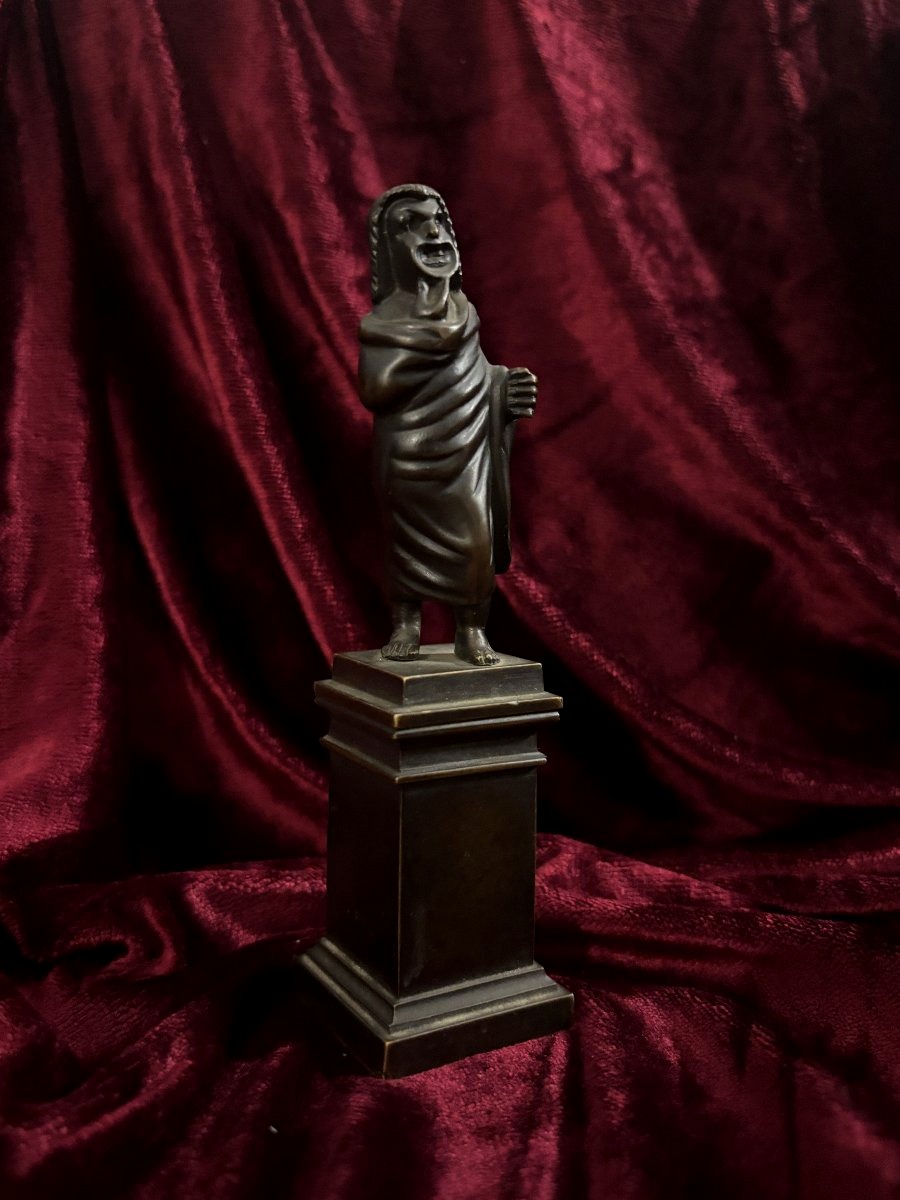
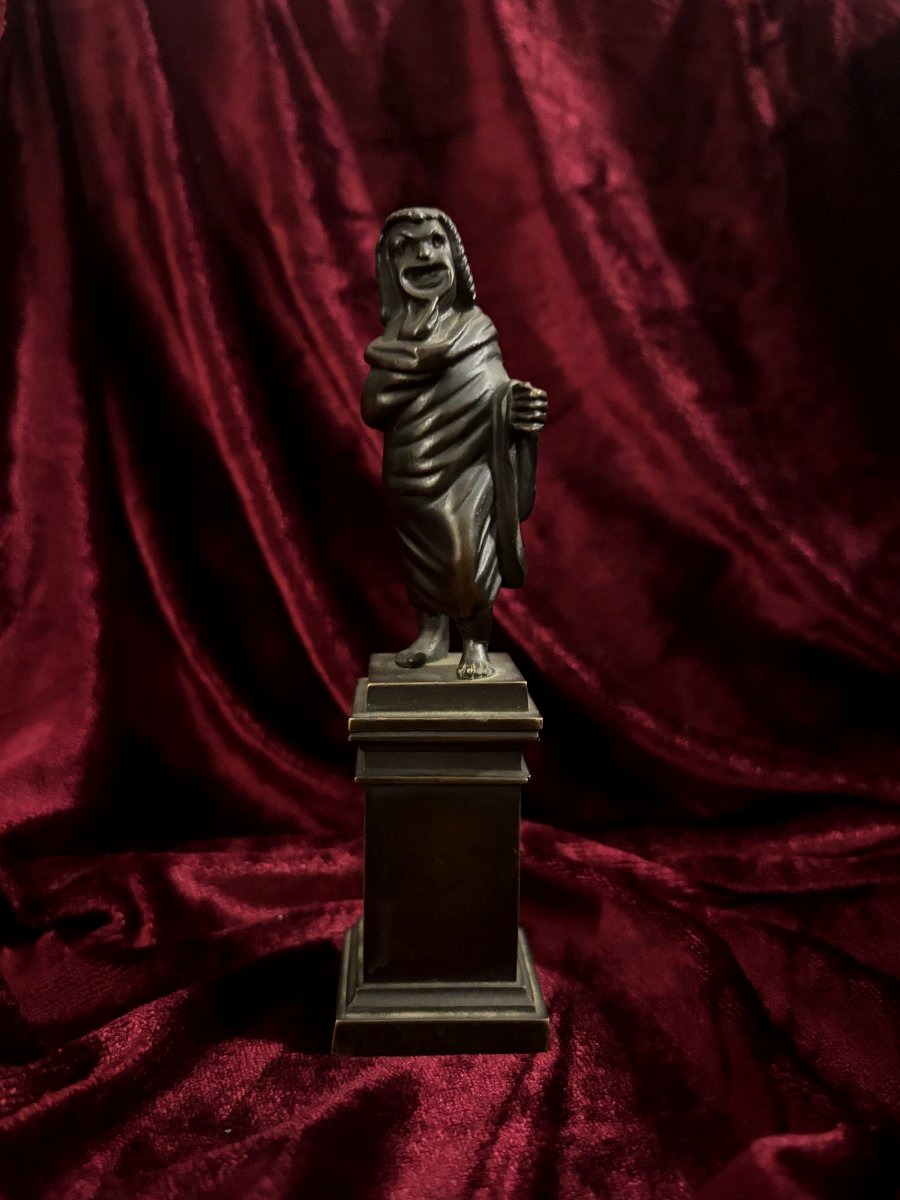
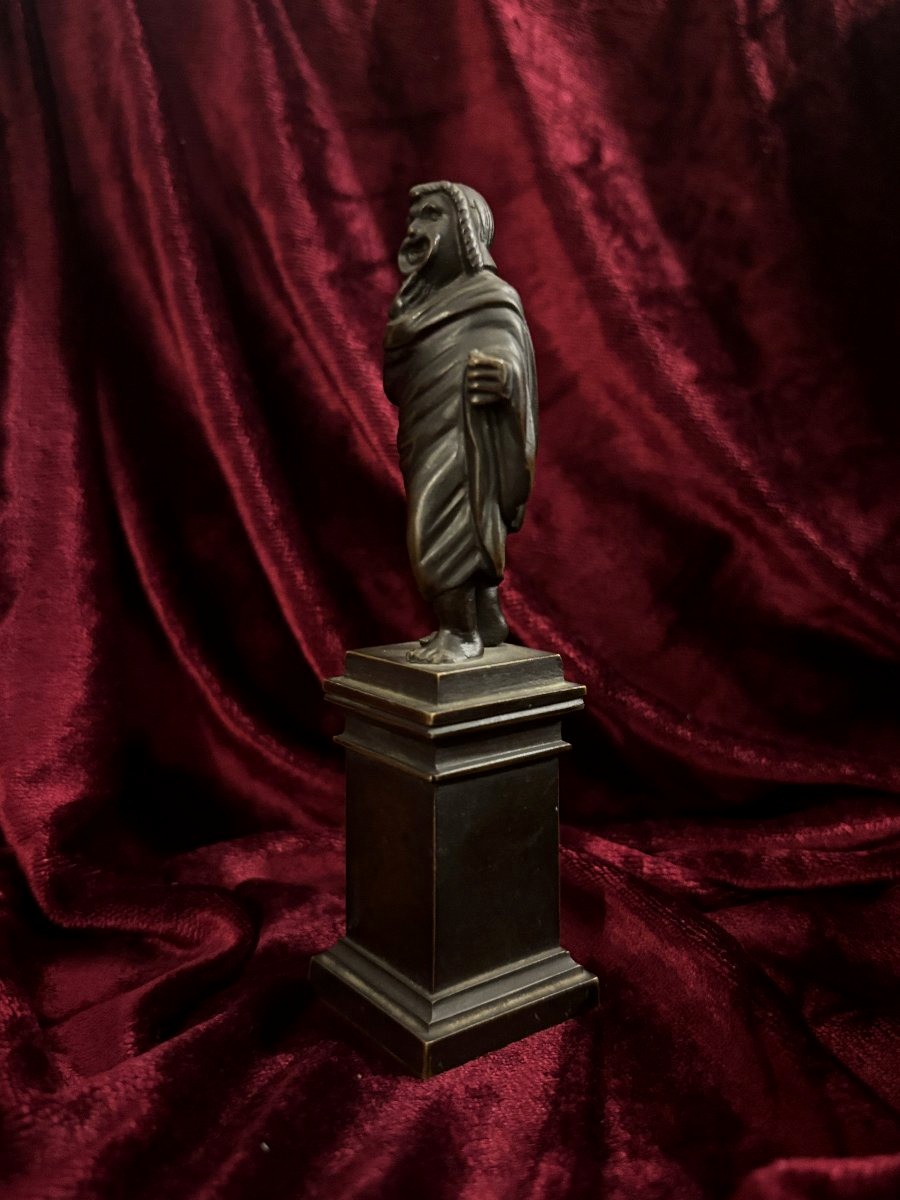
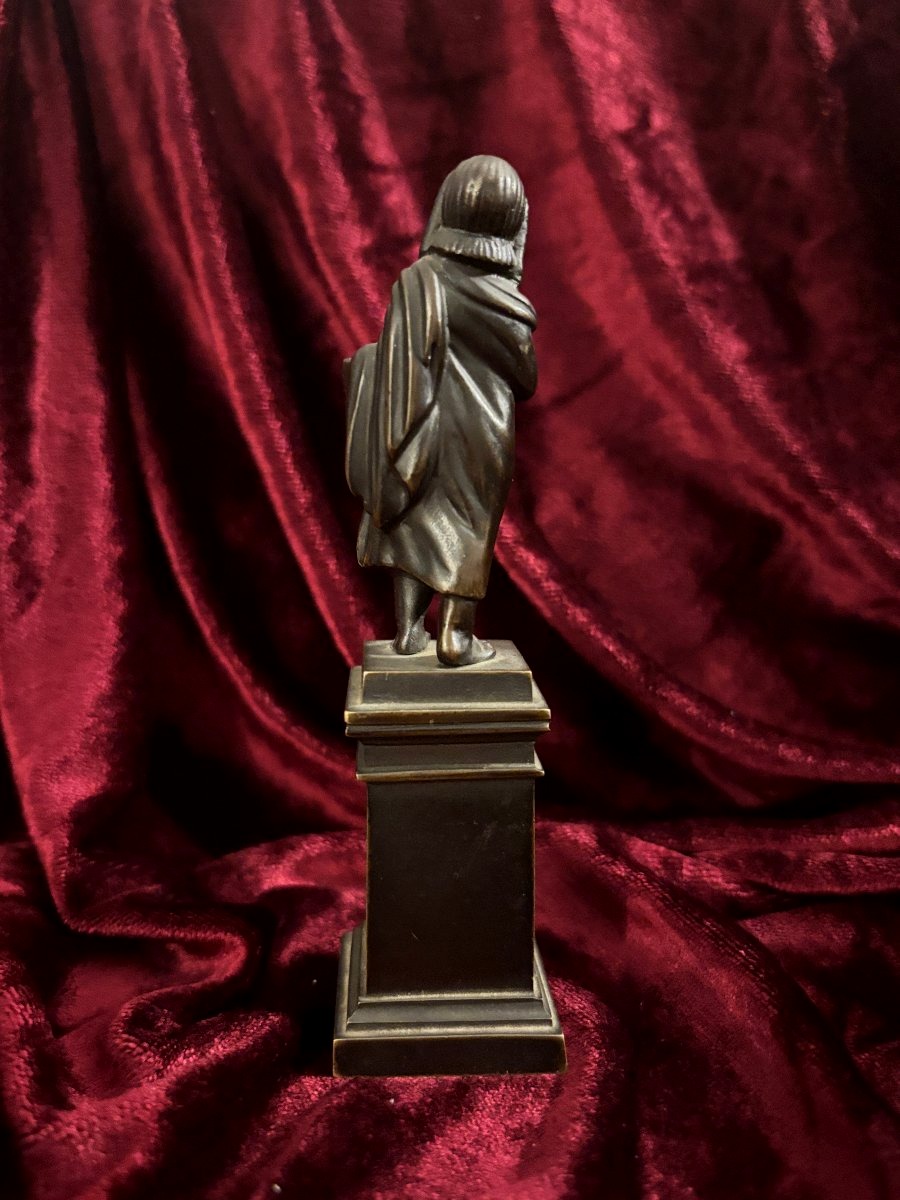
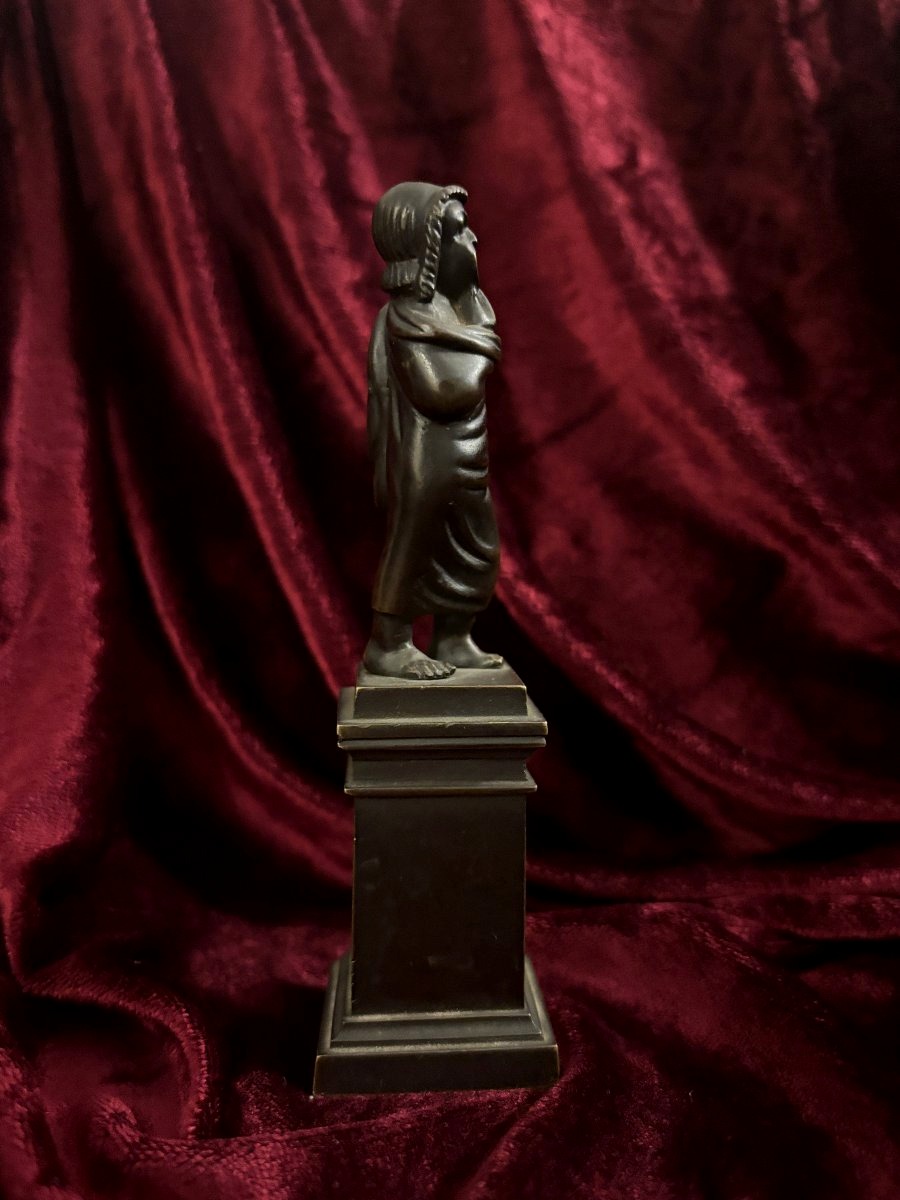


A beautiful bronze figure with a brown patina depicting an actor from ancient Roman theater holding a mask. The figure stands on a molded rectangular base, dressed in a long toga.
19th-century Italian work.
Height: 13 cm.
Base width: 3.5 cm.
Superb original brown patina in perfect condition.
This bronze statuette exemplifies the historicist and Neo-Pompeian aesthetic of the 19th century, a period when a passion for classical archaeology and ancient theater inspired numerous cabinet bronzes.
In ancient Rome, theater actors—whether performing in comedy, tragedy, or popular farces such as the Atellan farce—occupied a paradoxical position: they fascinated the public with their virtuosity but were branded with infamy by the institutions.
Unlike classical Greek tragedy, Roman performances made extensive use of expressive masks made of linen, cork, or wood, with powerfully exaggerated features (gaping mouths, comedic grimaces, or tragic expressions), allowing spectators seated in the vast tiers of the stands to instantly identify the psychological and social nature of the character (a miserly old man, a cunning slave, a parasite, or a young leading man). These stereotypical figures, dressed in traditional costumes (such as the cloak or stage toga), were not only at the heart of major public festivals (ludi), but also inspired an entire tradition of domestic arts and crafts in the form of cabinet bronzes, statuettes, or wall sconces, attesting to the omnipresence of theater in the visual imagination of Roman society.
Explore similar pieces and discover your ideal find:
bronze sculptures