


Sculpted Marble Fragment—probably From The Roman Period, 3rd–4th Century
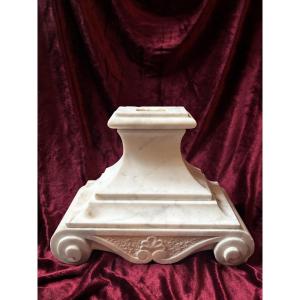
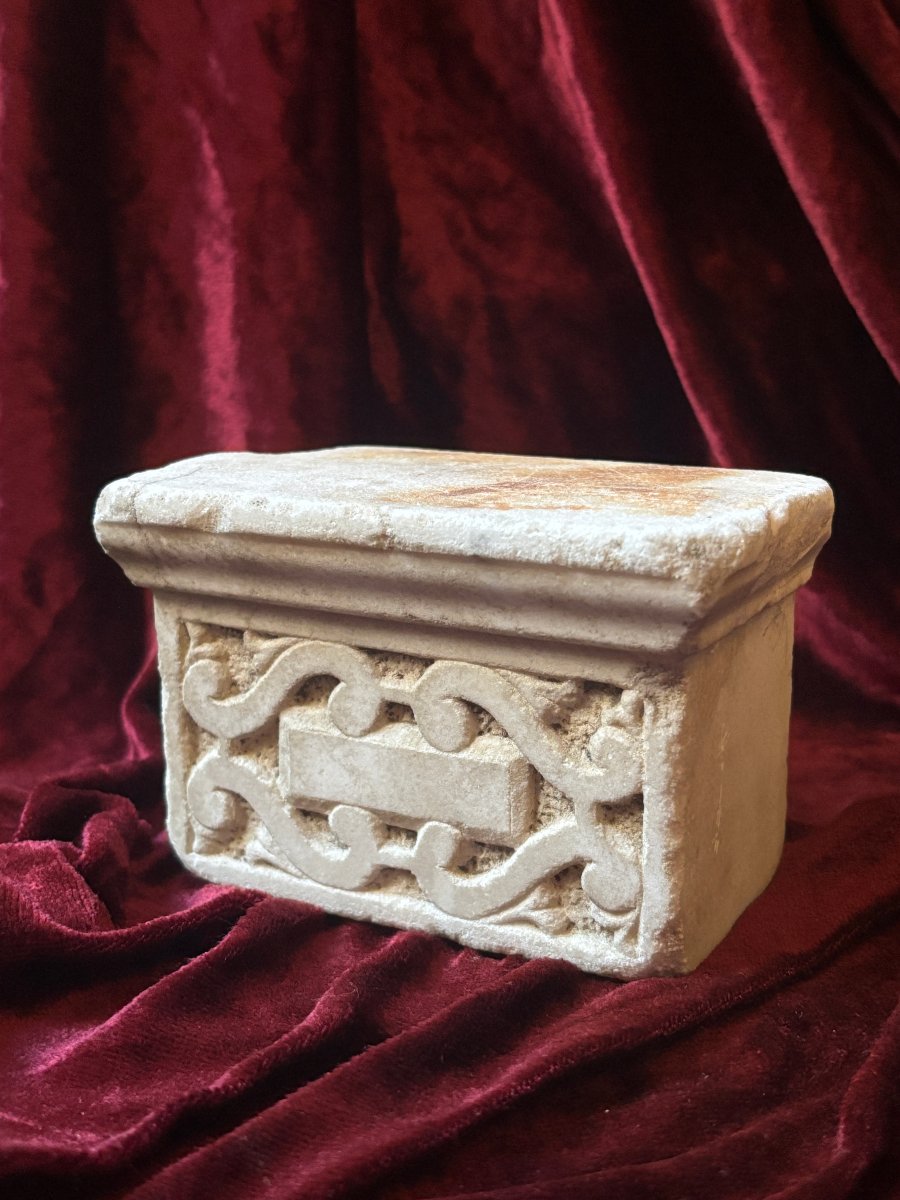
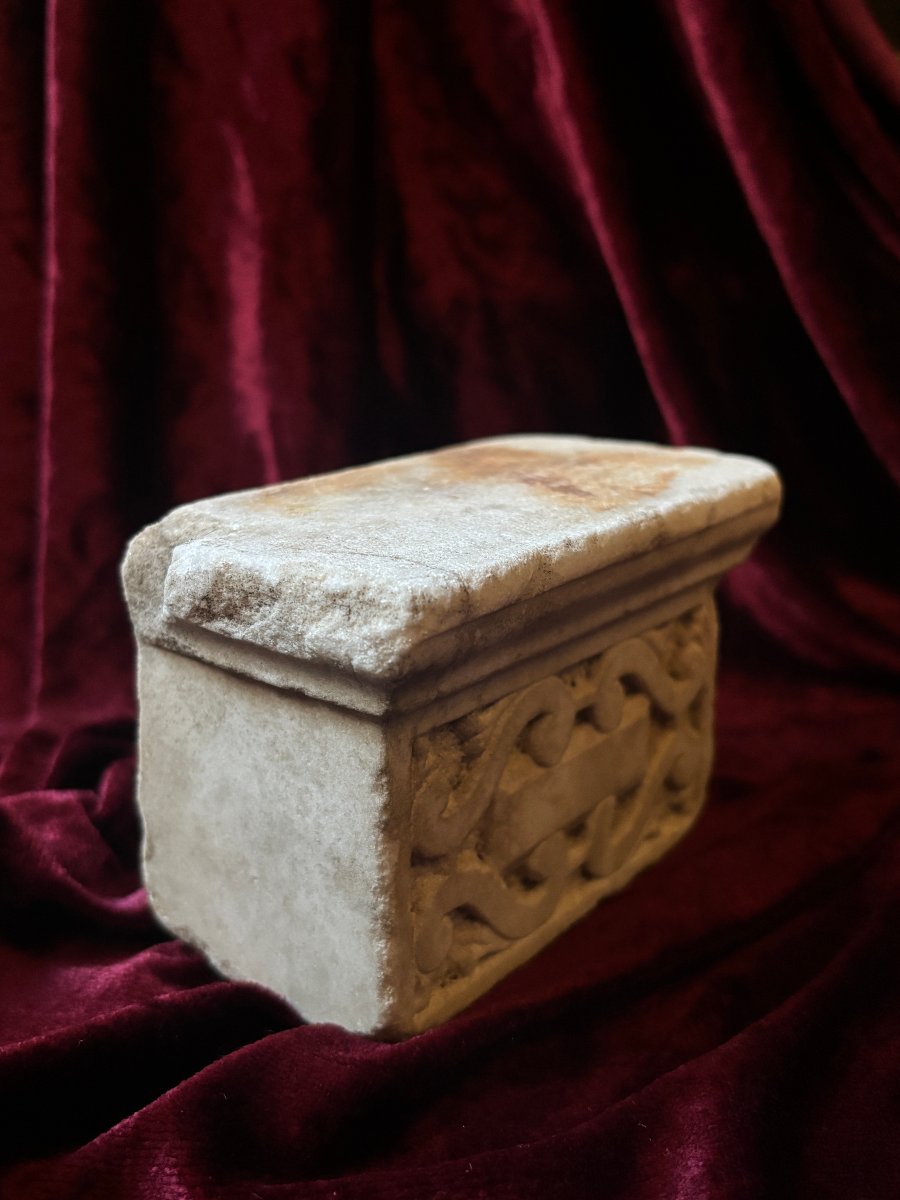
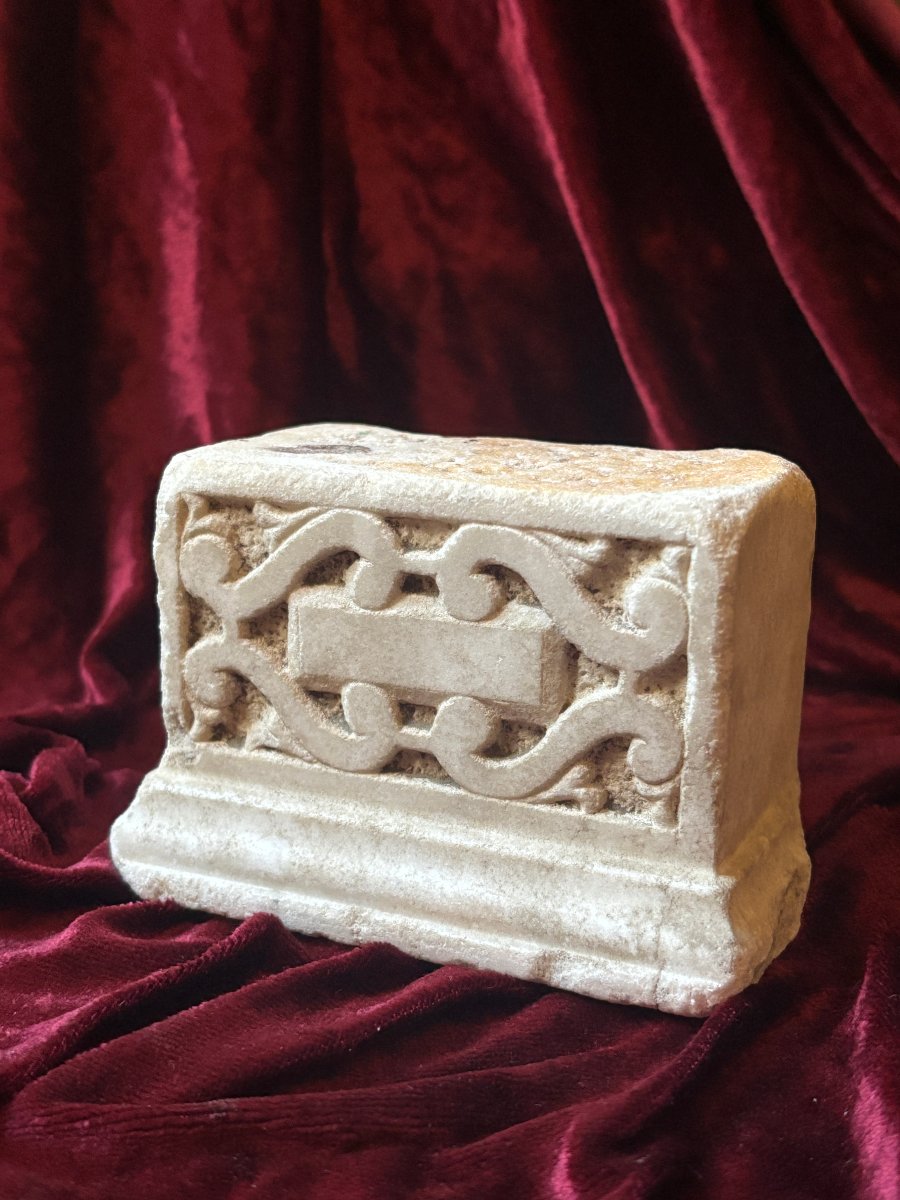
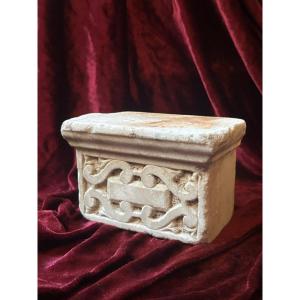
A beautiful fragment of carved white marble featuring an interlaced design framing a rectangular tabula ansata, which may have been intended to hold an inscription. The upper portion is adorned with a molded cornice.
A stable object that could serve as a pedestal for a sculpture.
Most likely a work from the Late Roman period (3rd or 4th century).
Dimensions: 7.5 x 11 x 6.8 cm.
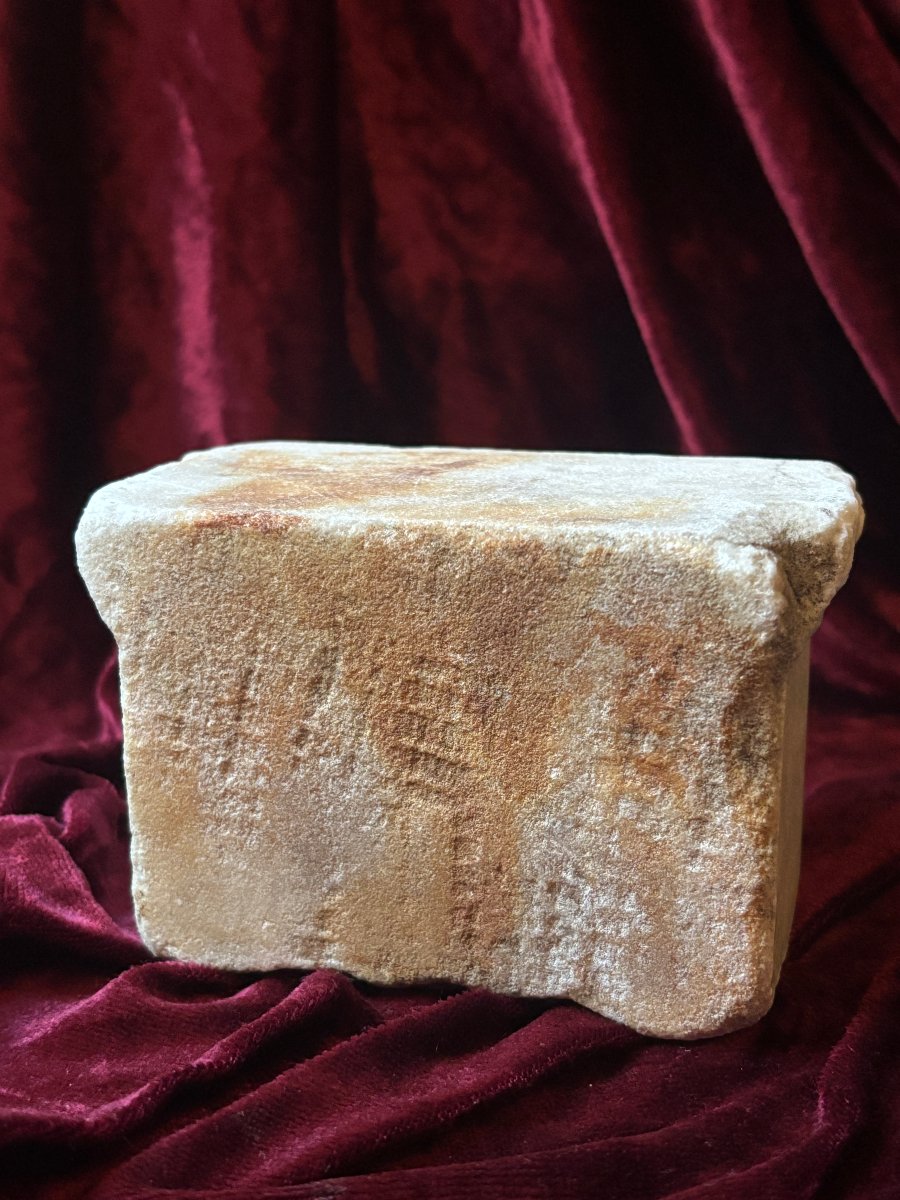
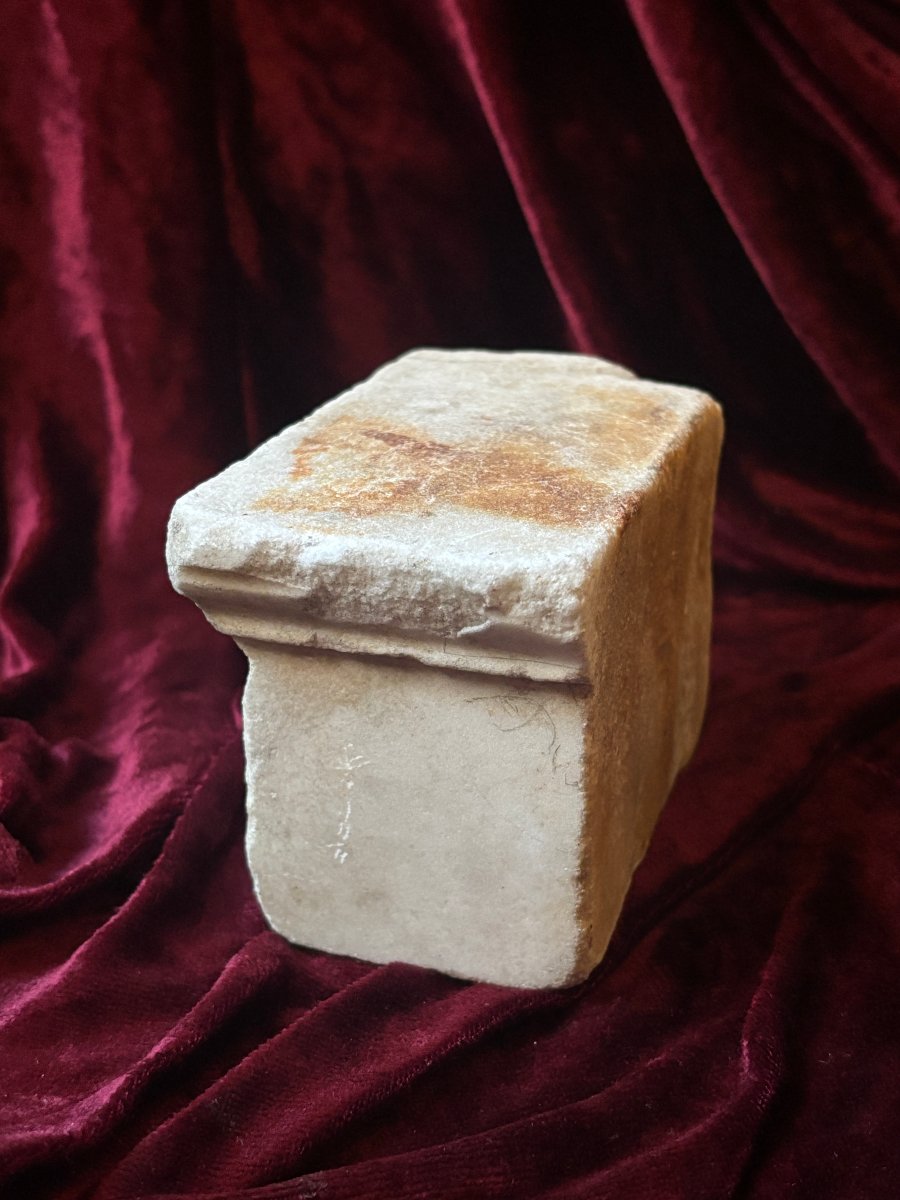
A rare fragment that may have come from a laraarium frieze or a piece of architecture, possibly funerary in nature. The volute motifs and the central cartouche (tabula ansata) are very common in Roman architectural and funerary ornamentation. The surface patina and erosion (particularly visible on the edges, the upper part, and the back) indicate a long period of exposure followed by prolonged burial.
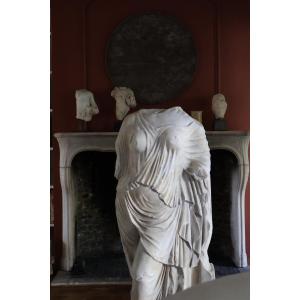
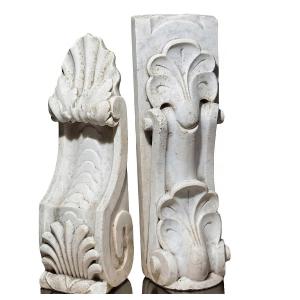
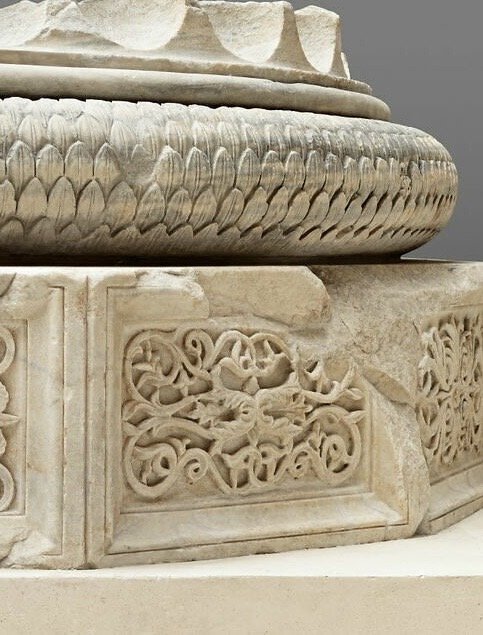
Similar style decorations are visible on a column base exhibited at the Louvre Museum under inventory number MA2765, dating to the first quarter of the 2nd century AD. (Last picture).
A stable object that could serve as a pedestal for a sculpture.
Most likely a work from the Late Roman period (3rd or 4th century).
Dimensions: 7.5 x 11 x 6.8 cm.
A rare fragment that may have come from a laraarium frieze or a piece of architecture, possibly funerary in nature. The volute motifs and the central cartouche (tabula ansata) are very common in Roman architectural and funerary ornamentation. The surface patina and erosion (particularly visible on the edges, the upper part, and the back) indicate a long period of exposure followed by prolonged burial.
Similar style decorations are visible on a column base exhibited at the Louvre Museum under inventory number MA2765, dating to the first quarter of the 2nd century AD. (Last picture).
620 €
Period: Before 16th century
Style: Rome and Antic Greece
Condition: Good condition
Material: Marble
Reference (ID): 1838340
Availability: In stock
Print