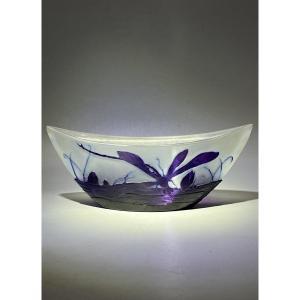


émile Gallé – Cup With Dragonfly Design
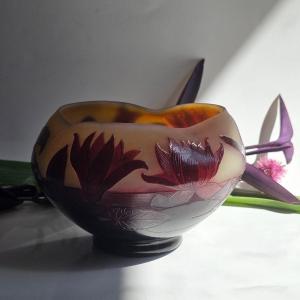
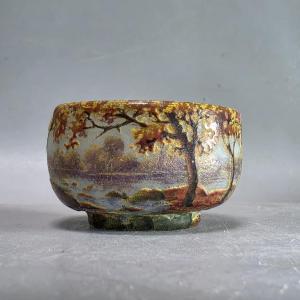
Émile Gallé – Bowl with dragonfly decoration, Nancy, circa 1900
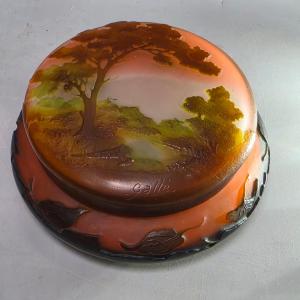
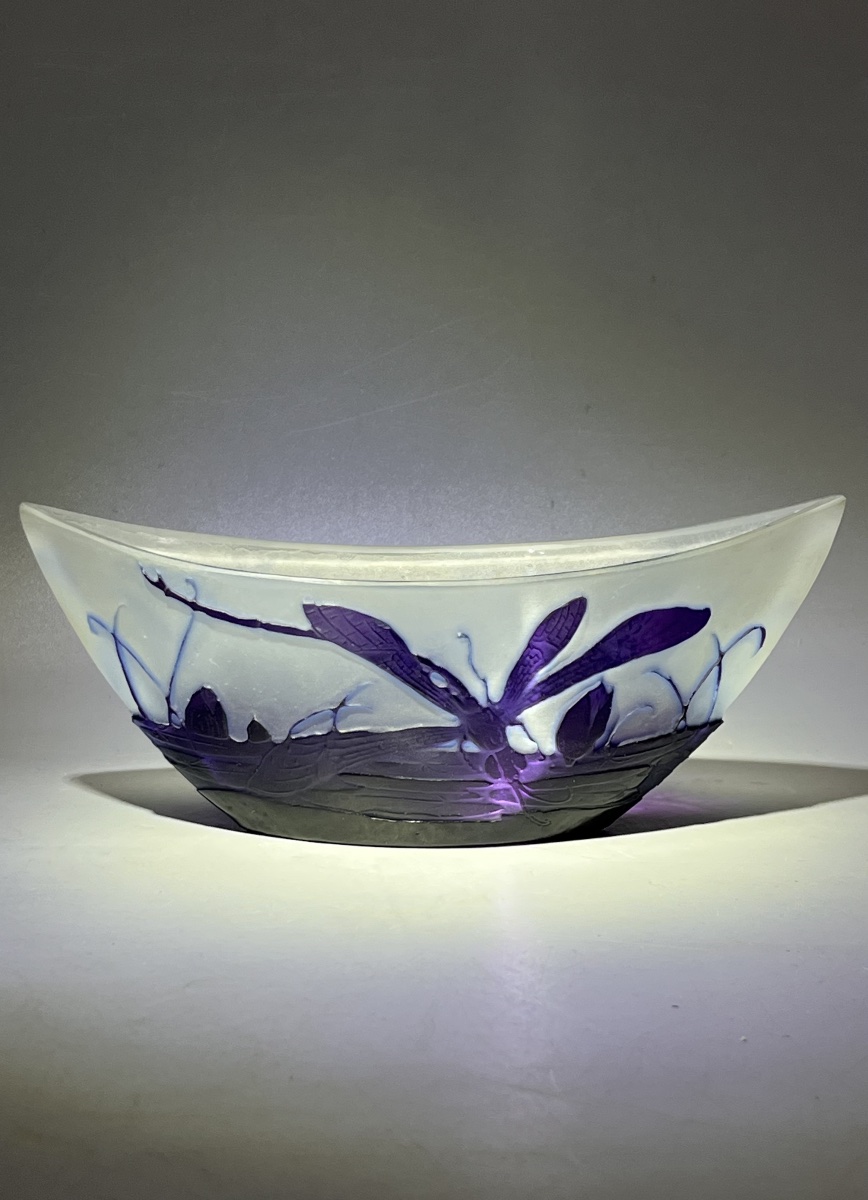
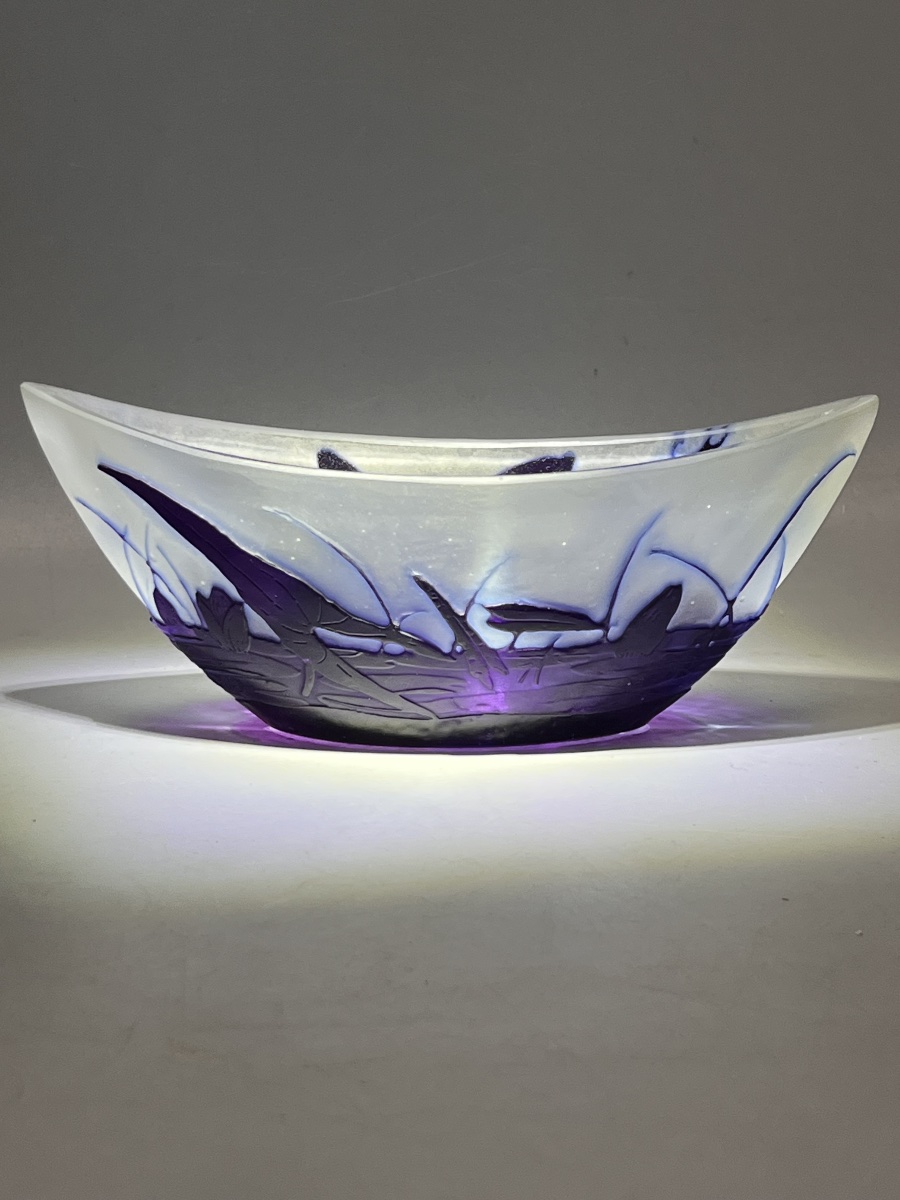
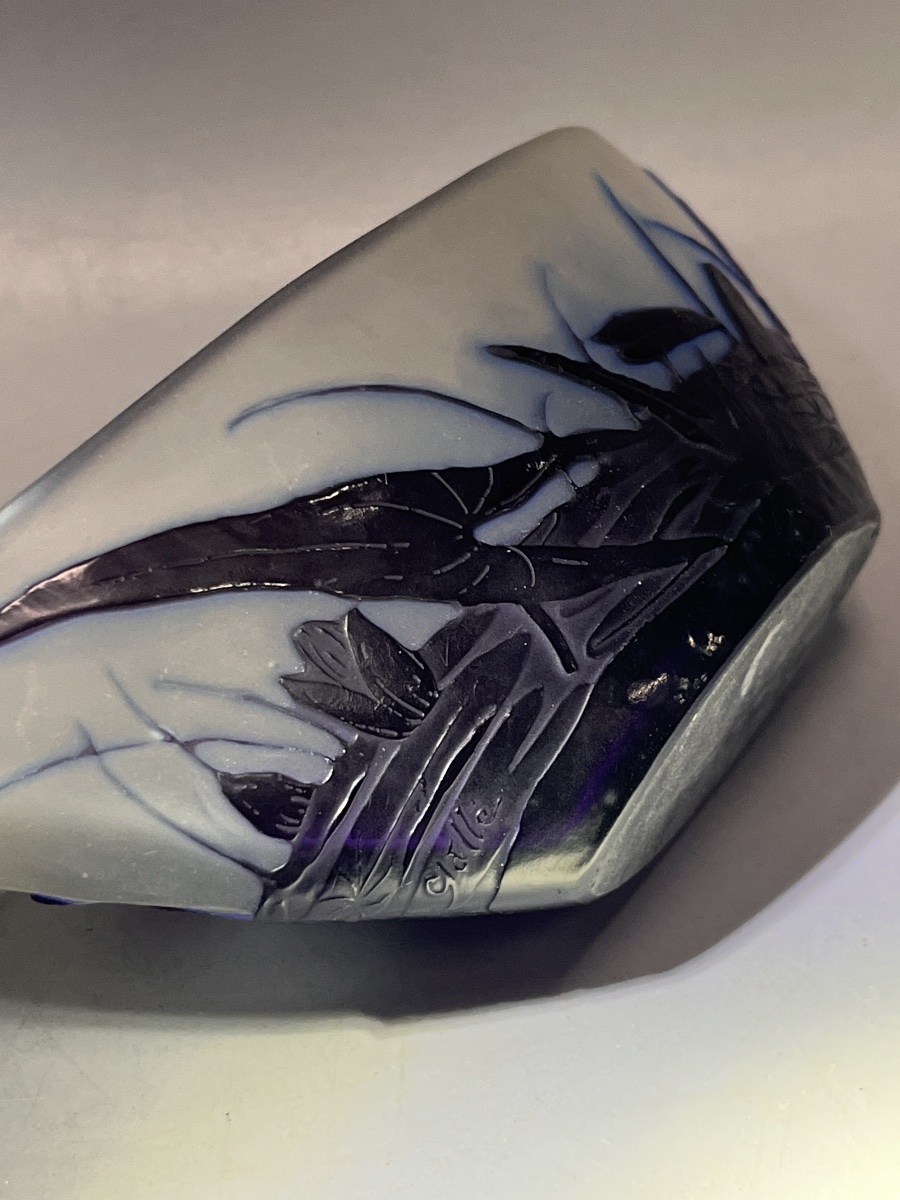
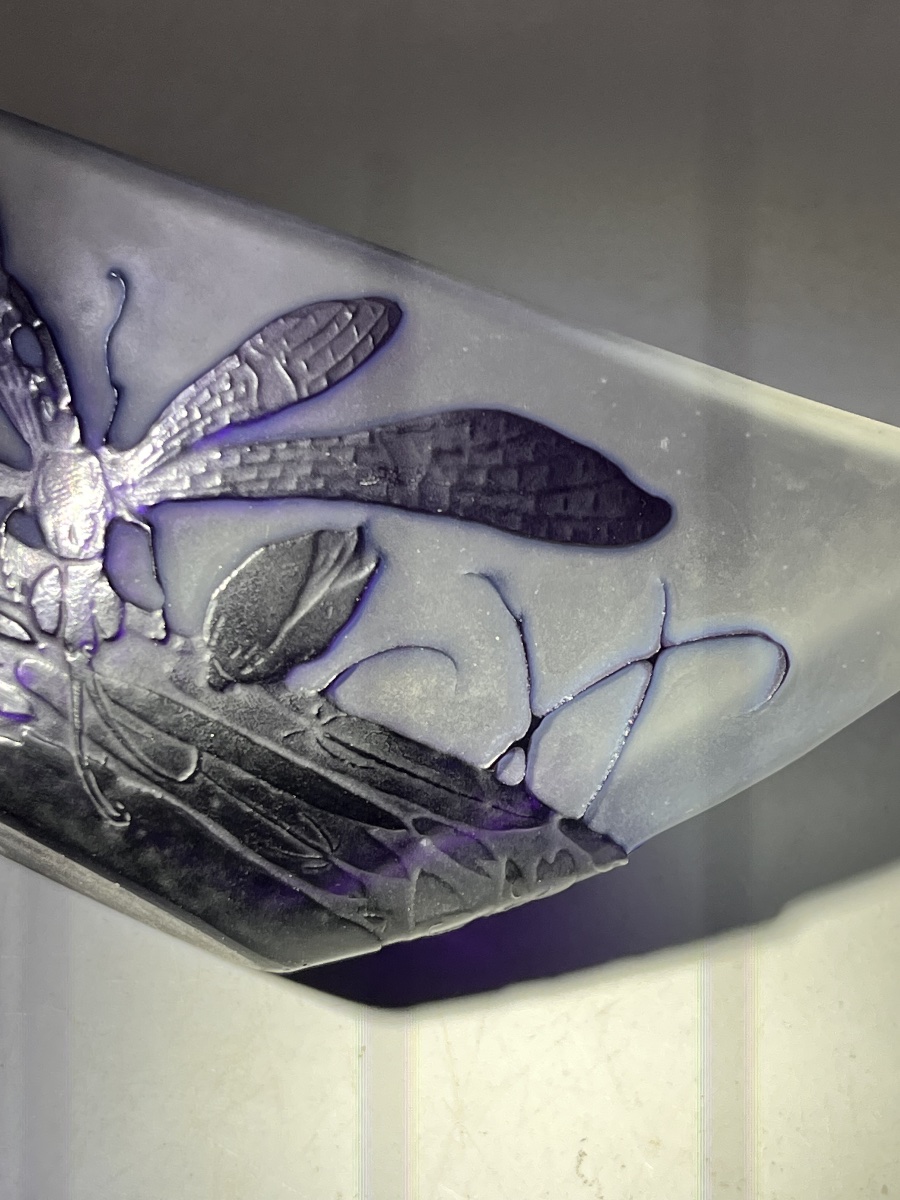
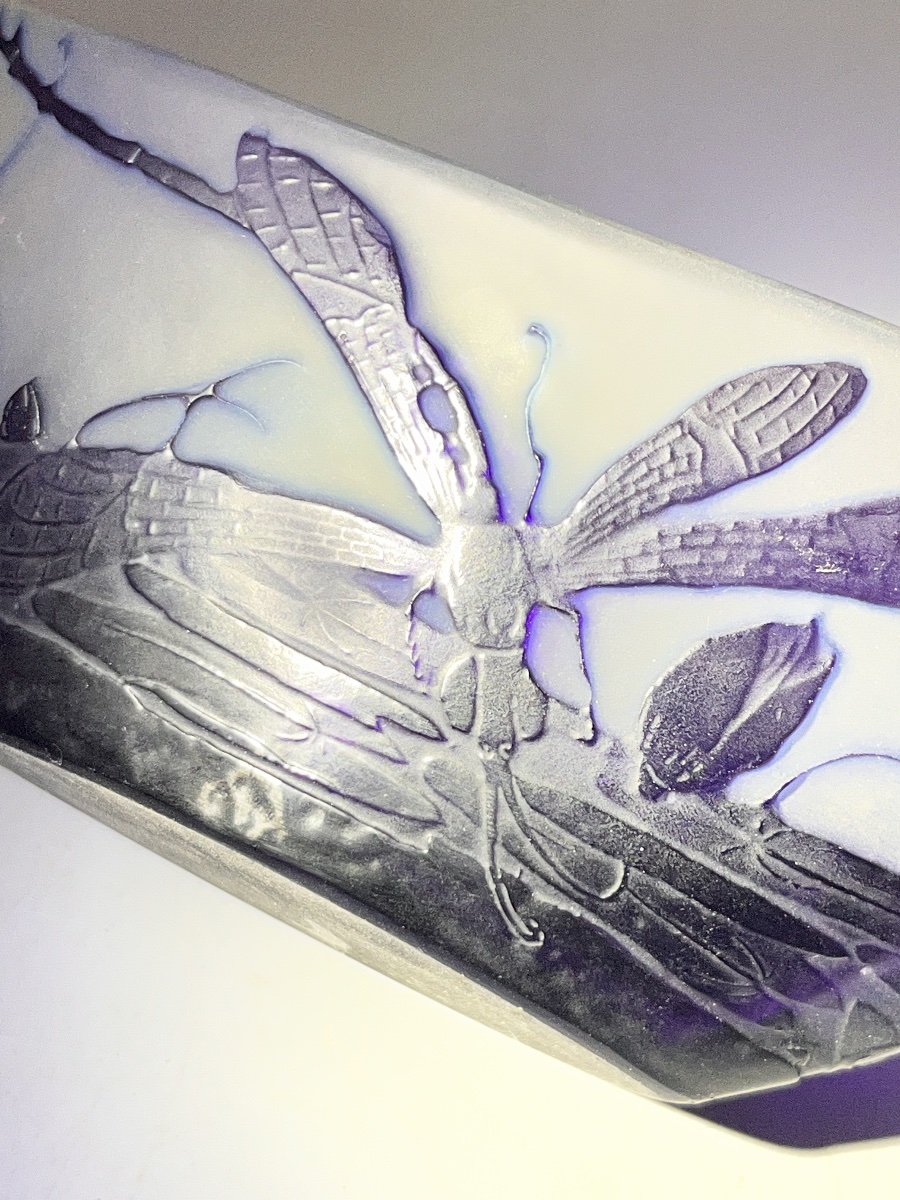
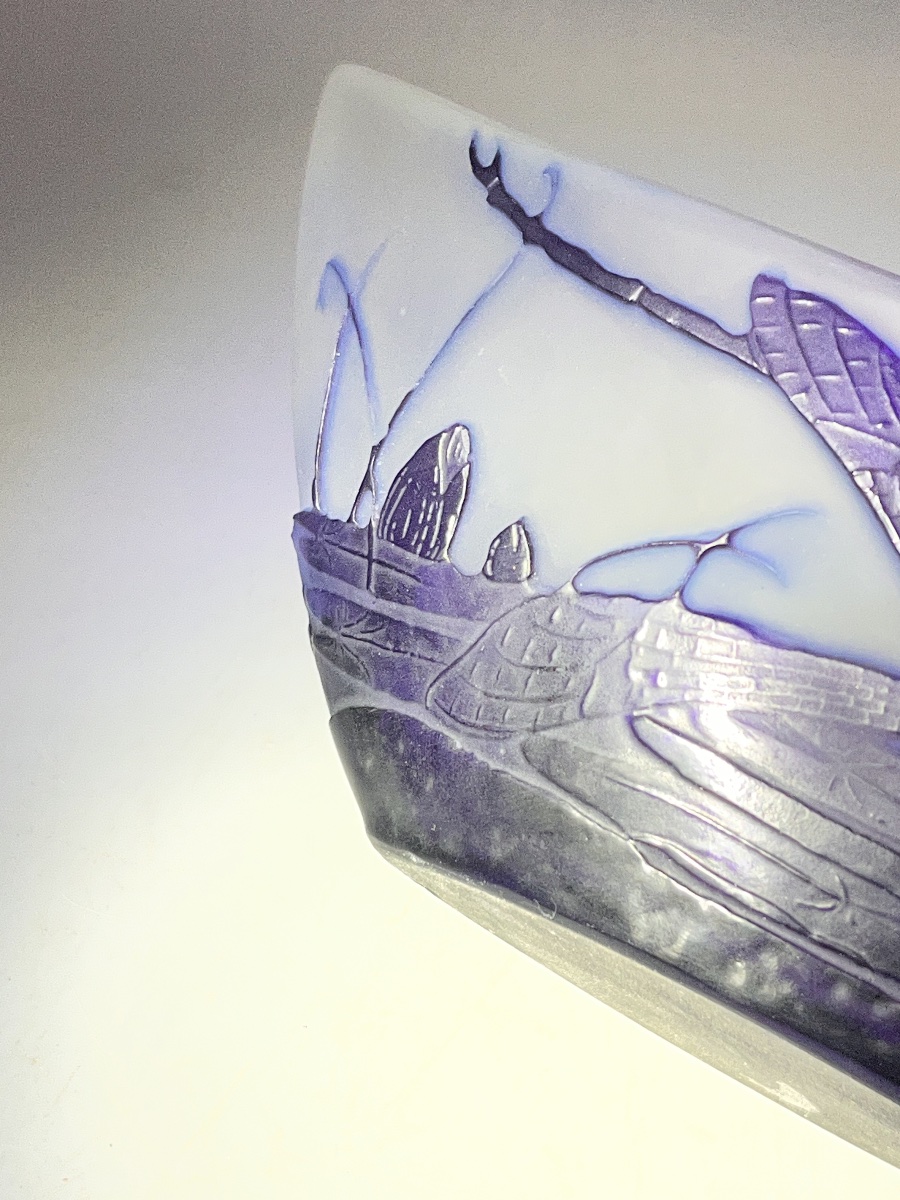
An elegant multilayered glass bowl signed by Émile Gallé, featuring a naturalistic design of a dragonfly and aquatic vegetation in a refined palette of opal white, deep purple, and bluish hues.
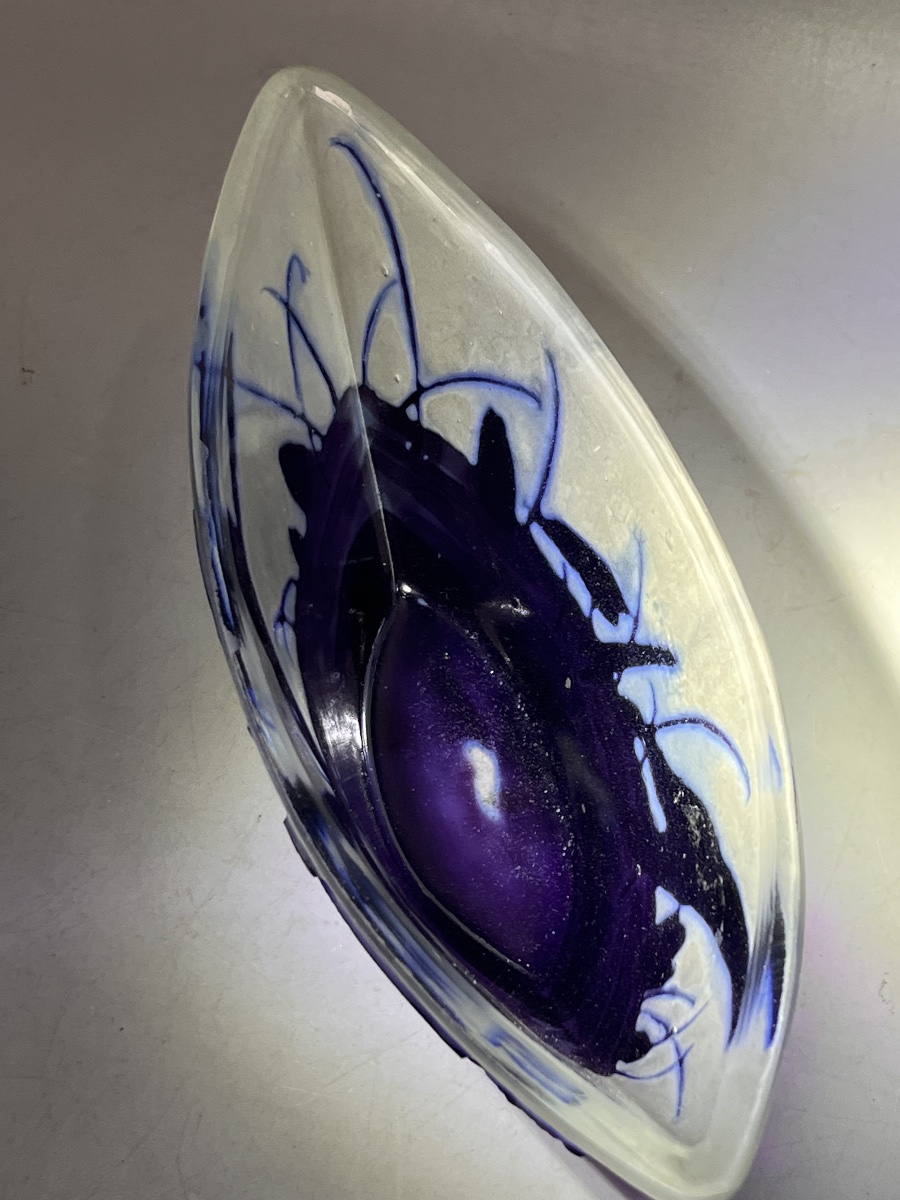
This bowl is distinguished by its low, flared shape, with slightly raised edges that create a supple, asymmetrical silhouette. Its design depicts a dragonfly amidst aquatic plants, evoking the banks of a pond. The violet tones of the leaves and stems contrast with the milky translucency of the glass, while the dark shades highlight the contours and add depth to the composition.
The design, integrated into the material and rendered in relief, reflects Gallé’s aesthetic exploration of transparency, depth, and color. Light reveals the glass’s various shades and highlights the delicacy of the botanical motifs, in a spirit where naturalistic observation becomes a true form of artistic expression.
Émile Gallé and His Fascination with the Dragonfly
Émile Gallé (1846–1904), a leading figure of Art Nouveau and founder of the École de Nancy, drew much of his inspiration from observing the natural world. Flowers, foliage, insects, and aquatic landscapes fueled his imagination and became the subjects of a particularly personal exploration of decoration and symbolism.
The dragonfly holds a special place in his work. In 1889, Gallé dubbed himself “the lover of quivering dragonflies,” an expression that attests to his fascination with this delicate and mysterious insect.
Why is the dragonfly so important in Gallé’s work?
The dragonfly is much more than a simple decorative motif. Its life cycle, which begins in the water before the insect takes flight, makes it a particularly evocative image of transformation and the renewal of life.
It thus allows Gallé to bring together two worlds that fascinate him: the aquatic world, with its vegetation and still waters, and the aerial world, embodied by the insect’s light movement. This relationship between water, vegetation, and flight lends his compositions a poetic dimension, characteristic of the Symbolist spirit of Art Nouveau.
The dragonfly also has Japanese connotations: a prominent motif in Japanese art, it is notably associated with bravery. Gallé’s interest in Japanese aesthetics helps explain the prominence he gives it in his creations.
A representative work of Nancy Art Nouveau
With its naturalistic design, play of colors, and elegant silhouette, this bowl illustrates Gallé’s desire to make glass a true medium for artistic expression. For him, nature is not merely reproduced: it becomes a visual language, capable of evoking the movement, fragility, and transformation of living things.
Period: 20th century
Style: Art Nouveau
Condition: Excellent condition
Length: 17,5
Height: 7
Depth: 6,5
Reference (ID): 1840896
Availability: In stock