
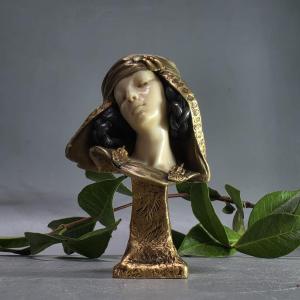


Louis-ernest Barrias, Bust Of The Young Girl From Bou-sâada
Louis-Ernest Barrias – “Young Girl from Bou-Saâda”
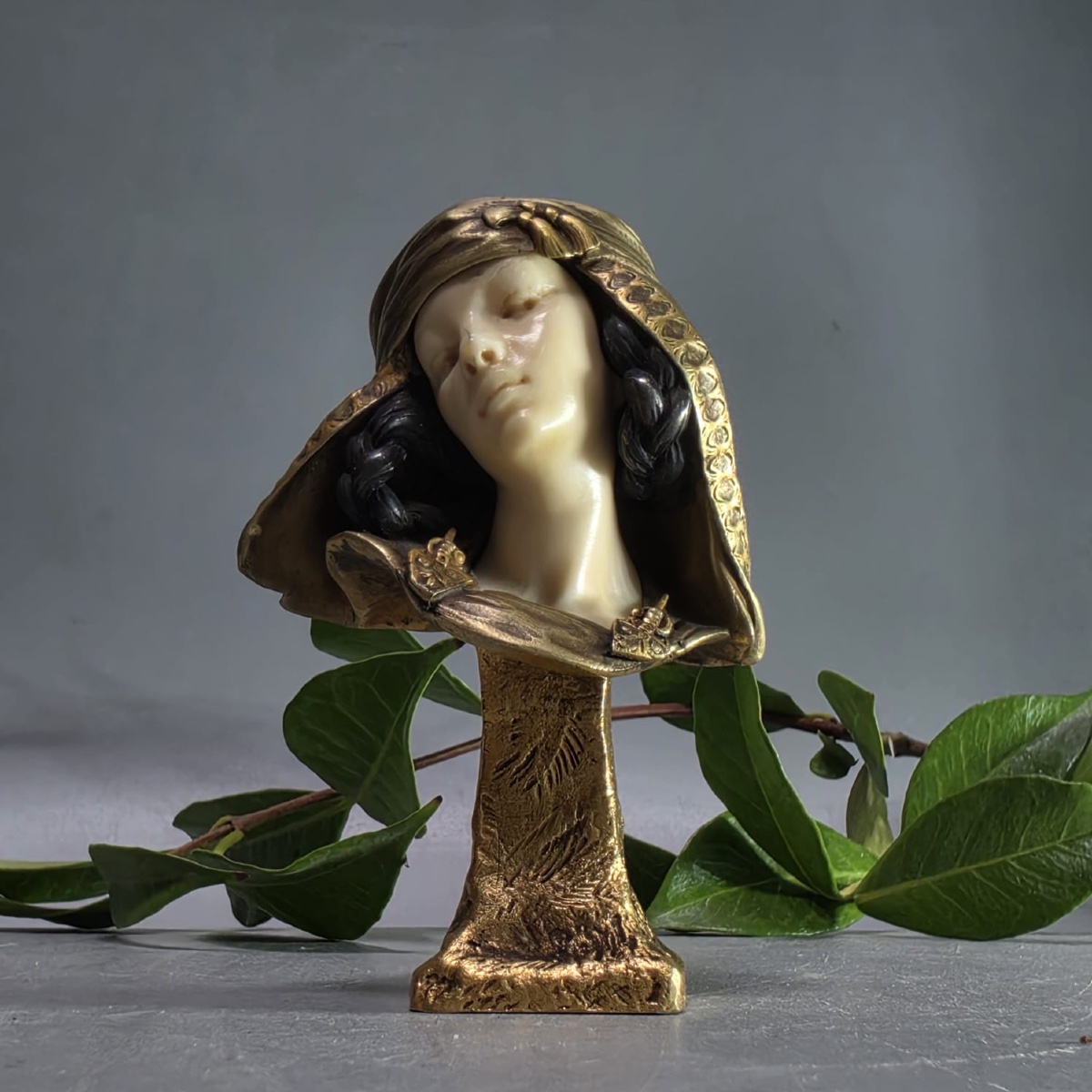
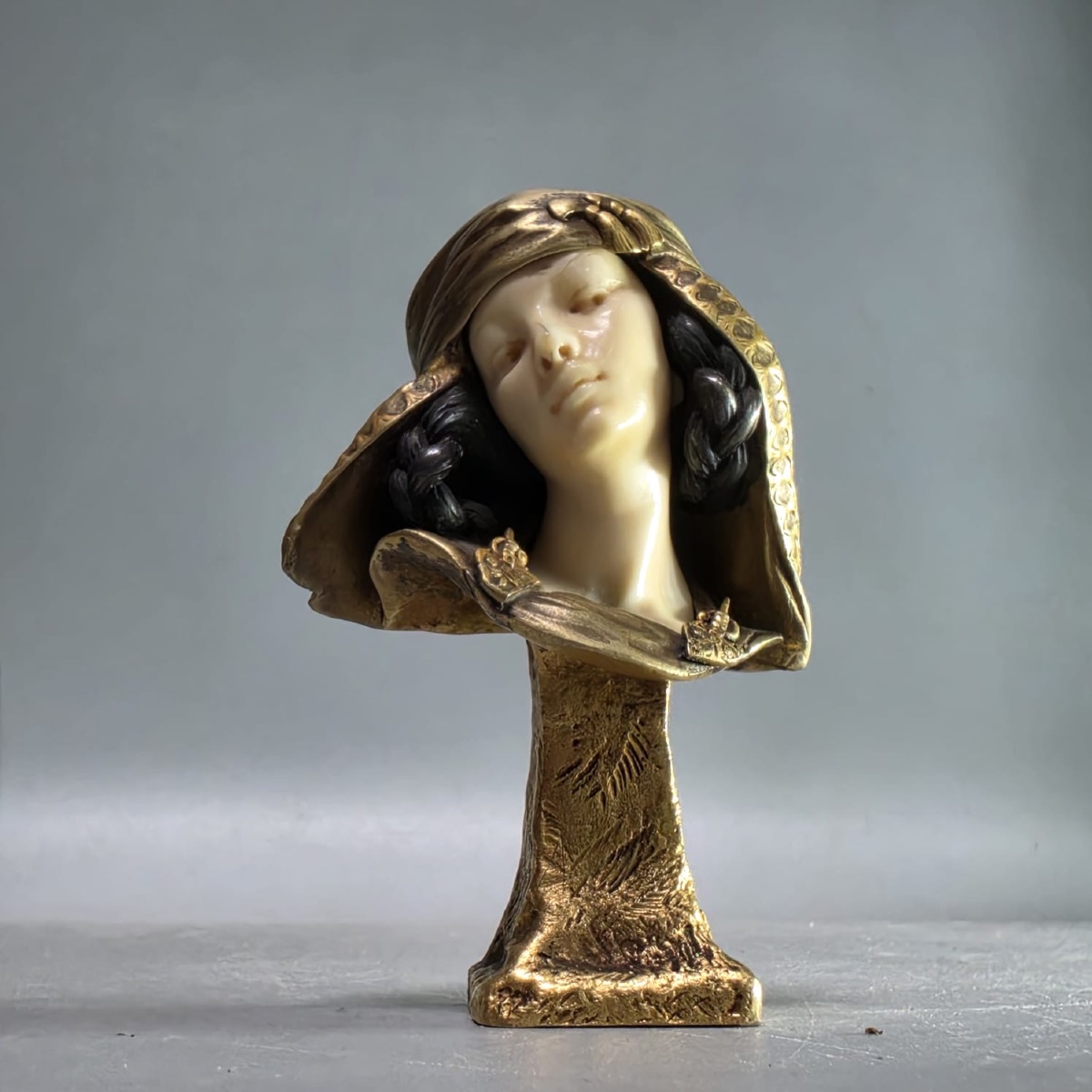
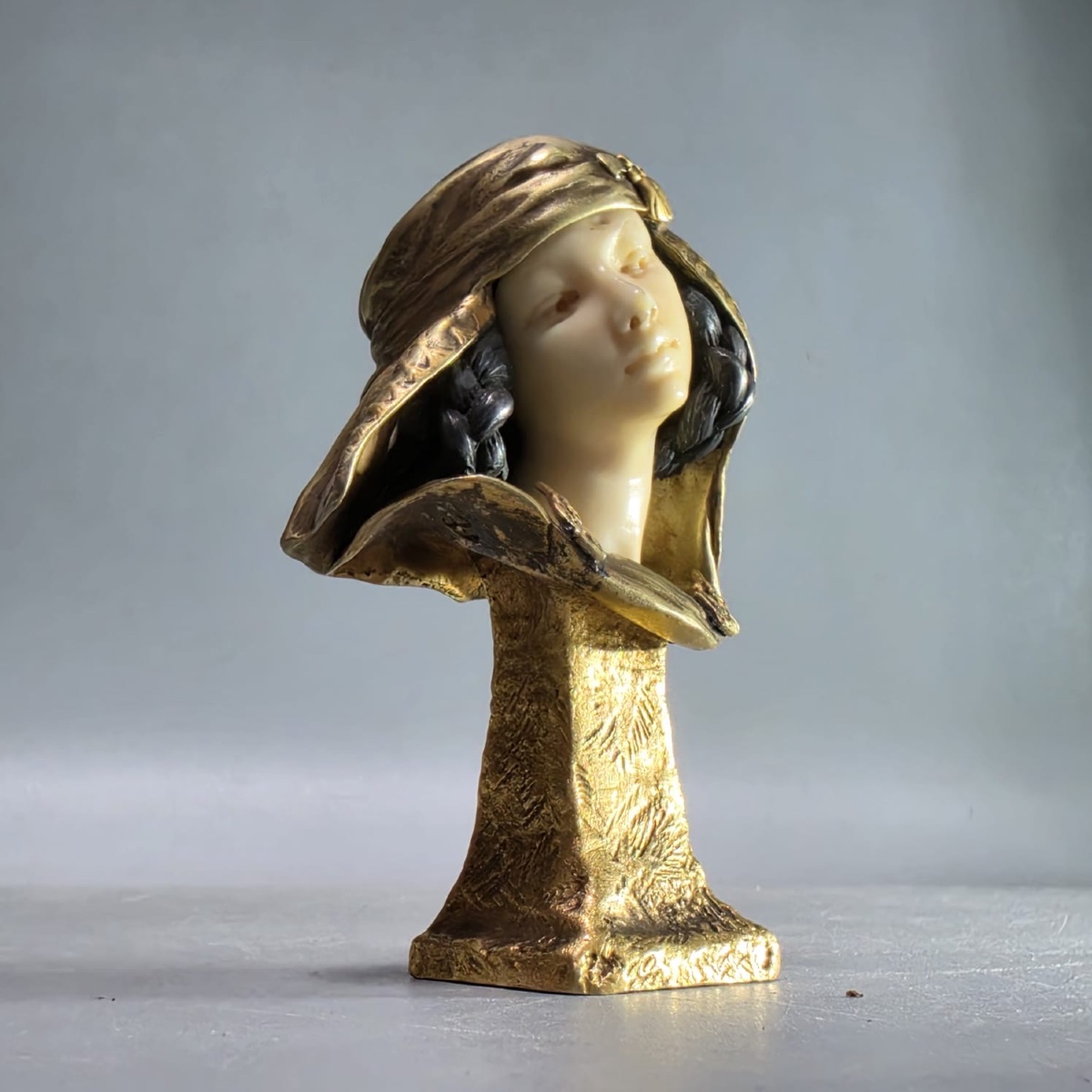
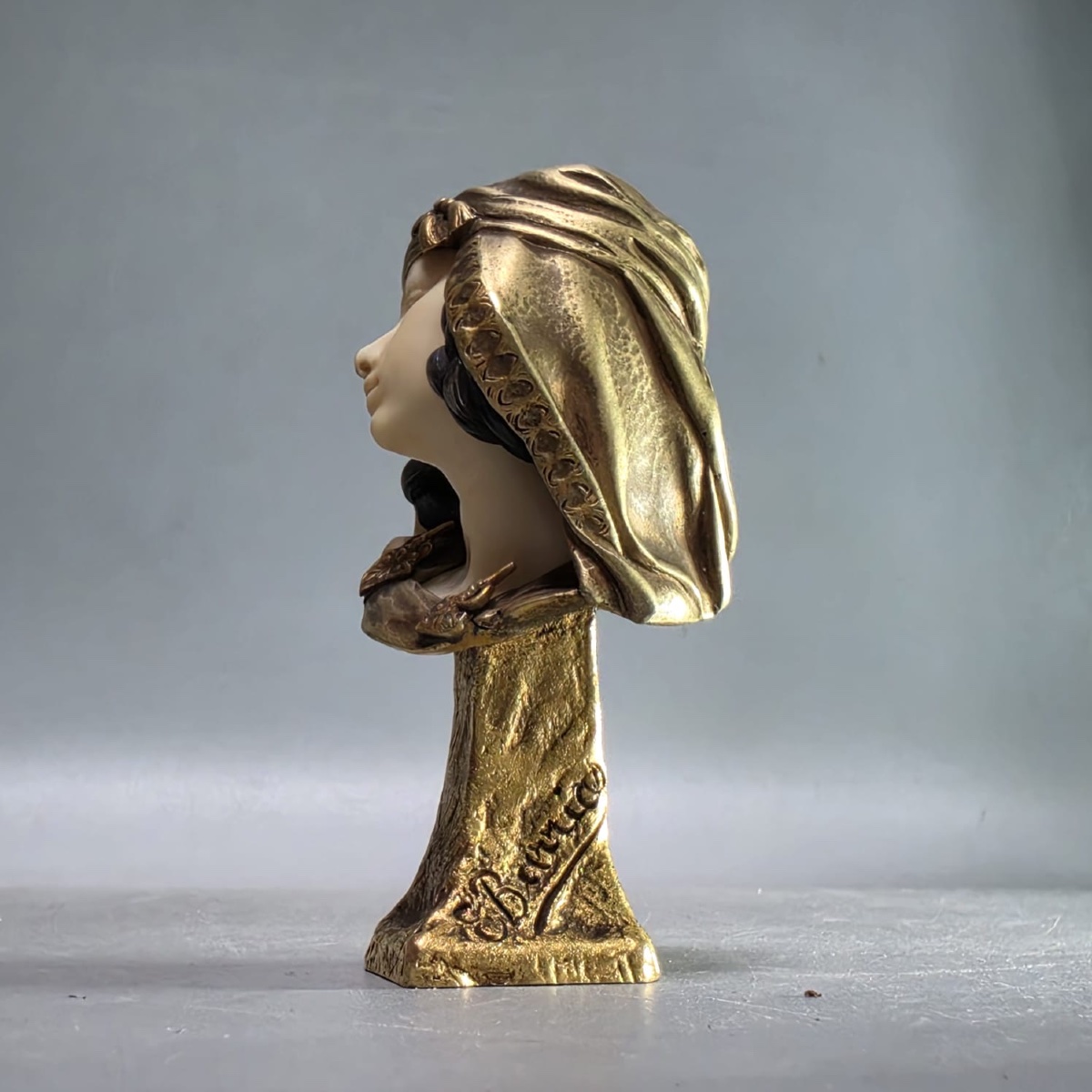
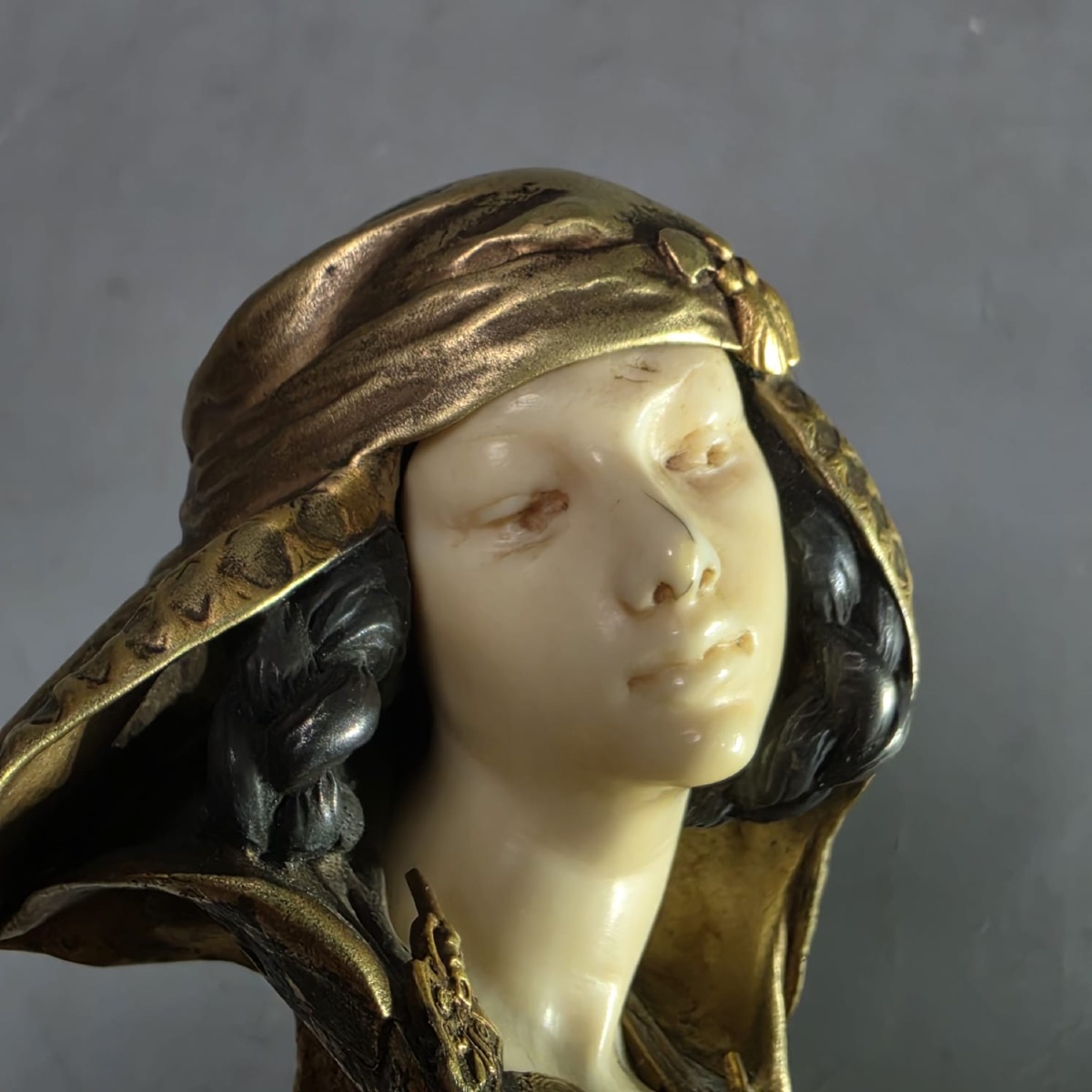
An elegant small chryselephantine bust by Louis-Ernest Barrias (1841–1905) depicting the Young Girl from Bou-Saâda, the artist’s famous Orientalist composition. The face and neck, finely carved from ivory, contrast with the bronze with a golden patina that forms the hairstyle, veil, and clothing. The young woman is depicted beneath a richly crafted veil that delicately frames her face with its fine features and downcast gaze.
This work belongs to one of Barrias’s most famous subjects. The Young Girl from Bou-Saâda was conceived in the late 1880s for the funerary monument of the Orientalist painter Gustave Guillaumet at the Montparnasse Cemetery. The model was exhibited at the Paris Salon in 1890. Barrias drew inspiration in particular from Guillaumet’s work depicting the women of Bou-Saâda, while giving his sculpture a more refined and decorative interpretation.
The choice of precious materials characterizes the chryselephantine elements of this composition: ivory is used for the skin tones, while bronze—often gilded or given various patinas—highlights the costume, hair, and veil. This combination of materials, inspired by the ancient chryselephantine tradition, allows Barrias to give the figure a particularly precious and refined appearance.
The model enjoyed significant commercial success and was produced in various sizes and variations by Susse Frères. In particular, there are documented examples of chryselephantine sculptures measuring approximately 18 cm with an ivory face, double-patinated bronze, and the Susse Frères mark, which closely match the type of your piece.
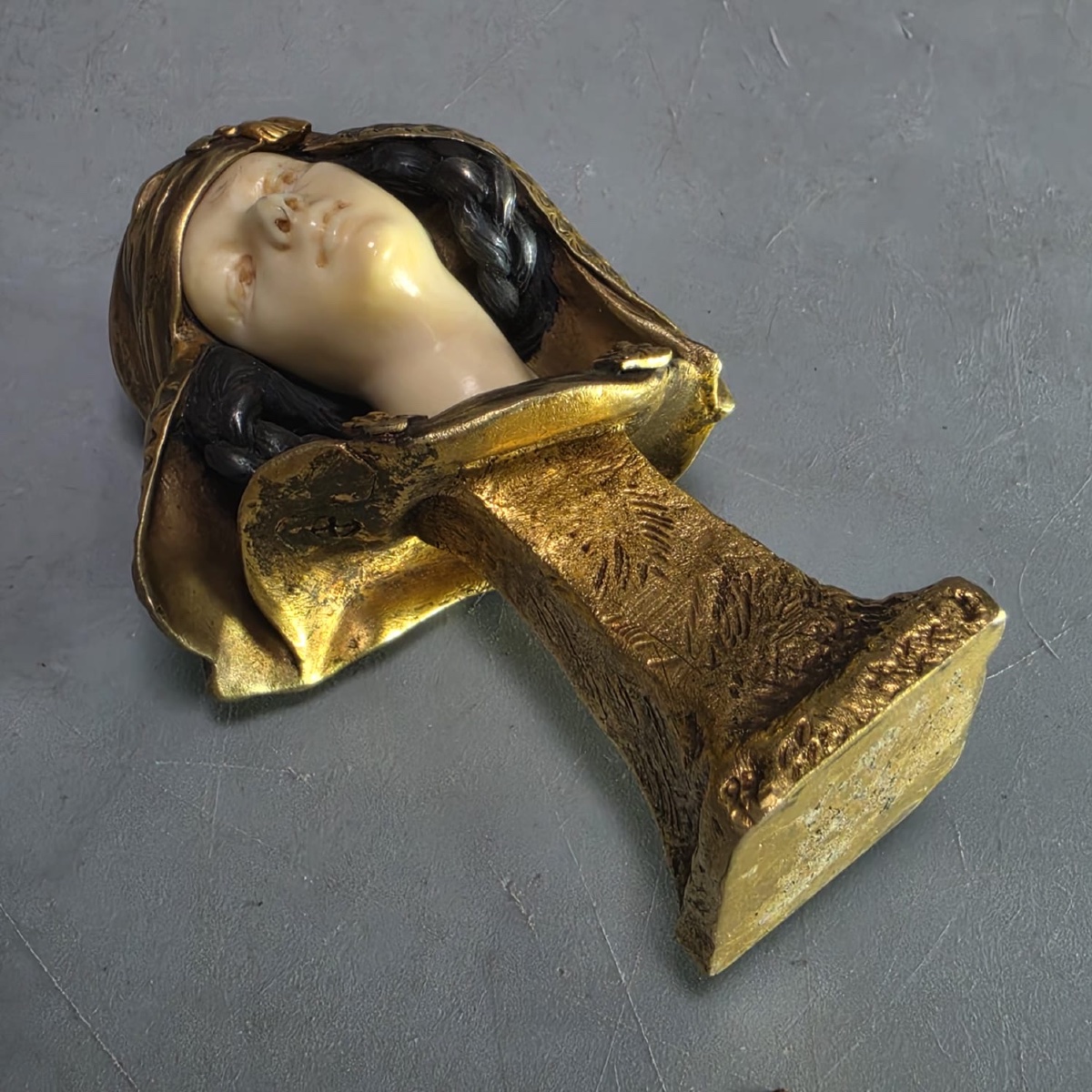
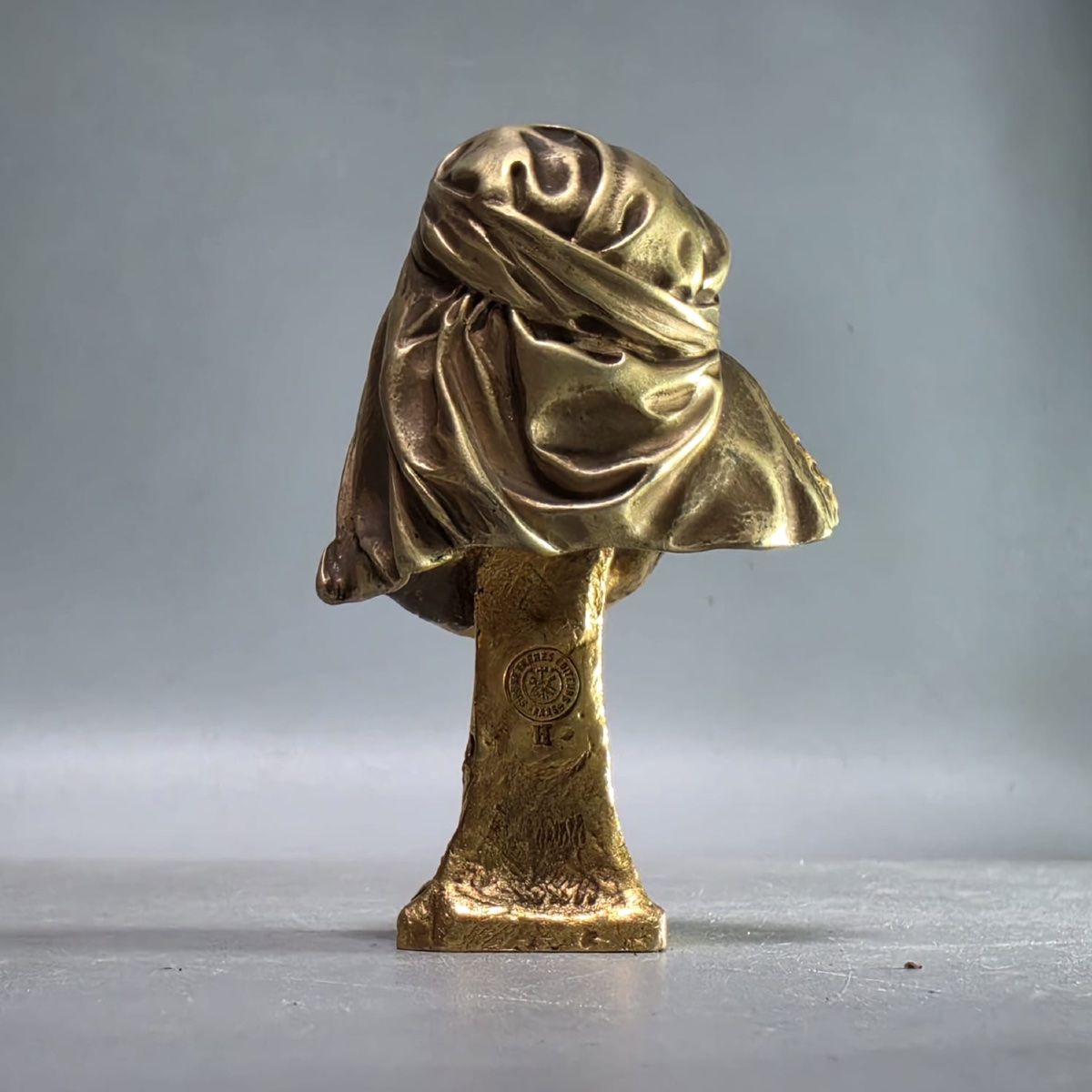
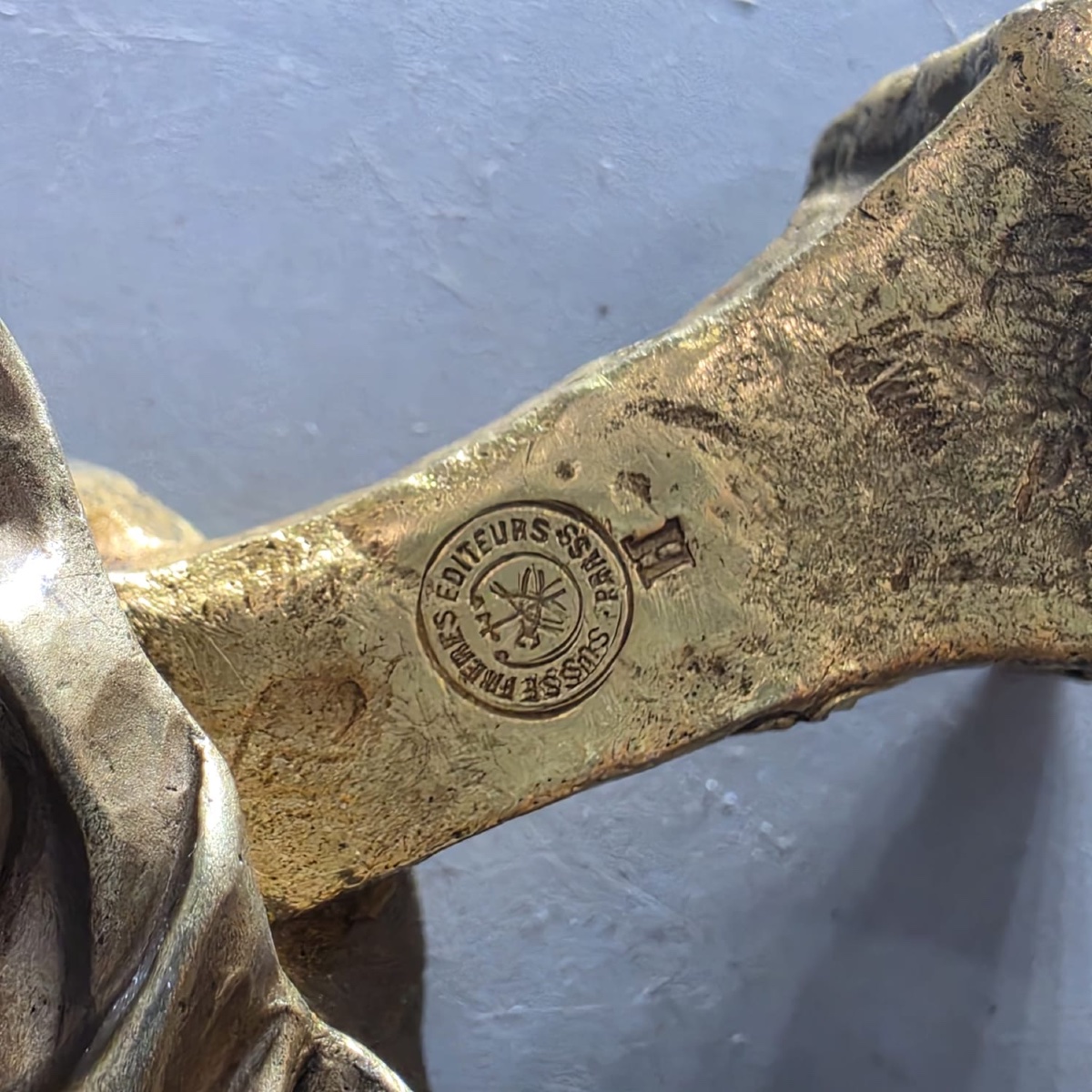
Your sculpture bears the stamp of the foundry and publisher Susse Frères on the reverse, a particularly interesting detail for its attribution and identification. Susse Frères, one of the leading Parisian sculpture publishing houses, widely distributed Barrias’s works in the late 19th and early 20th centuries.
An elegant small chryselephantine bust by Louis-Ernest Barrias (1841–1905) depicting the Young Girl from Bou-Saâda, the artist’s famous Orientalist composition. The face and neck, finely carved from ivory, contrast with the bronze with a golden patina that forms the hairstyle, veil, and clothing. The young woman is depicted beneath a richly crafted veil that delicately frames her face with its fine features and downcast gaze.
This work belongs to one of Barrias’s most famous subjects. The Young Girl from Bou-Saâda was conceived in the late 1880s for the funerary monument of the Orientalist painter Gustave Guillaumet at the Montparnasse Cemetery. The model was exhibited at the Paris Salon in 1890. Barrias drew inspiration in particular from Guillaumet’s work depicting the women of Bou-Saâda, while giving his sculpture a more refined and decorative interpretation.
The choice of precious materials characterizes the chryselephantine elements of this composition: ivory is used for the skin tones, while bronze—often gilded or given various patinas—highlights the costume, hair, and veil. This combination of materials, inspired by the ancient chryselephantine tradition, allows Barrias to give the figure a particularly precious and refined appearance.
The model enjoyed significant commercial success and was produced in various sizes and variations by Susse Frères. In particular, there are documented examples of chryselephantine sculptures measuring approximately 18 cm with an ivory face, double-patinated bronze, and the Susse Frères mark, which closely match the type of your piece.
Your sculpture bears the stamp of the foundry and publisher Susse Frères on the reverse, a particularly interesting detail for its attribution and identification. Susse Frères, one of the leading Parisian sculpture publishing houses, widely distributed Barrias’s works in the late 19th and early 20th centuries.
1 180 €
Period: 19th century
Style: Art Nouveau
Condition: Excellent condition
Length: 5,5
Height: 8
Depth: 4
Reference (ID): 1826308
Availability: In stock
Print