

"aux Maréchaux" Clock, Late 18th-century Empire Period, Fayzant, Paris
Clock known as the “aux Maréchaux” — Directoire/Consulate period, circa 1795–1805
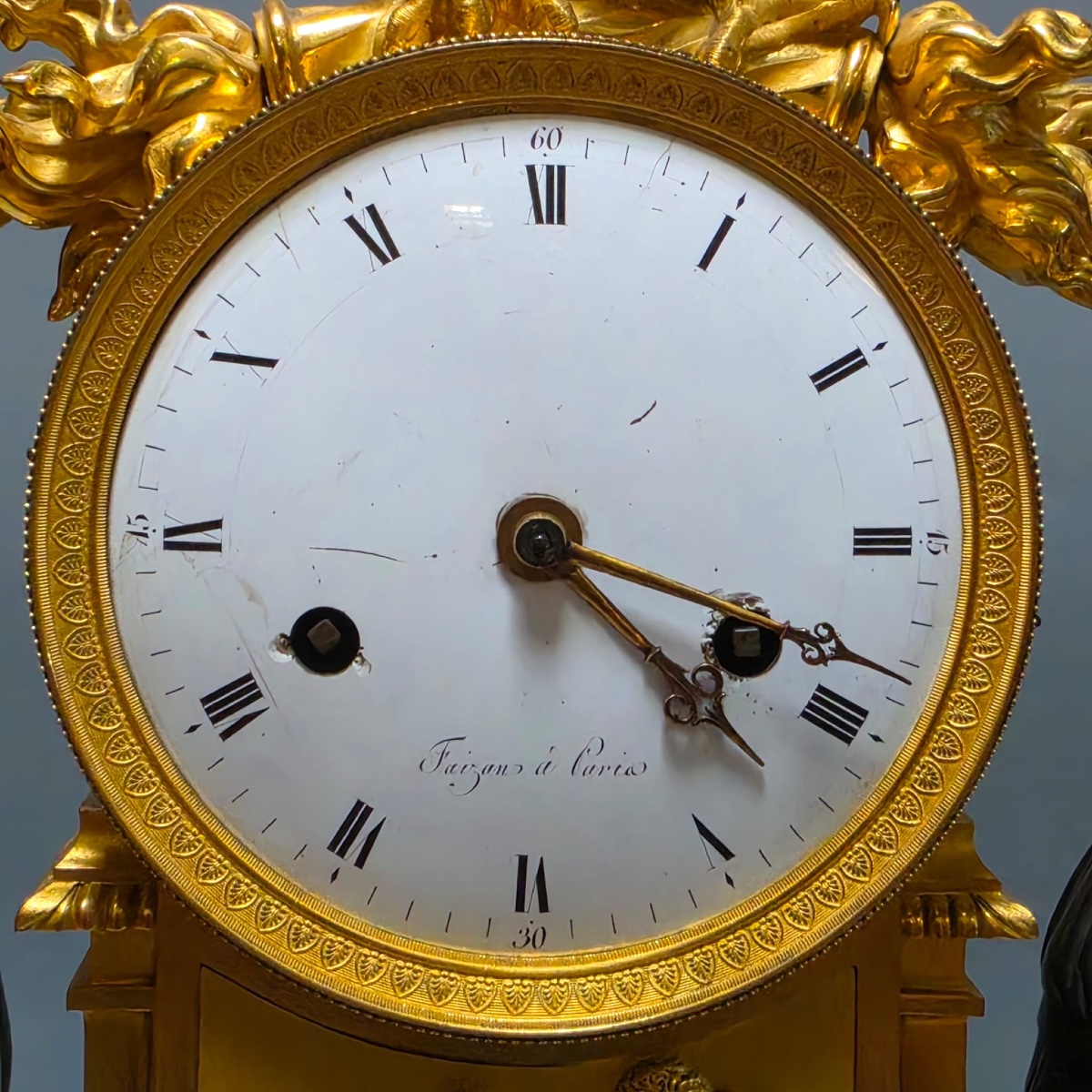
Fayzant, clockmaker in Paris
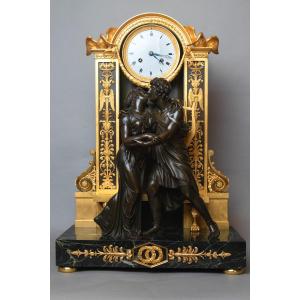
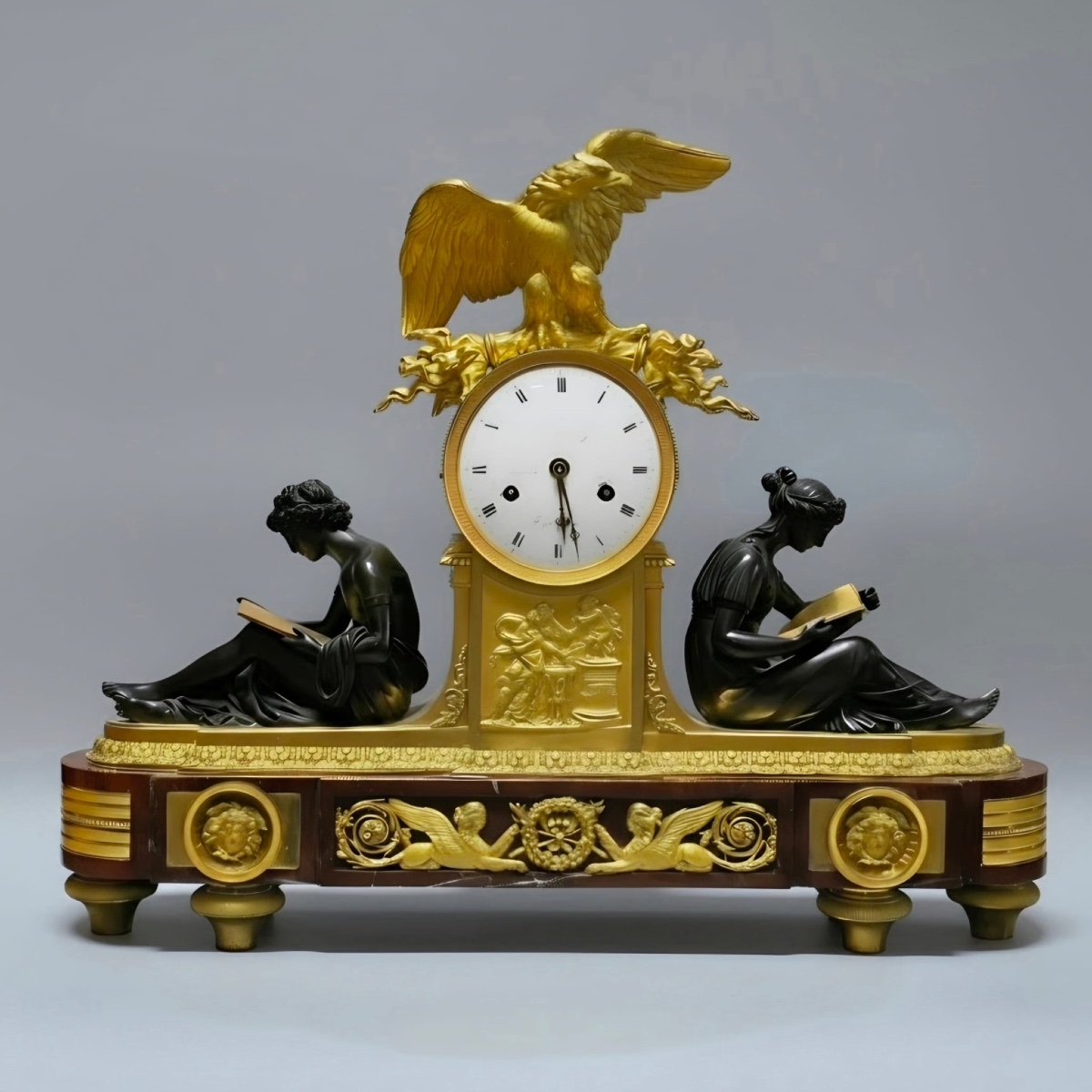
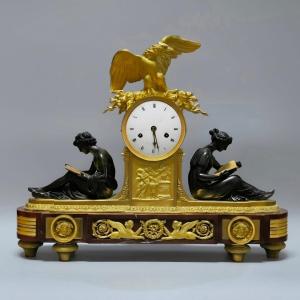
An important mantel clock known as the “aux Maréchaux,” crafted in finely chiseled and gilded bronze, featuring a rich allegorical composition characteristic of the grand, prestigious clocks of the late 18th century and the very early years of the 19th century.
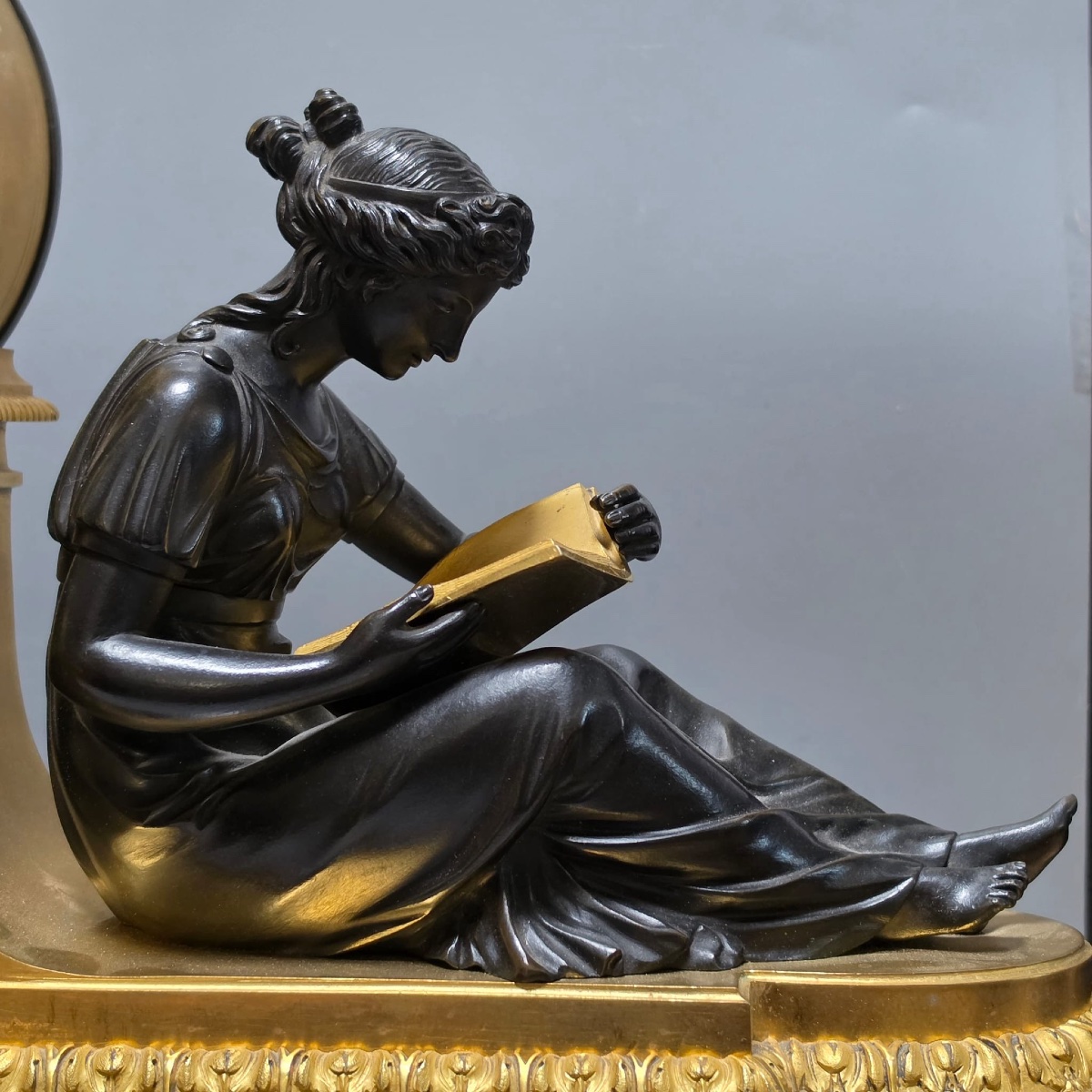
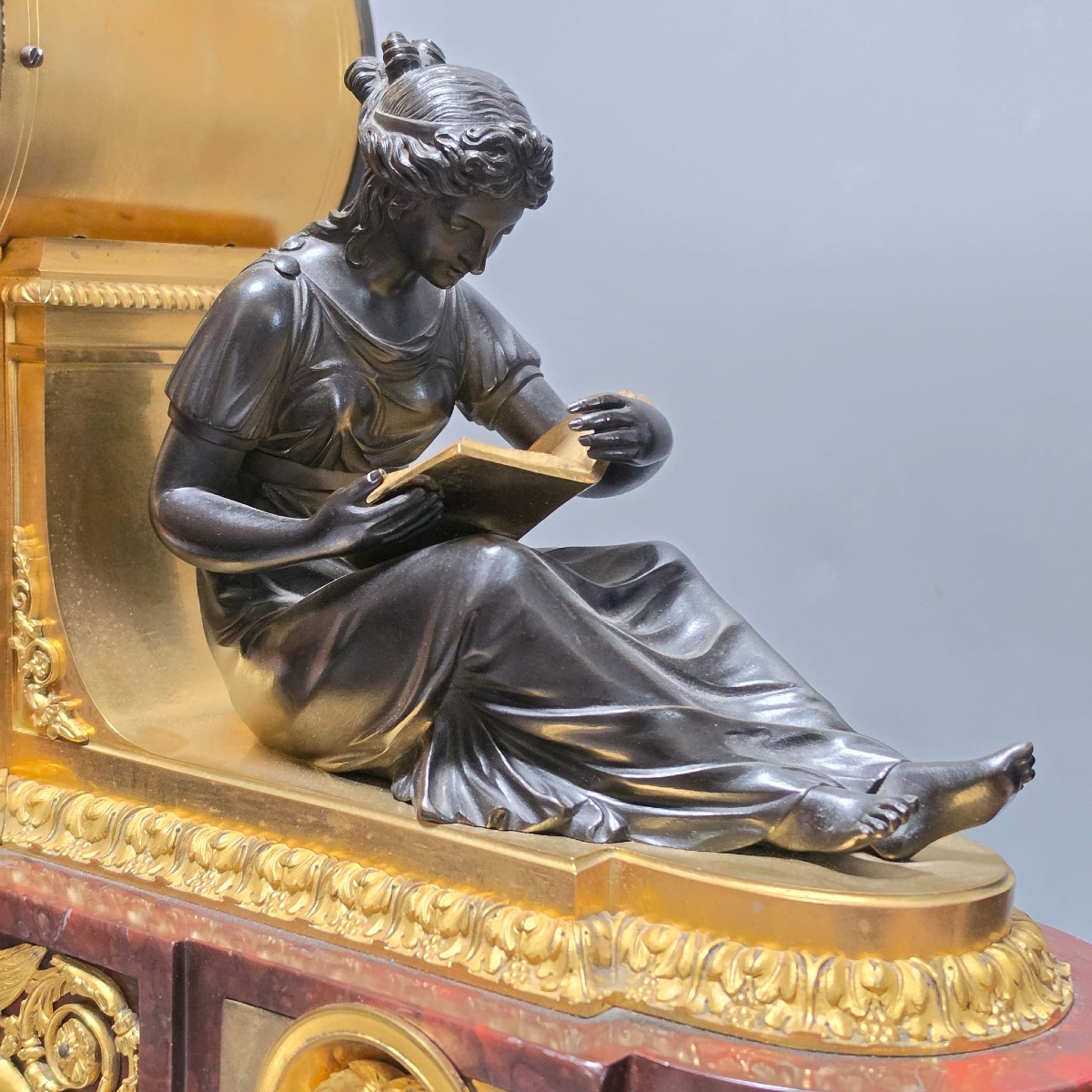
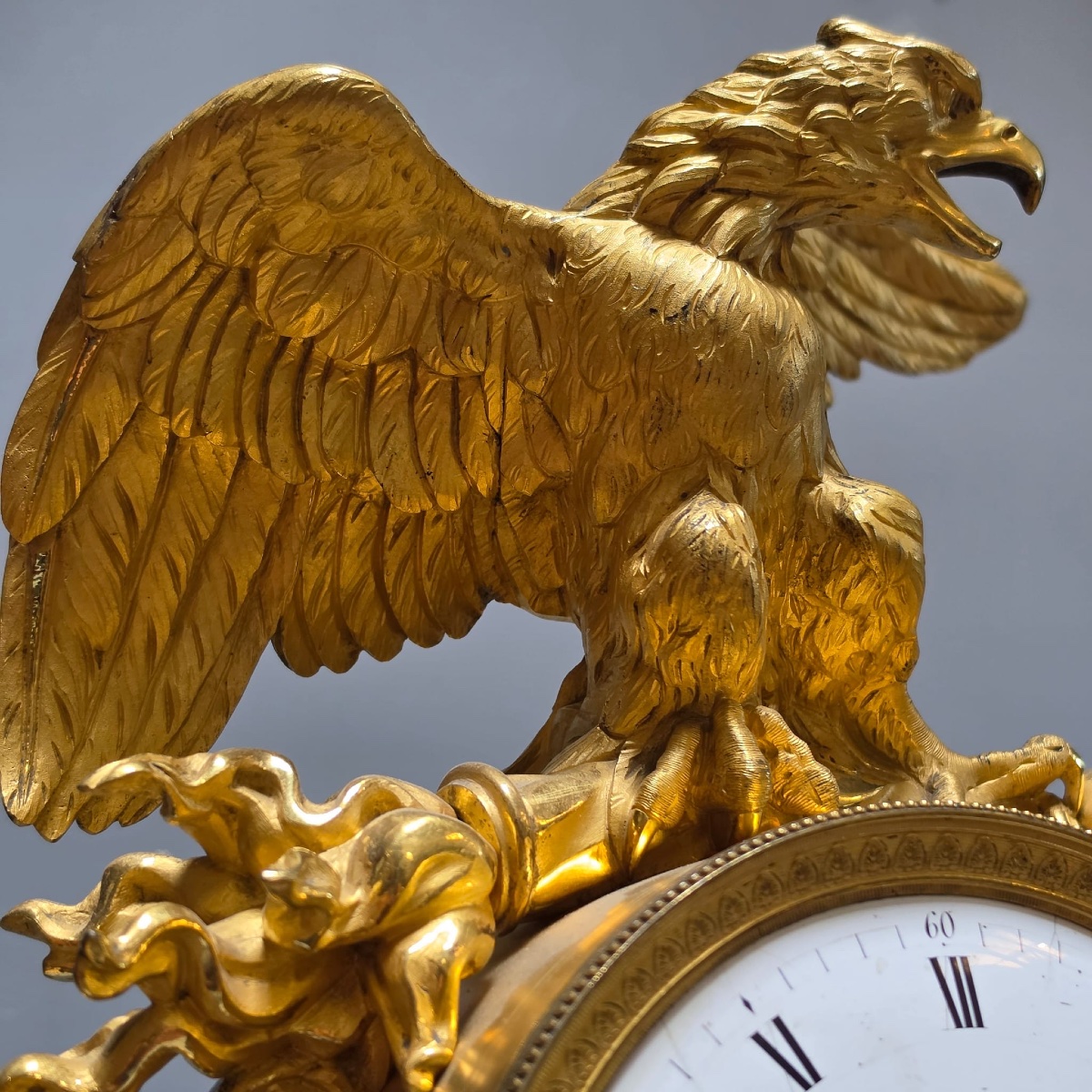
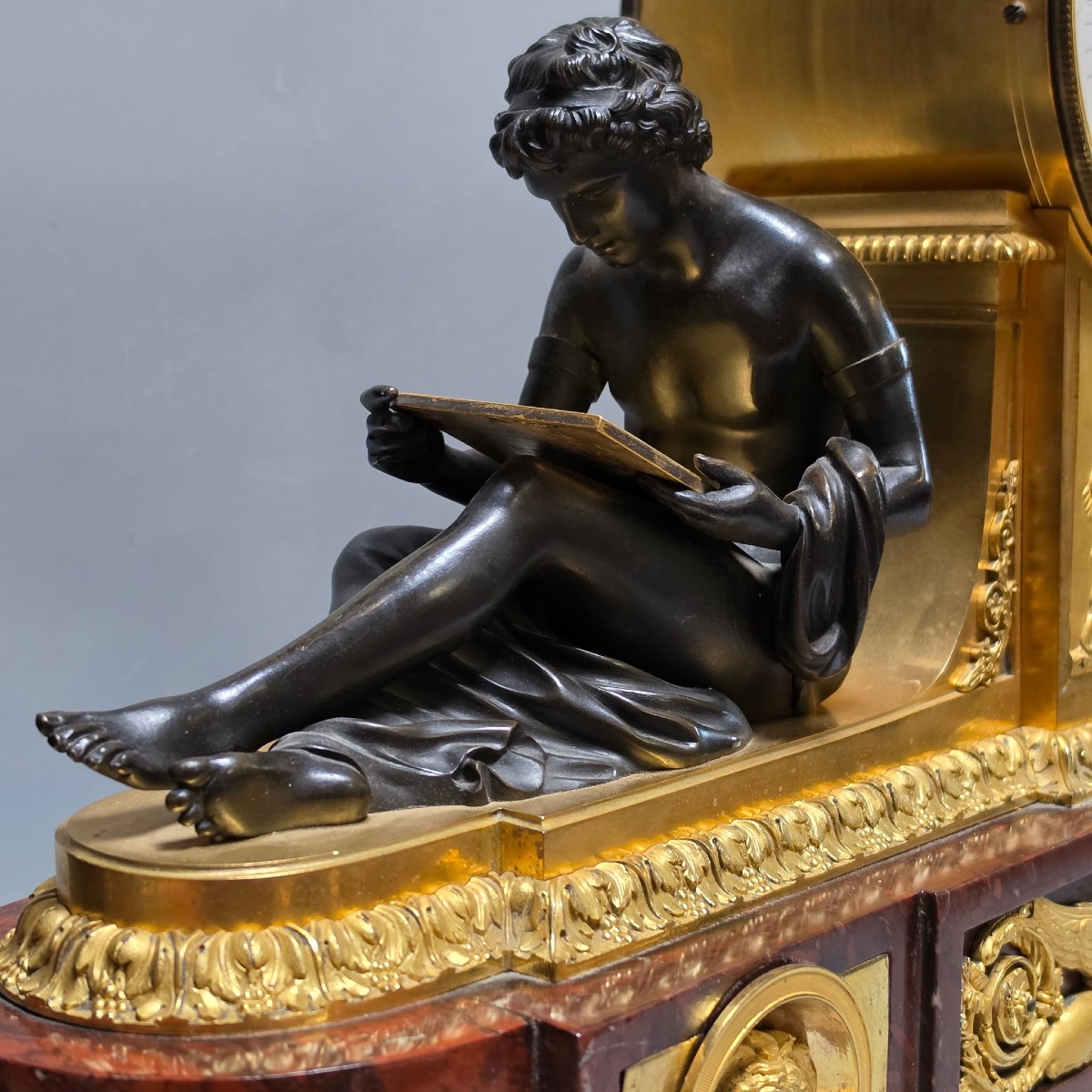
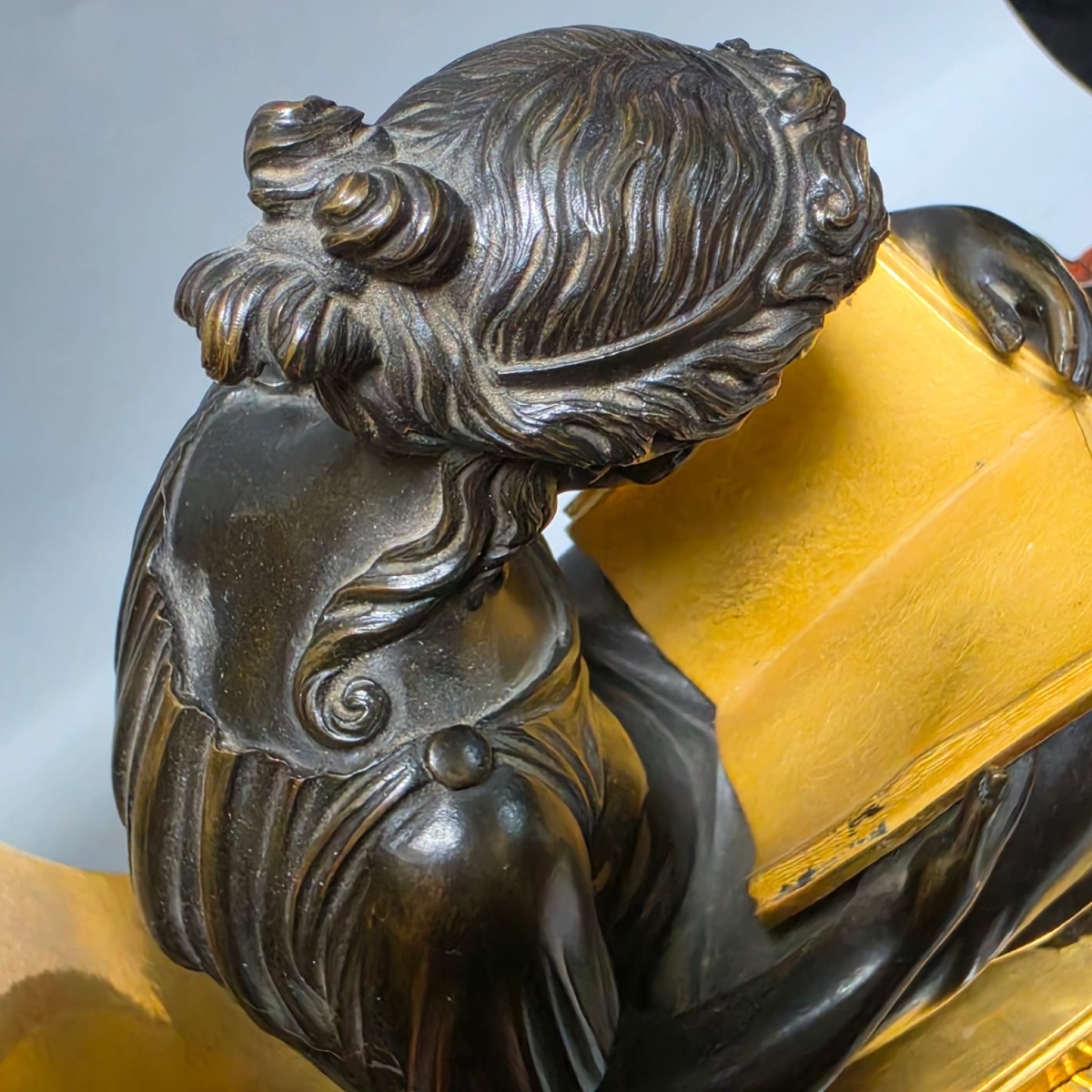
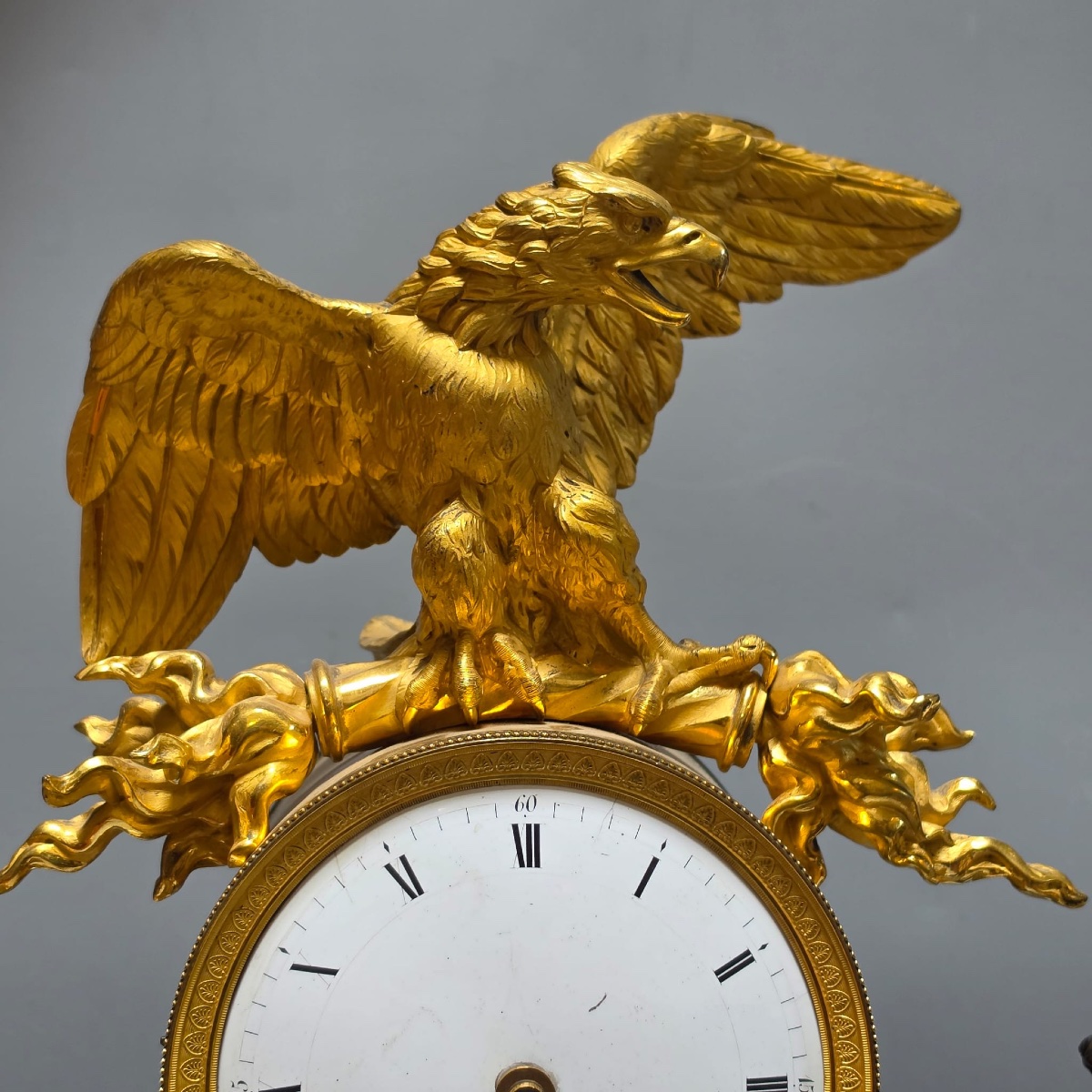
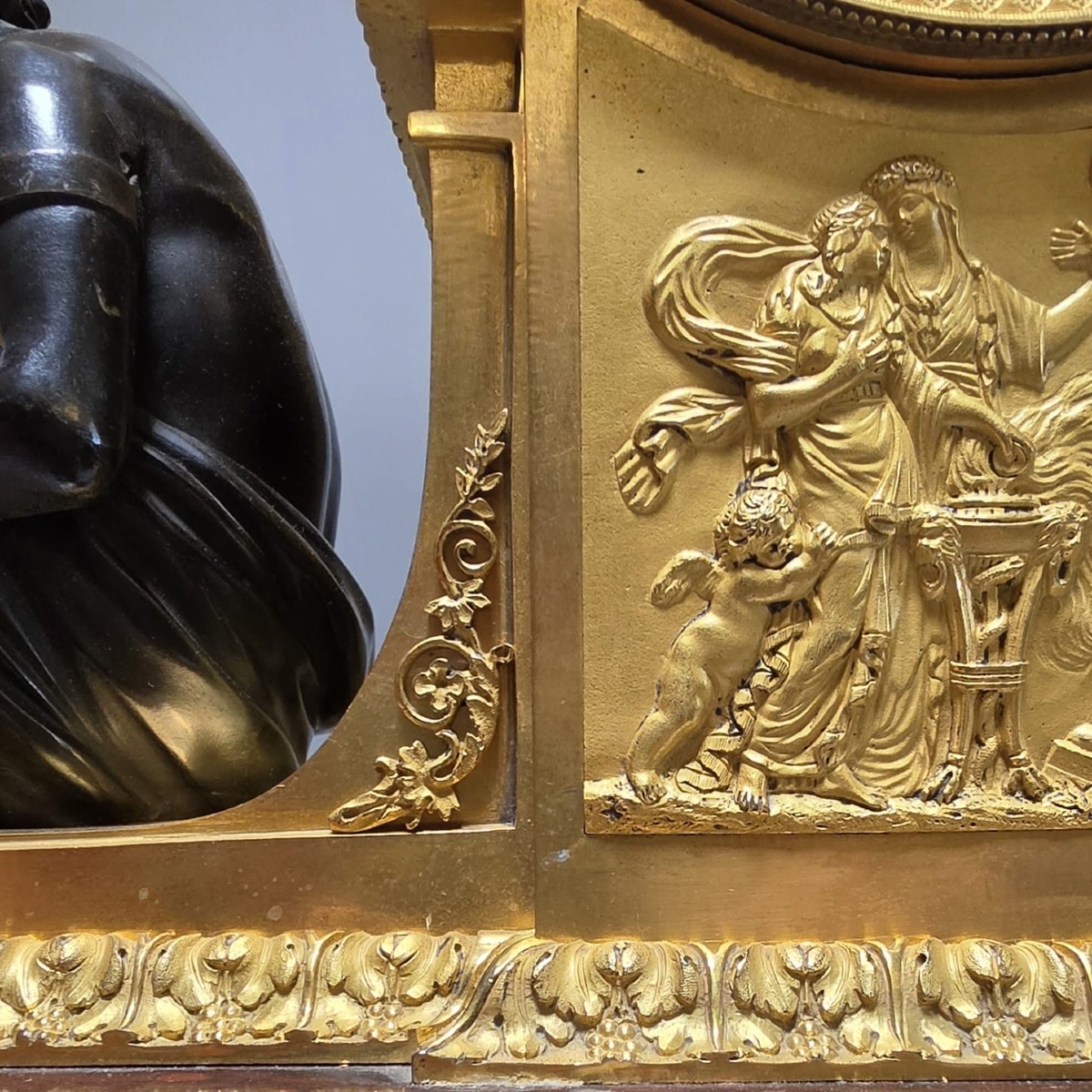
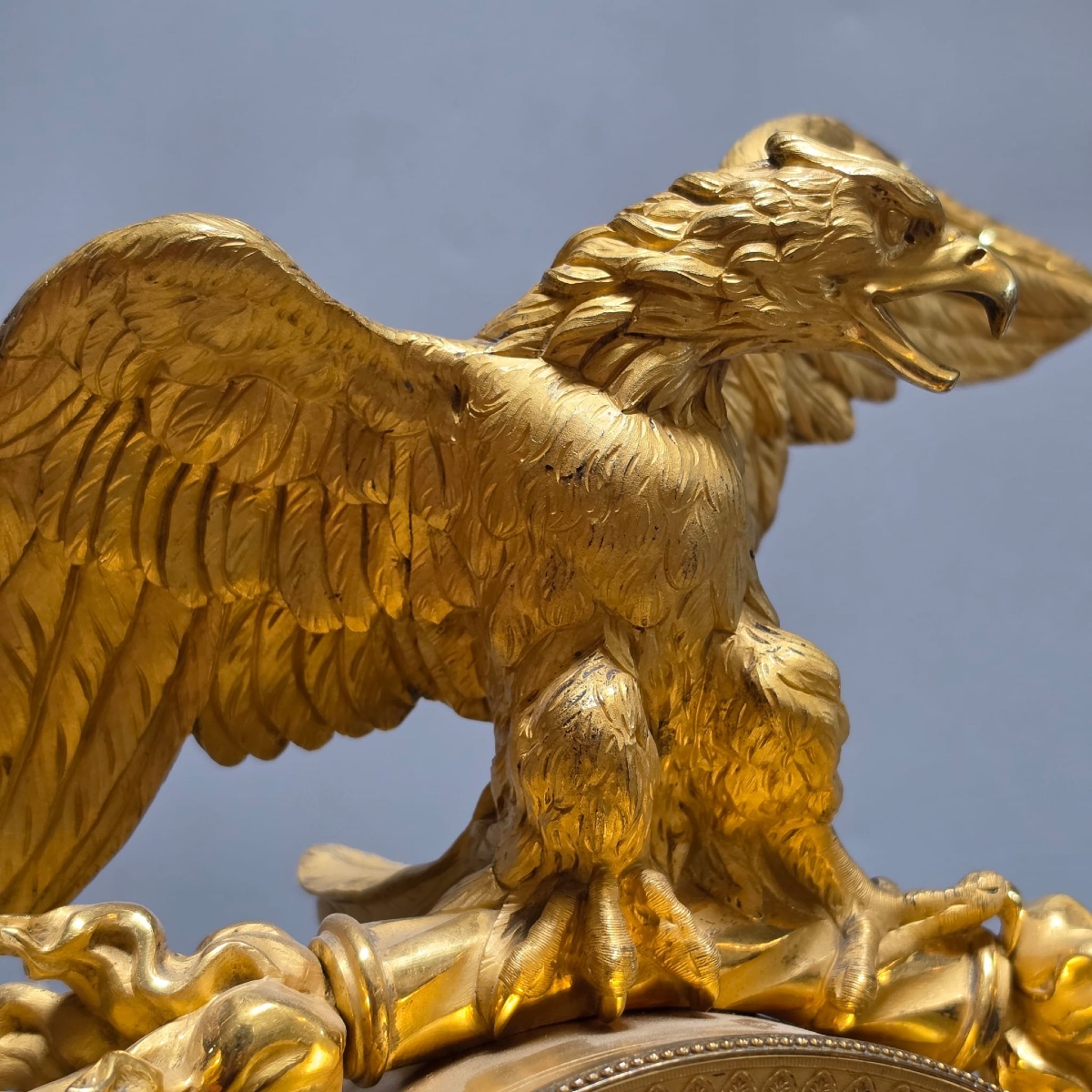
The movement is set within the center of an architectural frame, surmounted by an eagle with outspread wings—a symbol of power and victory—perched on a thunderbolt. On either side of the dial are two elegant female figures in bronze with a dark patina, depicted seated and absorbed in reading and study. This pairing refers to the allegories of Study and Philosophy, which also gave this model its other name.
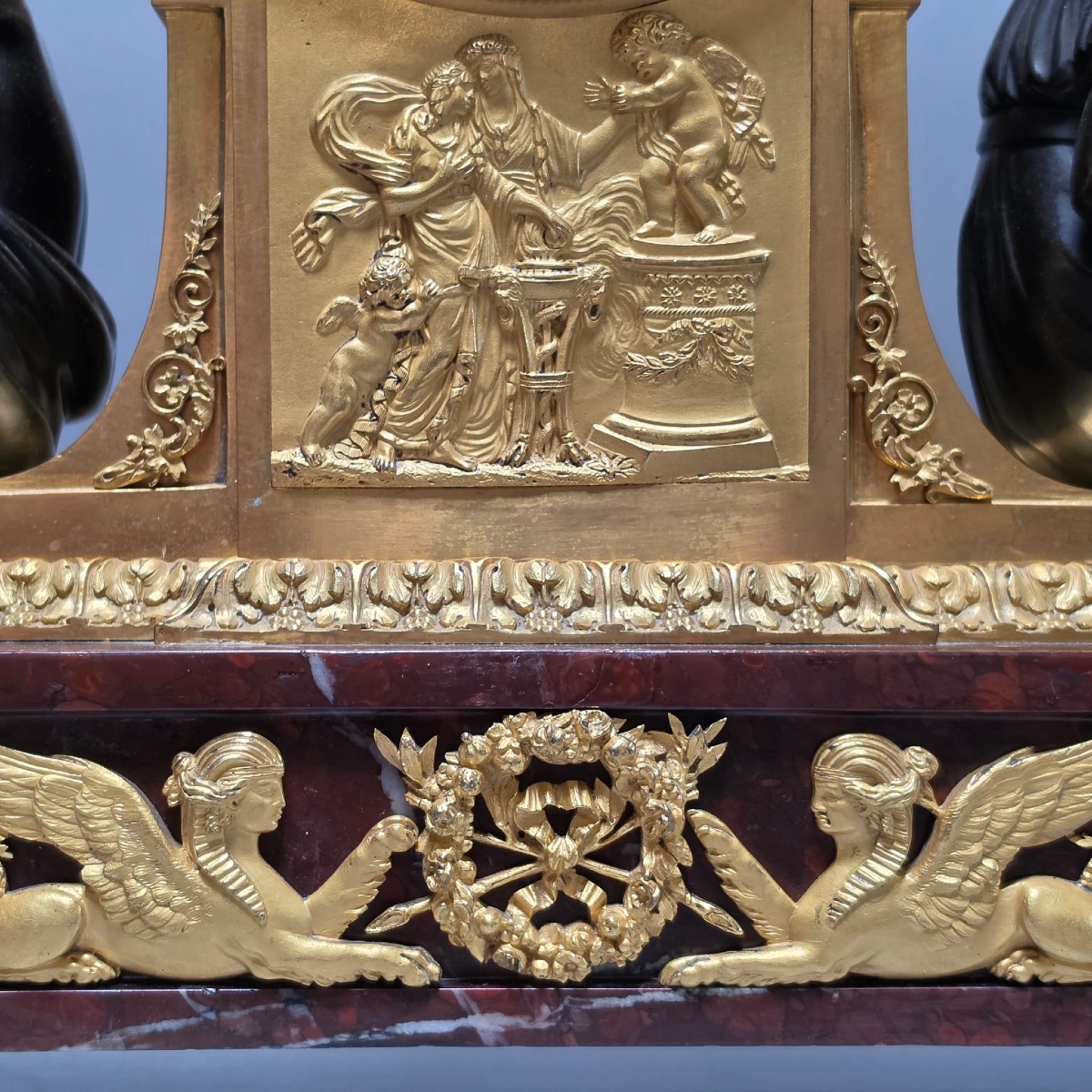
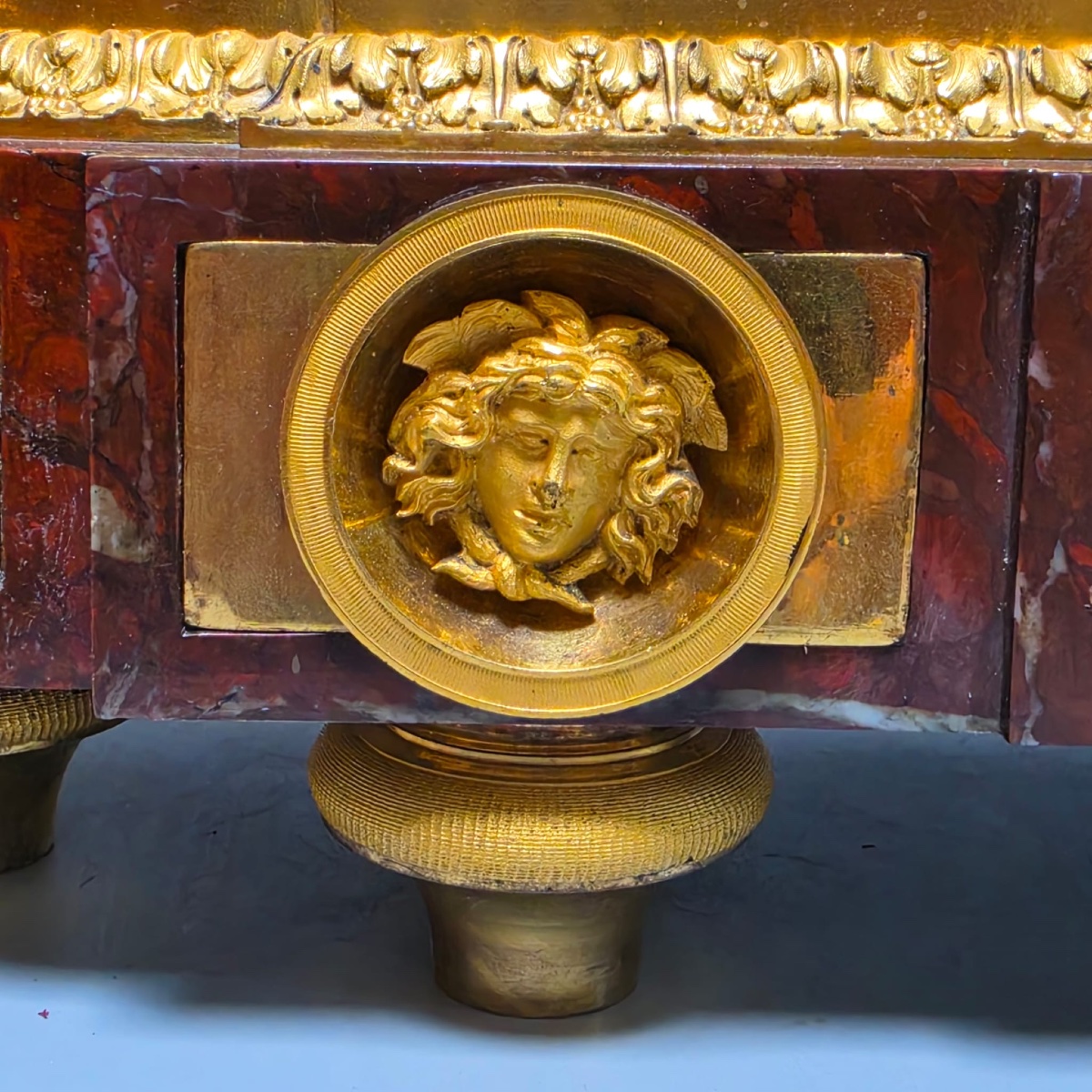
The contrast between the patinated bronze figures, the gilded ornamentation, and the dark marble of the pedestal accentuates the monumental appearance of the ensemble. The base is richly adorned with friezes, foliage, allegorical attributes, masks, and motifs inspired by the neoclassical decorative repertoire. The entire piece rests on a large marble terrace, accented with gilded bronze elements.
This model dates back to the final years of Louis XVI’s reign. The haberdasher Dominique Daguerre developed the concept based on figures designed by the sculptor Simon-Louis Boizot for the Sèvres Porcelain Manufactory. The Parisian bronze castor François Rémond contributed to its design and execution around 1784–1785. These clocks subsequently enjoyed remarkable popularity during the Directory, the Consulate, and especially the Empire.
The name “Maréchaux clock” became established in the 19th century due to the presence of this type of clock in the collections of several dignitaries and marshals of the Empire. The model saw numerous variations and was particularly prized in libraries, studies, and the interiors of grand residences. Today, it stands as one of the most iconic models symbolizing the transition from the Louis XVI style to the decorative language of the First Empire.
—It is worth noting that a clock of this model, made by the same clockmaker, appears in the posthumous inventory of Marshal Ney, Prince of Moskowa and Duke of Elchingen. It draws direct inspiration from a preparatory drawing attributed to the Parisian bronze casters François Rémond (1747–1812).
Period: 19th century
Style: Consulat, Empire
Condition: Excellent condition
Length: 68
Height: 54
Depth: 17.5
Reference (ID): 1826496
Availability: In stock