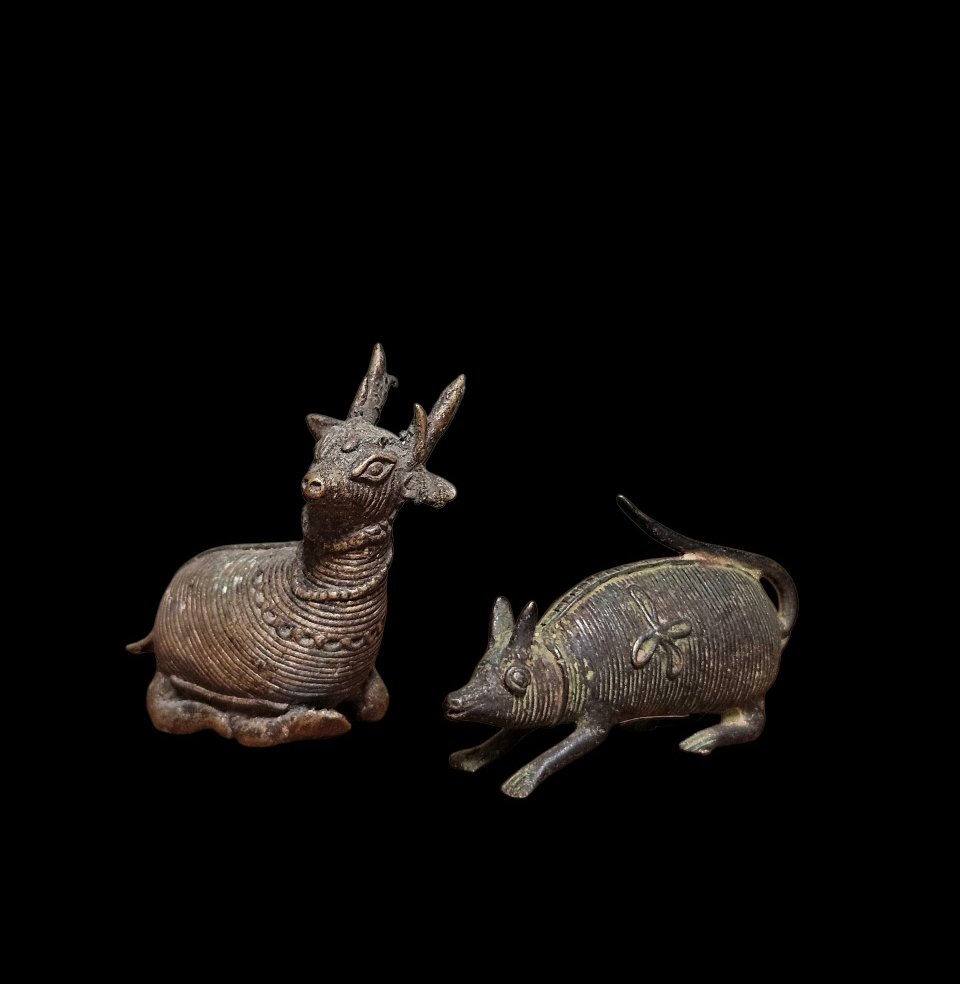

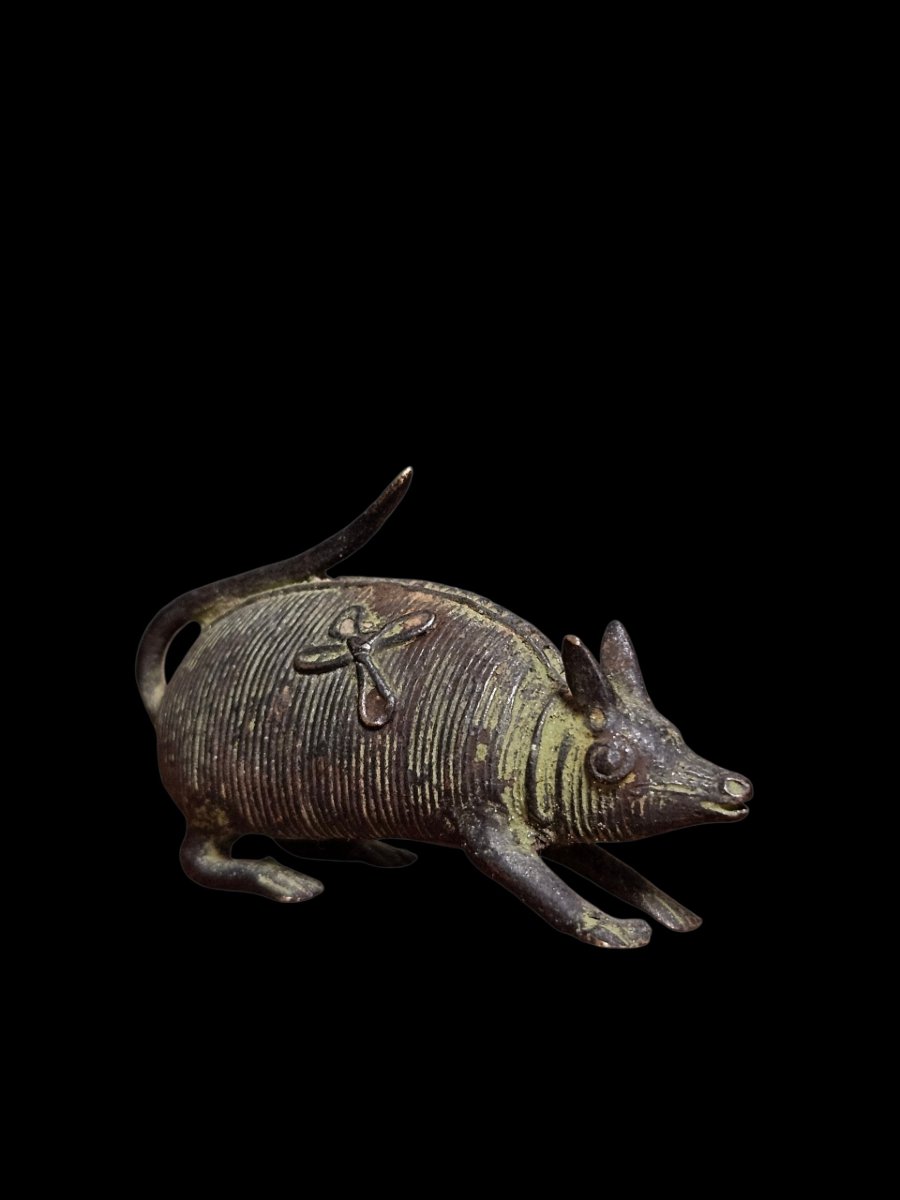
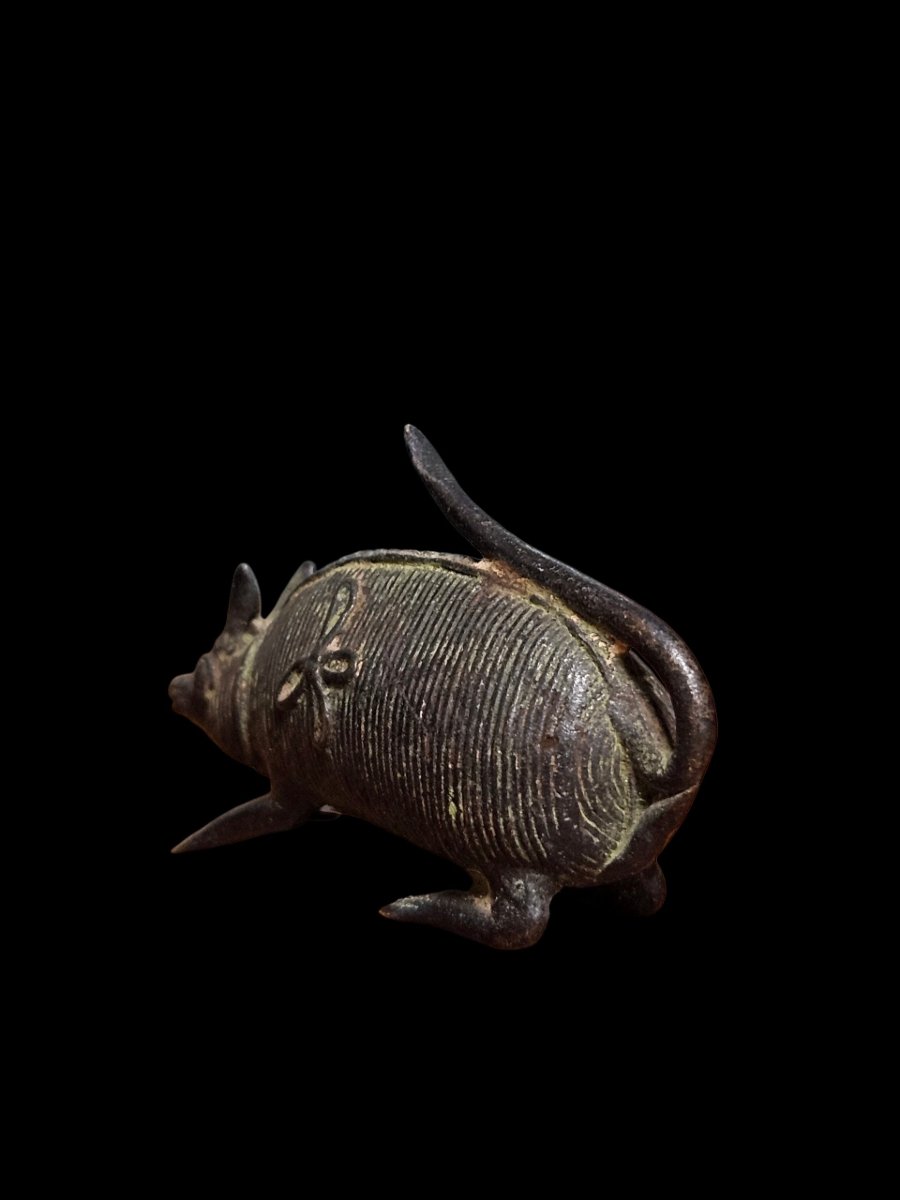
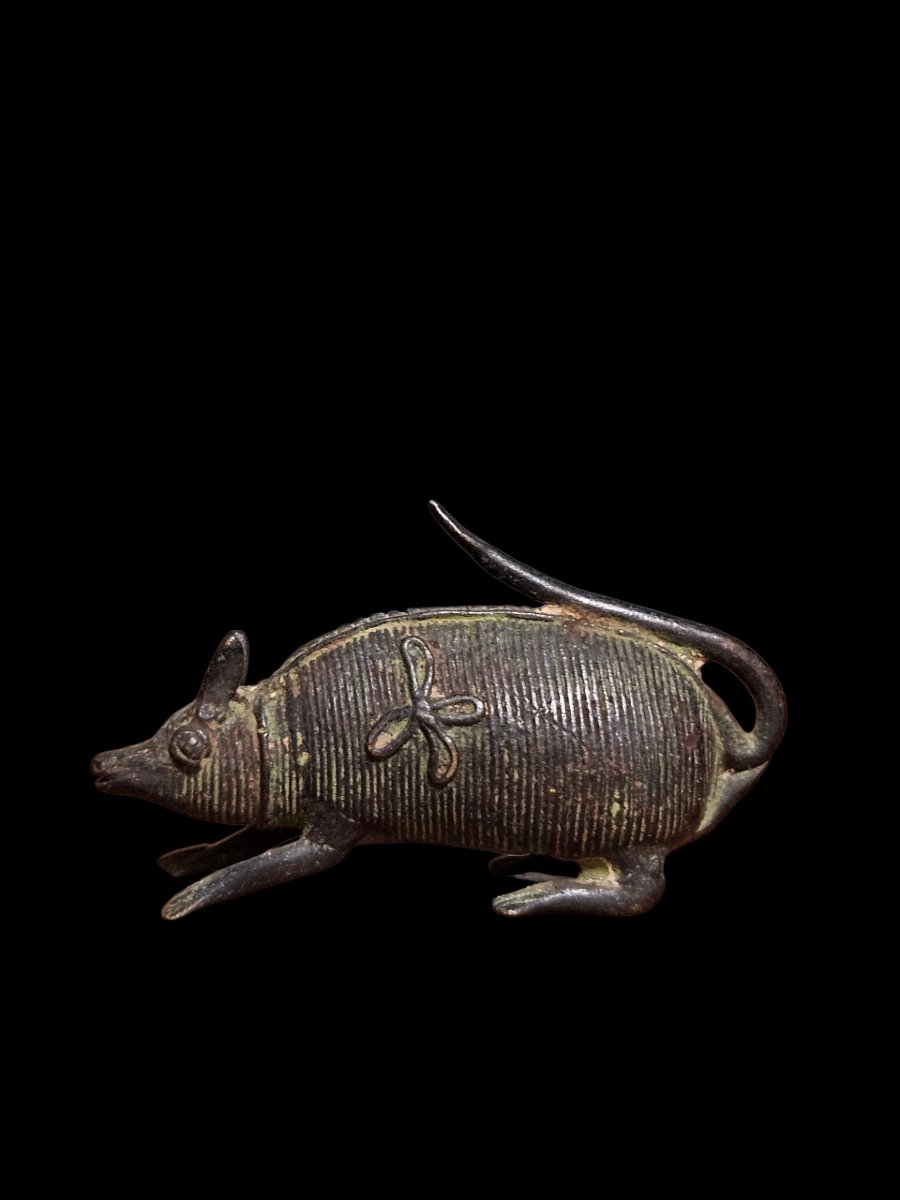
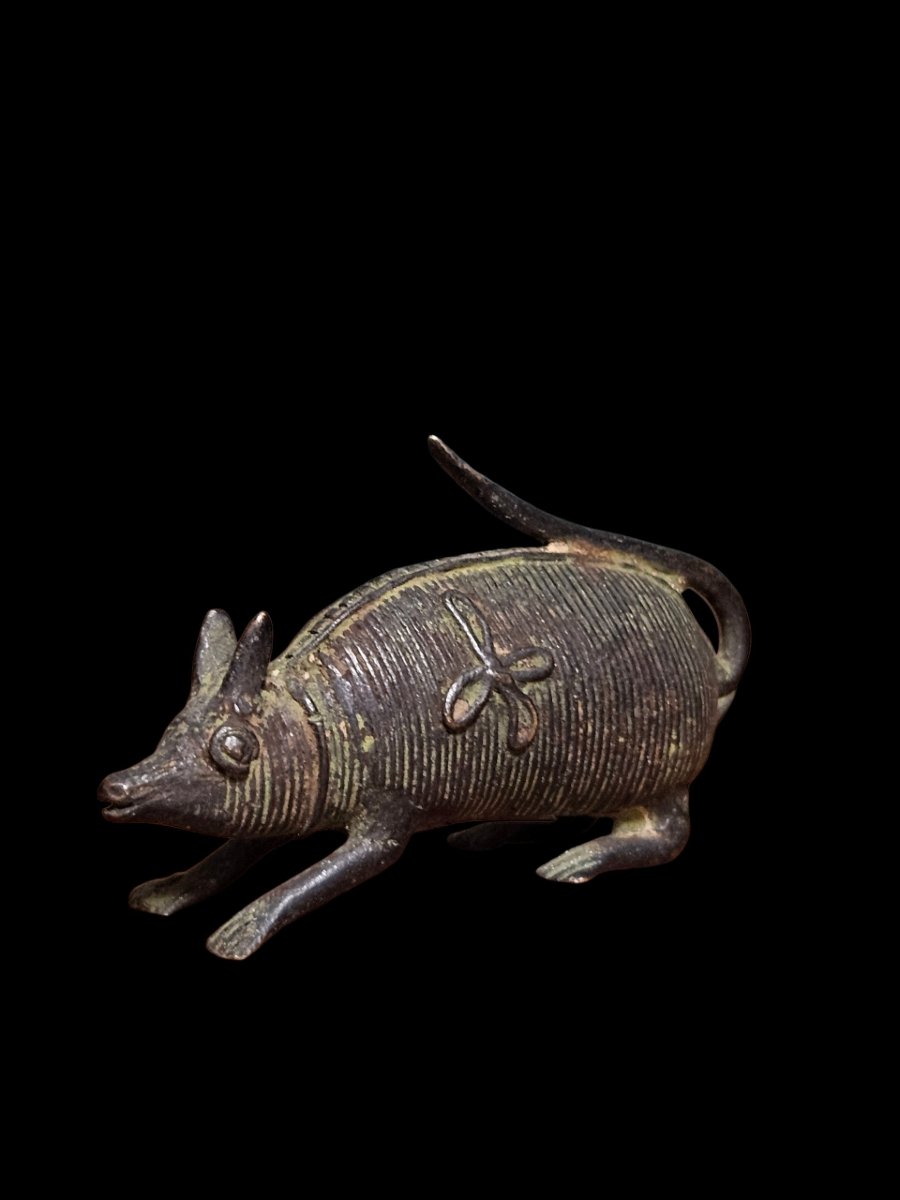
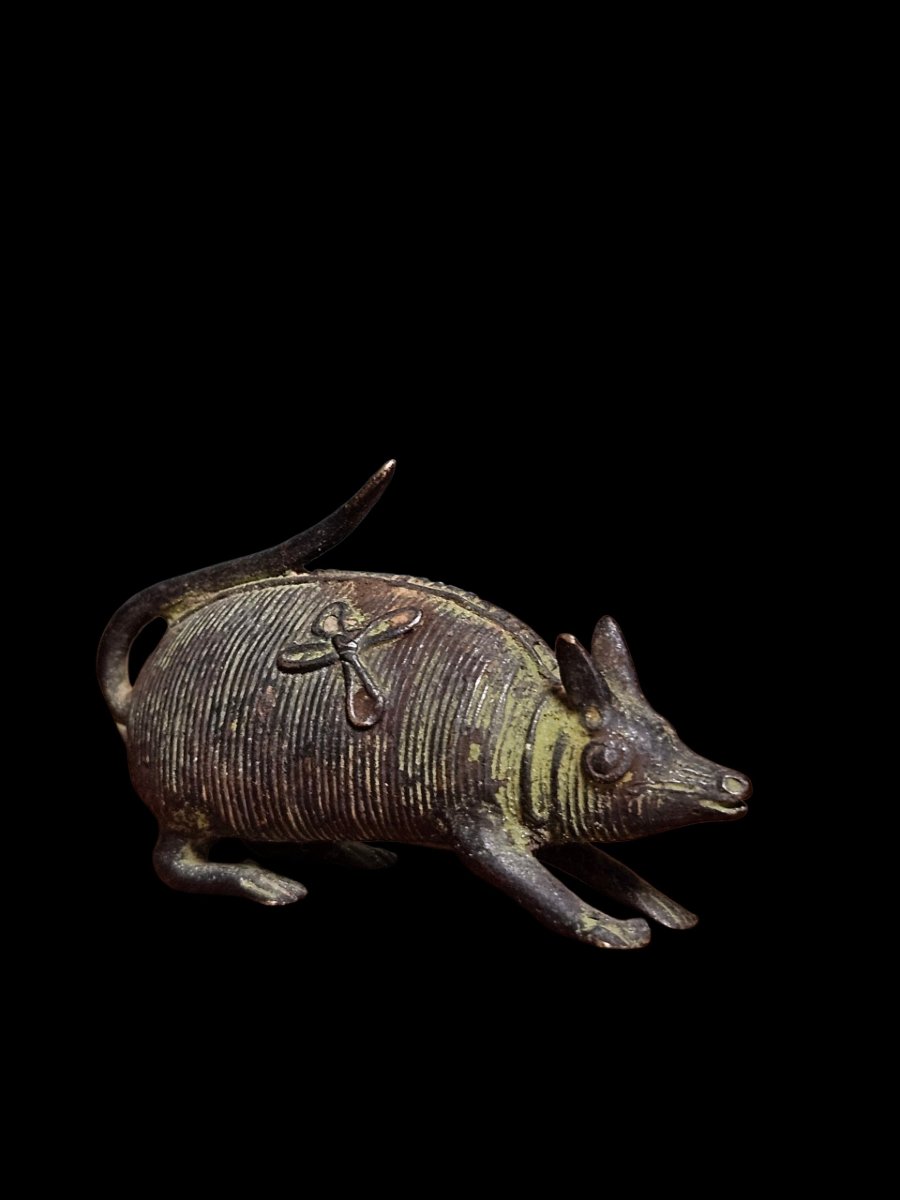


Votive Figurines From The Kondh Culture, Odisha, Eastern India. 20th Century
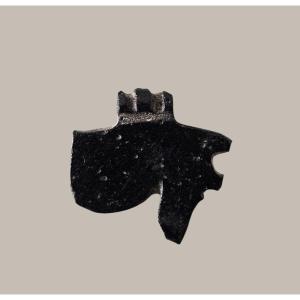
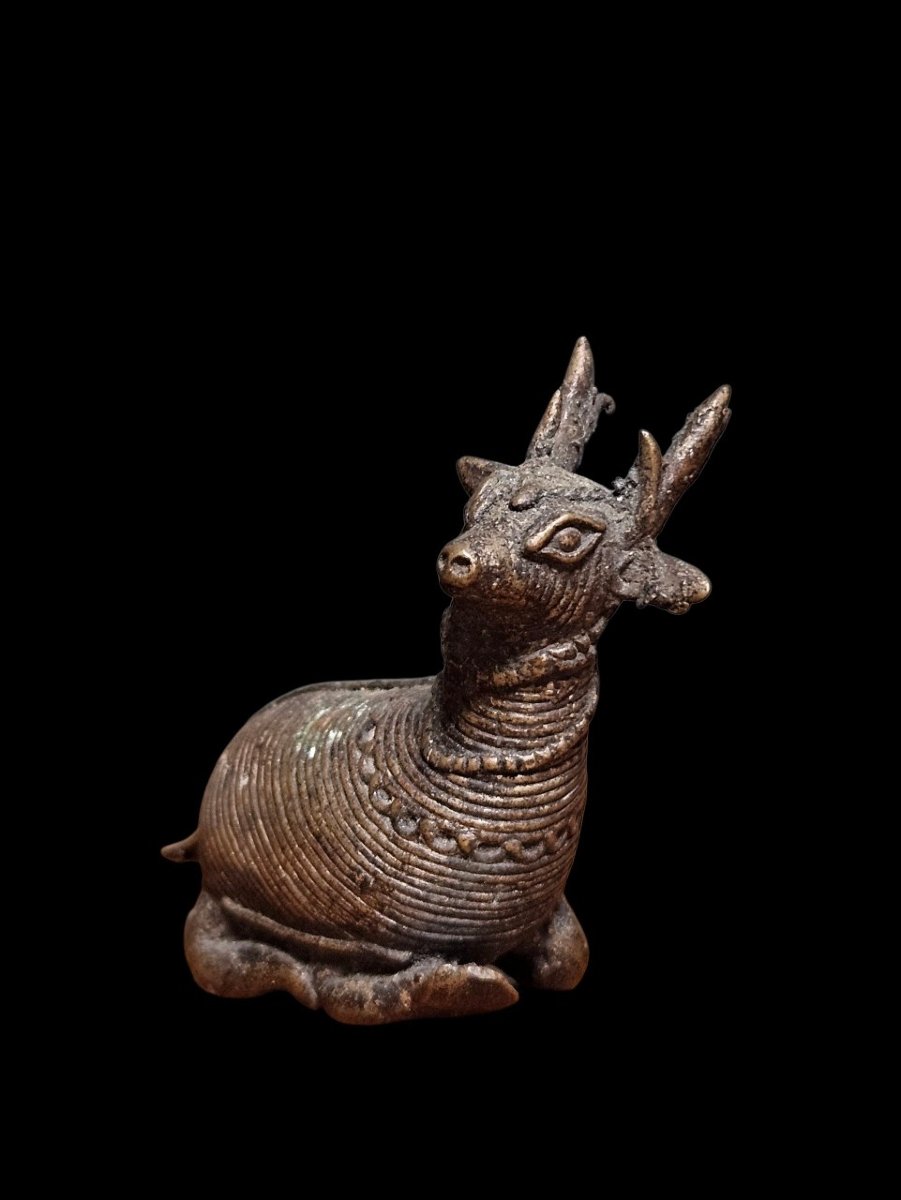
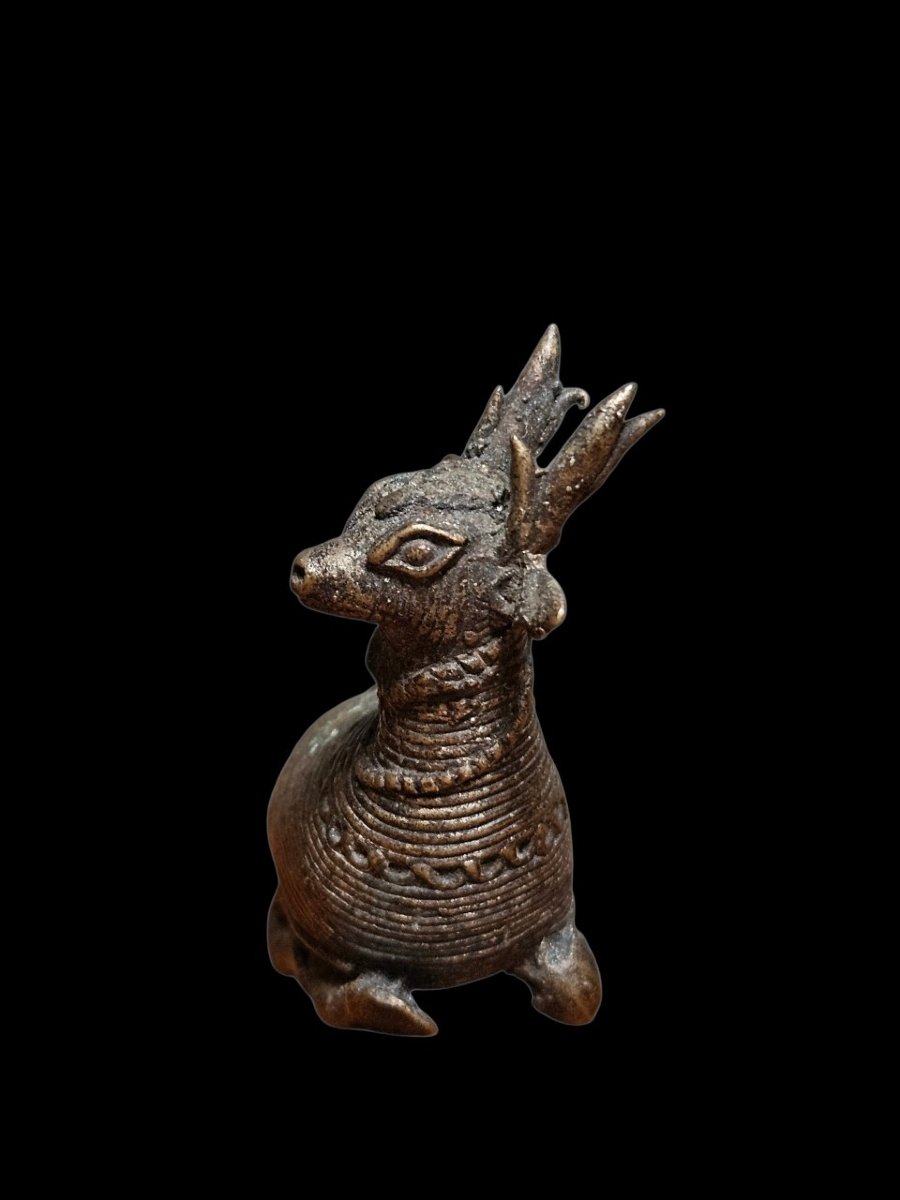
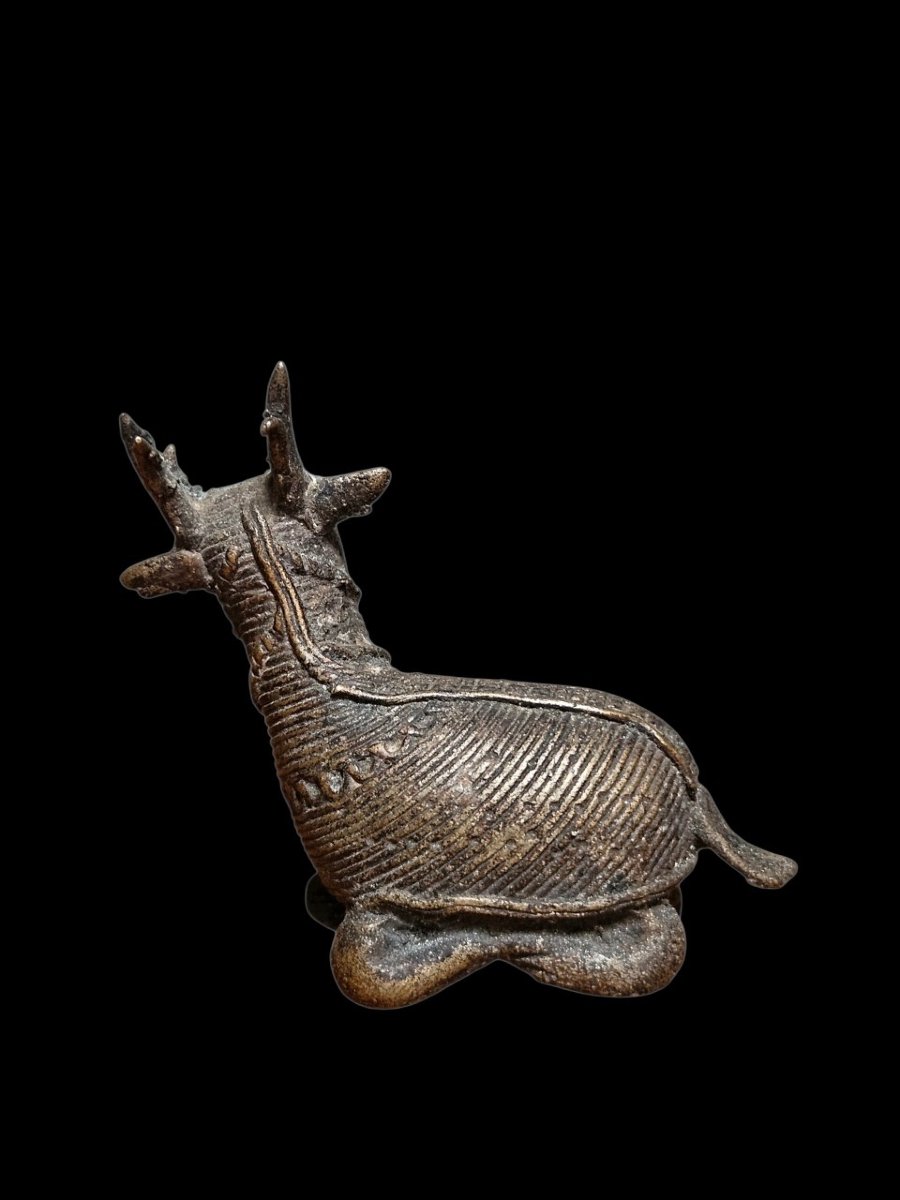
No. 1 — Votive figurine depicting a reclining deer
Copper alloy with a brown patina, cast hollow using the lost-wax method according to the Dhokra technique. Signs of age and minor casting irregularities.
Kondh culture, Odisha, eastern India.
20th century, likely the first half.
Dimensions: 6.2 × 6.5 cm.
Provenance: acquired in India by the father of its former owner in the 1960s–1970s.
In the Kondh tradition, the deer belongs to the forest world and symbolizes fertility, abundance, and a successful hunt. These small figurines might have been kept near the hearth, displayed during ceremonies, or placed as votive offerings.
No. 2— Votive figurine depicting a rat
Copper alloy with a brown patina, hollow cast using the lost-wax method according to the Dhokra technique. Signs of age and minor casting irregularities.
Kondh culture, Odisha, eastern India.
20th century, likely the first half.
Dimensions: 4 × 7.1 × 2 cm.
Provenance: acquired in India by the father of its former owner in the 1960s–1970s.
In Kondh culture, these small animal figurines connect the domestic realm to the natural and spiritual worlds. The rat also evokes Mushika, the mount of the god Ganesha, and symbolizes intelligence, agility, and the ability to overcome obstacles. Its compact silhouette, extended by a long, raised tail, gives the object a particularly lively presence.
* Shipping costs upon request
150 €
Period: 20th century
Style: Other Style
Condition: Good condition
Material: Bronze
Length: 6,5 cm
Height: 6,2 cm
Reference (ID): 1840734
Availability: In stock
Print