

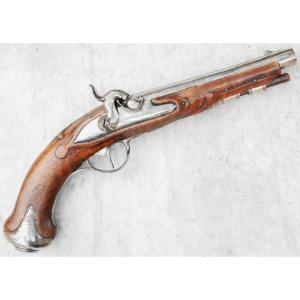


18th-century French Officer's Pistol Converted To Percussion In The 19th Century Sdd26pis003
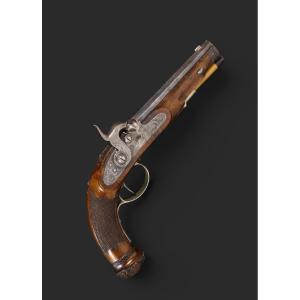
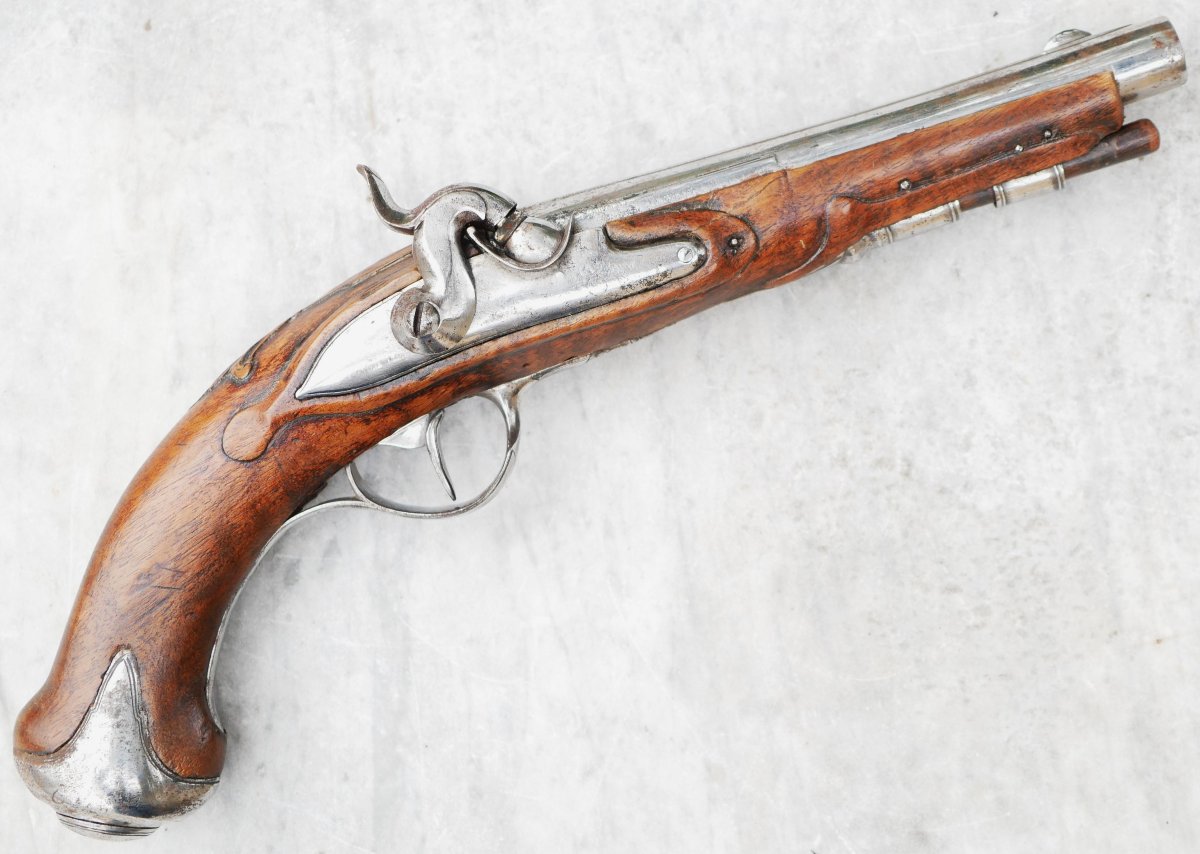
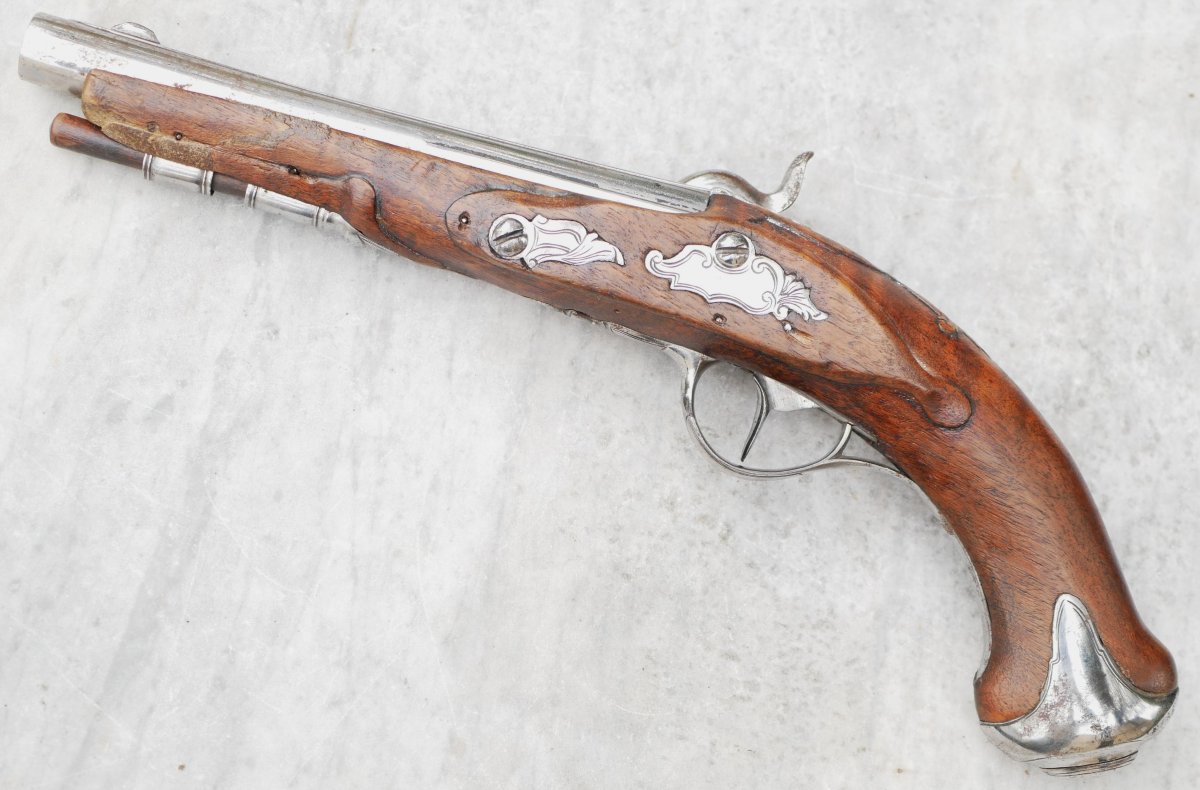
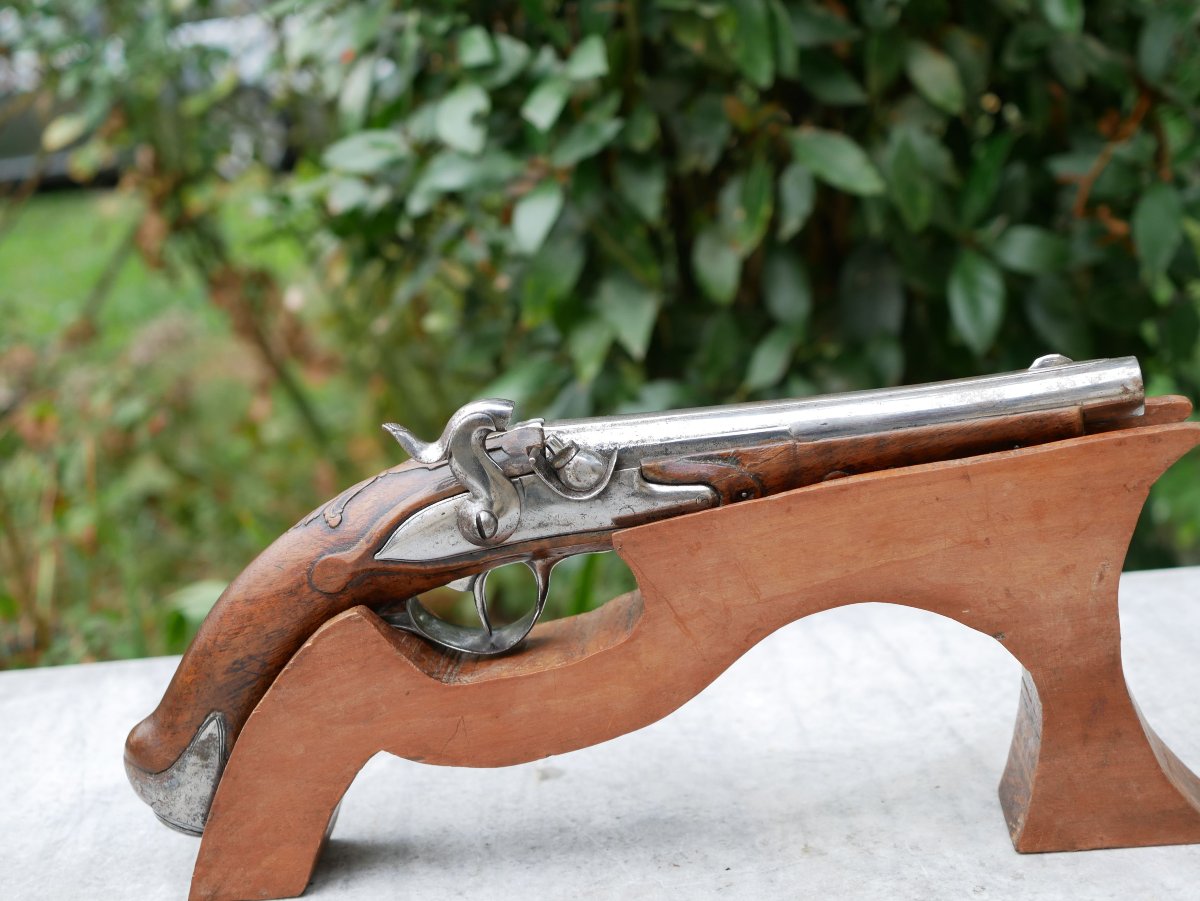
French officer’s pistol from the second half of the 18th century, originally flintlock, then converted to percussion during the 19th century, illustrating the evolution of firearms technology and the adaptation of antique weapons to new firing mechanisms.
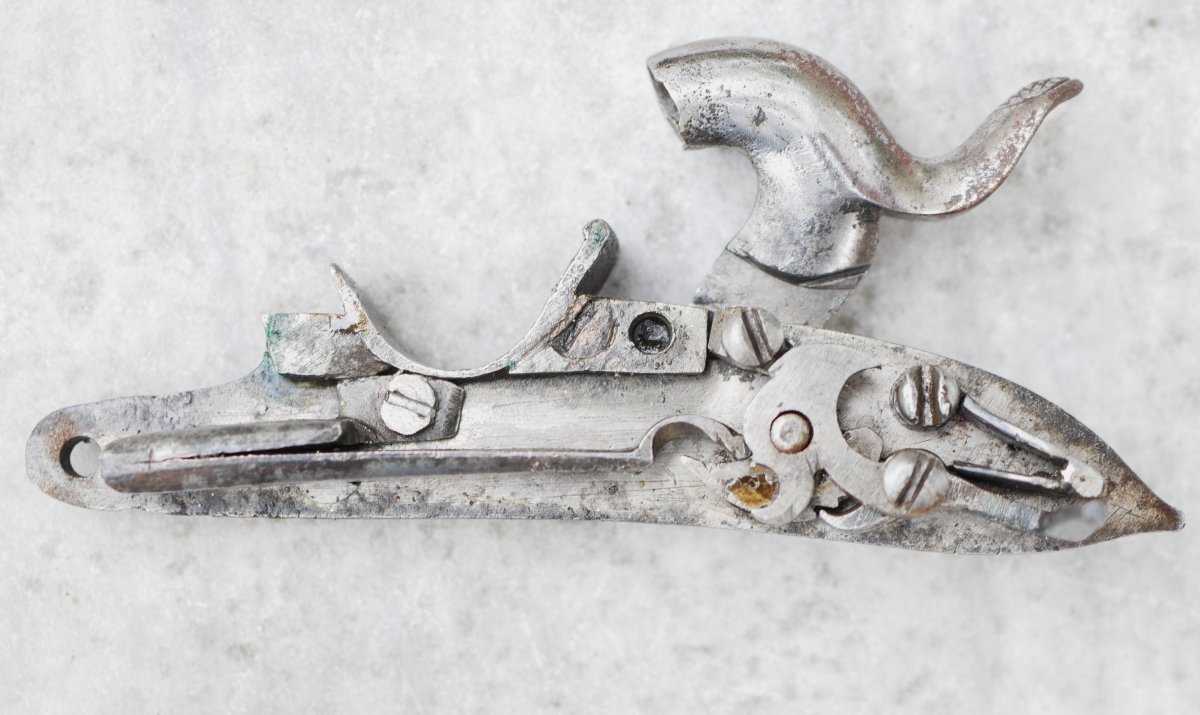
Originally, this pistol was equipped with a flintlock mechanism. In the 19th century, with the spread of the percussion system and the fulminate primer, many older firearms were converted to extend their service life. This historical conversion now serves as an interesting testament to the transition between two generations of firing mechanisms.
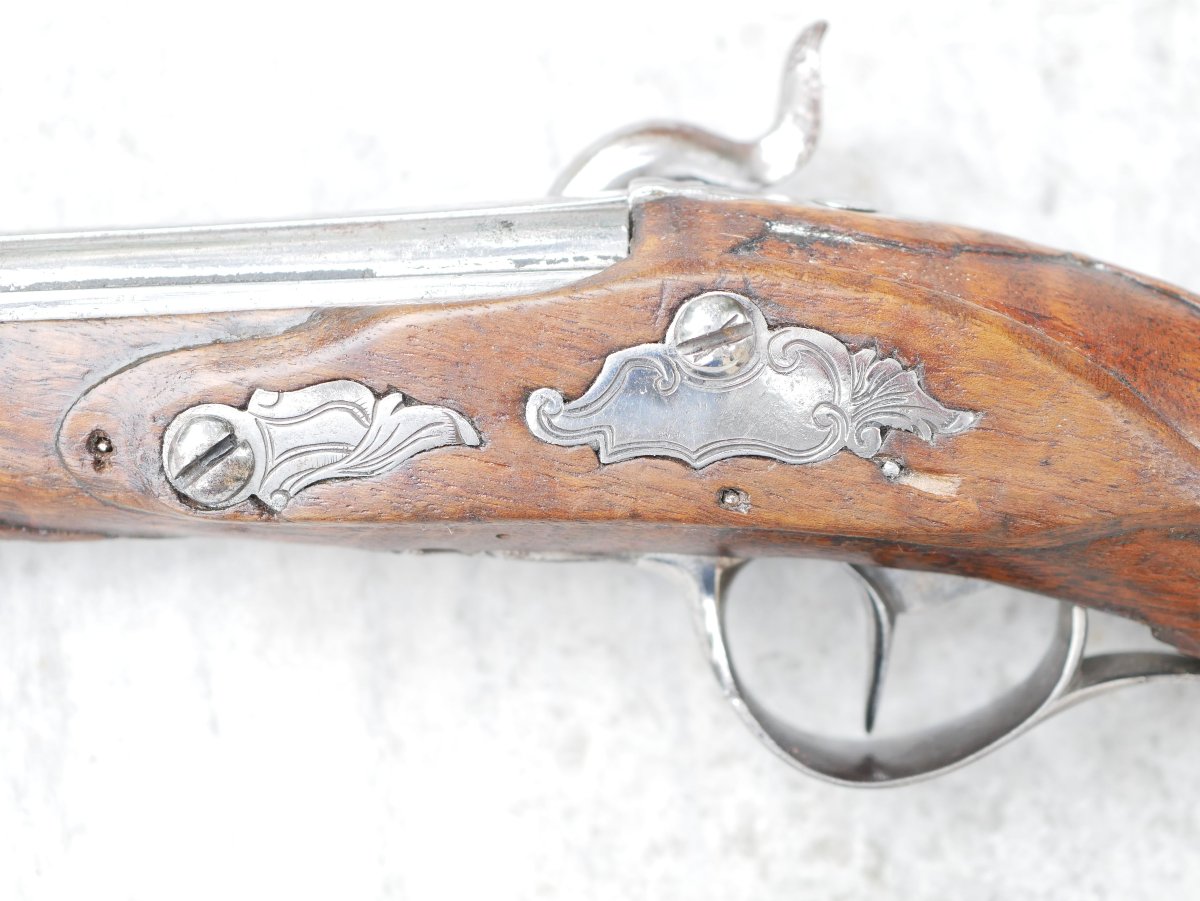
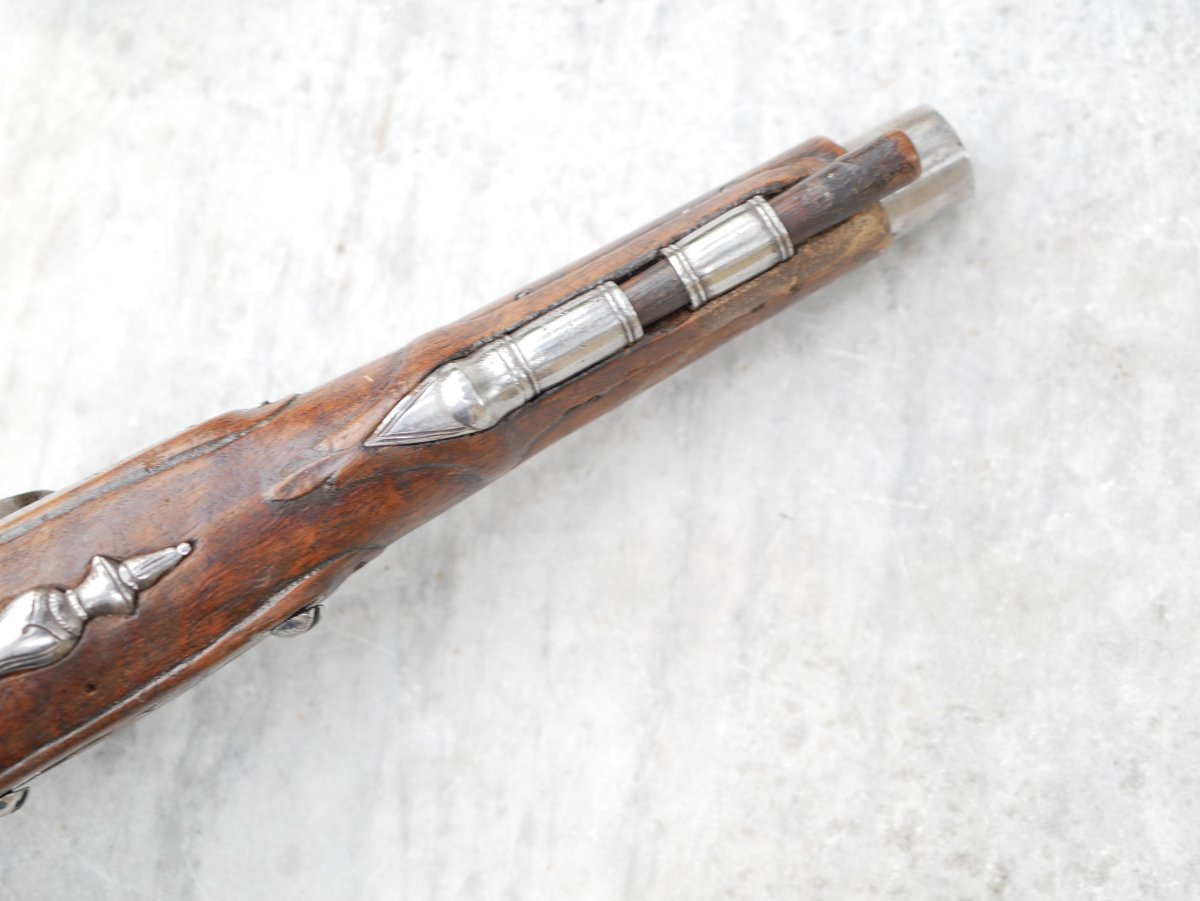
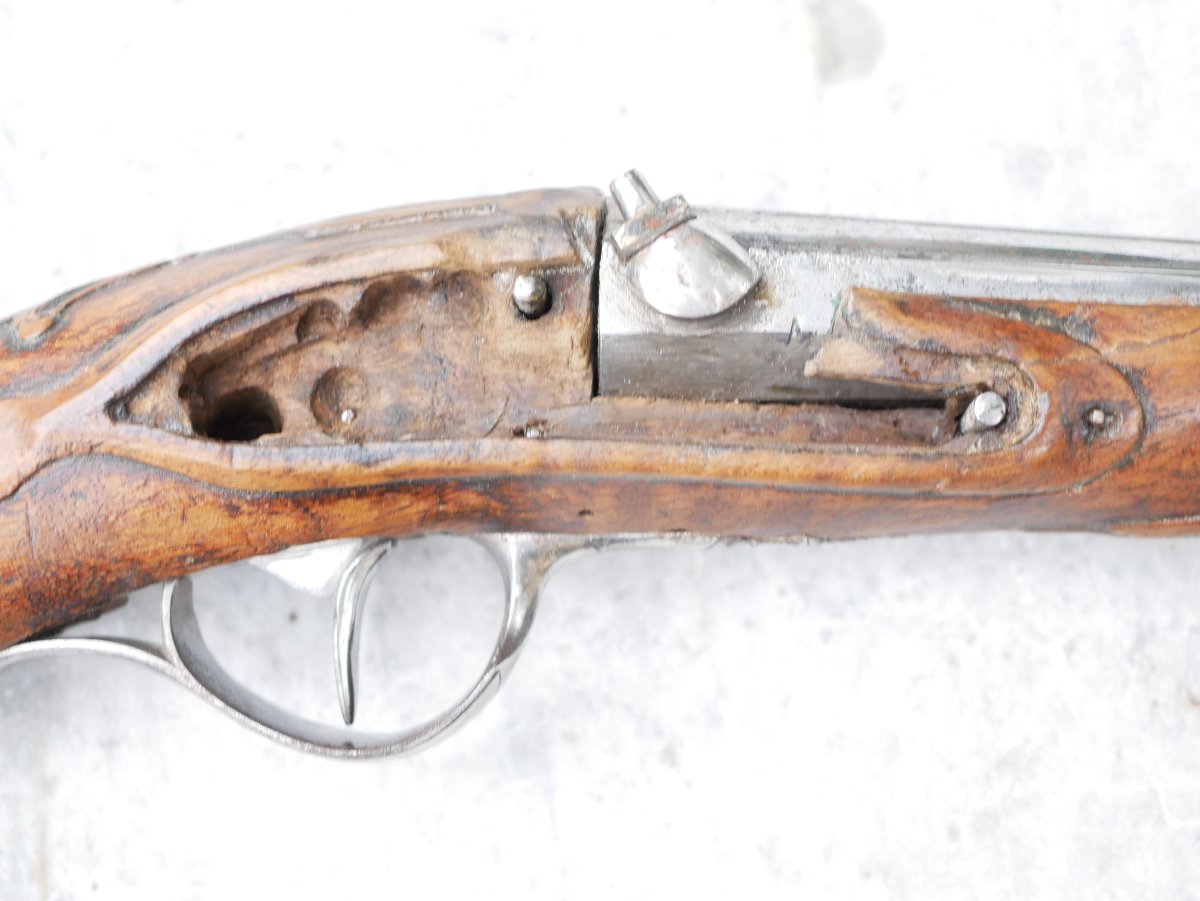
The top of the stock is adorned with an engraved stylized fleur-de-lis, a decorative detail reminiscent of the French ornamental style of the period. The side plates are particularly well crafted and chiseled.
Total length: 32 cm
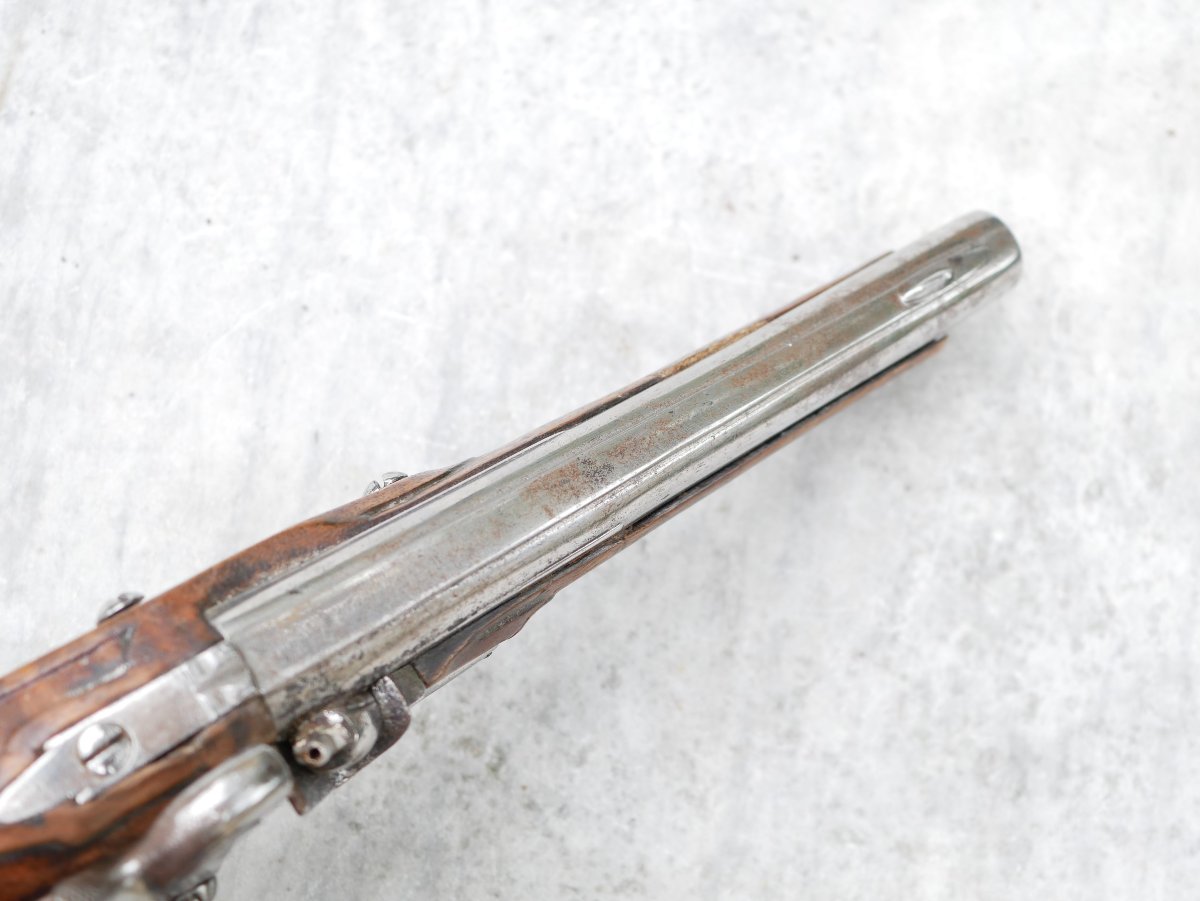
Barrel length: 17 cm
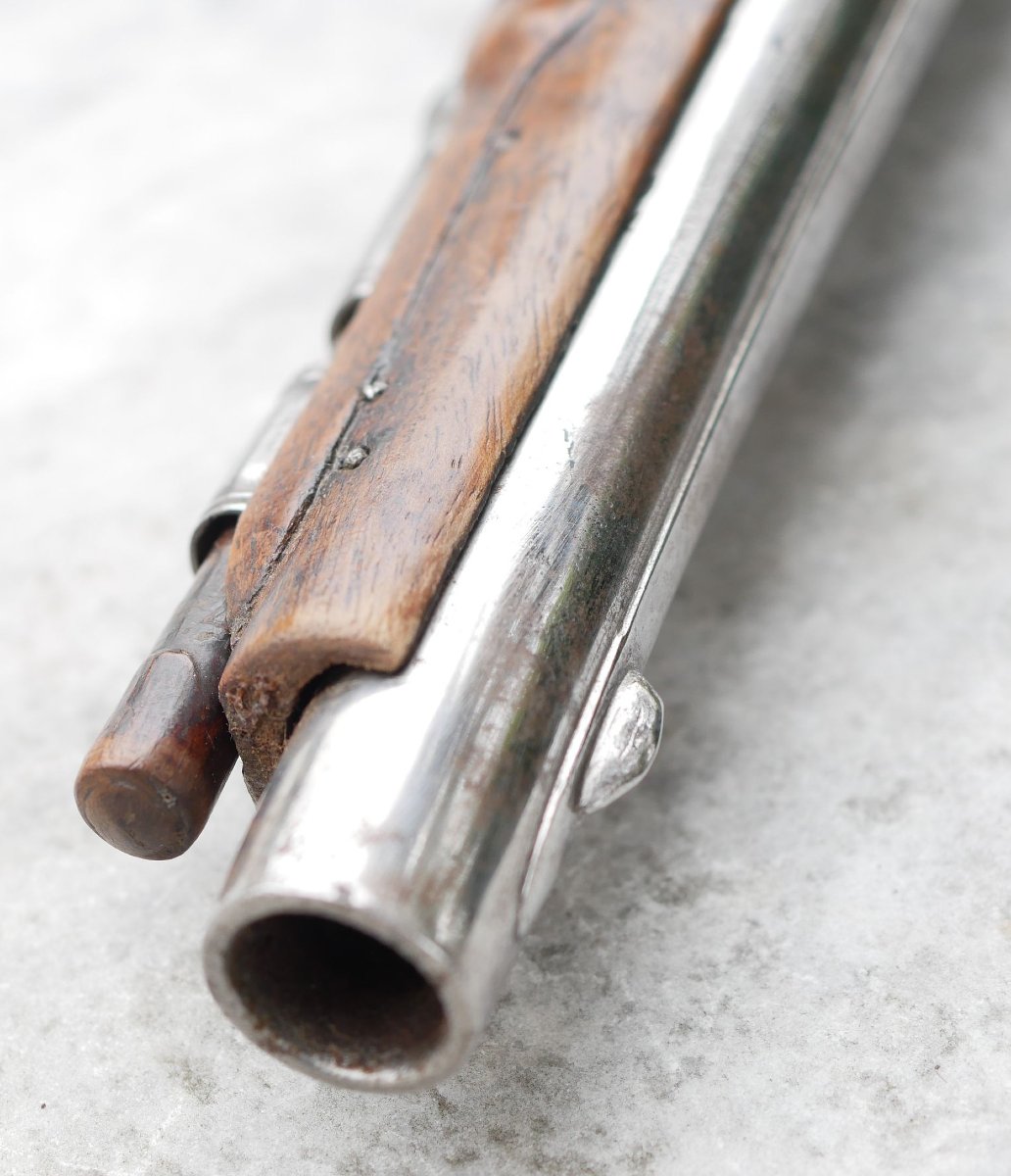
Inner barrel diameter: 13 mm
Loading rod: present, but not of original length
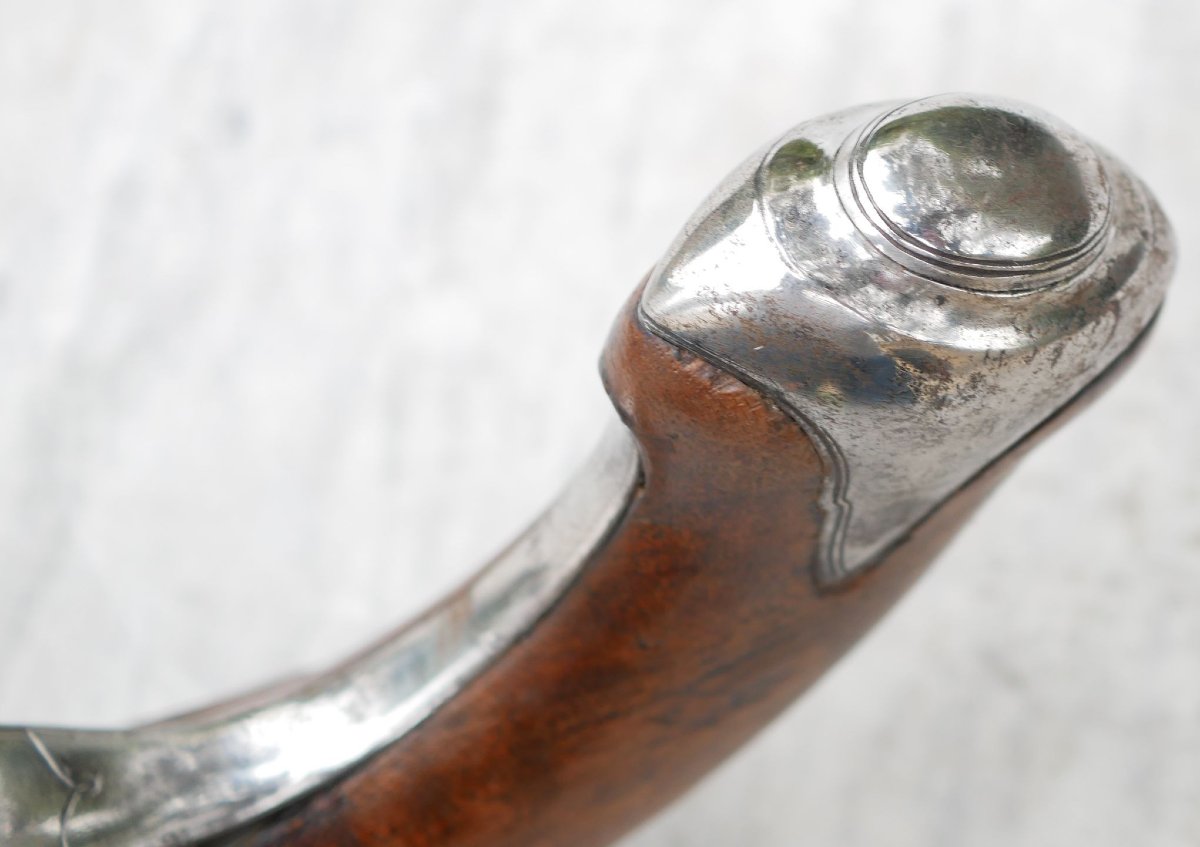
Stock: minor repair at the end
Metal parts: sound and polished, in very good cosmetic condition
Muzzle: in very good condition, unobstructed sight line, not crushed
This antique pistol is in good overall condition, with sound metal parts, polished metal surfaces nearly mirror-like, and few signs of oxidation. The wood retains a beautiful appearance despite a small repair at its end.
The ramrod is present but is not its original length.
The original mechanism has been preserved. However, the hammer tends not to hold its two notches properly, whether in the ready position or the cocked position. A minor adjustment (a simple light filing) of the engagement surfaces will be necessary.
Nevertheless, this firearm is functional and in good condition, provided this minor adjustment is made.
An interesting example of French firearms from the end of the Ancien Régime, this 18th-century pistol—converted to percussion in the 19th century—illustrates the modernization of antique firearms over the course of the following century. Its historical conversion, preserved original mechanics, and stylized fleur-de-lis engraved on the wood make it a lovely collector’s item.
Fast and well-protected shipping
SHIPPING WORLDWIDE
Period: 19th century
Style: Other Style
Condition: Good condition
Material: Wrought iron
Length: 32 cm
Reference (ID): 1839513
Availability: In stock