




Emilian School, 18th Century, Allegories Of Geometry And Poetry
Emilian School, 18th century
Allegories of Geometry and Poetry
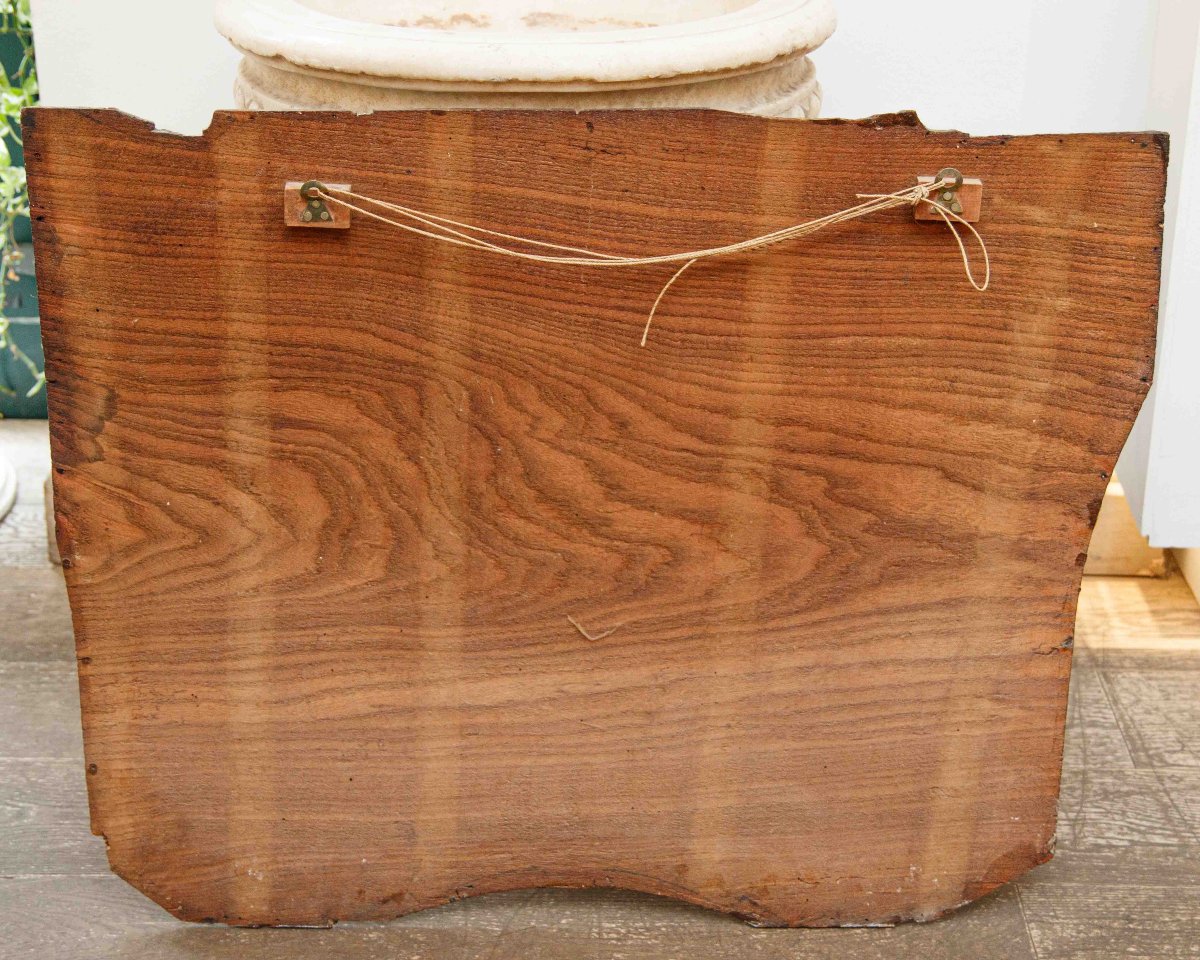
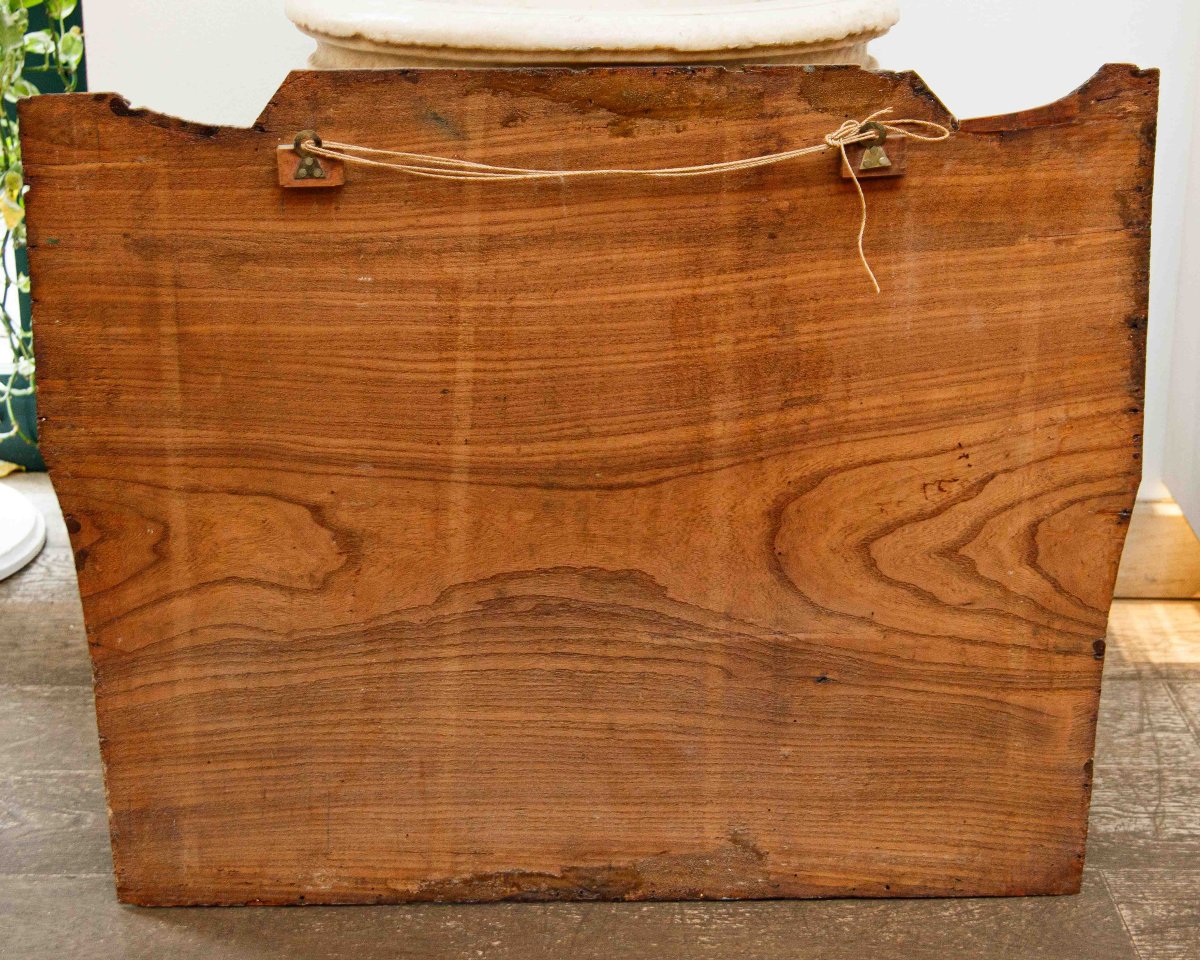
(2) Oil on panel, 65 x 89 cm
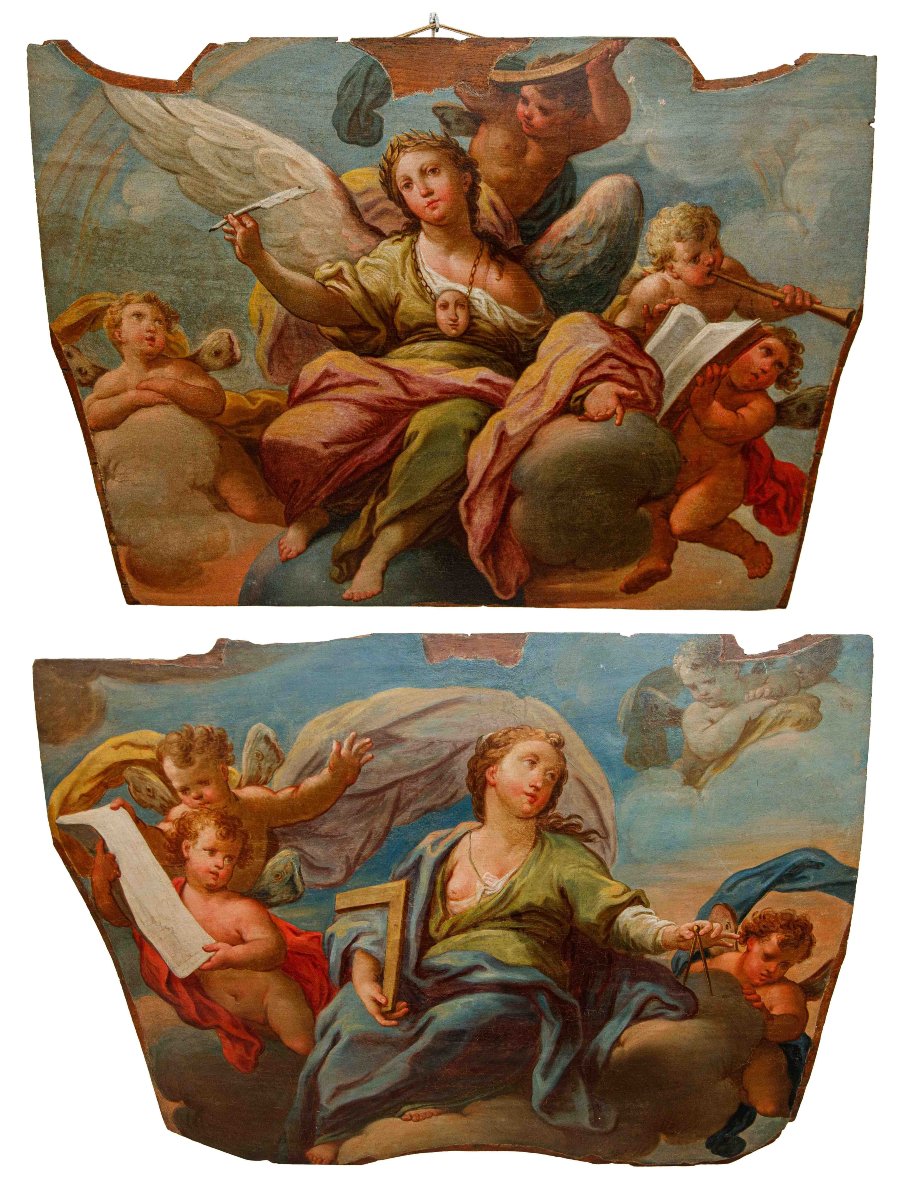
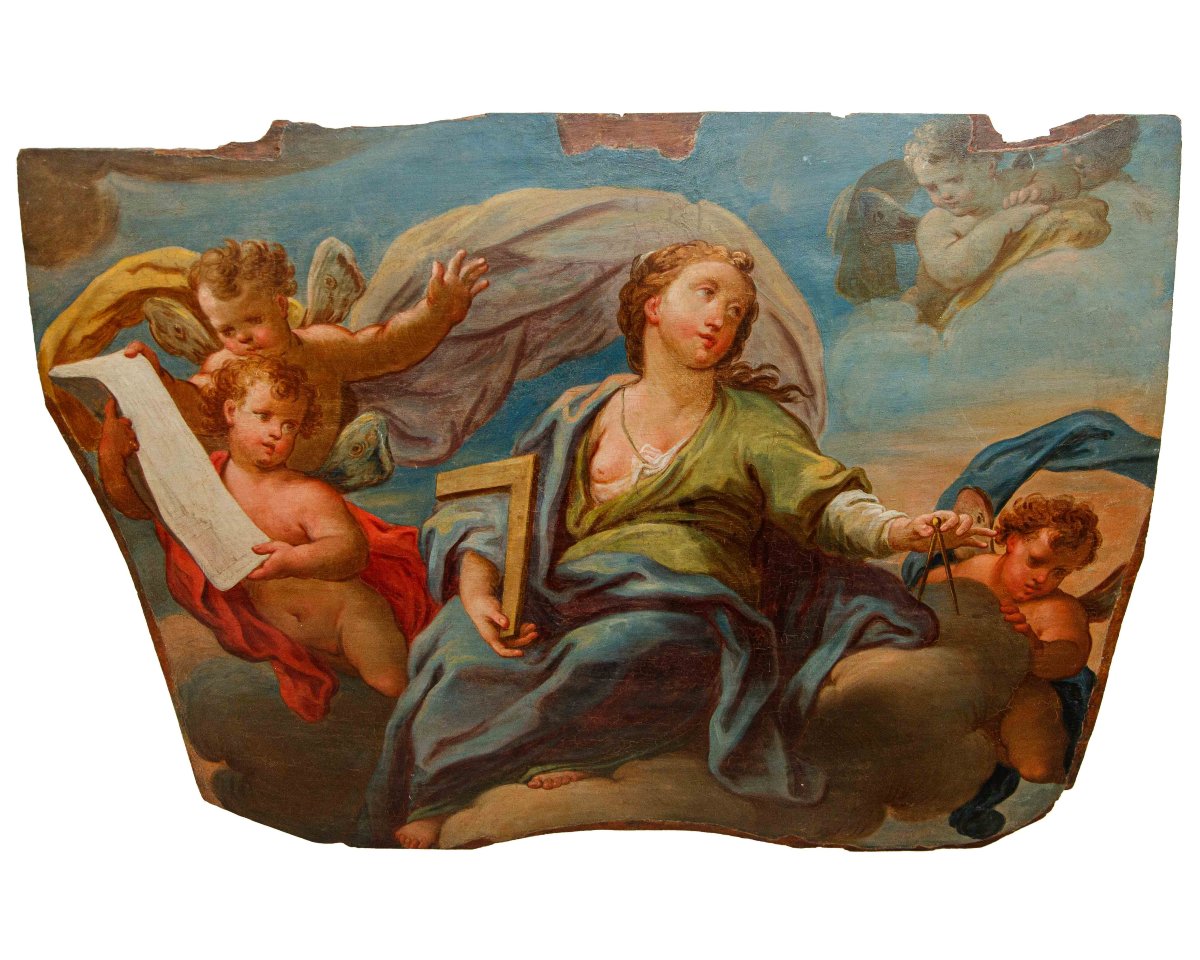
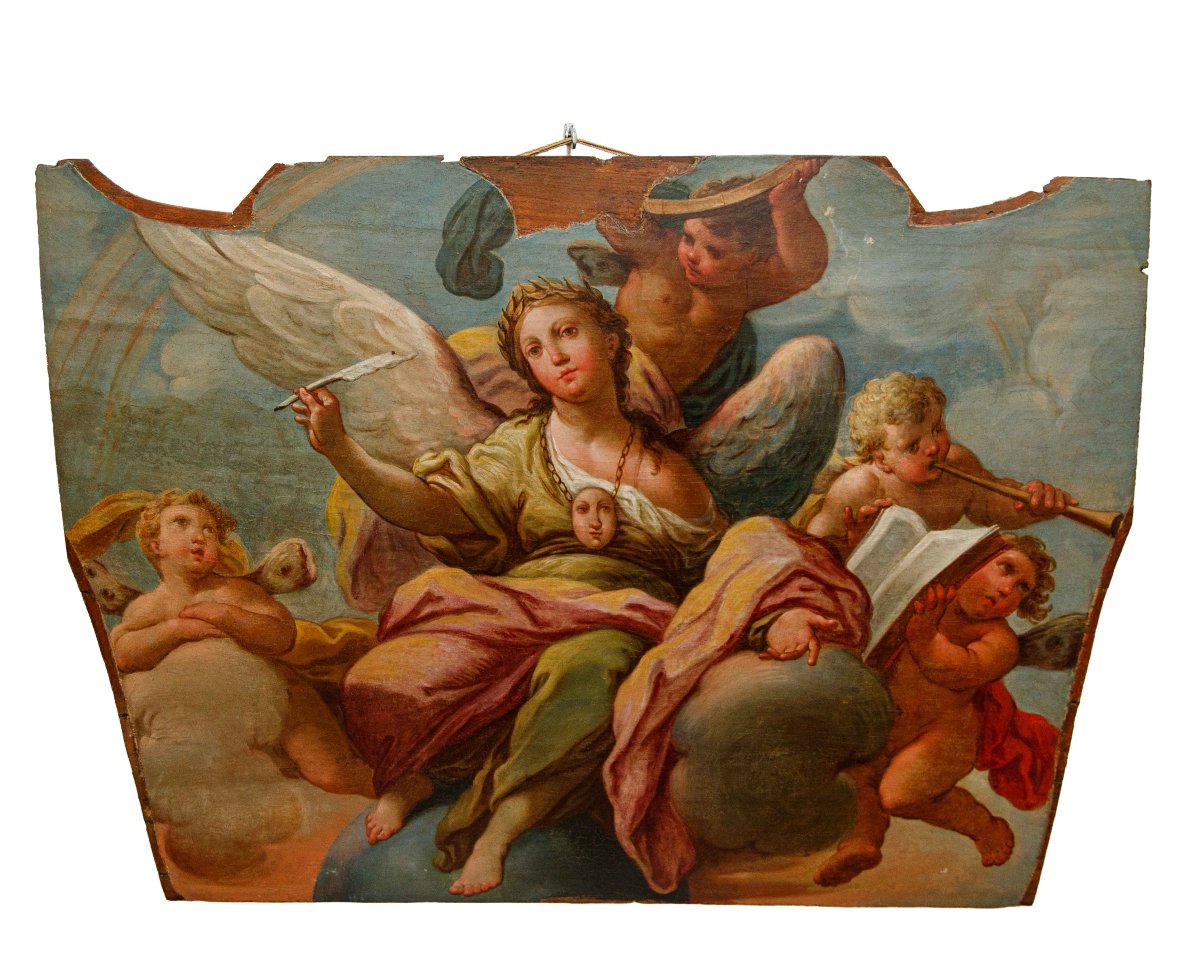
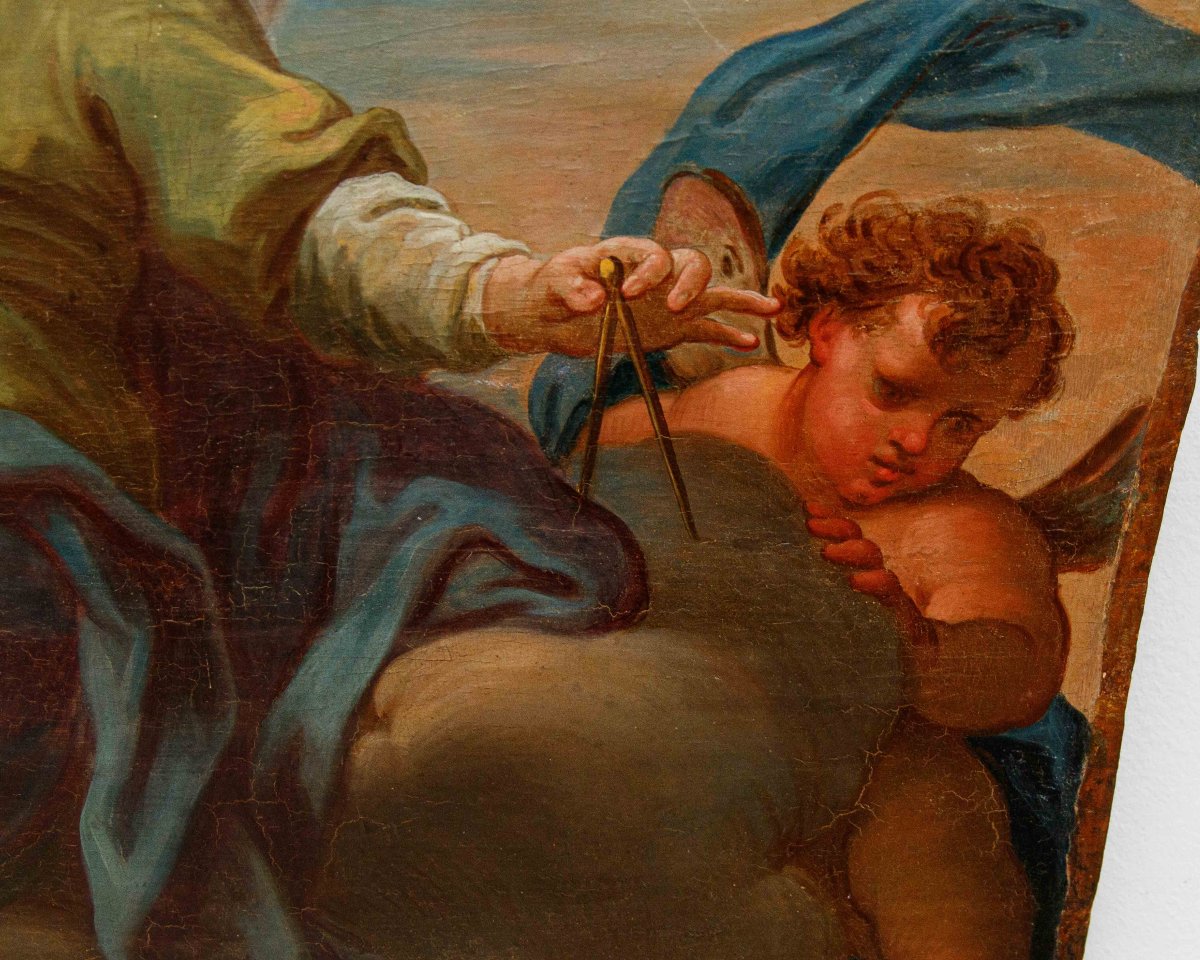
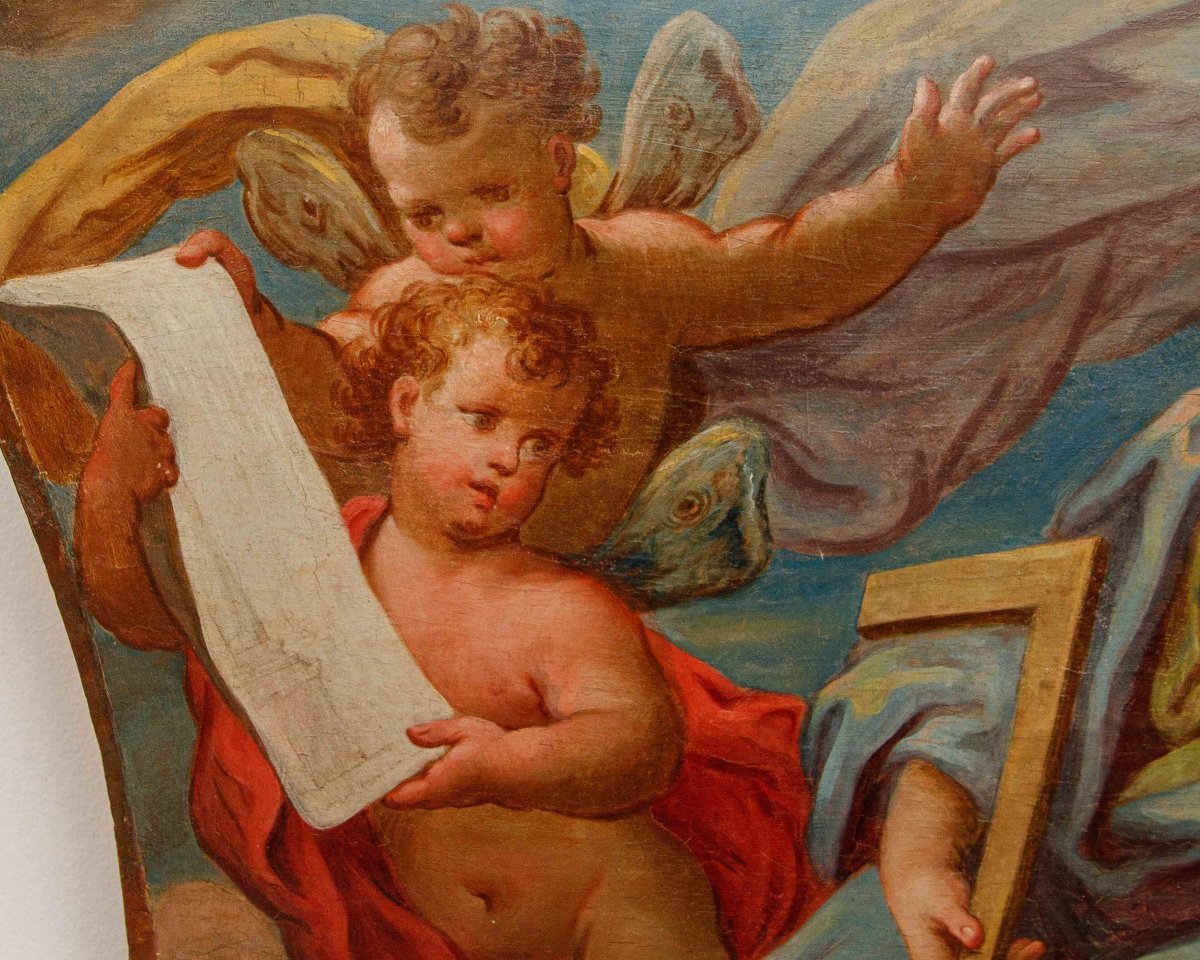
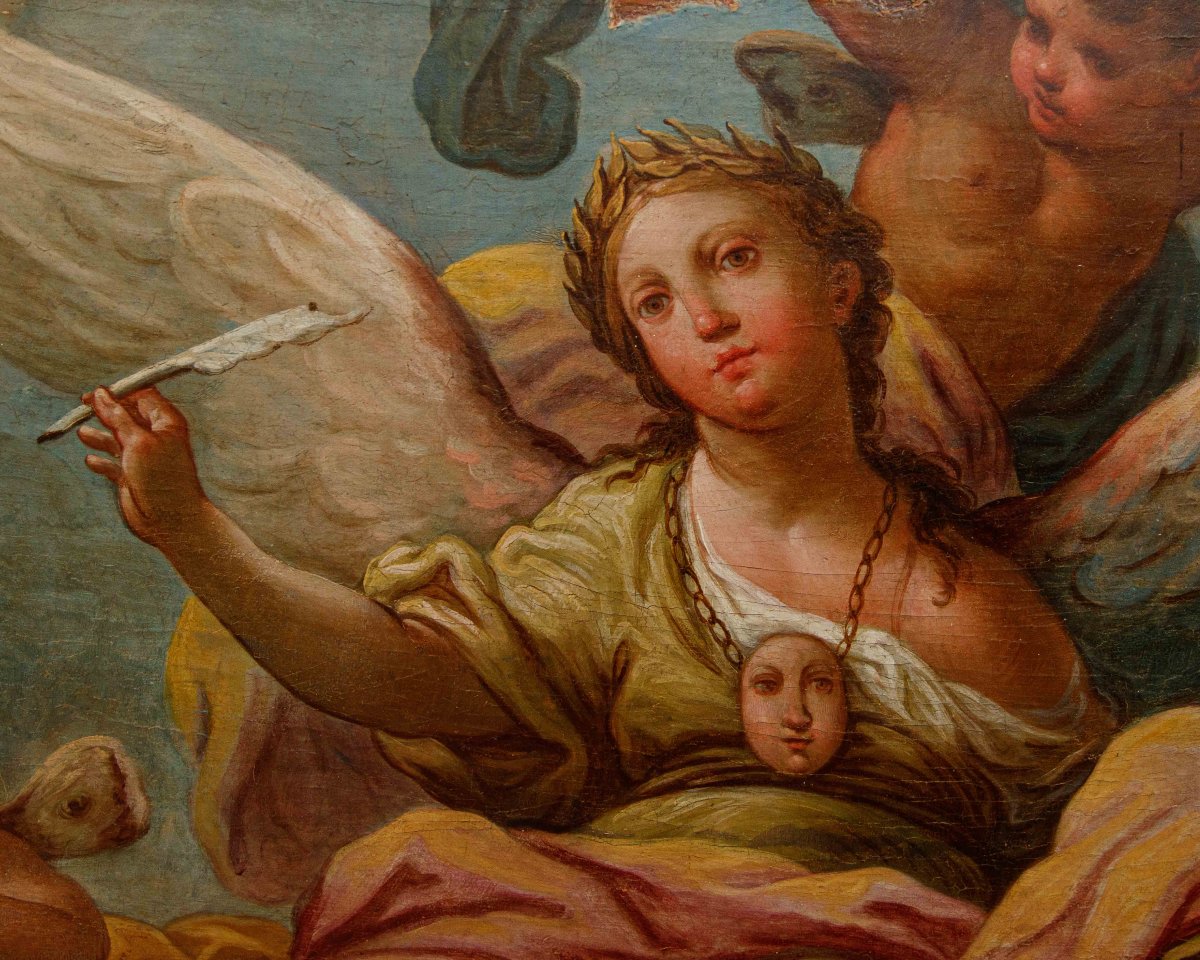
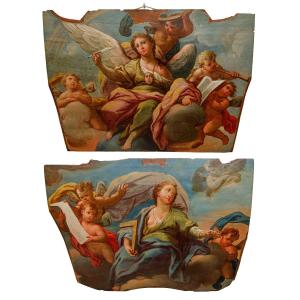
The two panels, attributable to the 18th-century Emilian school, display a style typical of the period, characterized by dynamic compositions, opulent female figures, and a light that enhances the rich drapery and the soft skin tones of the cherubs. They are likely fragments of larger decorative works, perhaps from a frescoed vault or an altarpiece, given their irregular shape and the depiction of figures suspended among the clouds. The central female figures are allegorical representations, as was customary in the celebratory and decorative painting of the Baroque and Rococo periods.
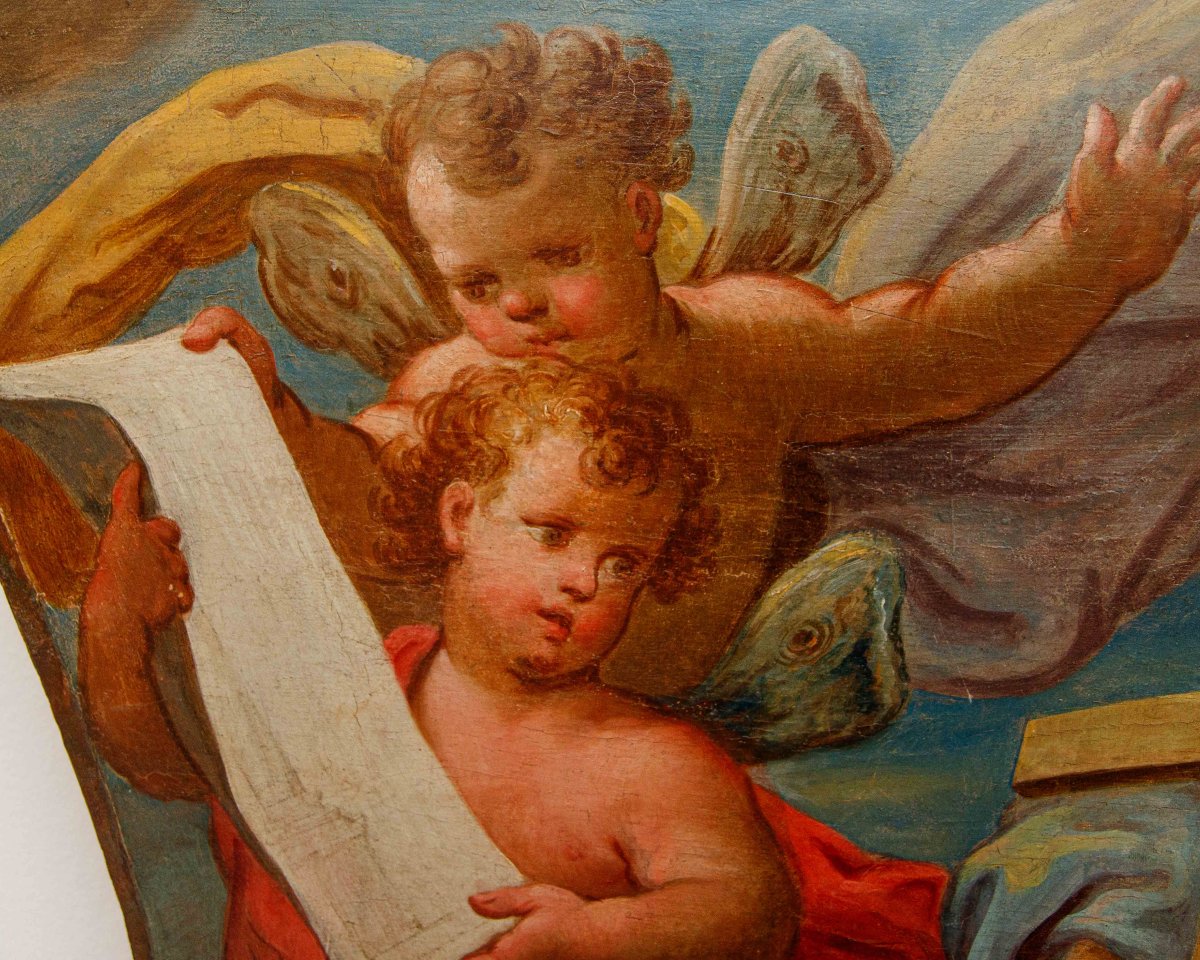
The first depicts an Allegory of Geometry or, more generally, of the Mathematical Sciences, presented in a solemn manner on her throne of clouds, surrounded by cherubs: her most distinctive attribute is the large set square shaped like an "L" that the woman holds in her left hand, resting on her lap, while with her right hand she elegantly holds a compass, a recurring symbol of the Liberal Arts linked to measurement and order, such as Astronomy and Geometry itself. The cherub in the foreground on the left holds an unrolled scroll, on which no marks are visible, but which suggests the presence of calculations, drawings, or formulas.
The second panel, on the other hand, depicts the Allegory of Poetry or History: in this case, unlike the other, the woman is endowed with large white wings, which help identify her as a celestial creature or a personification linked to Inspiration, Genius, or Fame; on her head she wears a laurel wreath, a universal symbol of glory, honor, and, specifically, of Poetry and intellectual victory. In her right hand she holds a quill pen, while around her neck she wears a medallion featuring a mask, which could symbolize History—recalling the past—or the Theater. The cherubs surrounding her reinforce this allegorical interpretation; they are depicted holding an open book—a symbol of knowledge and the intellectual disciplines—and playing a trumpet, the primary attribute of Fame, whose role is to disseminate and celebrate written works.
Both paintings are characterized by vivid colors—with a preference for reds, yellows, and iridescent blues—and by a soft, descriptive brushstroke in the drapery. The ethereal composition, with the figures occupying a corner of the sky, reflects the influence of Bolognese Classicism, as seen in the works of the Carracci or Guido Reni, filtered through the more decorative and lighthearted taste of 18th-century Emilia, which tends toward an almost Rococo elegance while maintaining a certain structural solidity in the figures.
Period: 18th century
Style: Other Style
Condition: Good condition
Material: Oil painting on wood
Width: 89
Height: 65
Reference (ID): 1839078
Availability: In stock