



19th Century, Portrait Of Giuseppe Garibaldi In Caprera
19th century
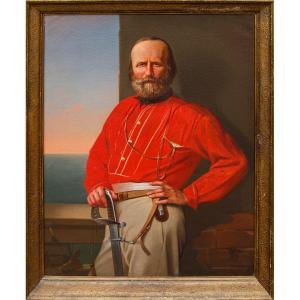
Portrait of Giuseppe Garibaldi in Caprera
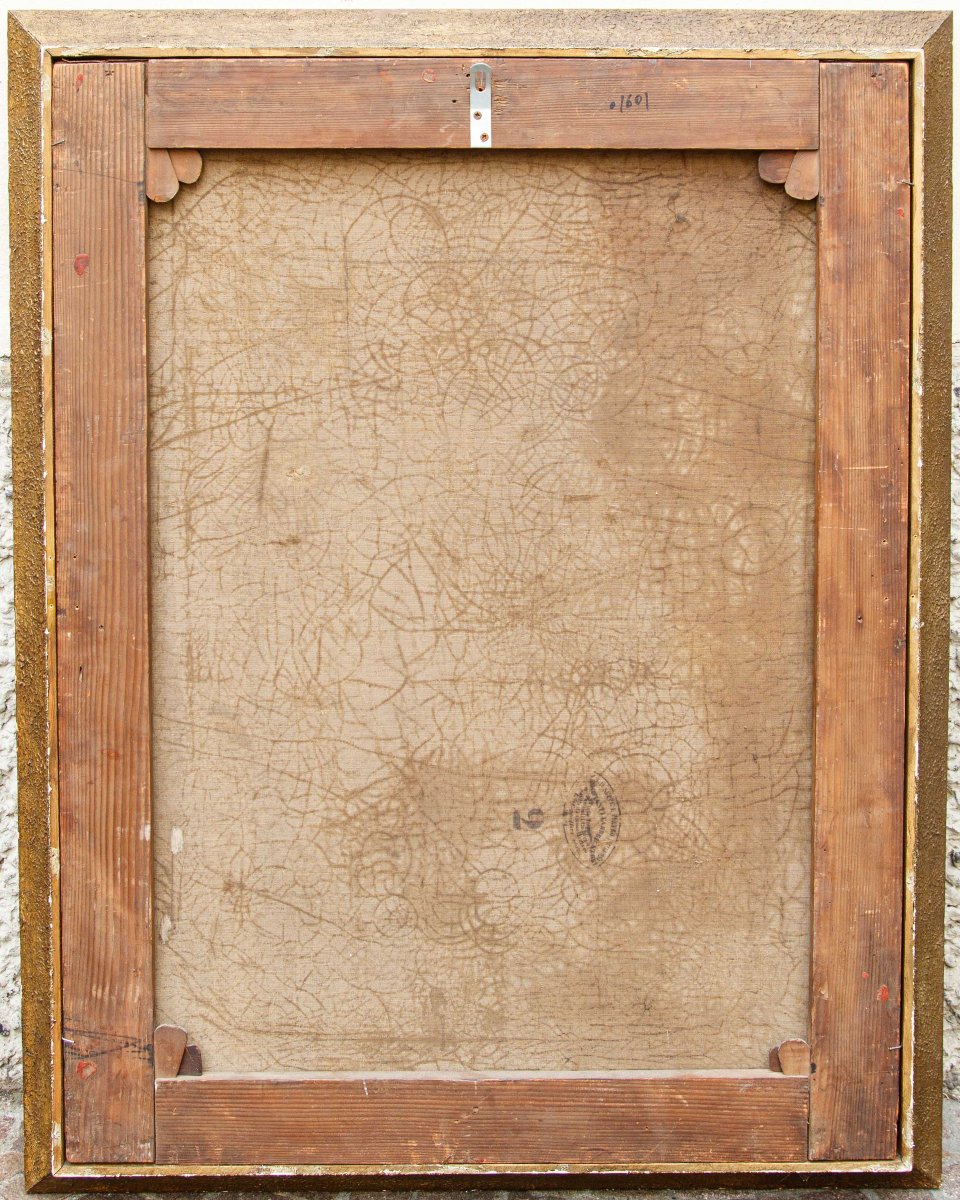
Oil on canvas, 104 x 78 cm
With frame, 115.5 x 90 cm
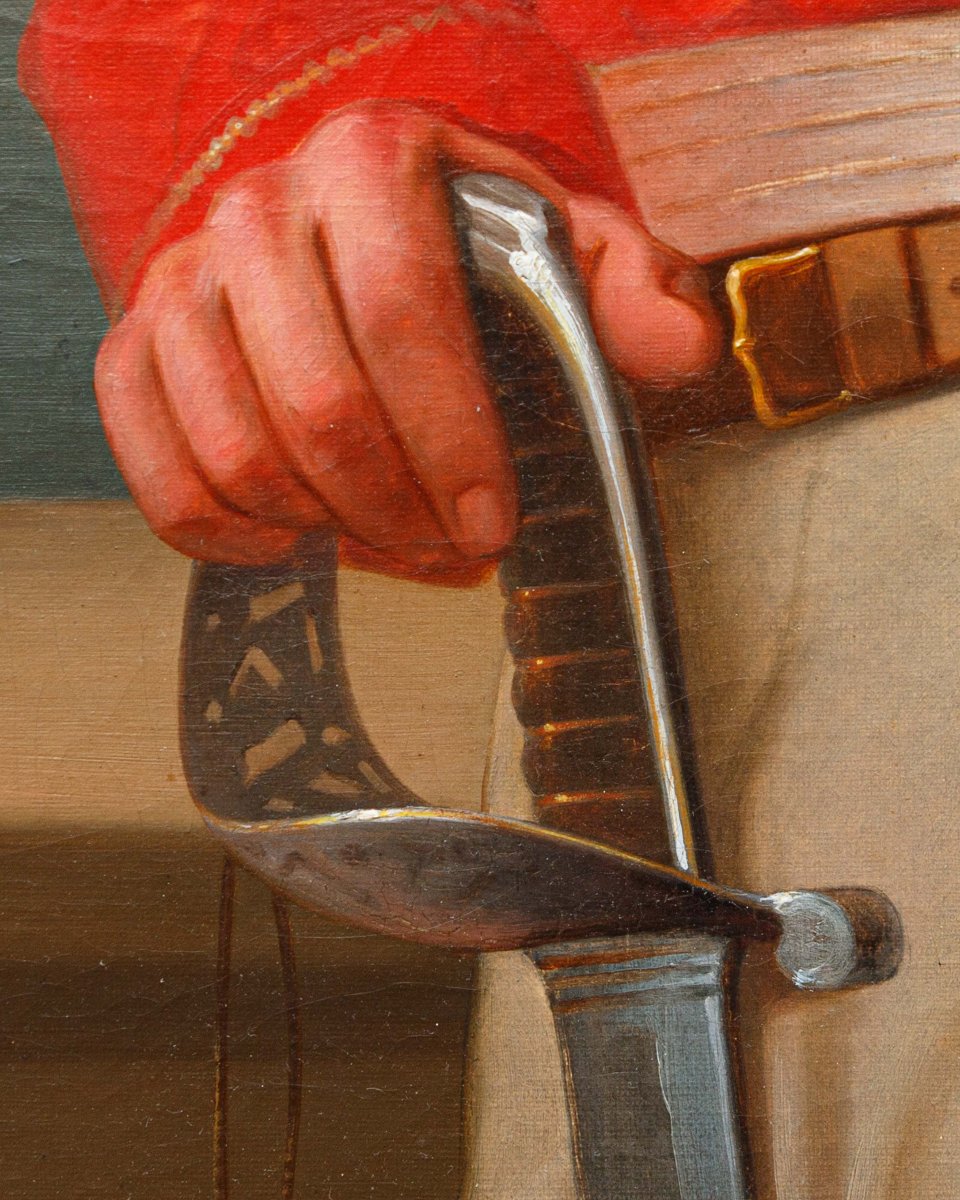
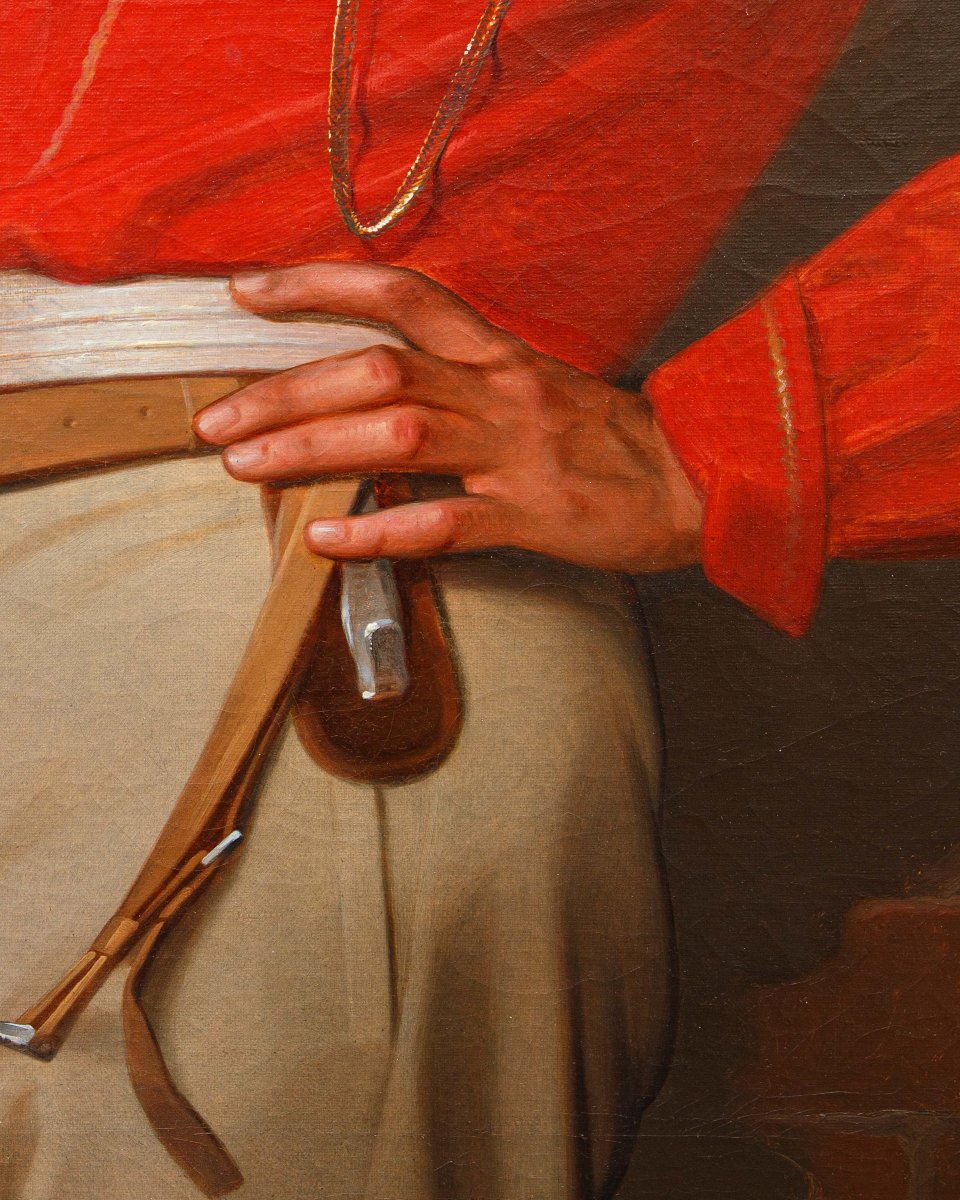
Giuseppe Garibaldi, his face marked by the passage of time, dominates the composition: a half-length portrait with his left hand resting on his hip and his right hand firmly gripping the hilt of his service saber, in a pose that any 19th-century observer would have recognized immediately. The red shirt, which has now become the very emblem of his figure, catches the light with soft, sweeping folds. His thick, grizzled beard, framed by deep wrinkles around his eyes, conveys the image of a man no longer young, marked by the years and by battles, and suggests that the work was created sometime between the late 1860s and the early 1890s, perhaps painted shortly after his death in 1882, as a memorial. Behind him, a glimpse of a terrace overlooks the sea at sunset, with rosy skies blending into a calm maritime horizon—an image that evokes the hero’s retreat to Caprera, the island he chose as his refuge during the final years of his life. Garibaldi had purchased a portion of the island in 1855, making it his permanent residence despite repeated departures for military and political campaigns, until his death on June 2, 1882. It was precisely during his long periods of isolation on Caprera—and in particular after the defeat at Mentana in 1867—that the hero devoted himself more consistently to writing: he resumed and expanded his autobiographical Memoirs, which he had begun years earlier during his second exile in South America, and supplemented them with patriotic and folk-inspired novels such as *Clelia: *The Monk’s Government* and *Cantoni the Volunteer*, as well as more intimate and political works, including the famous will in which he expressed his final wishes. On the right, a dark wall creates a stark contrast, isolating the figure and accentuating its monumentality, separating the intimate space of the portrait from the luminous landscape that opens up on the other side of the canvas.
This composition is not the painter’s original invention but derives directly from a photographic prototype that became famous throughout Europe: the photograph taken by Gustave Le Gray in 1860 in Palermo, in the aftermath of the Expedition of the Thousand. That photograph—with the red shirt, the saber, and the positioning of the hands—forever cemented Garibaldi’s public image, transforming it into an iconographic model that was tirelessly replicated for decades. Between 1860 and 1890, Italy in fact experienced a veritable boom in Garibaldi portraiture, fueled by the leader’s enormous popularity among the middle class and the general public. Mutual aid societies, municipalities, democratic clubs, and private collectors commissioned a large number of paintings celebrating the “Hero of the Two Worlds,” often turning to academically trained painters active at the local level who were able to combine the formality of a photographic pose with their own personal artistic approaches. The sea off Caprera, landscapes of Risorgimento battles, and sunset skies laden with symbolic meaning became recurring backdrops, capable of transforming a simple portrait into a small visual narrative of the hero’s life story, from military glory to contemplative retreat. The work presented here should also be viewed in this context: one example, among the many produced during that era, of the extraordinary capacity of a photographic image to generate an entire artistic tradition—one capable of spanning decades while maintaining its evocative power and its significance as a symbol of identity for a united Italy.
Period: 19th century
Style: Other Style
Condition: Good condition
Material: Oil painting
Width: 78
Height: 104
Reference (ID): 1819568
Availability: In stock