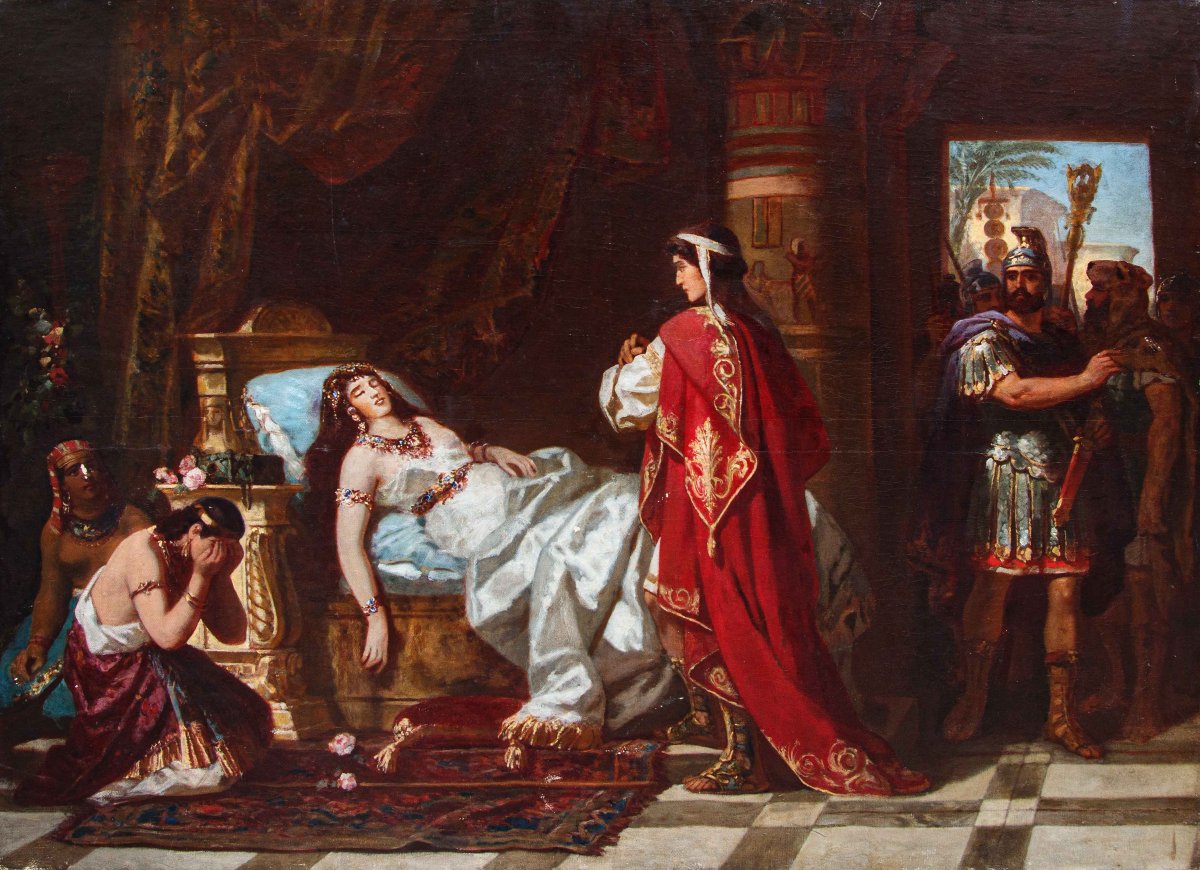





Gustav Bartsch (1821–1906), The Death Of Cleopatra
Gustav Bartsch (1821–1906)
The Death of Cleopatra
Oil on canvas, 111 x 142 cm
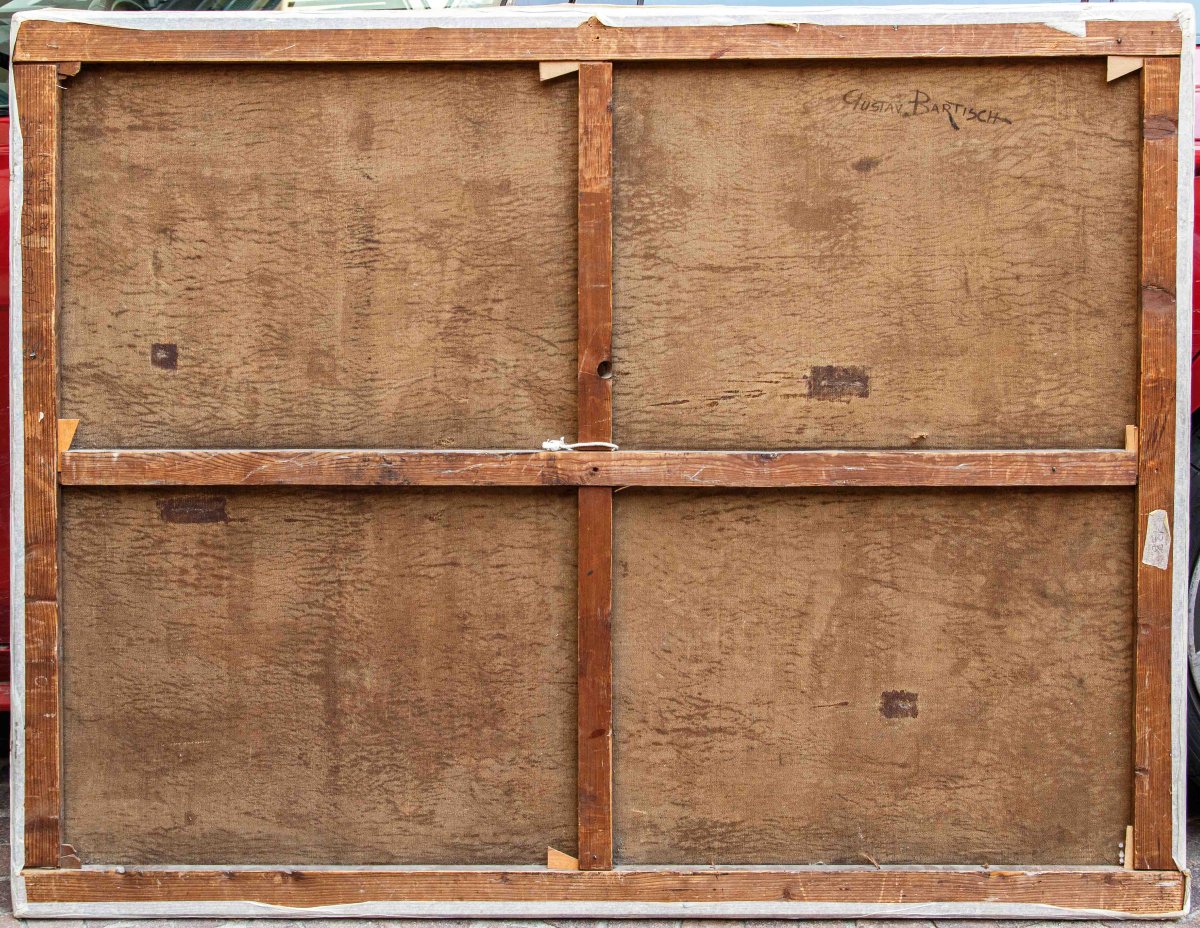
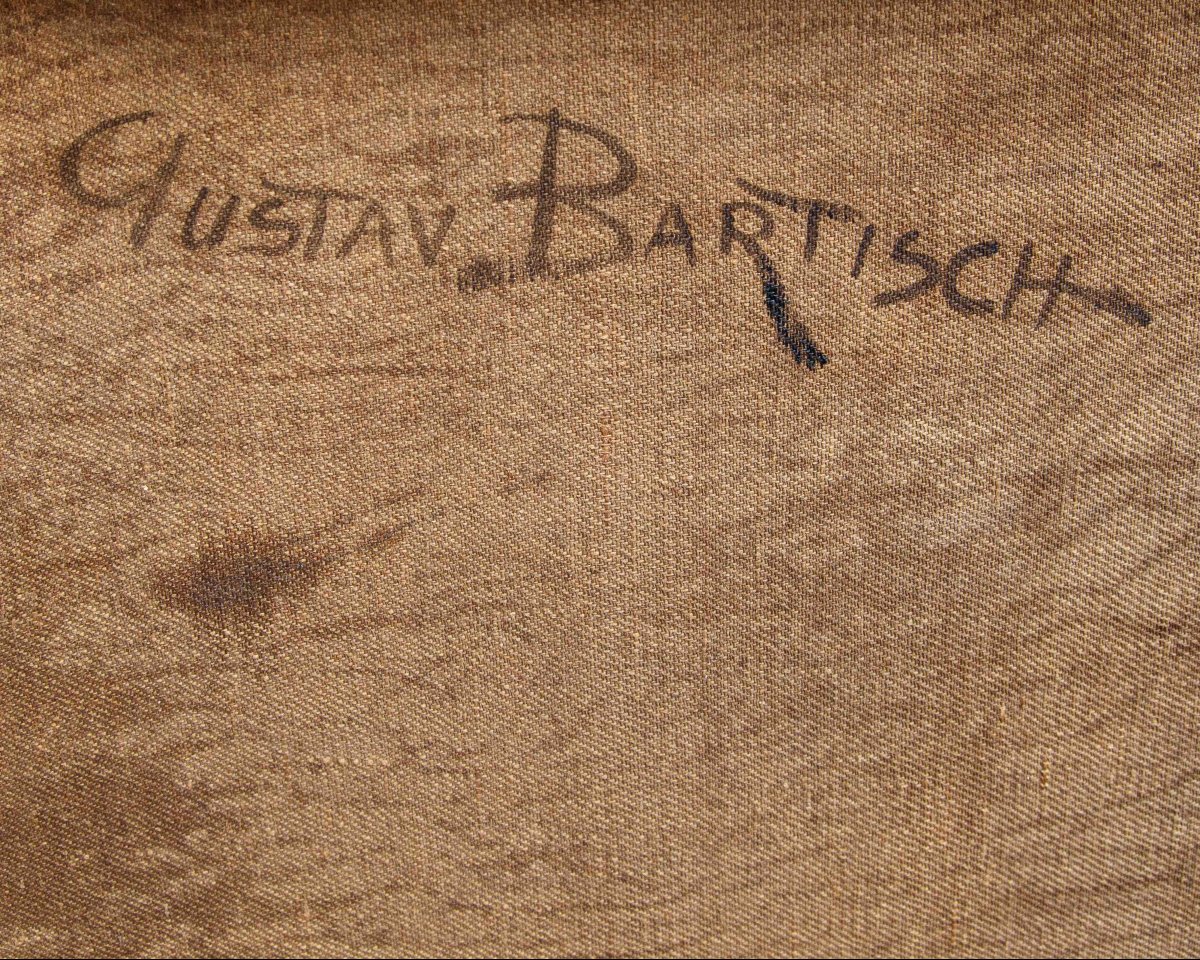
Signed on the back: Gustav Bartisch
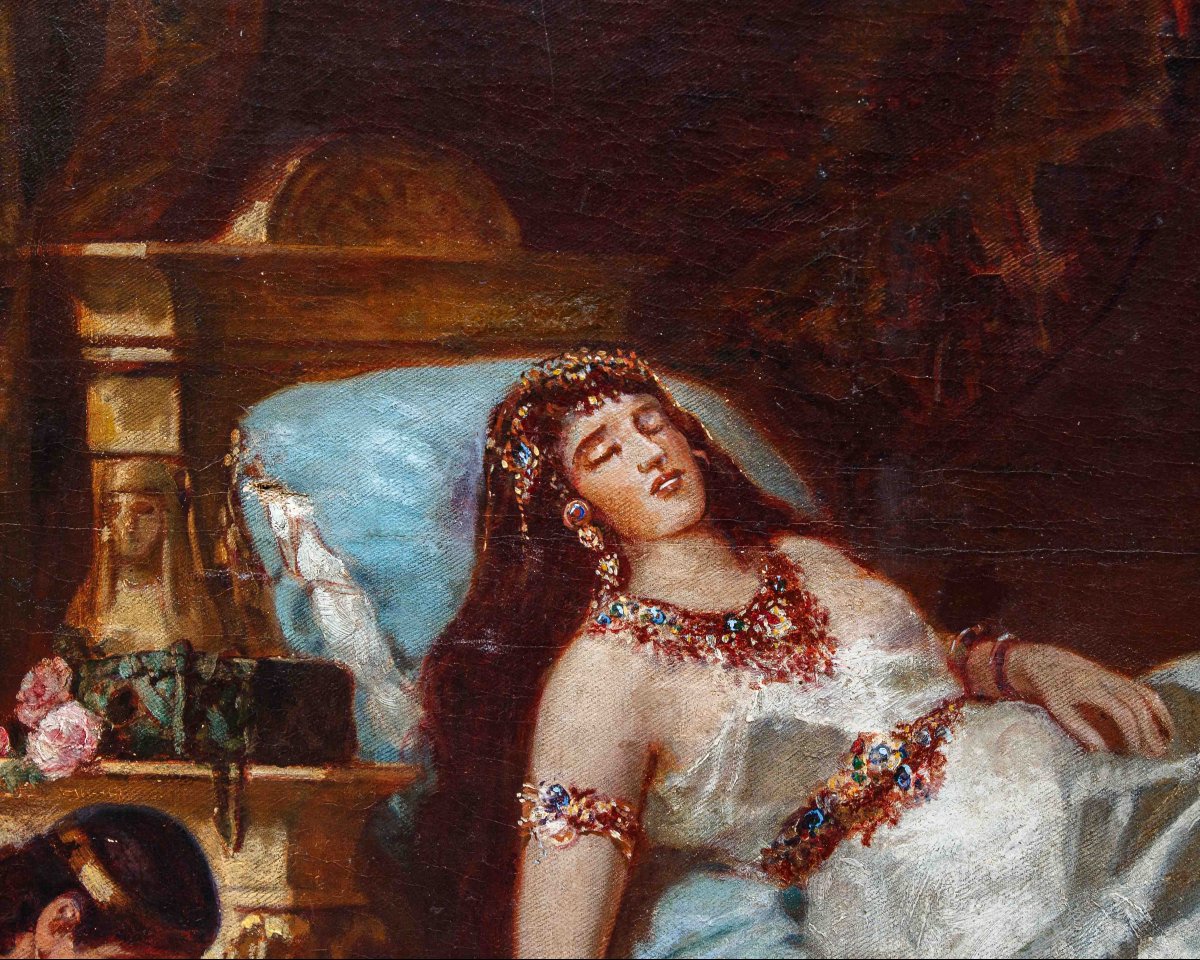
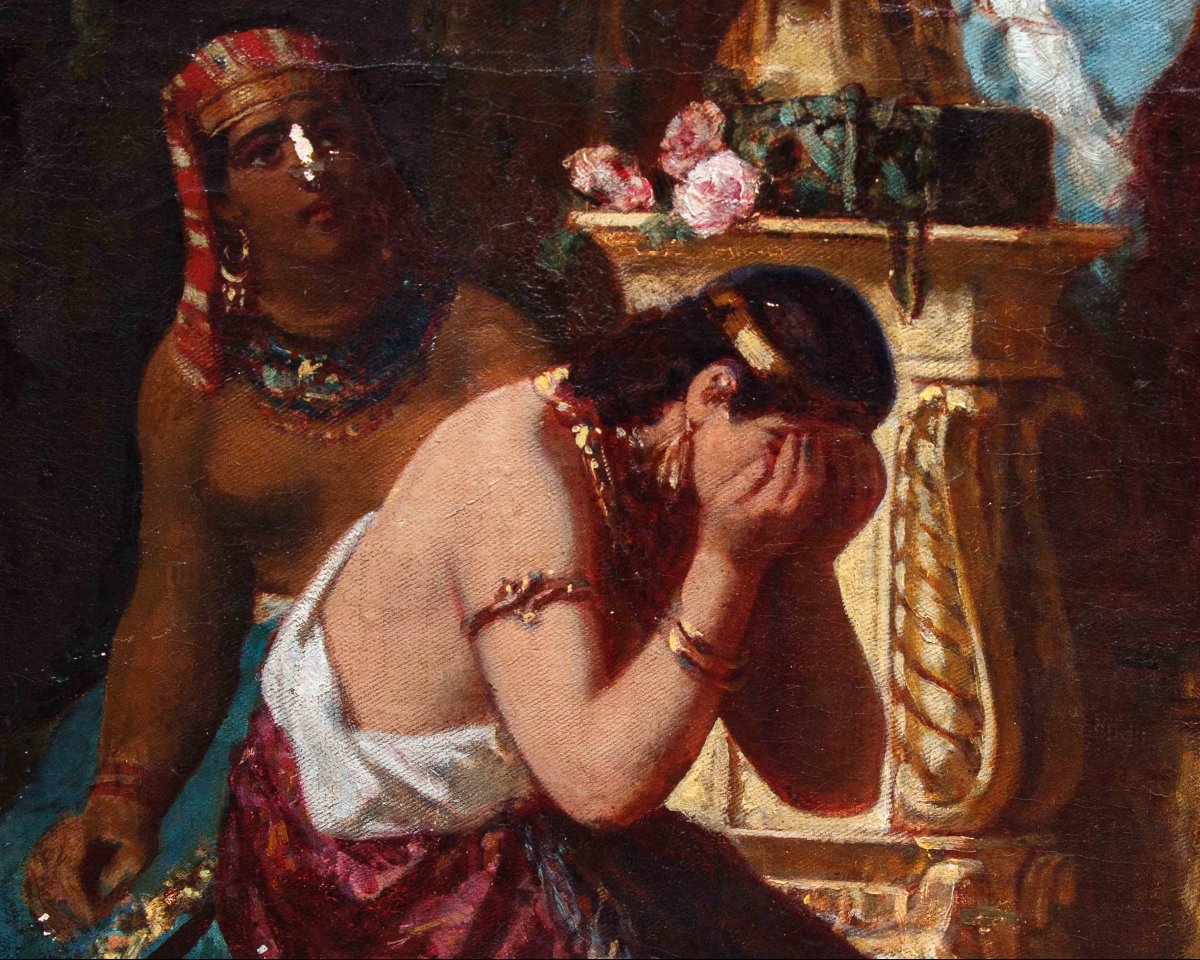
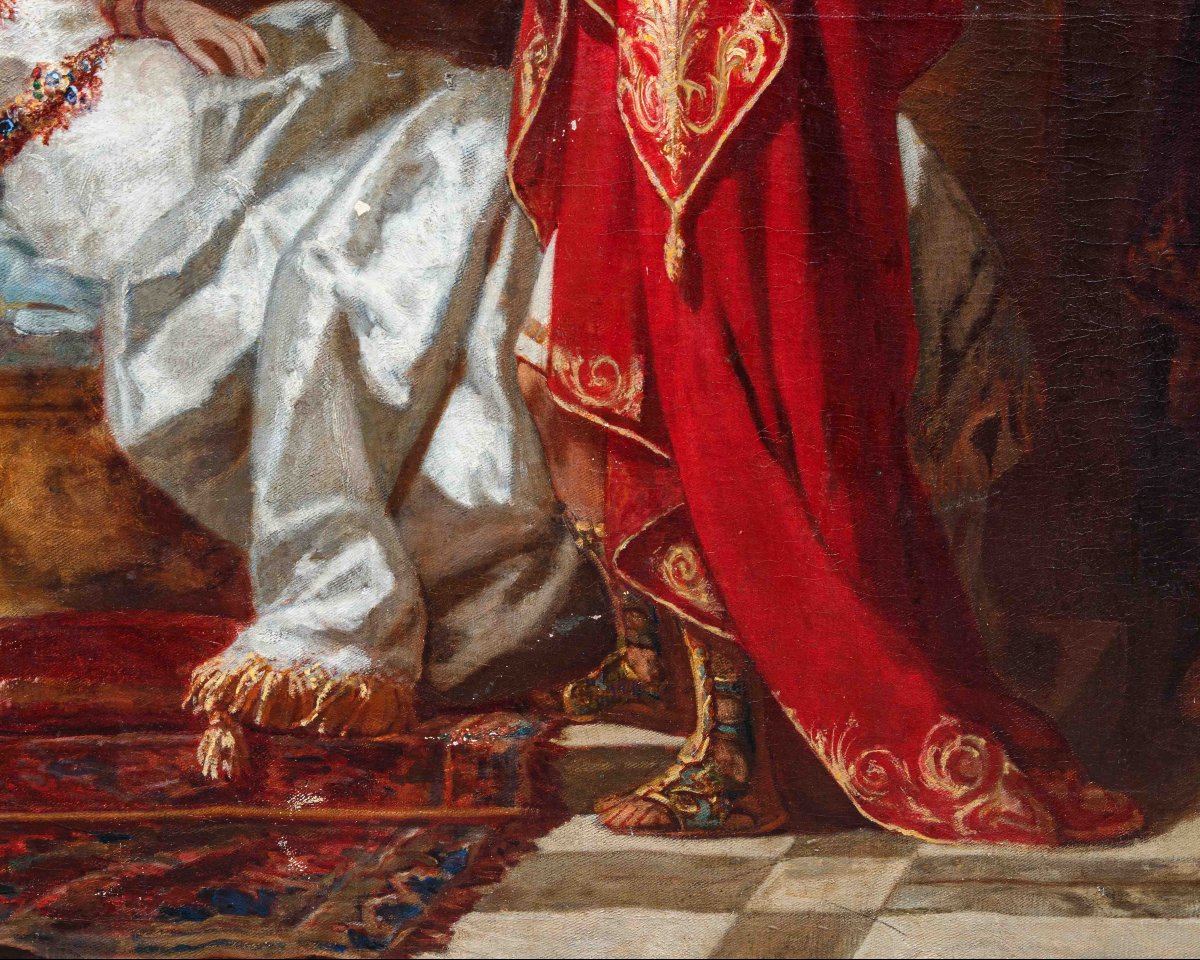
Cleopatra, lying lifeless, occupies the center of Gustav Bartsch’s composition, captured in the moment immediately following her suicide. The Queen of Egypt lies reclining on the bed—which, in iconographic tradition, serves as both a wedding bed and a funeral bier—wrapped in flowing white robes and adorned with royal jewels: a diadem in her hair, a necklace of precious stones, and bracelets on her arms. Her right arm, limp and sliding downward in a gesture now devoid of strength, is the classic painterly symbol signifying her death. At the foot of the bed, a maidservant is in despair, hiding her face in her hands. In front of the bed, a male figure wrapped in a large red cloak embroidered with gold—likely a dignitary or a messenger. On the right, the scene abruptly shifts to the irruption of Roman soldiers in armor, led by an officer whose face betrays bewilderment, surprise, and an involuntary respect for the queen’s resolve. Those soldiers represent the power of Rome and Octavian, who has arrived too late: the war has been won on the battlefield, but Cleopatra, by taking her own life, has deprived the victor of his most coveted trophy—that of leading her captive to Rome.
The painting is part of the historical painting oeuvre of Gustav Bartsch, a German painter, portraitist, and illustrator born in 1821 in Gleiwitz and active primarily in the second half of the nineteenth century. His talent manifested itself at a very early age: as early as 1836, at just fifteen years old, he exhibited a pen-and-ink drawing at the Berliner Kunstausstellung, a sign of the solid training in the graphic arts that would characterize his entire career. After marrying Clara Friederike Georgine von Strombeck, Bartsch settled in the Blasewitz neighborhood of Dresden, becoming an active figure in the Saxon art scene of the time. His work falls within the tradition of academic art and German historicism, with a clear penchant for historical and exotic subjects, fueled by the Orientalist taste that was widespread in the figurative arts of the mid-19th century. In works of similar dramatic scope and ancient setting—often with an Orientalist theme—Bartsch displays the same meticulous attention to detail in the rendering of fabrics, architecture, and ornamentation, as well as the same theatrical focus on the composition of the figures. The Death of Cleopatra lends itself perfectly to this artistic language, combining a fascination with the ancient East with the moral resonance of an empire’s defeat and a queen’s personal triumph over her own fate. The work also demonstrates how Bartsch moved with ease between high-quality editorial illustration and easel painting intended for bourgeois collectors and nineteenth-century exhibitions—a field in which his painting technique and narrative sensibility found their fullest expression.
Period: 19th century
Style: Other Style
Condition: Good condition
Material: Oil painting
Width: 142
Height: 111
Reference (ID): 1826409
Availability: In stock