


Wrought-iron Wax Case With Double Seal - Louis XIV Period, C. 1700 - Nuremberg Or Augsburg
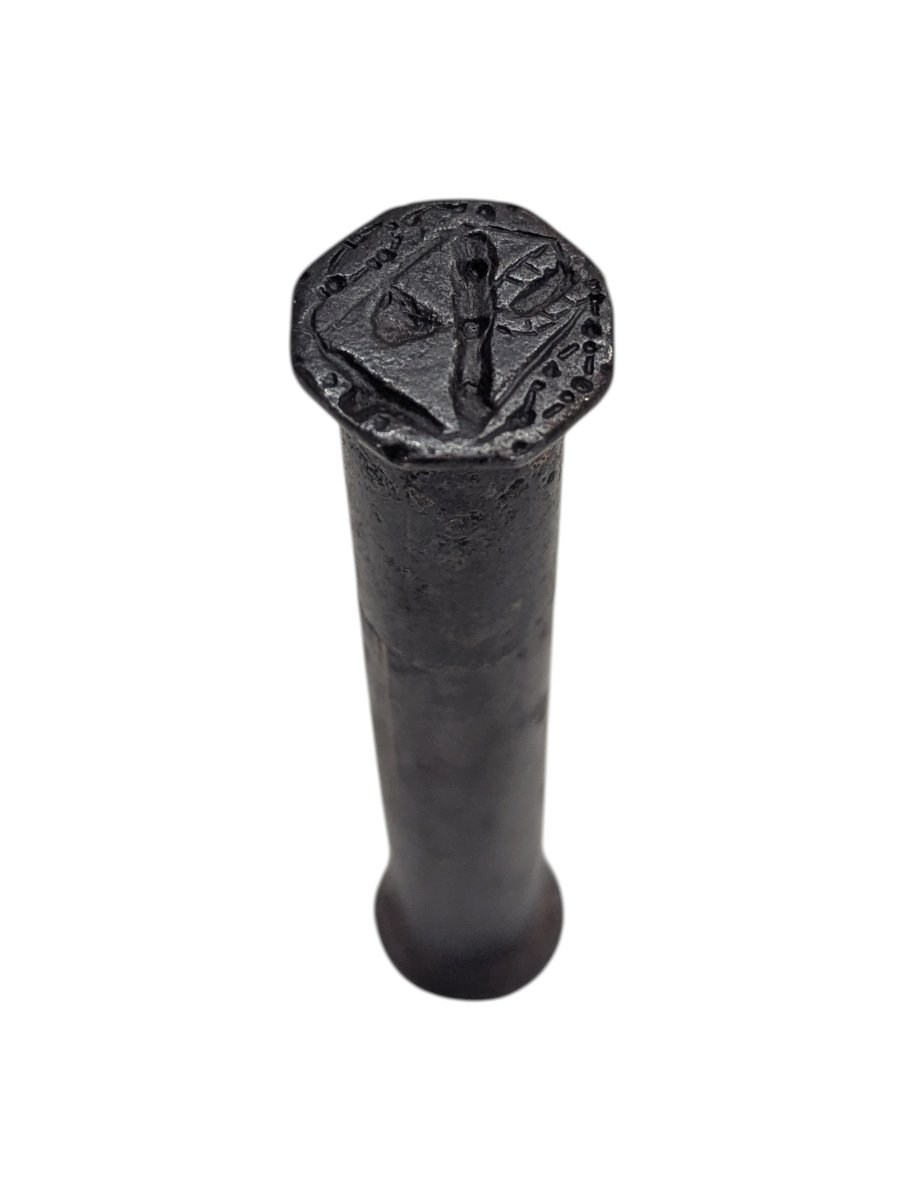
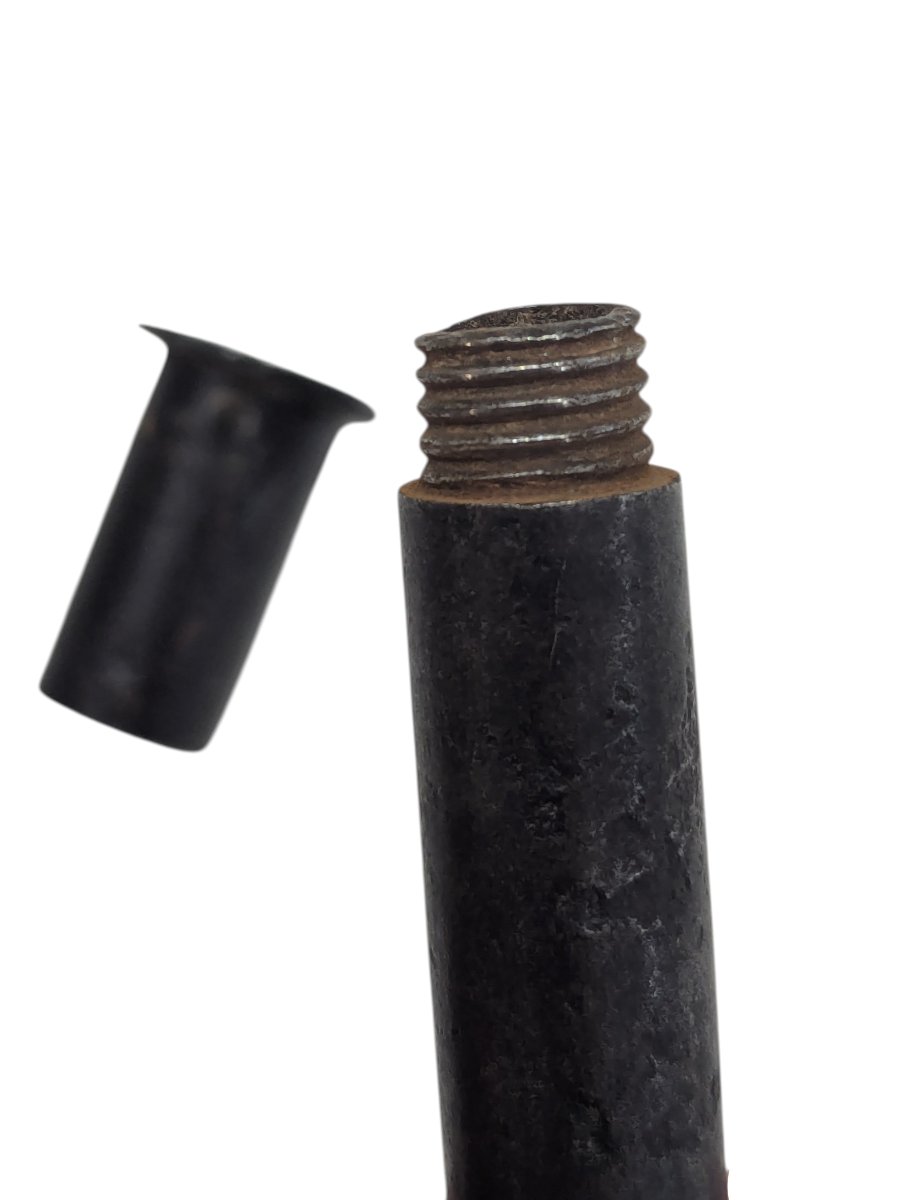
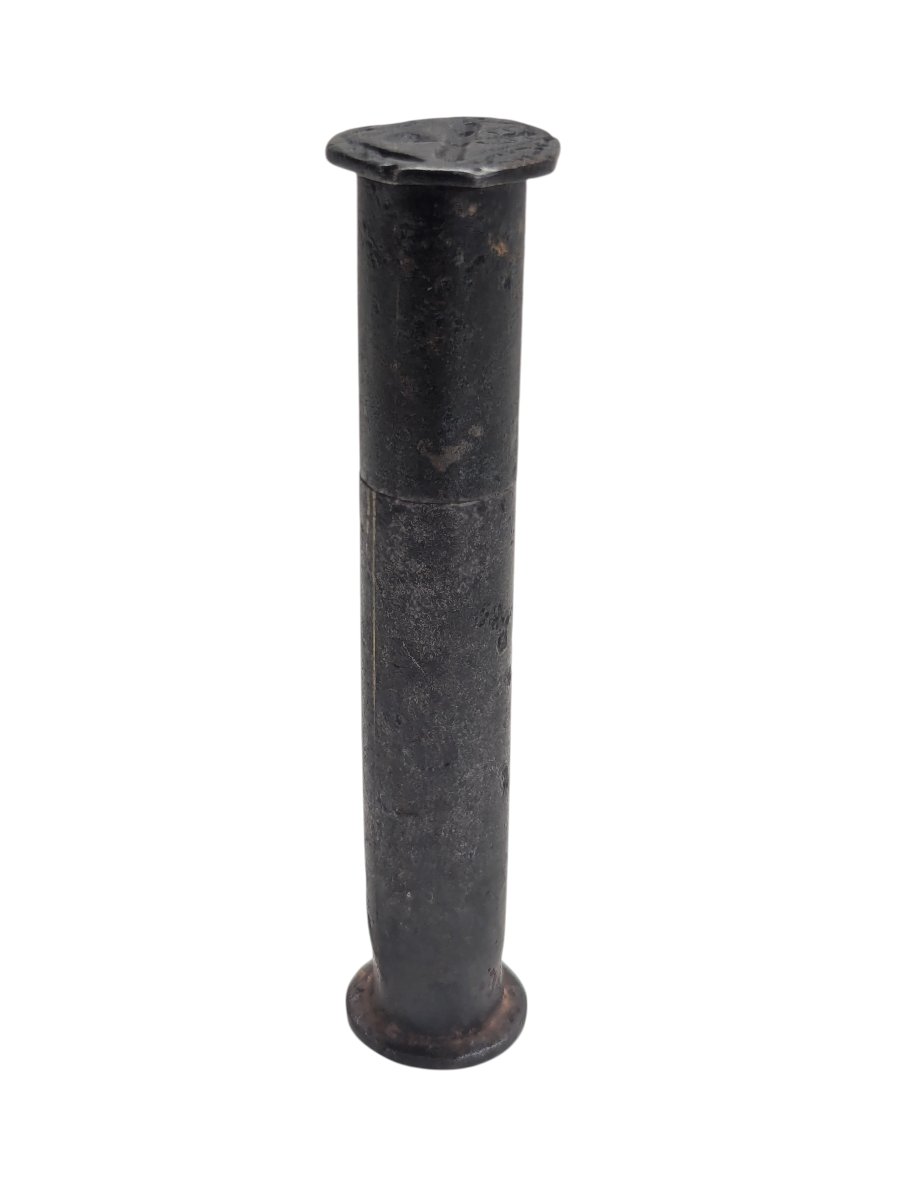
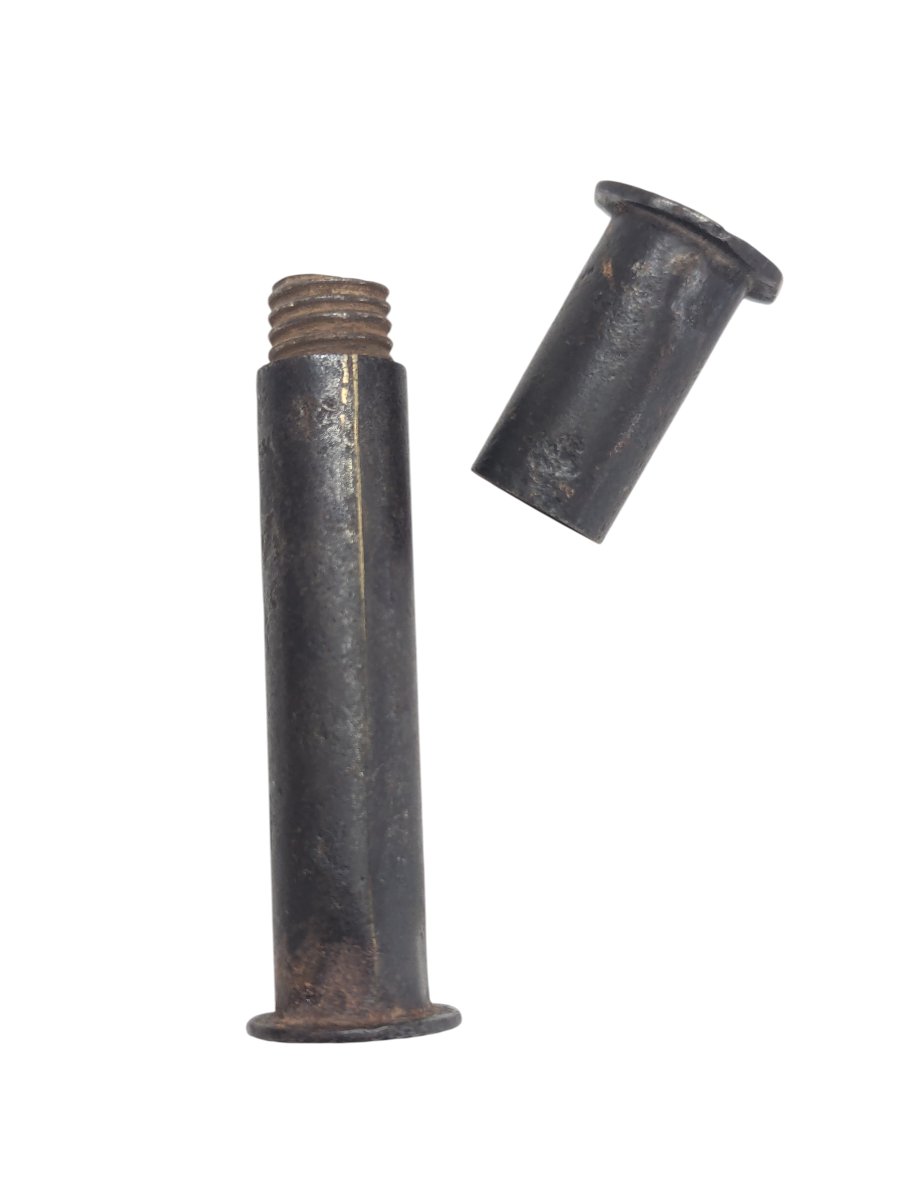
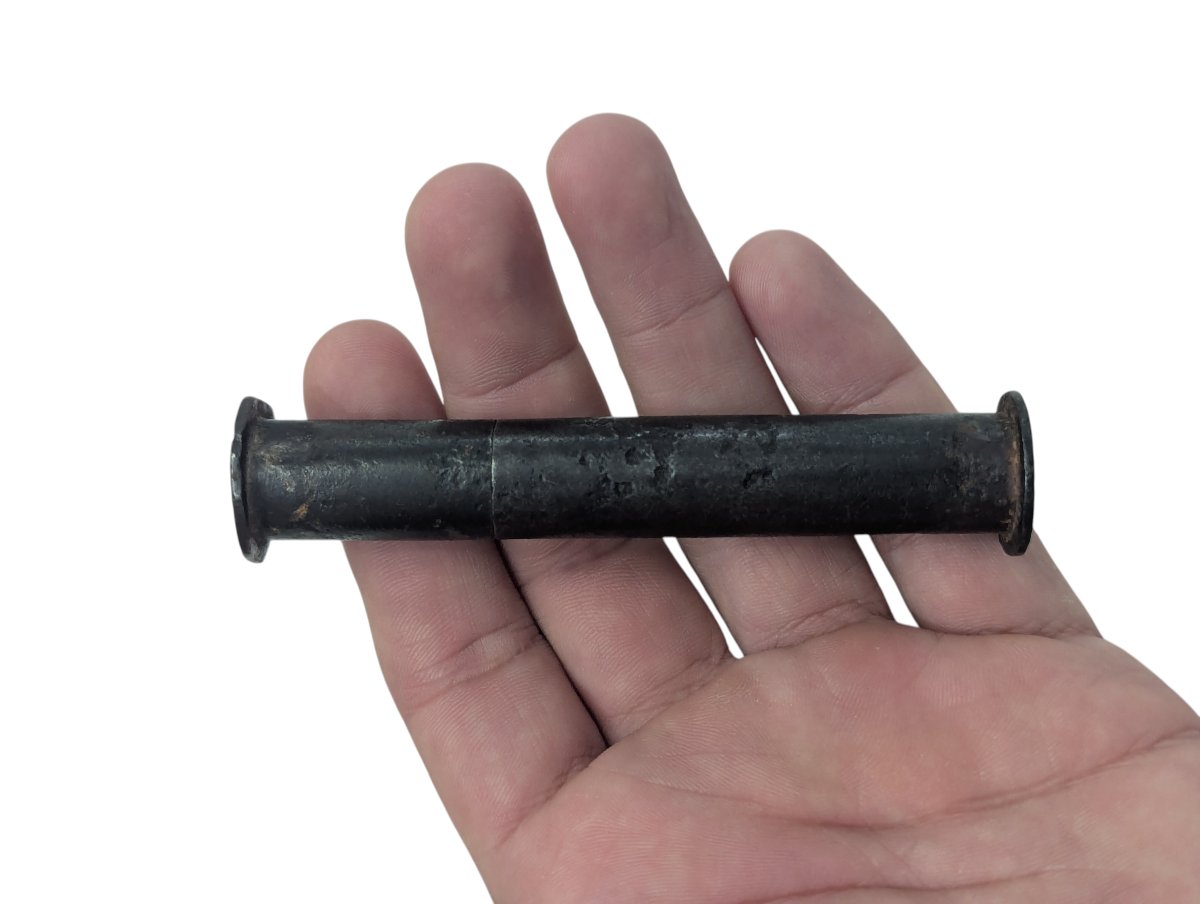
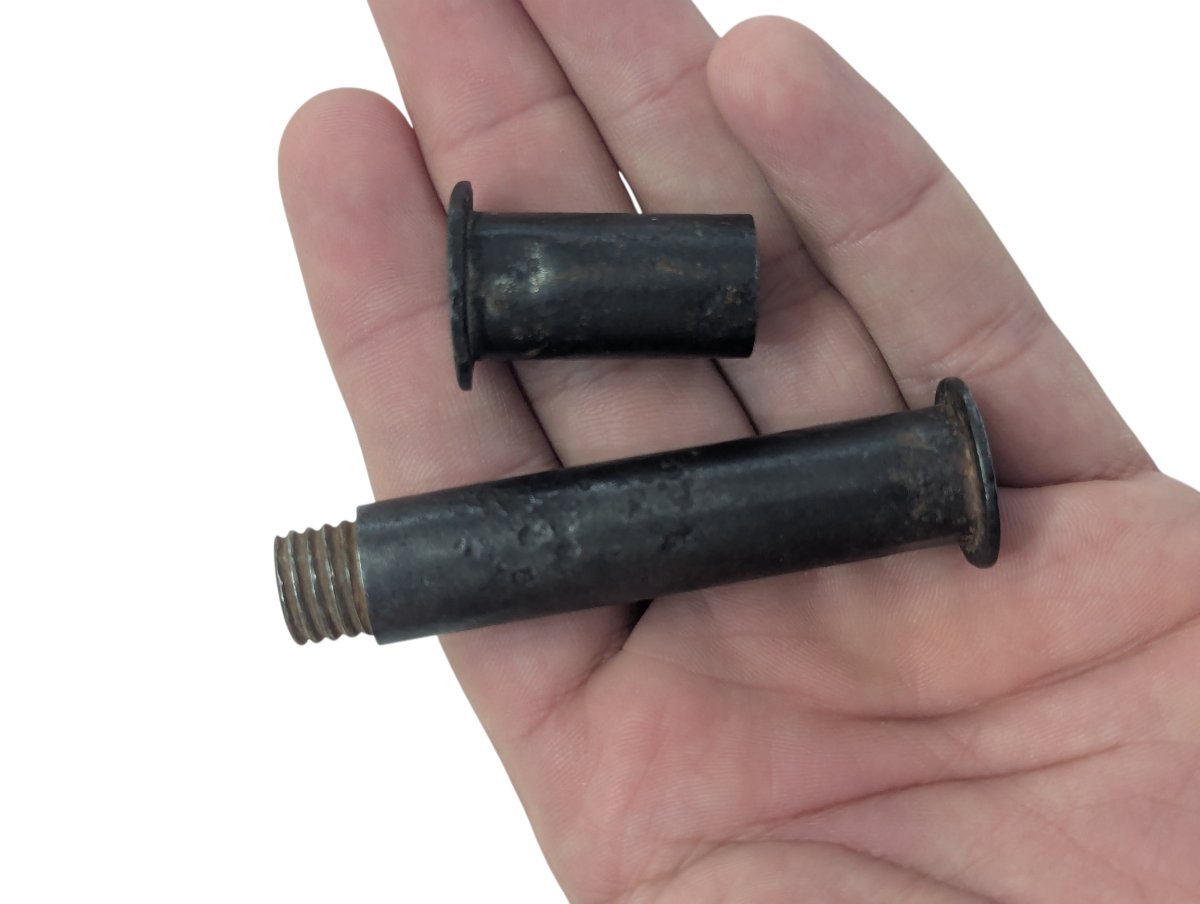
A rare antique wrought-iron wax case, cylindrical in shape, opening two-thirds of the way via a screw mechanism and featuring an engraved seal at each end. Measuring only 8.5 cm in length, this elegant little object attests to the care taken with personal correspondence and sealing instruments in the late 17th and early 18th centuries.
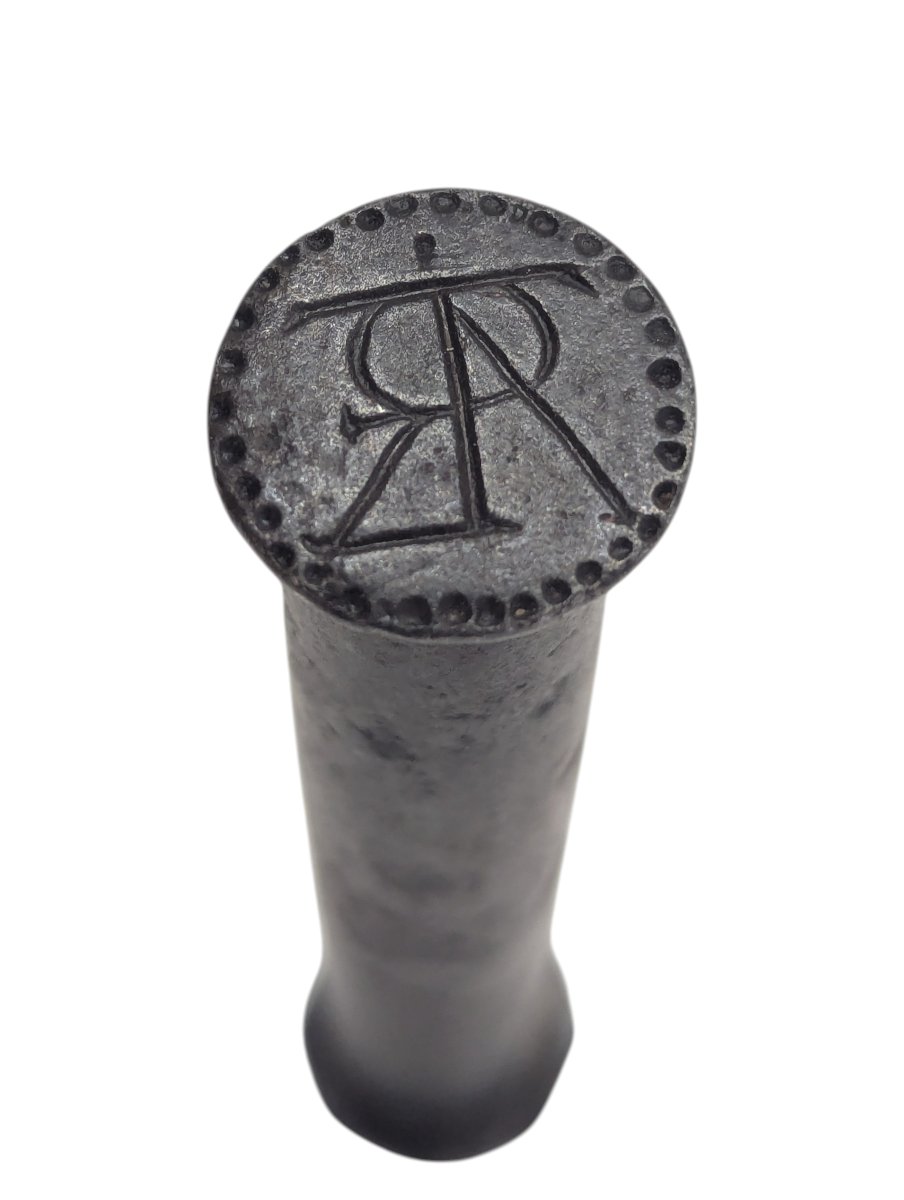
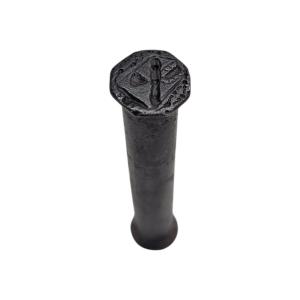
The simplicity of its metal body contrasts with the uniqueness of its two engraved dies. One features a monogram composed of intertwined initials, framed by a dotted border. The other bears a more enigmatic composition, combining several geometric and figurative motifs, also highlighted by a dotted border. The exact interpretation of this design remains to be determined, which adds to the appeal of this collector’s item.
The cylindrical body, with slightly flared ends, consists of two parts joined by a threaded connection. The construction is simple, functional, and sturdy. The iron has an aged patina, with dark hues and signs of wear that contribute to its authentic character.
The wax case was intended to hold a stick of sealing wax, which was essential for sealing and authenticating letters, documents, and private correspondence at a time when a seal served as a sign of personal identification.
The uniqueness of this example lies in the presence of two distinct dies, allowing for two different impressions to be made with a single tool. The monogram could be used to mark documents with the owner’s name, while the second die could feature another emblem or personal symbol.
These small objects, both utilitarian and personal, held a special place in the material culture of the 17th and 18th centuries. Their compact size made it possible to store them in a desk set or carry them easily.
The construction of this case is reminiscent of a type of object attributed to certain workshops in Nuremberg or Augsburg, two craft centers renowned for their metalwork. According to a hypothesis proposed for comparable examples, the iron bodies may have been manufactured in these regions before being exported to France, where the dies were engraved and personalized for their owners.
However, the German origin of our case cannot be considered certain in the absence of a workshop mark or historical documentation. Its attribution to a workshop in Nuremberg or Augsburg remains a hypothesis based on typological similarities.
8.5 cm long
Late 17th or early 18th century
Period: 17th century
Style: Louis 14th, Regency
Condition: Good condition
Material: Wrought iron
Length: 8.5
Reference (ID): 1838631
Availability: In stock