
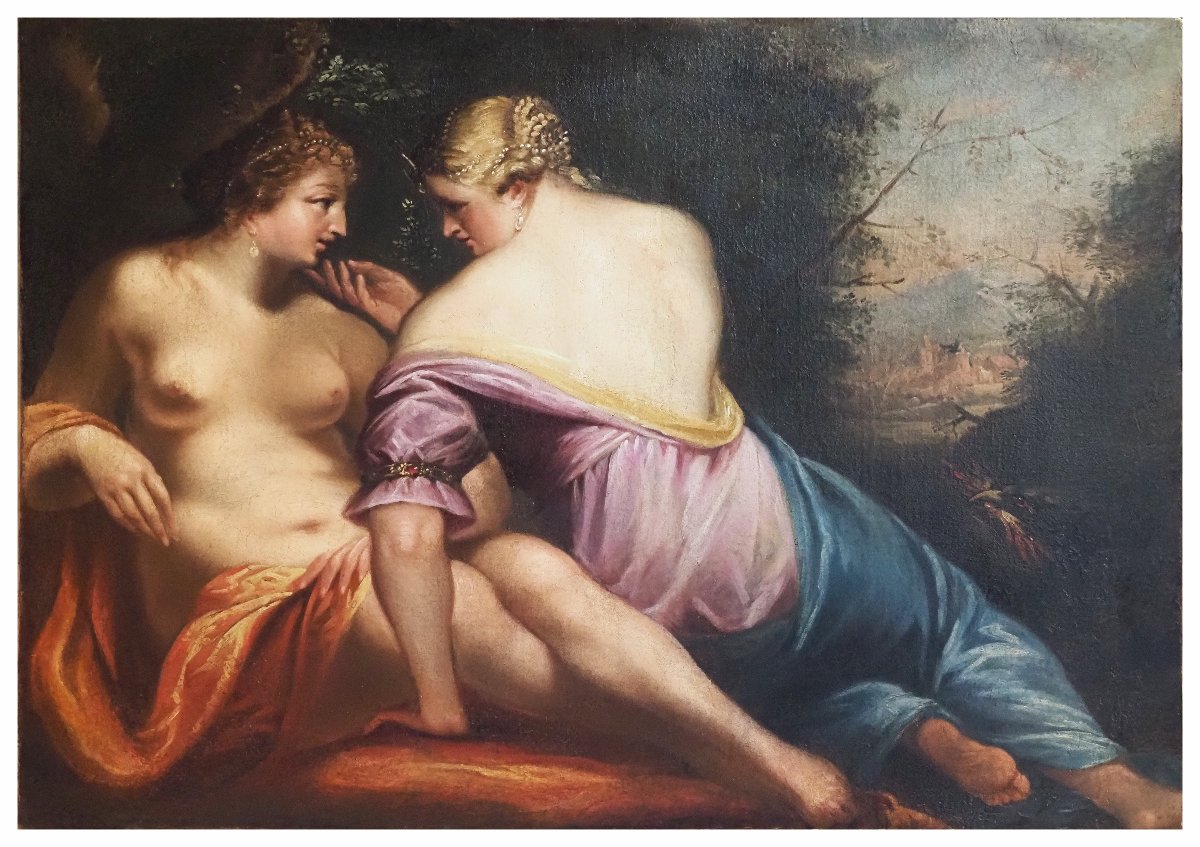

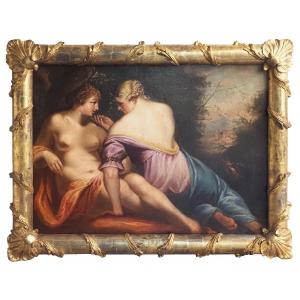


Diana And Callisto
Artist: Attribué à Pietro Liberi (padova 1605 – Venezia 1687)
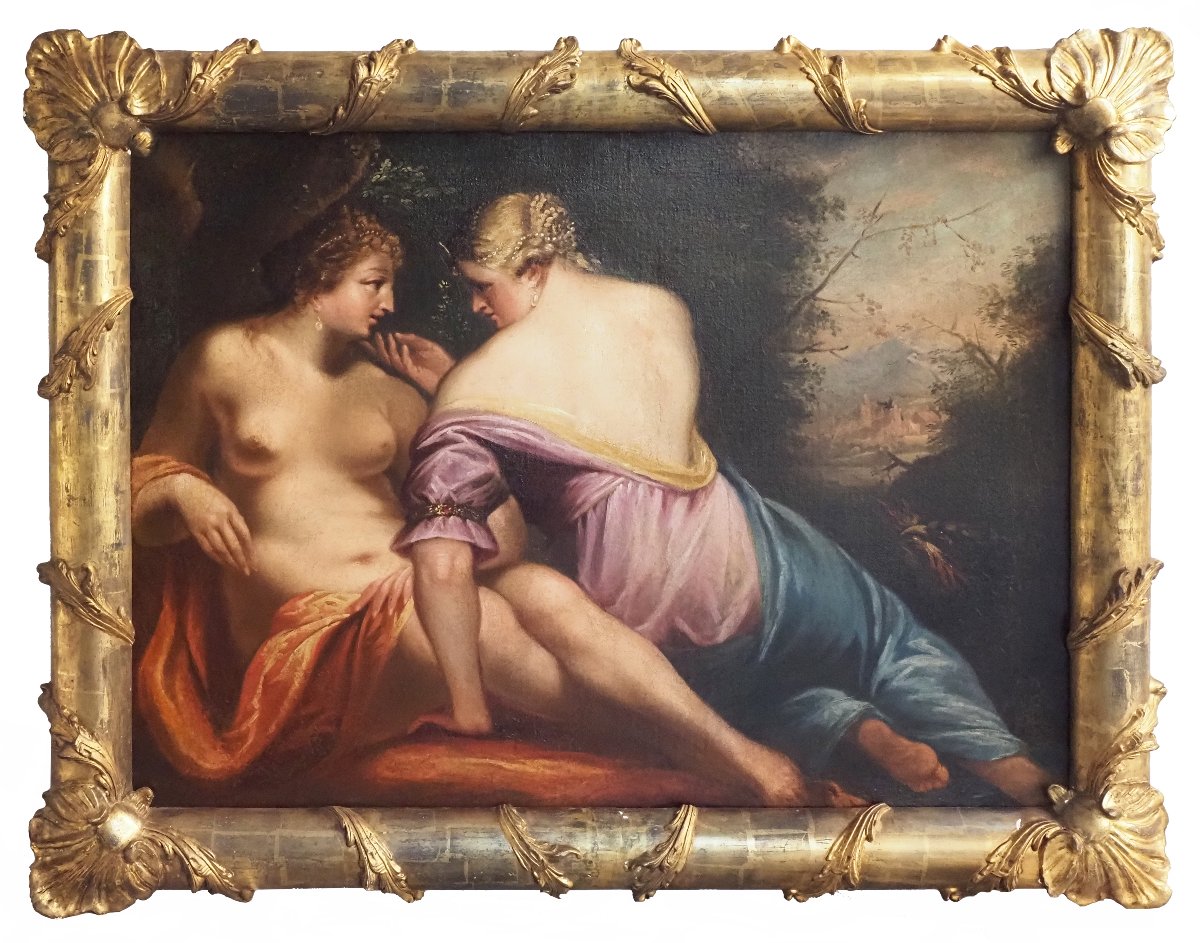
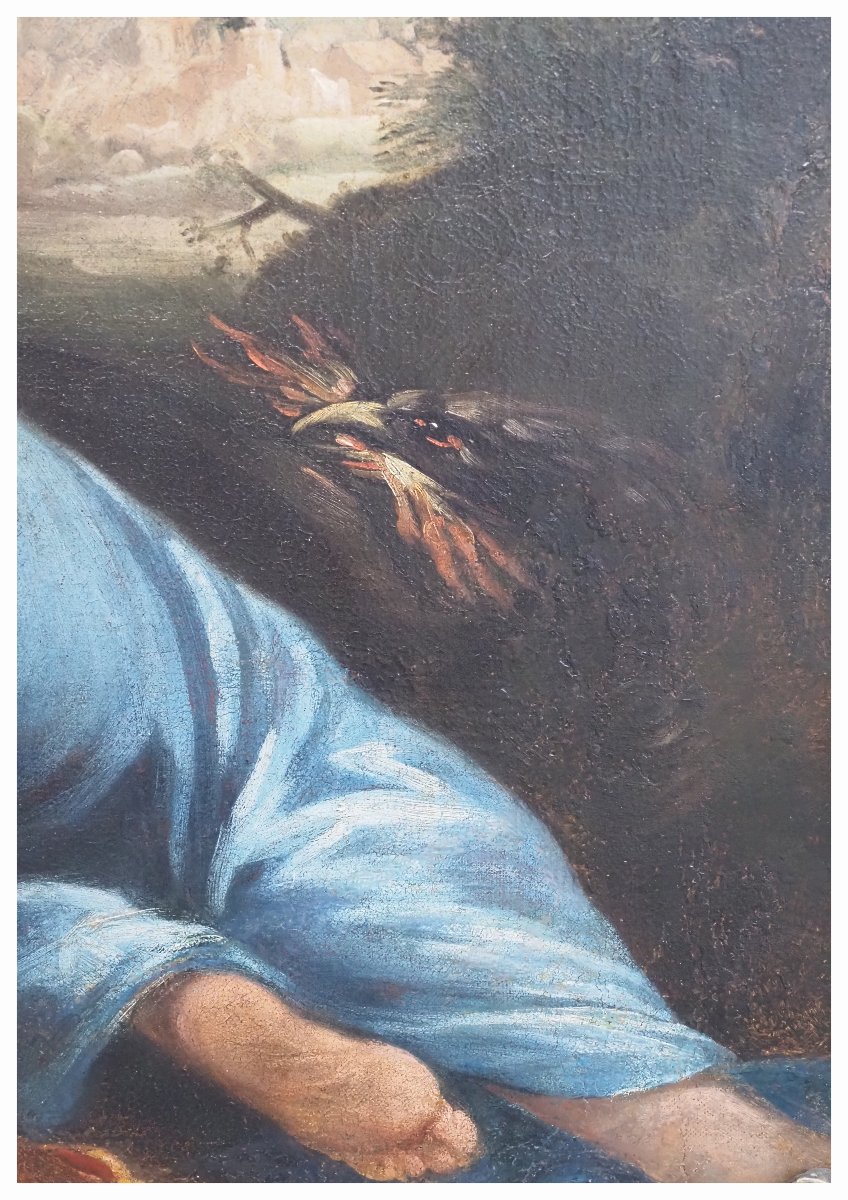
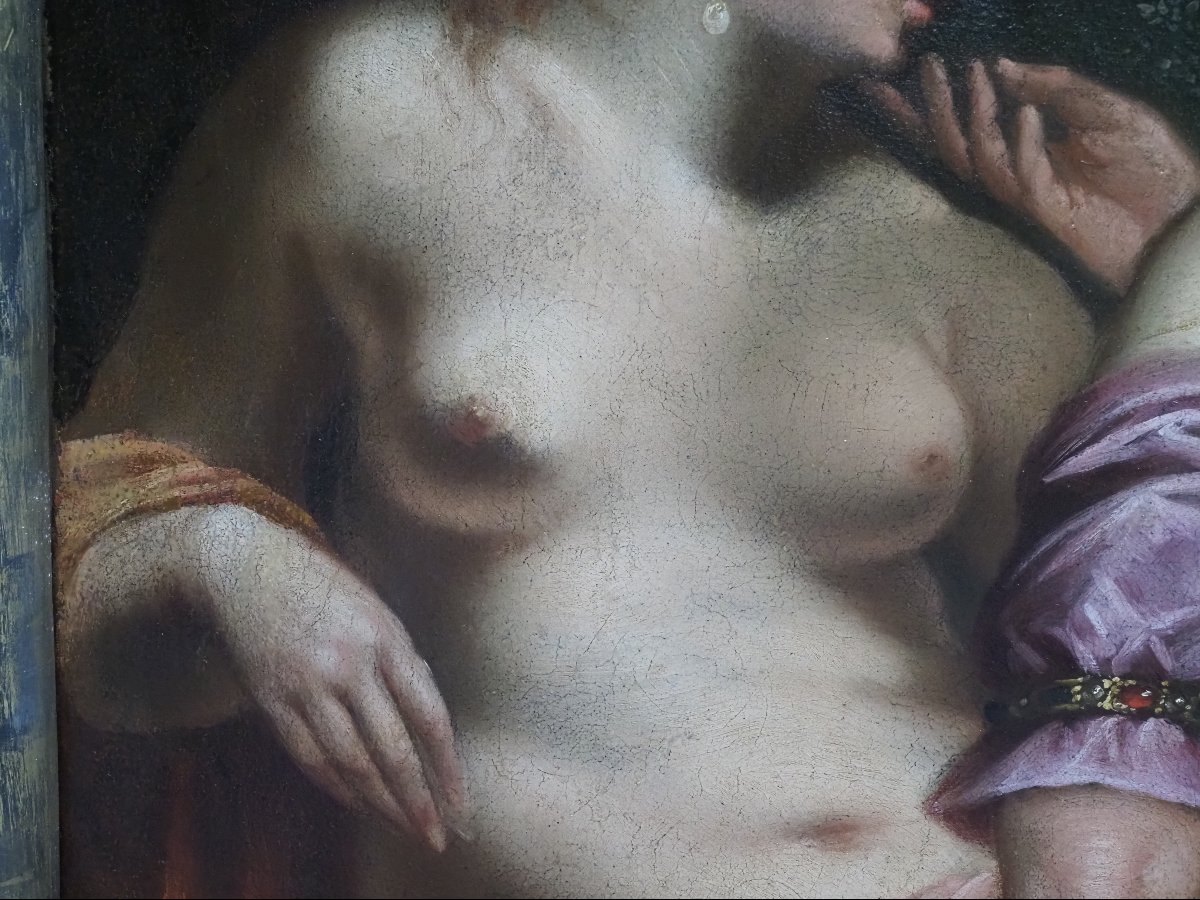
The scene, imbued with a strong sense of intimacy and sensuality, depicts the myth of Diana and Callisto as told by Ovid in his "Metamorphoses". The myth tells of the nymph Callisto, devoted to the goddess Diana, and therefore bound to chastity. Jupiter, having fallen in love with the young woman, takes on theappearance of Diana herself to deceive and seduce her. The painting depicts the most psychologically intense moment of the narrative: the seduction by Jupiter, in the guise of the goddess Diana. The composition captures the moment of intimacy between the two female figures: Callisto is depicted naked and vulnerable, while Jupiter-Diana, dressed in an elegant purple and blue, leans over her, gazing at her with a lustful look as she caresses her. Jupiter’s “disguise,” however, is betrayed by his muscular and powerful figure and by the eagle—his symbolic animal—which appears on the right side of the painting, clutching a thunderbolt in its beak. The scene is set in a clearing surrounded by dense vegetation, which opens up on the rightrevealing a glimpse of a valley with a city and mountains in the background. The darkcolors of the forest create a pleasing contrast with the brightness of the garments, in the spirit of the most typical Venetian colorism—details that complement the elaborate hairstyles embellished with strands of pearls. Based on its quality and style, the work is attributed to Pietro Liberi (Padua 1605 –Venice 1687). A cultured and versatile artist, he is known for having combined the sensuality of Venetian painting with Baroque dynamism. In this work, one can also detect a certain libertine spirit, reflected in the choice of subject and in its intensely erotic and ambiguous depiction. The work reflects a taste typical of the seventeenth century: an interest in myths as a pretext for exploring psychology, sensuality, and inner conflicts. The depiction of female nudityis never gratuitous but is always linked to a specific mythological and moral meaning—here, the betrayal of chastity and theconsequent punishment. Pietro Liberi, a leading figure in 17th-century Venetian painting, was highly regarded by both his contemporaries and later art critics, and his works are found in major European and American collections. Paintings similar in color and composition include “Susanna and the Elders” at the Gemäldegalerie in Kassel, an “Allegoryof Fortune and Presence” now in a private collection, and a painting of the same subject, “Diana and Callisto,” at the Ringling Museum in Sarasota, Florida. The painting is framed by a scenic Art Déco period frame.
10 000 €
Period: 17th century
Style: Louis 14th, Regency
Condition: Good condition
Material: Oil painting
Width: 115
Height: 85
Reference (ID): 1835083
Availability: In stock
Print