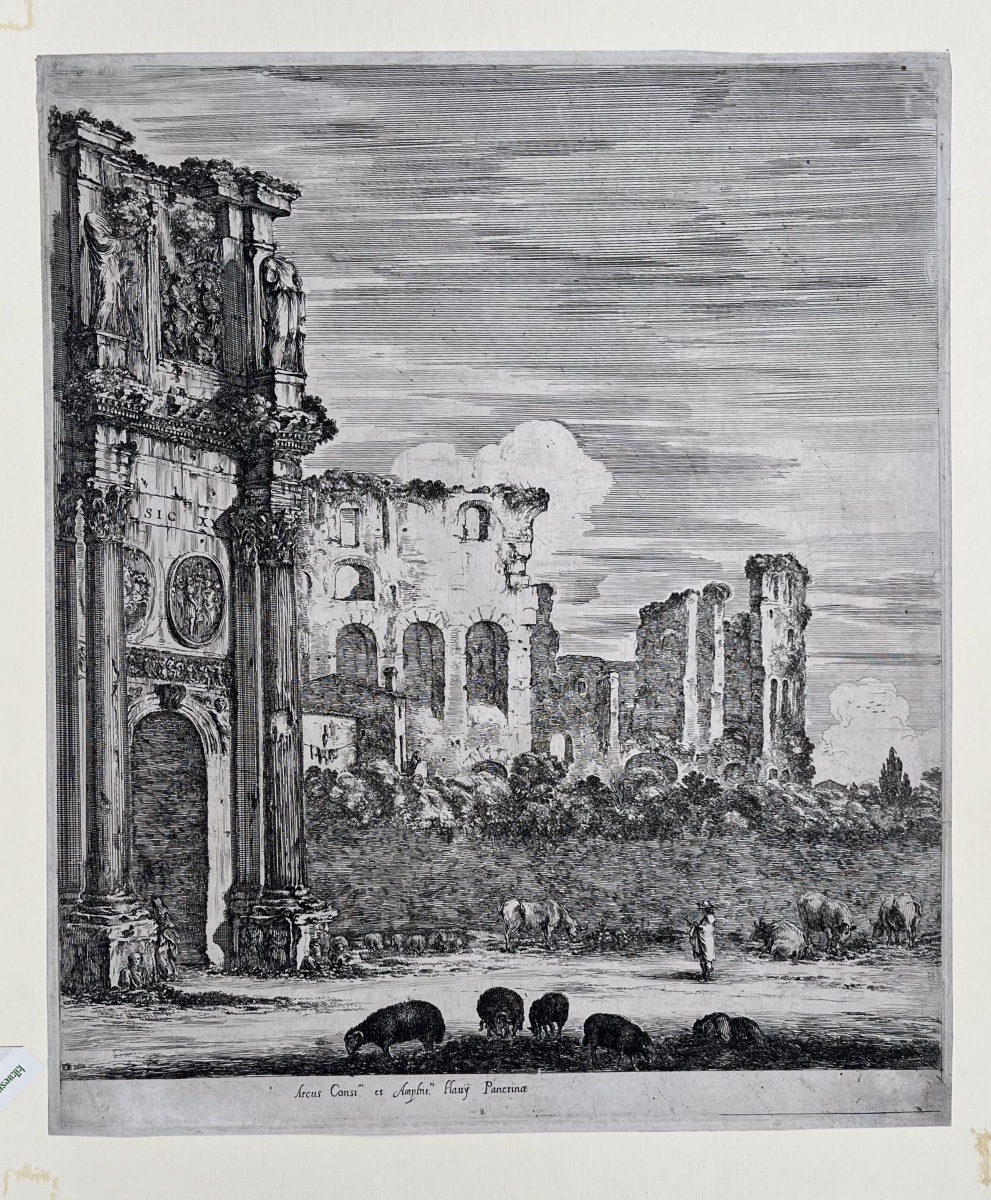
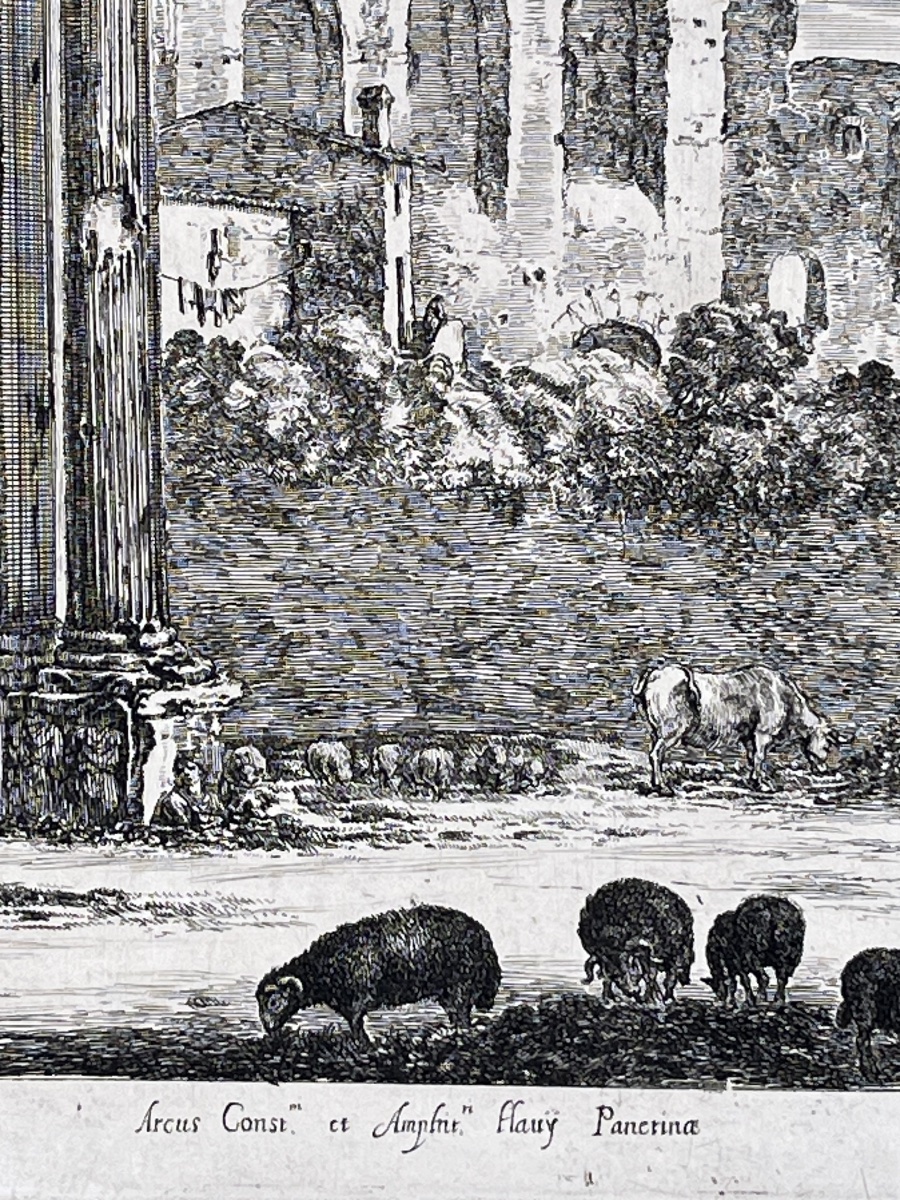
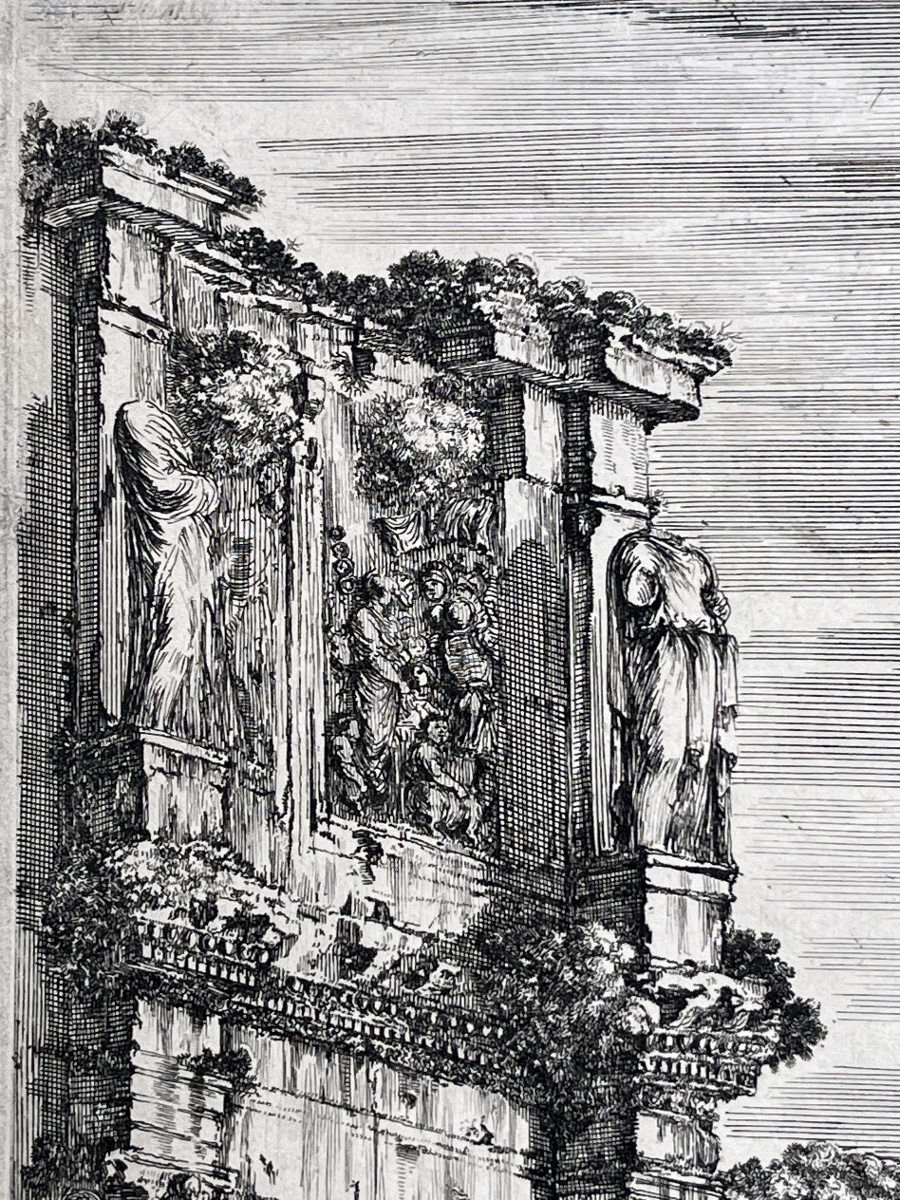
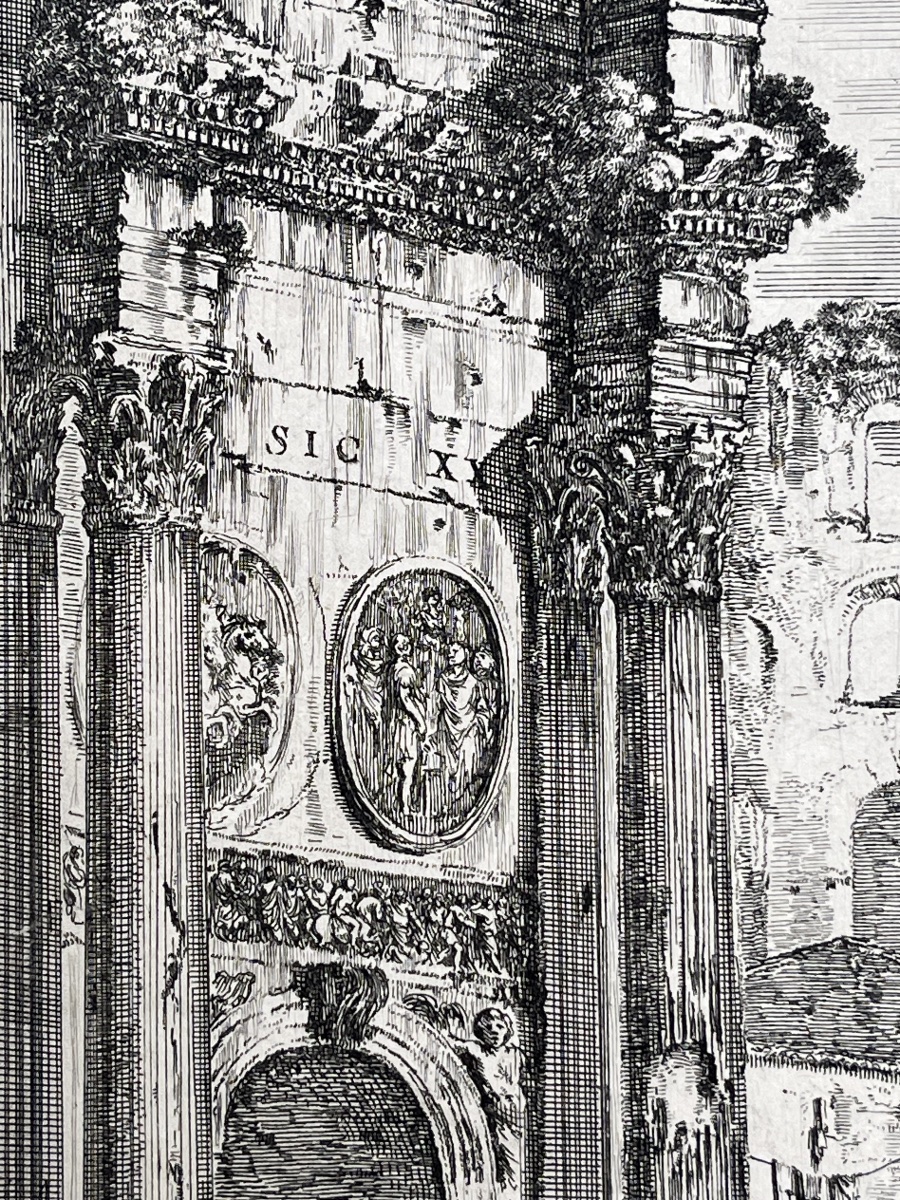
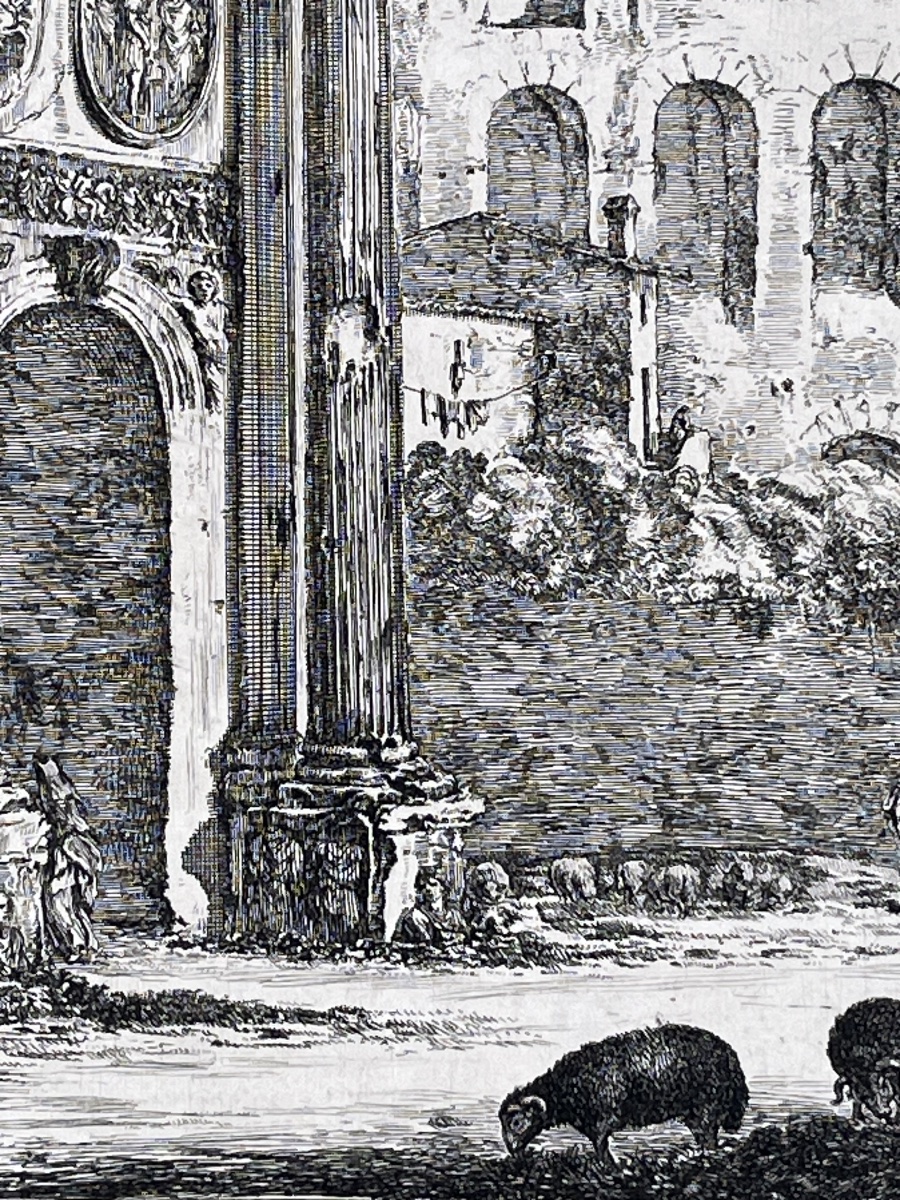



Stefano Della Bella, Arch Of Constantine And Colosseum, 17th-century Etching, Colbert Watermark
Stefano della Bella, Arch of Constantine and Colosseum, 17th-Century Etching, Colbert Watermark
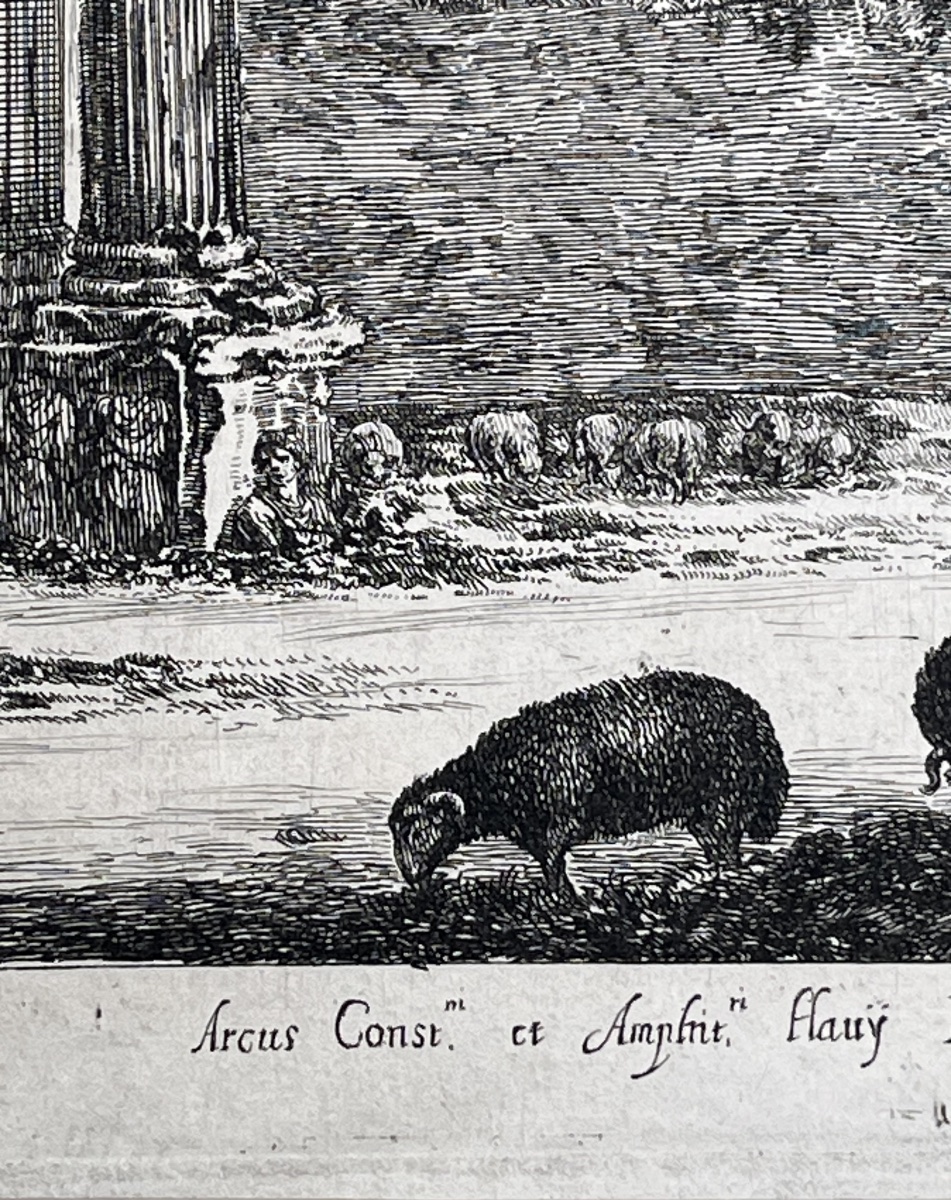
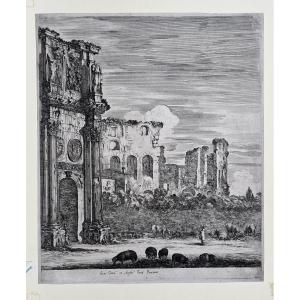
Arcus Const.ini et Amphit.ri Flavii
Stefano della Bella (Florence, 1610–1664), known in France as Étienne de la Belle.
Original etching on French laid paper with a watermark associated with the Colbert arms.
Plate engraved in 1656; French impression datable to the closing decades of the 17th century. The series was published in Paris by Israël Henriet, succeeded by Israël Silvestre.
Second state of two in the traditional classification: with the Latin inscription identifying the monuments depicted, absent in the first state.
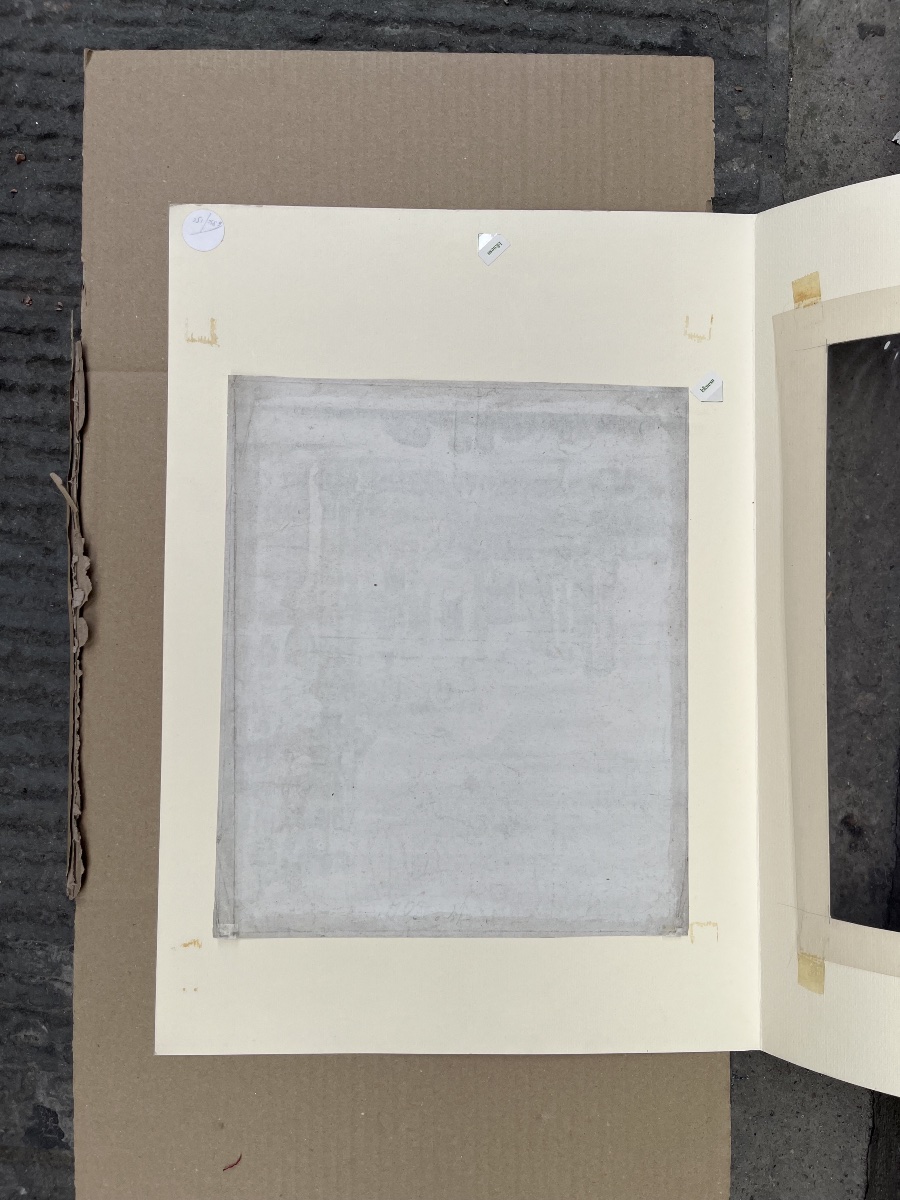
Sheet dimensions: 27.5 × 32.5 cm (10.83 × 12.80 inches).
From the series Six Large Views, Four of Rome and Two of the Roman Countryside.
Reference: De Vesme–Massar 834, II/II.
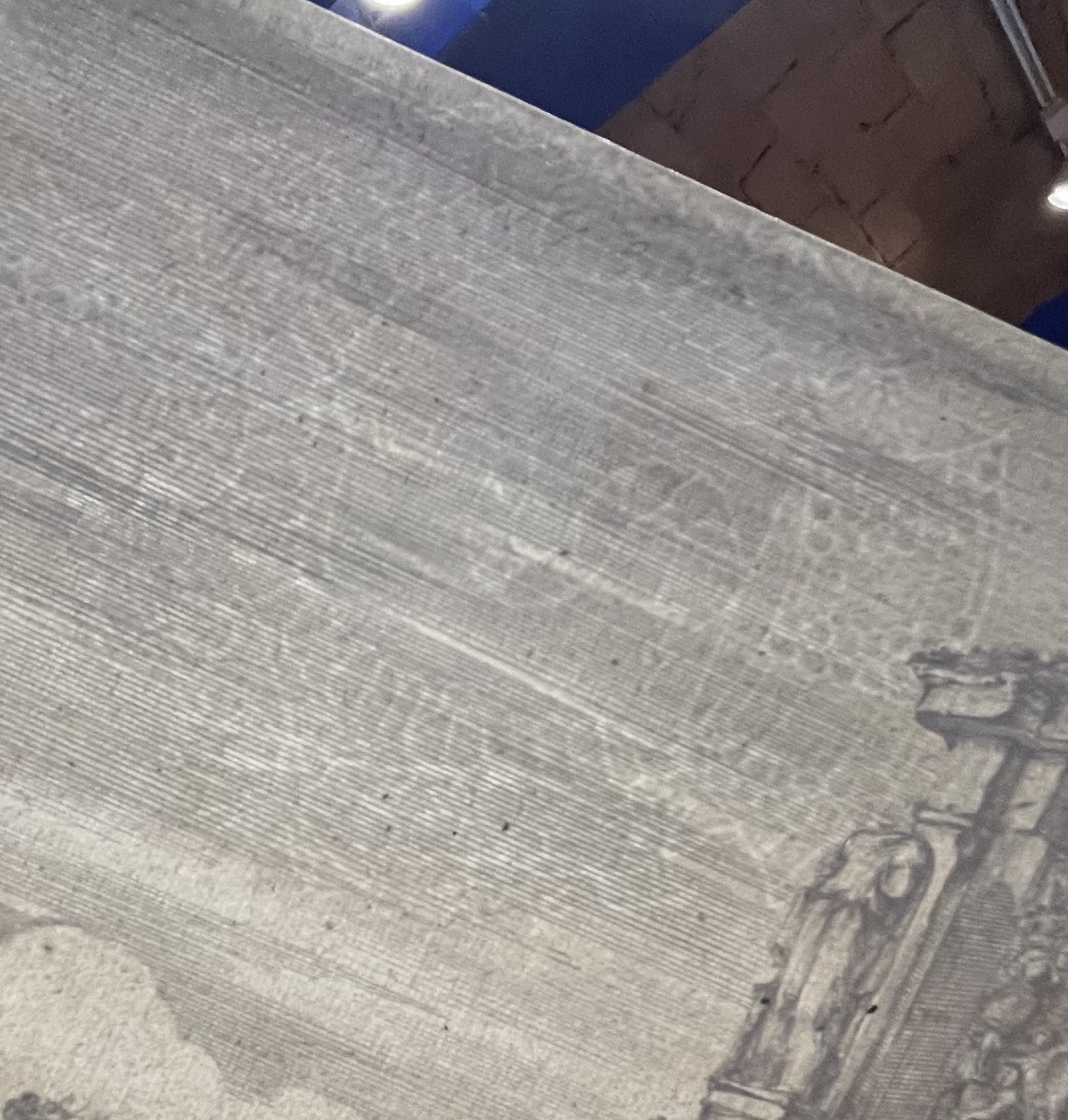
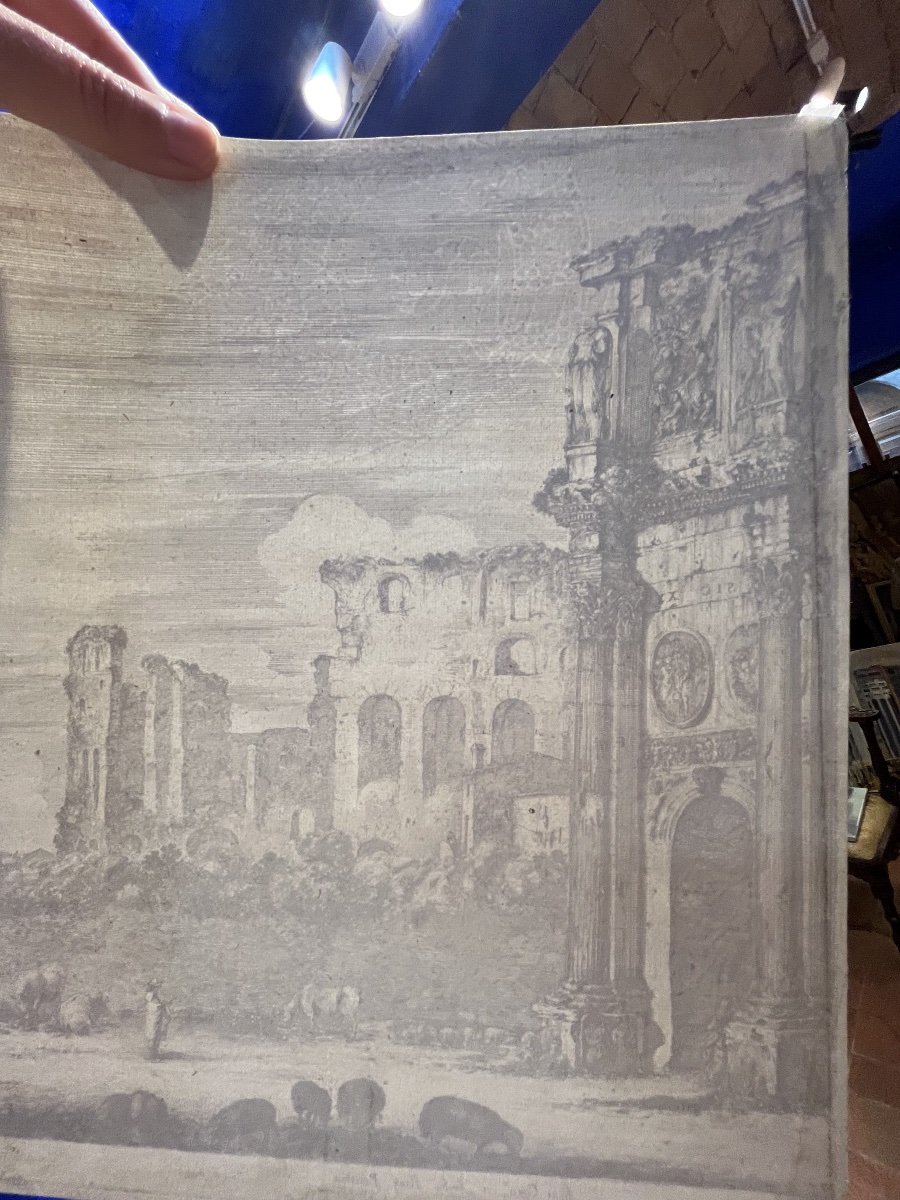
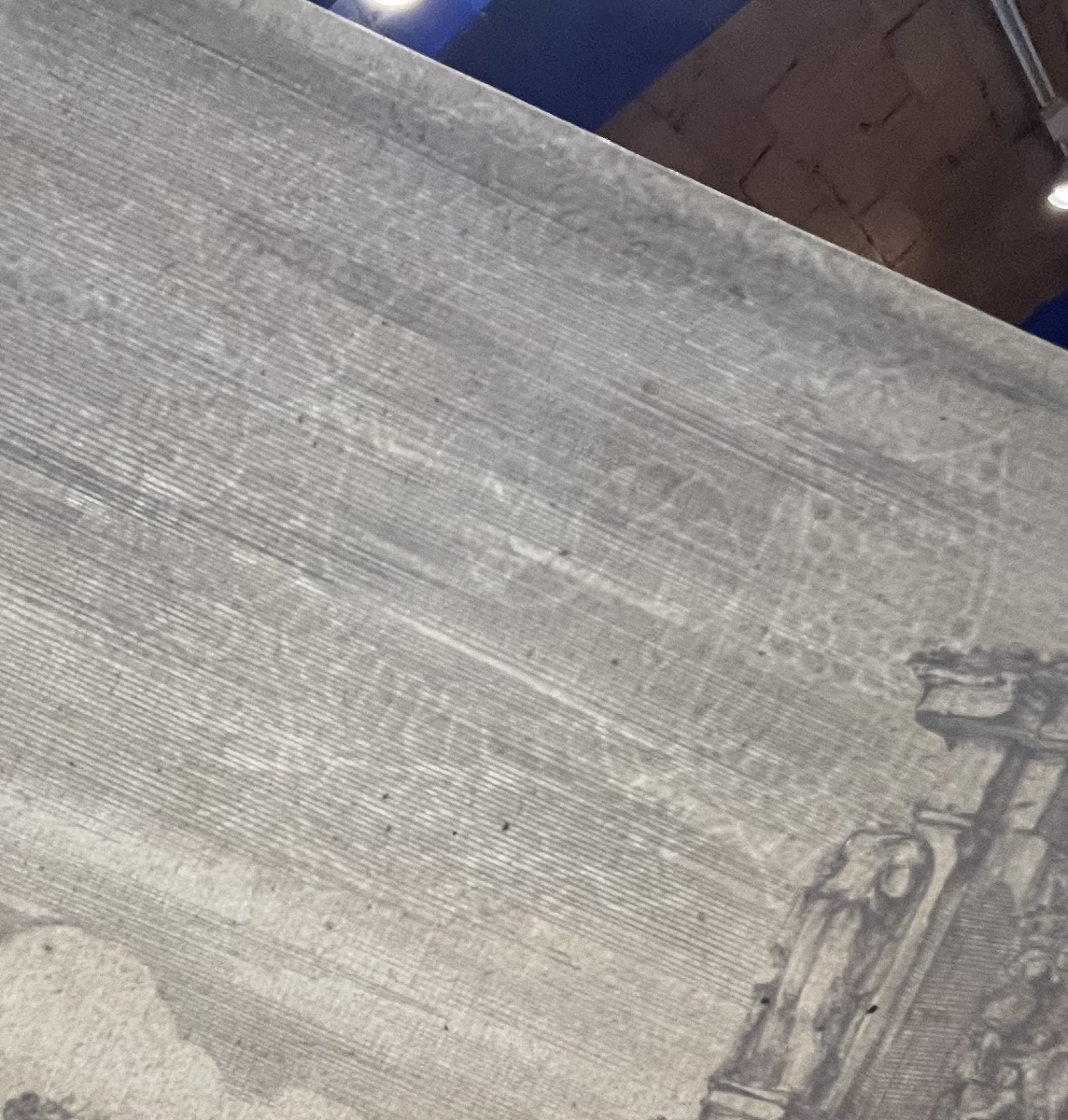
Viewed against the light, the upper part of the sheet reveals an unexpected clue: a serpent within a crowned shield, with the cross of the Order of the Holy Spirit beneath it. The watermark recalls the arms of Jean-Baptiste Colbert, Louis XIV’s finance minister and a central figure in French economic and manufacturing policy. How did his emblem find its way onto a Roman view etched by a Florentine artist?
The answer begins with Stefano della Bella’s career. Trained in Florentine workshops, advised by Remigio Cantagallina and profoundly influenced by Jacques Callot, he met the French publishers Israël Henriet and François Langlois in Rome. In 1639 he travelled to Paris, where he remained until 1650, working for local publishers and receiving commissions from Richelieu and Mazarin.
His return to Florence did not end these relationships. The six large Roman views, etched around 1656, were entrusted to Henriet for printing in Paris. The French publishers therefore held the original copperplates and could continue printing them after the artist’s death in 1664. The reconstructed history of the plates subsequently places them with Israël Silvestre, Henriet’s nephew.
The paper adds another significant element. According to Gaudriault’s research, paper bearing the Colbert arms was produced from 1668, initially for ministerial use and subsequently also for publishing. Watermarks from the same family are documented on impressions of Silvestre’s prints, providing a comparison that supports a late 17th-century date for this sheet.
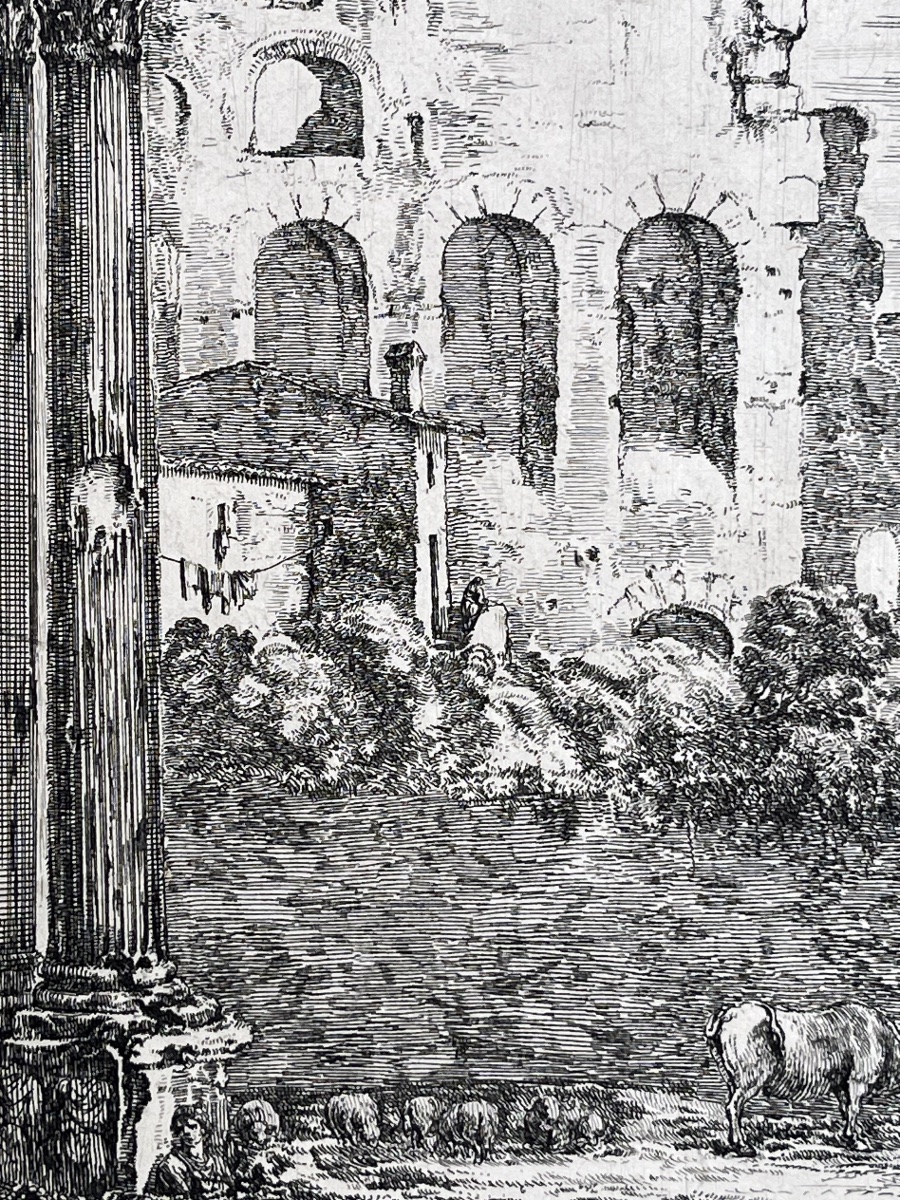
Rome supplies the subject, Florence the invention, and Paris the publishers and presses. The Arch of Constantine dominates the left of the composition, while the Colosseum rises on the right; sheep in the foreground introduce a quiet pastoral scene. Monuments and small incidents intertwine in della Bella’s vision, turning a topographical view into a story.
Period: 17th century
Style: Louis 14th, Regency
Condition: Good condition
Material: Paper
Width: 27,5cm
Height: 32,5cm
Reference (ID): 1834933
Availability: In stock