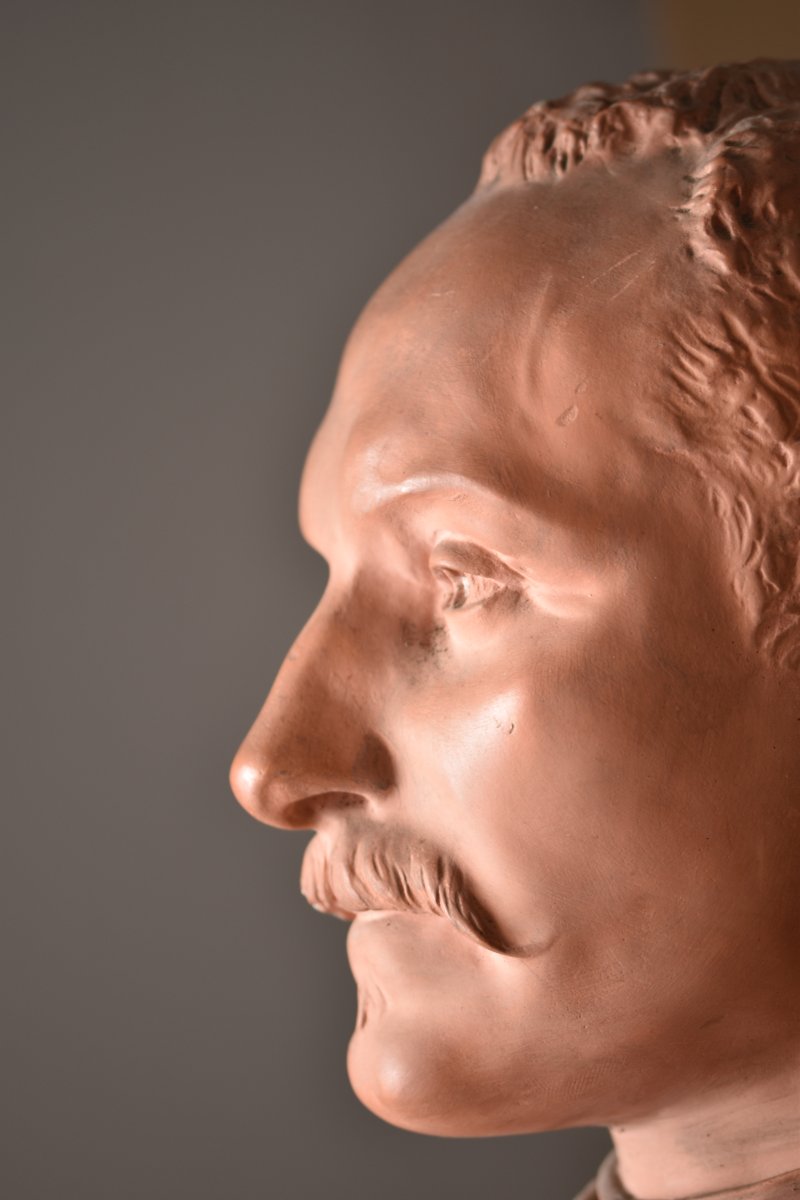
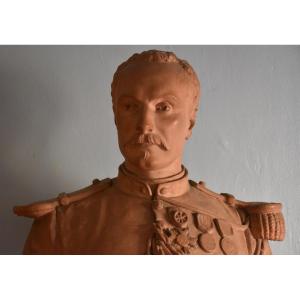


Portrait Of Gaston De Galliffet By Miriam Franck (1866)
Miriam Franck (Zurich 1837 – Bordeaux 1919)
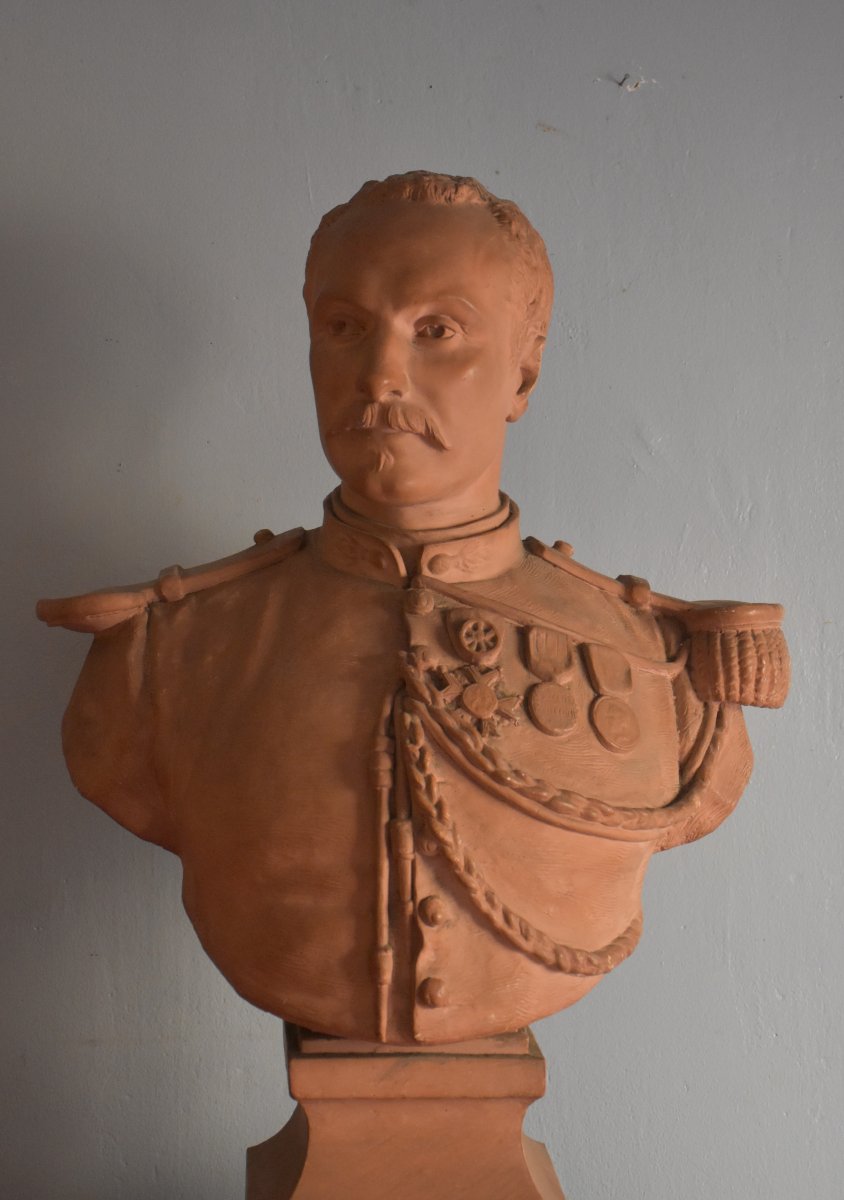
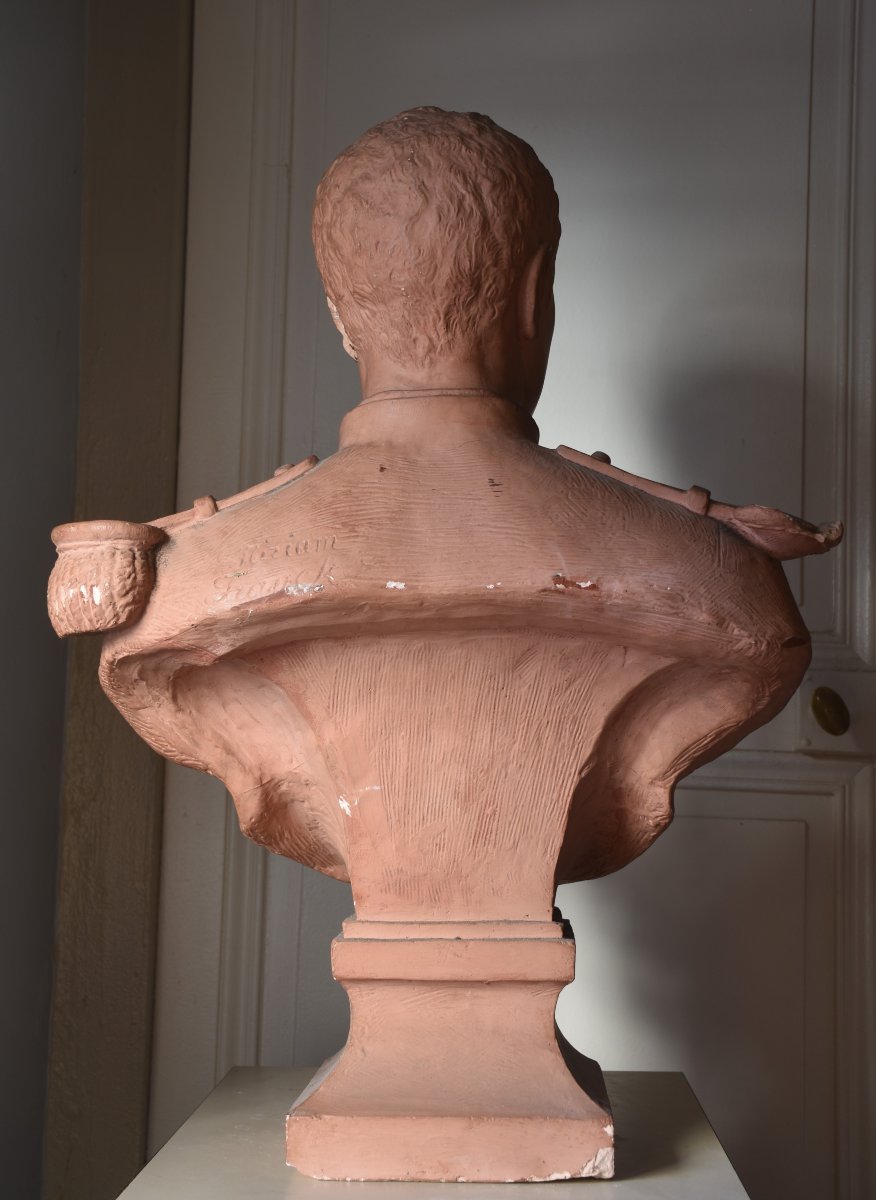
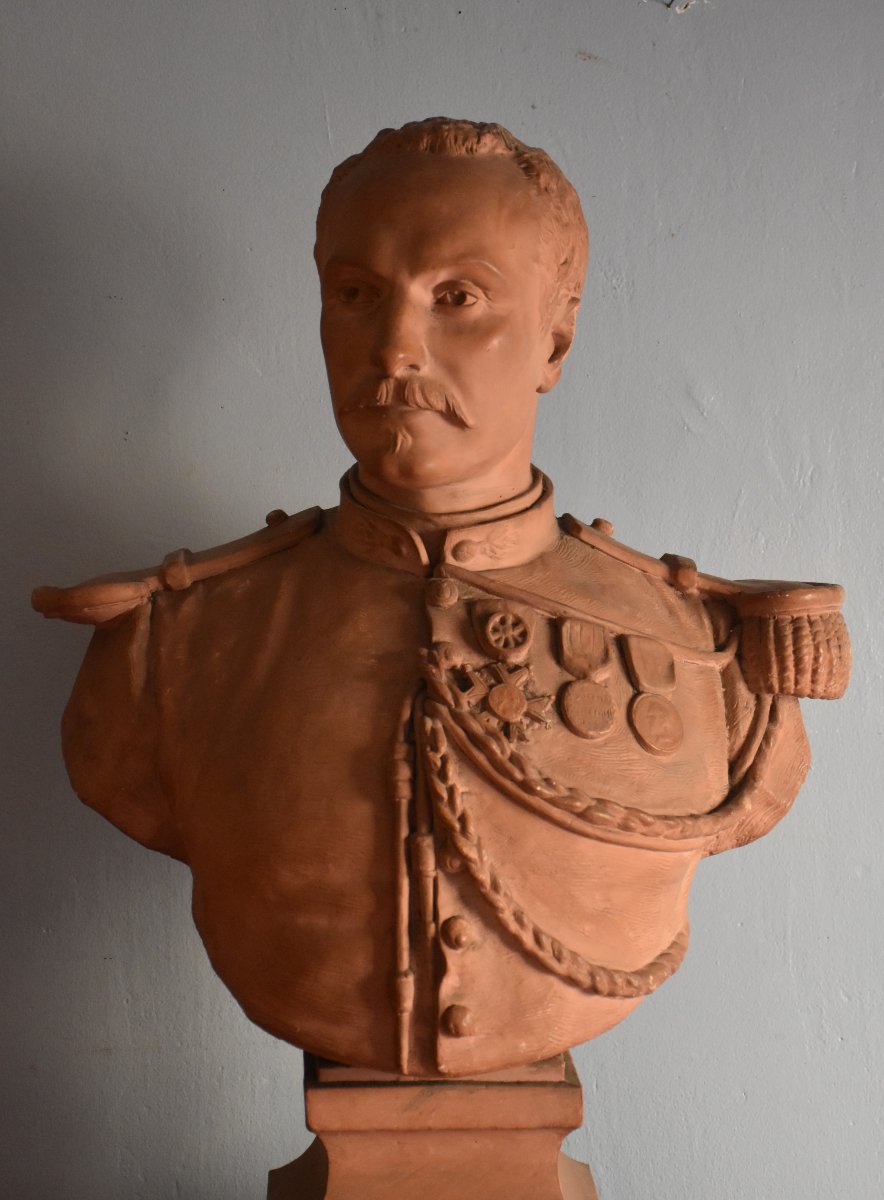
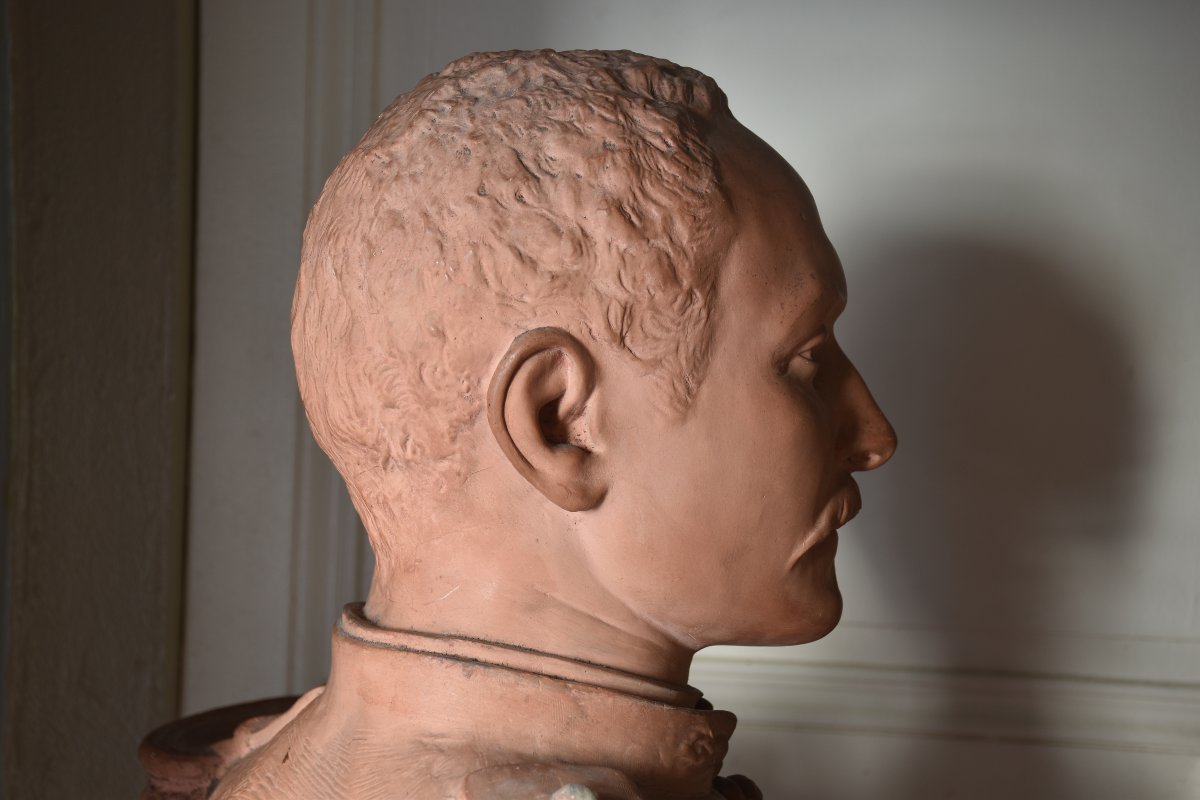
Portrait of Gaston de Galliffet
1866
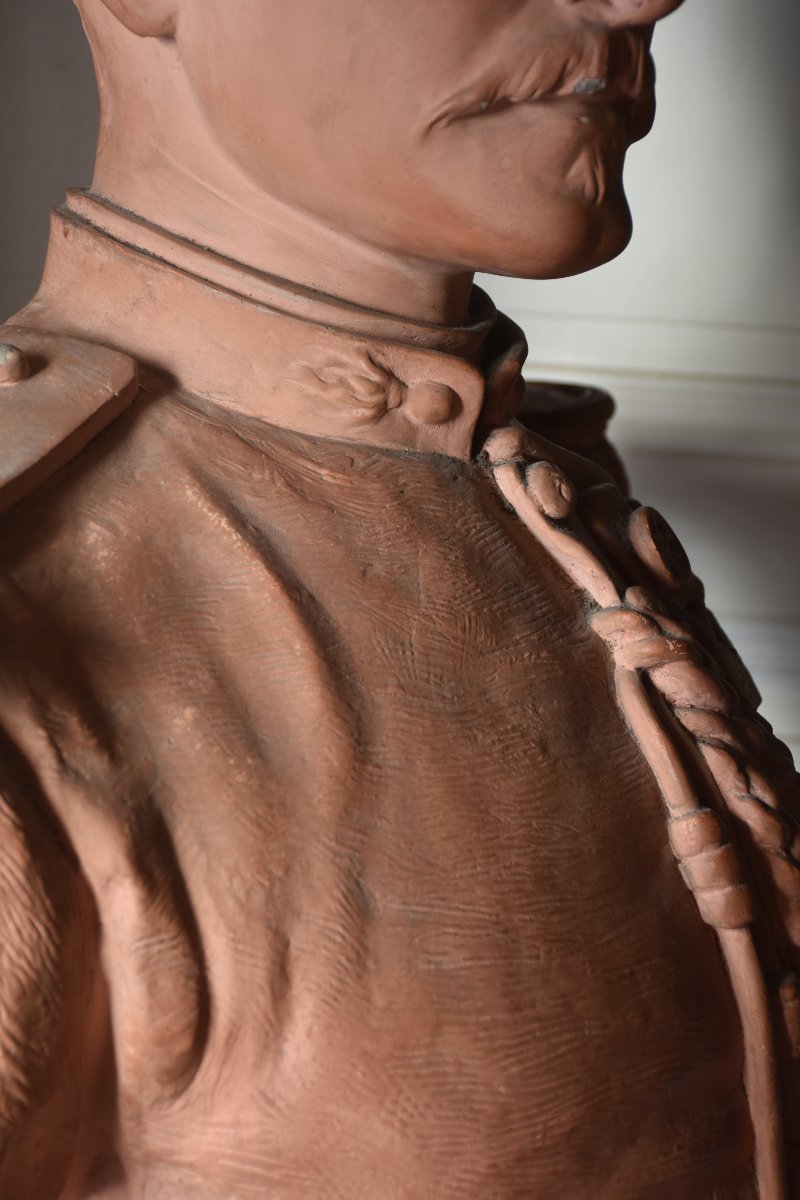
Terracotta
H. 78 cm
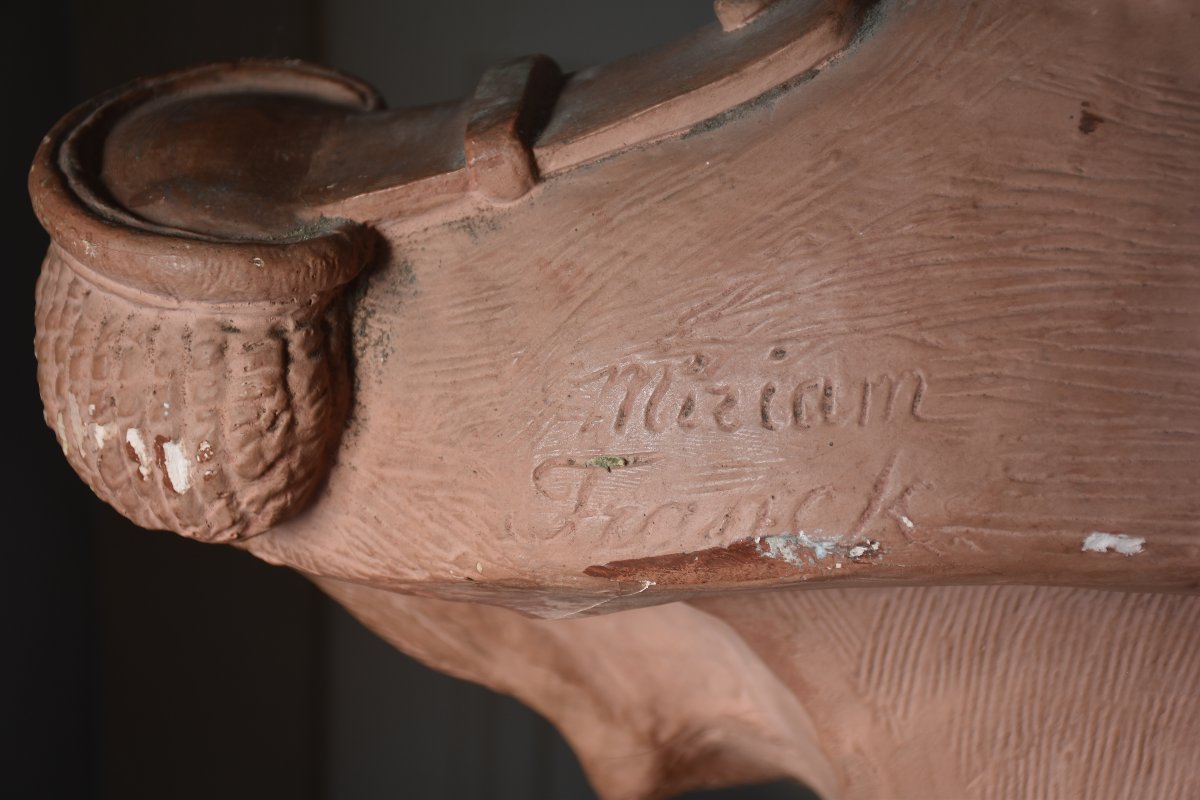
Signed: Miriam Franck
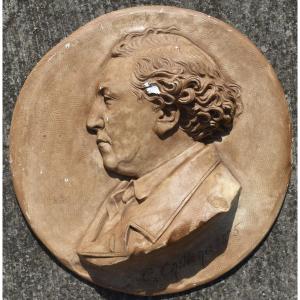
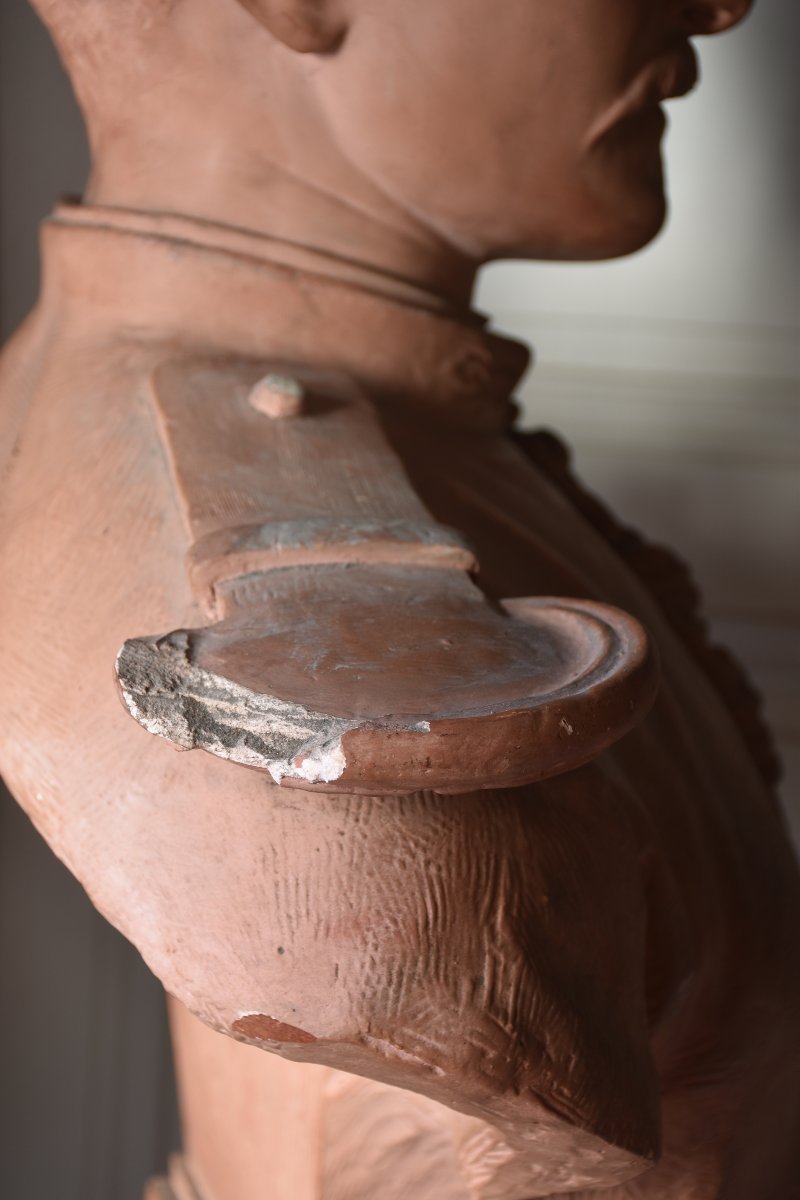
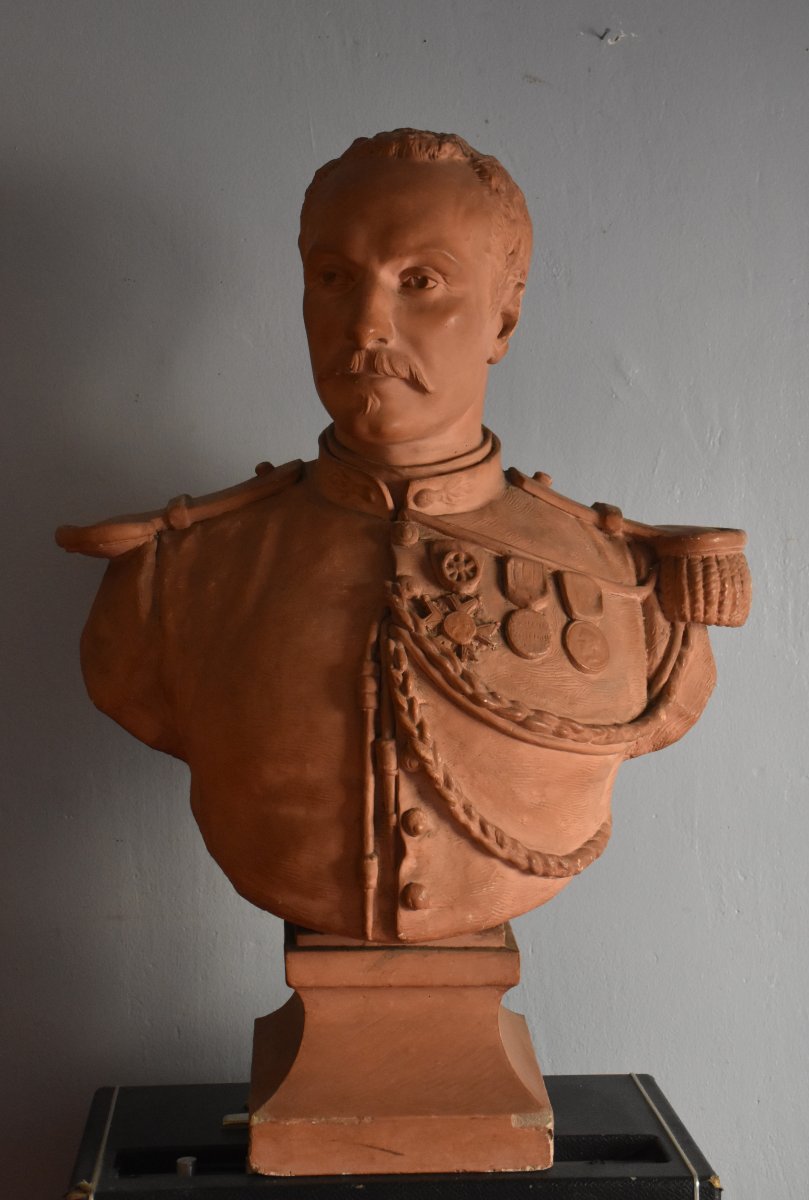
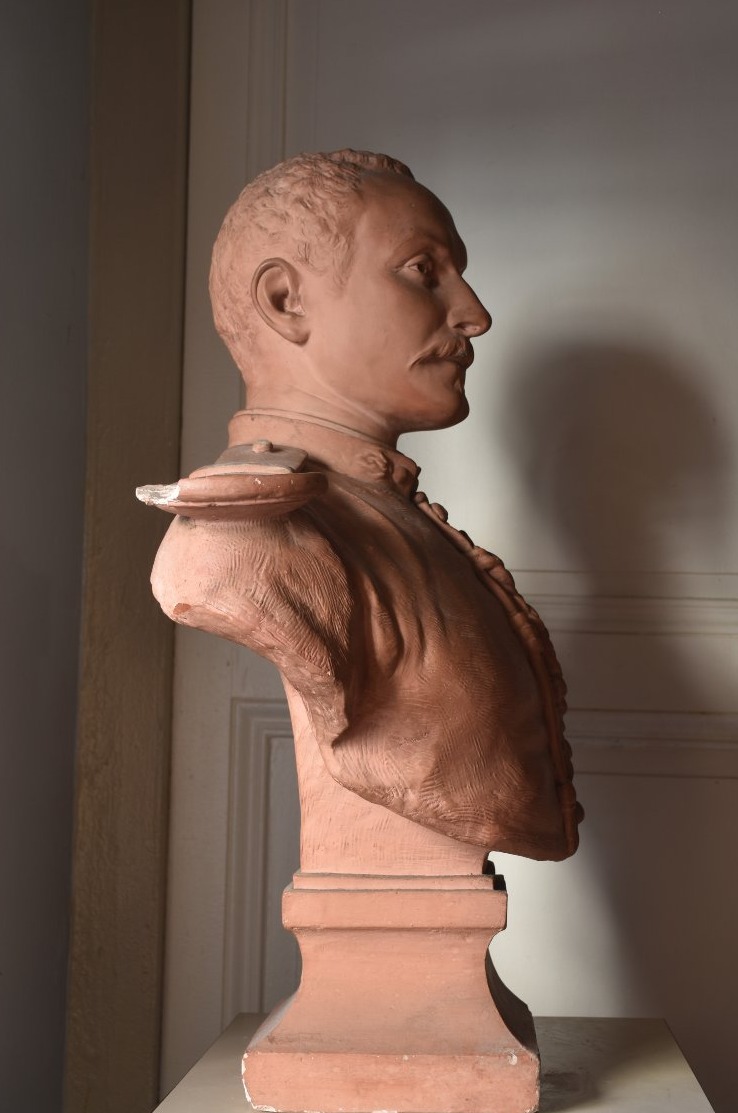
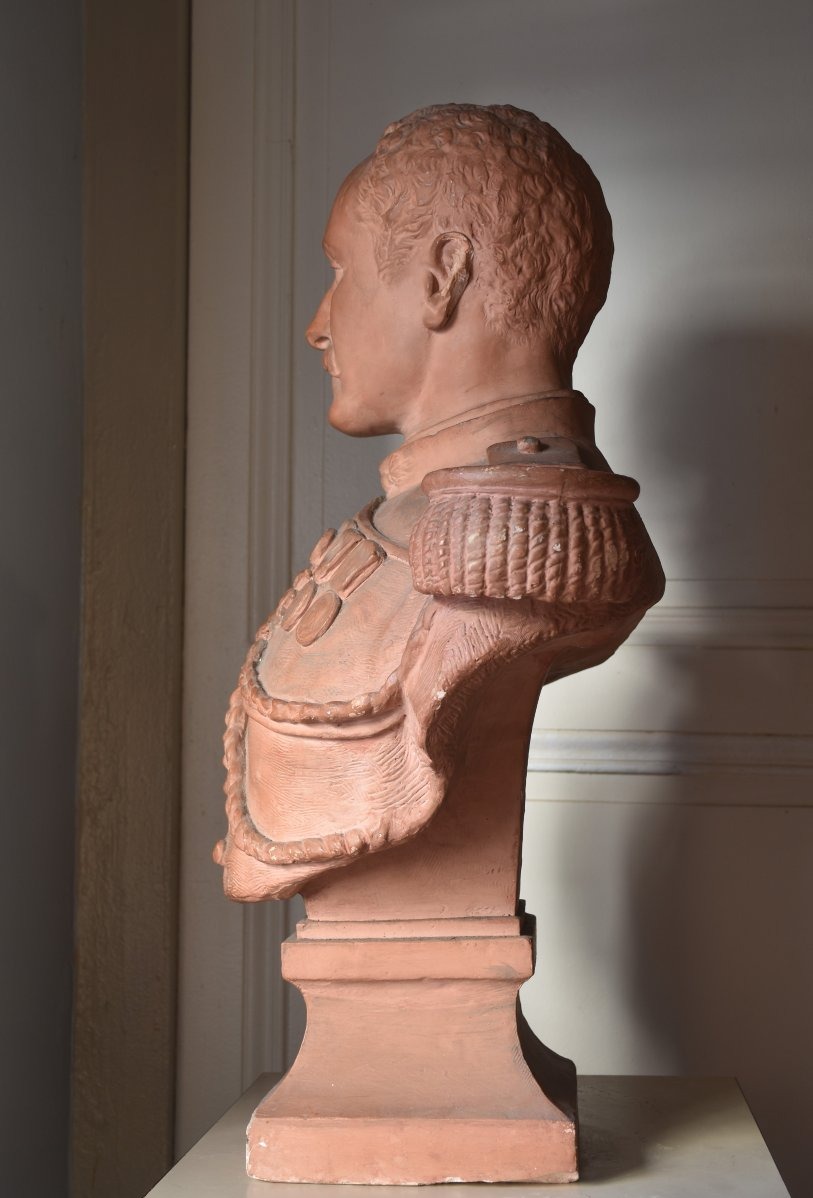
Gaston de Galliffet, here with the rank of lieutenant colonel, was a prominent military figure of the 19th century. Born in 1830 into a noble Provençal family, he grew up between the Hôtel de Galliffet in Paris and the Château du Tholonet, near Aix, the family’s primary residence in Provence. In 1848, at the age of 18, he joined the cavalry and began a distinguished career by participating in the campaigns in Crimea, Algeria, Italy, and Mexico. He was promoted to Officer of the Legion of Honor in 1863, to lieutenant colonel on 17 June 1865, and then to colonel on 14 August 1867. This portrait made by the sculptor Miriam Franck in 1866, depicts Galliffet mid-career, when he was already one of France’s most famous military figures.
Galliffet later took part in the Franco-Prussian War, where he led the brigade that charged at Sedan; he was also involved in the suppression of the Paris Commune (he was known as the “Marquis with the Red Heels”). After another campaign in Algeria, he was promoted to general in 1875. He was appointed governor of Paris by Gambetta, and from 1881 to 1885, as chairman of the cavalry committee, he restructured and modernised the French cavalry. Despite the failure of his political ambitions toward the end of his career, he was appointed to positions of great responsibility by Gambetta and Waldeck-Rousseau. The latter even appointed him Minister of War. In fact, it was Gallifet who was the architect of the system under which the highest-ranking military officer was to be appointed by elected officials.
A complex man: although he came from a noble background, he was loyal to the Republic. In his private life, he was a spendthrift and a womaniser. As a military man, he was a technocrat and a modernist. He was both cruel (the summary executions of the Communards) and just - he was the one who defended Picquart, who exposed the Dreyfus Affair, and who secured Waldeck-Rousseau’s pardon for Dreyfus. As one of the most famous men of his time, the body of imagery depicting him is quite extensive, including numerous photographic portraits by Nadar and many caricatures. However, sculptural portraits remain quite rare; one example is the portrait by Gustave Crauk at the Valenciennes Museum, which was created 20 years after Miriam Franck’s. This bust comes from an auction house in Marseille; it is therefore believed to have once belonged to the Château du Tholonet (which today houses the headquarters of the Société du Canal de Provence).
The sculptor Miriam Franck is no less interesting. Born Rosa Franck in 1837 in Zurich to a Jewish family, she moved to Strasbourg and then to Paris, where she became a student of the sculptor Joseph Colona Cesari. From the mid-1860s onward, she was a highly sought-after portrait artist, counting Princess Eugénie among her sitters. In 1866, she converted to Christianity and was baptized under the name Miriam (which, along with the rank of lieutenant colonel, allows us to date the bust of Galliffet precisely to that year). She then became involved in charitable work, founding an institution in Paris affiliated with the Assumptionists, and then, after the Franco-Prussian War, a mission near Bordeaux. In the 1880s, she joined the Oblates of the Assumption (she took her perpetual vows in 1884), quickly becoming their mother superior, even though she held no official title.
Even as a nun, she continued her work as a sculptor: in 1891, she created a bronze statue of Father Emmanuel d’Alzon, founder of the Oblates, which is now located in Nîmes, as well as a statue of the Virgin Mary in Lourdes, on the plateau above the pools. In 1903, amid the anticlericalism of the time, she went into exile in England, where she founded a charitable centre in Charlton, a suburb of London. Following a dispute with the parish priest, she returned to France in 1910. Like Galliffet, Franck played a role in the Dreyfus Affair. As an influential member of the Church of Jewish descent, she was shocked by the strong anti-Semitic sentiment present in the Catholic press, particularly in the newspaper La Croix, with which she had worked and maintained ties. She wrote an open letter to Father Picard in that same newspaper to express her concern. Returning to the portrait: in 1866, Miriam Franck was 29 years old and Gaston de Galliffet was 36, both still young, and perhaps this bust reveals a certain rapport between the sculptor and the officer.
Portrait of Gaston de Galliffet
1866
Terracotta
H. 78 cm
Signed: Miriam Franck
Gaston de Galliffet, here with the rank of lieutenant colonel, was a prominent military figure of the 19th century. Born in 1830 into a noble Provençal family, he grew up between the Hôtel de Galliffet in Paris and the Château du Tholonet, near Aix, the family’s primary residence in Provence. In 1848, at the age of 18, he joined the cavalry and began a distinguished career by participating in the campaigns in Crimea, Algeria, Italy, and Mexico. He was promoted to Officer of the Legion of Honor in 1863, to lieutenant colonel on 17 June 1865, and then to colonel on 14 August 1867. This portrait made by the sculptor Miriam Franck in 1866, depicts Galliffet mid-career, when he was already one of France’s most famous military figures.
Galliffet later took part in the Franco-Prussian War, where he led the brigade that charged at Sedan; he was also involved in the suppression of the Paris Commune (he was known as the “Marquis with the Red Heels”). After another campaign in Algeria, he was promoted to general in 1875. He was appointed governor of Paris by Gambetta, and from 1881 to 1885, as chairman of the cavalry committee, he restructured and modernised the French cavalry. Despite the failure of his political ambitions toward the end of his career, he was appointed to positions of great responsibility by Gambetta and Waldeck-Rousseau. The latter even appointed him Minister of War. In fact, it was Gallifet who was the architect of the system under which the highest-ranking military officer was to be appointed by elected officials.
A complex man: although he came from a noble background, he was loyal to the Republic. In his private life, he was a spendthrift and a womaniser. As a military man, he was a technocrat and a modernist. He was both cruel (the summary executions of the Communards) and just - he was the one who defended Picquart, who exposed the Dreyfus Affair, and who secured Waldeck-Rousseau’s pardon for Dreyfus. As one of the most famous men of his time, the body of imagery depicting him is quite extensive, including numerous photographic portraits by Nadar and many caricatures. However, sculptural portraits remain quite rare; one example is the portrait by Gustave Crauk at the Valenciennes Museum, which was created 20 years after Miriam Franck’s. This bust comes from an auction house in Marseille; it is therefore believed to have once belonged to the Château du Tholonet (which today houses the headquarters of the Société du Canal de Provence).
The sculptor Miriam Franck is no less interesting. Born Rosa Franck in 1837 in Zurich to a Jewish family, she moved to Strasbourg and then to Paris, where she became a student of the sculptor Joseph Colona Cesari. From the mid-1860s onward, she was a highly sought-after portrait artist, counting Princess Eugénie among her sitters. In 1866, she converted to Christianity and was baptized under the name Miriam (which, along with the rank of lieutenant colonel, allows us to date the bust of Galliffet precisely to that year). She then became involved in charitable work, founding an institution in Paris affiliated with the Assumptionists, and then, after the Franco-Prussian War, a mission near Bordeaux. In the 1880s, she joined the Oblates of the Assumption (she took her perpetual vows in 1884), quickly becoming their mother superior, even though she held no official title.
Even as a nun, she continued her work as a sculptor: in 1891, she created a bronze statue of Father Emmanuel d’Alzon, founder of the Oblates, which is now located in Nîmes, as well as a statue of the Virgin Mary in Lourdes, on the plateau above the pools. In 1903, amid the anticlericalism of the time, she went into exile in England, where she founded a charitable centre in Charlton, a suburb of London. Following a dispute with the parish priest, she returned to France in 1910. Like Galliffet, Franck played a role in the Dreyfus Affair. As an influential member of the Church of Jewish descent, she was shocked by the strong anti-Semitic sentiment present in the Catholic press, particularly in the newspaper La Croix, with which she had worked and maintained ties. She wrote an open letter to Father Picard in that same newspaper to express her concern. Returning to the portrait: in 1866, Miriam Franck was 29 years old and Gaston de Galliffet was 36, both still young, and perhaps this bust reveals a certain rapport between the sculptor and the officer.
3 600 €
Period: 19th century
Style: Other Style
Condition: En l'etat
Material: Terracotta
Height: 78 cm
Reference (ID): 1828469
Availability: In stock
Print