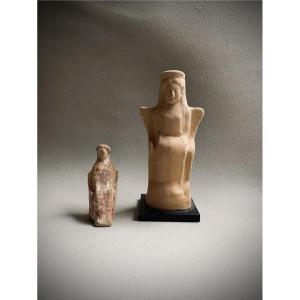


Two Statuettes Of Greek Goddesses From The Archaic Period, 6th–5th Centuries Bc
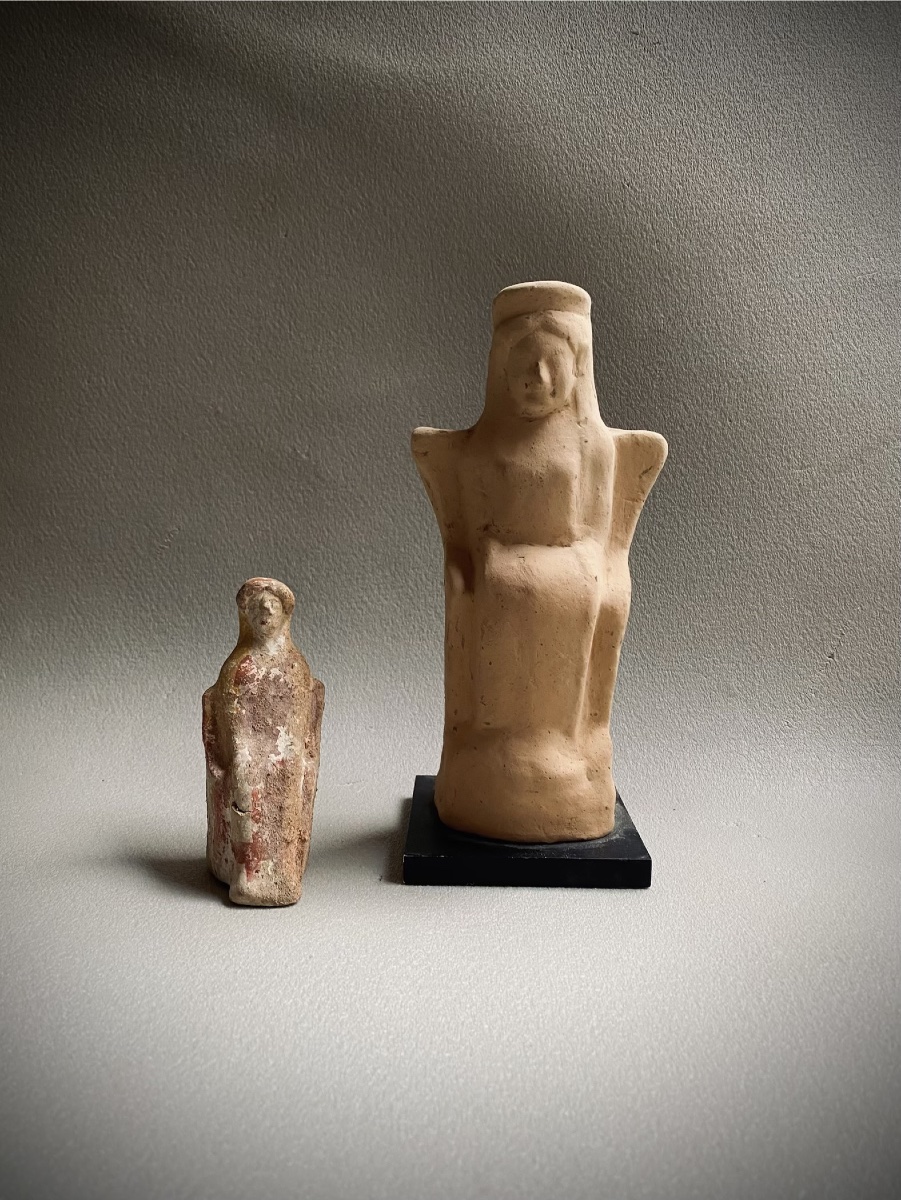
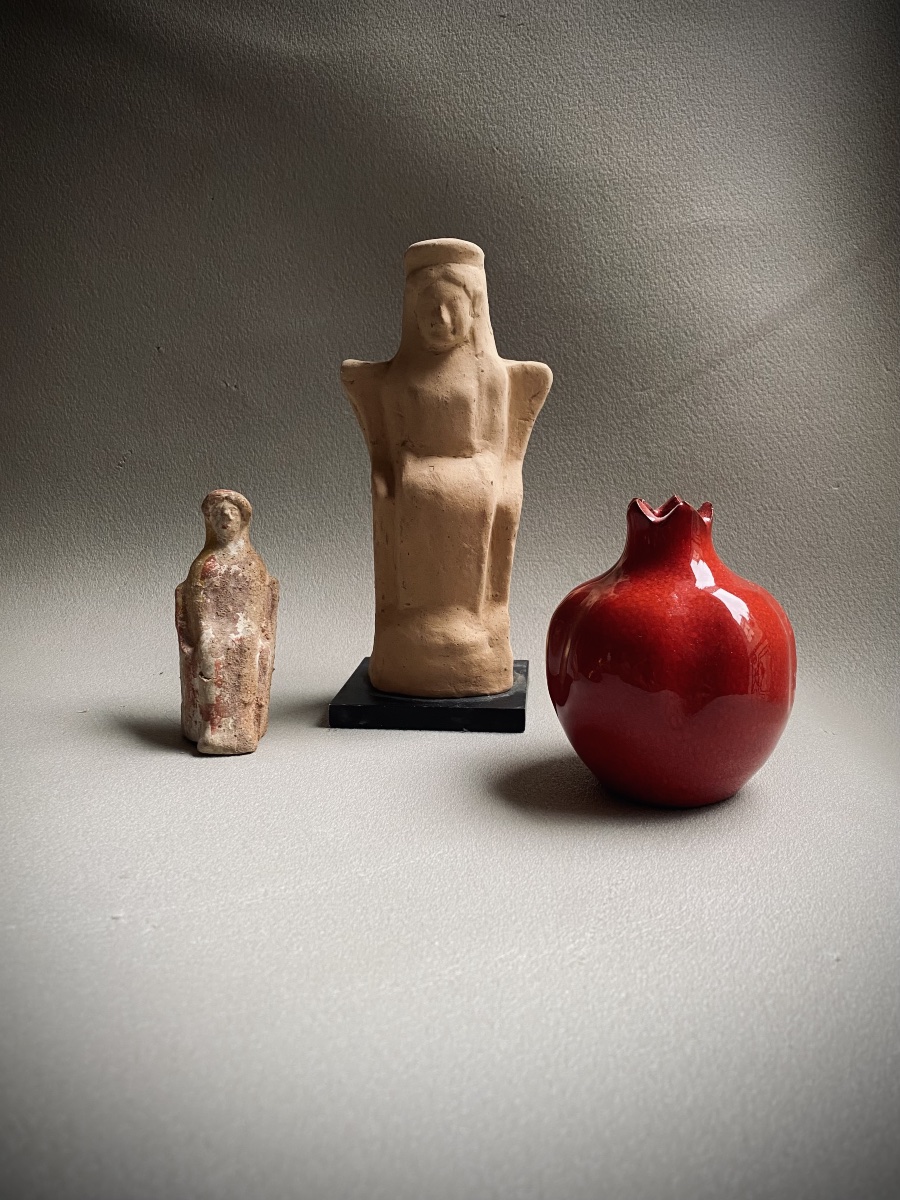
Two Archaic Greek figurines.
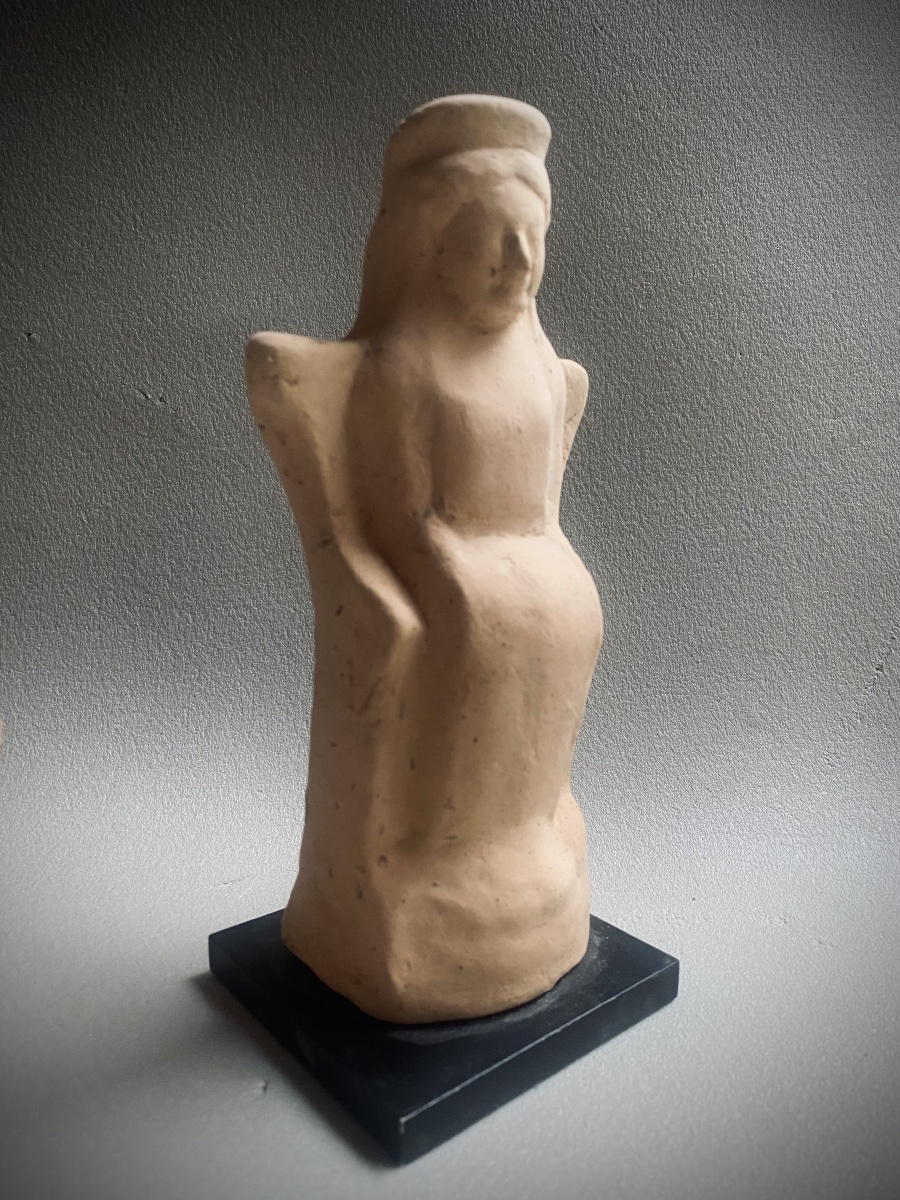
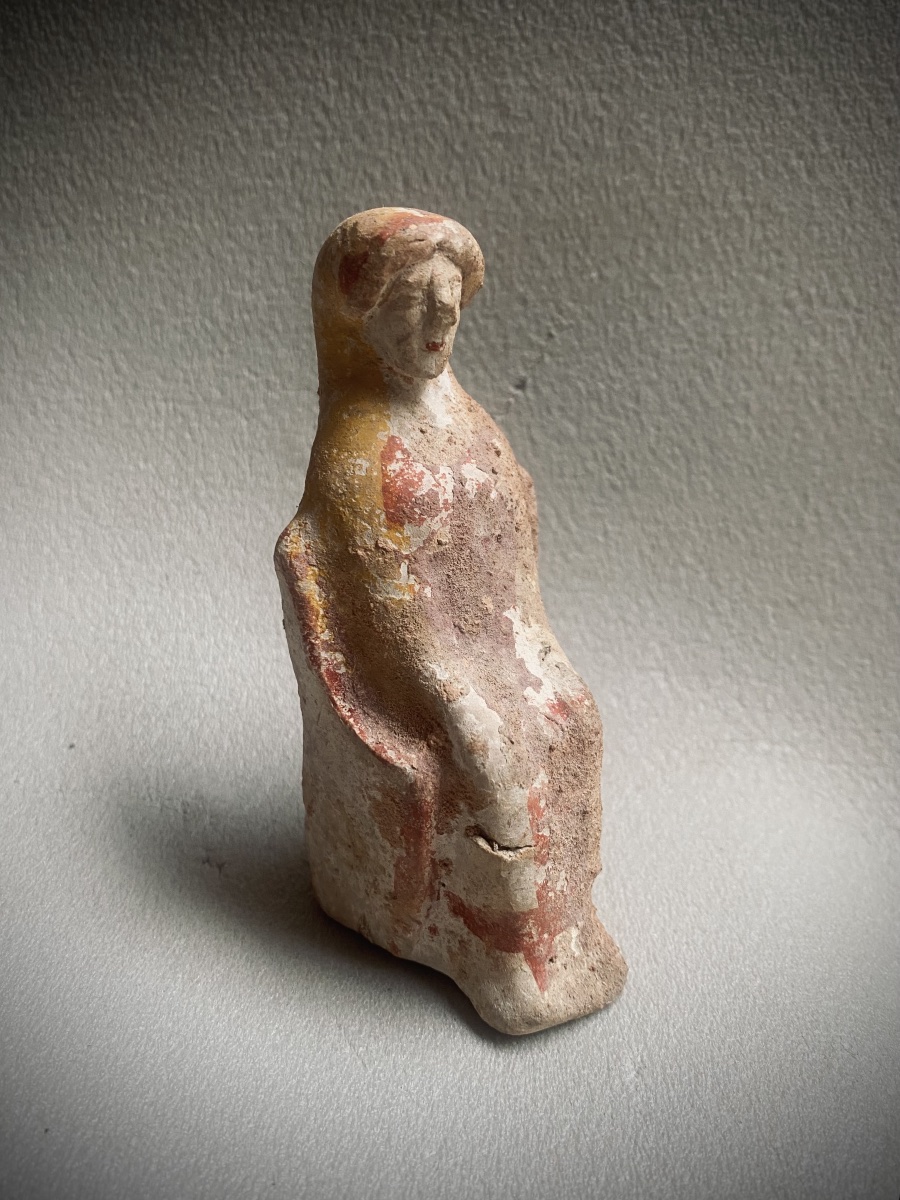
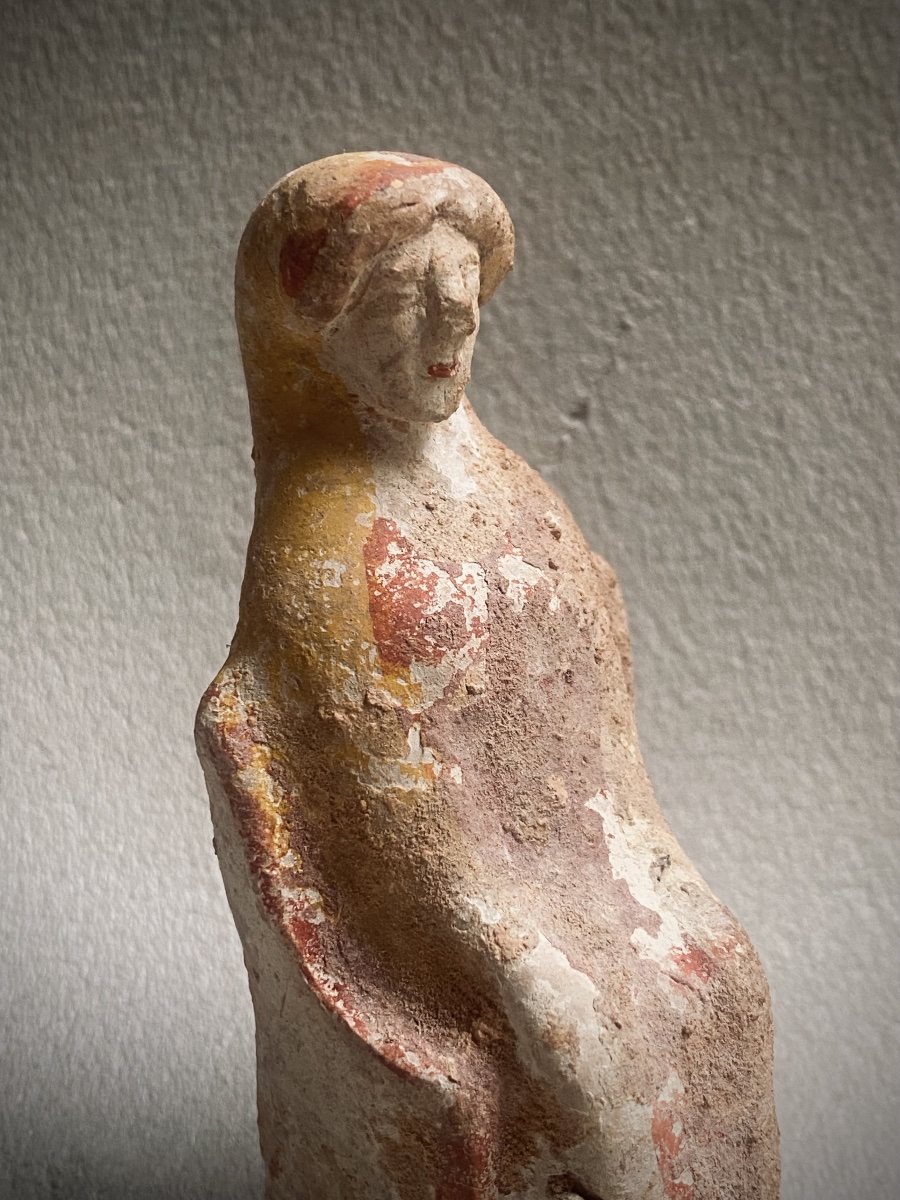
A votive statue of a seated goddess
Greece, Late Archaic period, circa 500 – 475 B.C.
terracotta
19 x 9 cm.
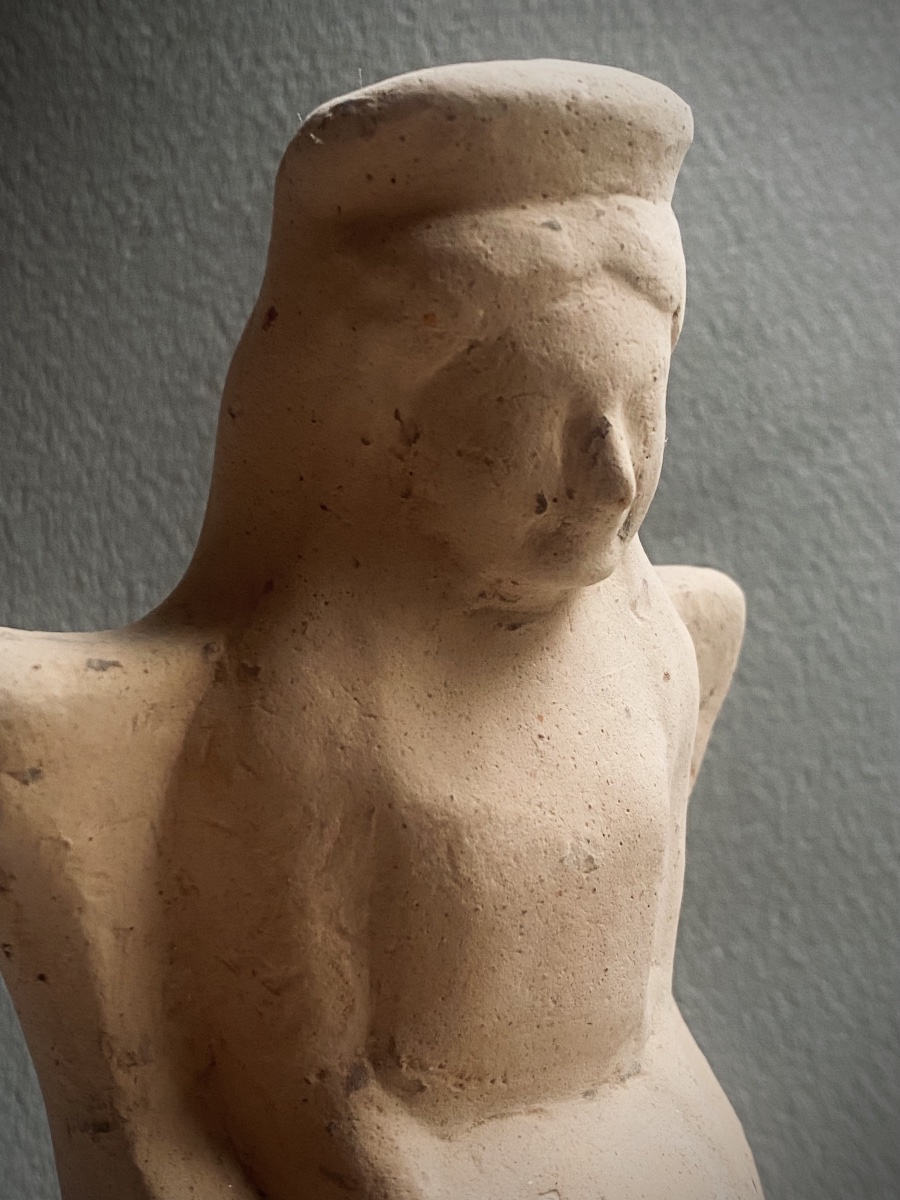
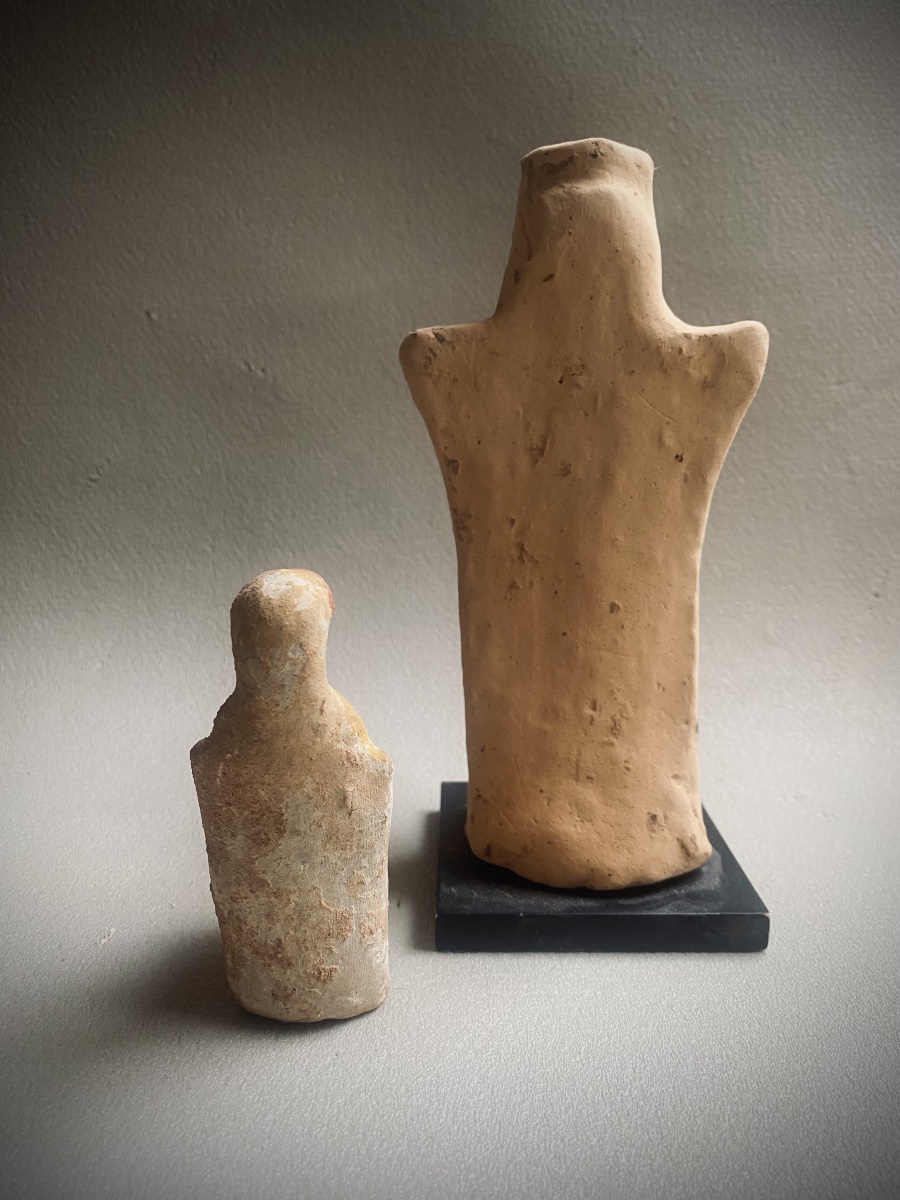
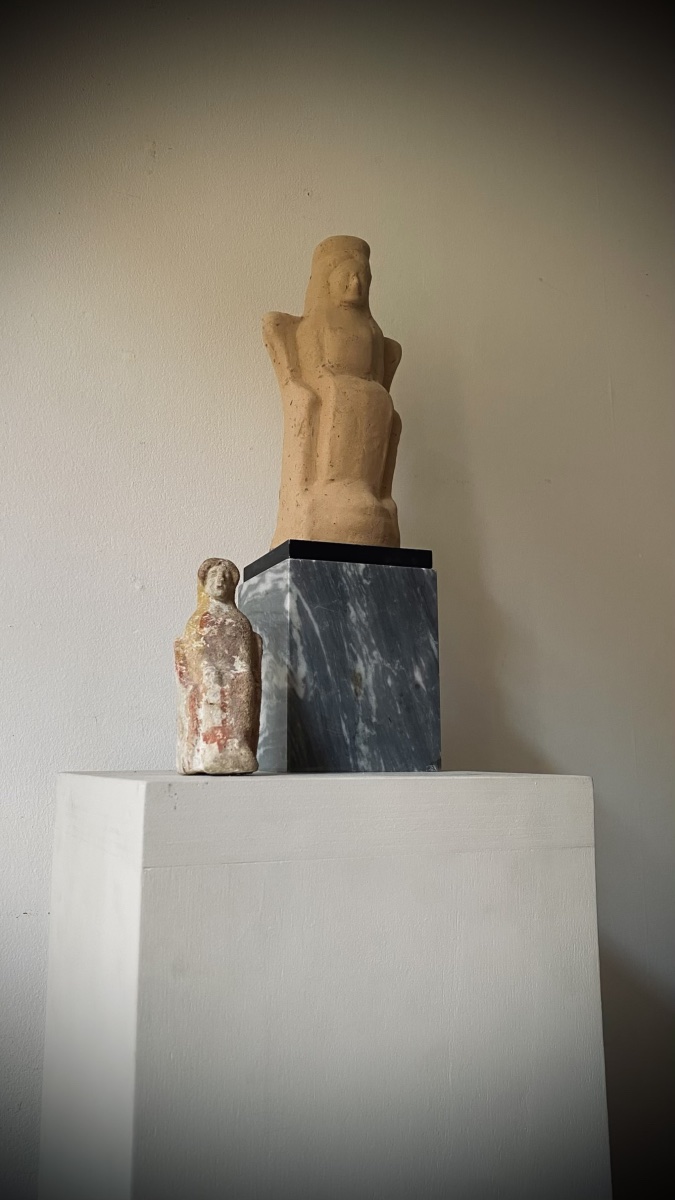
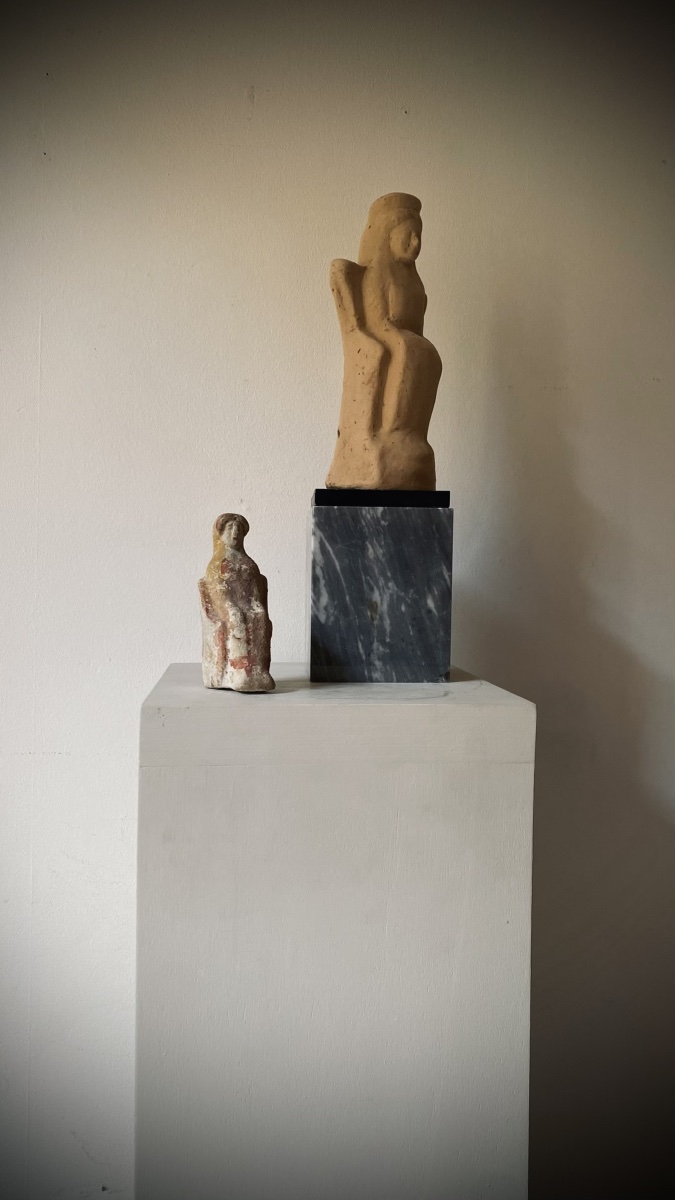
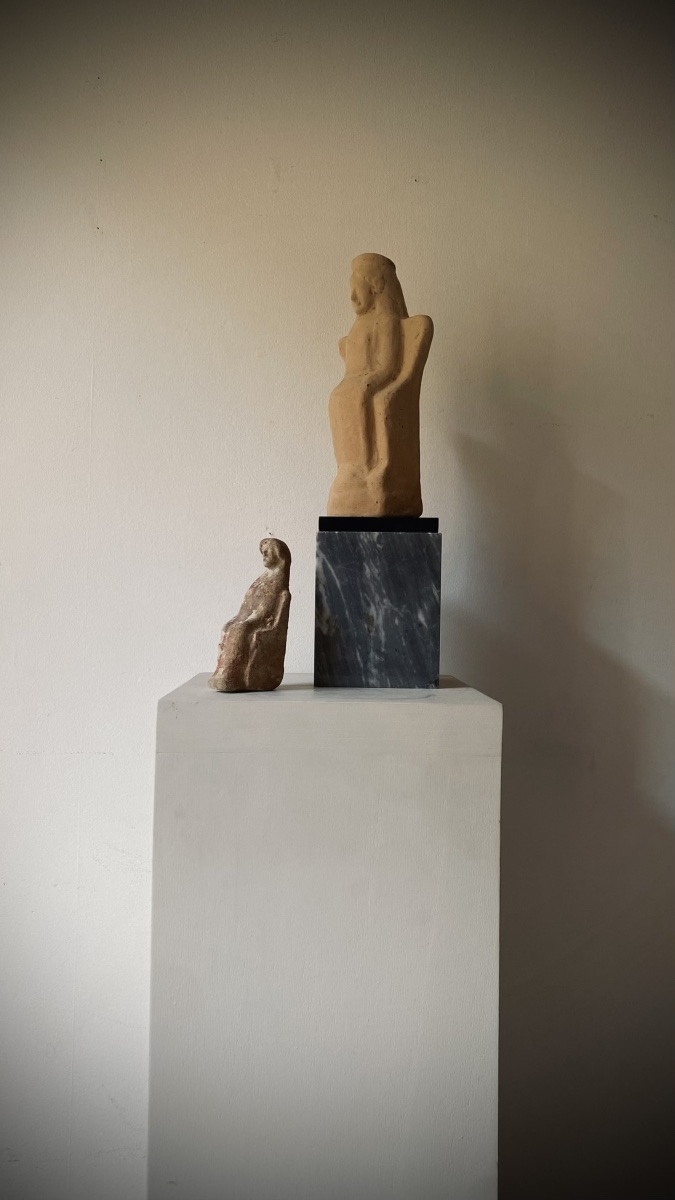
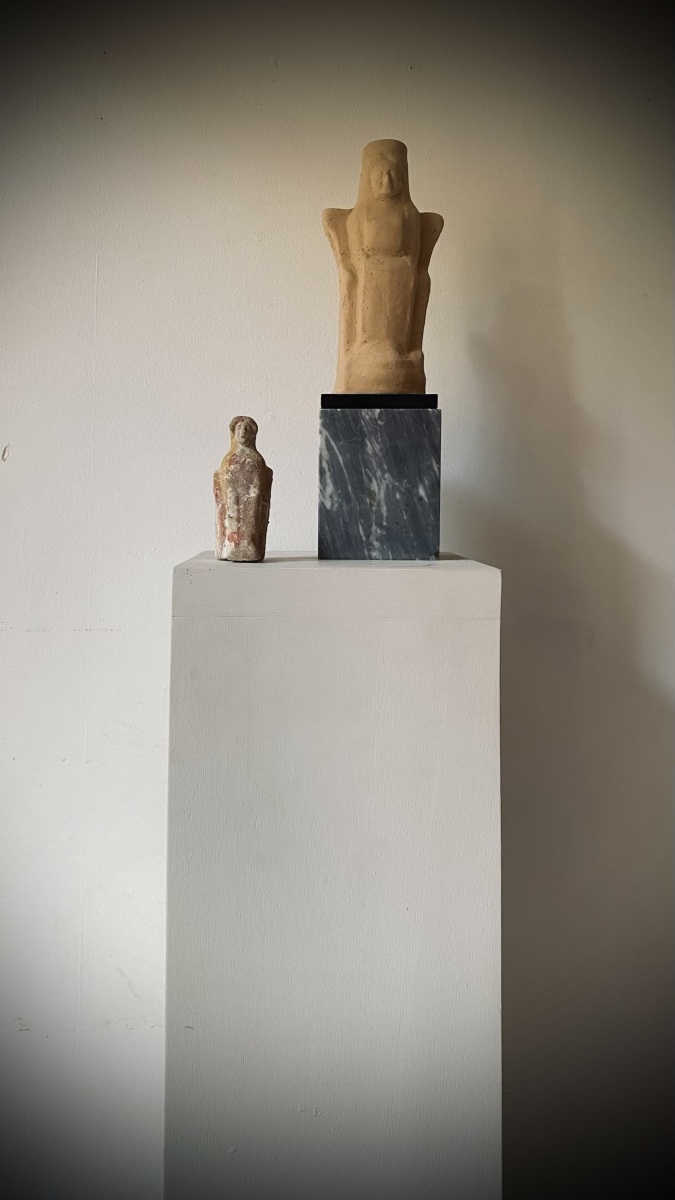
This votive figurine, made of buff-ochre terracotta, depicts a female deity (godess) in the traditional iconography of Demeter or Persephone, seated majestically in a strictly frontal and hieratic pose. The figure wears the polos,a cylindrical headdress symbolizing divine sovereigntu, and sits on a rectangular high-backed throne flanked by two lateral wings characteristic of works from the late 6th or early 5th century BCE. Her forward-extended forearms rest on her knees in a posture of sacred dignity.
Condition: The surface has retained its archaeological patina, with slight earthy and sedimentary deposits. The object is in a remarkable state of preservation, intact and free of modern restorations, displayed on a slender modern matte black wooden base.
Bibliographic reference:
For examples and typologies of identical molds, see the academic reference work:
William R. Biers, The Archaeology of Greece: An Introduction, Ithaca-London, 1987, fig. 8.63, p. 263.
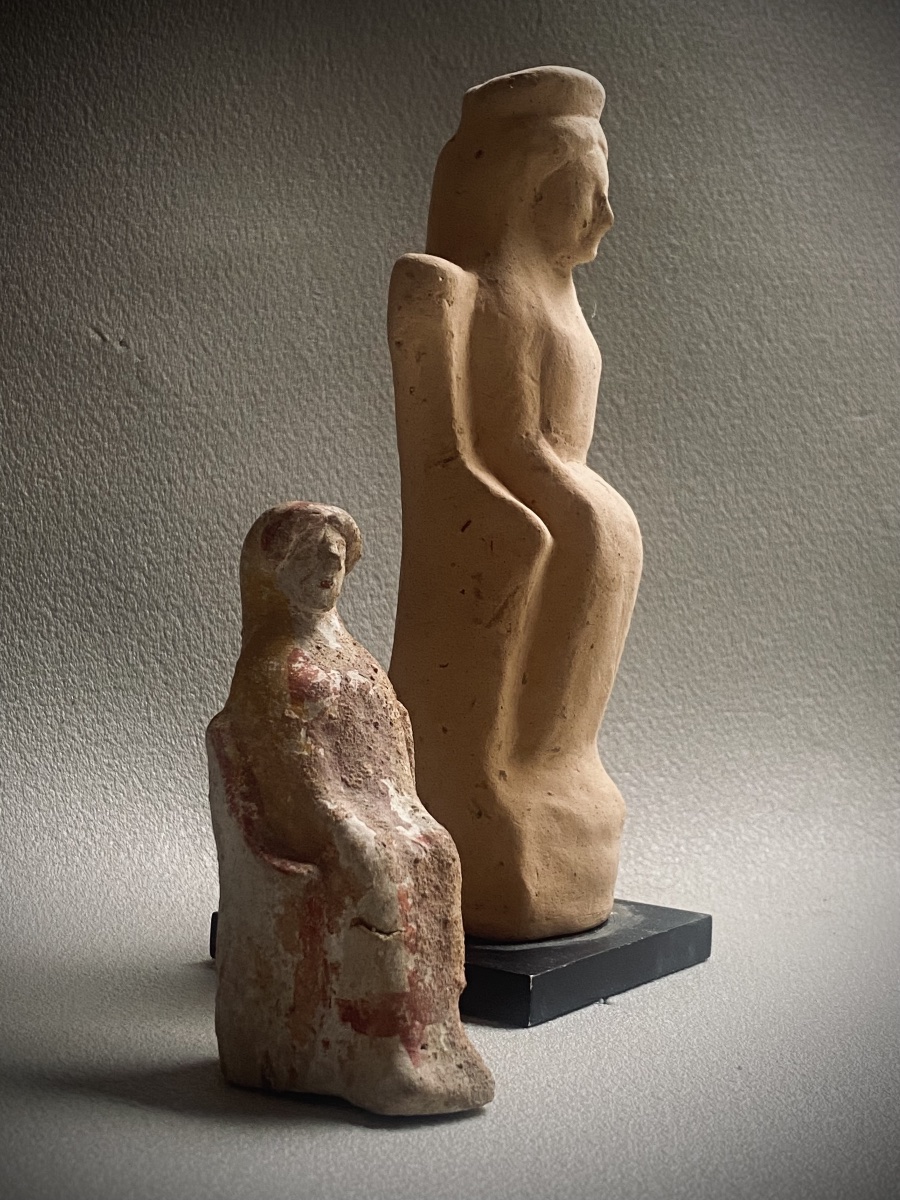
a second one with polychrome decoration
SMALL PAINTED ANTHROPOMORPHIC TERRACOTTA FIGURINE
MAINLAND GREECE (PROBABLY BOEOTIA OR ATTICA), 6th–5th CENTURY B.C.
Terracotta with original painted decoration
10 x 4 cm
Small miniature votive idol with a highly stylized cylindrical or plaque-like body, hand-modeled according to the primitive geometric traditions of Archaic coroplathy. The schematic figure features short, stump-like arms and a head crowned with a simple diadem or polos. The surface decoration is brush-painted with motifs of horizontal bands and lines in brown-black, red, and ochre engobe on a light background.
Bibliographic reference:
two similar examples in the Louvre collections:
https://collections.louvre.fr/ark:/53355/cl010268893
https://collections.louvre.fr/ark:/53355/cl010259092
Ancient use: ritual offerings deposited in large numbers in Greek sanctuaries (ex-voto).
Provenance: Former French collection dispersed at public auction
These Archaic Greek terracotta votive statuettes illustrate the persistence of primitive, schematic forms within Greek coroplathy. Originally placed as votive offerings in a sanctuary or tomb, these idols bear witness to popular ritual practices and domestic devotion in the ancient Mediterranean basin.
A votive statue of a seated goddess
Greece, Late Archaic period, circa 500 – 475 B.C.
terracotta
19 x 9 cm.
This votive figurine, made of buff-ochre terracotta, depicts a female deity (godess) in the traditional iconography of Demeter or Persephone, seated majestically in a strictly frontal and hieratic pose. The figure wears the polos,a cylindrical headdress symbolizing divine sovereigntu, and sits on a rectangular high-backed throne flanked by two lateral wings characteristic of works from the late 6th or early 5th century BCE. Her forward-extended forearms rest on her knees in a posture of sacred dignity.
Condition: The surface has retained its archaeological patina, with slight earthy and sedimentary deposits. The object is in a remarkable state of preservation, intact and free of modern restorations, displayed on a slender modern matte black wooden base.
Bibliographic reference:
For examples and typologies of identical molds, see the academic reference work:
William R. Biers, The Archaeology of Greece: An Introduction, Ithaca-London, 1987, fig. 8.63, p. 263.
a second one with polychrome decoration
SMALL PAINTED ANTHROPOMORPHIC TERRACOTTA FIGURINE
MAINLAND GREECE (PROBABLY BOEOTIA OR ATTICA), 6th–5th CENTURY B.C.
Terracotta with original painted decoration
10 x 4 cm
Small miniature votive idol with a highly stylized cylindrical or plaque-like body, hand-modeled according to the primitive geometric traditions of Archaic coroplathy. The schematic figure features short, stump-like arms and a head crowned with a simple diadem or polos. The surface decoration is brush-painted with motifs of horizontal bands and lines in brown-black, red, and ochre engobe on a light background.
Bibliographic reference:
two similar examples in the Louvre collections:
https://collections.louvre.fr/ark:/53355/cl010268893
https://collections.louvre.fr/ark:/53355/cl010259092
Ancient use: ritual offerings deposited in large numbers in Greek sanctuaries (ex-voto).
Provenance: Former French collection dispersed at public auction
These Archaic Greek terracotta votive statuettes illustrate the persistence of primitive, schematic forms within Greek coroplathy. Originally placed as votive offerings in a sanctuary or tomb, these idols bear witness to popular ritual practices and domestic devotion in the ancient Mediterranean basin.
1 400 €
Period: Before 16th century
Style: Rome and Antic Greece
Condition: Good condition
Material: Terracotta
Length: 19
Width: 10
Reference (ID): 1824713
Availability: In stock
Print