

India, 17 Or 18th Cty, Lakshmi Very Large Gray Patina Wden Carvd Bracket
South India, (most likely KERALA—the TRAVANCORE region rather than TAMIL NADU)
18th century
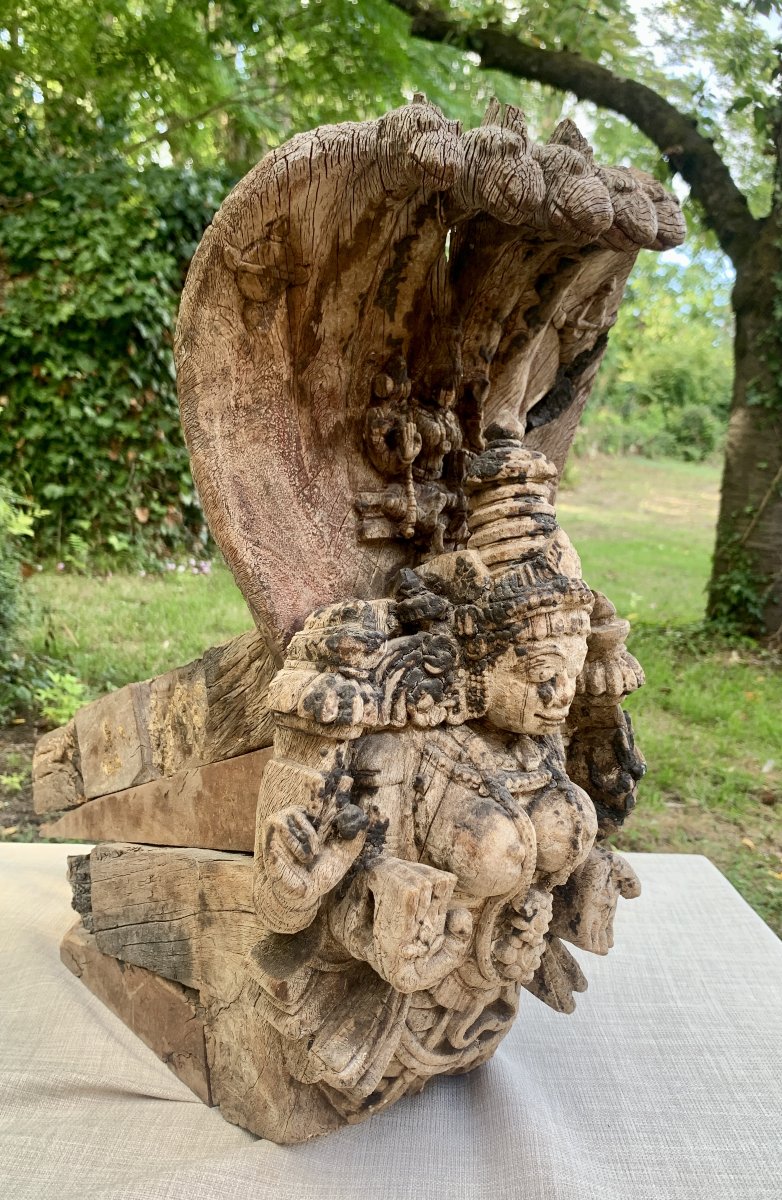
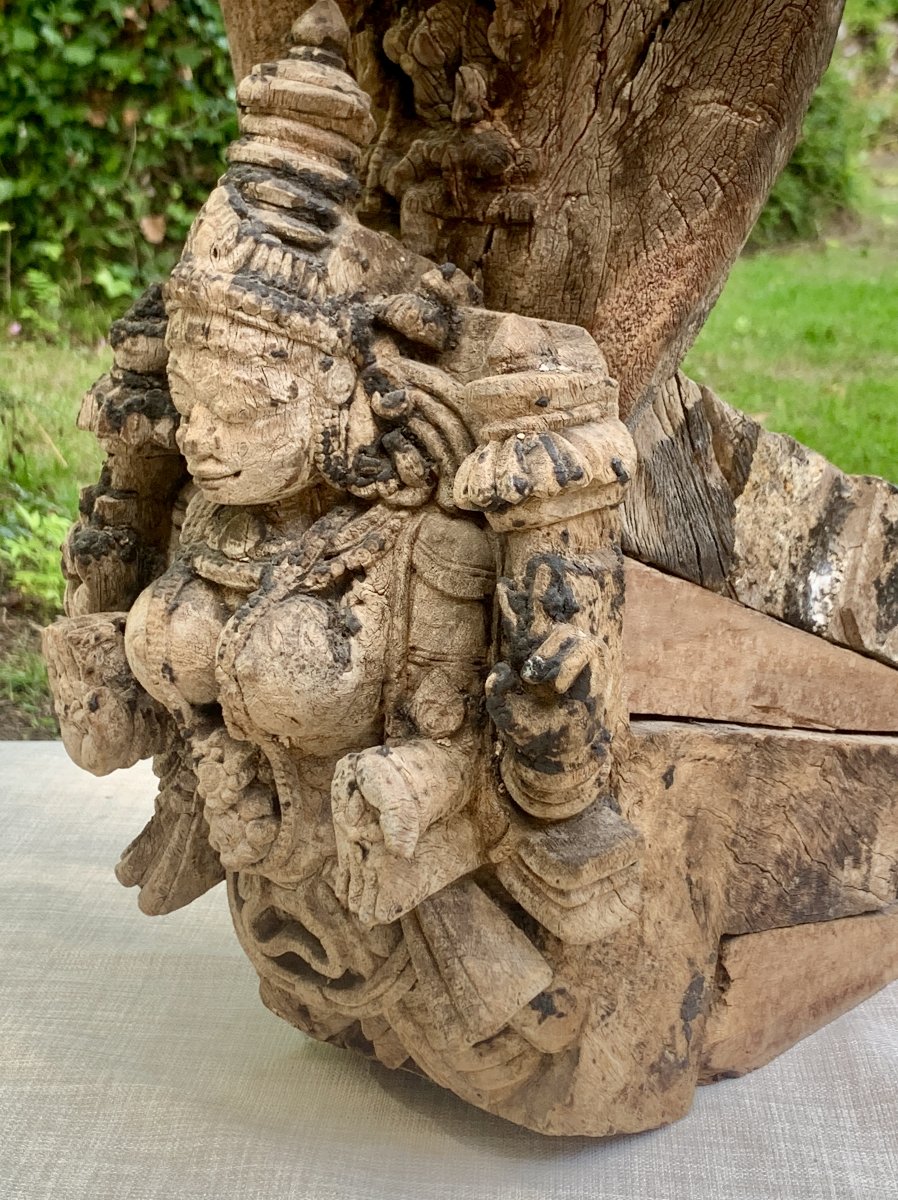
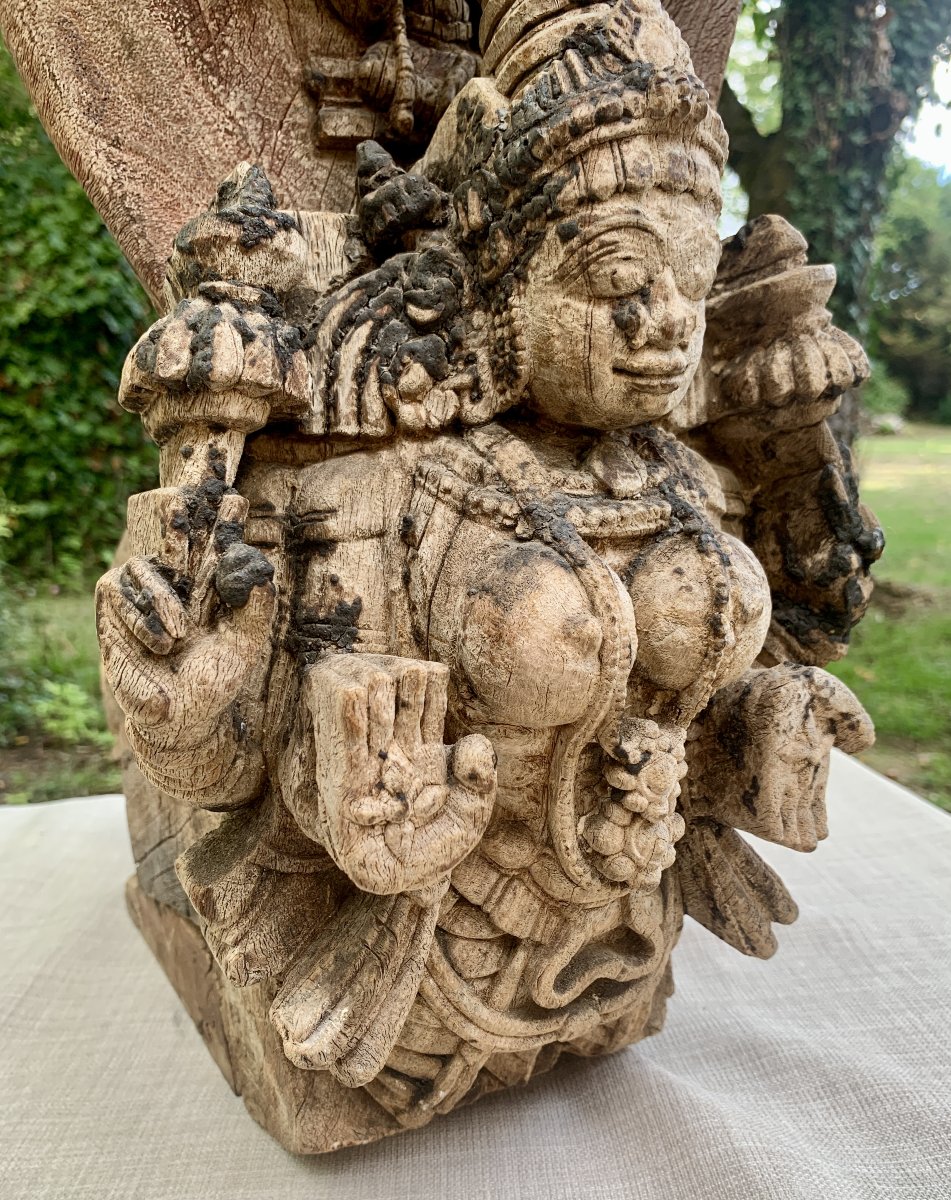
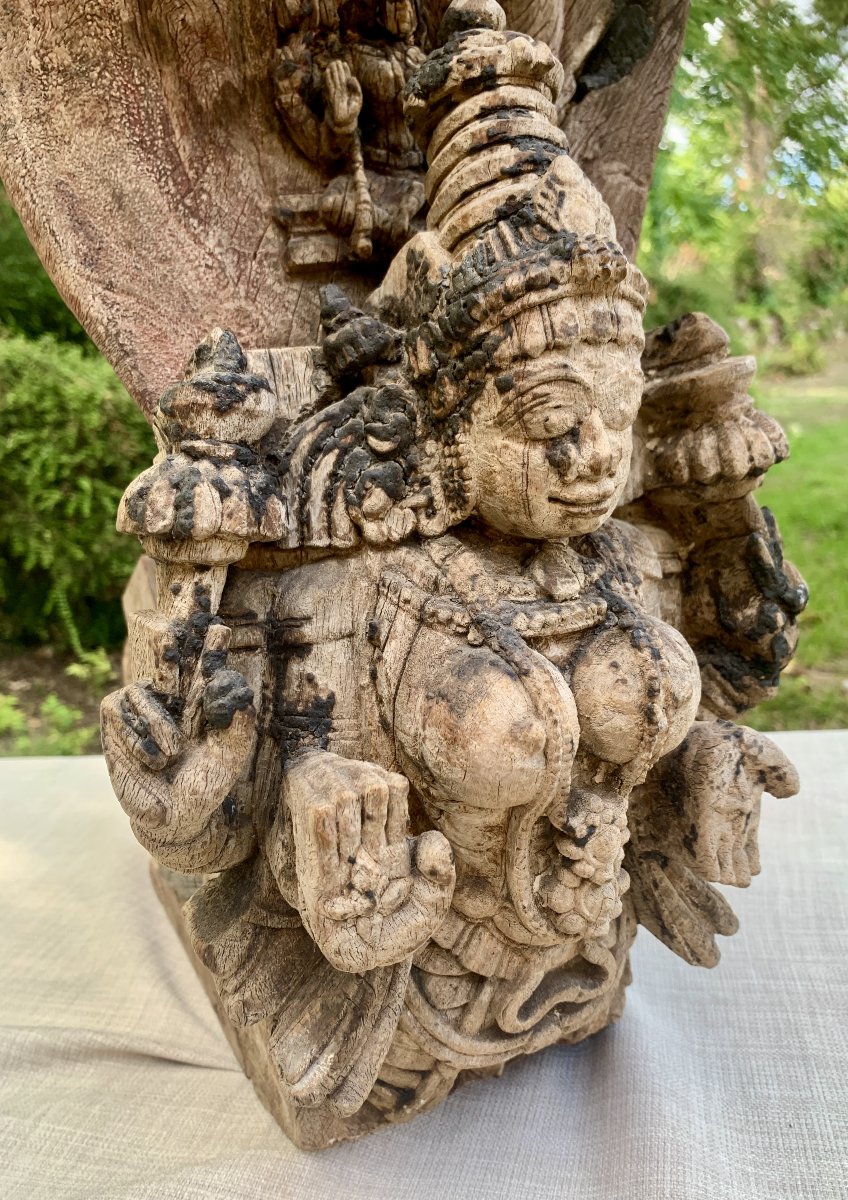
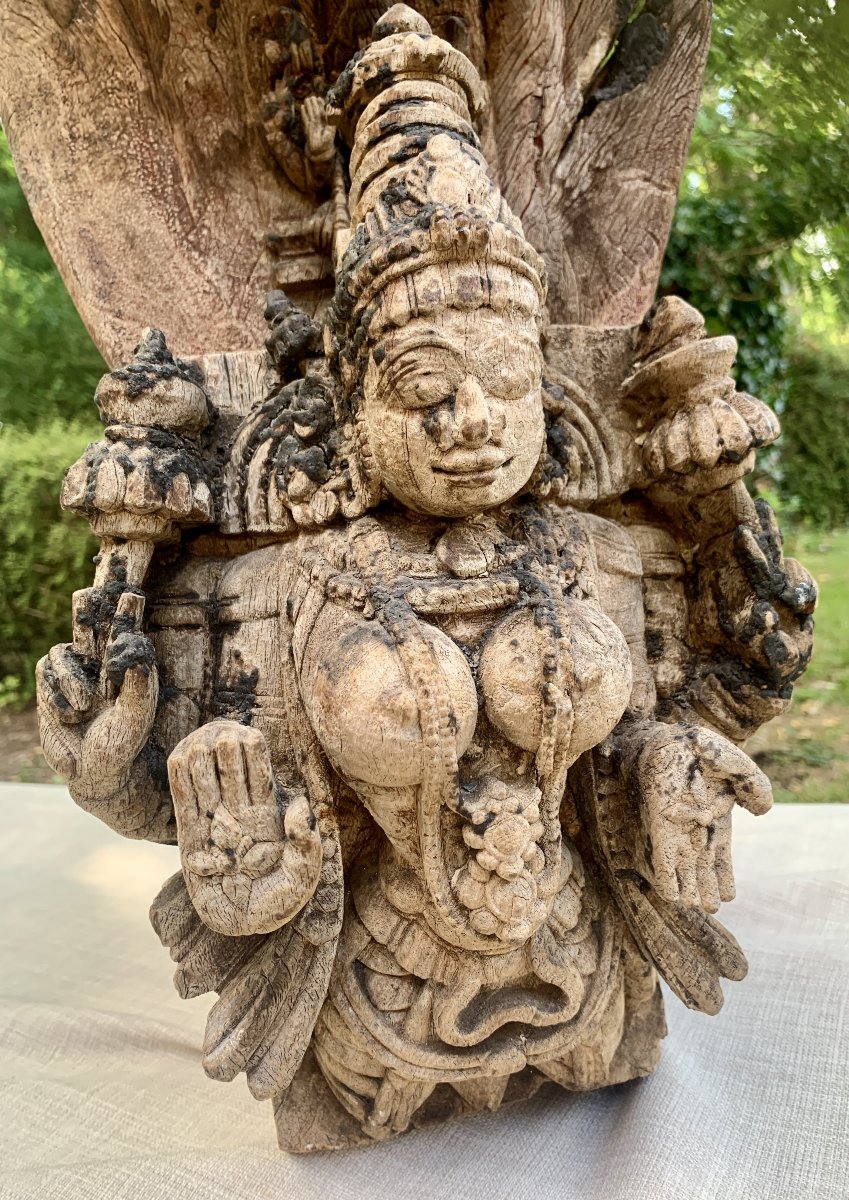
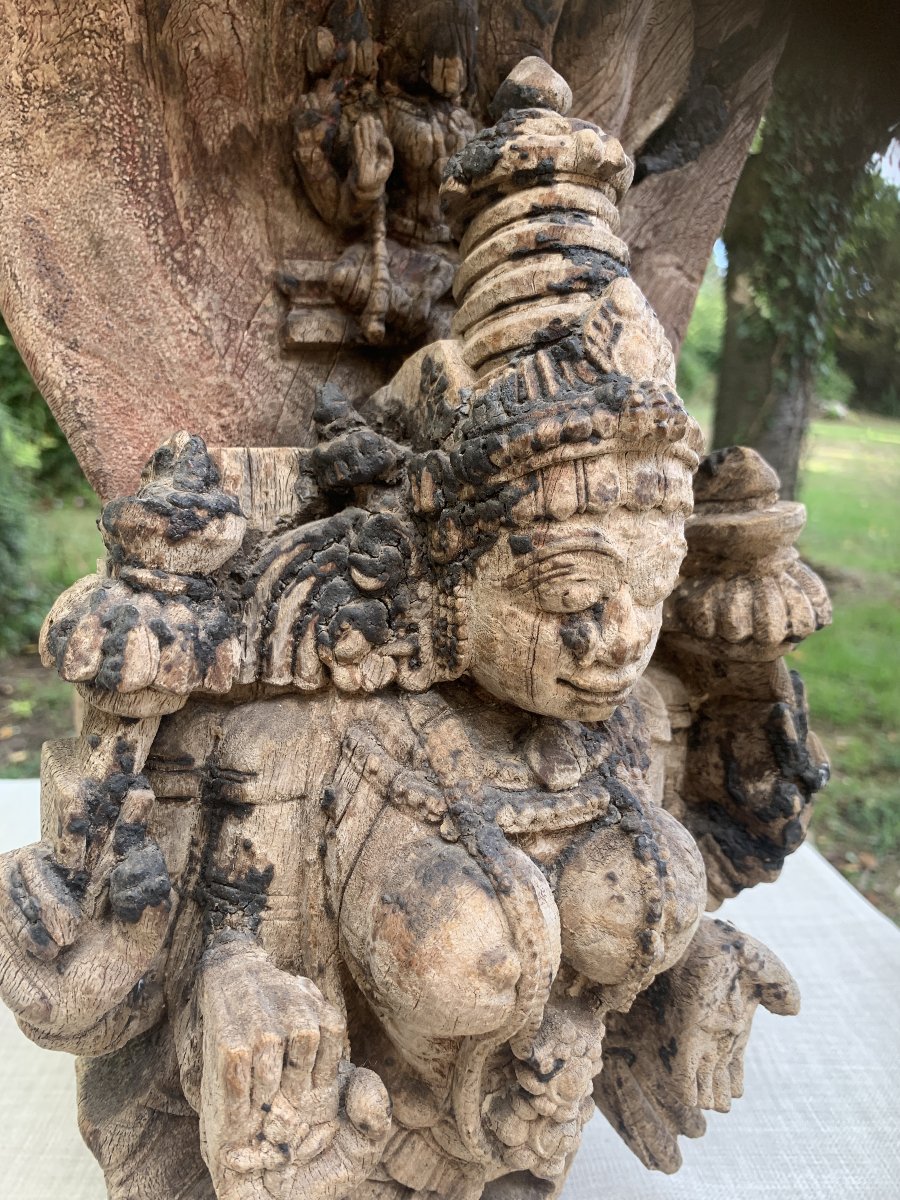
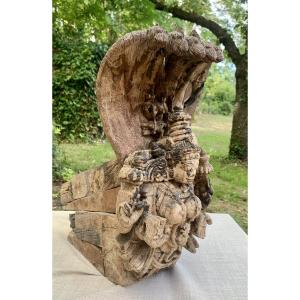
Superb and significant wooden carved bracket, either a processional chariot or an architectural element (a type of console, architectural corbel or modillion), with a superb gray patina, depicting a richly adorned female Hindu goddess.
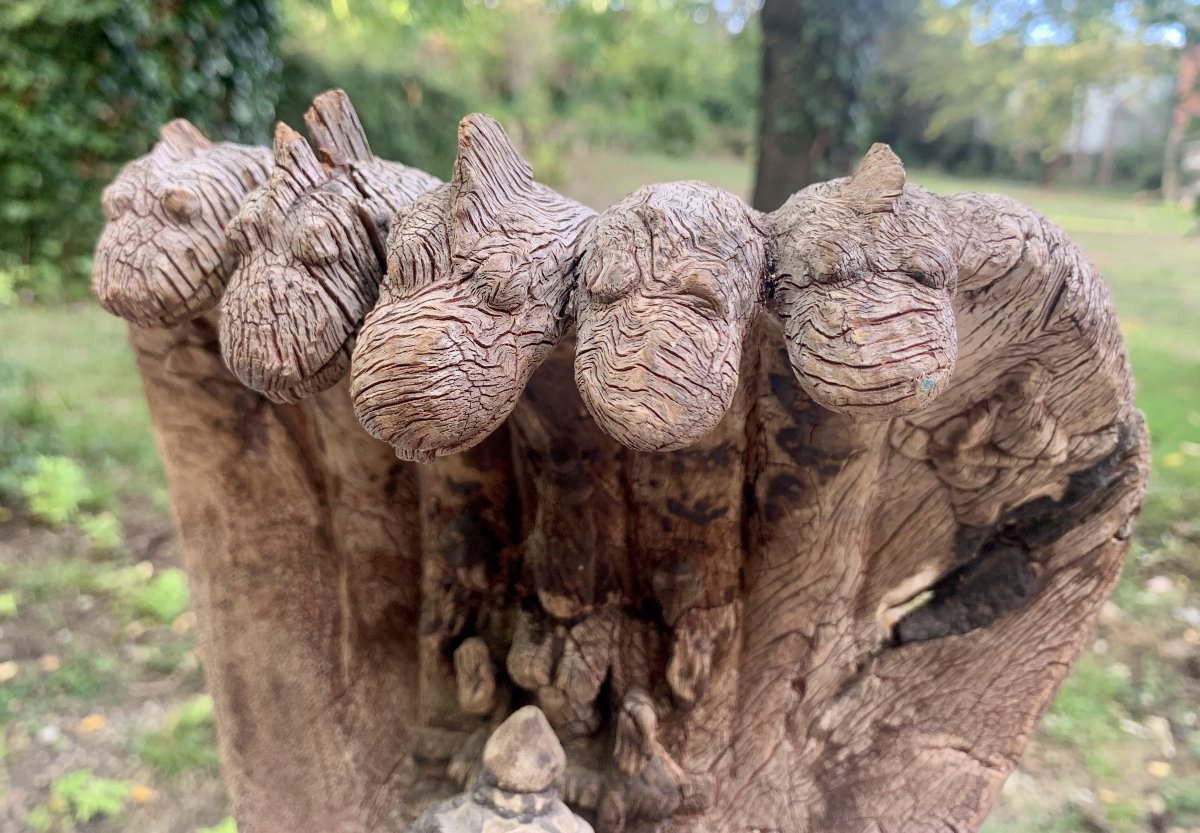
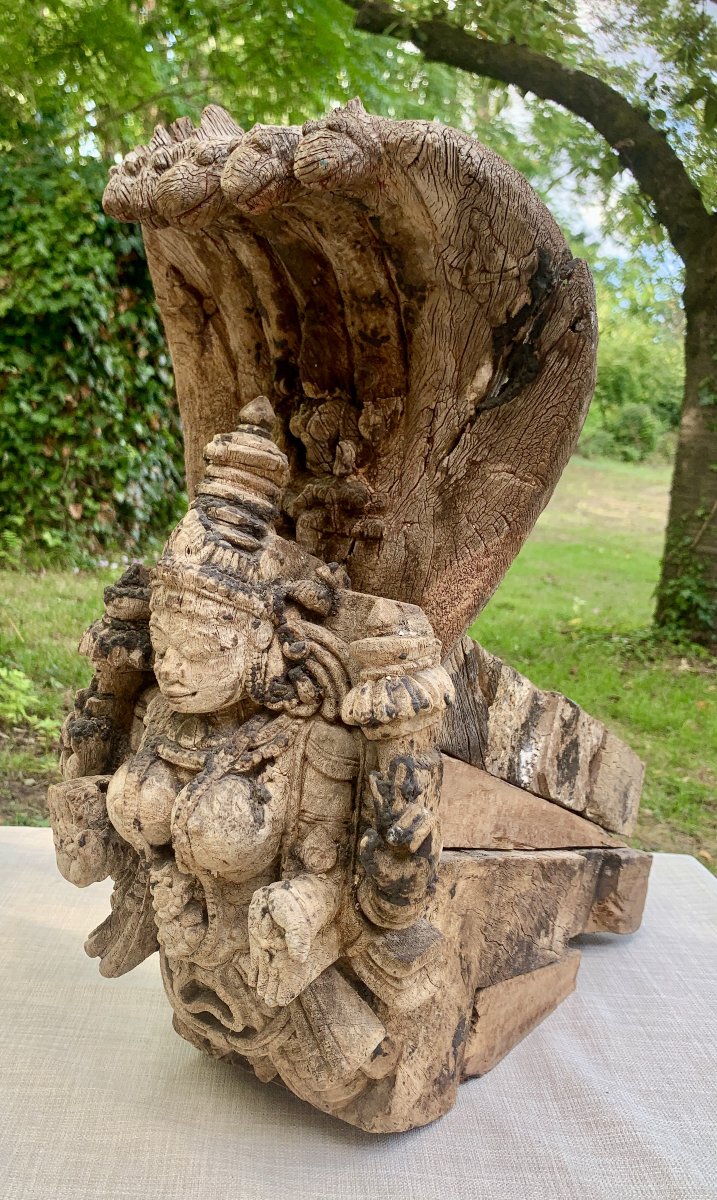
She is crowned with a large protective headdress featuring a five-headed Naga, arranged in a fan-like pattern and extending behind and above the main figure.
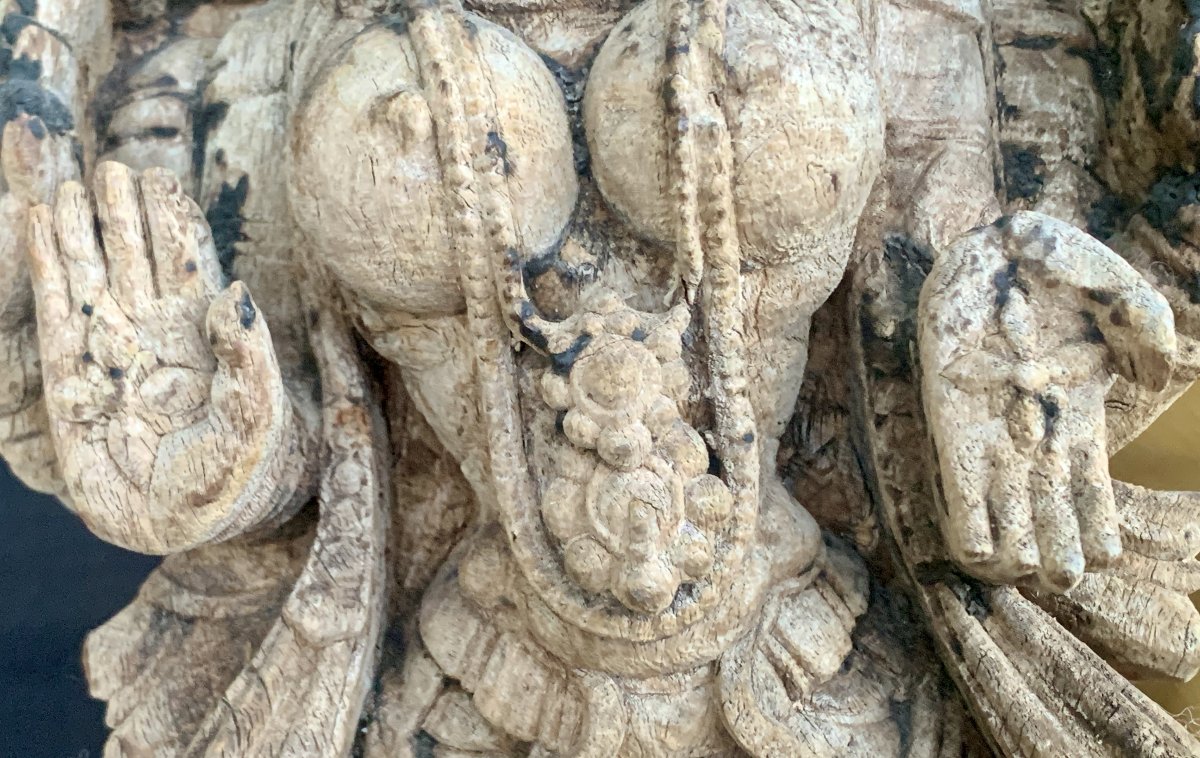
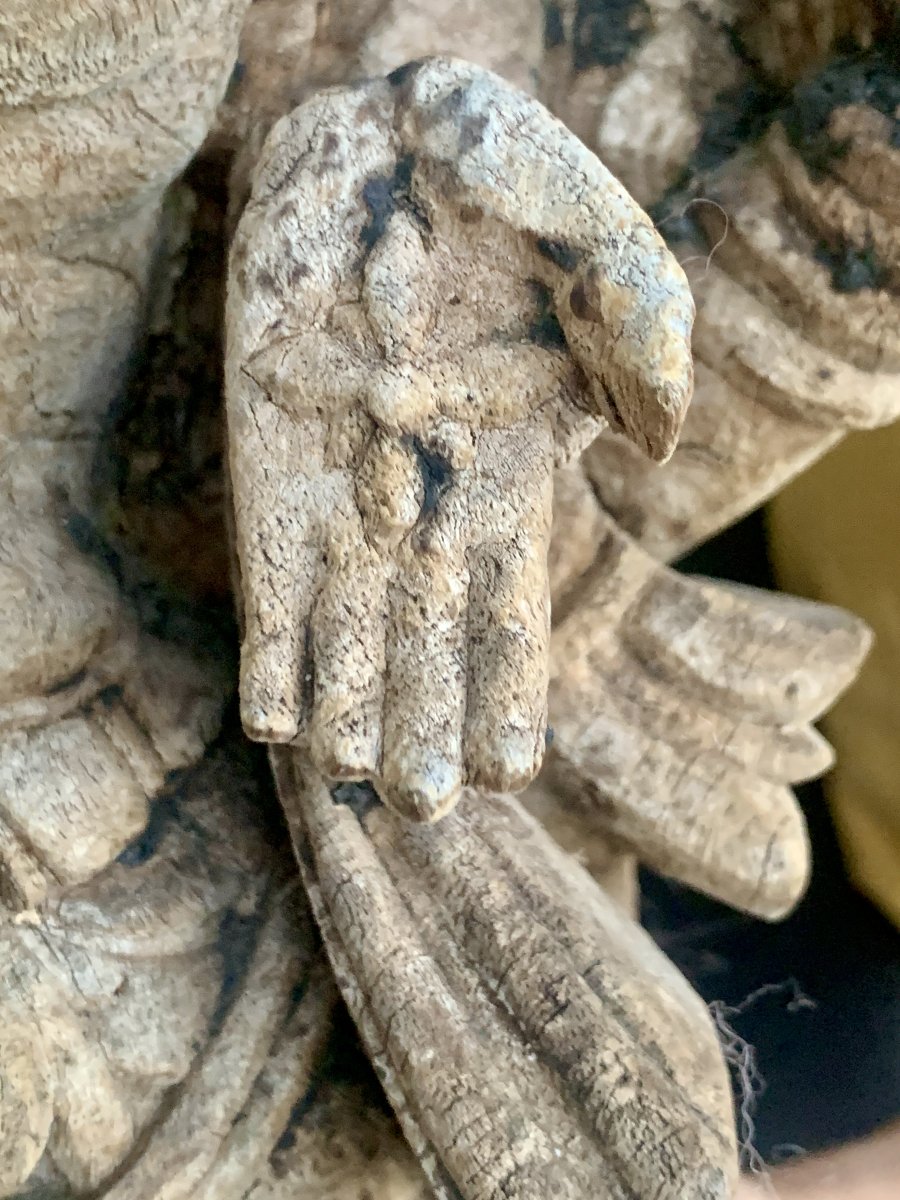
The female figure most certainly represents Lakshmi beneath a protective five-headed Naga, with four arms. Her two upper hands hold lotus flowers, consistent with Lakshmi’s lotuses, while her two lower hands are joined in front of the body, evoking the ANJALI gesture, a sacred pose symbolizing union and gratitude, representing unity and respect...
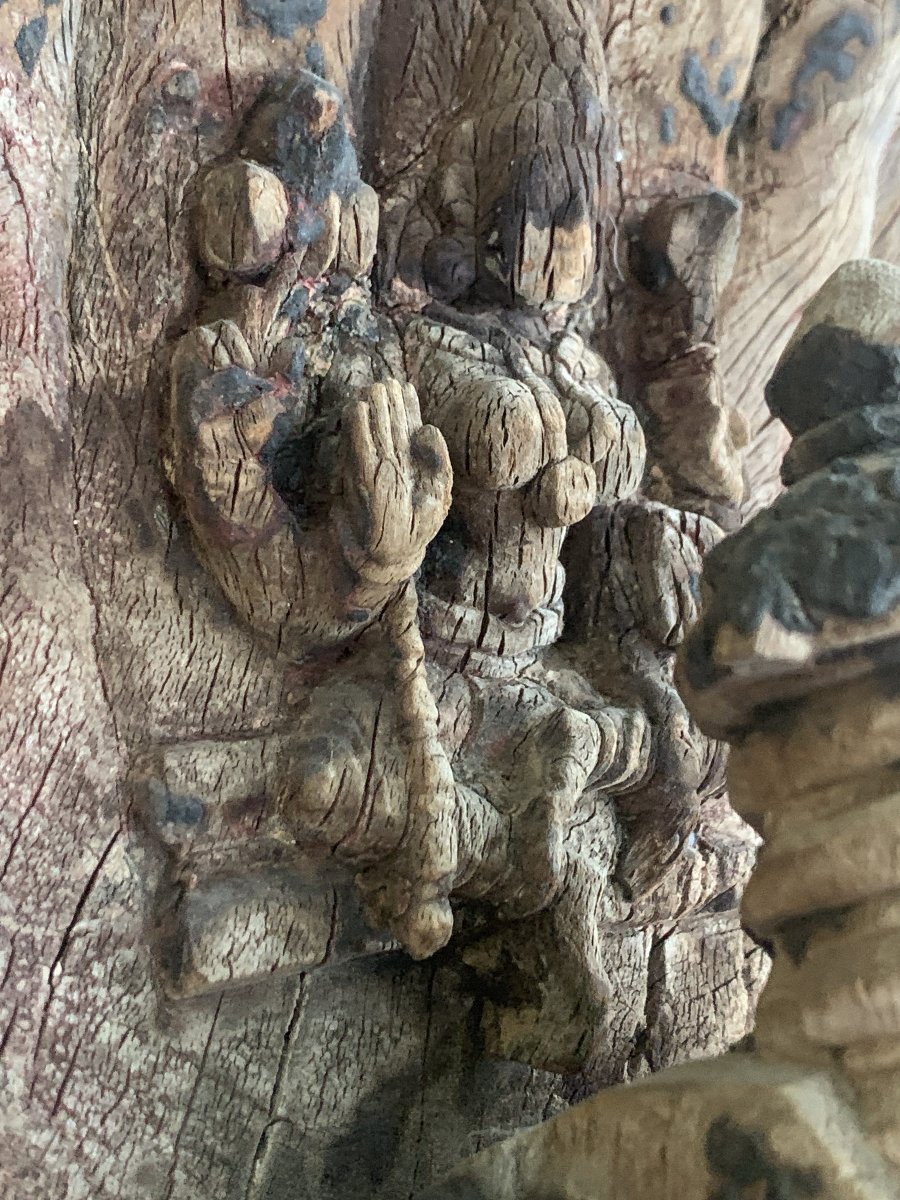
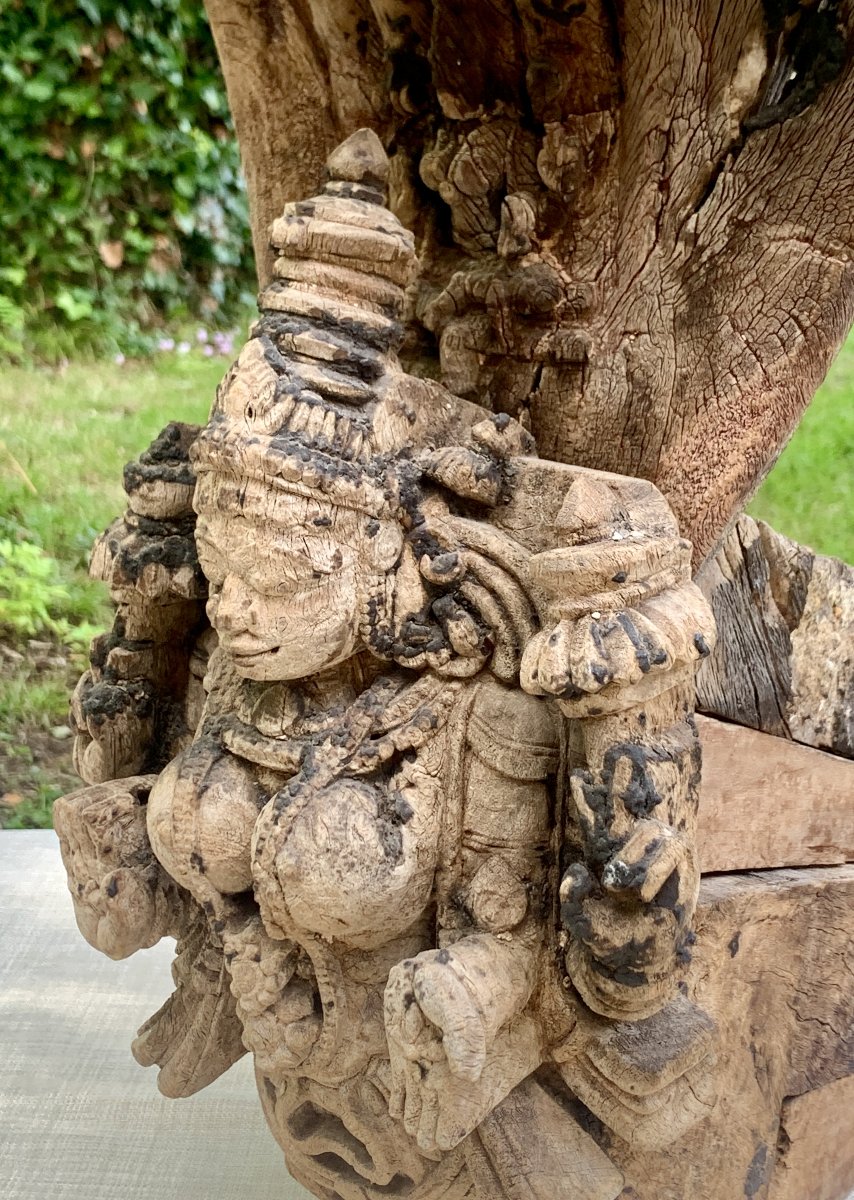
The construction of the back of the carved wooden element clearly shows its architectural use, with the interweaving and old attachments of the different massive and irregular parts to each other. A catalogue of wooden sculptures from the collections of the Government Museums of Tamil Nadu describes a piece from the Siva temple in Kottarakkara, in the former Travancore, as 'a wooden bracket depicting Lakshmi seated under a five-headed naga, with 4 arms, the upper hands holding lotuses, and the lower hands in anjali.'
This piece may have belonged to a Hindu temple, a palace, or some other secular building in South India, serving as an architectural bracket, but it could also have been part of a mobile processional structure. The construction of the back section of the carved wooden element clearly demonstrates its architectural use, with the interweaving and old attachments of the different massive and irregular parts to each other.
A catalog of wood carvings from the collections of the Tamil Nadu Government Museums describes a piece from the Siva temple at KOTTARAKKARA, in former Travancore, as “a wooden bracket depicting Lakshmi seated beneath a five-headed naga, with 4 arms, her upper hands holding lotuses, and her lower hands in the anjali mudra.
The same inventory mentions, just before Lakshmi, a console representing Siva under a five-headed naga, then Brahma and Uma-Mahesvara beneath cobras. This suggests that this type of decoration was part of a religious architectural program featuring multiple deities protected by the snake.
Dimensions:
approximately 52 cm long x 47 cm high x 23 cm wide
Condition:
The wood was certainly stripped a long time ago and now displays a superb gray-to-white patina, with traces of black. These elements were originally very often polychrome and covered with paint included notably of a sort of tar, with several layers possibly being stacked on top of each other over time.
18th century
Superb and significant wooden carved bracket, either a processional chariot or an architectural element (a type of console, architectural corbel or modillion), with a superb gray patina, depicting a richly adorned female Hindu goddess.
She is crowned with a large protective headdress featuring a five-headed Naga, arranged in a fan-like pattern and extending behind and above the main figure.
The female figure most certainly represents Lakshmi beneath a protective five-headed Naga, with four arms. Her two upper hands hold lotus flowers, consistent with Lakshmi’s lotuses, while her two lower hands are joined in front of the body, evoking the ANJALI gesture, a sacred pose symbolizing union and gratitude, representing unity and respect...
The construction of the back of the carved wooden element clearly shows its architectural use, with the interweaving and old attachments of the different massive and irregular parts to each other. A catalogue of wooden sculptures from the collections of the Government Museums of Tamil Nadu describes a piece from the Siva temple in Kottarakkara, in the former Travancore, as 'a wooden bracket depicting Lakshmi seated under a five-headed naga, with 4 arms, the upper hands holding lotuses, and the lower hands in anjali.'
This piece may have belonged to a Hindu temple, a palace, or some other secular building in South India, serving as an architectural bracket, but it could also have been part of a mobile processional structure. The construction of the back section of the carved wooden element clearly demonstrates its architectural use, with the interweaving and old attachments of the different massive and irregular parts to each other.
A catalog of wood carvings from the collections of the Tamil Nadu Government Museums describes a piece from the Siva temple at KOTTARAKKARA, in former Travancore, as “a wooden bracket depicting Lakshmi seated beneath a five-headed naga, with 4 arms, her upper hands holding lotuses, and her lower hands in the anjali mudra.
The same inventory mentions, just before Lakshmi, a console representing Siva under a five-headed naga, then Brahma and Uma-Mahesvara beneath cobras. This suggests that this type of decoration was part of a religious architectural program featuring multiple deities protected by the snake.
Dimensions:
approximately 52 cm long x 47 cm high x 23 cm wide
Condition:
The wood was certainly stripped a long time ago and now displays a superb gray-to-white patina, with traces of black. These elements were originally very often polychrome and covered with paint included notably of a sort of tar, with several layers possibly being stacked on top of each other over time.
1 400 €
Period: 18th century
Style: Asian art
Condition: Excellent condition
Material: Solid wood
Length: 52 cm
Width: 23 cm
Height: 47 cm
Depth: 52 cm
Reference (ID): 1822830
Availability: In stock
Print