

Wooden Sculpture, Saint Catherine, Lower Rhine, Circa 1480
Artist: Provenance Bas-rhin (ou Tyrol Du Sud) - Fin Du Xve Siècle (vers 1480)
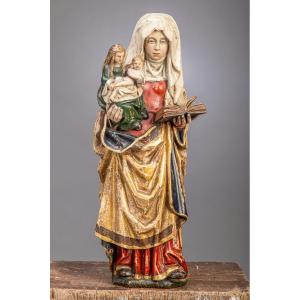
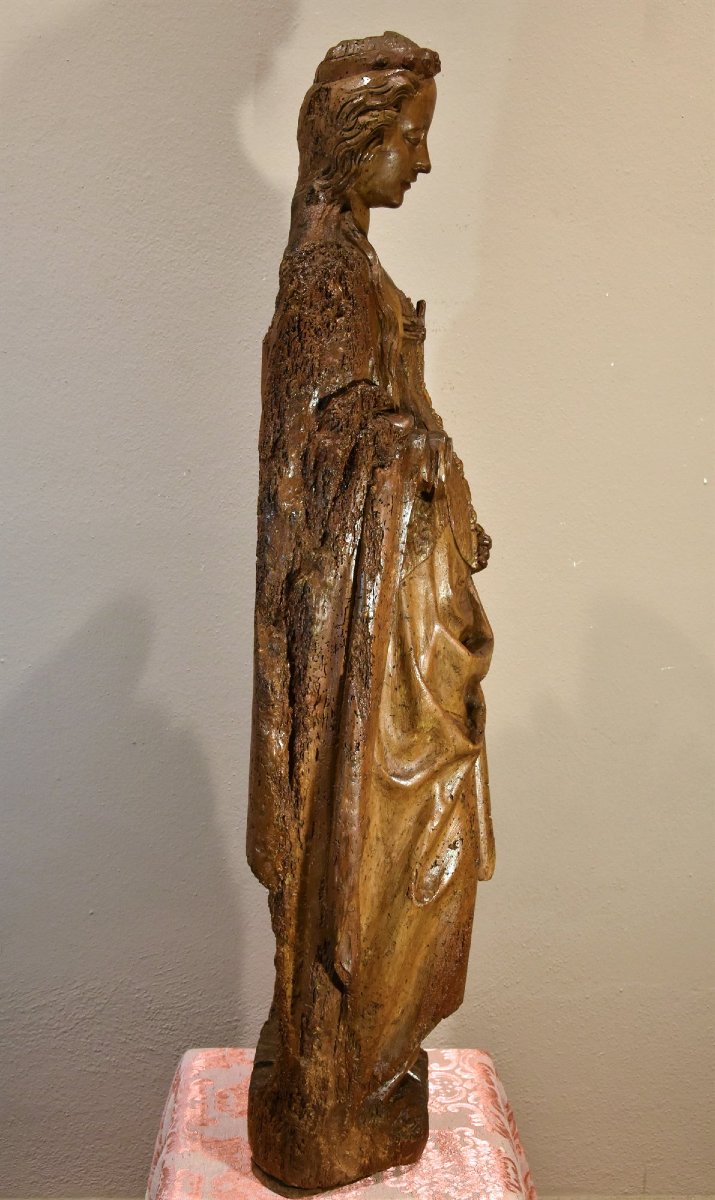
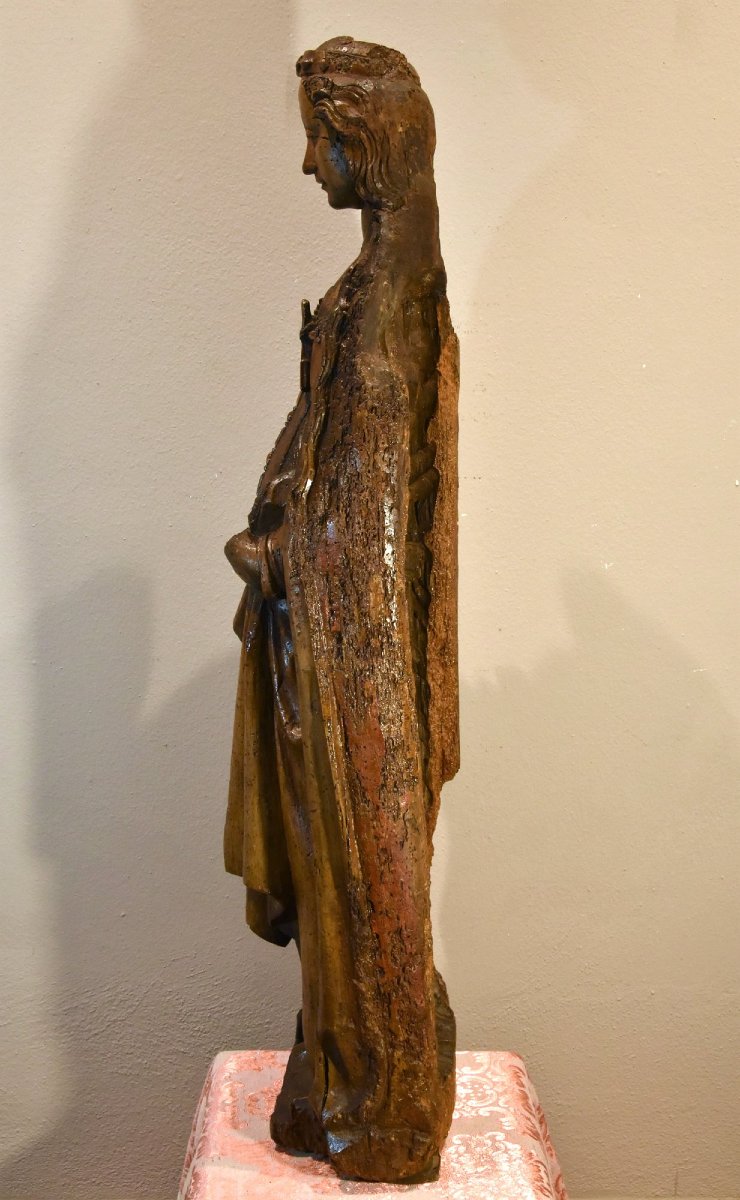
Wooden sculpture depicting Saint Catherine of Alexandria
Provenance: Lower Rhine or South Tyrol
Late 15th century (circa 1480)
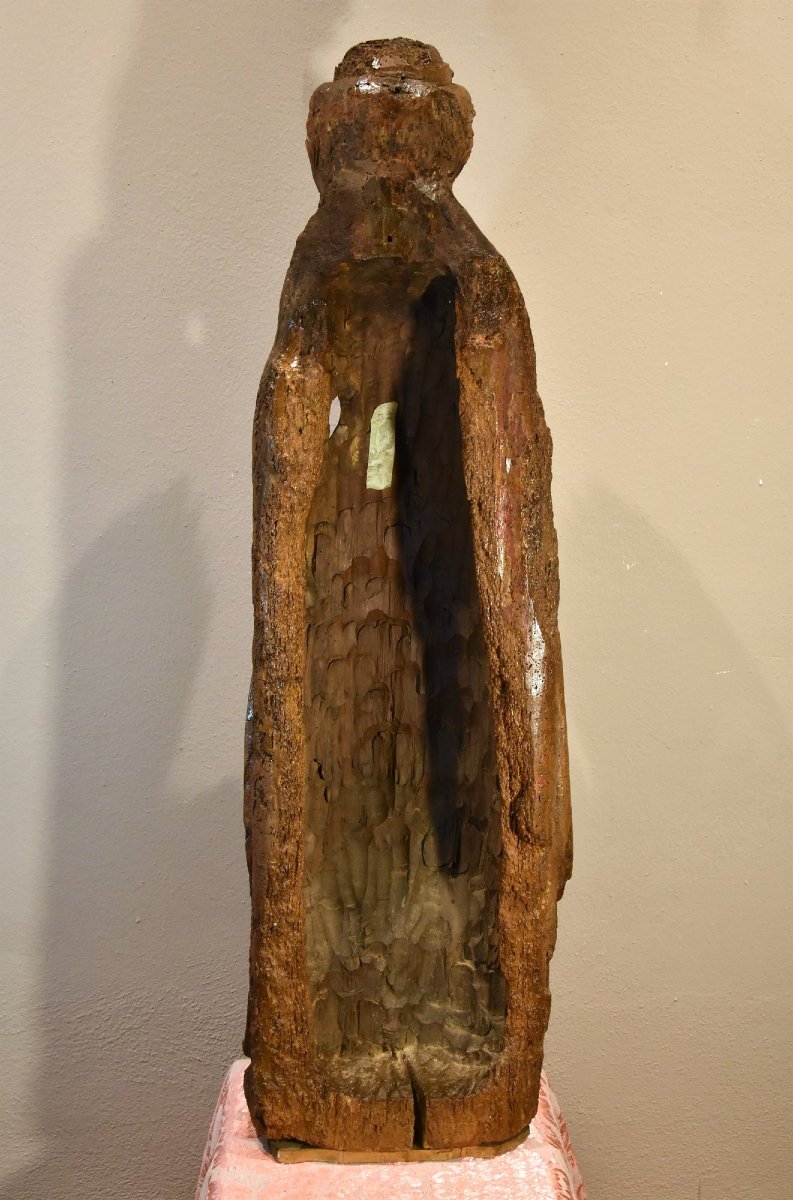
Linden wood (single block, hollowed-out back), traces of polychromy on the back
Height: 105 cm
Provenance: BONHAMS London, New Bond Street, Auction June 23, 2021, Lot 2, estimate £12,000 - £18,000 (link)
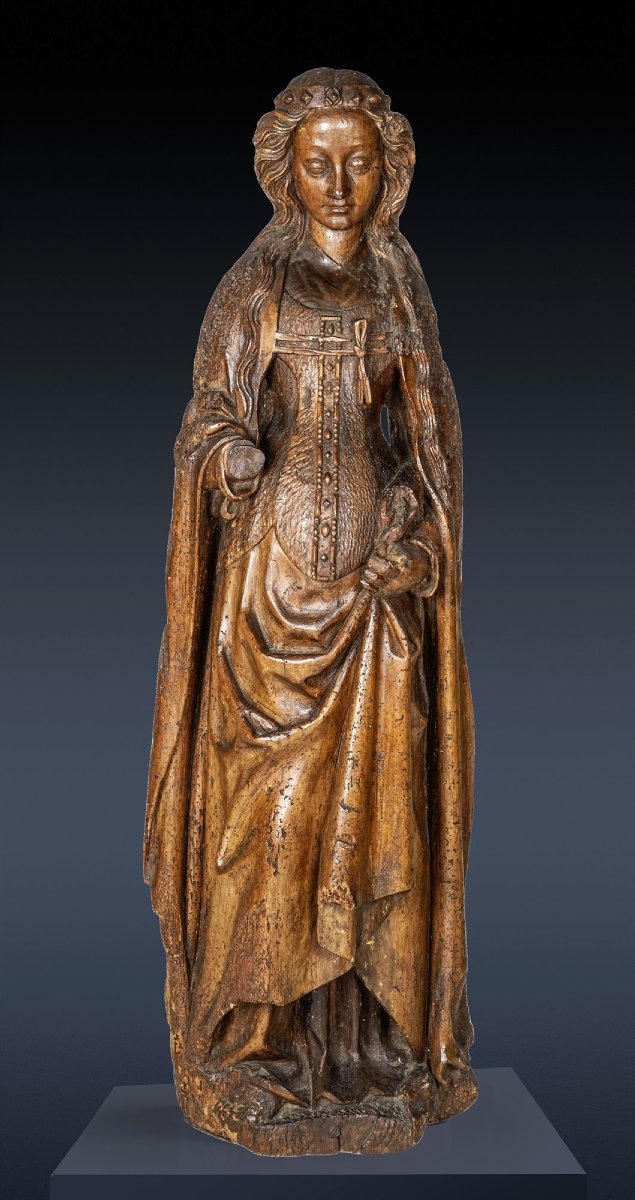
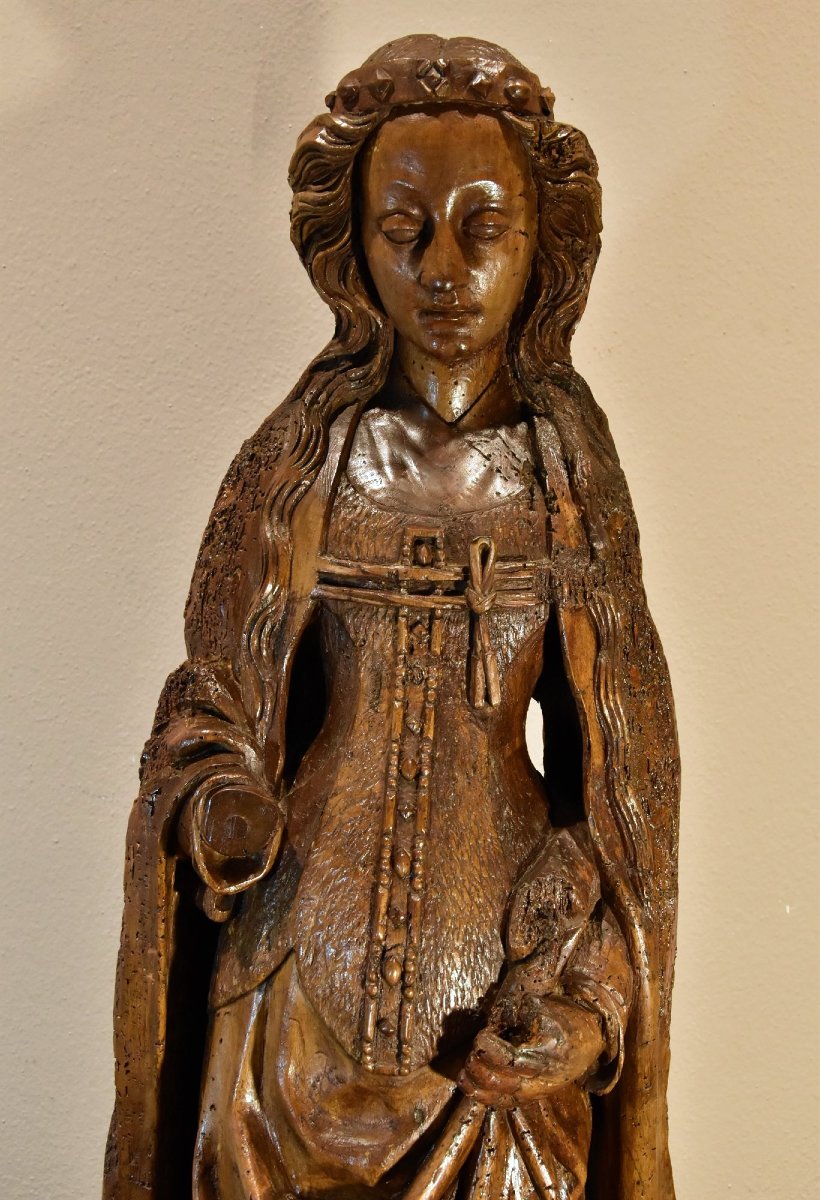
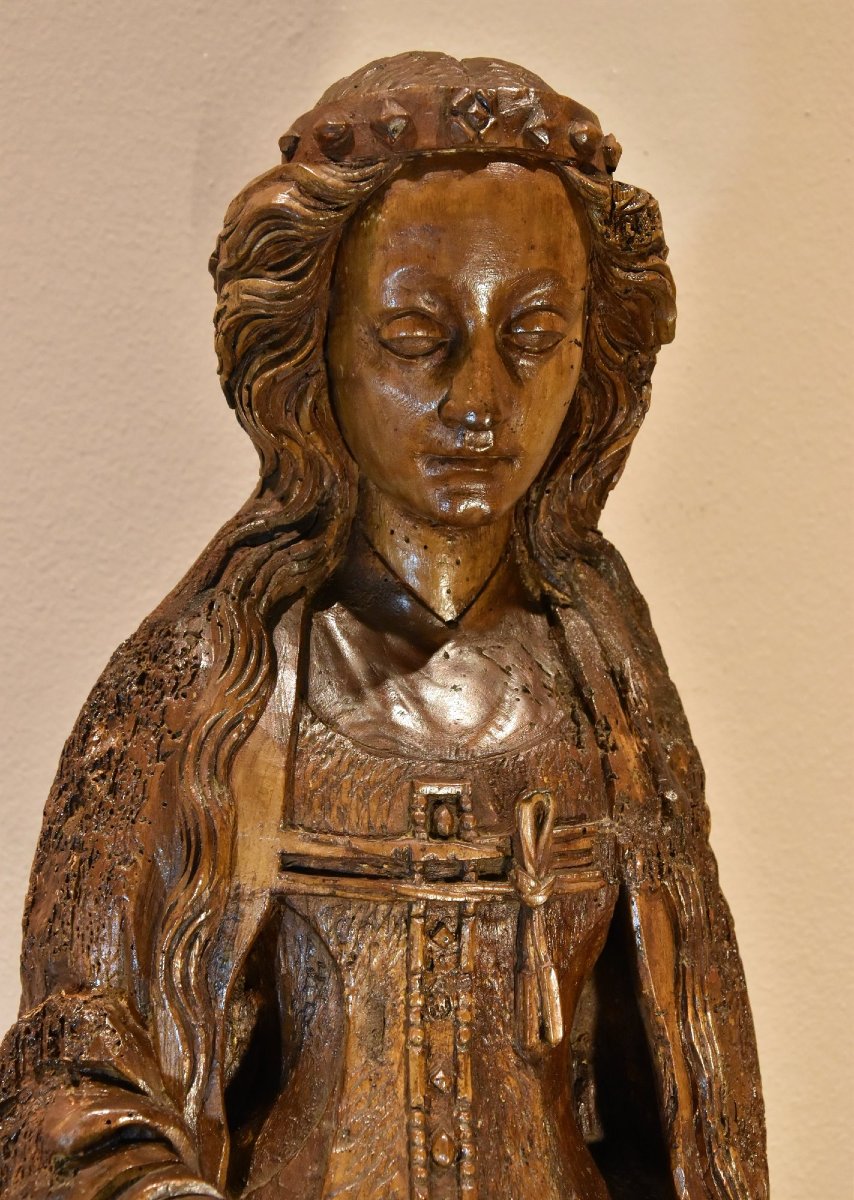
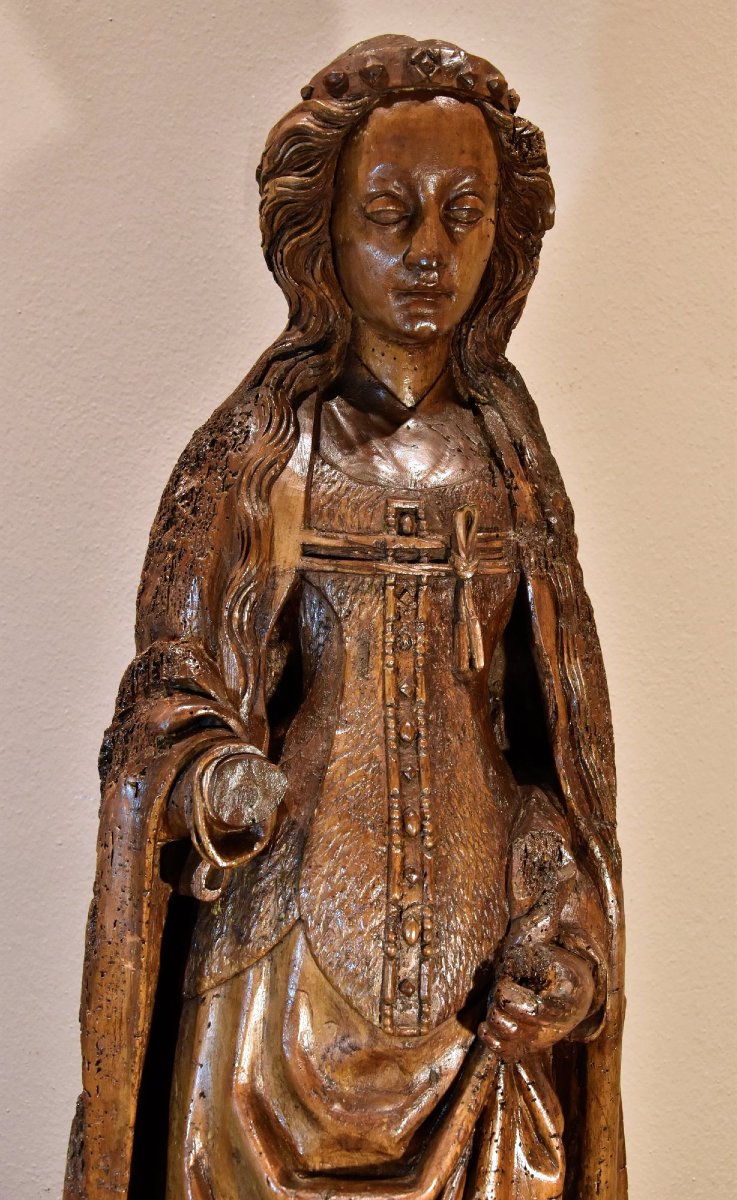
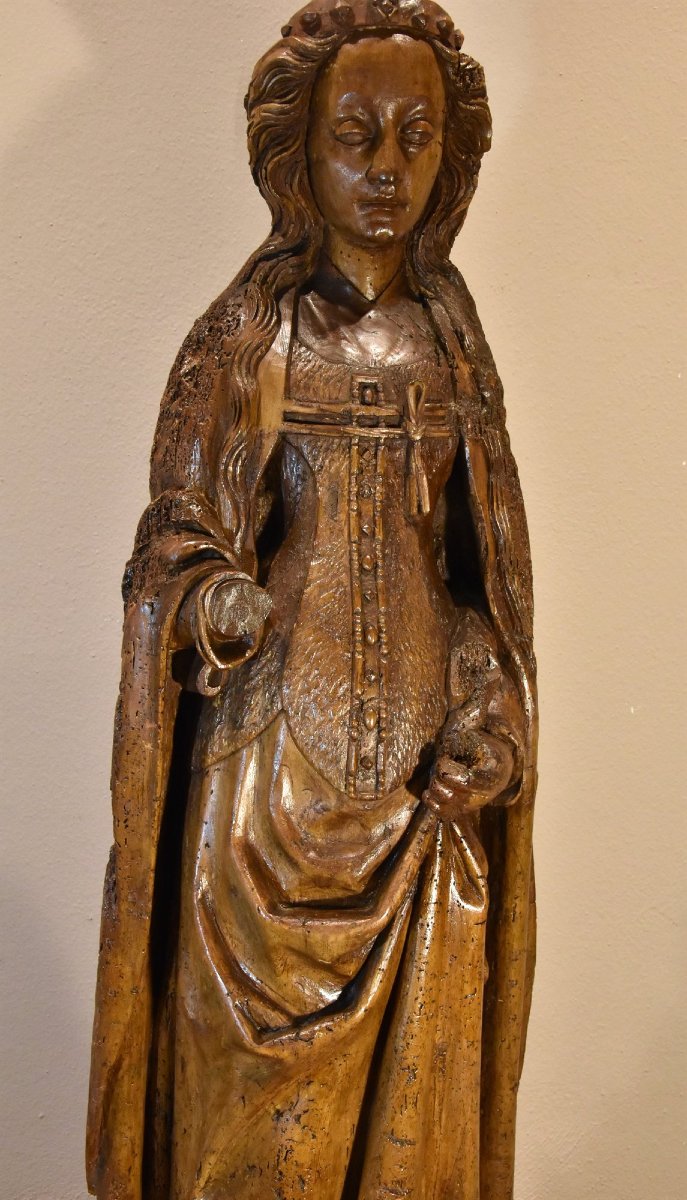
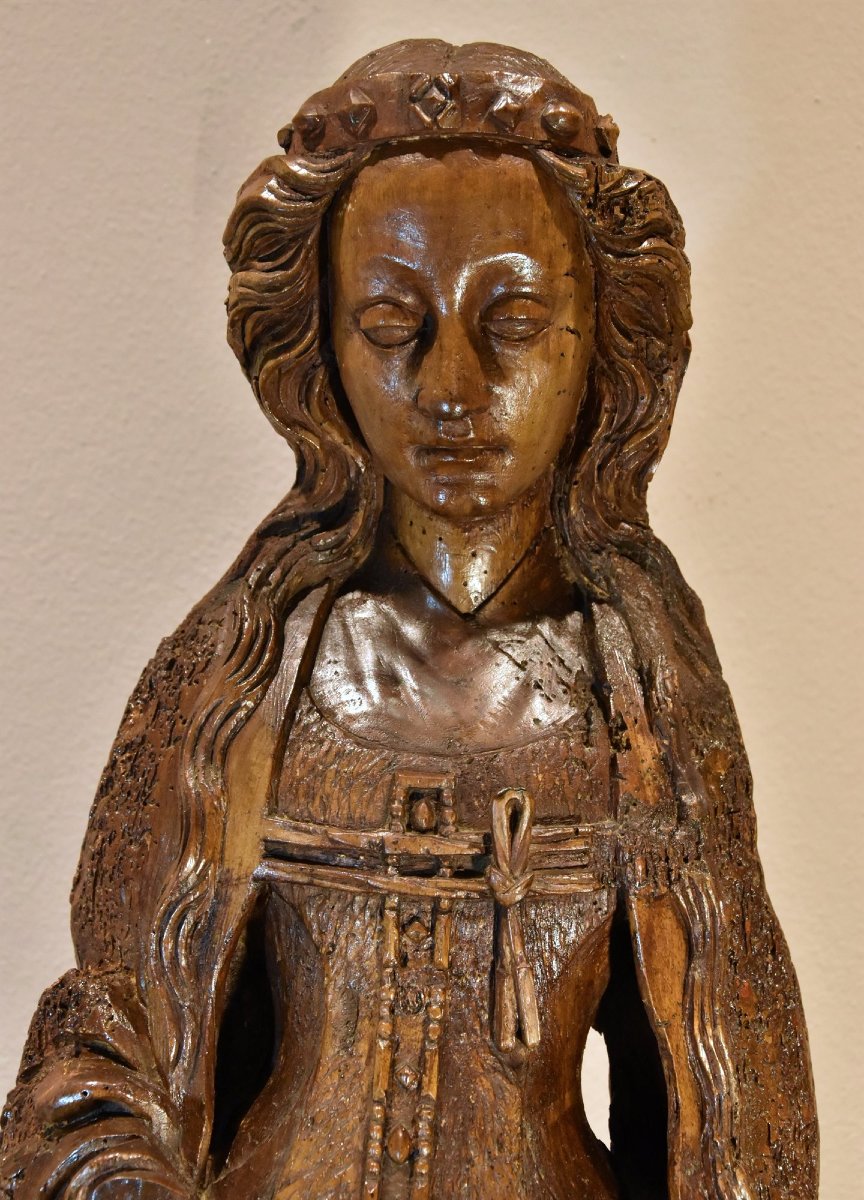
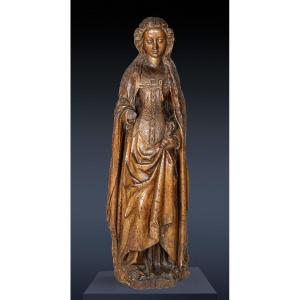
The wooden sculpture in question, depicting an elegant full-length Saint Elizabeth, is the work of a master sculptor of Gothic heritage who was active toward the end of the 15th century. To allude to her noble origins as a princess, the saint is depicted wearing a jeweled crown resting upon her long, flowing hair; she appears refined and elegant yet with a solemn demeanor.
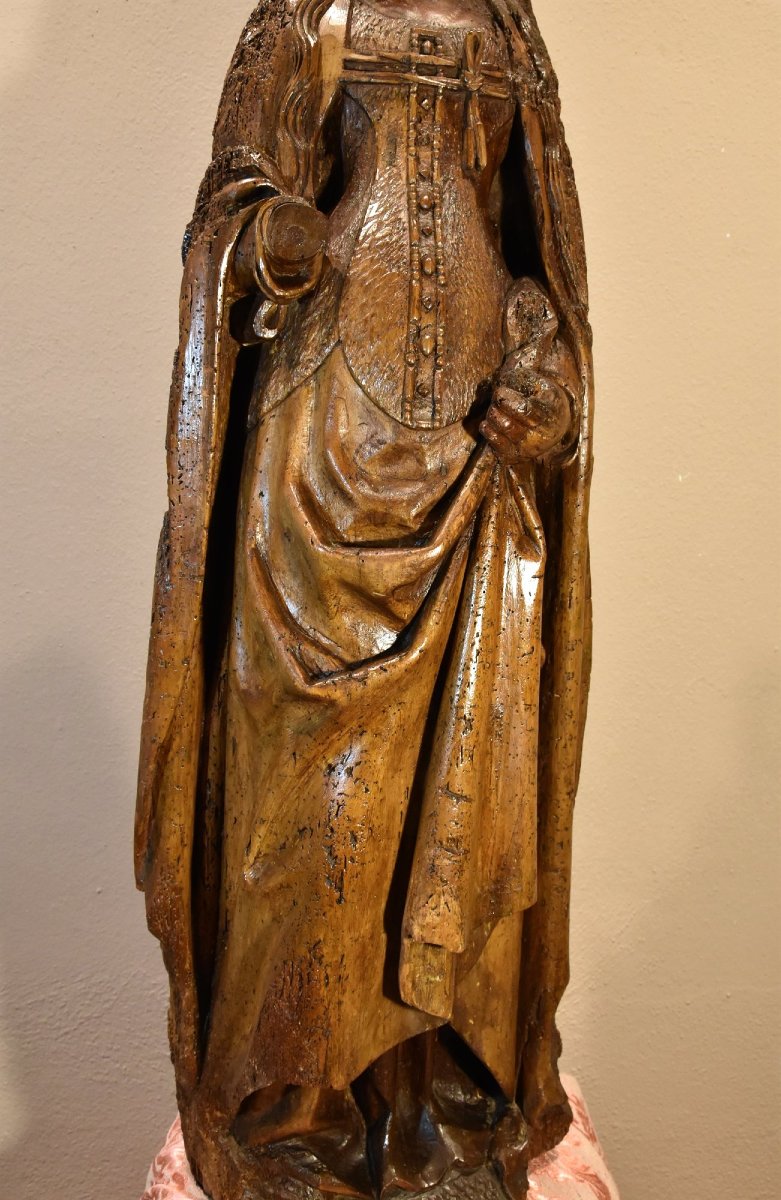
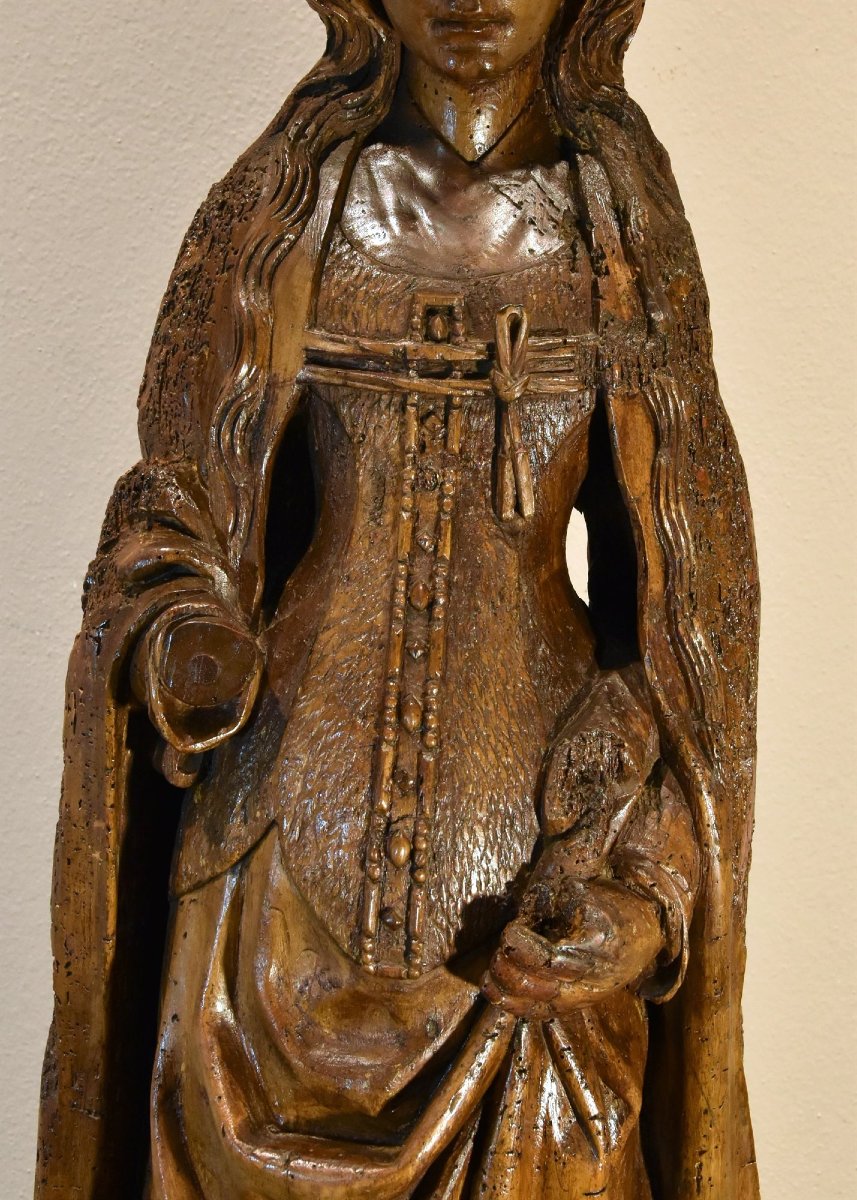
Worthy of mention are the sumptuous robes that envelop her figure, consisting of a sophisticated fitted bodice, crafted with a pattern reminiscent of brocade, and embellished with a vertical band set with precious stones.
The Holy Queen is also draped in a cloak draped over her shoulders and fastened at the chest with a knot—a decorative detail with symbolic significance that, in all likelihood, may refer to her union with Christ or her spiritual bond with him.
Her left hand holds up the richly pleated and draped skirt, while her right hand—now missing—may once have held a scepter or a book, or may simply have been raised in a gesture of blessing.
With its elegant design, the sculpture—evoking the canons of the French Gothic tradition—will captivate any lover of ancient sculpture, certainly for its ideal beauty but also, at the same time, for the power and sense of solemnity it conveys.
The quality of the work and the richness of its details—among which the meticulously carved drapery stands out—allow it to be linked to the rich sculptural tradition typical of the Lower Rhine region (or, as previously suggested, though less likely, of South Tyrol), which, beginning in the 14th–15th centuries, became one of the major centers specializing in the art of sculpture.
Our artist drew inspiration from Italian Renaissance culture and, above all, Flemish Renaissance culture; his style is therefore a personal synthesis of these two influences with French Gothic art.
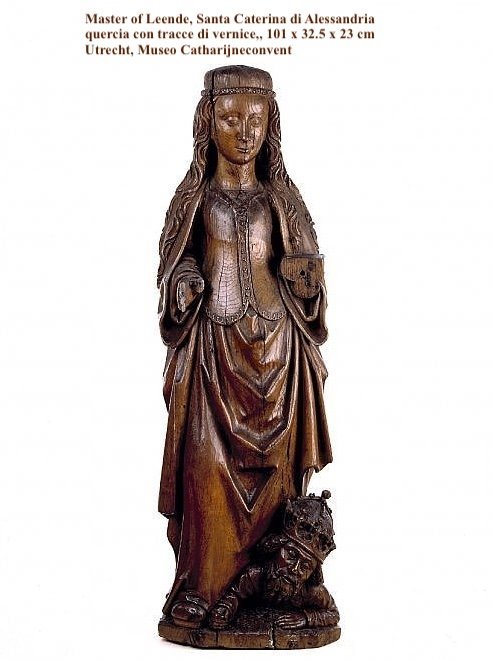
Speaking of Flemish influences, the work in fact draws on the magnificent statue—depicting the same subject—now housed at the Museum Catharijneconvent in Utrecht, a late 15th-century work by the Master of Leende (see image in detail, https://adlib.catharijneconvent.nl/Details/collect/42290). Typical of Flemish art are the sumptuous robes with heavy folds, the rounded, egg-shaped heads, eyes with almond-shaped lids, thick, widely spaced locks of hair, and a subtle attention to detail.
This is a work of exceptional sculptural quality, in good condition for its age, with a splendid burnished patina; losses are consistent with the period.
ADDITIONAL INFORMATION:
The work is sold with a certificate of authenticity and a descriptive iconographic sheet.
We arrange and organize the shipping of purchased works, both within Italy and internationally, using professional and insured carriers.
If you would like to view this or other works in person, we would be delighted to welcome you to our new gallery in Riva del Garda, located at Viale Giuseppe Canella 18. We look forward to seeing you!
Please contact us for any information; we will be happy to assist you.
Follow us on:
https://www.instagram.com/galleriacastelbarco/?hl=it
https://www.facebook.com/galleriacastelbarco/
Provenance: Lower Rhine or South Tyrol
Late 15th century (circa 1480)
Linden wood (single block, hollowed-out back), traces of polychromy on the back
Height: 105 cm
Provenance: BONHAMS London, New Bond Street, Auction June 23, 2021, Lot 2, estimate £12,000 - £18,000 (link)
The wooden sculpture in question, depicting an elegant full-length Saint Elizabeth, is the work of a master sculptor of Gothic heritage who was active toward the end of the 15th century. To allude to her noble origins as a princess, the saint is depicted wearing a jeweled crown resting upon her long, flowing hair; she appears refined and elegant yet with a solemn demeanor.
Worthy of mention are the sumptuous robes that envelop her figure, consisting of a sophisticated fitted bodice, crafted with a pattern reminiscent of brocade, and embellished with a vertical band set with precious stones.
The Holy Queen is also draped in a cloak draped over her shoulders and fastened at the chest with a knot—a decorative detail with symbolic significance that, in all likelihood, may refer to her union with Christ or her spiritual bond with him.
Her left hand holds up the richly pleated and draped skirt, while her right hand—now missing—may once have held a scepter or a book, or may simply have been raised in a gesture of blessing.
With its elegant design, the sculpture—evoking the canons of the French Gothic tradition—will captivate any lover of ancient sculpture, certainly for its ideal beauty but also, at the same time, for the power and sense of solemnity it conveys.
The quality of the work and the richness of its details—among which the meticulously carved drapery stands out—allow it to be linked to the rich sculptural tradition typical of the Lower Rhine region (or, as previously suggested, though less likely, of South Tyrol), which, beginning in the 14th–15th centuries, became one of the major centers specializing in the art of sculpture.
Our artist drew inspiration from Italian Renaissance culture and, above all, Flemish Renaissance culture; his style is therefore a personal synthesis of these two influences with French Gothic art.
Speaking of Flemish influences, the work in fact draws on the magnificent statue—depicting the same subject—now housed at the Museum Catharijneconvent in Utrecht, a late 15th-century work by the Master of Leende (see image in detail, https://adlib.catharijneconvent.nl/Details/collect/42290). Typical of Flemish art are the sumptuous robes with heavy folds, the rounded, egg-shaped heads, eyes with almond-shaped lids, thick, widely spaced locks of hair, and a subtle attention to detail.
This is a work of exceptional sculptural quality, in good condition for its age, with a splendid burnished patina; losses are consistent with the period.
ADDITIONAL INFORMATION:
The work is sold with a certificate of authenticity and a descriptive iconographic sheet.
We arrange and organize the shipping of purchased works, both within Italy and internationally, using professional and insured carriers.
If you would like to view this or other works in person, we would be delighted to welcome you to our new gallery in Riva del Garda, located at Viale Giuseppe Canella 18. We look forward to seeing you!
Please contact us for any information; we will be happy to assist you.
Follow us on:
https://www.instagram.com/galleriacastelbarco/?hl=it
https://www.facebook.com/galleriacastelbarco/
11 500 €
Period: Before 16th century
Style: Renaissance, Louis 13th
Condition: Excellent condition
Material: Solid wood
Height: cm 105
Reference (ID): 1820792
Availability: In stock
Print