

Bust Of St. Fortunade By Alexandre Bigot (1862–1927), Made Of Glazed Stoneware, Circa 1900, Art Nouveau
Artist: Alexandre Bigot
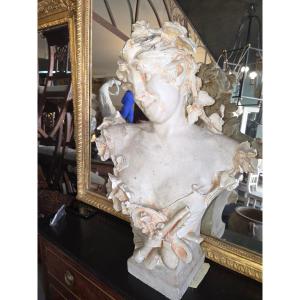
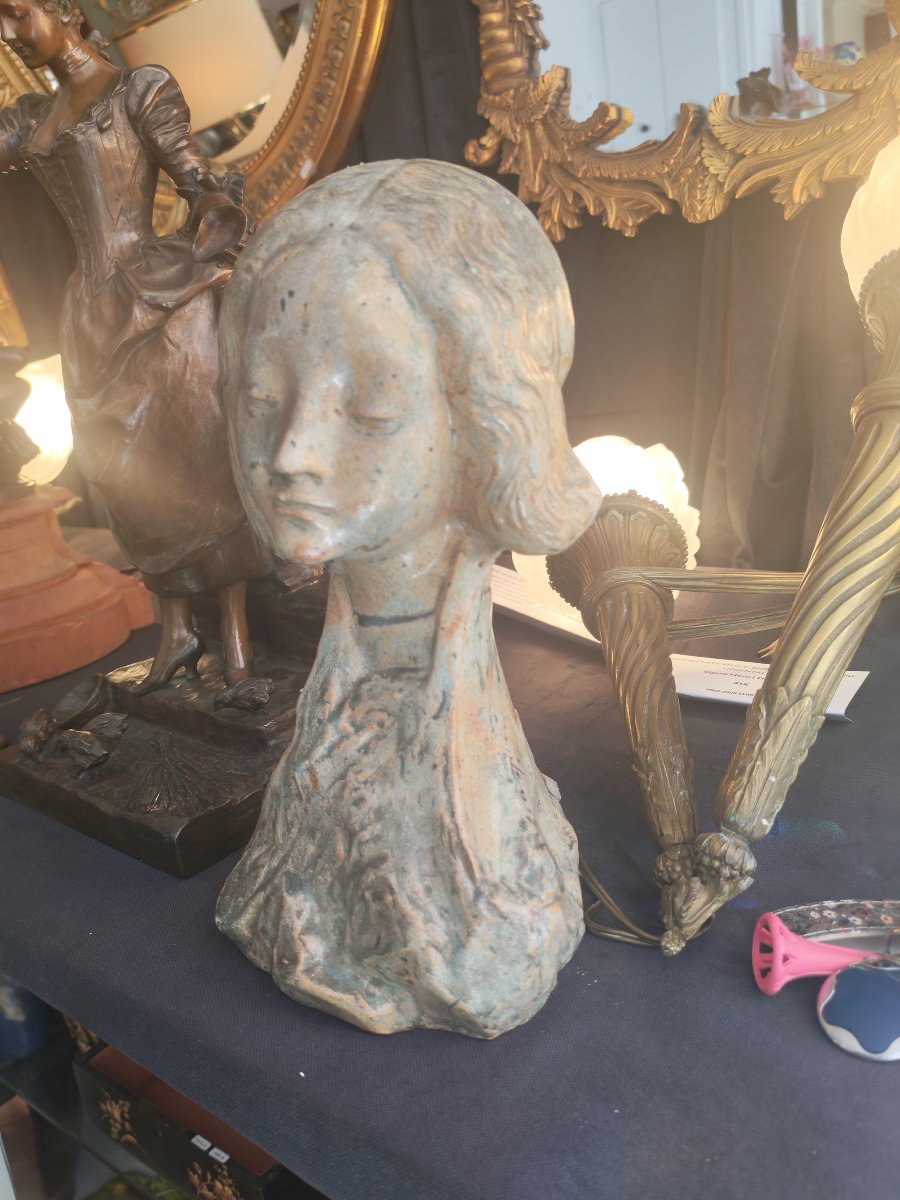
A beautiful, unique piece: this bust of St. Fortunade by Alexandre Bigot (1862–1927), made of glazed stoneware, circa 1900, Art Nouveau
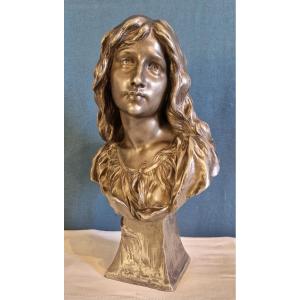
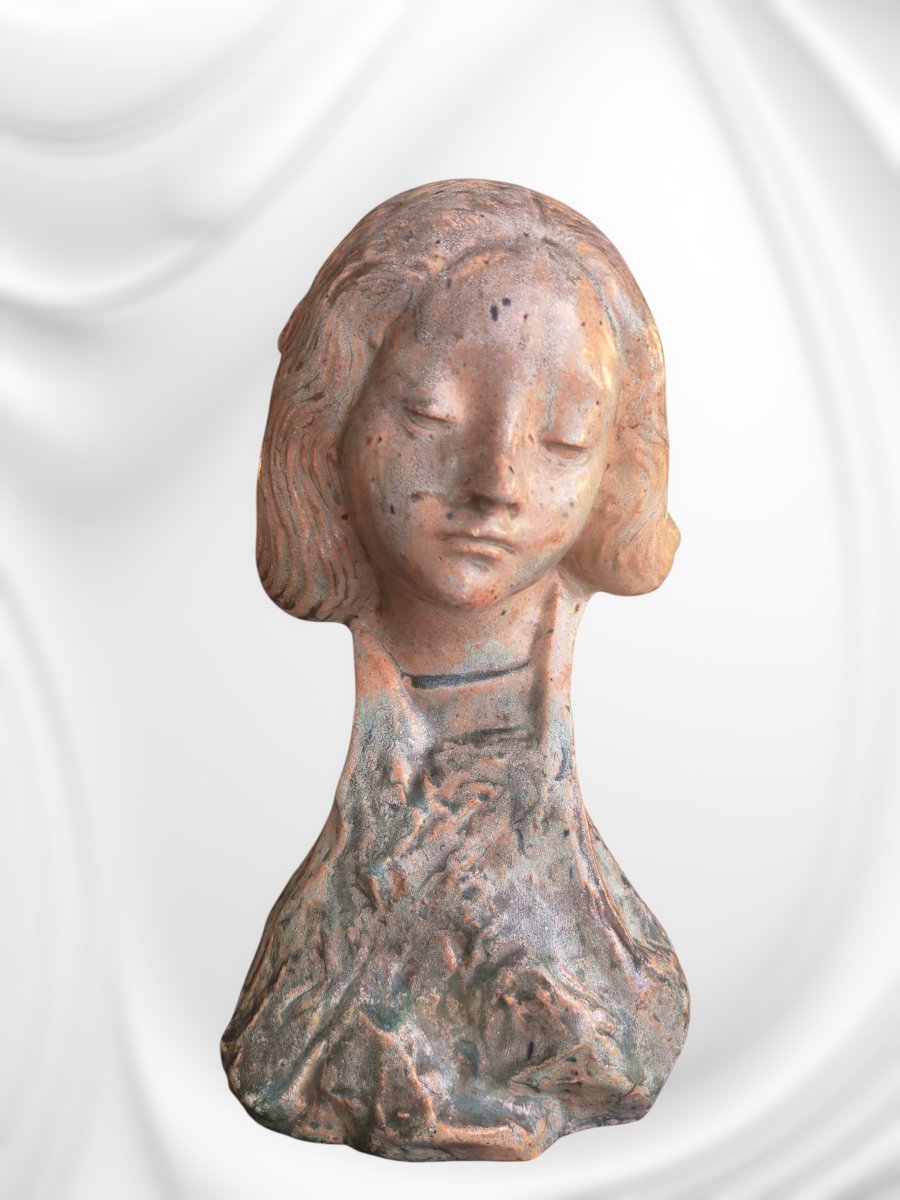
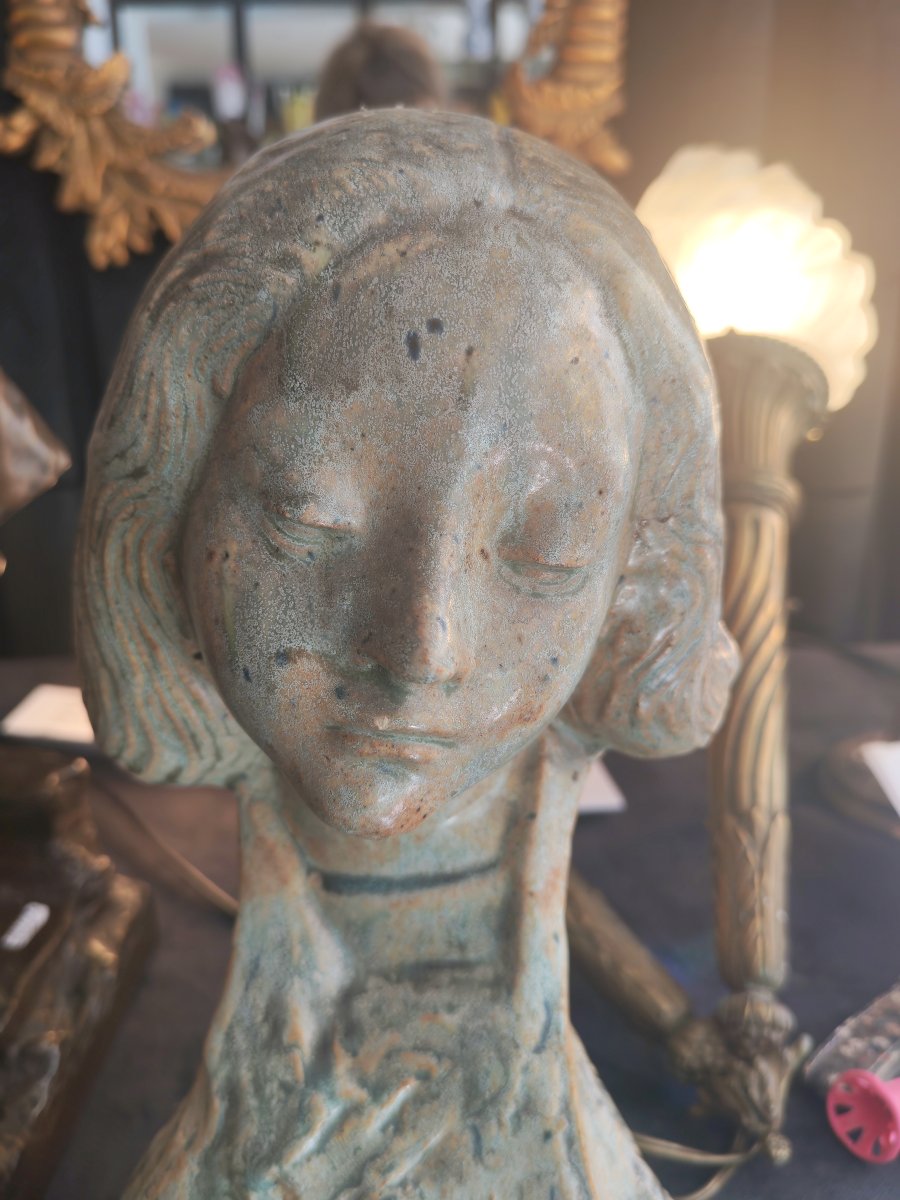
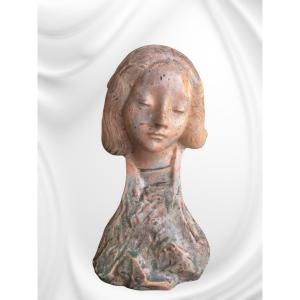
Bust of a young woman with closed eyes, known as Saint Fortunade, based on the famous 15th-century pewter-plated bronze reliquary housed in the Church of Sainte-Fortunade (Corrèze).
This is a glazed stoneware edition by the great ceramist Alexandre Bigot, a chemist and leading figure in Art Nouveau architectural ceramics in Paris (who collaborated with Hector Guimard on the Metro).
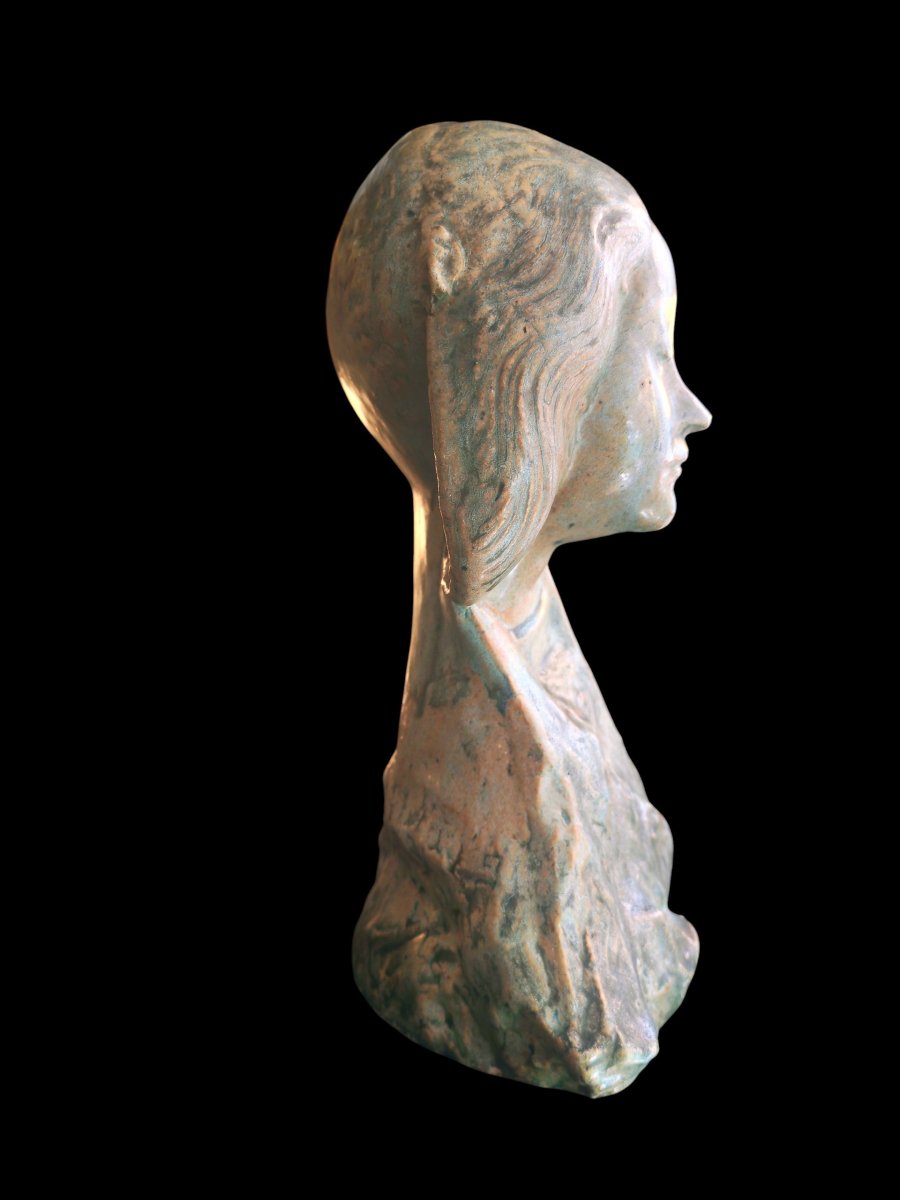
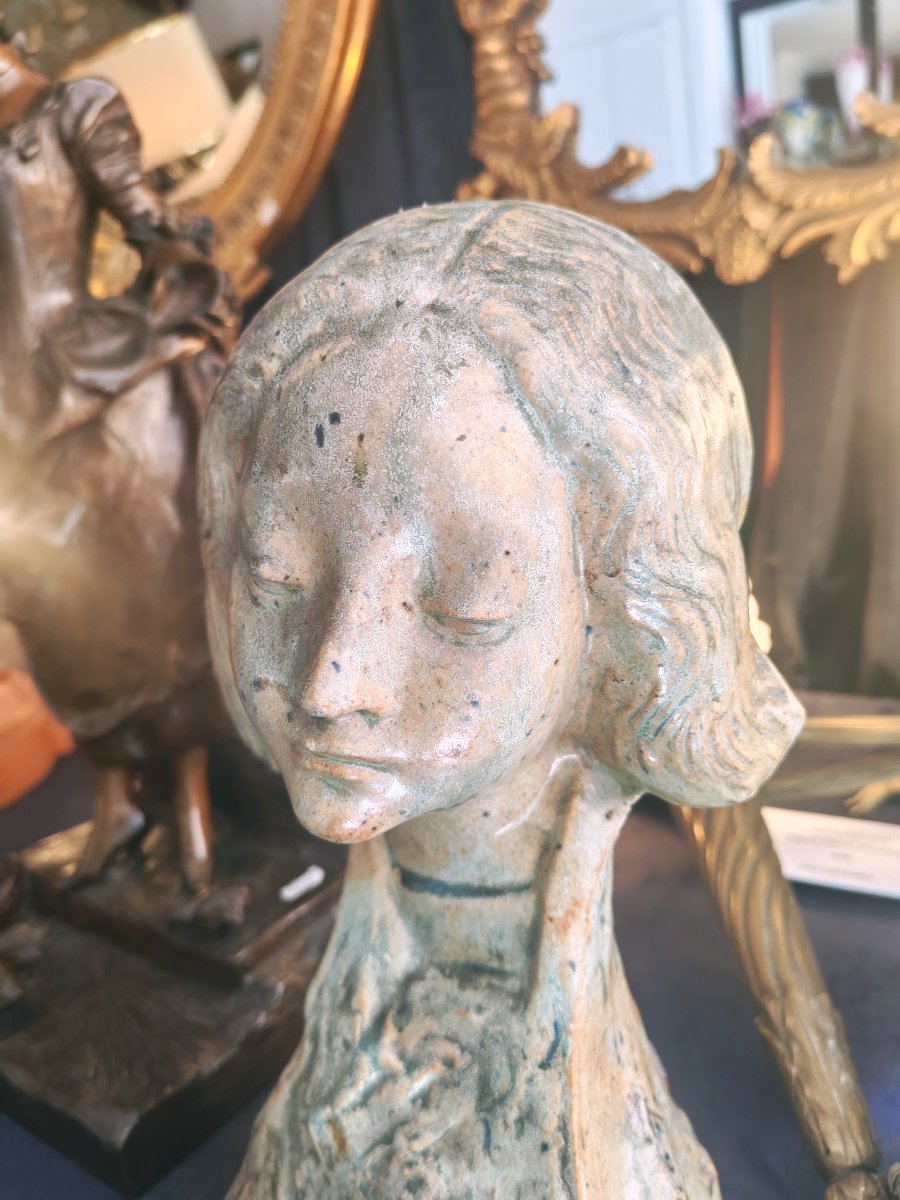
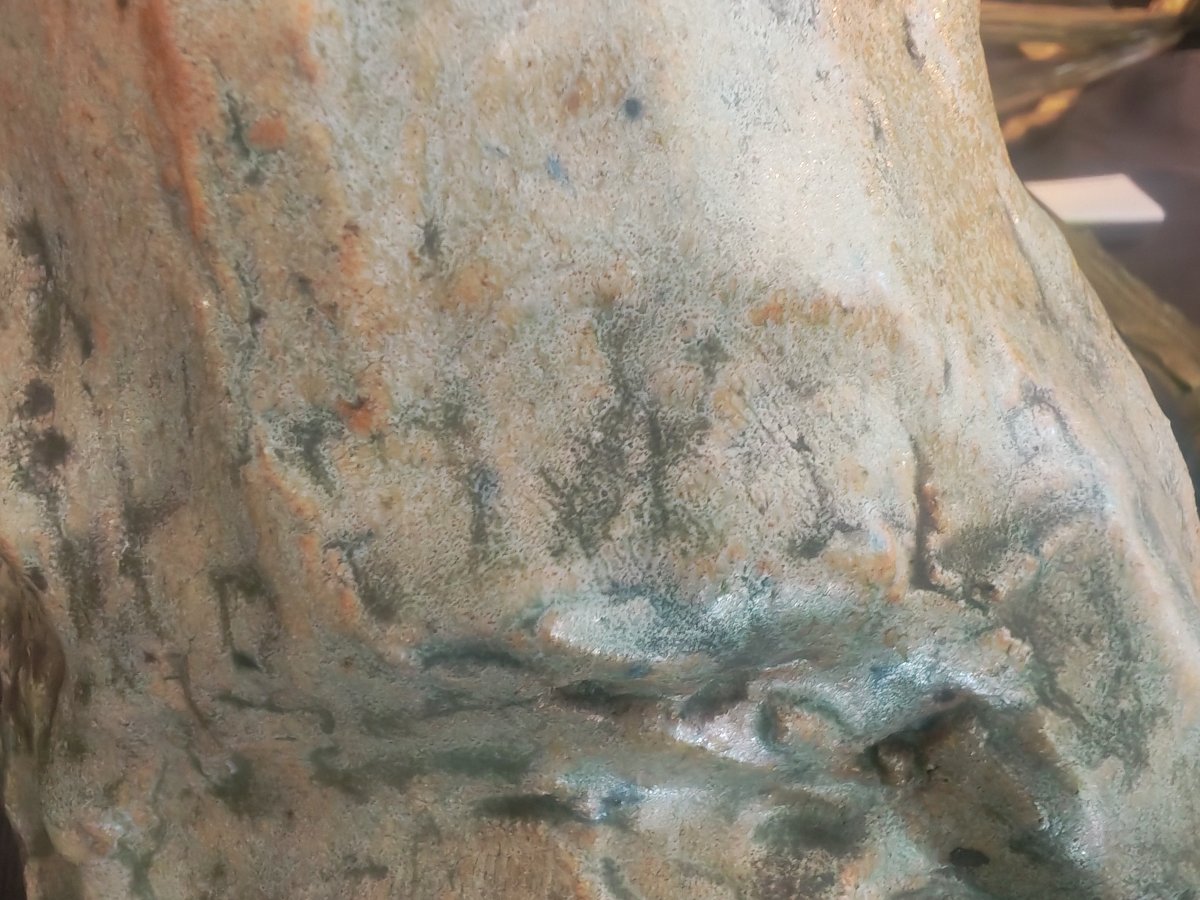
The matte glaze features nuanced shades of pinkish beige, blue, and aqua green, with the mottled and speckled appearance characteristic of Bigot. The figure has a gentle, contemplative expression, wavy hair, and a base decorated with a bas-relief plant motif. The stamped inscription “Grès de A. Bigot” is partially visible within the decoration.
Dimensions: 30 cm tall (large model)
History
St. Fortunade was a local saint from Corrèze, a young martyr of the 3rd century, around 259. Persecuted, she died in Agen. Her brother wanted to bring her ashes back to Burgundy, so he placed them in his knapsack. Along the way, he stopped near a spring called St. Martial-le-Noir. In the morning, he found it impossible to lift the bag—it had become too heavy. The locals saw this as a sign from Providence. The relics remained there. A chapel was then built, followed by the parish church. In the 15th century, a magnificent reliquary head made of bronze and tin was crafted to house the relics. It was based on this piece that Bigot copied and reinterpreted St. Fortunade around 1900. Almaric Walter also created a version of it in pâte de verre.
Bust of a young woman with closed eyes, known as Saint Fortunade, based on the famous 15th-century pewter-plated bronze reliquary housed in the Church of Sainte-Fortunade (Corrèze).
This is a glazed stoneware edition by the great ceramist Alexandre Bigot, a chemist and leading figure in Art Nouveau architectural ceramics in Paris (who collaborated with Hector Guimard on the Metro).
The matte glaze features nuanced shades of pinkish beige, blue, and aqua green, with the mottled and speckled appearance characteristic of Bigot. The figure has a gentle, contemplative expression, wavy hair, and a base decorated with a bas-relief plant motif. The stamped inscription “Grès de A. Bigot” is partially visible within the decoration.
Dimensions: 30 cm tall (large model)
History
St. Fortunade was a local saint from Corrèze, a young martyr of the 3rd century, around 259. Persecuted, she died in Agen. Her brother wanted to bring her ashes back to Burgundy, so he placed them in his knapsack. Along the way, he stopped near a spring called St. Martial-le-Noir. In the morning, he found it impossible to lift the bag—it had become too heavy. The locals saw this as a sign from Providence. The relics remained there. A chapel was then built, followed by the parish church. In the 15th century, a magnificent reliquary head made of bronze and tin was crafted to house the relics. It was based on this piece that Bigot copied and reinterpreted St. Fortunade around 1900. Almaric Walter also created a version of it in pâte de verre.
900 €
Period: 20th century
Style: Art Nouveau
Condition: Good condition
Material: Sandstone
Height: 30 cm
Reference (ID): 1820680
Availability: In stock
Print