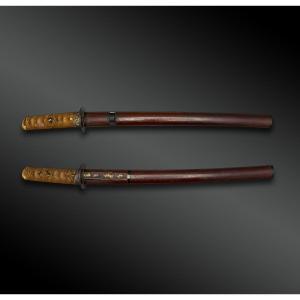


Sabre Known As A Tanto - Japan - Edo Period (1603–1868)
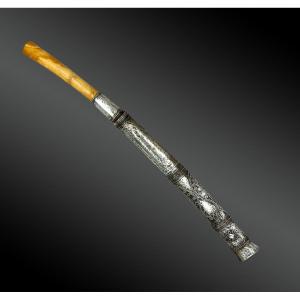
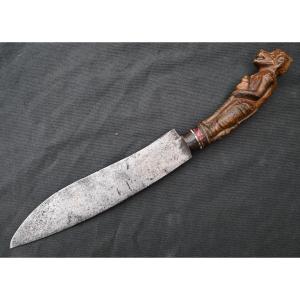
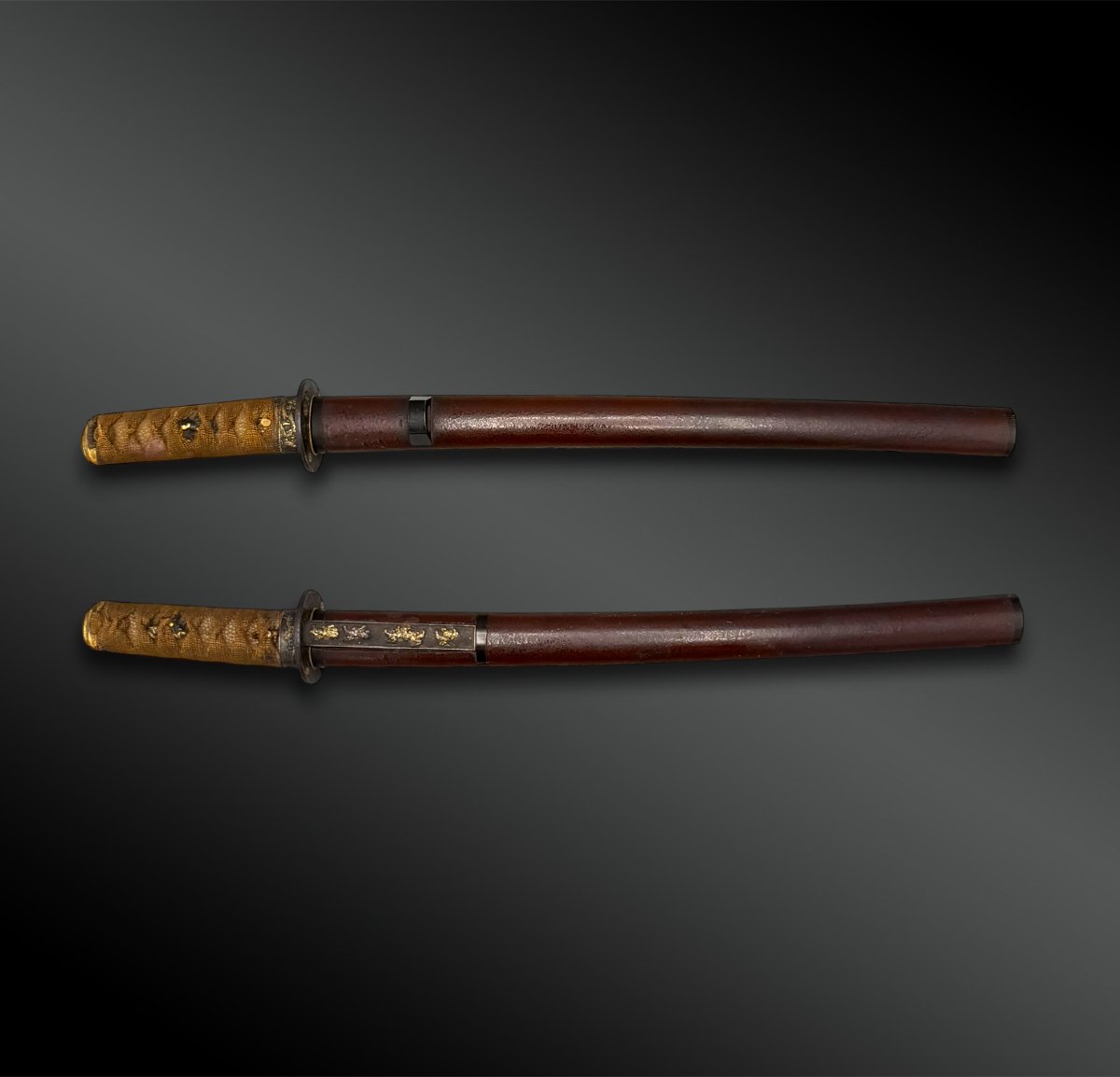
Sword known as a Tanto
Japan
Edo period (1603–1868)
Steel, wood, lacquer, copper, iron, gold, shakudo
Nagasa: 20.3; Nakago: 10.5 cm
(Cracks on the scabbard)
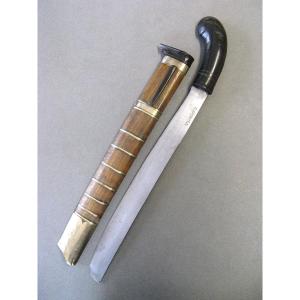
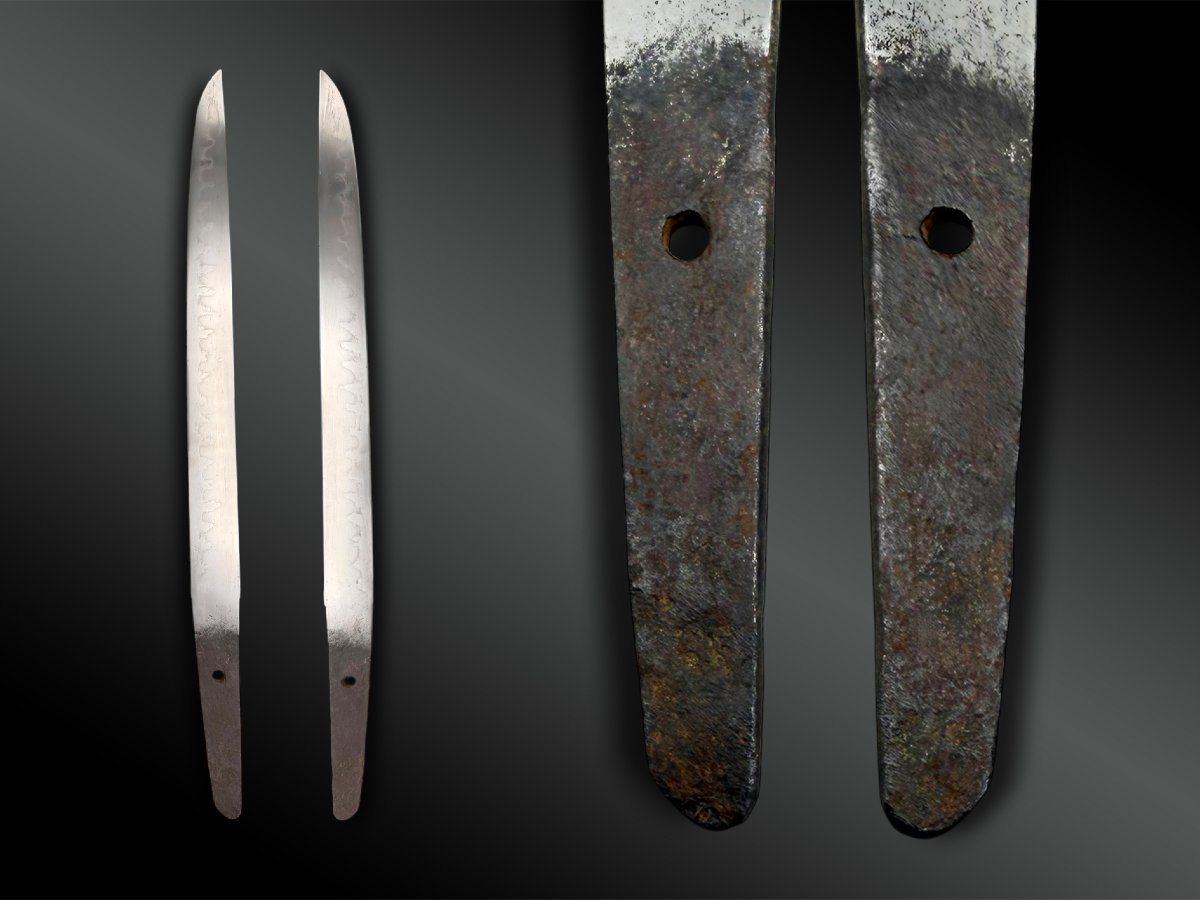
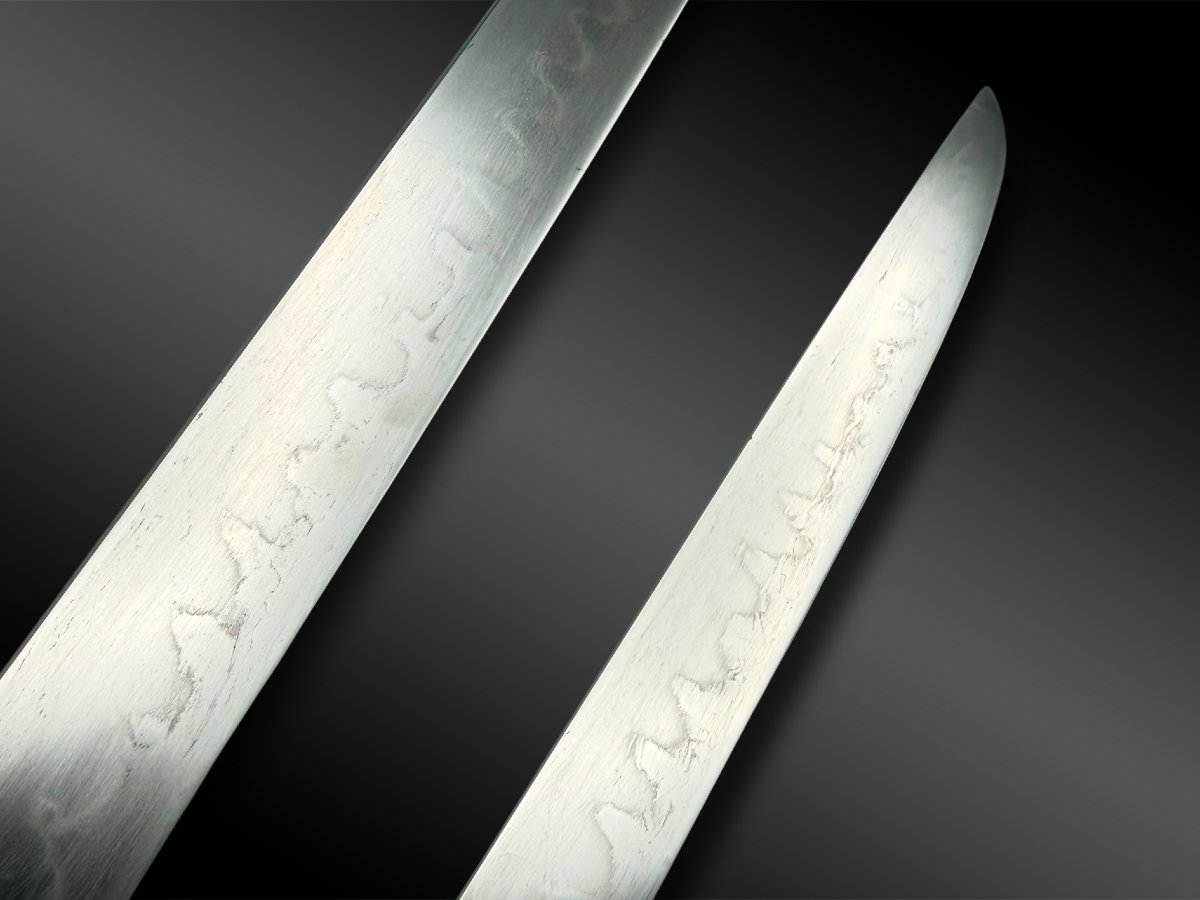
Kata kiri ha-style blade, mune hikushi, kawazu choji-style hamon.
Kaen-style boshi.
Funa-gata nakago with ha hagari kuri jiri.
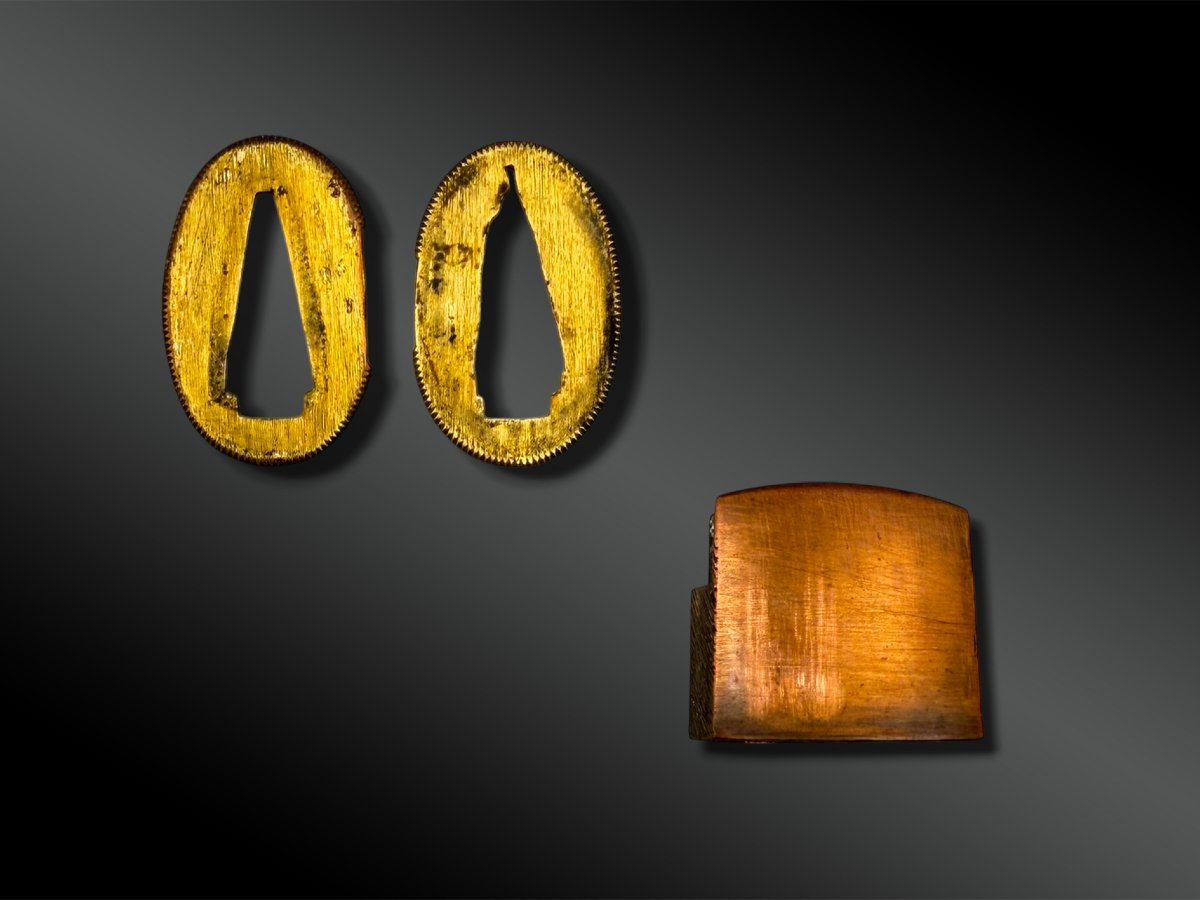
Copper habaki.
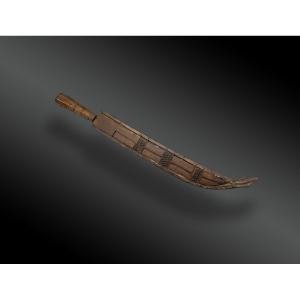
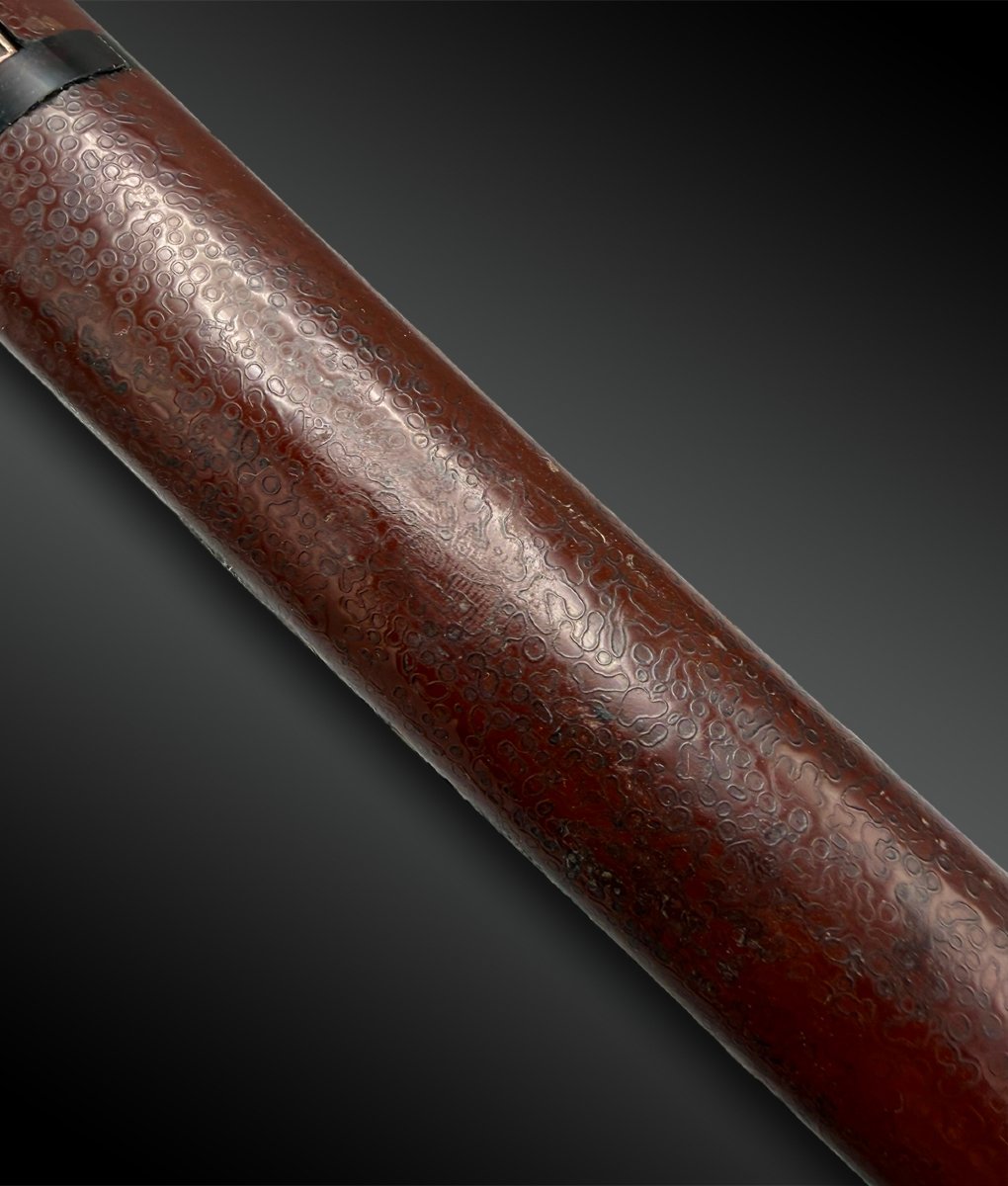
Wooden saya coated with matte red lacquer.
Kojiri, kuri-gata, and koi-guchi made of buffalo horn.
Chiseled brass shitodome.
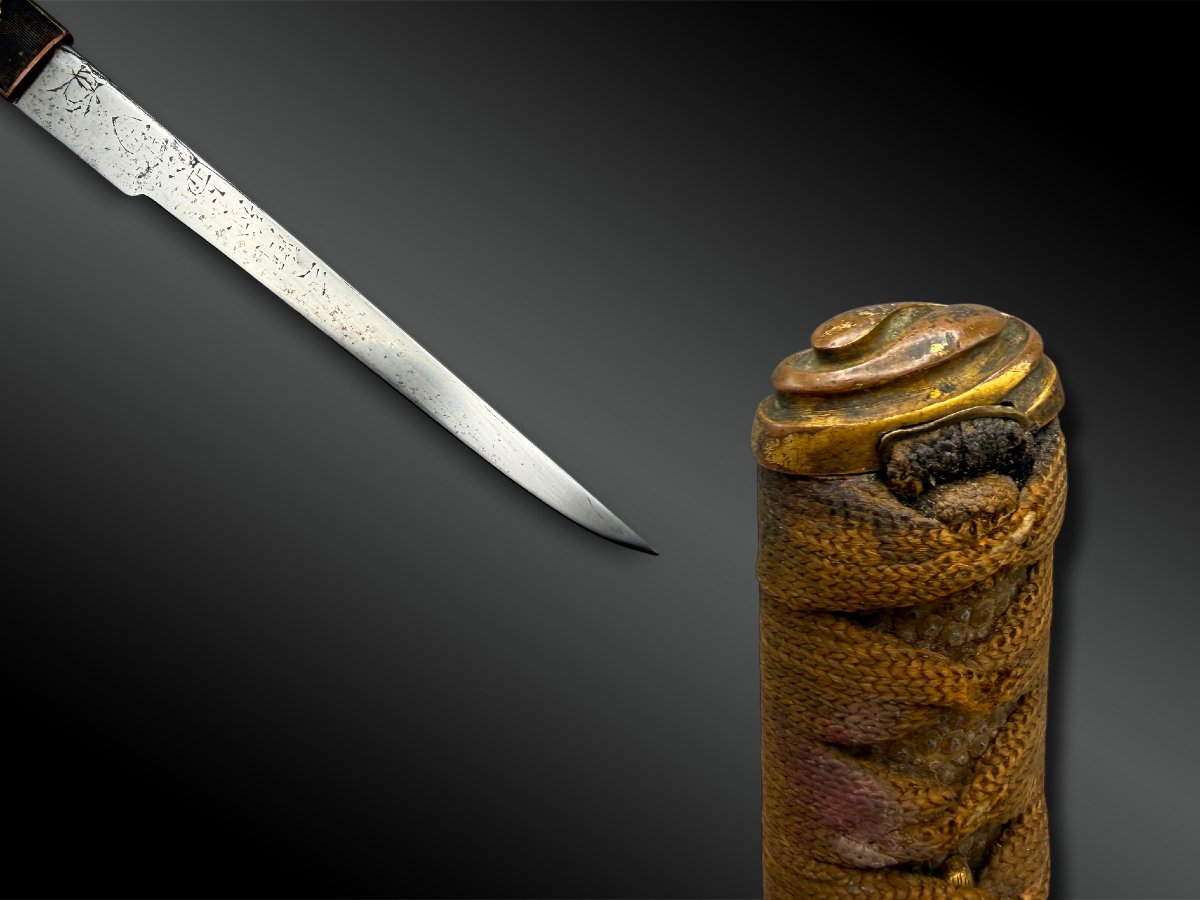
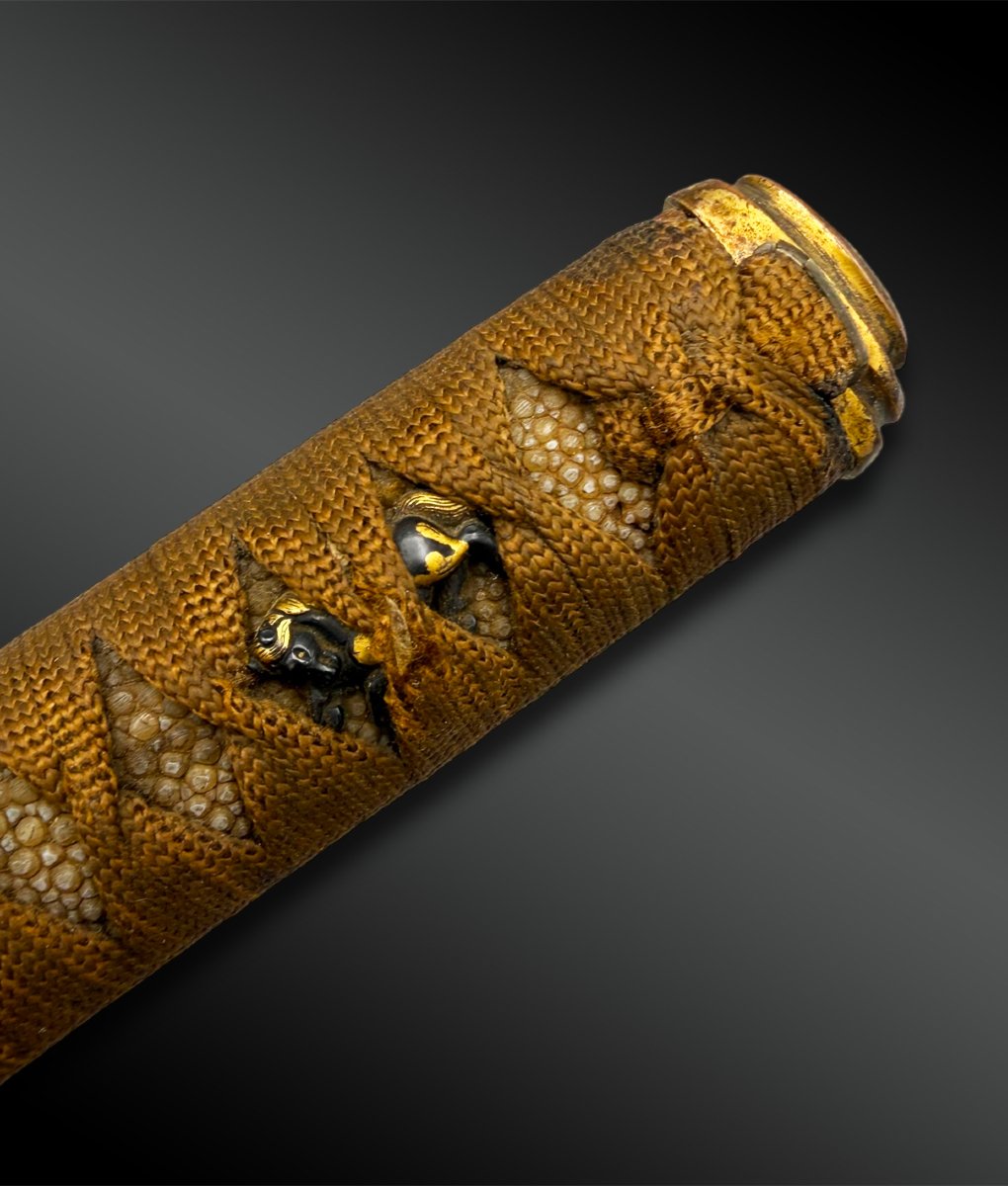
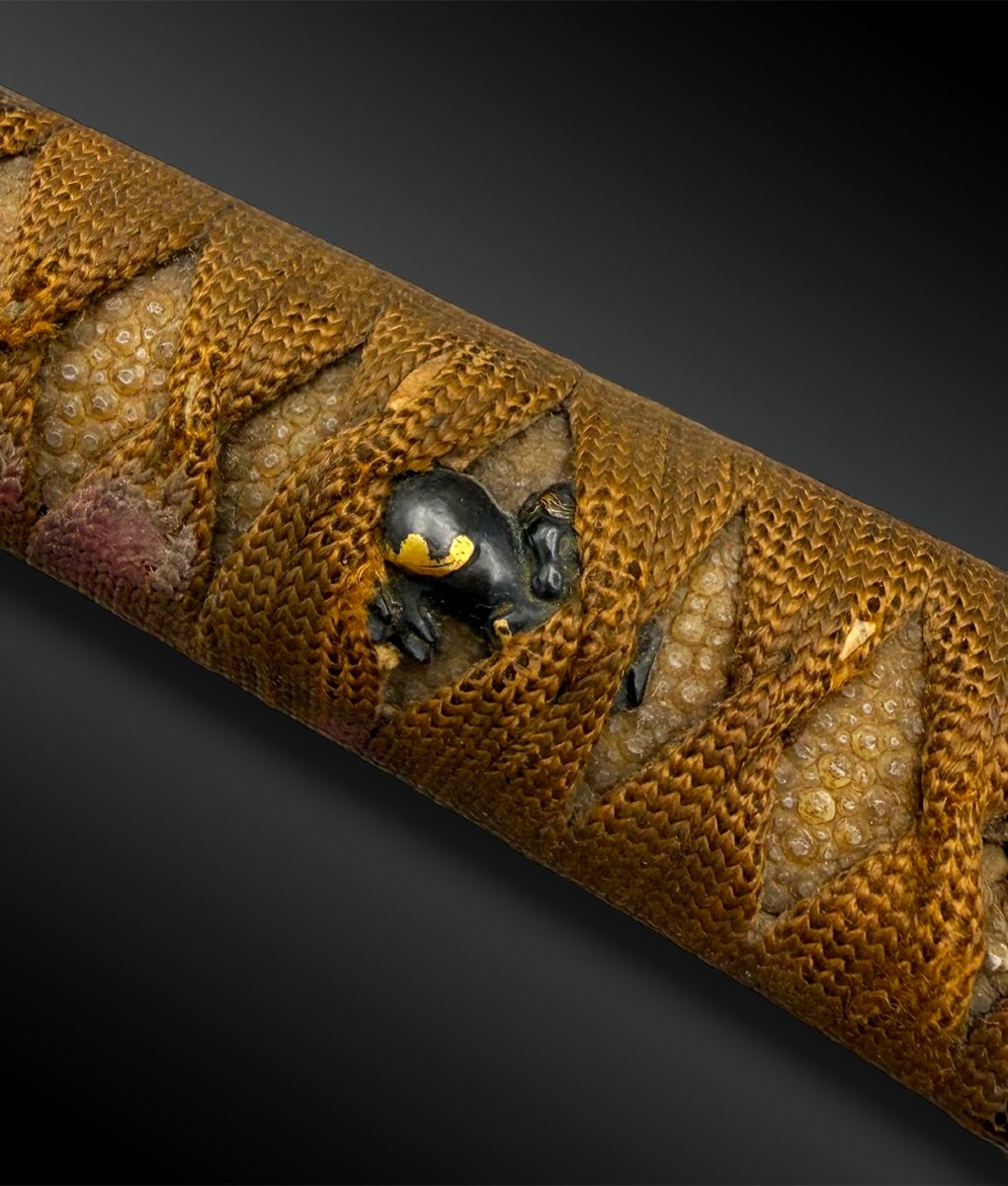
Wooden tsuka ito, covered with shagreen and braided with brown silk.
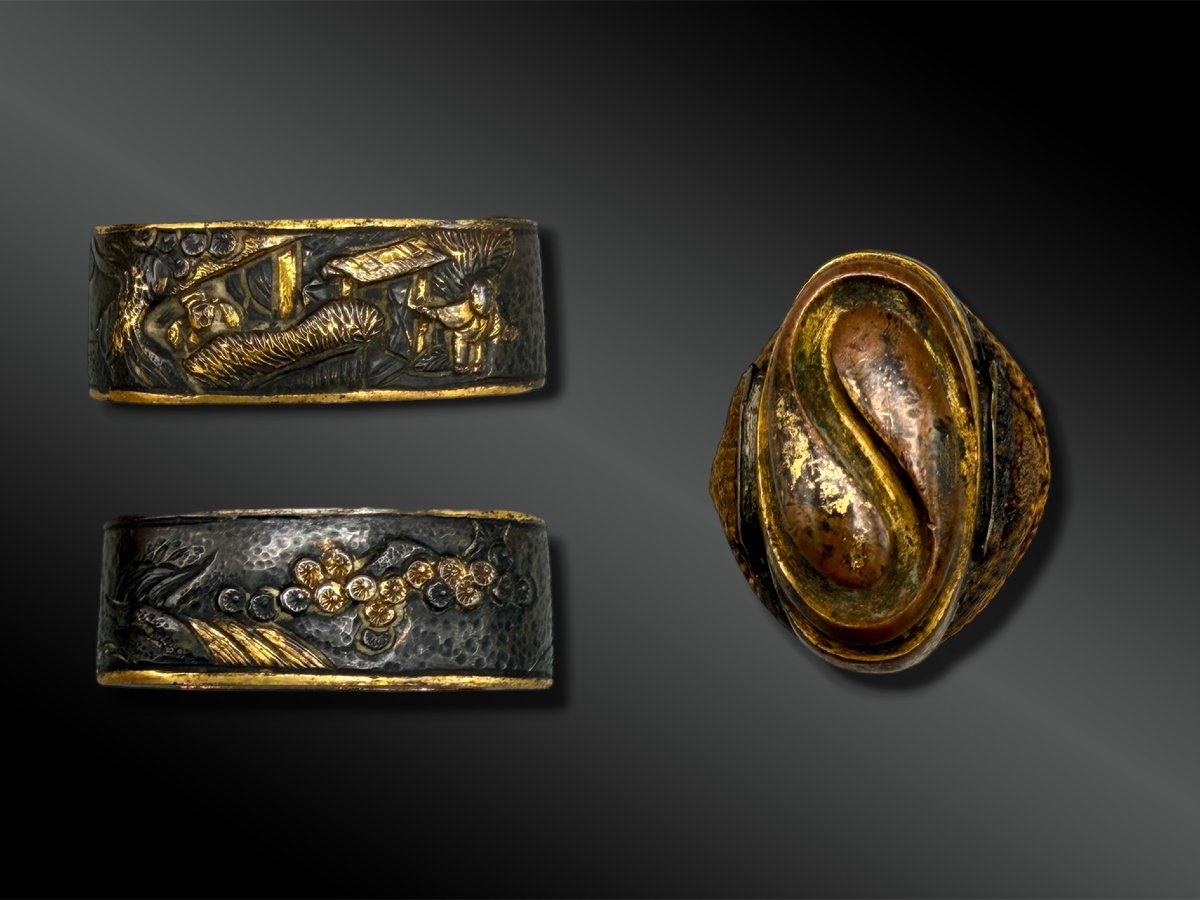
Copper fuchi overlaid with shakudo, chiseled with two figures depicted in an architectural scene and flowering branches; the entire piece is accented with gold.
Gilded copper kashira in the shape of a geometric motif.
Menuki depicting two horses in shakudo, accented with gold.
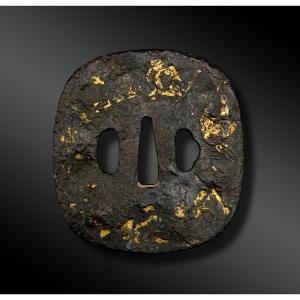
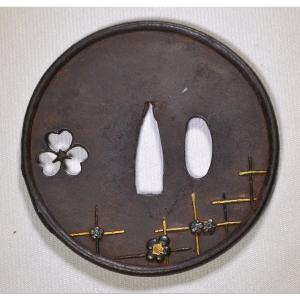
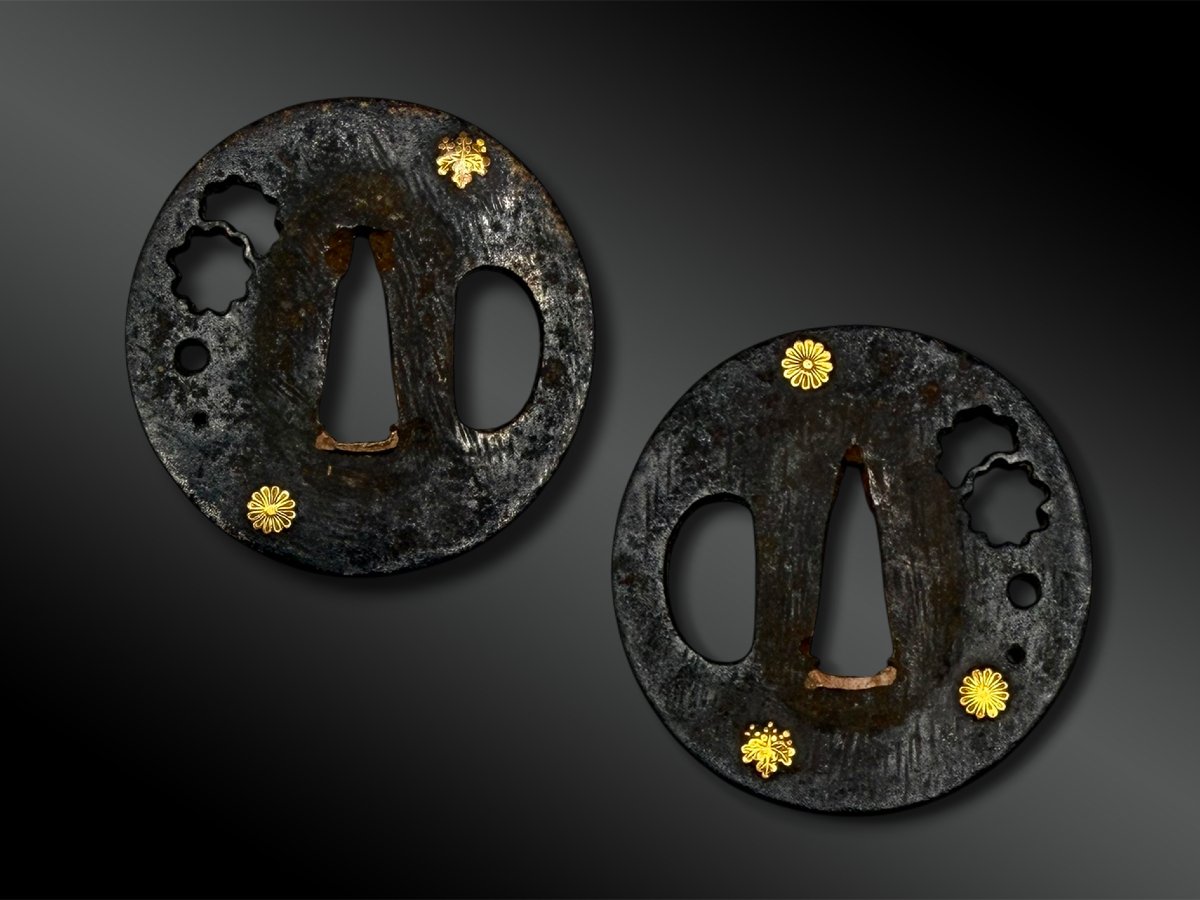
Shin no maru-gata tsuba in iron, openworked with geometric motifs and engraved with two “go-san no kiri” (see “kiri-mon”) in gold; “kaye-mon” (secondary crest) of the Kuchi-ki, Ku-ki of San-da, Matsu-daira of Ito-i-gawa, and Mo-ri (see “Matsu-daira”), Mori of A-kô and Mi-ka-zuki, O-gasa-wara of Kara-tsu, O-ta of Kashiwa-bara, Séki, Sen-goku, Tani, and Waki-zaka; and engraved with three jû-roku kiku (kiku mon), kaye-mon (secondary crest) of the Ashi-kaga; the whole accented with gold.
Sekigane made of copper.
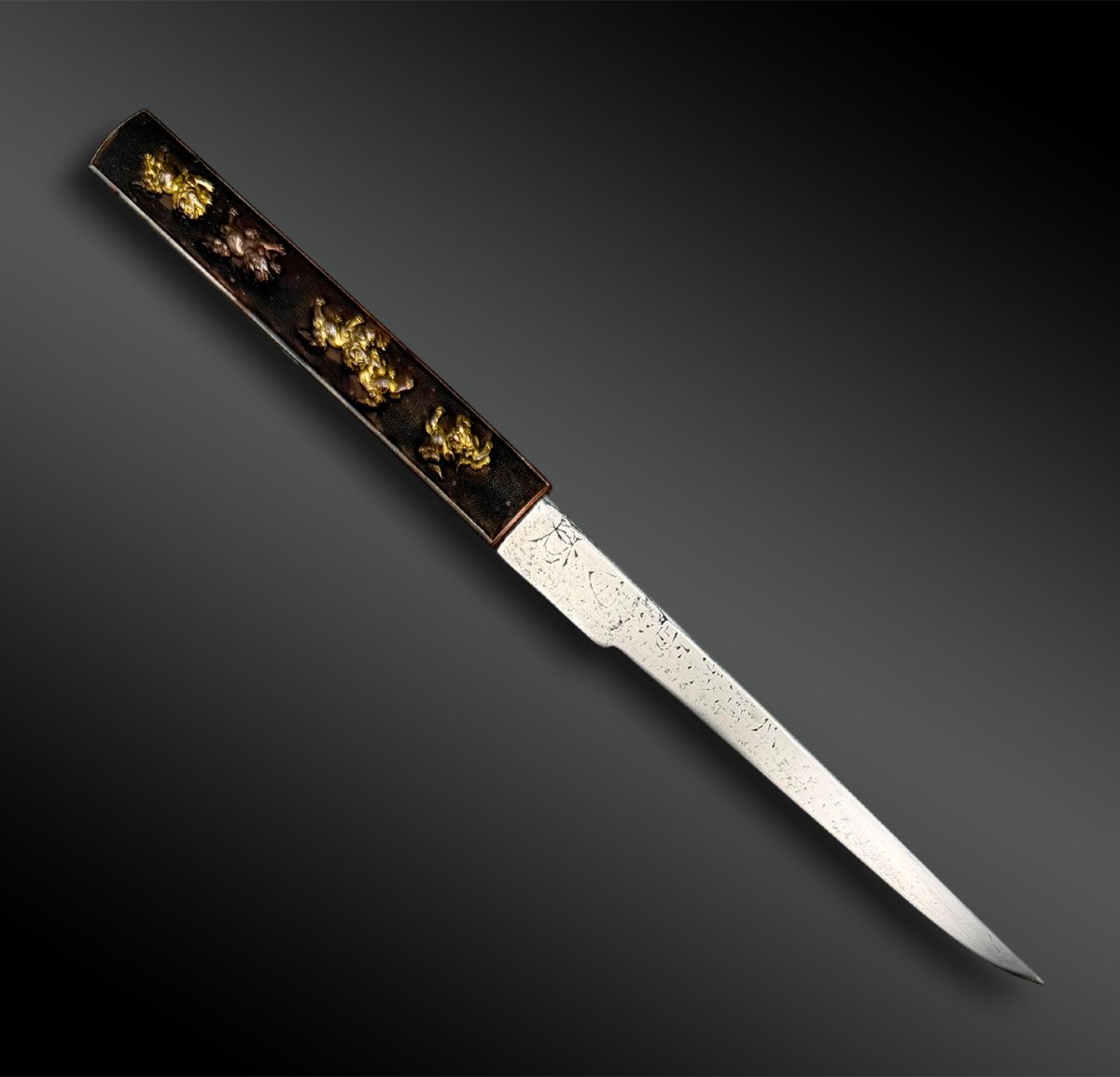
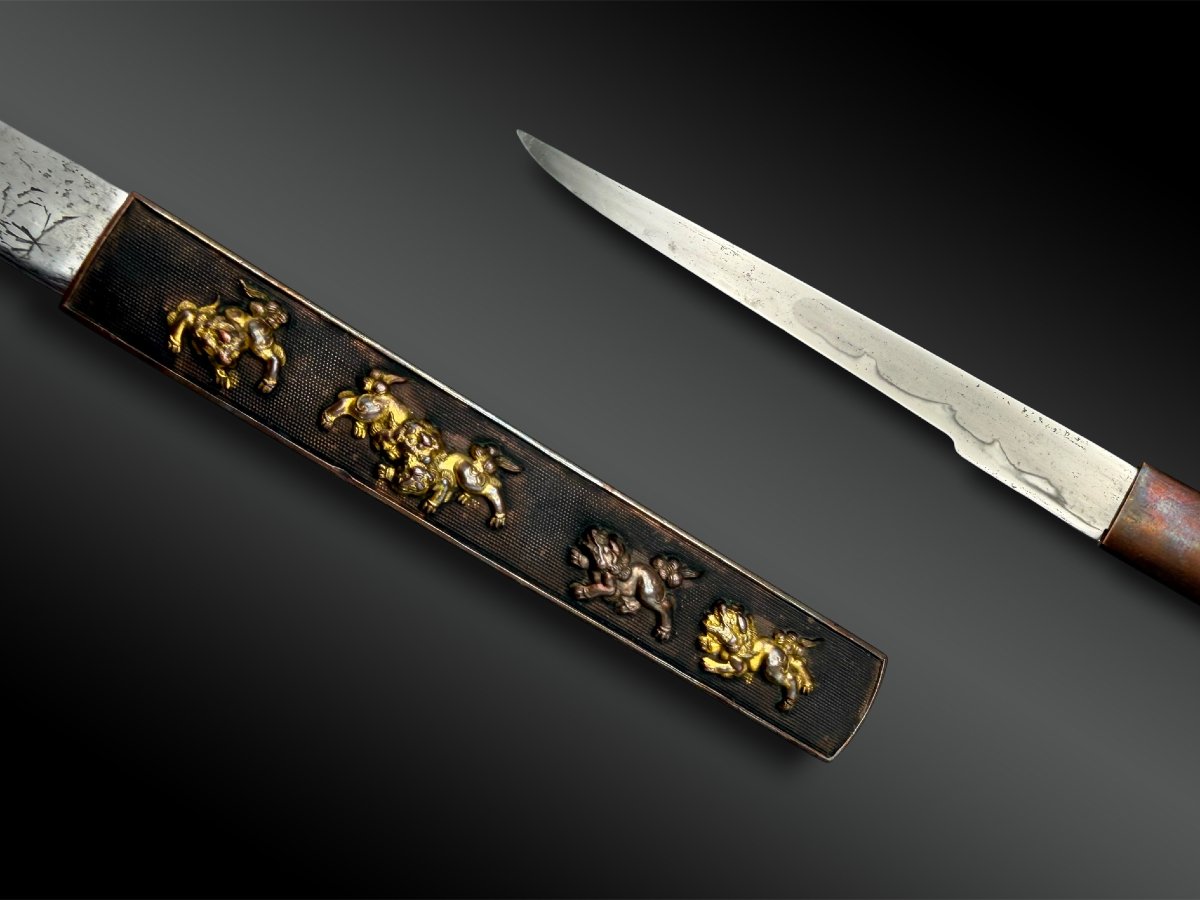
Kogatana with a signed blade and amon, kotsuka-hitsu made of copper, overlaid with shakudo, chiseled with five gilded shi-shi.
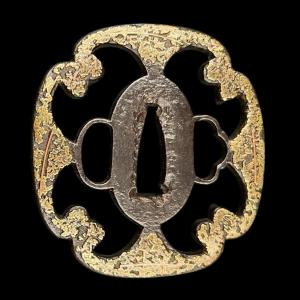
Seppa made of gilded and chiseled copper.
Ref.: 7416
Text and photos © FCP CORIDON
Japan
Edo period (1603–1868)
Steel, wood, lacquer, copper, iron, gold, shakudo
Nagasa: 20.3; Nakago: 10.5 cm
(Cracks on the scabbard)
Kata kiri ha-style blade, mune hikushi, kawazu choji-style hamon.
Kaen-style boshi.
Funa-gata nakago with ha hagari kuri jiri.
Copper habaki.
Wooden saya coated with matte red lacquer.
Kojiri, kuri-gata, and koi-guchi made of buffalo horn.
Chiseled brass shitodome.
Wooden tsuka ito, covered with shagreen and braided with brown silk.
Copper fuchi overlaid with shakudo, chiseled with two figures depicted in an architectural scene and flowering branches; the entire piece is accented with gold.
Gilded copper kashira in the shape of a geometric motif.
Menuki depicting two horses in shakudo, accented with gold.
Shin no maru-gata tsuba in iron, openworked with geometric motifs and engraved with two “go-san no kiri” (see “kiri-mon”) in gold; “kaye-mon” (secondary crest) of the Kuchi-ki, Ku-ki of San-da, Matsu-daira of Ito-i-gawa, and Mo-ri (see “Matsu-daira”), Mori of A-kô and Mi-ka-zuki, O-gasa-wara of Kara-tsu, O-ta of Kashiwa-bara, Séki, Sen-goku, Tani, and Waki-zaka; and engraved with three jû-roku kiku (kiku mon), kaye-mon (secondary crest) of the Ashi-kaga; the whole accented with gold.
Sekigane made of copper.
Kogatana with a signed blade and amon, kotsuka-hitsu made of copper, overlaid with shakudo, chiseled with five gilded shi-shi.
Seppa made of gilded and chiseled copper.
Ref.: 7416
Text and photos © FCP CORIDON
1 280 €
Period: 18th century
Style: Asian art
Condition: Excellent condition
Reference (ID): 1817773
Availability: In stock
Print