


Holy Oils In Solid Silver, Paris 1702–1703
Louis XIV Period
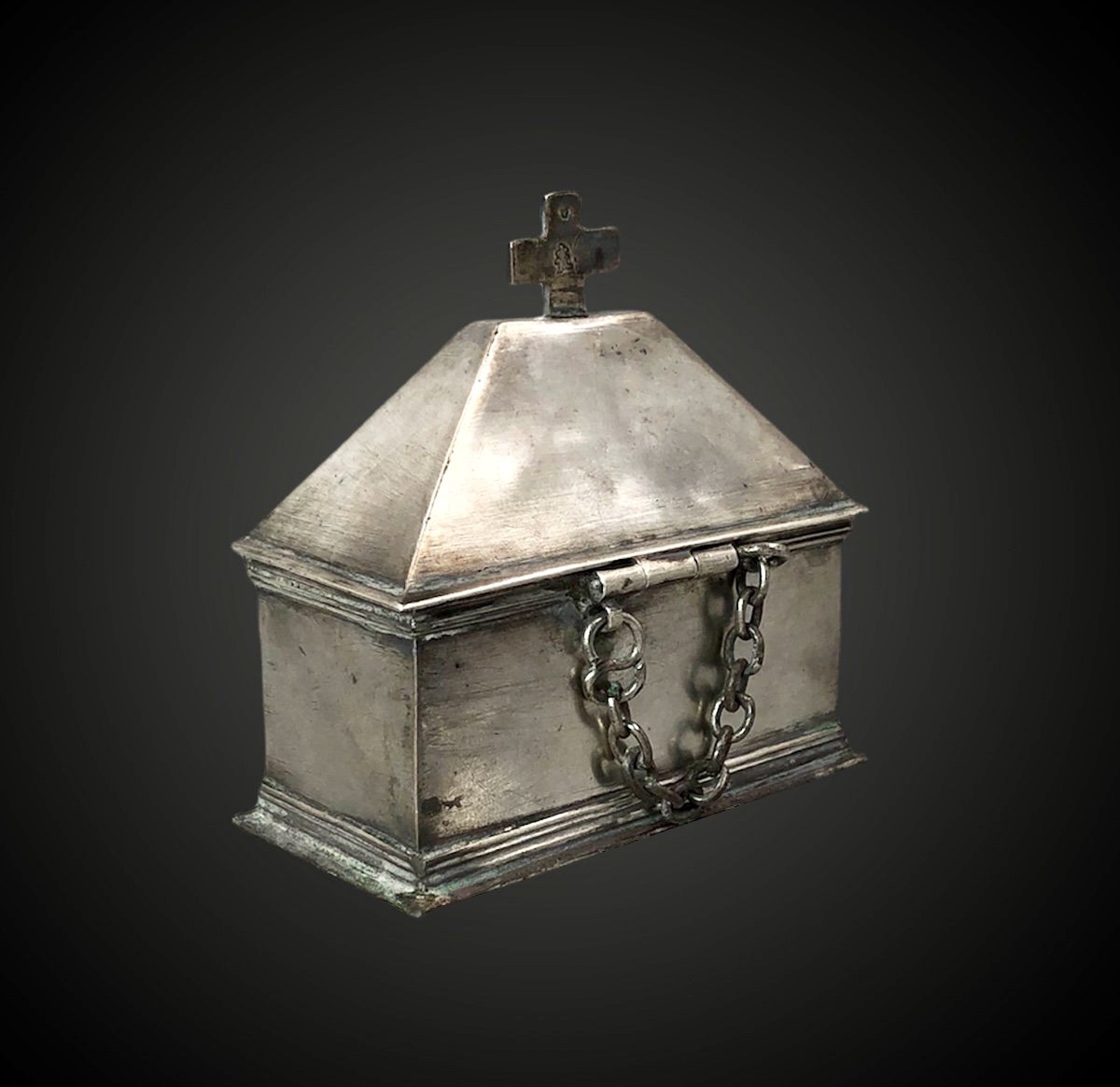
A rare and precious solid silver Holy Oils casket, crafted in Paris between 1702 and 1703, during the reign of Louis XIV.
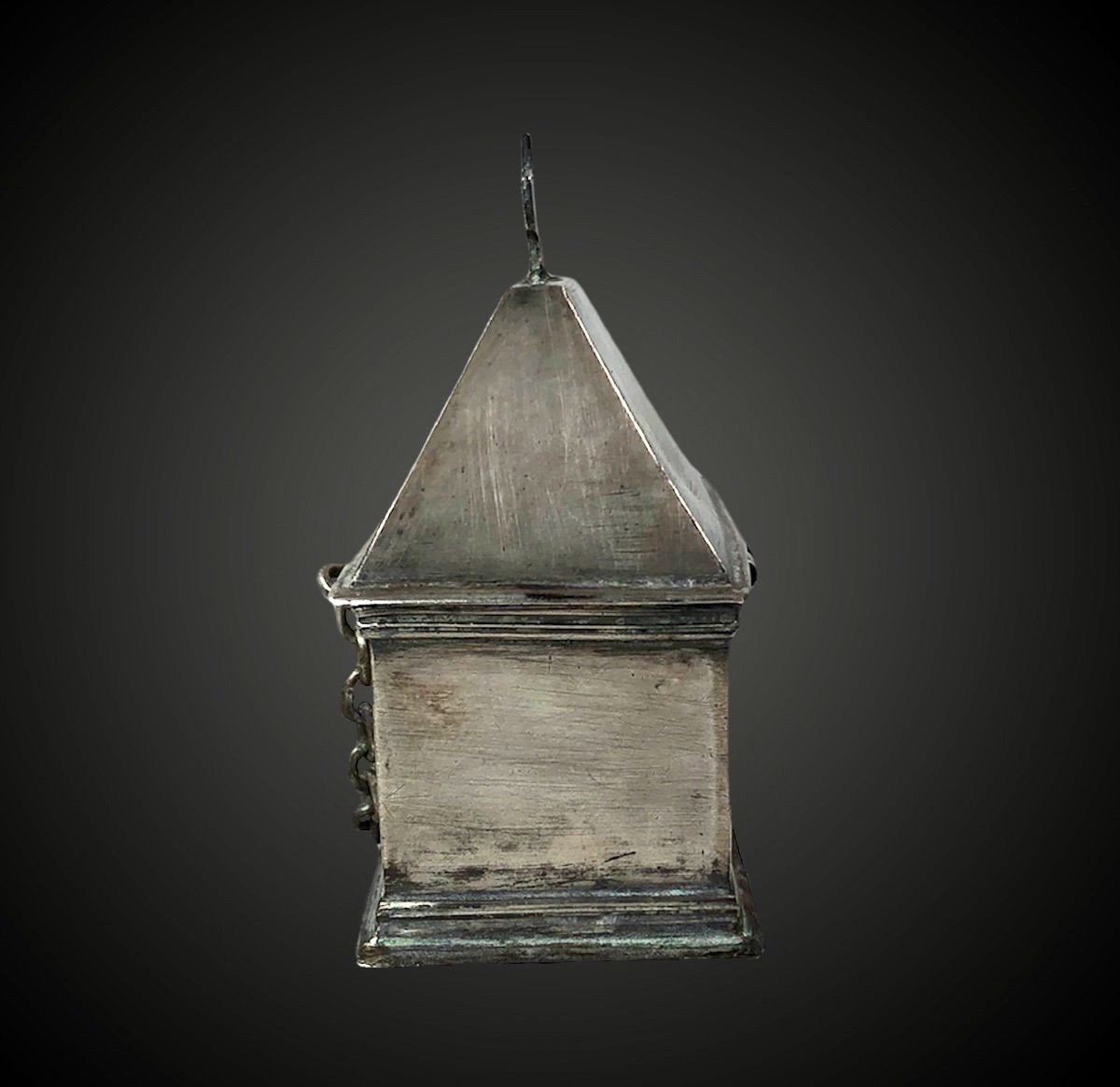
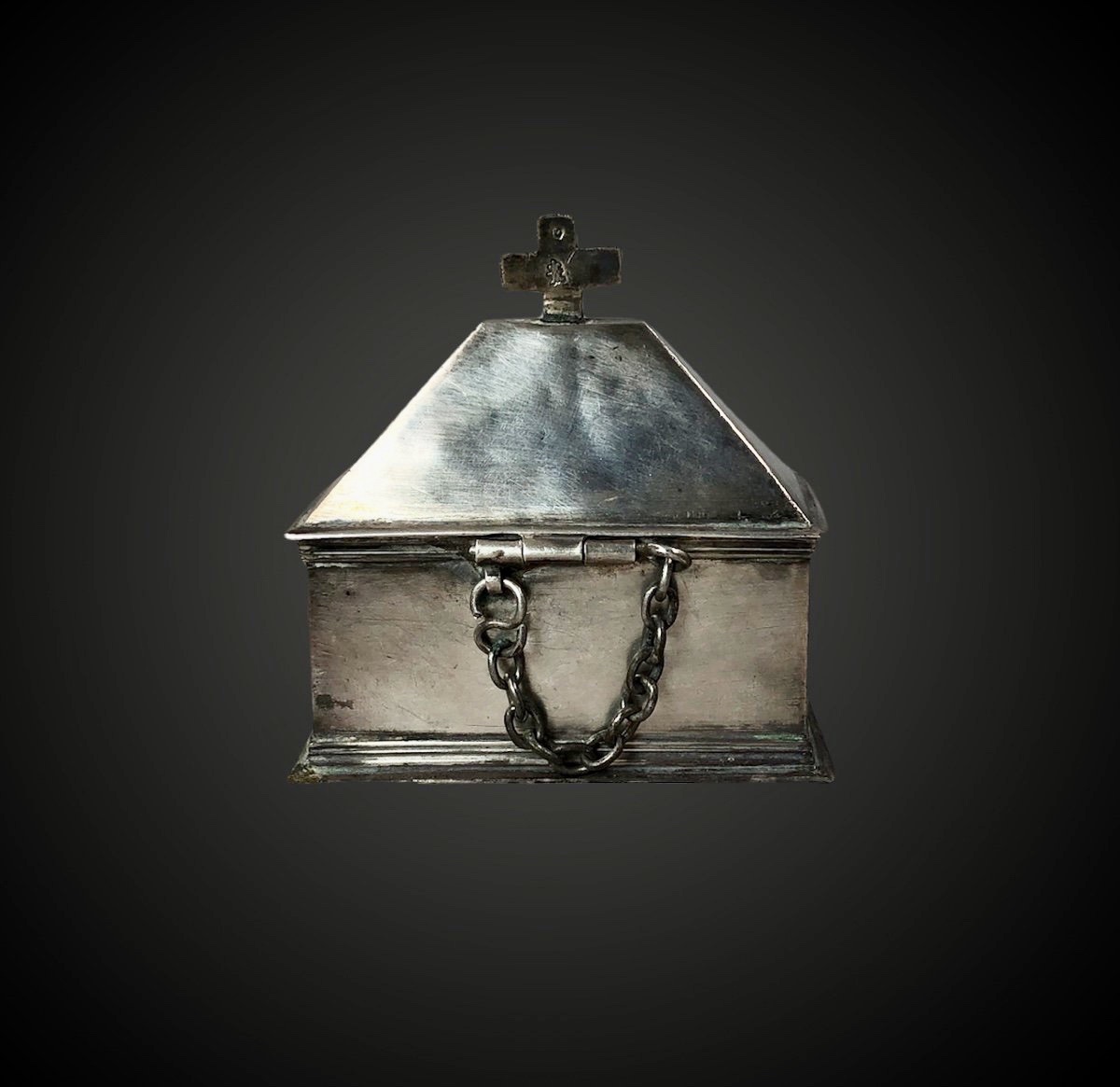
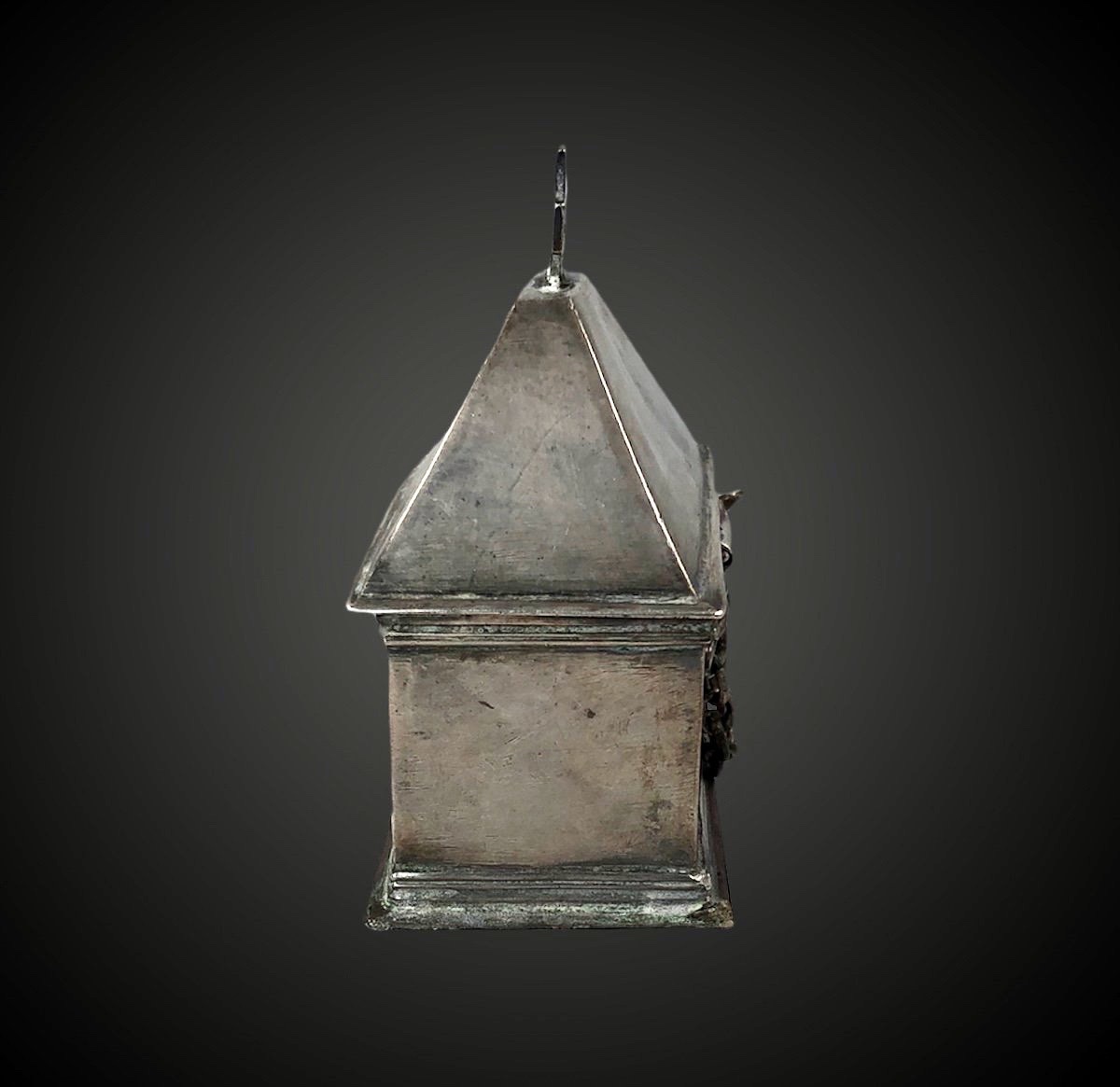
Intended for the storage and transport of the sacred oils used in the Catholic liturgy, this exceptional set features an elegant, architecturally inspired design reminiscent of a reliquary. It consists of a rectangular box resting on a molded plinth base and topped by a four-sided pyramidal lid, crowned with a small cross.
The box opens via a rear hinge and retains its ingenious original locking mechanism, consisting of a thin chain ending in a small rod—a feature rarely preserved.
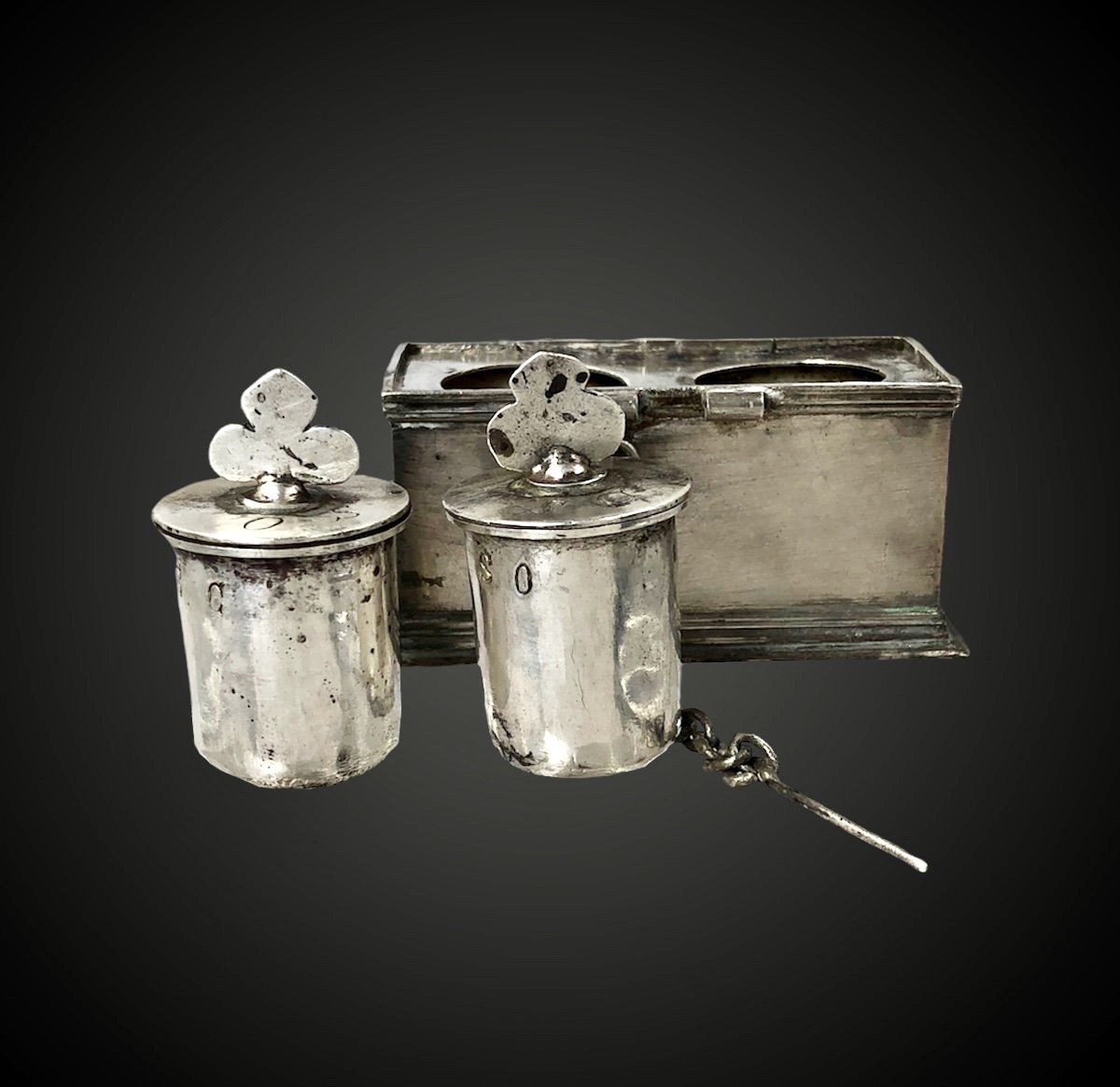
The interior contains its two original solid-silver cylindrical ampoules, fitted with their domed lids featuring a cross-shaped handle. They are engraved with the inscriptions “OS” (Oleum Sanctum) and “SC ” (Sanctum Chrisma), intended to identify the liturgical oils they contained.
The two ampoules still bear ancient traces of Holy Oils, a moving testament to their use during religious celebrations for over three centuries.
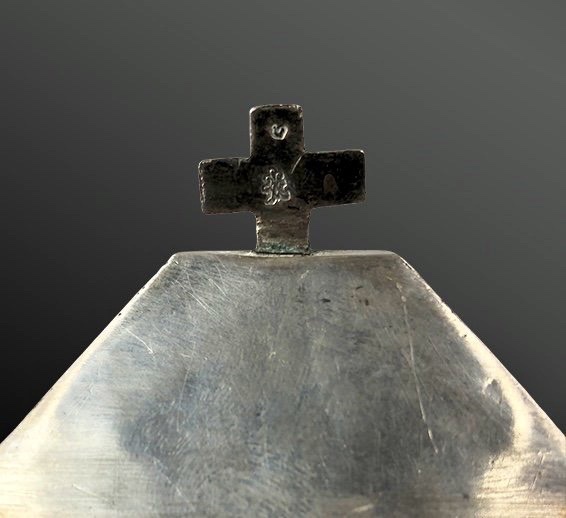
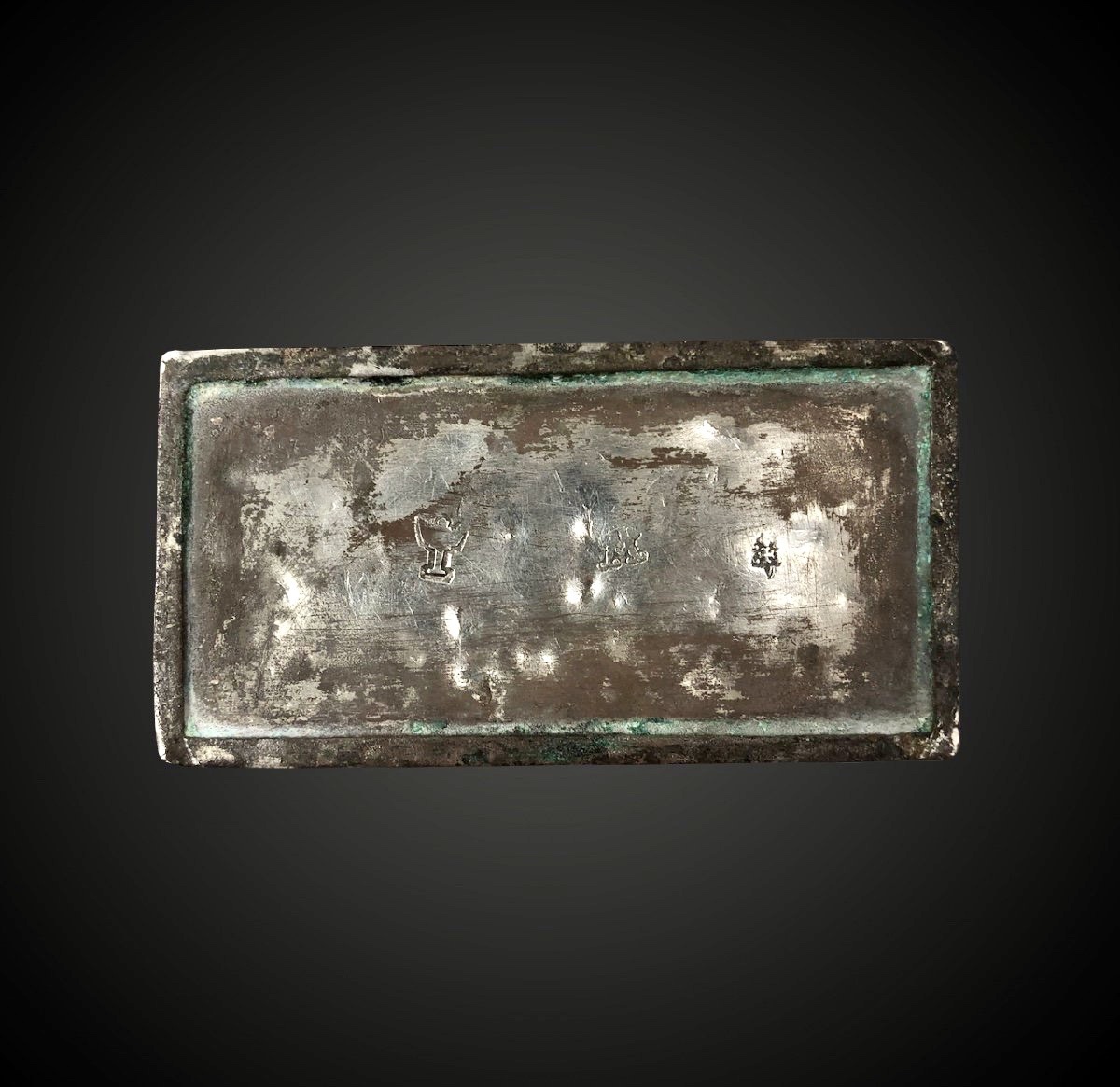
An analysis of the hallmarks allows for a particularly precise dating. The casket bears the Paris hallmarks used between 1702 and 1703, while the small cross on top bears the hallmarks for small Parisian items used between 1704 and 1712. This discrepancy is most likely due to an earlier intervention, carried out shortly after the casket was made, without calling into question the historical integrity of the ensemble.
Solid silver Holy Oils cases from the Ancien Régime are among the rarest liturgical objects today. Successive melting orders issued under the Ancien Régime and then during the French Revolution led to the disappearance of a large portion of these works. Complete examples—retaining their case, their two original ampoules, and their period locking mechanism—have become exceptionally rare.
Due to its age, its remarkable craftsmanship, its excellent state of preservation, and its now-confirmed attribution to early 18th-century Parisian goldsmithing, this case stands as a first-rate example of French religious goldsmithing under Louis XIV.
Condition:
In very fine condition. Complete set, with no apparent repairs, retaining its two original ampoules, its closing chain, and the historical traces of its liturgical use.
Expert Report:
The attribution of this casket to Paris is based on an analysis of the hallmarks conducted by Mr. Bastien Lancelot, a CNES-certified expert in 17th- and 18th-century French goldsmithing. His analysis identifies the Parisian hallmarks and guild marks used between 1702 and 1703, while those on the cross at the top correspond to small Parisian pieces from 1704 to 1712, likely indicating a later alteration to the piece. This reattribution to Parisian production—a major center of French goldsmithing under Louis XIV—significantly enhances the historical and heritage value of this exceptional box for the Holy Oils.
Period: 17th century
Style: Louis 14th, Regency
Condition: Excellent condition
Material: Sterling silver
Reference (ID): 1816485
Availability: In stock