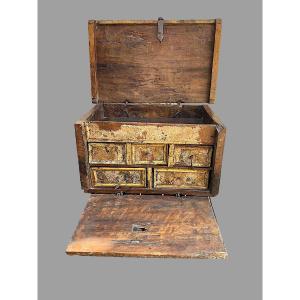


Small Spanish Travel Bargueño In Polychrome Walnut, Castile, Circa 1680–1720
Small Spanish Travel Chest in Polychrome Walnut
Castile, late 17th – early 18th century (circa 1680-1720)
Dimensions:
Height: 22 cm
Width: 38.2 cm
Depth: 23.4 cm
An authentic Spanish travel chest
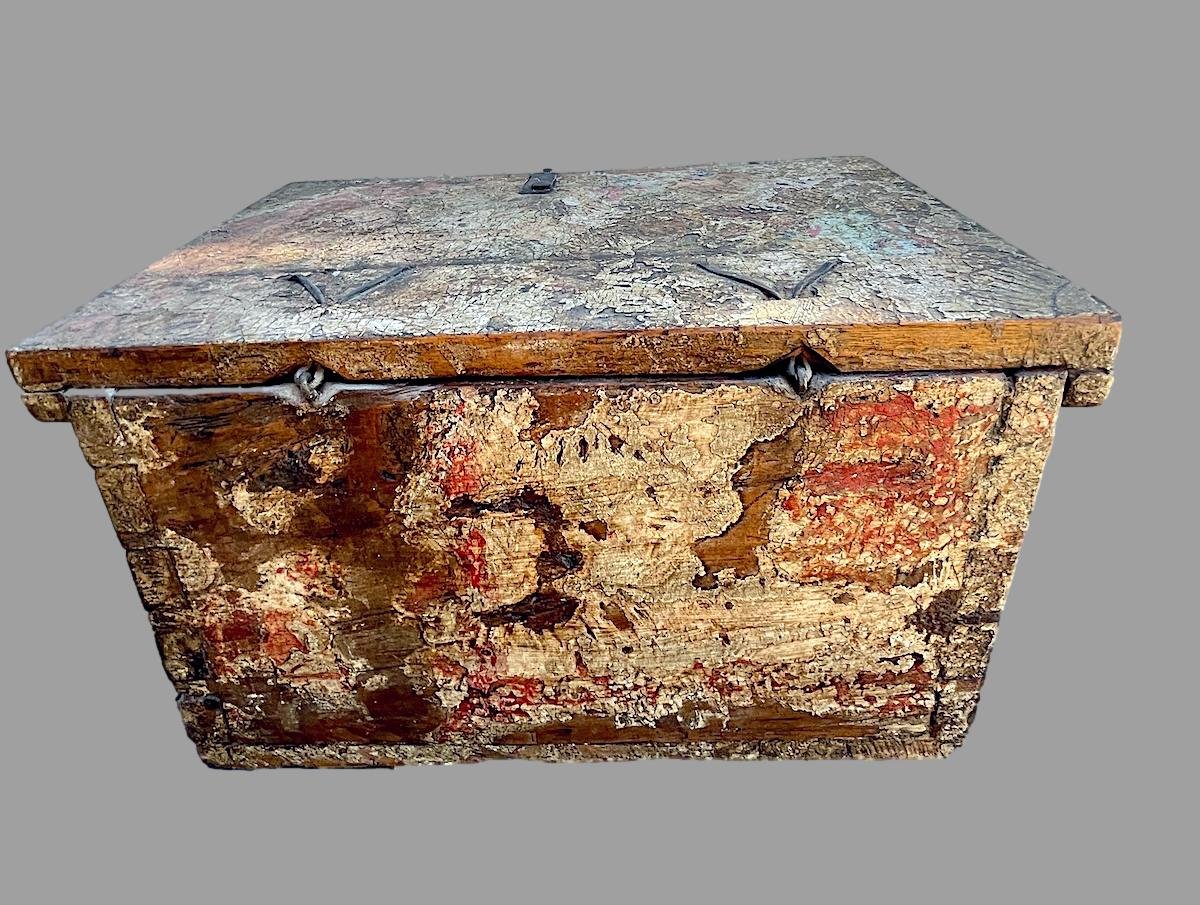
This charming, small Spanish bargueño, crafted from walnut with several oak drawer bottoms, is a remarkable example of Castilian domestic furniture from the end of Spain's Golden Age.
Designed to accompany its owner on their travels, it combines, in a compact format, the functions of a personal chest, a writing cabinet, and a storage unit for precious objects, documents, and correspondence.
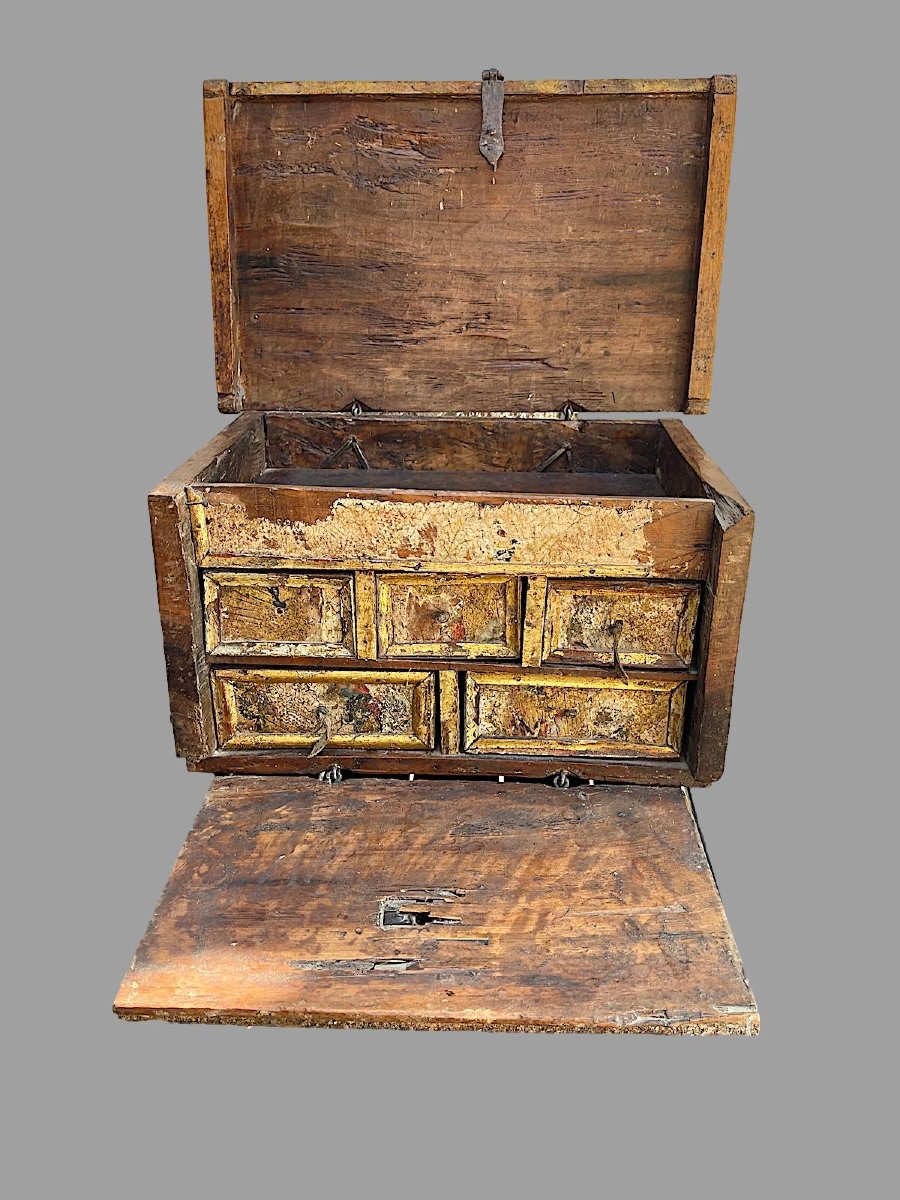
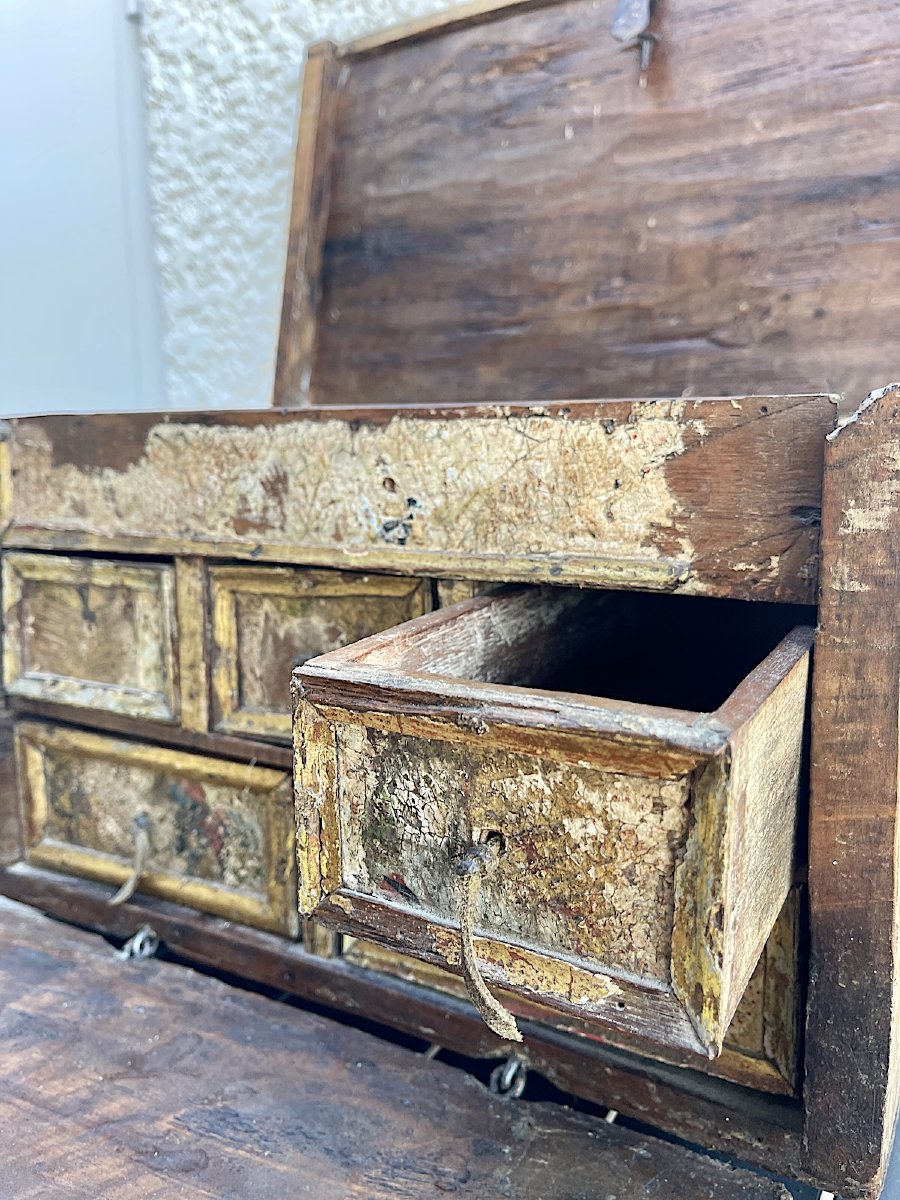
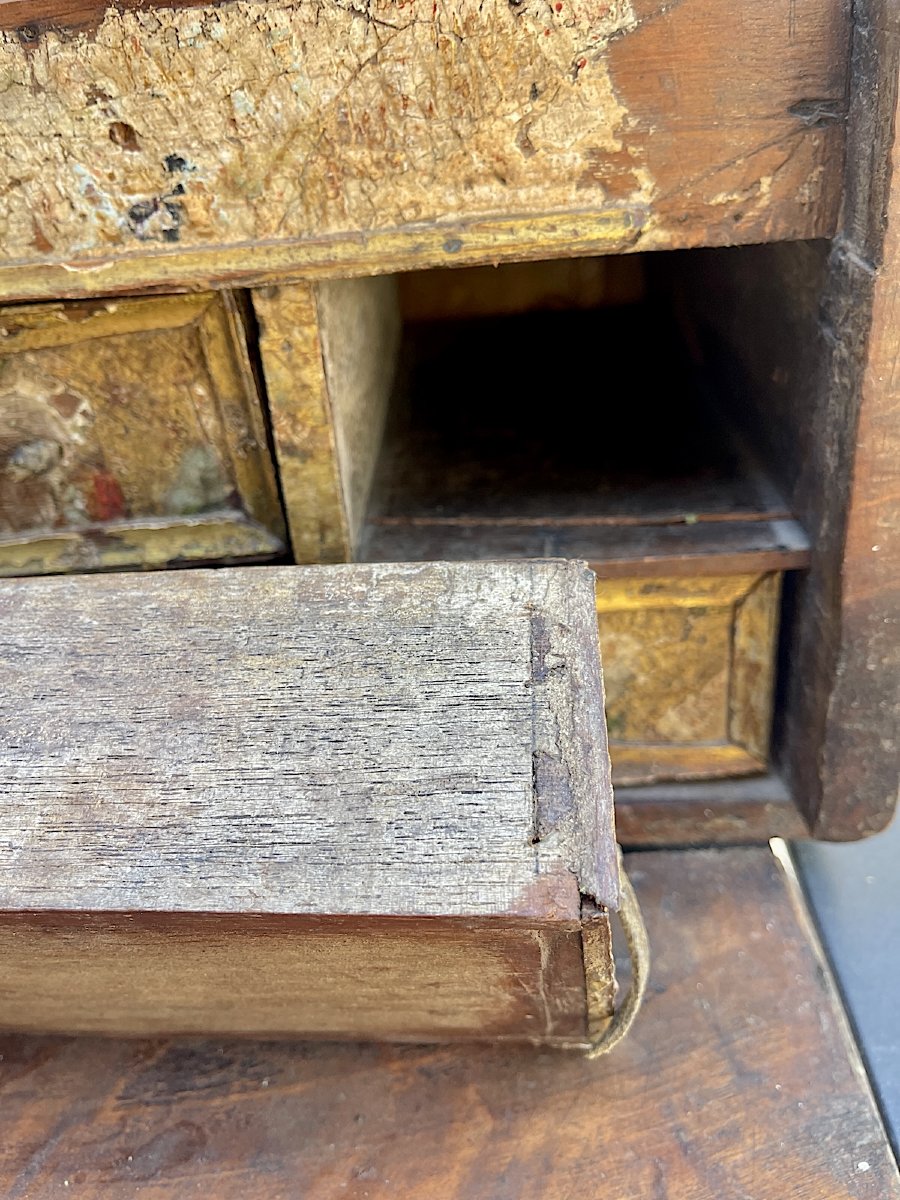
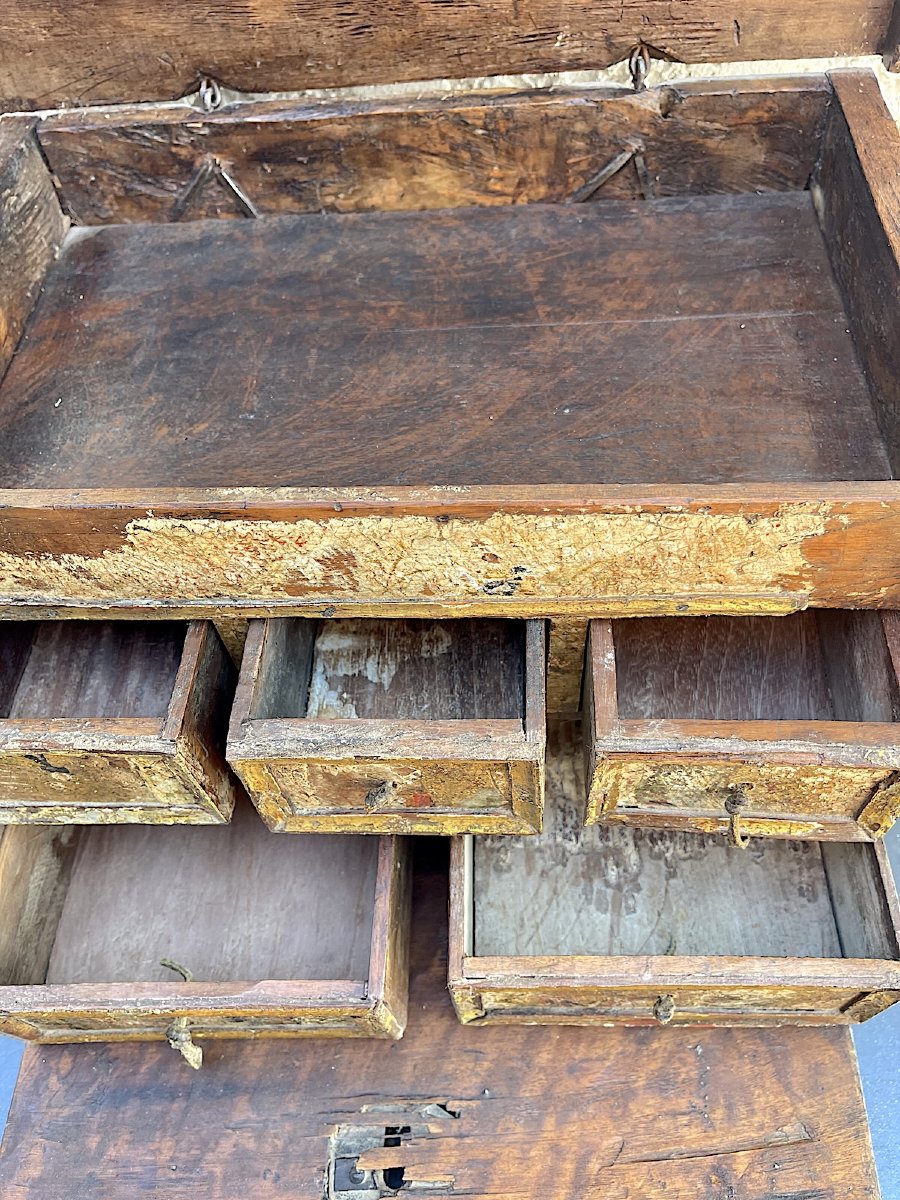
Behind its lockable drop-front is a spacious upper compartment spanning the entire width of the piece, along with an elegant interior featuring six drawers, symmetrically arranged in a style typical of Spanish workshops of the period.
An Ancient Polychromy Transformed by Time
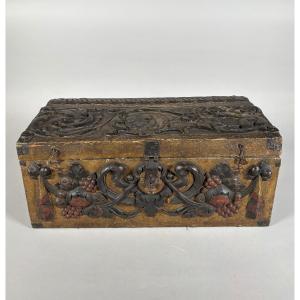
One of the most captivating aspects of this piece of furniture lies in the preservation of its original polychromy.
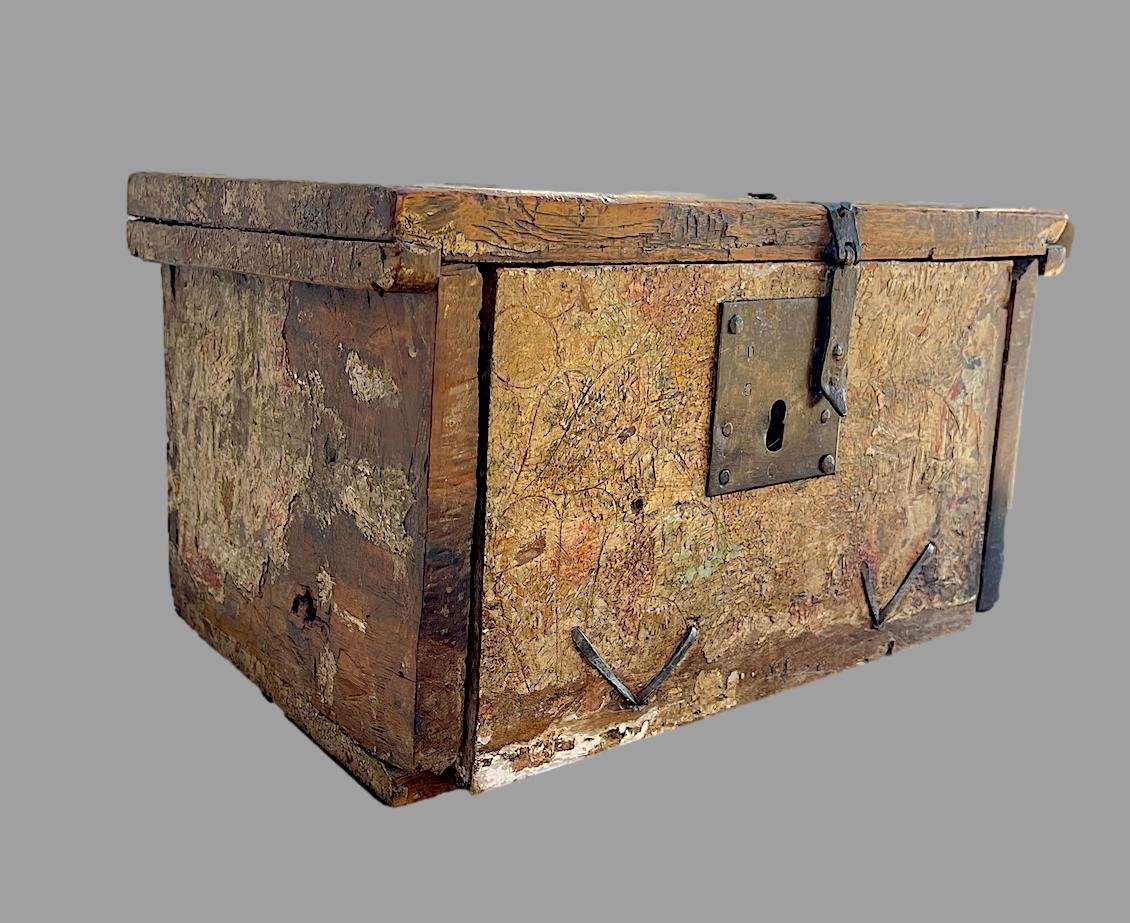
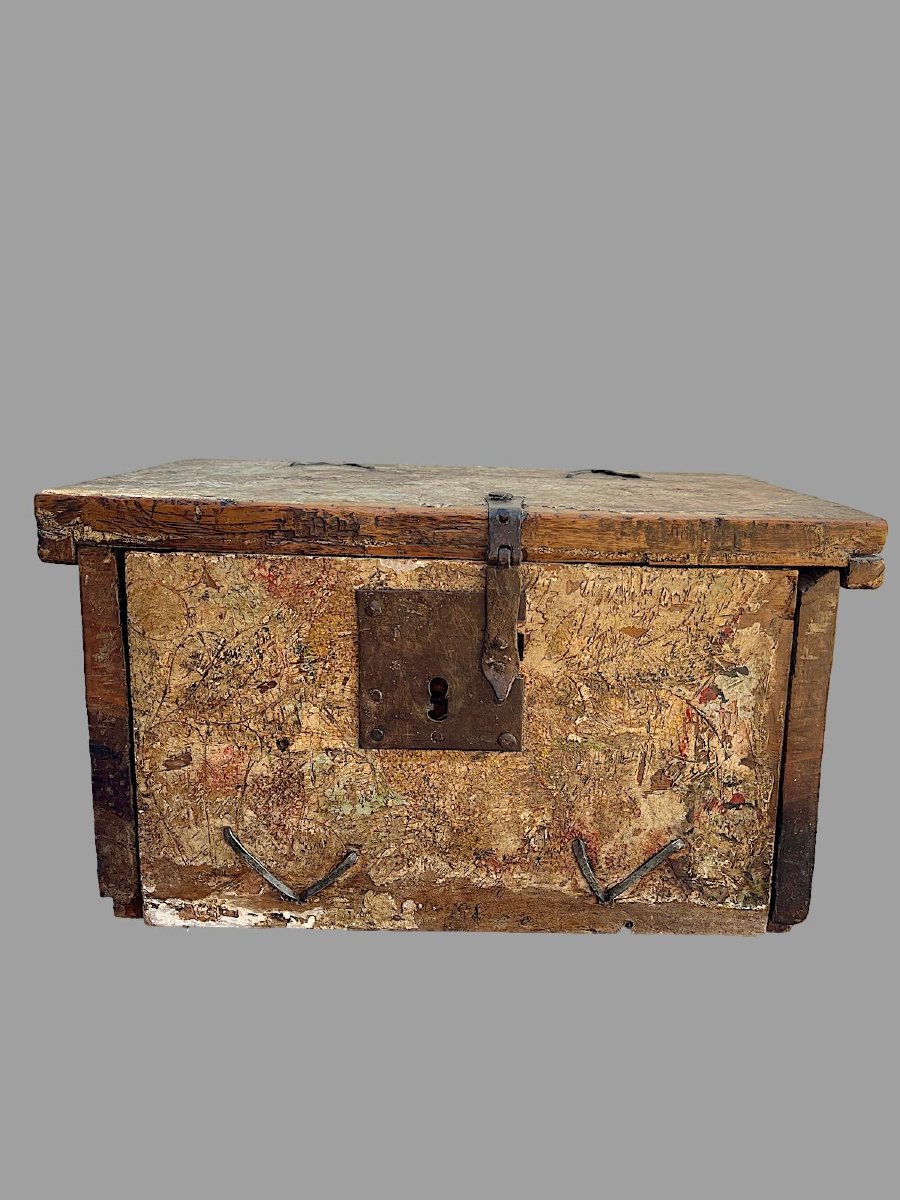
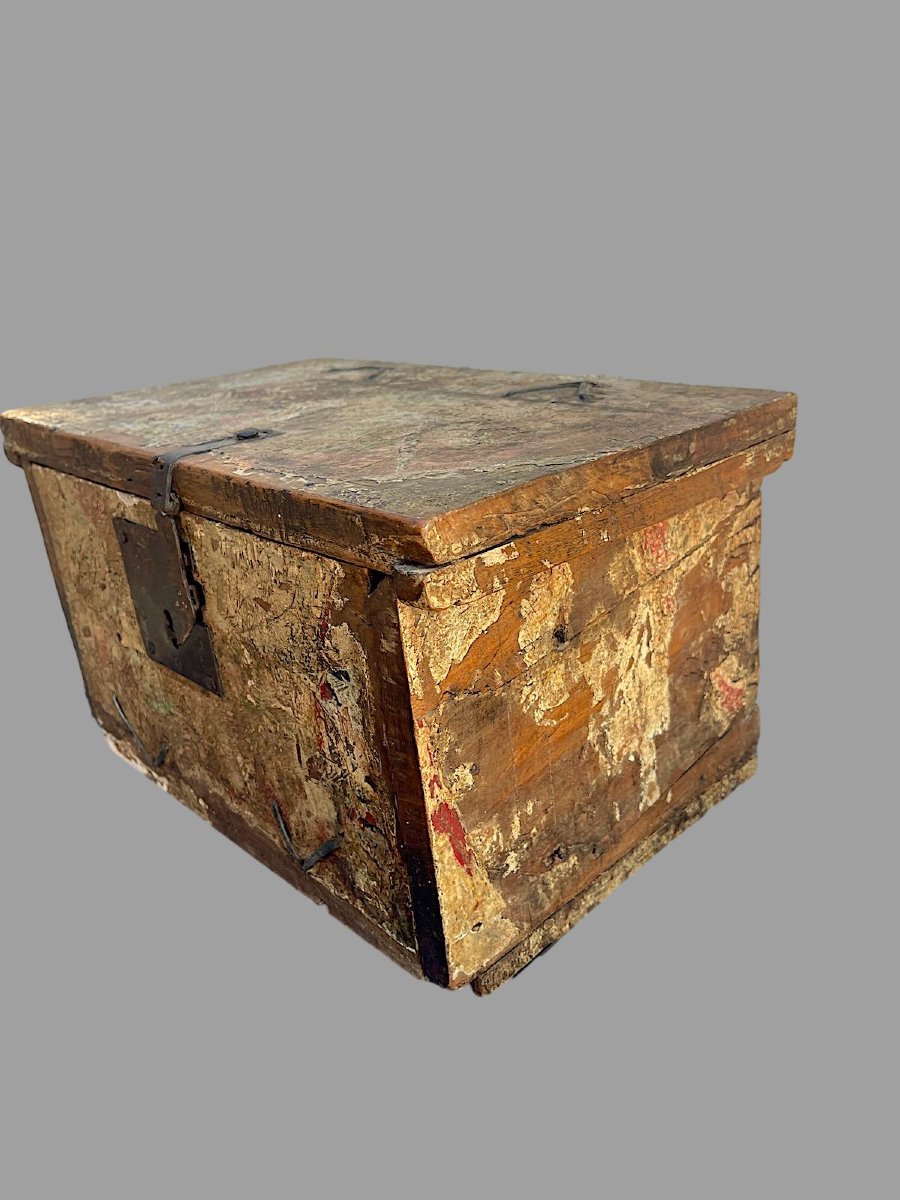
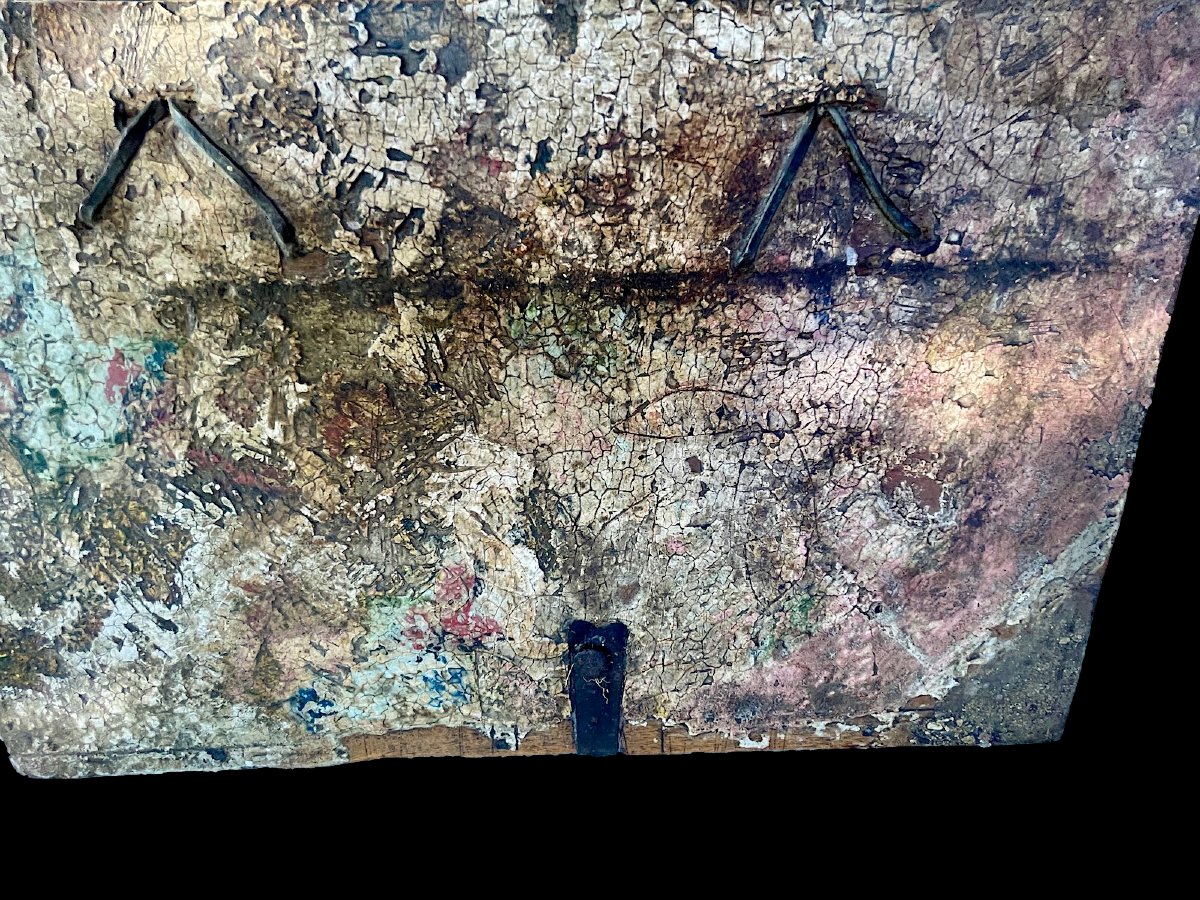
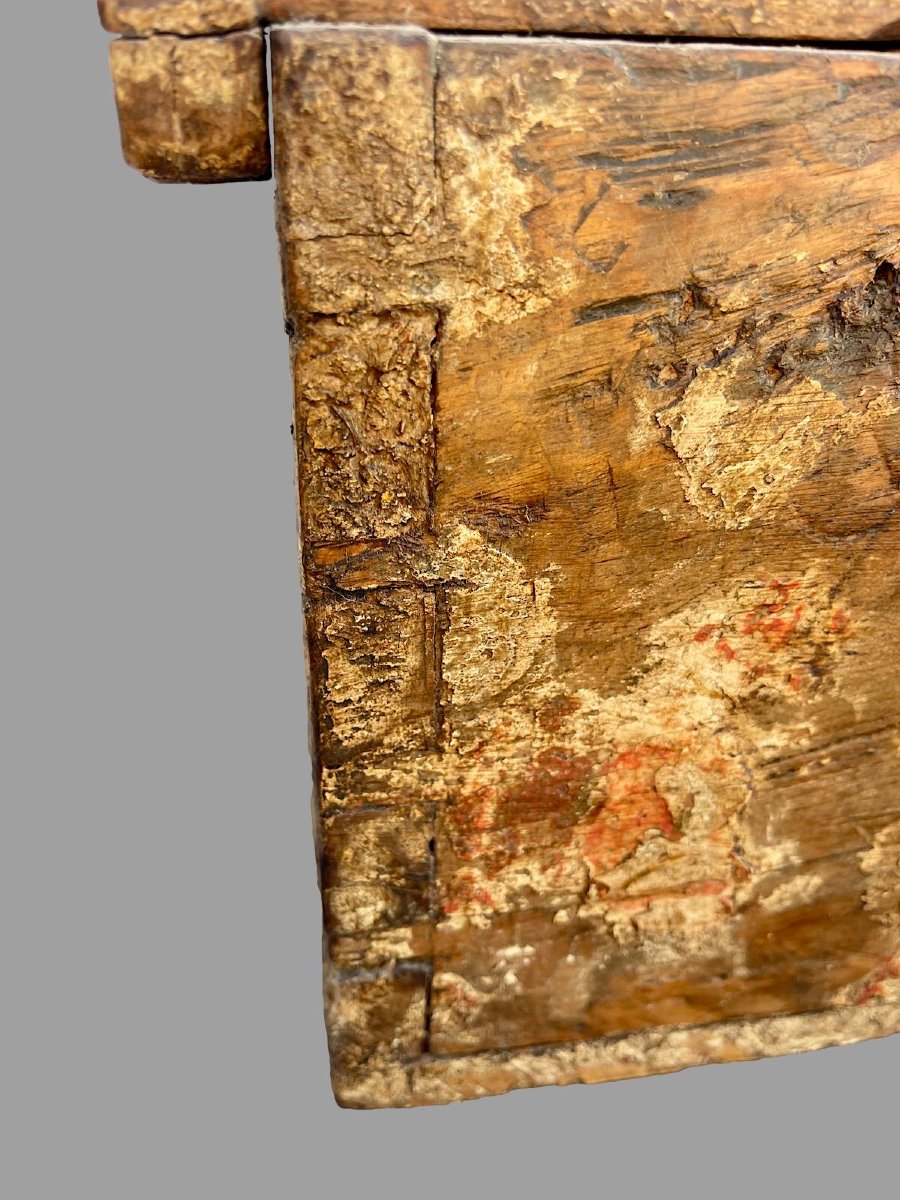
The four sides, the lid, and the drawer fronts still display significant traces of a painted decoration applied over a gesso base. Three centuries of history have gradually transformed this surface into a truly abstract composition where lifting, cracking, wear, and transparency intertwine.
The palette retains beautiful nuances of:
gesso white,
yellow ochre,
natural earth,
ferruginous red,
copper green,
carbon black.
This exceptional patina now lends the piece a unique decorative presence, impossible to reproduce artificially.
A Completely Handcrafted Construction
Examination of the piece reveals traditional, entirely handcrafted construction.
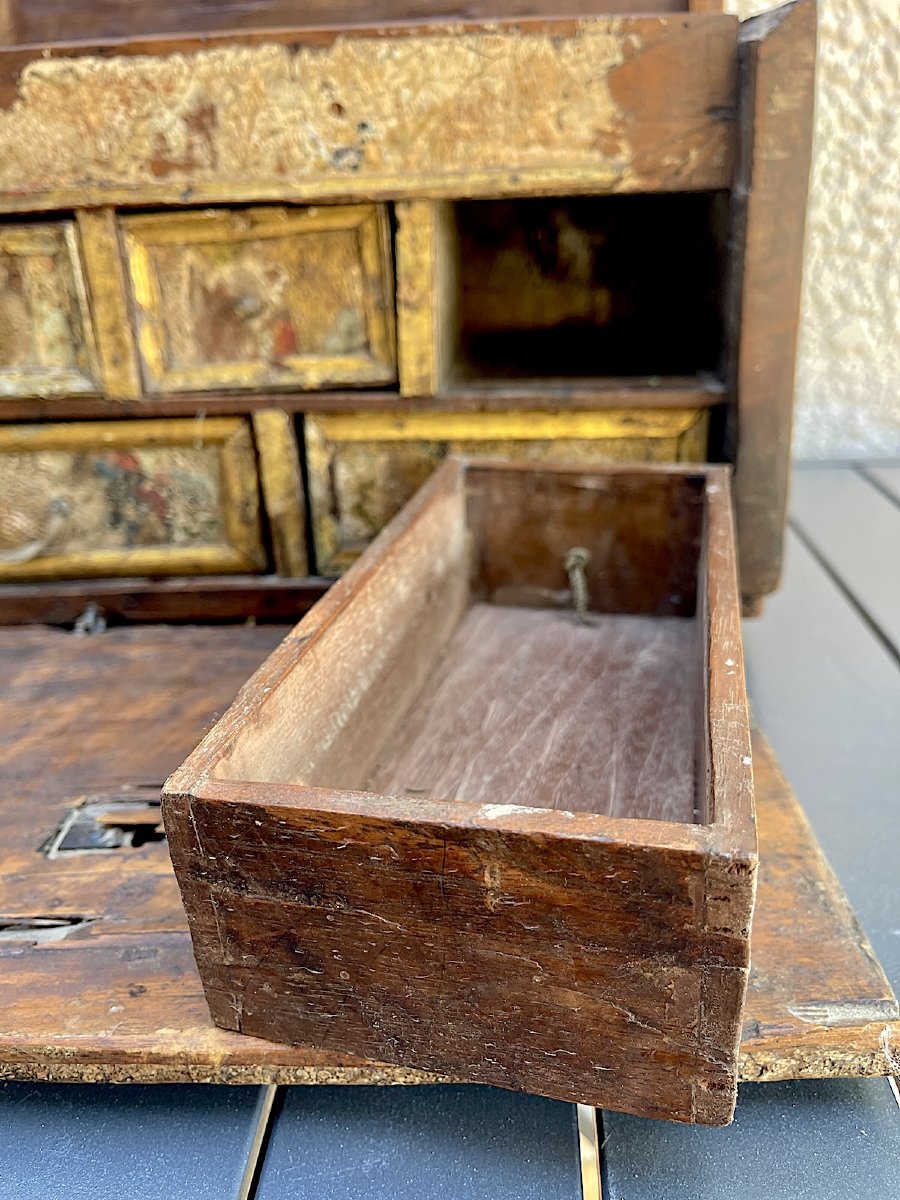
The main body is made of walnut, a wood particularly prized in Spanish workshops for its robustness and stability. Several drawer bottoms are made of oak, a common practice in 17th- and 18th-century Iberian furniture.
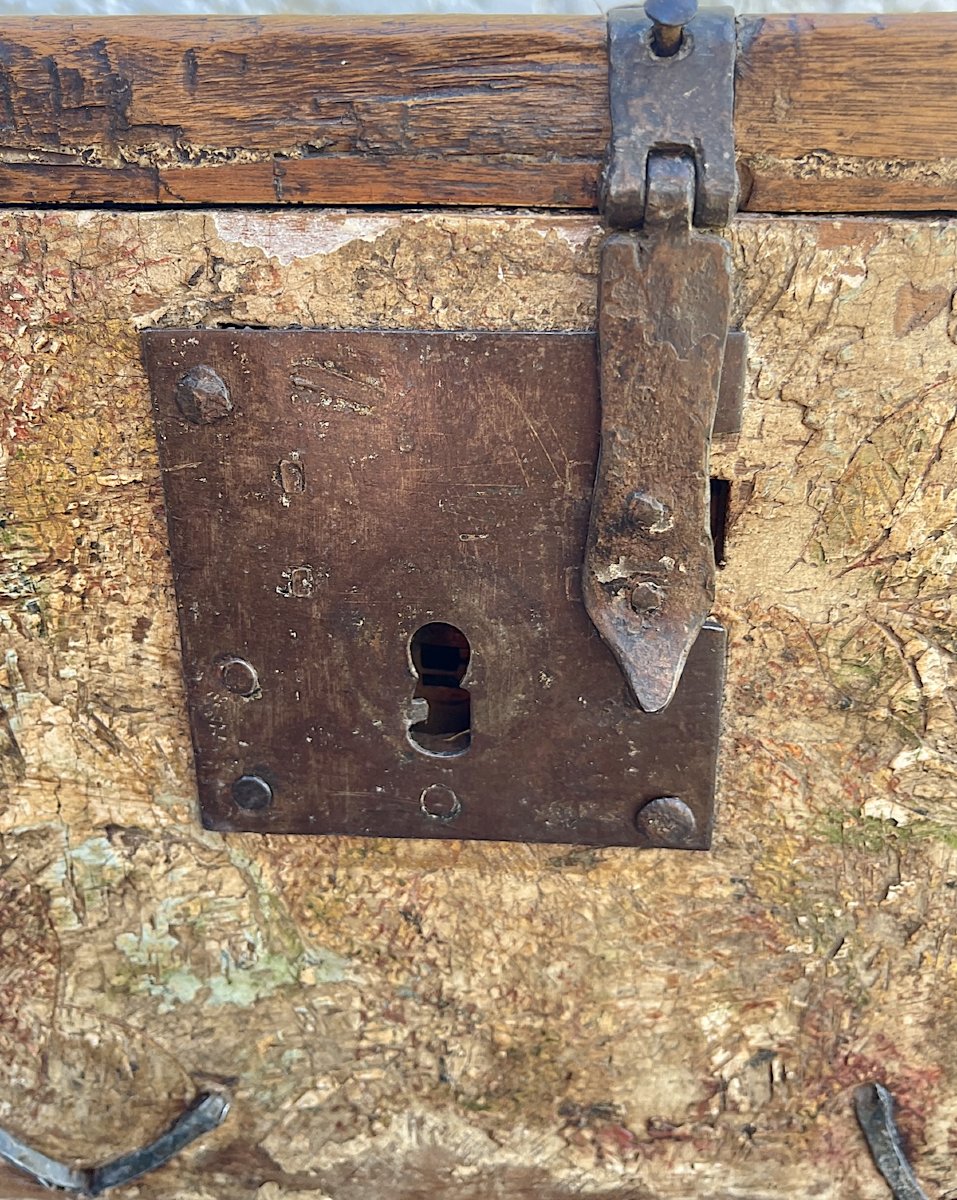
The joinery is old and consistent. The hand-forged hardware, the substantial through nails, and the original locking mechanism attest to the itinerant nature of this type of furniture.
The piece notably retains:
its antique lock,
its forged hasp,
its metal reinforcements,
several antique fabric drawer pulls, elements that have become particularly rare.
The bargueño: an emblematic piece of furniture from the Spanish Golden Age
Appearing in the 16th century in the workshops of Castile and Toledo, the bargueño is one of the major creations of Spanish furniture.
A true ancestor of the desk and the storage cabinet, it was designed to hold documents, coins, jewelry, seals, writing instruments, and devotional objects.
While the most luxurious models were decorated with ivory, ebony, or intricate marquetry intended for the aristocracy, polychrome walnut examples like this one were designed for everyday use while maintaining a high level of craftsmanship.
Their intensive use explains their relative rarity today.
An authentic and captivating piece
Unlike the grand, stately bargueños preserved in Spanish palaces, this example is striking for its authenticity.
Every mark of wear, every abrasion, and every fragment of polychromy contributes to its history and character.
It possesses that special presence of objects that have survived the centuries without major alteration or invasive restoration.
Attribution
Spain, probably Castile.
Late 17th century – early 18th century (circa 1680-1720).
Provincial workshop work.
Condition
Very good overall condition considering its age.
Sound and coherent structure.
Remarkable antique patina.
Significant remains of original polychromy.
Antique hardware.
Original fabric handles preserved.
Some old maintenance restorations.
No significant modern restoration visible.
Provenance
Formerly in a private collection.
Conclusion
Serving as a travel cabinet, writing desk, and personal chest, this charming Spanish bargueño aptly illustrates the art of Castilian furniture from the late 17th century.
Its small size, authenticity, the quality of its walnut construction, and the remarkable preservation of its original polychromy make it a particularly appealing piece for collectors of early period furniture, Spanish furniture, and objects steeped in history.
Keywords: Bargueño – Spanish Bargueño – Spanish cabinet – Spanish furniture – Castile – Toledo – Walnut – Early period – 17th century – 18th century – Travel cabinet – Chest of drawers – Antique furniture – Spanish art – Collection.
Castile, late 17th – early 18th century (circa 1680-1720)
Dimensions:
Height: 22 cm
Width: 38.2 cm
Depth: 23.4 cm
An authentic Spanish travel chest
This charming, small Spanish bargueño, crafted from walnut with several oak drawer bottoms, is a remarkable example of Castilian domestic furniture from the end of Spain's Golden Age.
Designed to accompany its owner on their travels, it combines, in a compact format, the functions of a personal chest, a writing cabinet, and a storage unit for precious objects, documents, and correspondence.
Behind its lockable drop-front is a spacious upper compartment spanning the entire width of the piece, along with an elegant interior featuring six drawers, symmetrically arranged in a style typical of Spanish workshops of the period.
An Ancient Polychromy Transformed by Time
One of the most captivating aspects of this piece of furniture lies in the preservation of its original polychromy.
The four sides, the lid, and the drawer fronts still display significant traces of a painted decoration applied over a gesso base. Three centuries of history have gradually transformed this surface into a truly abstract composition where lifting, cracking, wear, and transparency intertwine.
The palette retains beautiful nuances of:
gesso white,
yellow ochre,
natural earth,
ferruginous red,
copper green,
carbon black.
This exceptional patina now lends the piece a unique decorative presence, impossible to reproduce artificially.
A Completely Handcrafted Construction
Examination of the piece reveals traditional, entirely handcrafted construction.
The main body is made of walnut, a wood particularly prized in Spanish workshops for its robustness and stability. Several drawer bottoms are made of oak, a common practice in 17th- and 18th-century Iberian furniture.
The joinery is old and consistent. The hand-forged hardware, the substantial through nails, and the original locking mechanism attest to the itinerant nature of this type of furniture.
The piece notably retains:
its antique lock,
its forged hasp,
its metal reinforcements,
several antique fabric drawer pulls, elements that have become particularly rare.
The bargueño: an emblematic piece of furniture from the Spanish Golden Age
Appearing in the 16th century in the workshops of Castile and Toledo, the bargueño is one of the major creations of Spanish furniture.
A true ancestor of the desk and the storage cabinet, it was designed to hold documents, coins, jewelry, seals, writing instruments, and devotional objects.
While the most luxurious models were decorated with ivory, ebony, or intricate marquetry intended for the aristocracy, polychrome walnut examples like this one were designed for everyday use while maintaining a high level of craftsmanship.
Their intensive use explains their relative rarity today.
An authentic and captivating piece
Unlike the grand, stately bargueños preserved in Spanish palaces, this example is striking for its authenticity.
Every mark of wear, every abrasion, and every fragment of polychromy contributes to its history and character.
It possesses that special presence of objects that have survived the centuries without major alteration or invasive restoration.
Attribution
Spain, probably Castile.
Late 17th century – early 18th century (circa 1680-1720).
Provincial workshop work.
Condition
Very good overall condition considering its age.
Sound and coherent structure.
Remarkable antique patina.
Significant remains of original polychromy.
Antique hardware.
Original fabric handles preserved.
Some old maintenance restorations.
No significant modern restoration visible.
Provenance
Formerly in a private collection.
Conclusion
Serving as a travel cabinet, writing desk, and personal chest, this charming Spanish bargueño aptly illustrates the art of Castilian furniture from the late 17th century.
Its small size, authenticity, the quality of its walnut construction, and the remarkable preservation of its original polychromy make it a particularly appealing piece for collectors of early period furniture, Spanish furniture, and objects steeped in history.
Keywords: Bargueño – Spanish Bargueño – Spanish cabinet – Spanish furniture – Castile – Toledo – Walnut – Early period – 17th century – 18th century – Travel cabinet – Chest of drawers – Antique furniture – Spanish art – Collection.
1 990 €
Period: 17th century
Style: Renaissance, Louis 13th
Condition: Good condition
Width: 38,2 cm
Height: 22 cm
Depth: 23,4 cm
Reference (ID): 1814800
Availability: In stock
Print