





Christ In Chains – Sacred Art Sculpture – Western Europe, 16th Century – Renaissance
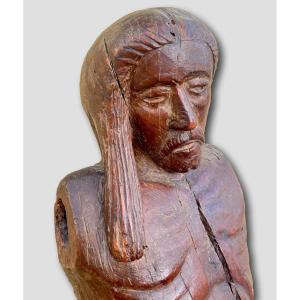
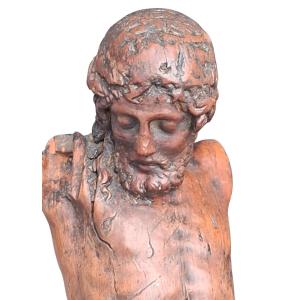
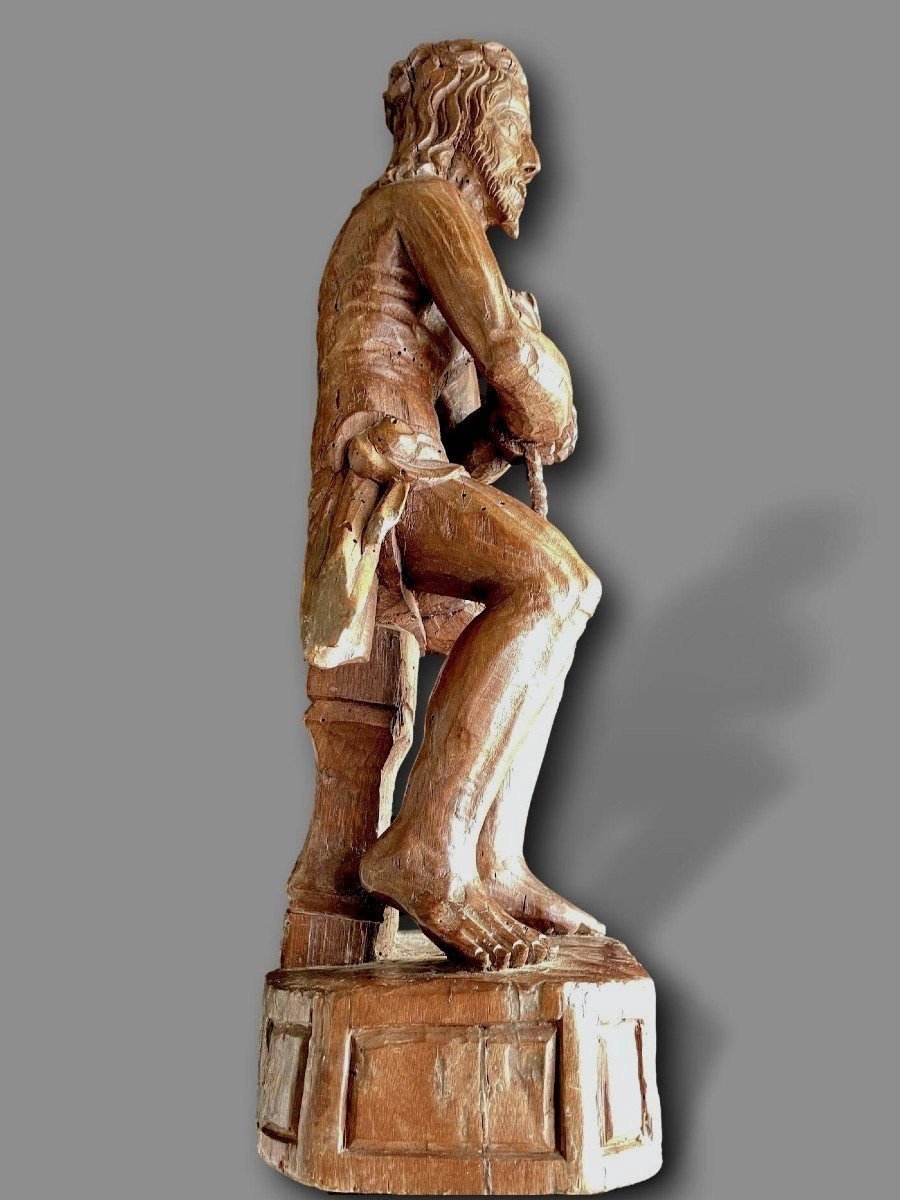
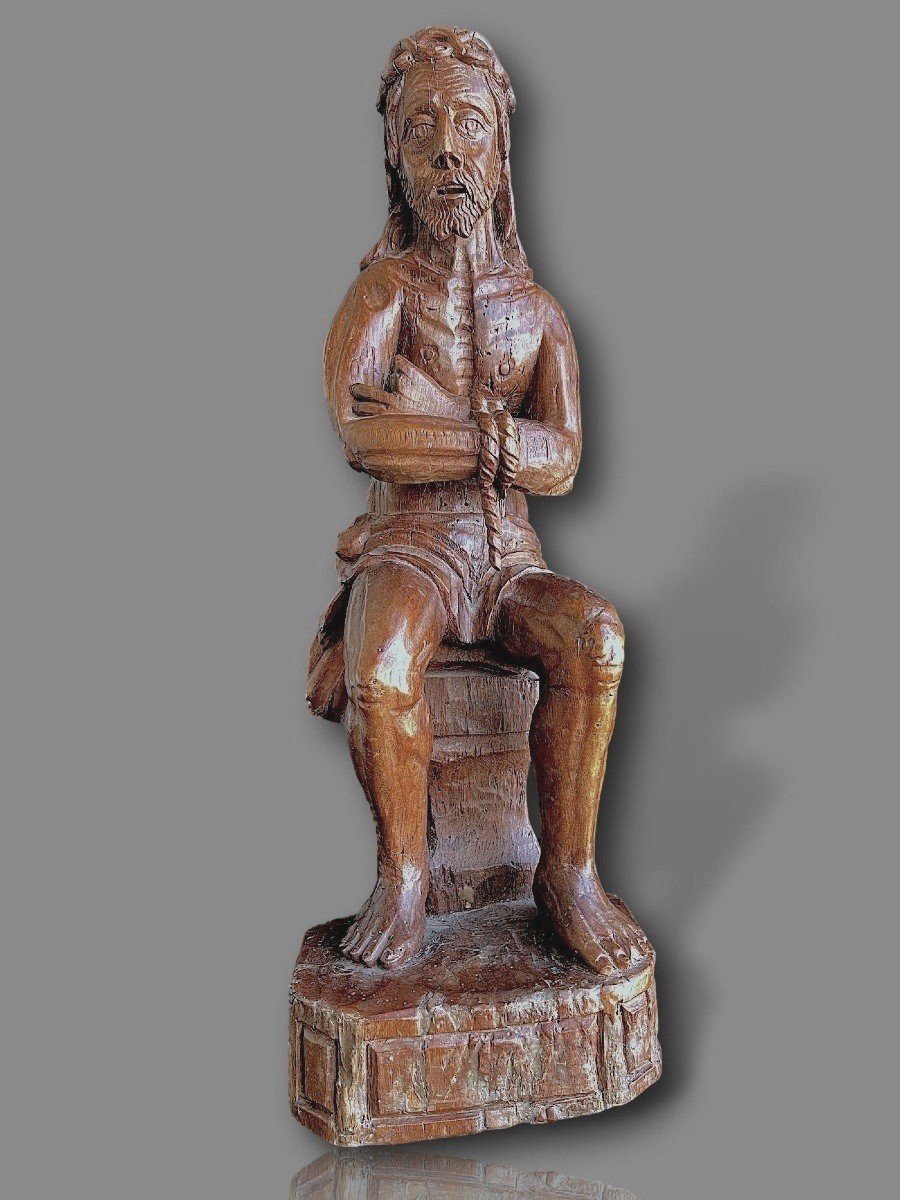
A rare and deeply moving carved wooden sculpture depicting Christ Bound (Christ of Patience), shown seated, his hands crossed and tied, in a moment of silent suffering preceding the Crucifixion.
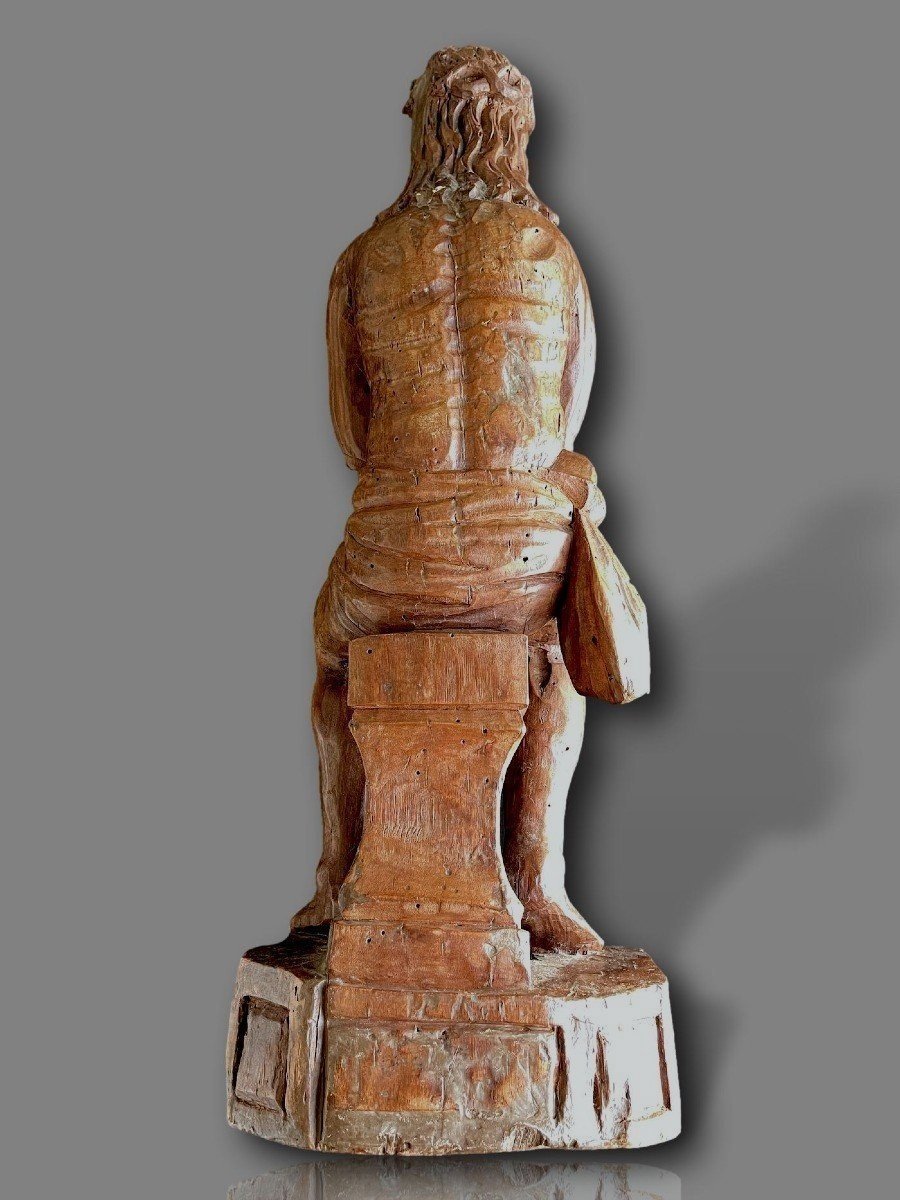
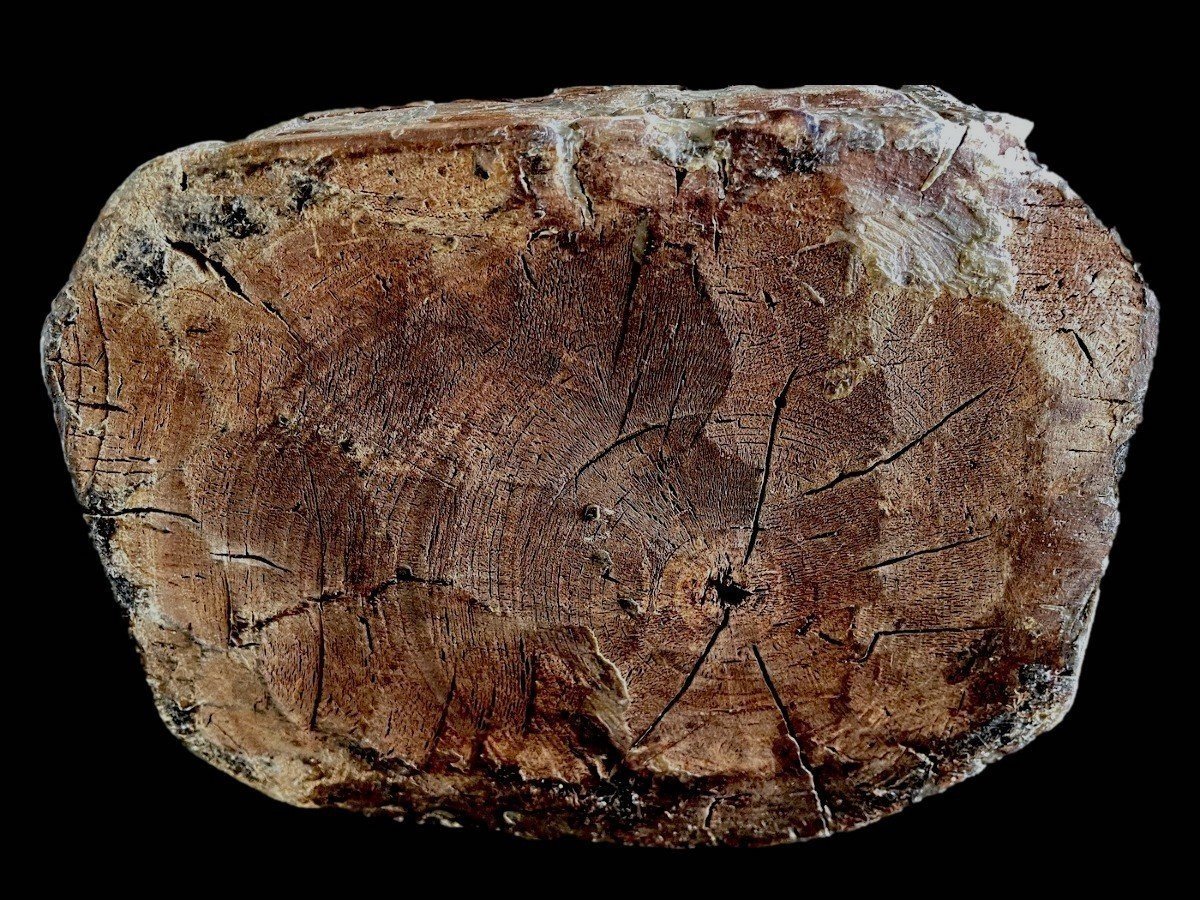
Executed in the round, this sculpture was carved from a single block of wood, hollowed at the base in accordance with traditional techniques widely used from the late Middle Ages through the Renaissance for devotional sculpture.
Christ is represented seated upon a block, his torso exposed, head gently inclined, his introspective gaze conveying both resignation and spiritual gravity. The proportions are well balanced, with a sober yet convincing anatomical treatment emphasizing the ribcage, sloping shoulders, and restrained tension of the forearms.
Iconography and Historical ContextThe iconography of Christ Bound—also known as Christ of Patience—emerged in Western Europe during the late 15th century and became particularly widespread throughout the 16th century.
This representation focuses on:
the human suffering of Christ,
silent meditation before the Passion,
the believer’s compassionate contemplation.
Such sculptures were commonly intended for:
monastic or conventual settings,
private oratories,
side chapels within churches.
This imagery is closely associated with the spirituality of the Devotio Moderna, emphasizing inward reflection and personal devotion.
Stylistic Analysis and CompositionThe sculpture displays several notable stylistic features:
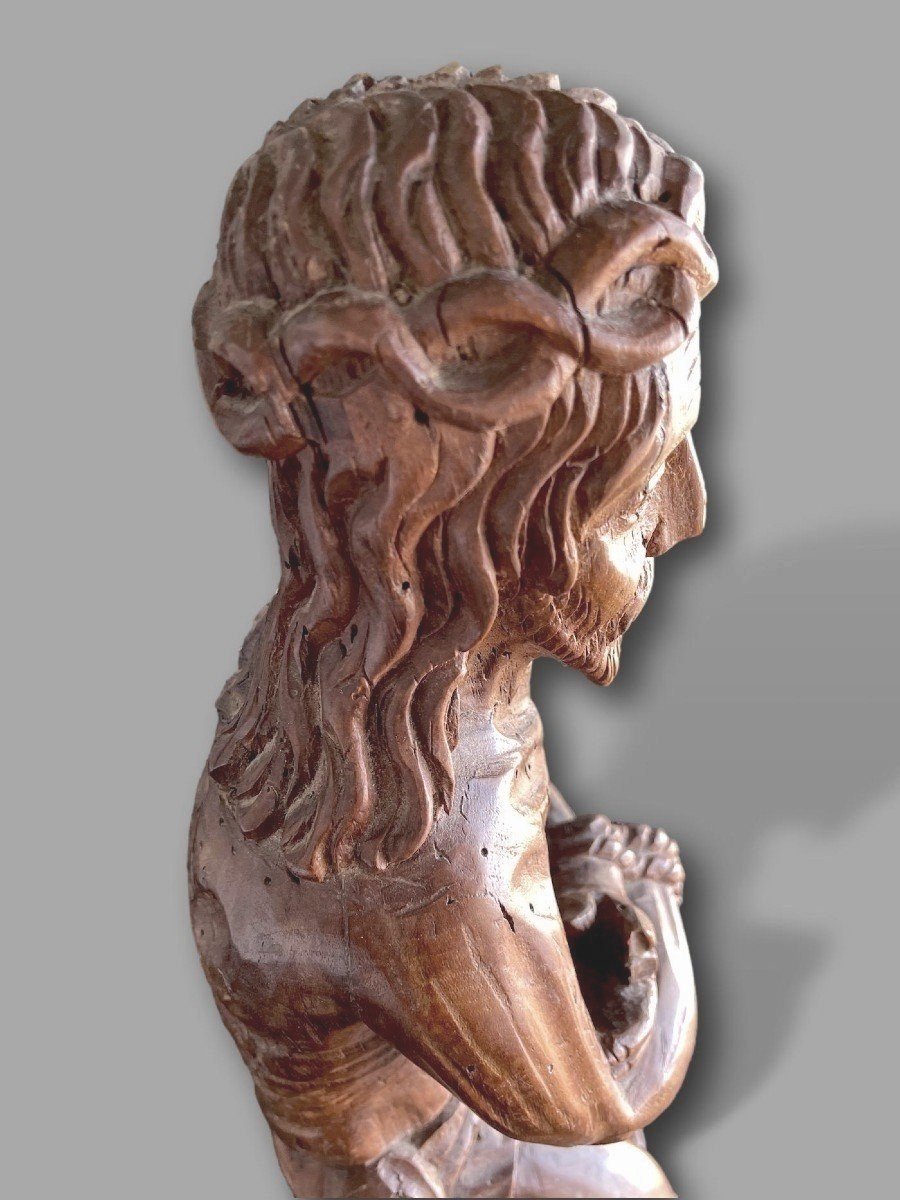
Expressive facial treatment, with elongated features, bifurcated beard, and deeply carved flowing hair
Carefully modeled torso, anatomically readable yet restrained
Stable seated posture, enhancing monumentality despite the moderate scale
Simply treated perizonium, carved with broad, flowing folds without excessive ornamentation
Overall, the work favors expressive spirituality over decorative complexity, characteristic of 16th-century Western European religious sculpture, still rooted in late Gothic traditions while opening toward Renaissance naturalism.
Material, Technique, and ConditionCarved from a dense hardwood, likely walnut or oak
Hollowed base, clearly visible underneath, confirming early manufacture
Traces of hand tools consistent with period workmanship
No visible polychromy today (original polychromy may have been lost over time)
Warm, homogeneous aged patina
Natural shrinkage cracks and wear consistent with age
No evidence of heavy or intrusive restoration
???? The condition is honest, stable, and highly authentic, particularly valued by collectors seeking unrestored works.
DimensionsHeight: 60.5 cm
Width (approx.): 24 cm
Depth (approx.): 20 cm
Based on:
iconography,
stylistic treatment of form,
carving technique,
wood type and patina,
???? This sculpture can be attributed to a Western European workshop, possibly France, Spain, or Northern Europe, dating from the 16th century, within the tradition of regional Renaissance devotional sculpture.
The work was most likely produced in a workshop context, intended for devotional use rather than monumental commission.
Place in Art HistorySculptures of Christ Bound represent:
a highly sought-after category within early religious sculpture,
a pivotal iconographic link between medieval spirituality and Renaissance humanism,
works prized by private collectors and religious art institutions alike.
Comparable examples are preserved in:
diocesan museums,
monastic collections,
major European private collections.
Shipping and Insurance Information:
All our packages are packaged by MBE (Mail Boxes Etc.) in Narbonne, guaranteeing careful and perfectly secure packaging.
Shipping is then handled by UPS, FedEx, or GLS, ensuring reliable and tracked delivery worldwide.
For all purchases over €4,000, an ad valorem insurance policy is automatically taken out with Trans-Pass, providing optimal coverage for your purchase throughout its entire journey.
Period: 16th century
Style: Renaissance, Louis 13th
Condition: Good condition
Material: Solid wood
Height: 60,5 cm
Reference (ID): 1683884
Availability: In stock