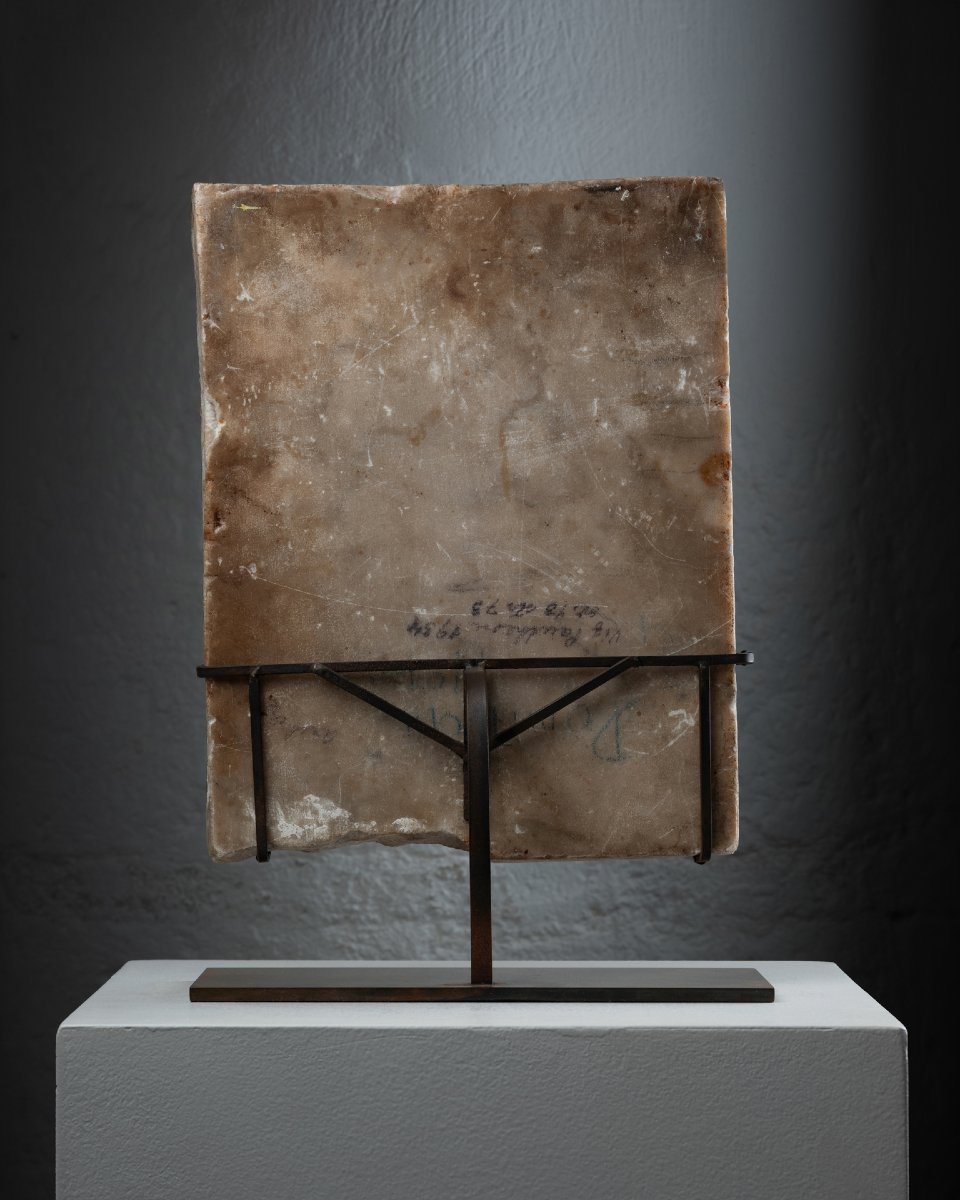


Presumed Portrait Of Domitian – Marble Bas-relief – Italy – 16th Century
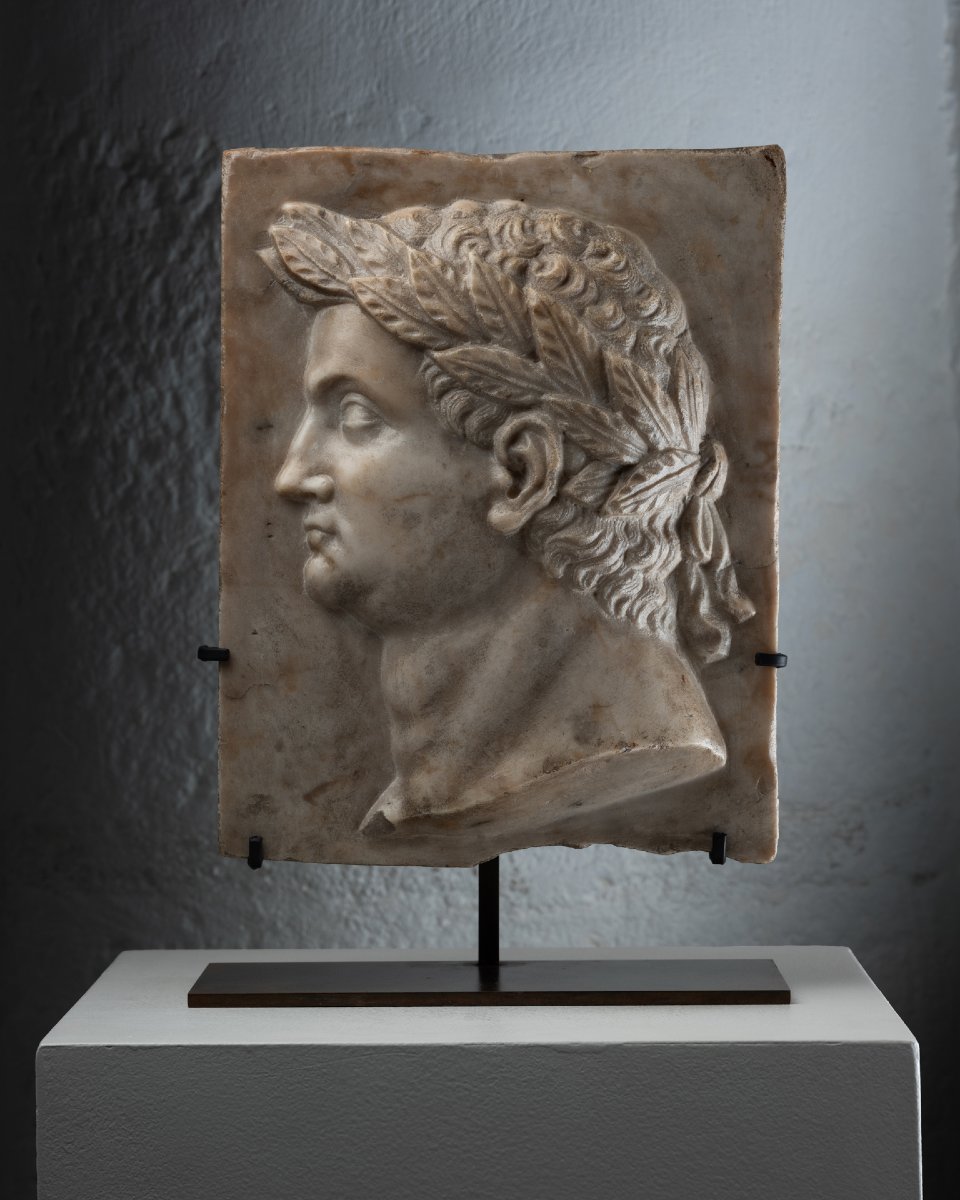
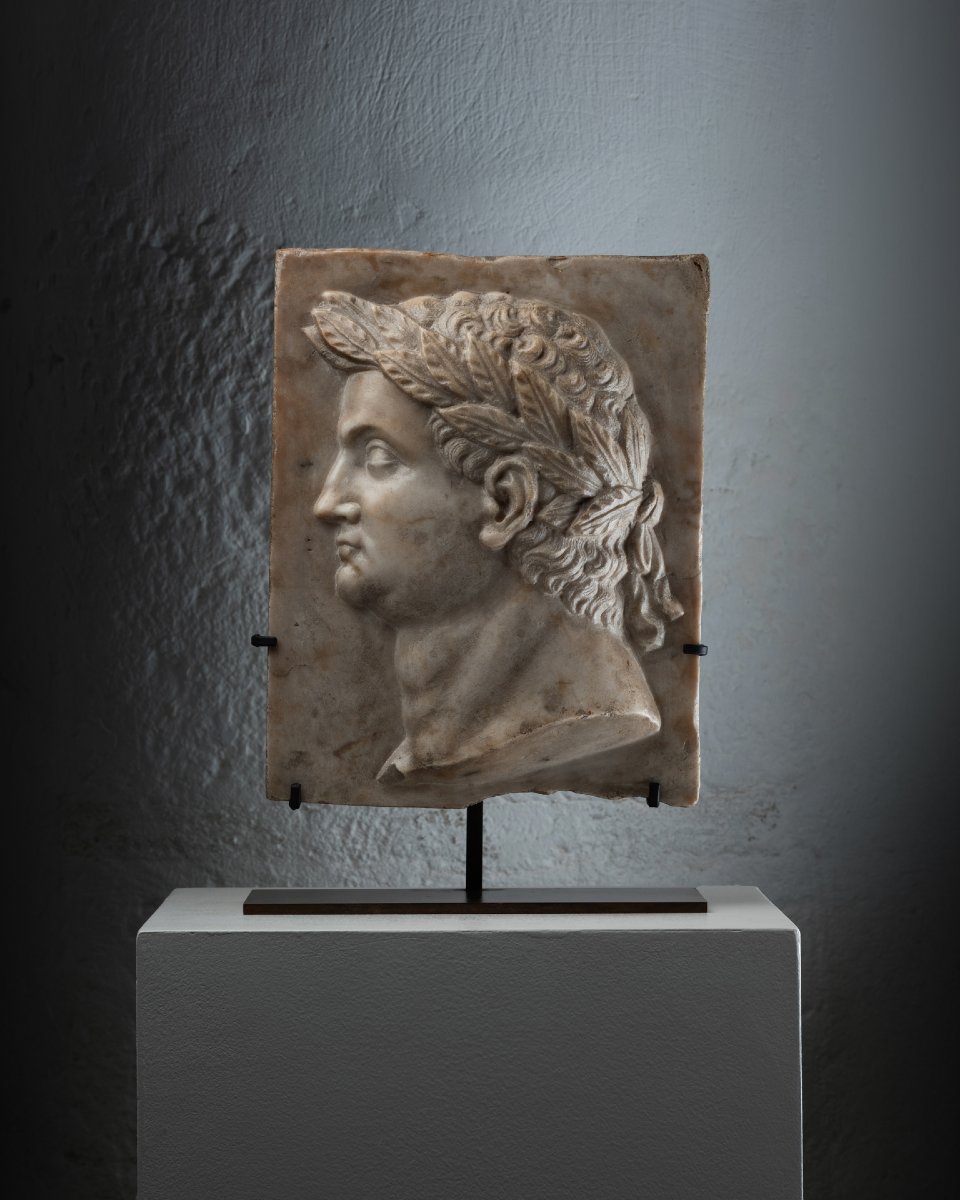
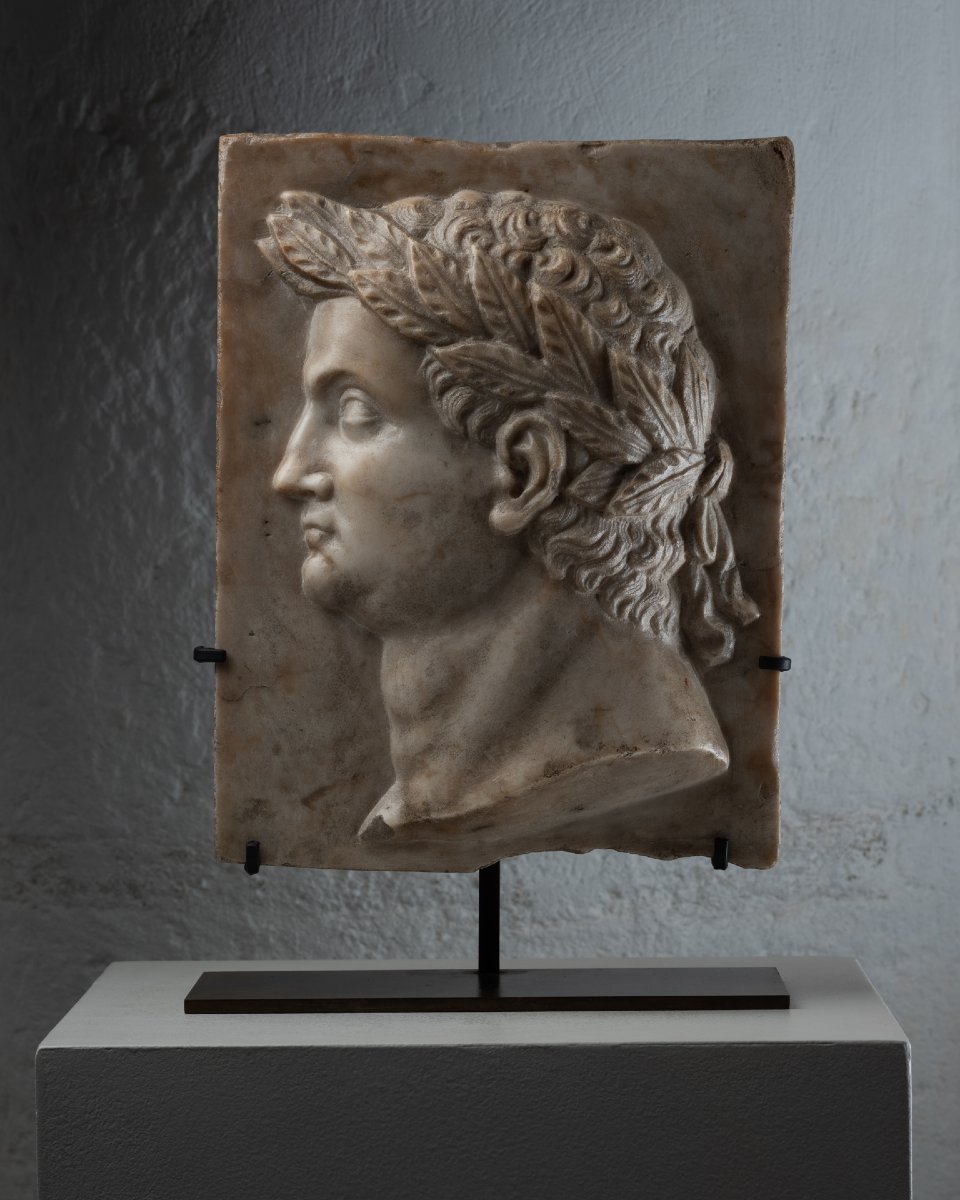
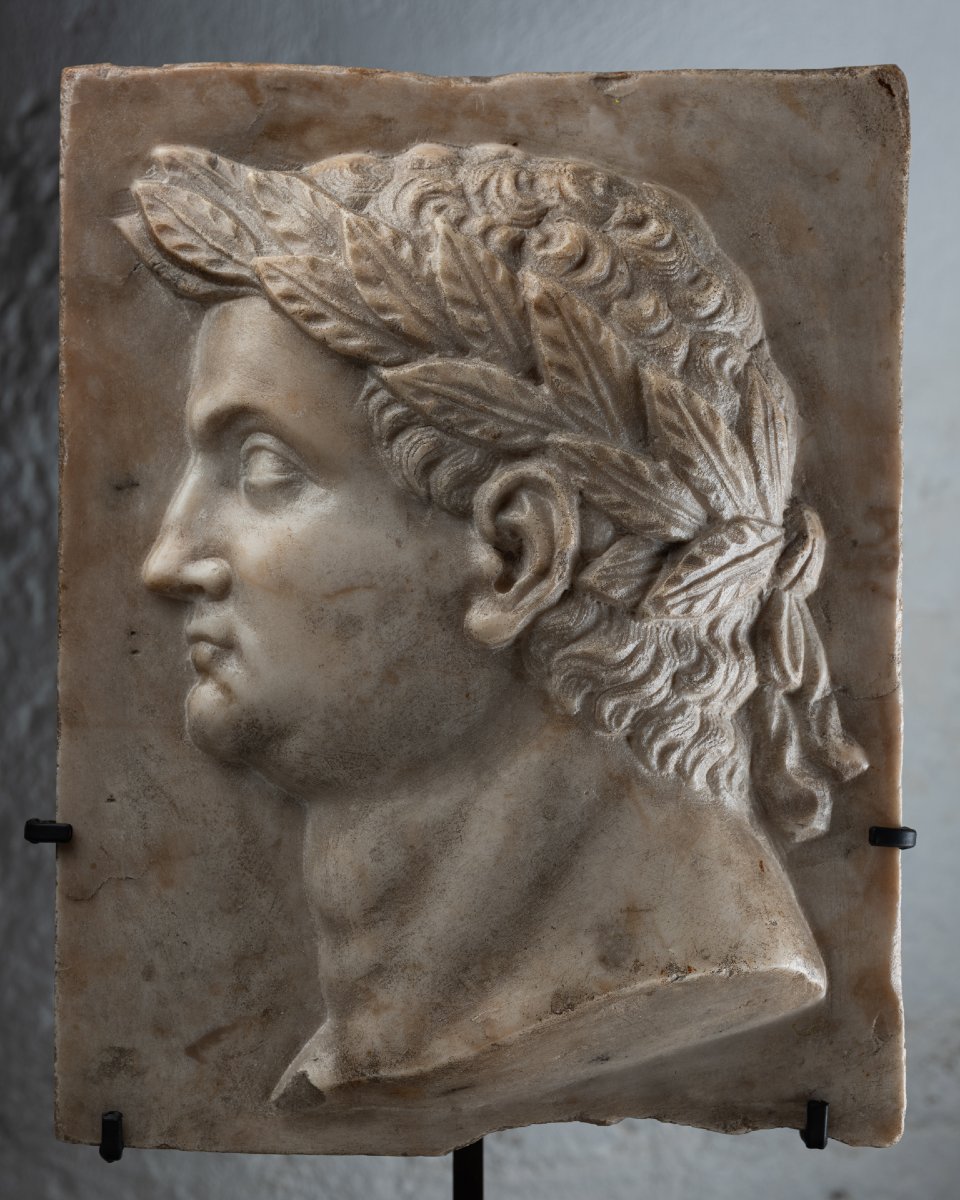
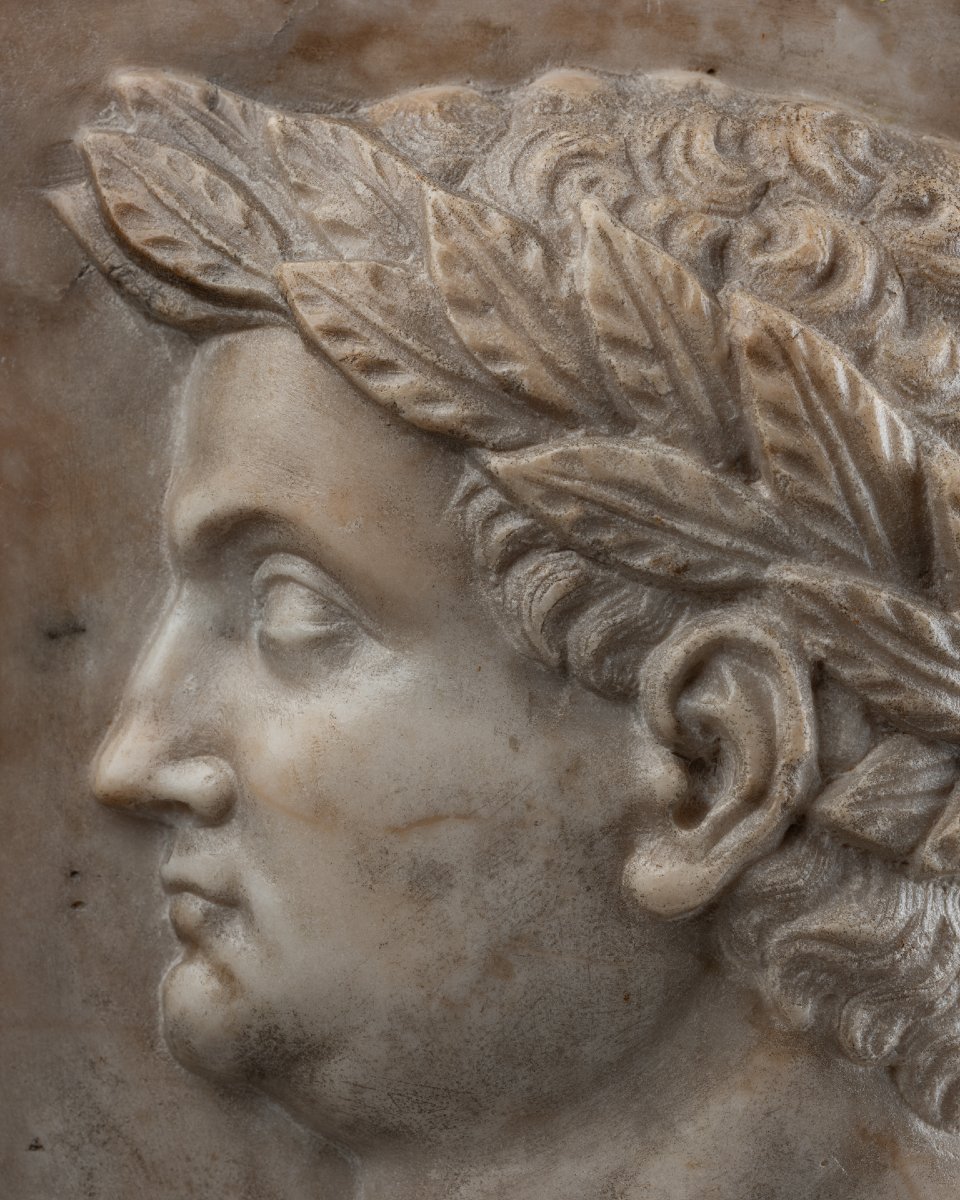
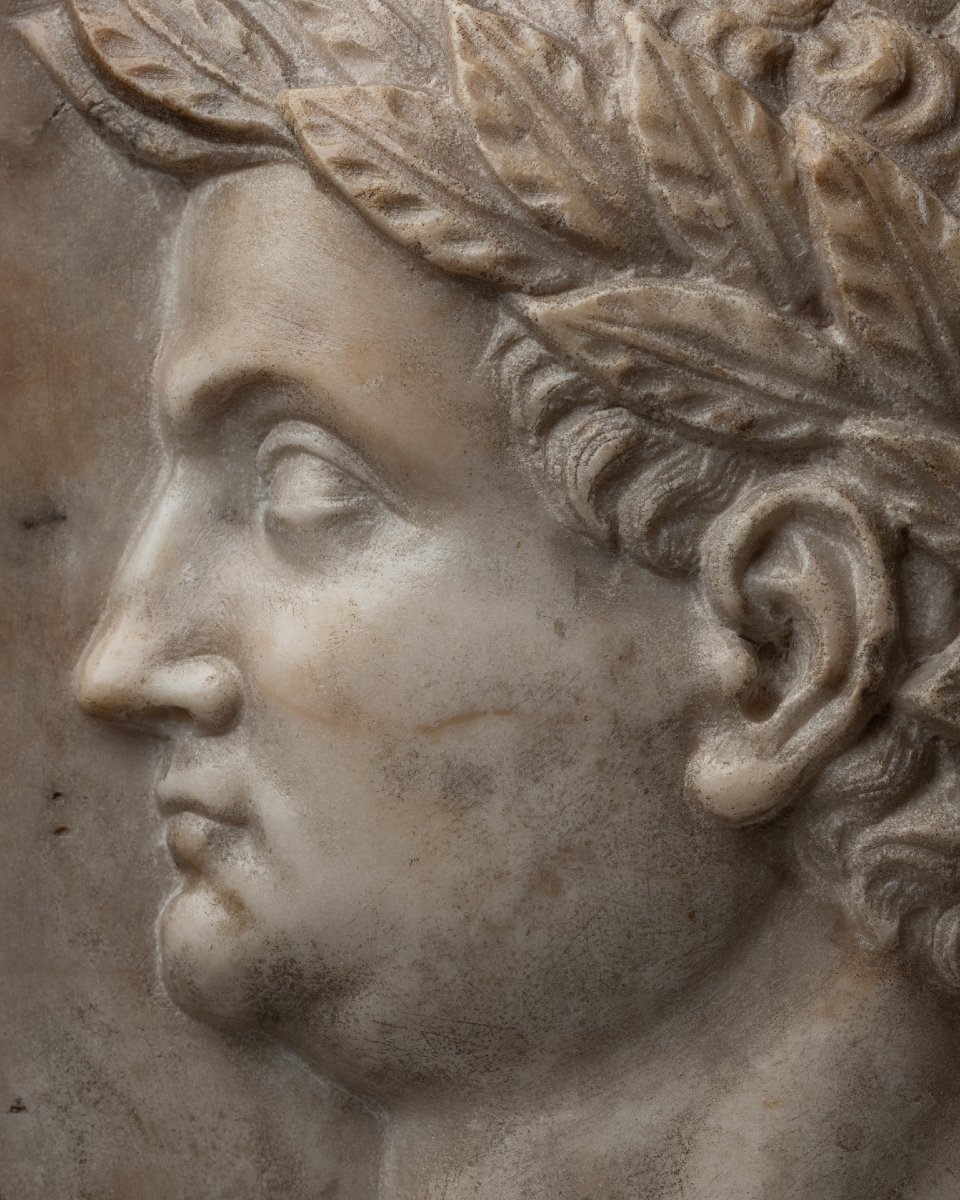
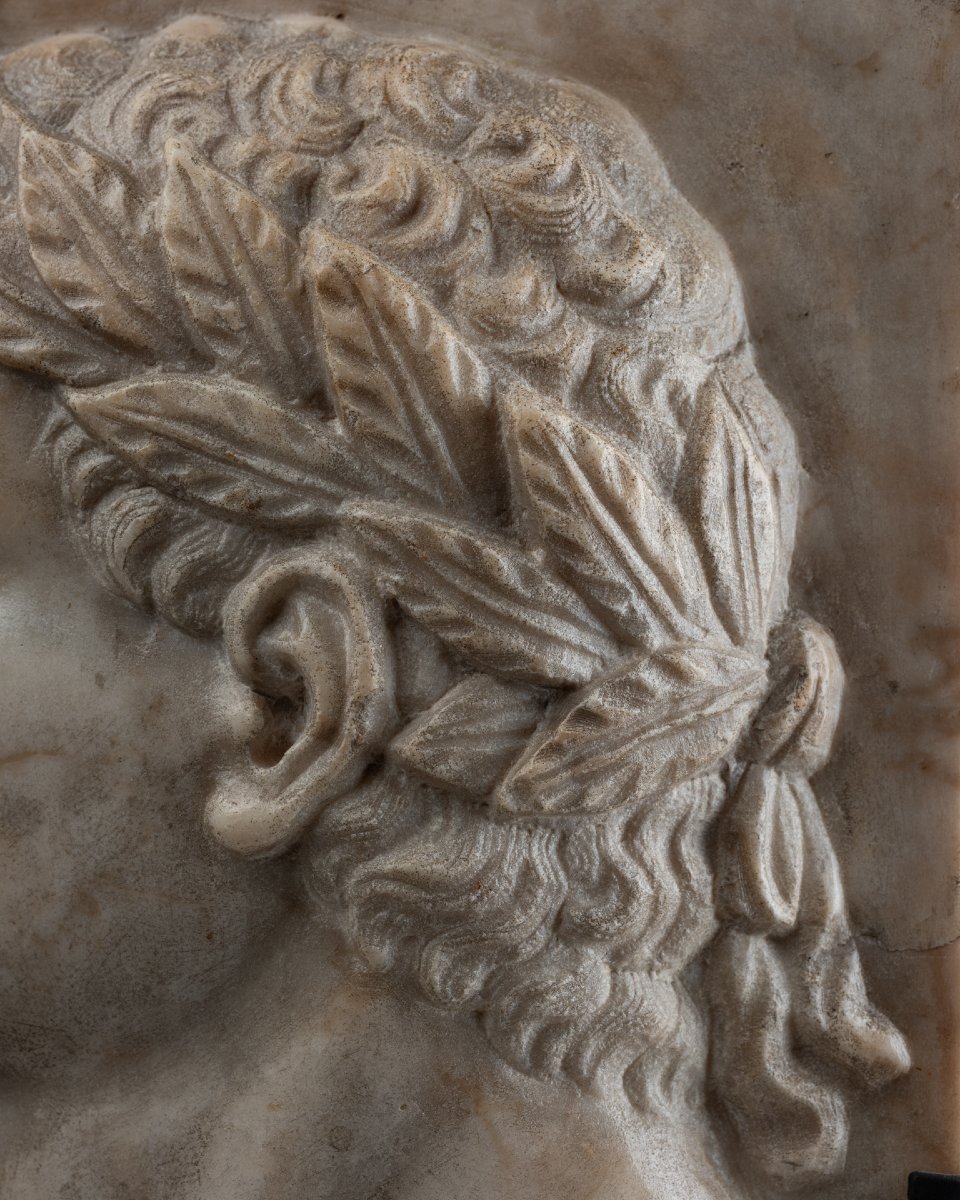
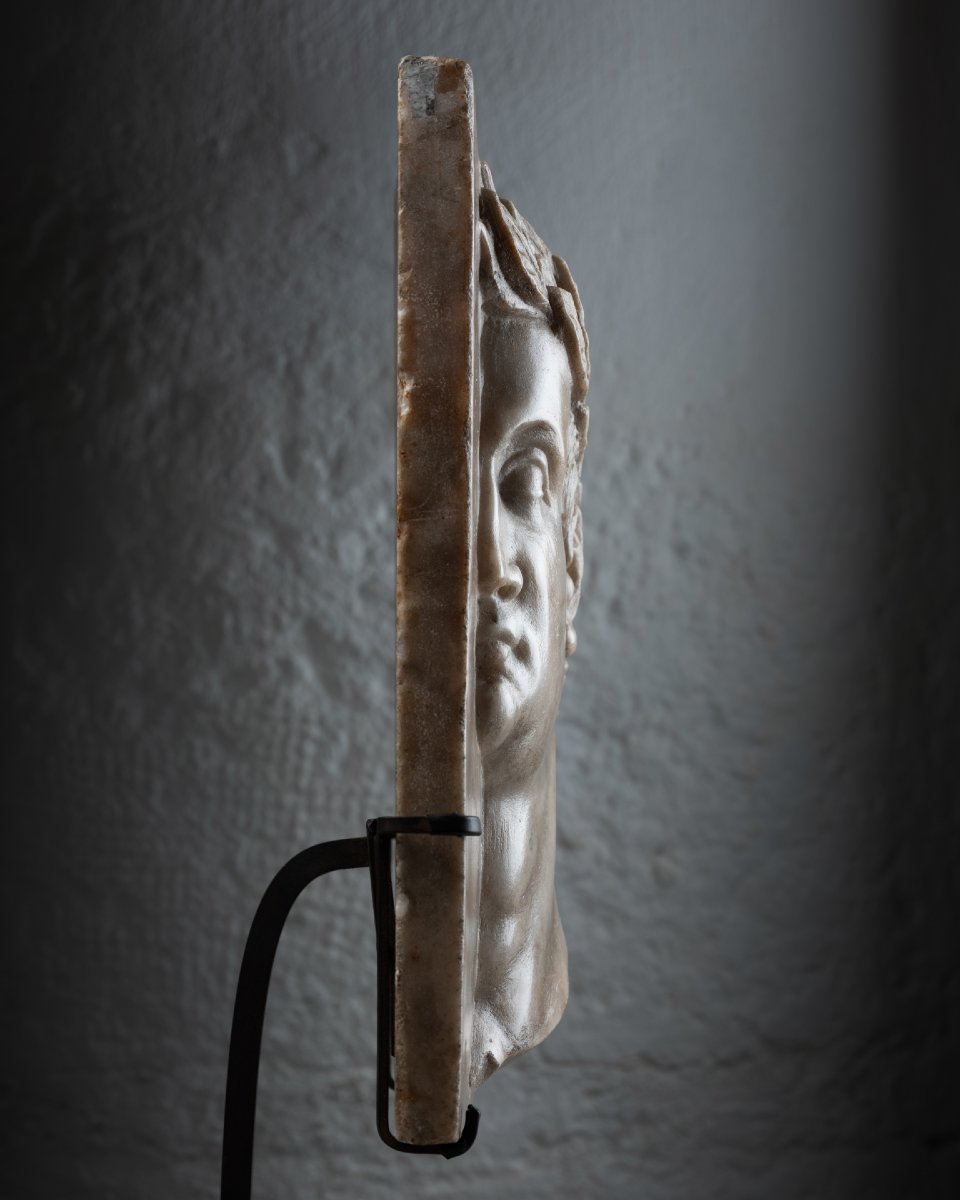
This charming marble bas-relief depicts a man in profile, who can be identified as the Roman emperor Domitian. He wears a laurel wreath delicately placed upon his wavy curls—an important iconographic detail that immediately reveals his imperial status. The laurel wreath is a powerful symbol of the emperor’s military triumphs, but it also evokes immortality, thereby underscoring the power and enduring nature of his reign.
Domitian was a Roman emperor who reigned from 81 to 96 BC; he was part of the line of the “Twelve Caesars.” His reign contributed to Rome’s influence, notably through the construction of numerous temples, such as the Capitoline Temple and the Temple of Jupiter; he also established the Capitoline Games, which took place every four years. A man of letters, he sought to make Rome a cultural capital.
The emperor presented himself as a god, dressed in a purple toga and a golden laurel wreath. The end of his reign was marked by tyranny, as he persecuted anyone who opposed his rule.
He is often depicted in profile, with a laurel wreath fastened at the back of his head; he is distinguished from other Roman emperors by his full cheeks, a powerful and robust neck, and a straight nose. This is clearly evident in the examples preserved at the Louvre and the Museum of Antiquities in Rouen.
It was during the Renaissance that sculptors fully rediscovered classical art, its forms, and its naturalism, once again adopting marble as a noble material in homage to the Greco-Roman heritage. The prevalence of marble is also linked to the disappearance of the original Greek bronzes, many of which were melted down or lost, whereas the Romans themselves had created numerous marble copies. Furthermore, the use of marble made it possible to immortalize this emperor, ensuring his longevity through the preservation of his memory.
Thus, the depiction of an emperor in marble became characteristic of this period; although numerous series of portraits of Roman emperors were produced at that time, this fragment stands out for the exceptional quality of its execution. The modeling, both firm and supple, lends the sculpture a striking realism characteristic of 16th-century artistic mastery.
Period: 16th century
Style: Renaissance, Louis 13th
Condition: Excellent condition
Material: Marble
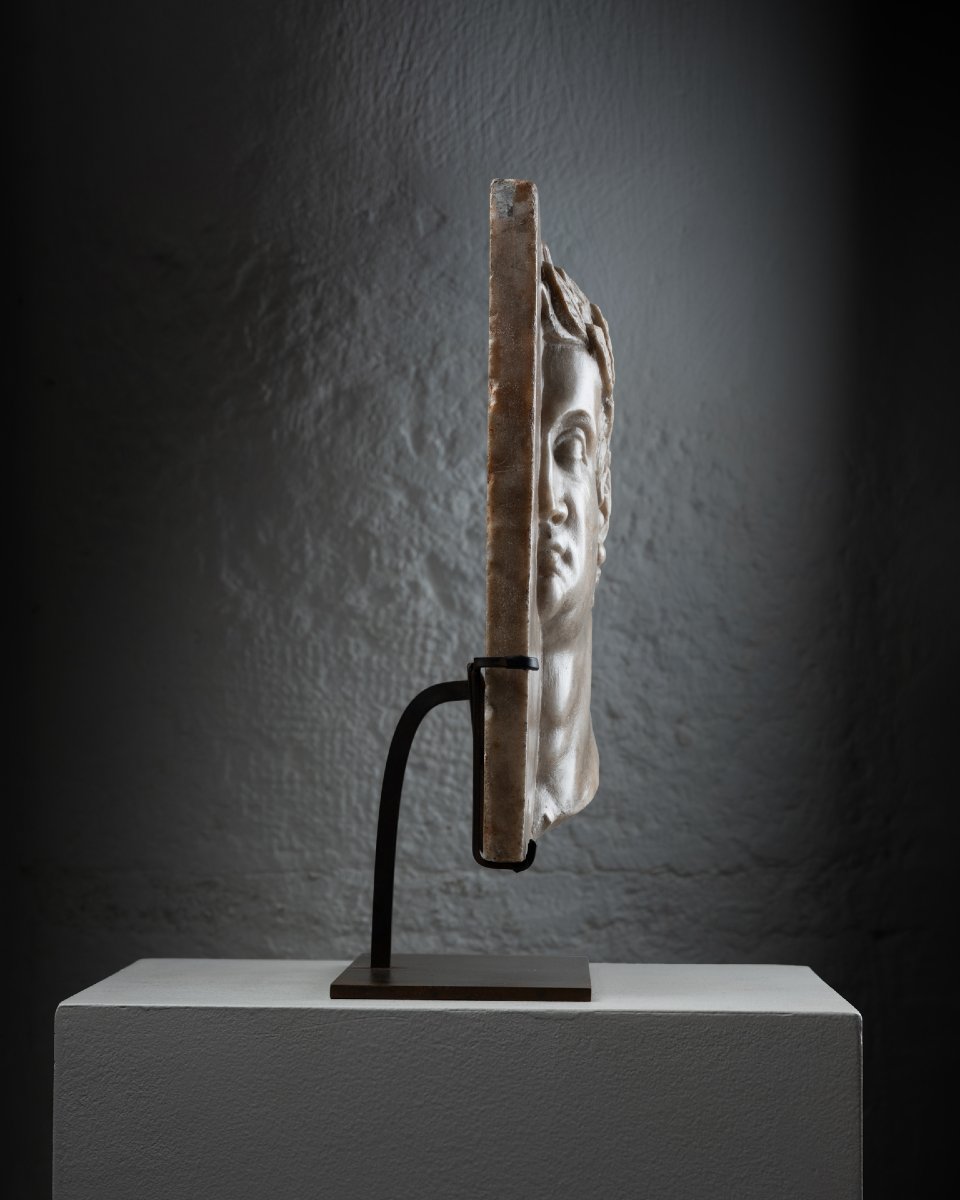
Width: 22 cm
Height: 31 cm
Depth: 10 cm
Reference (ID): 1814606
Availability: In stock