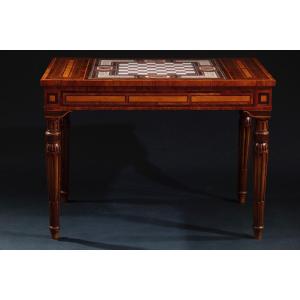
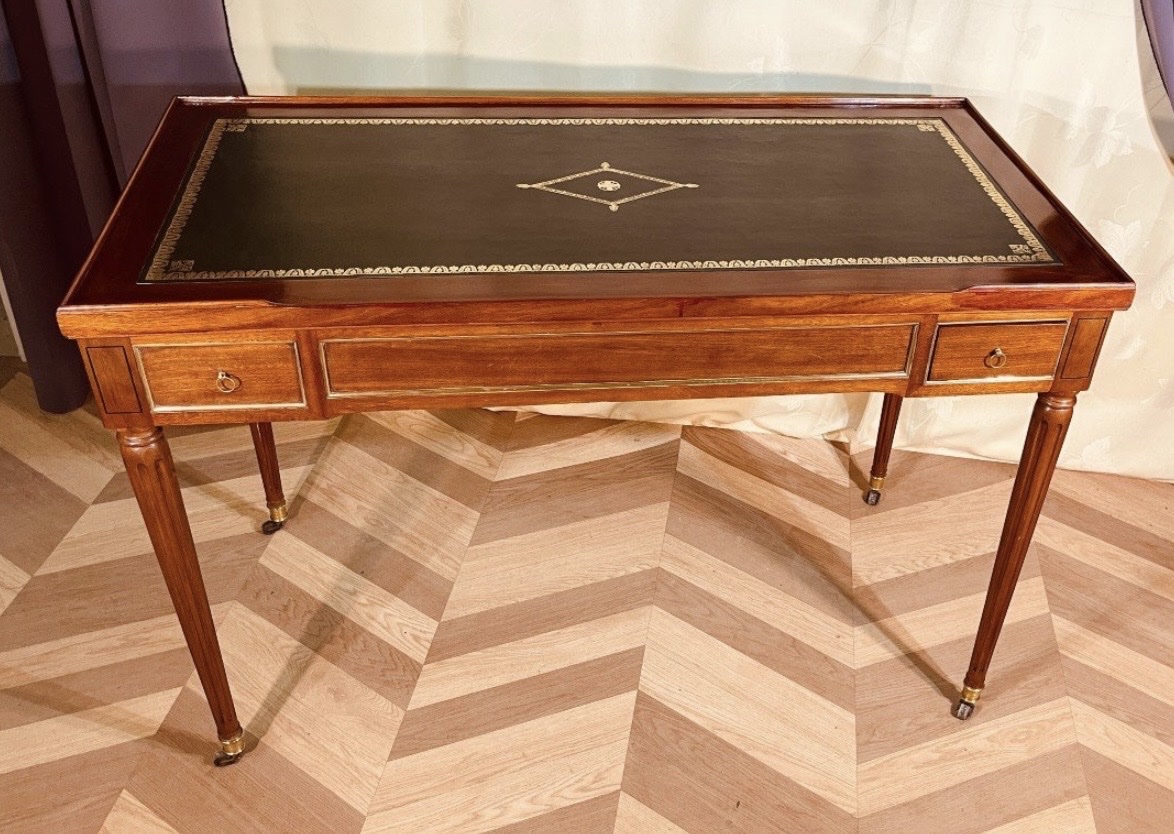


Tric Trac Table. Stamped “etienne Avril,” 18th Century
Artist: étienne Avril ( 1741-1814 )
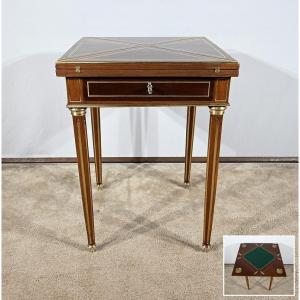
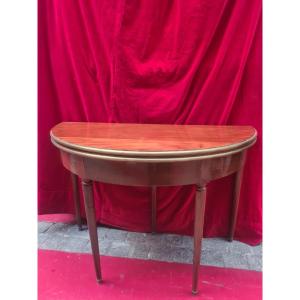
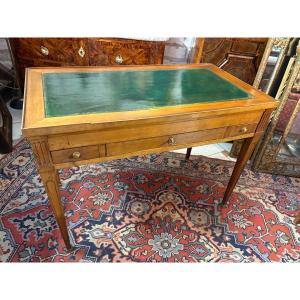
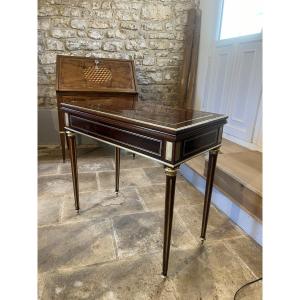
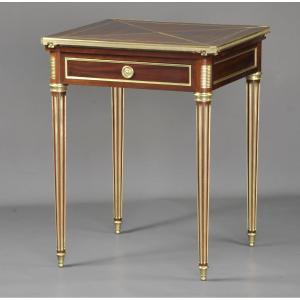
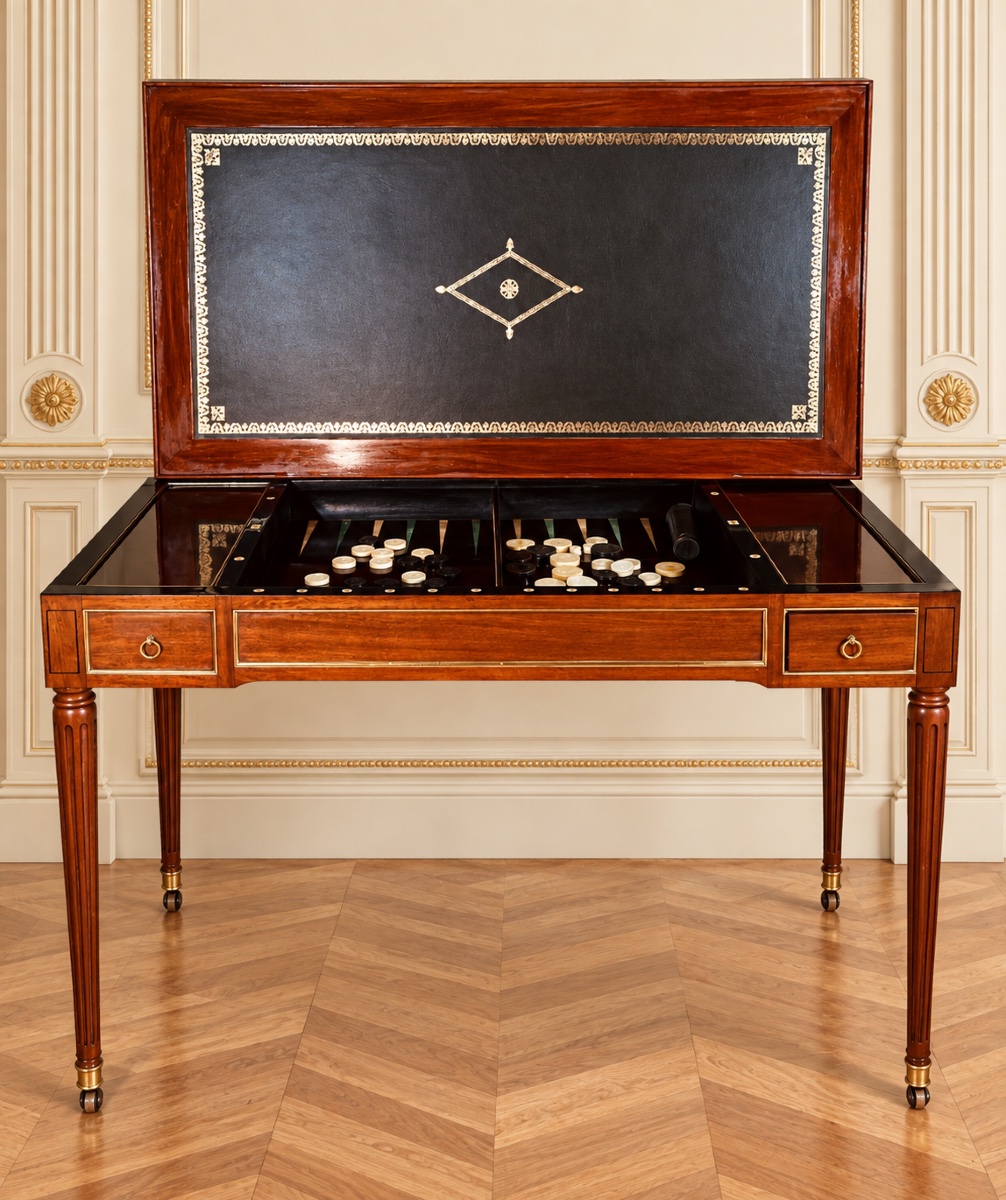
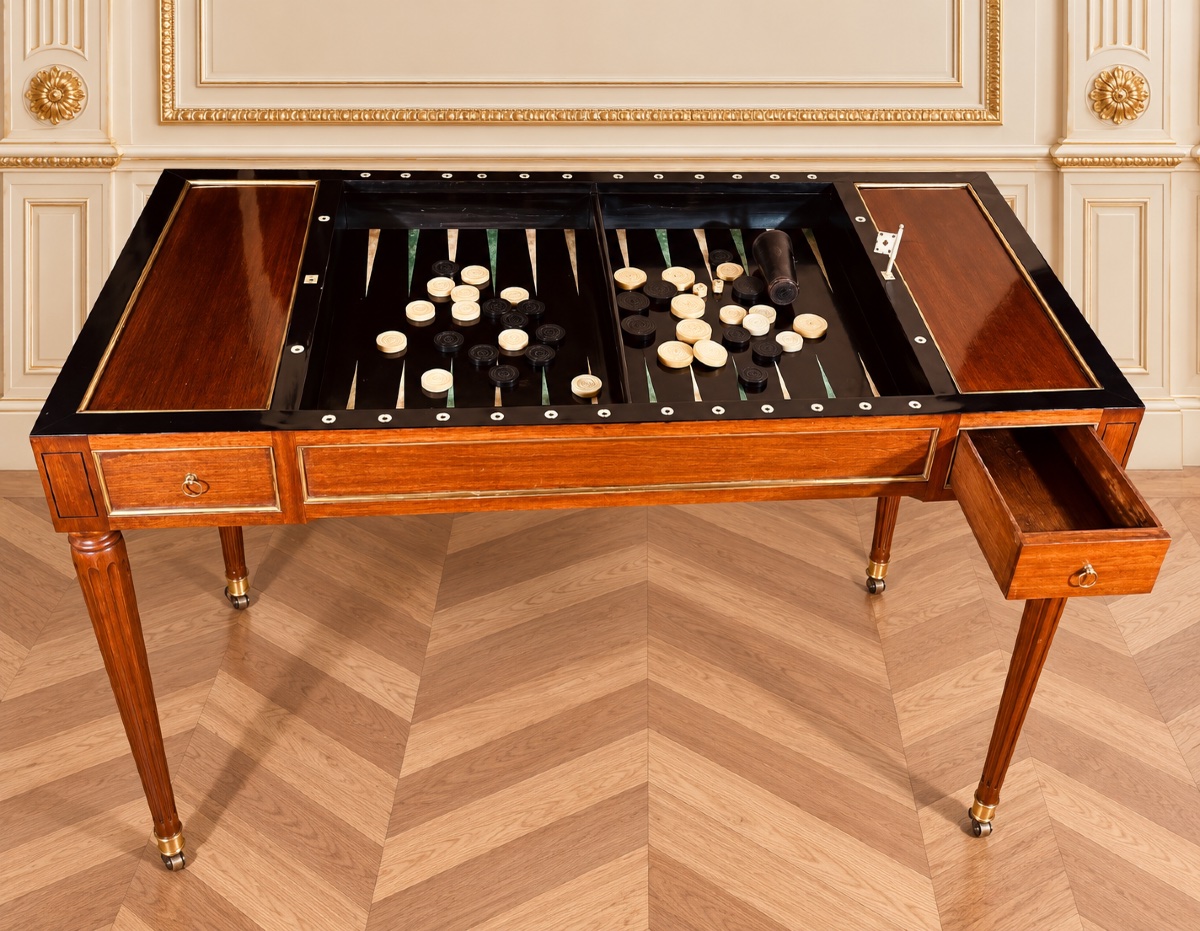
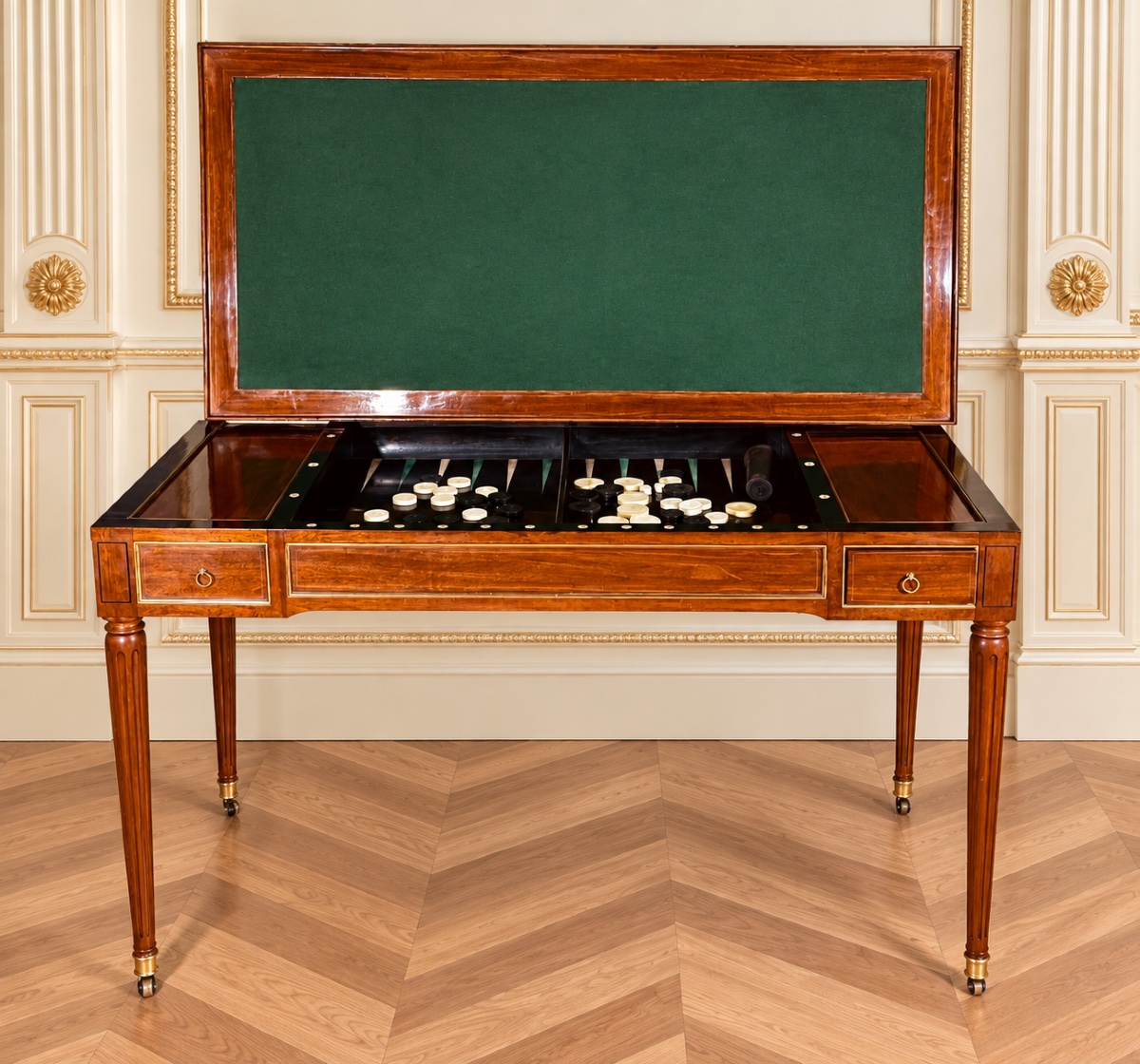
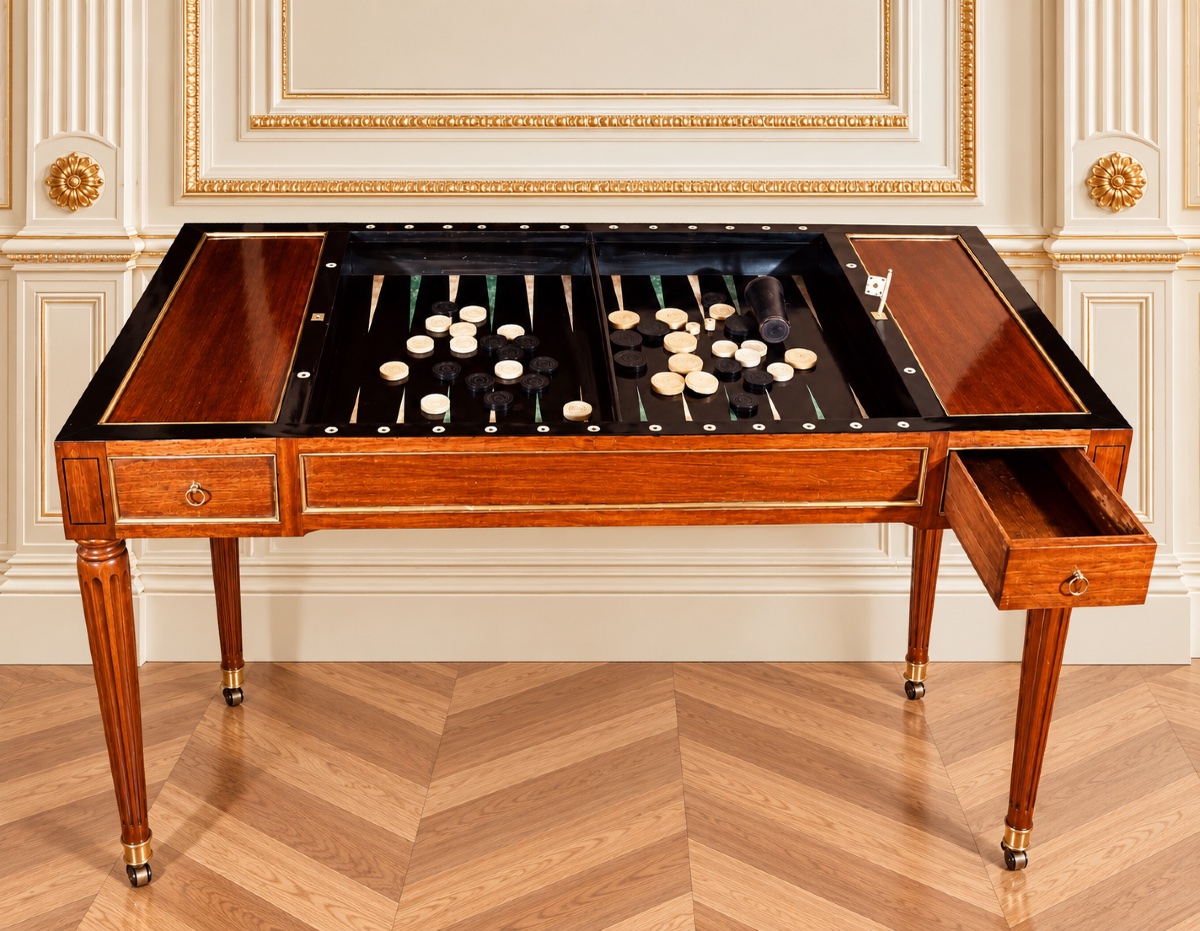
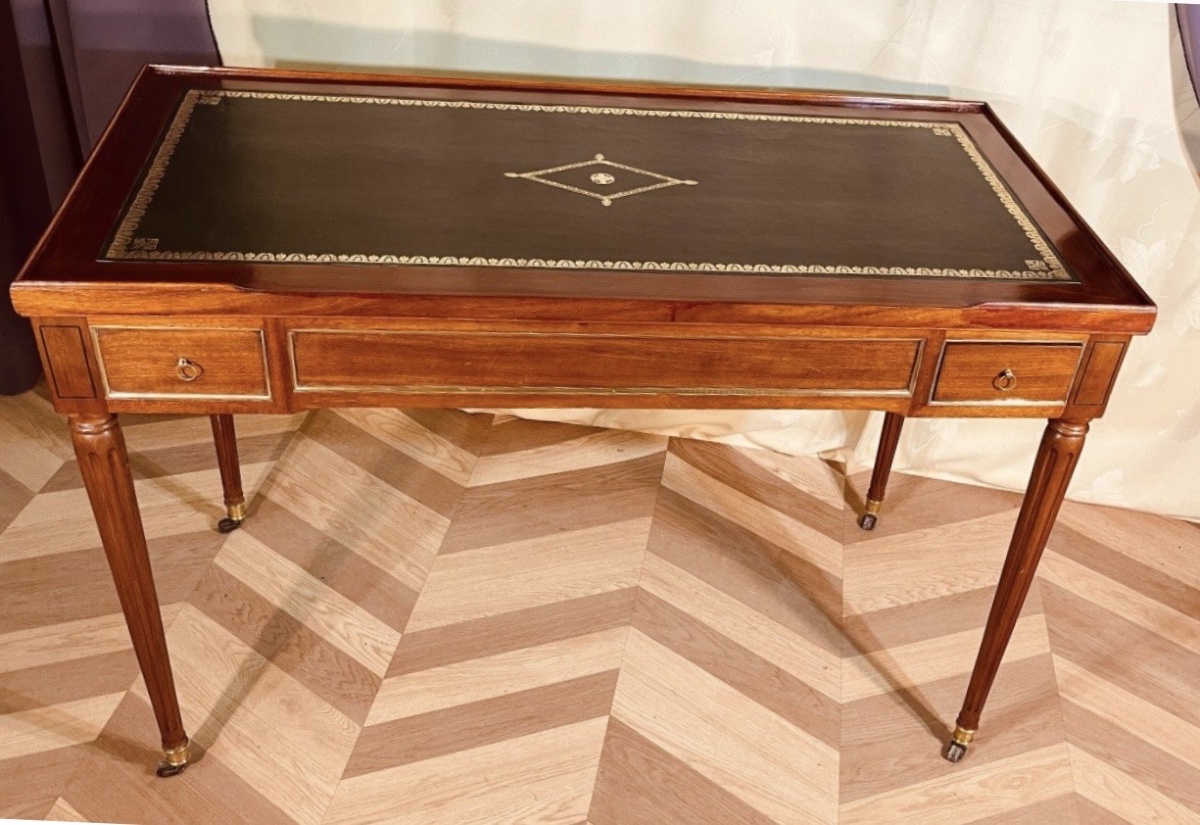
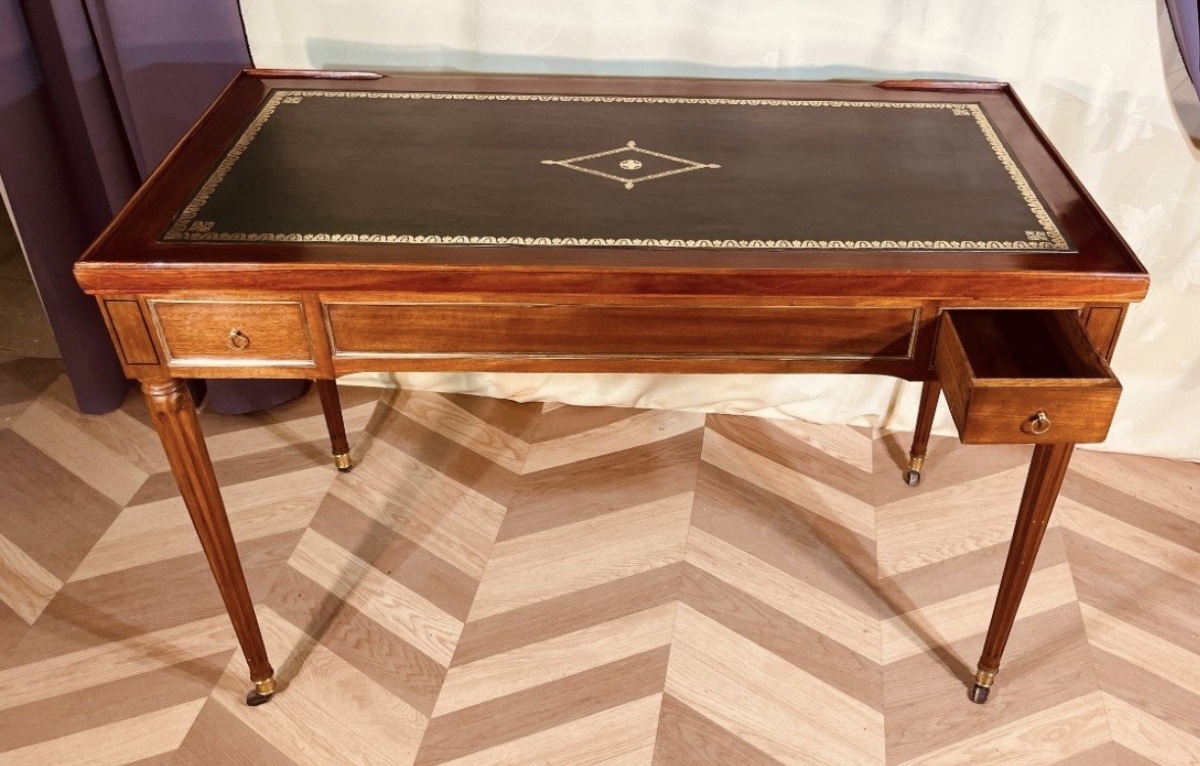
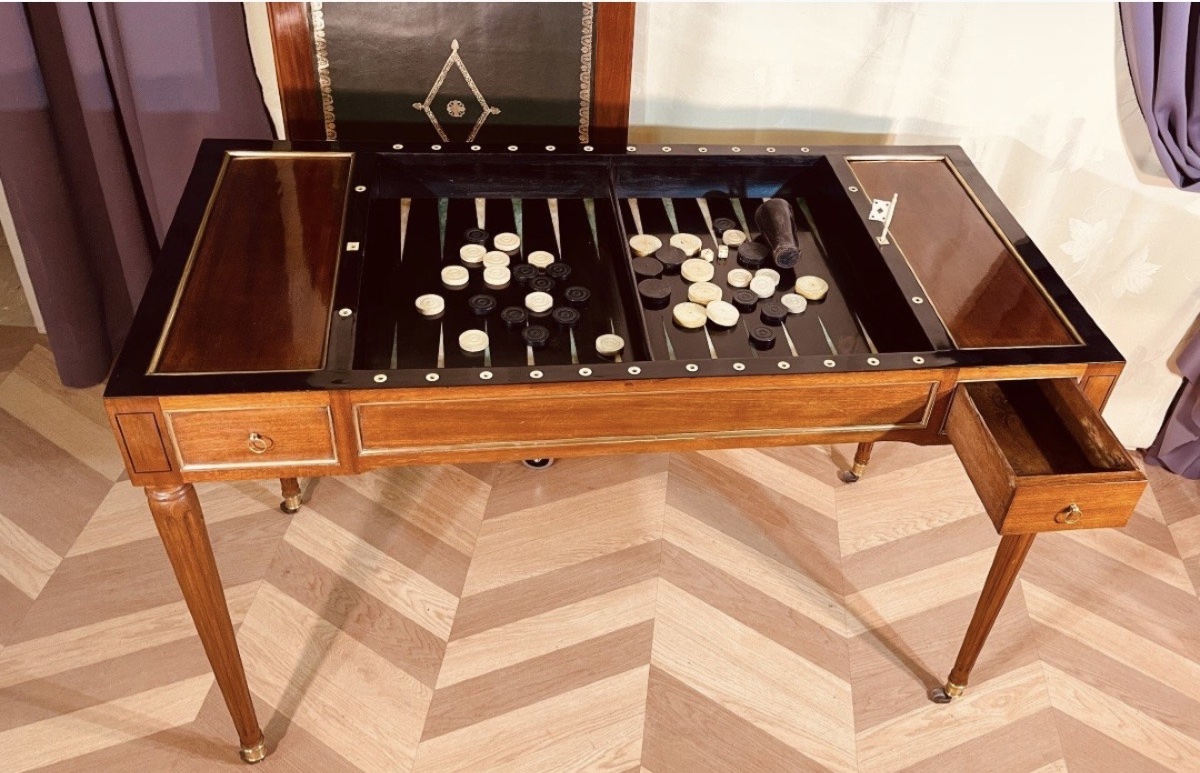
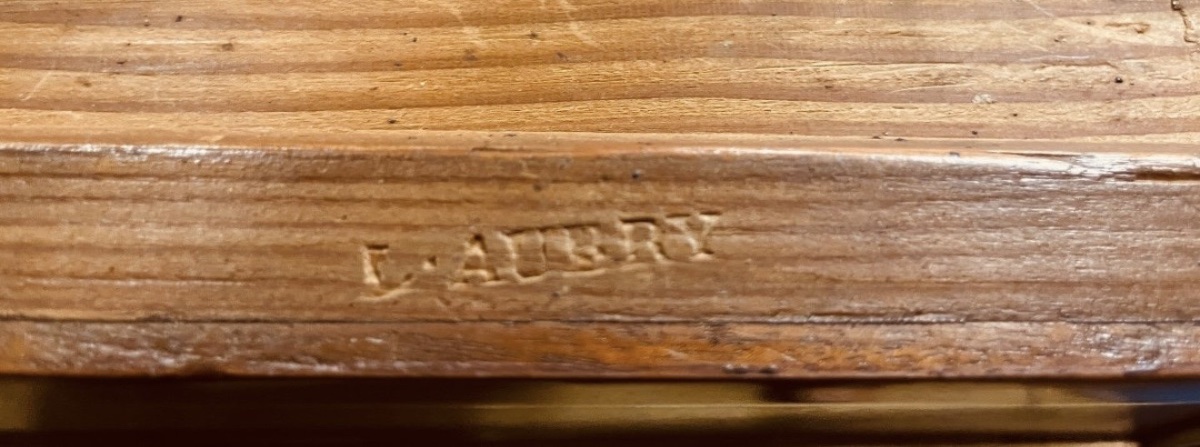
TRIC TRAC TABLE, STAMPED “L. AUBRY,” 18TH CENTURY Artist:Aubry TRIC TRAC Table, Louis XVI style, 18th-century period, made of mahogany and mahogany veneer.
It is stamped "Louis AUBRY" (1741–1814).
It has one drawer on each side for storing game pieces.
It rests on fluted leg covers, fitted with bronze glides on casters to facilitate movement.
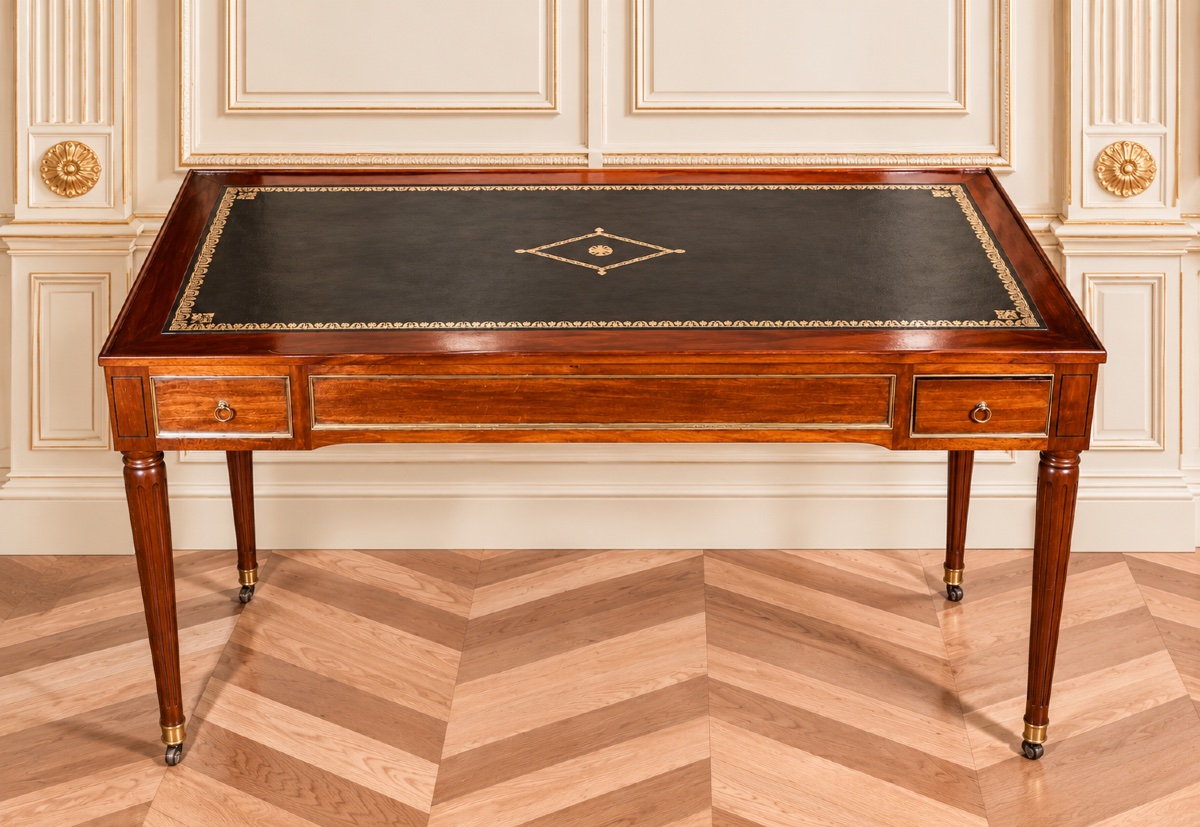
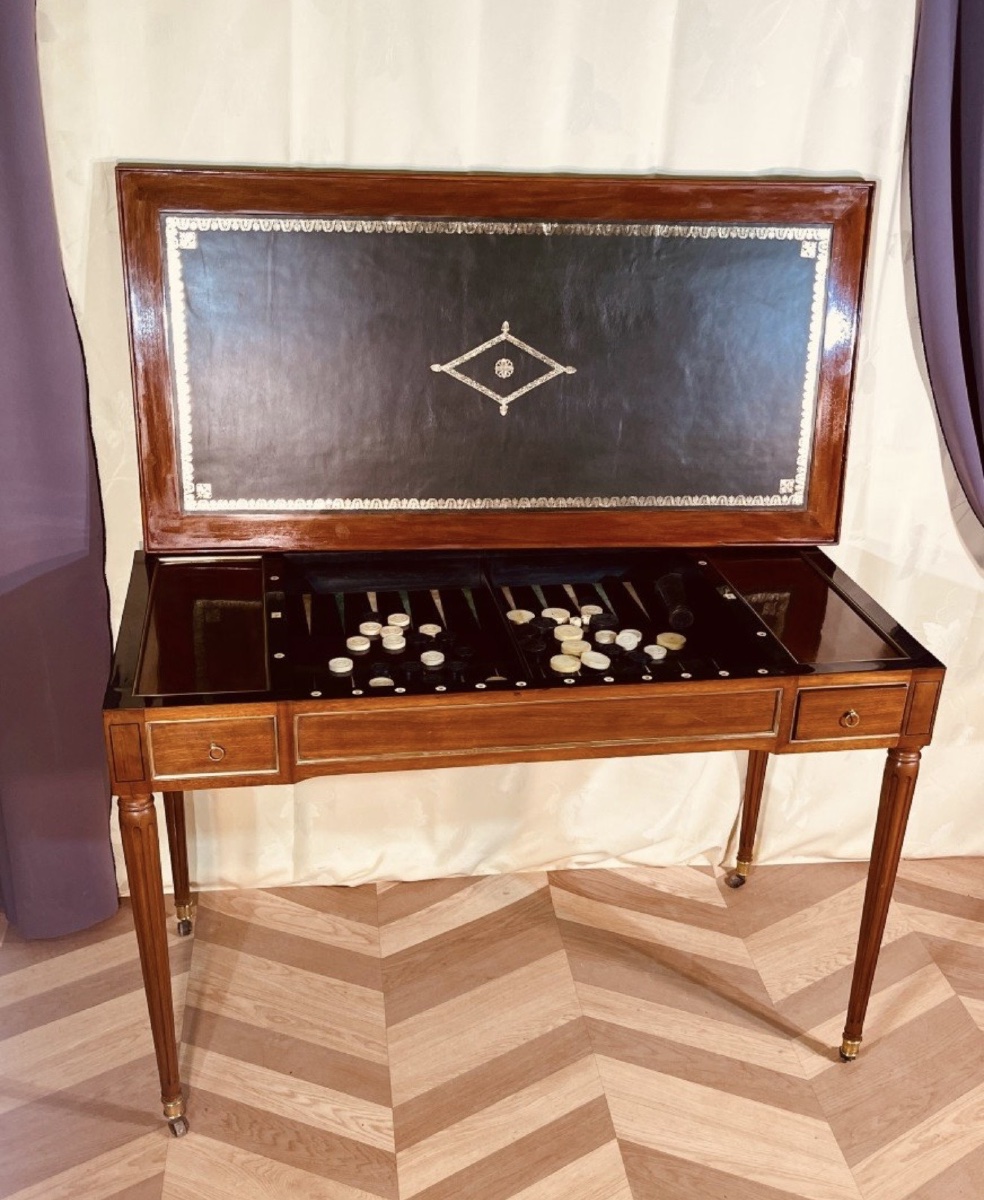
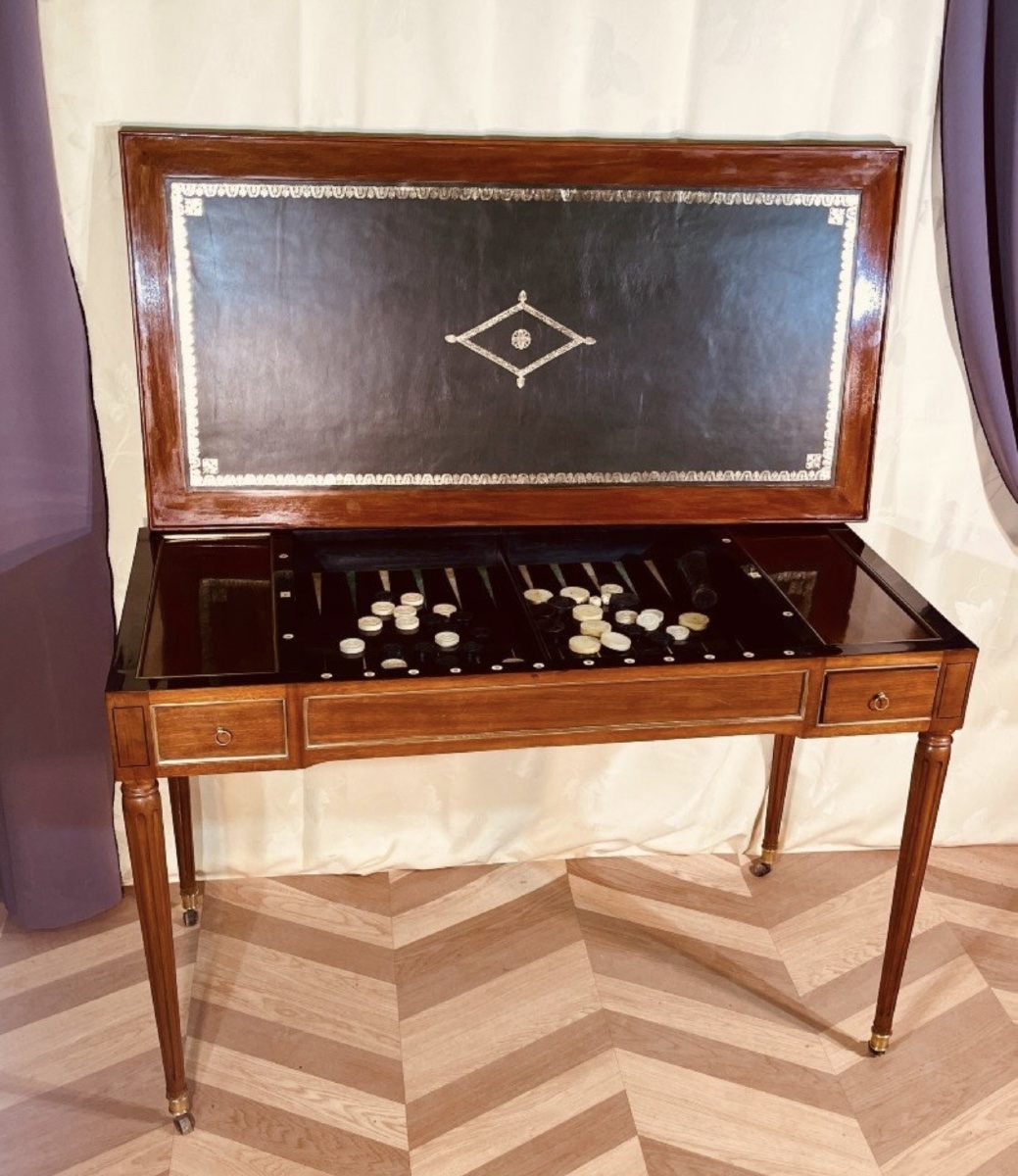
The tabletop is removable and double-sided.
On one side, the tabletop is covered with felt; on the other side, it is covered with new green leather, embossed with a small iron stamp.
It includes several black and white checkers, an antique leather cup, and two antique dice.
It measures 114 cm in length, 57 cm in depth, and 76 cm in height.
It is in very good condition.
Louis AUBRY (1741–1814)
Louis Aubry (1741–March 21, 1814)—cabinetmaker. Became a master craftsman on August 31, 1774.
He lived on Rue de Grammont until the Revolution, and then took over his father-in-law’s former workshop on Rue Saint-Nicolas.
He produced Transition-style furniture, particularly drop-front chests of drawers and Louis XVI-style pieces.
It was as the son-in-law of master cabinetmaker Claude-Pierre Lebesque that Louis Aubry obtained his master’s certificate in 1774. Until the Revolution, he worked on Rue de Grammont, then took over his father-in-law’s workshop on Rue Saint-Nicolas. In 1792, he was appointed civil commissioner of the Quinze-Vingts section. All of his pieces, well-crafted, demonstrate a distinct talent. He displayed great skill in marquetry and created furniture in the transitional style from Louis XV to Louis XVI, particularly chests of drawers with projecting panels, decorated with geometric motifs or flowers and trophies. His furniture is characterized by great simplicity and is very well proportioned. Numerous pieces are mentioned, notably in mahogany—a wood for which he seems to have had a clear preference—including chests of drawers, writing desks, and small, lightweight pieces such as side tables and music stands. Notable examples include, among others, a curious sideboard adorned with moldings inspired by antiquity and resting on green bronze sphinxes, or a small table framed in amaranth wood, with a top adorned with mosaics and two gilded copper legs shaped like lyres.
It is stamped "Louis AUBRY" (1741–1814).
It has one drawer on each side for storing game pieces.
It rests on fluted leg covers, fitted with bronze glides on casters to facilitate movement.
The tabletop is removable and double-sided.
On one side, the tabletop is covered with felt; on the other side, it is covered with new green leather, embossed with a small iron stamp.
It includes several black and white checkers, an antique leather cup, and two antique dice.
It measures 114 cm in length, 57 cm in depth, and 76 cm in height.
It is in very good condition.
Louis AUBRY (1741–1814)
Louis Aubry (1741–March 21, 1814)—cabinetmaker. Became a master craftsman on August 31, 1774.
He lived on Rue de Grammont until the Revolution, and then took over his father-in-law’s former workshop on Rue Saint-Nicolas.
He produced Transition-style furniture, particularly drop-front chests of drawers and Louis XVI-style pieces.
It was as the son-in-law of master cabinetmaker Claude-Pierre Lebesque that Louis Aubry obtained his master’s certificate in 1774. Until the Revolution, he worked on Rue de Grammont, then took over his father-in-law’s workshop on Rue Saint-Nicolas. In 1792, he was appointed civil commissioner of the Quinze-Vingts section. All of his pieces, well-crafted, demonstrate a distinct talent. He displayed great skill in marquetry and created furniture in the transitional style from Louis XV to Louis XVI, particularly chests of drawers with projecting panels, decorated with geometric motifs or flowers and trophies. His furniture is characterized by great simplicity and is very well proportioned. Numerous pieces are mentioned, notably in mahogany—a wood for which he seems to have had a clear preference—including chests of drawers, writing desks, and small, lightweight pieces such as side tables and music stands. Notable examples include, among others, a curious sideboard adorned with moldings inspired by antiquity and resting on green bronze sphinxes, or a small table framed in amaranth wood, with a top adorned with mosaics and two gilded copper legs shaped like lyres.
2 450 €
Period: 18th century
Style: Louis 16th, Directory
Condition: Excellent condition
Material: Mahogany
Length: 114 cm
Width: 57 cm
Height: 76 cm
Reference (ID): 1814375
Availability: In stock
Print