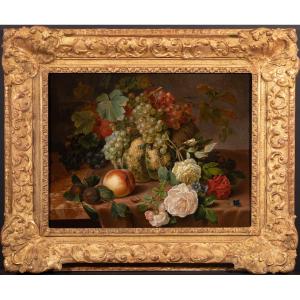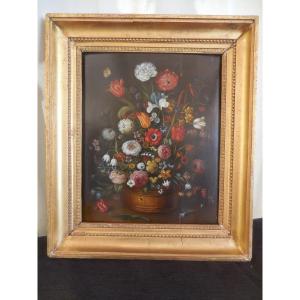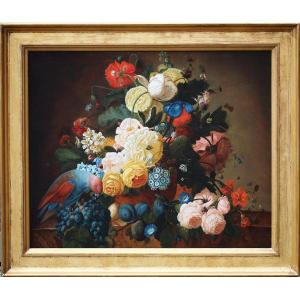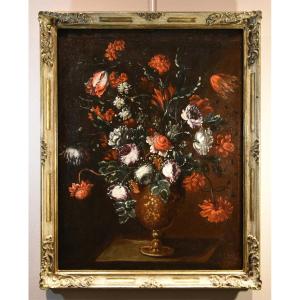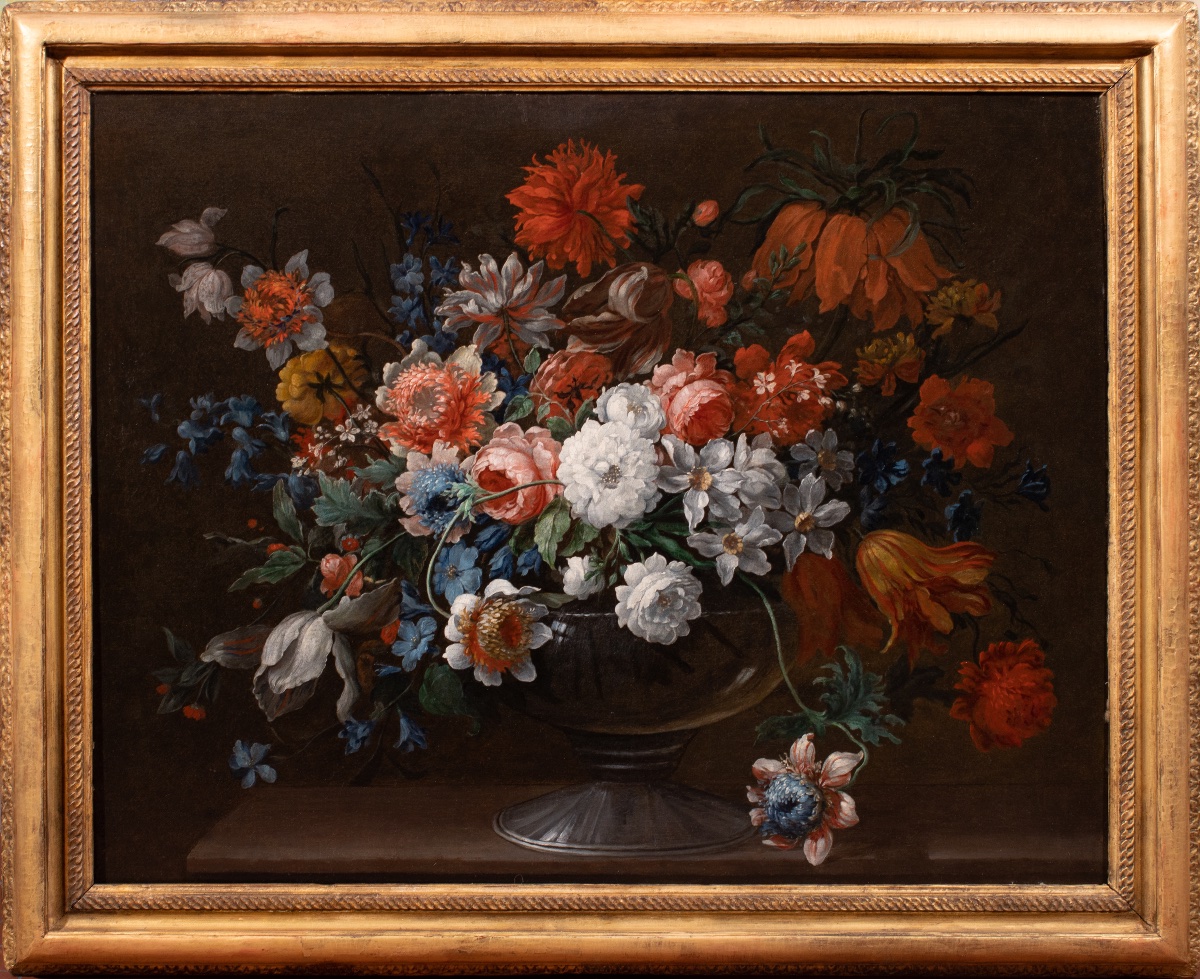


Jean Baptiste Monnoyer (1636–1699) & Workshop. Large Vase Of Flowers On A Marble Entablature
Oil on canvas
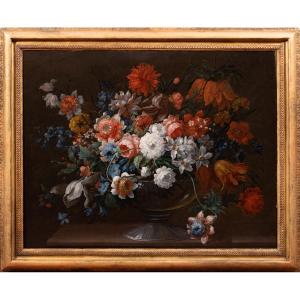
Presented in a beautiful 18th-century period frame made of molded and gilded wood, carved with a twisted garland.
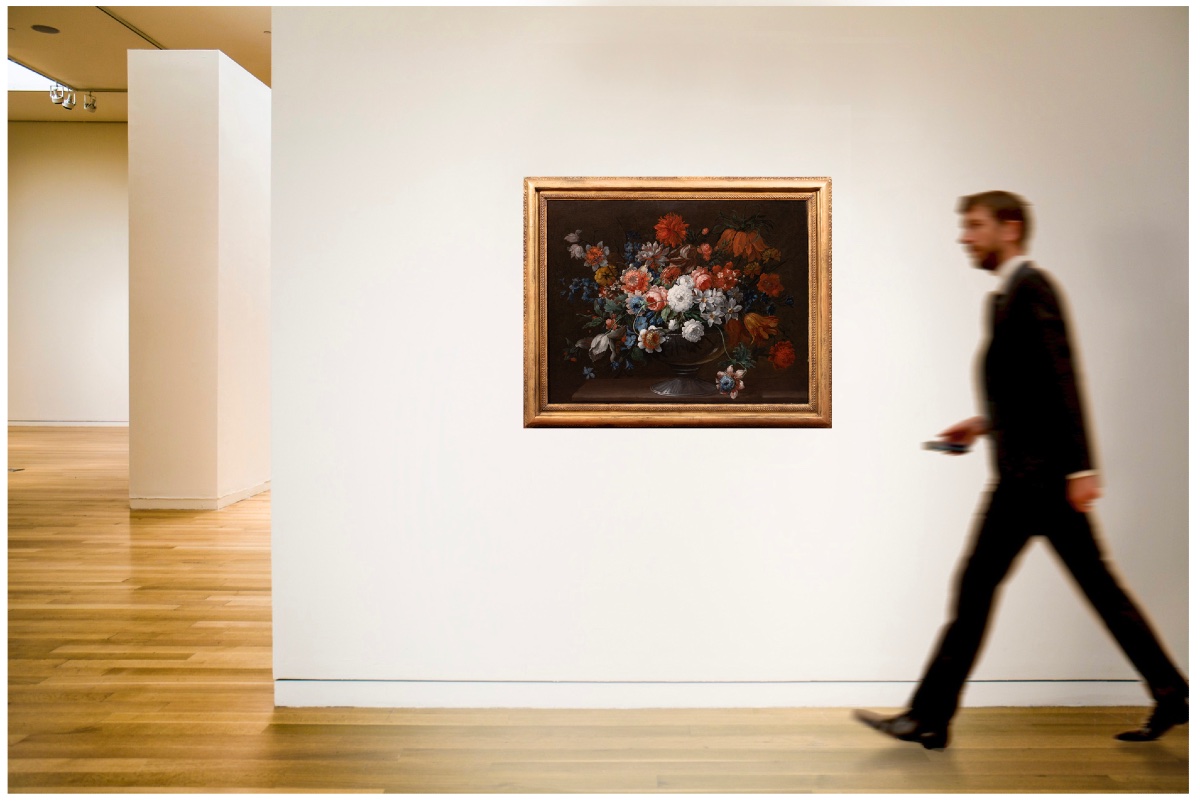
Dimensions with frame: 85 x 104 cm. Canvas only: 70 x 90 cm
This sumptuous composition illustrates the great popularity of flower painters in 17th-century France, a period when the floral still life became a genre in its own right, celebrated for its virtuosity and decorative refinement. Artists of the time vied with one another to capture the luxuriance of the bouquets and the delicacy of the petals with near-botanical precision, catering to collectors’ taste for ceremonial works intended for aristocratic residences.
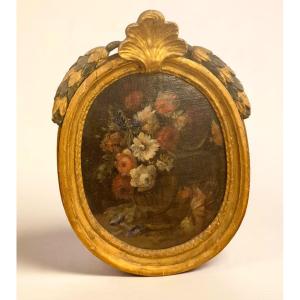
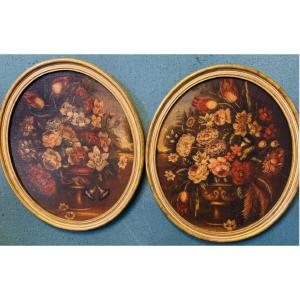
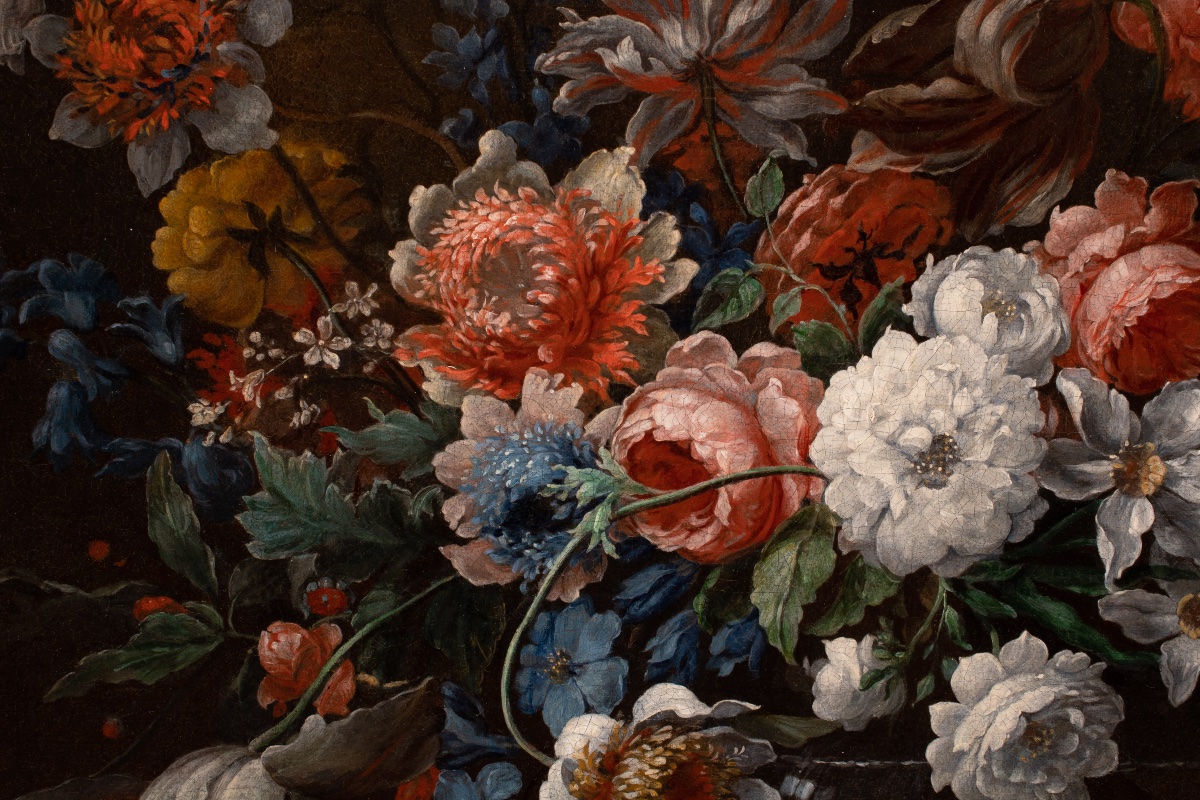
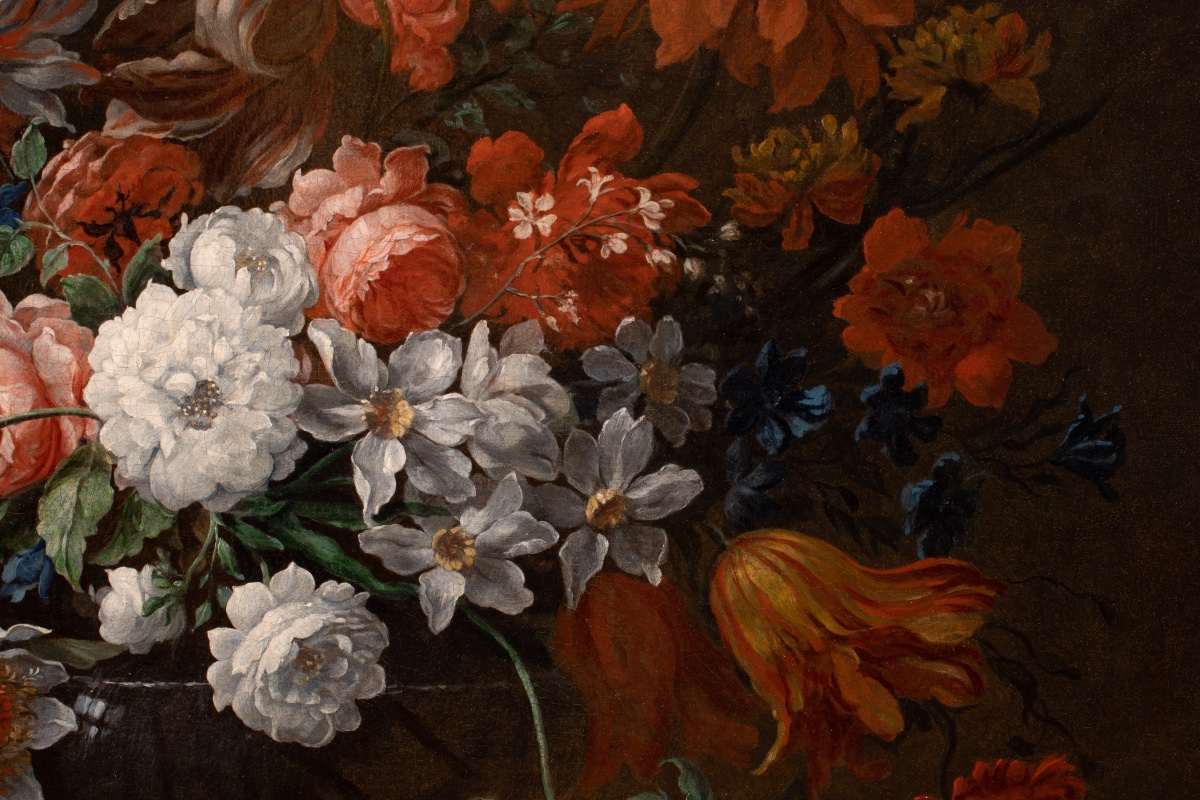
At the center of a vase resting on a marble entablature, a bountiful bouquet blooms, featuring a mix of roses, peonies, tulips, anemones, daffodils, carnations, ranunculus, bellflowers, and imperial fritillaries. The pearly whites, deep reds, and intense blues stand out against a dark background, accentuating the effect of depth and light. The artful arrangement of the flowers—some already wilted—evokes the fleeting nature of time and ephemeral beauty, themes dear to Baroque painting.
The broad, fluid brushstrokes, rich color palette, and mastery of chiaroscuro are hallmarks of Jean-Baptiste Monnoyer’s style, the undisputed master of the monumental bouquet. A painter of the grand decorations at Versailles and the Tuileries (notably the door lintels), he collaborated with Charles Le Brun and was appointed painter to the king. His art, at the crossroads of Flemish realism and the French taste for symmetry and grace, had a lasting influence on decorative painting well into the 18th century.
Biography of Jean-Baptiste MonnoyerBorn in Lille in 1636, Monnoyer trained in the Flemish tradition before settling in Paris around 1655. He quickly became famous for his large bouquets and garlands created for the court and collectors. In 1673, he was admitted to the Royal Academy of Painting and Sculpture, where he exhibited floral works of exceptional virtuosity. Toward the end of his career, he spent time in England, working for Queen Anne and aristocratic households. He died in London in 1699, leaving behind a prolific body of work that would influence 18th-century decorative painters such as Alexandre-François Desportes and, later, Jean-François Bony.
Excellent condition. Sold with a certificate of authenticity
Period: 17th century
Style: Louis 14th, Regency
Condition: Perfect condition
Material: Oil painting
Width: 104
Height: 85
Reference (ID): 1812928
Availability: In stock