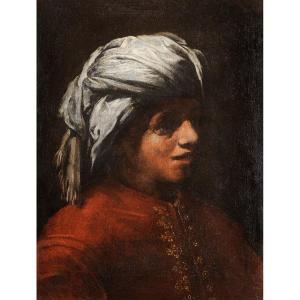
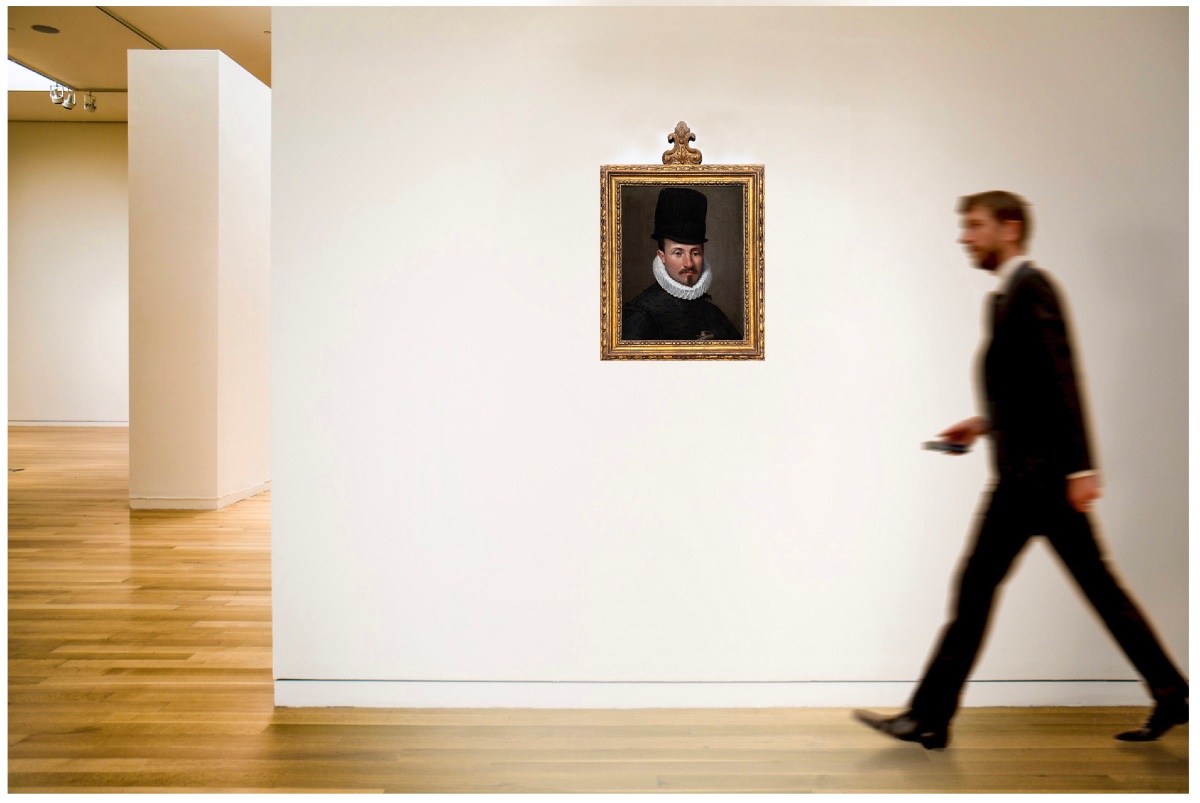
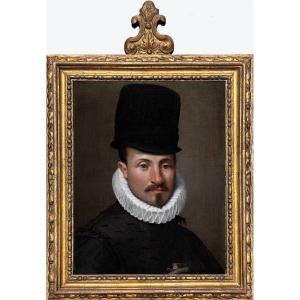


Attributed To Bartolomeo Passarotti (1529–1592). Portrait Of A Young Man Wearing A Fringe
Oil on its original canvas
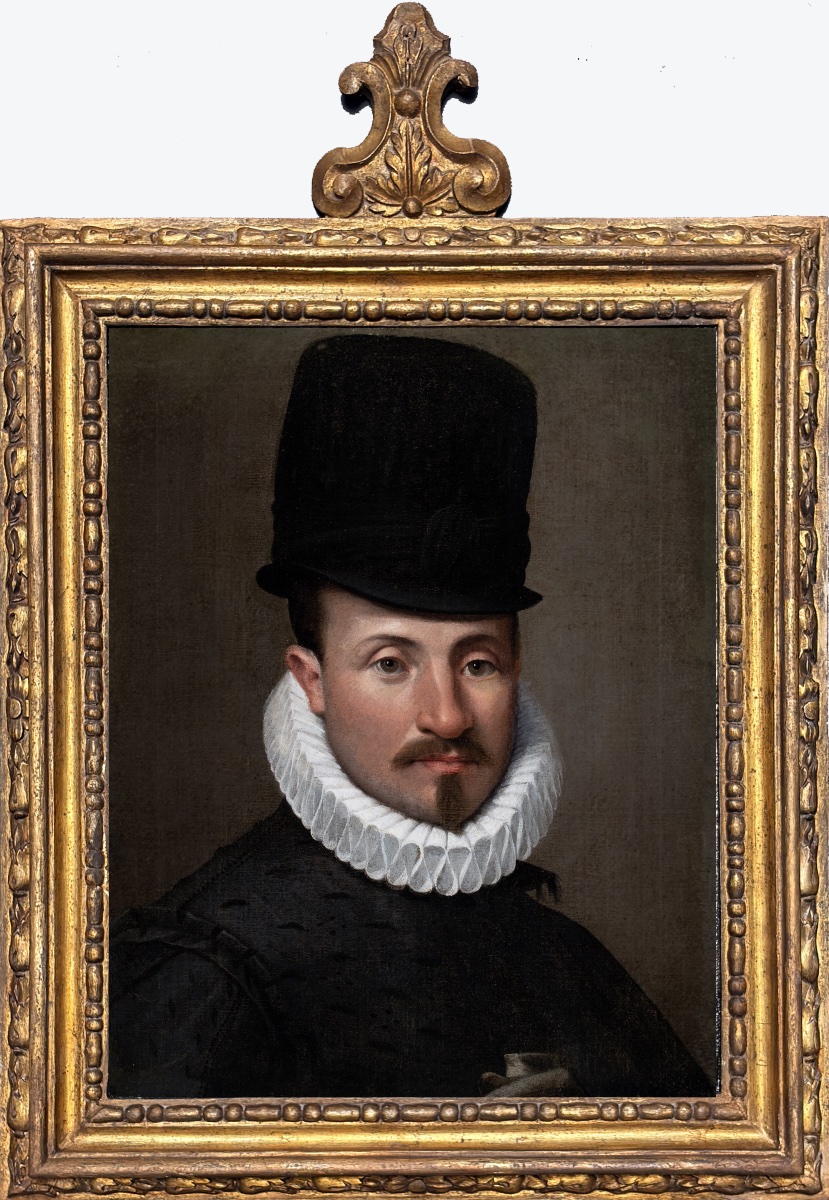
Beautiful antique Italian frame made of carved and gilded wood, with a heavily molded profile. It is adorned around the edges with a design of small flowers and beaded motifs. The upper crossbar is crowned by an elegant pediment featuring scrollwork and stylized acanthus leaves.
Overall dimensions (excluding pediment): 70 x 58 cm. The painting alone: 55 x 44 cm
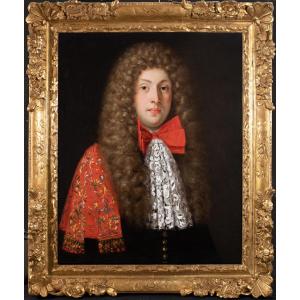
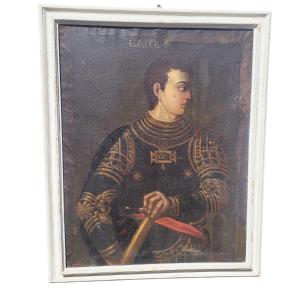
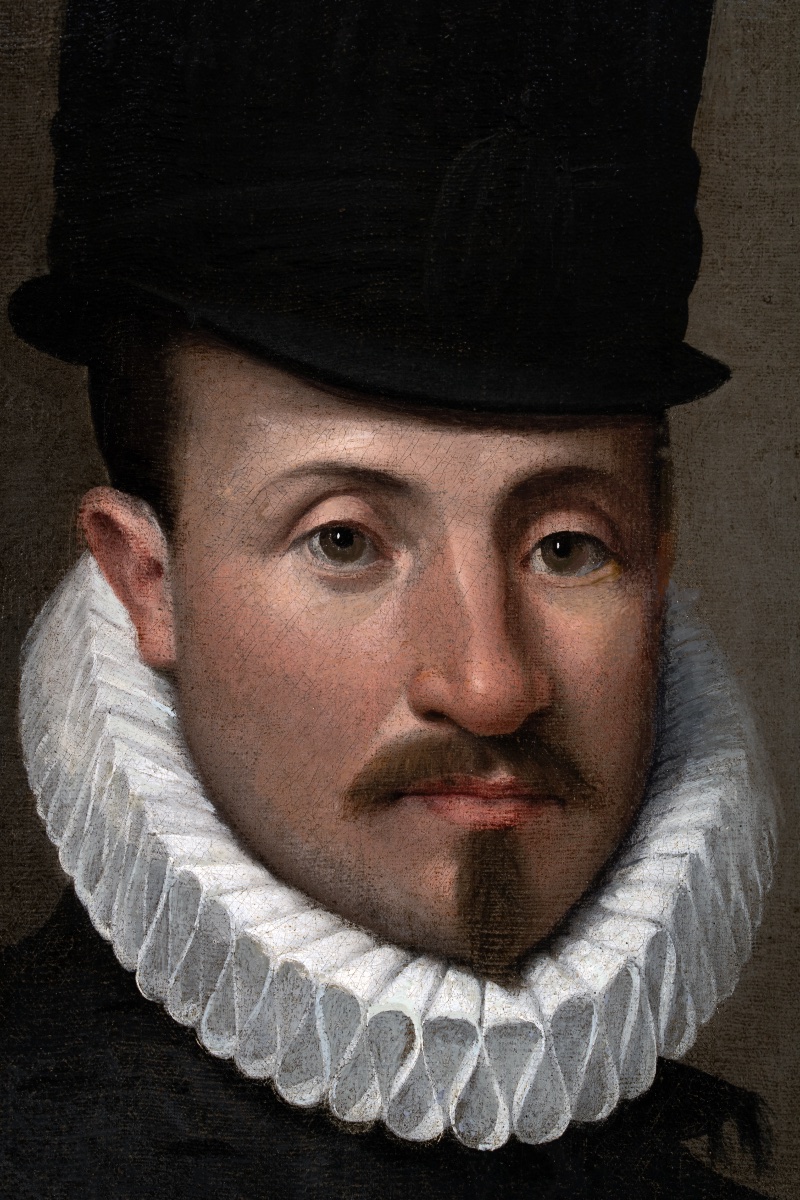
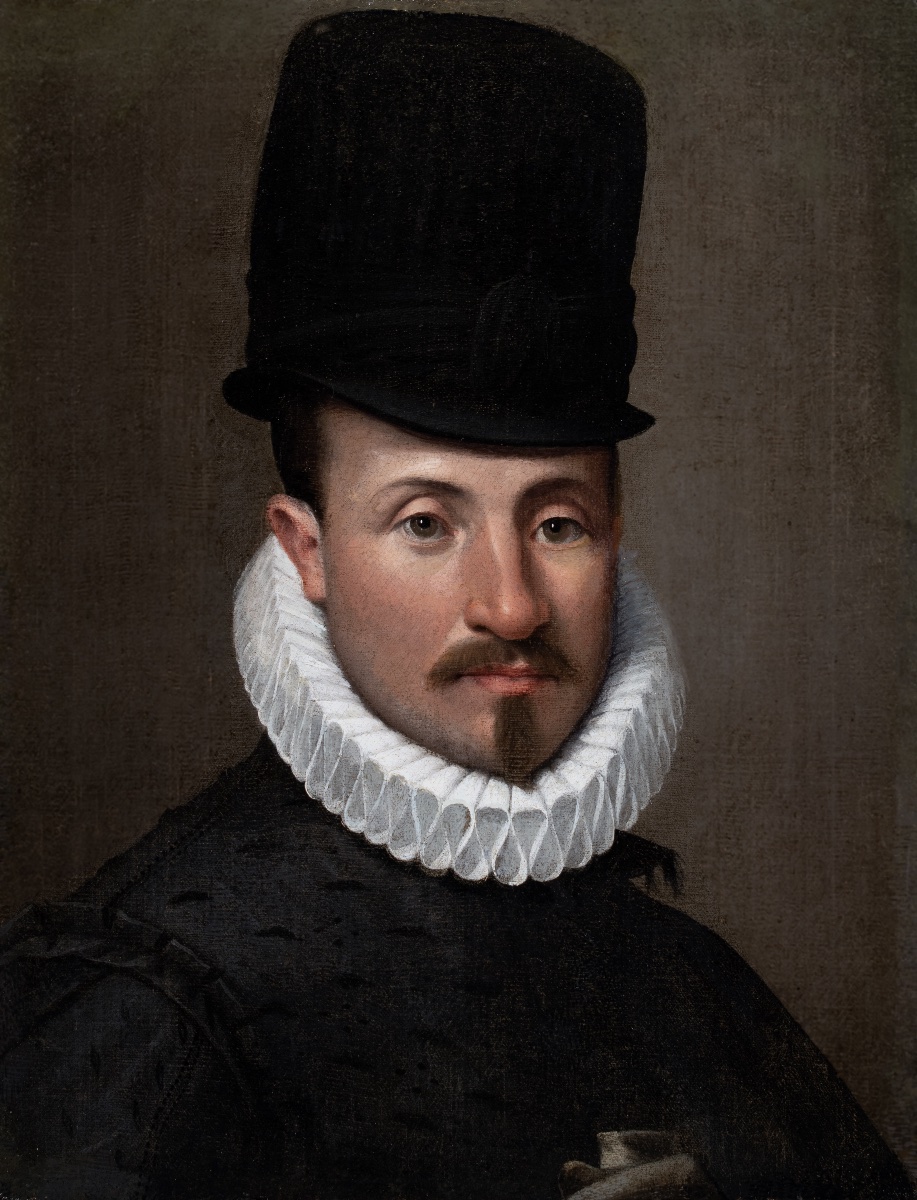
This portrait of a young man, attributed to Bartolomeo Passarotti, is part of the great tradition of Emilian portraiture from the second half of the 16th century. The subject, depicted in a half-length portrait against a neutral background, is dressed with the understated elegance characteristic of the Italian elite of his time. His remarkable starched ruff, rendered with particular meticulousness, frames the face and affirms his social status, while the black top hat, the finely trimmed, pointed beard and the delicate mustache contribute to the character’s individuality.
The artist pays close attention to the model’s facial features. The direct gaze, the precise rendering of the features, and the almost tangible presence of the face attest to this pursuit of truth that characterizes Passarotti’s work. The soft, measured light subtly illuminates the skin tone, while the contrasts of black, gray, and white highlight the richness of the textures and the quality of the fabrics.
Through its penetrating realism and restrained composition, this portrait exemplifies a key trend in late Renaissance Bolognese painting. Here, Passarotti prioritizes human presence over any decorative effect, seeking to capture not only the model’s appearance but also her personality. The work thus belongs to the body of portraiture that established the master’s reputation around the years 1570–1585, when faithful observation of nature was combined with great technical mastery.
This painting is a fine example of late Cinquecento Italian portraiture, combining elegance, realism, and psychological depth in a particularly successful balance.
Bartolomeo Passarotti (1529–1592)Born in Bologna in 1529, Bartolomeo Passarotti is one of the most original figures of the 16th-century Bolognese school. Trained by local masters before spending time in Rome, he absorbed the lessons of the Central Renaissance while developing a personal style based on careful observation of reality.
Passarotti distinguished himself as much as a portraitist as a painter of religious scenes and genre compositions. His portraits are particularly prized for their psychological insight, their uncompromising naturalism, and their ability to capture the physical characteristics of each subject. This direct approach to the human figure would exert a significant influence on the next generation of Bolognese artists, notably the Carracci.
His work is characterized by precise draftsmanship, masterful use of light, and a pronounced flair for rendering textures and expressions. Through his portraits, he contributed to the evolution of a style of painting more closely aligned with the observation of nature, foreshadowing certain developments in 17th-century naturalism.
Today, Bartolomeo Passarotti is considered one of the leading figures of the Bolognese Renaissance and an important precursor in the history of Italian realist portraiture.
In good condition. Sold with a certificate of authenticity
Period: 16th century
Style: Renaissance, Louis 13th
Condition: Perfect condition
Material: Oil painting
Width: 58
Height: 70
Reference (ID): 1836309
Availability: In stock