

The Barber Monkeys. Ferdinand Van Kessel (1648–1696) Attributed To
Artist: Ferdinand Van Kessel (1648–1696)
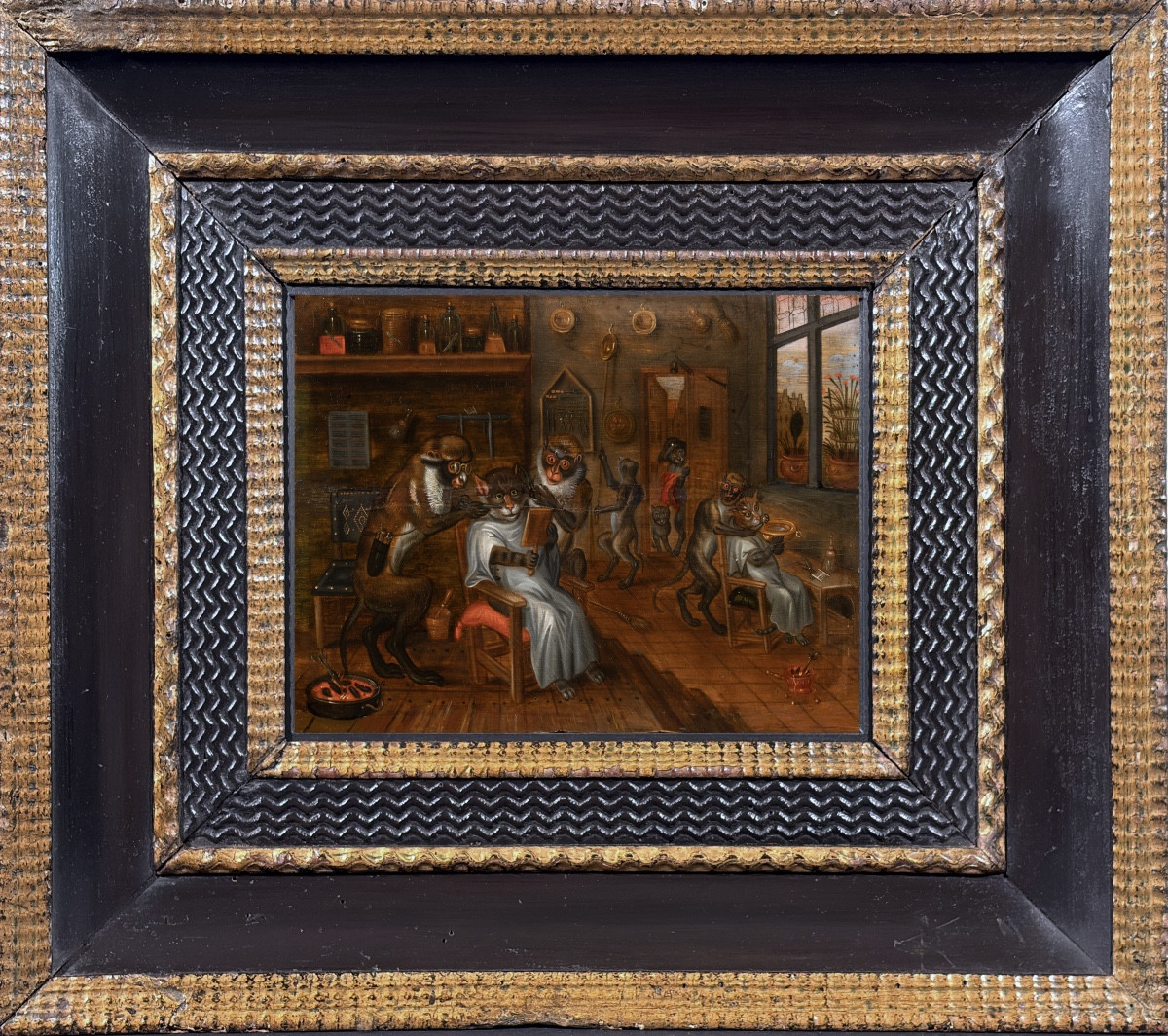
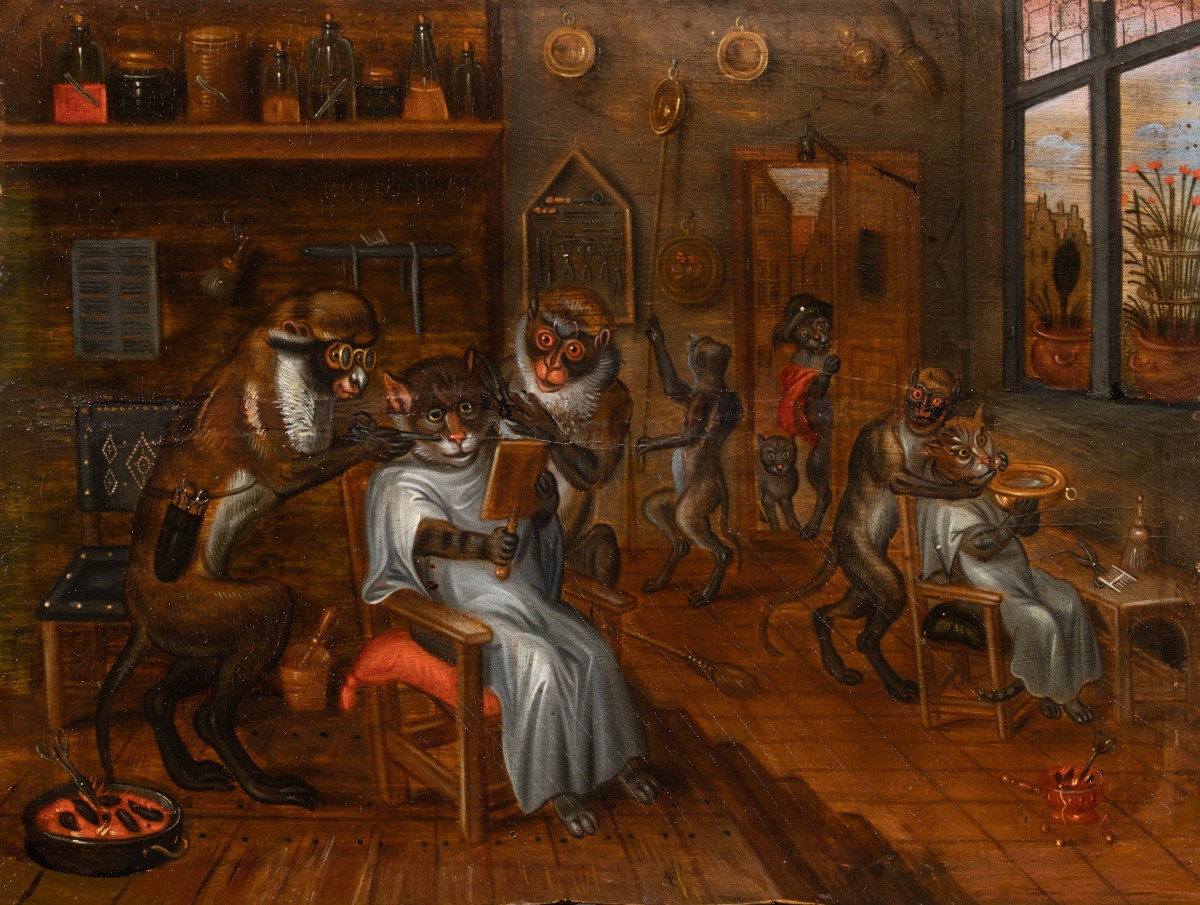
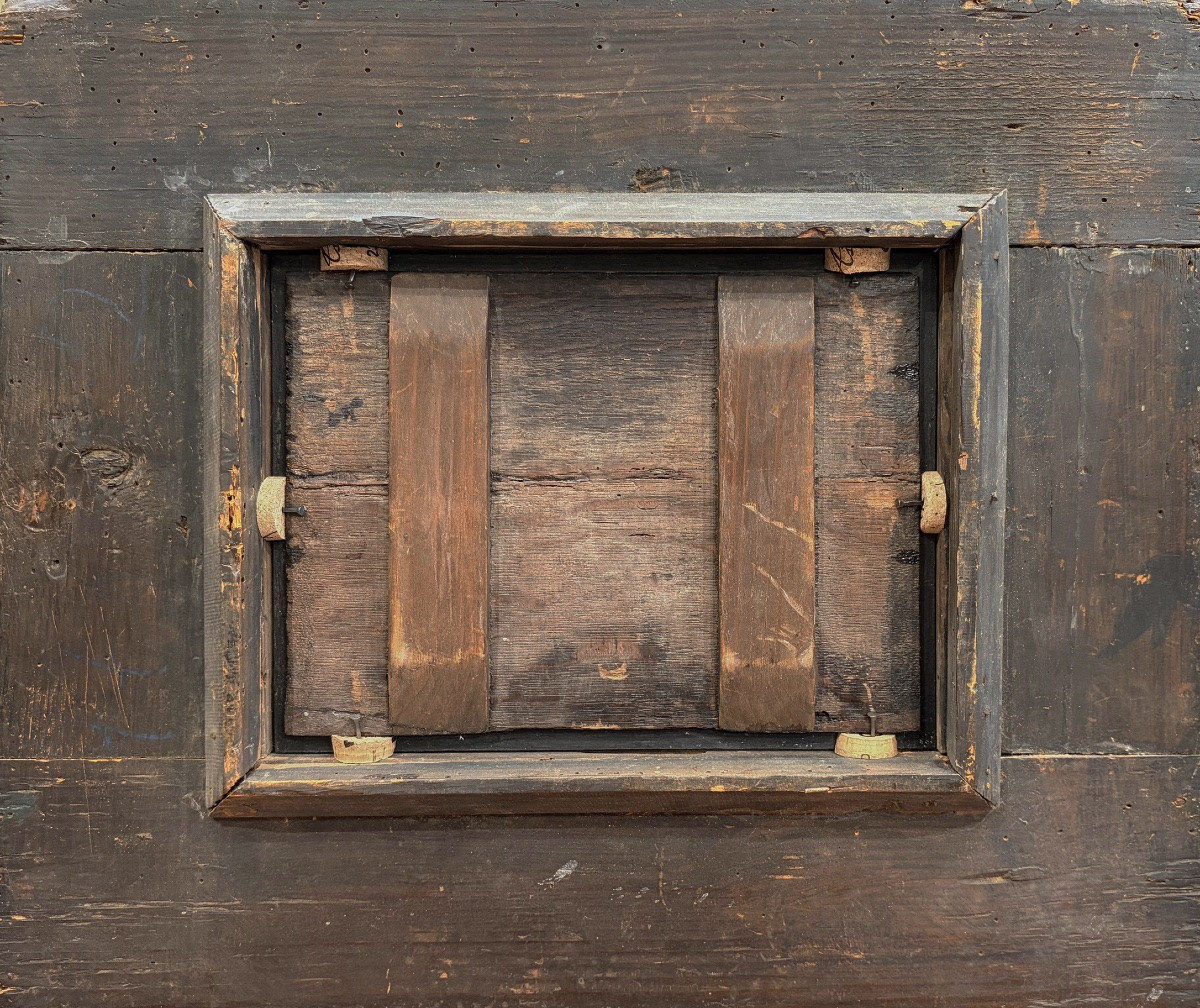
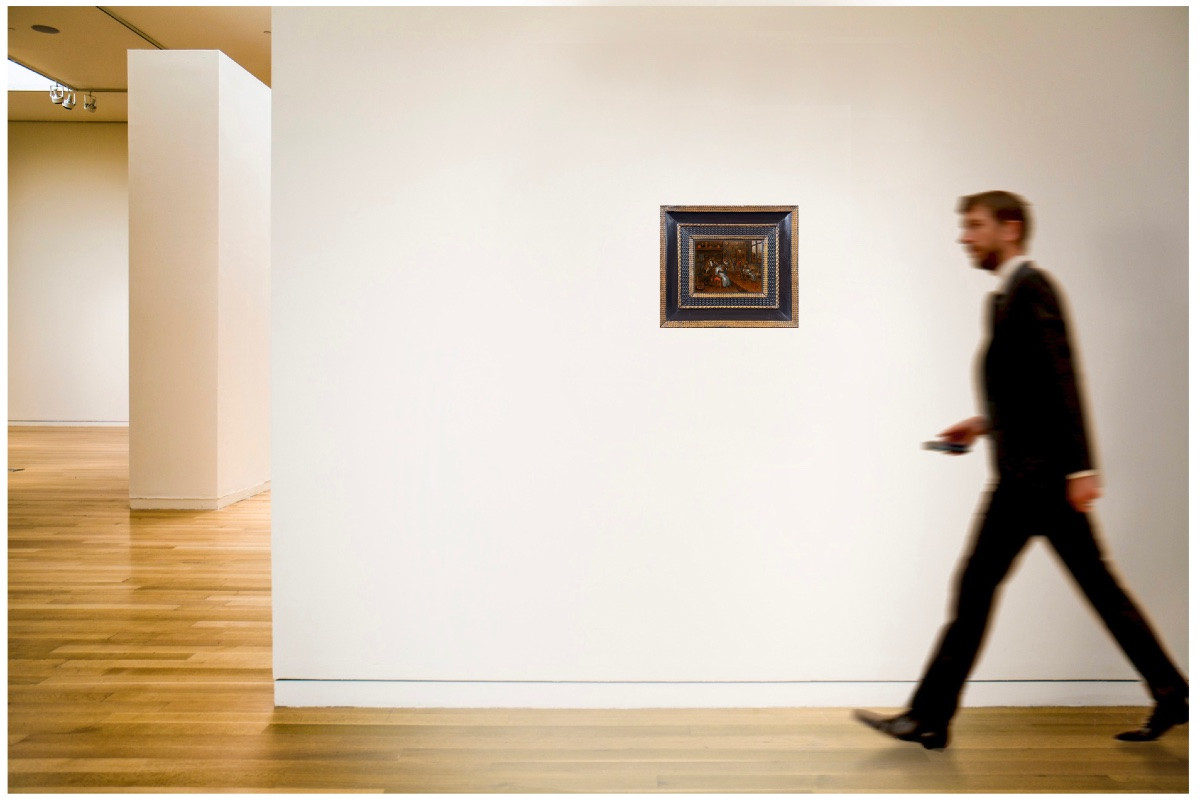
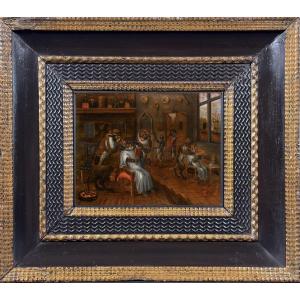
Flemish School, 17th century. Barbering Monkeys Trimming Cats' Whiskers. Oil on oak panel, 2 panels. Presented in a rare contemporary frame of blackened wood with gilt guilloché motifs. Overall dimensions: 38 x 43 cm. Panel alone: 18 x 23 cm. This witty and whimsical scene depicts barber monkeys busy trimming the whiskers of cats seated like real customers in a barbershop. The artist orchestrates a veritable miniature comedy, where each animal adopts an almost human attitude: the anxious cat holding a small mirror, the diligent monkey with his scissors, and the busy assistants in the background. The interior of the barbershop is rendered with remarkable detail. A multitude of utensils typical of workshops of the period are depicted: scissors, razors, combs, and brushes arranged on shelves; bottles of lotion, colored vials, and pots of pomade; towels; and grooming capes. A monkey, tasked with maintaining order in this small animal theater, grasps a shaving dish. The richly detailed setting contributes to the warm and slightly burlesque atmosphere of the scene. The work is painted on an oak panel composed of two joined planks. The join, visible on the surface, perfectly conforms to the practices of the 17th and 18th centuries: the majority of paintings on wood from this period feature this type of assembly, which affects neither the stability nor the value of the work. About Ferdinand van Kessel: Ferdinand van Kessel, born in Antwerp in 1648 and died in Breda in 1696, belonged to an illustrious line of Flemish painters. Grandson of Jan Brueghel the Elder and son of Jan van Kessel the Elder, he inherited a pronounced taste for meticulous compositions, allegorical scenes, and richly detailed worlds. He is particularly distinguished by his monkey paintings, imaginary landscapes, and still lifes, which blend technical precision, humor, and a sense of narrative. Monkey paintings: a popular genre in the 17th century. Monkey paintings—representations of monkeys imitating human behavior—enjoyed a real craze in the Southern Netherlands during the 17th century. Popularized by David Teniers the Younger, this genre allowed artists to: ridicule human foibles by attributing them to animals; explore scenes of daily life from a humorous perspective; and appeal to a cultured clientele receptive to moral allusions and symbolic play. In this work, the barber monkeys and their feline clients become the protagonists of a bittersweet satire, where fantasy serves as an amused mirror to the society of the time. Sold with a certificate of authenticity.
6 800 €
Period: 17th century
Style: Renaissance, Louis 13th
Condition: Good condition
Material: Oil painting on wood
Width: 43
Height: 38
Reference (ID): 1710426
Availability: In stock
Print