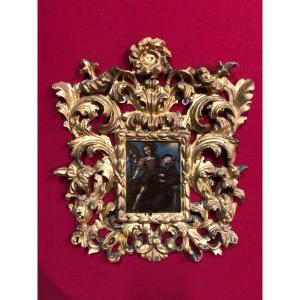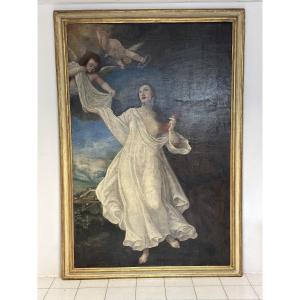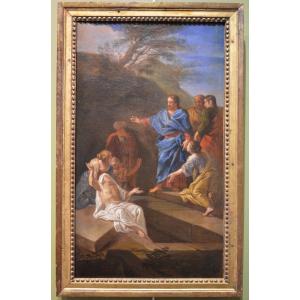


Saint Martina Refusing To Worship Idols - Northern School, Circa 1700
Artist: Ecole Du Nord Vers 1700
Northern School, circa 1700
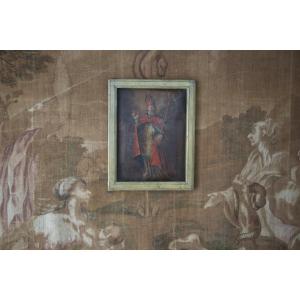
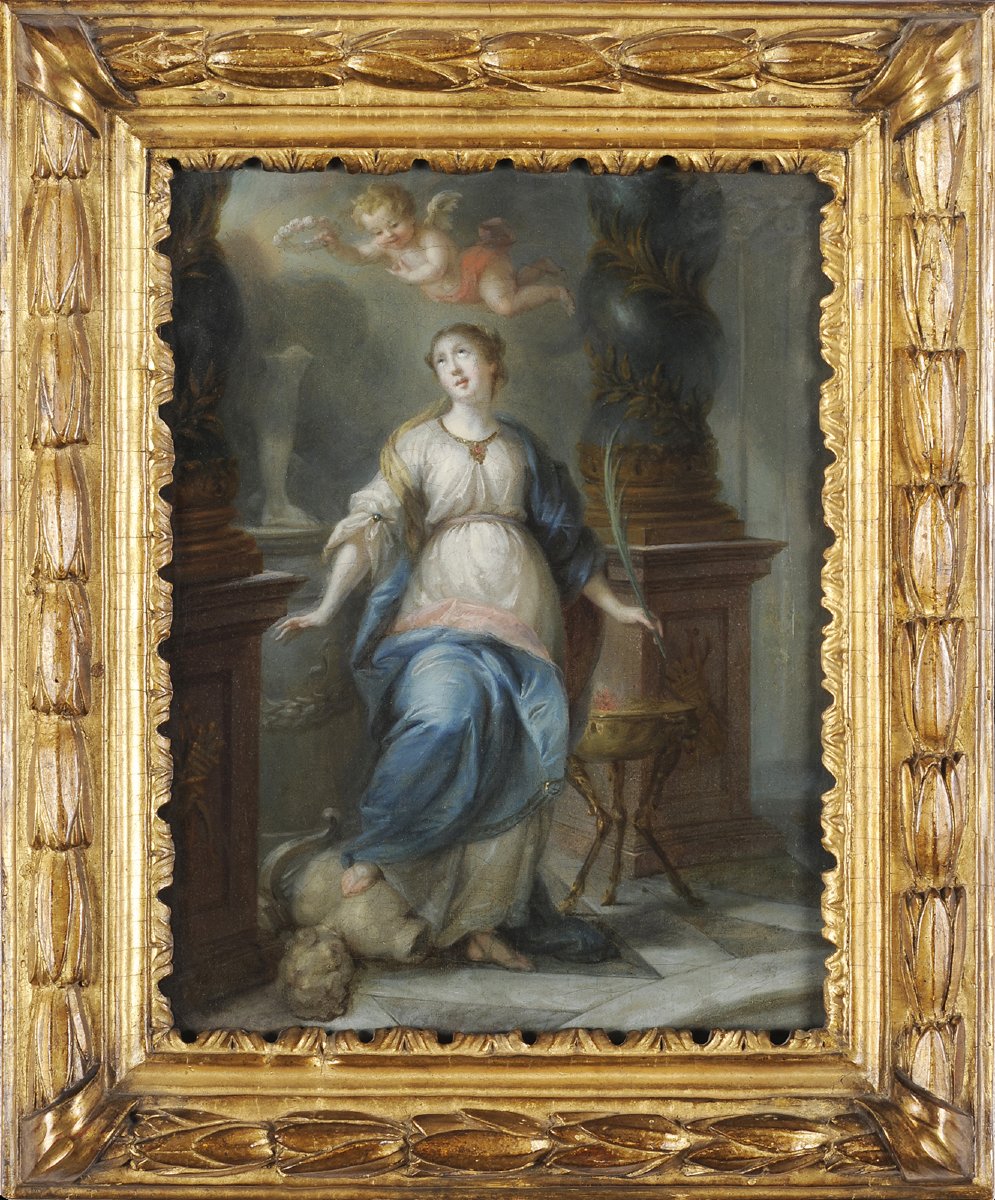
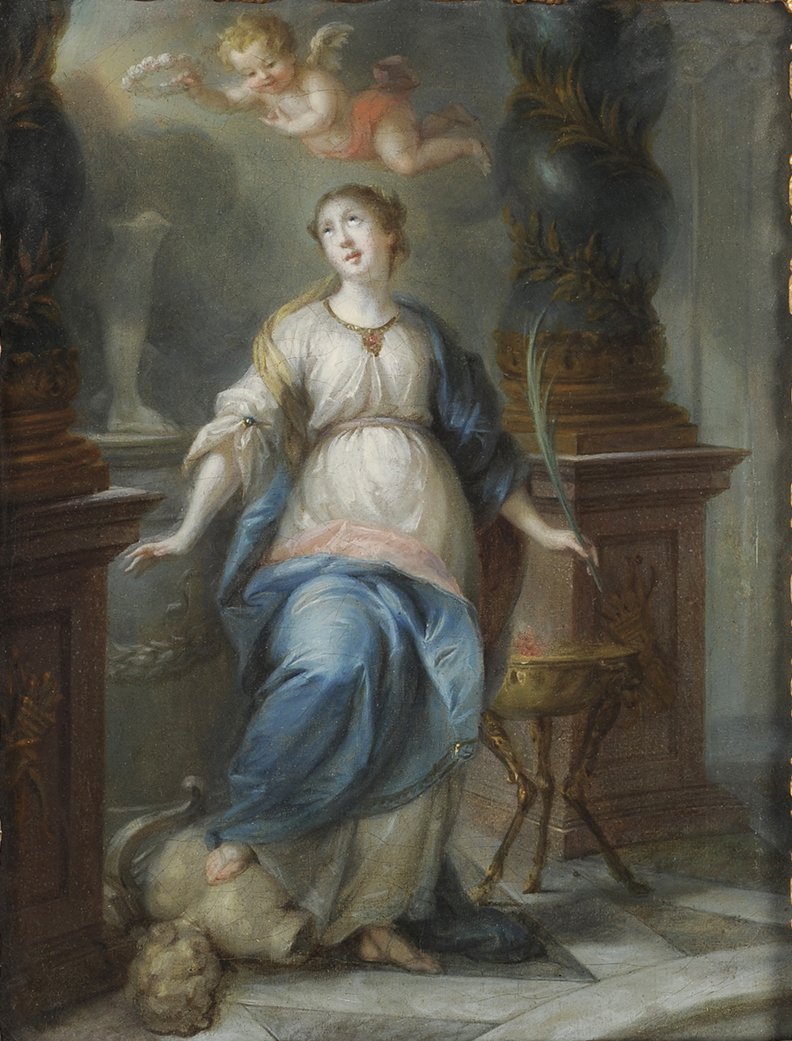
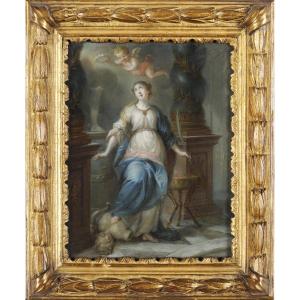
Saint Martina refusing to worship Idols
H. 30 cm; W. 23.5 cm
Rediscovered in the 17th century by the Church, Saint Martina lived in Rome in the 3rd century, during the reign of Emperor Alexander Severus. This period of pseudo-tolerance toward Christianity was precisely what gave rise to the saint’s legend. The daughter of a Roman consul, the young woman chose to donate the entire family fortune—which she had initially hesitated to part with—to charitable causes. While praying in a church, she was arrested and brought before the emperor, who condemned her to be sacrificed in the heart of the Temple of Apollo. As she entered the temple, an earthquake caused the building to collapse and shattered the statue of the god that stood there. The emperor ordered that the young woman be tortured, but she resisted and succeeded in converting her tormentors. She nevertheless endured the torment ordered and was carried into the arena to be devoured by lions. The lions lay down at her feet, protecting her. She was then placed on a pyre, whose flames did not touch her but burned the spectators… Finally, the emperor himself came to behead her.
Despite this tragic story, Saint Martina was given a tomb in a church built in the 7th century by Pope Honorius I, on the forum—the Church of Saint Martina, which was later replaced by the current Church of Saint Luke and Saint Martina.
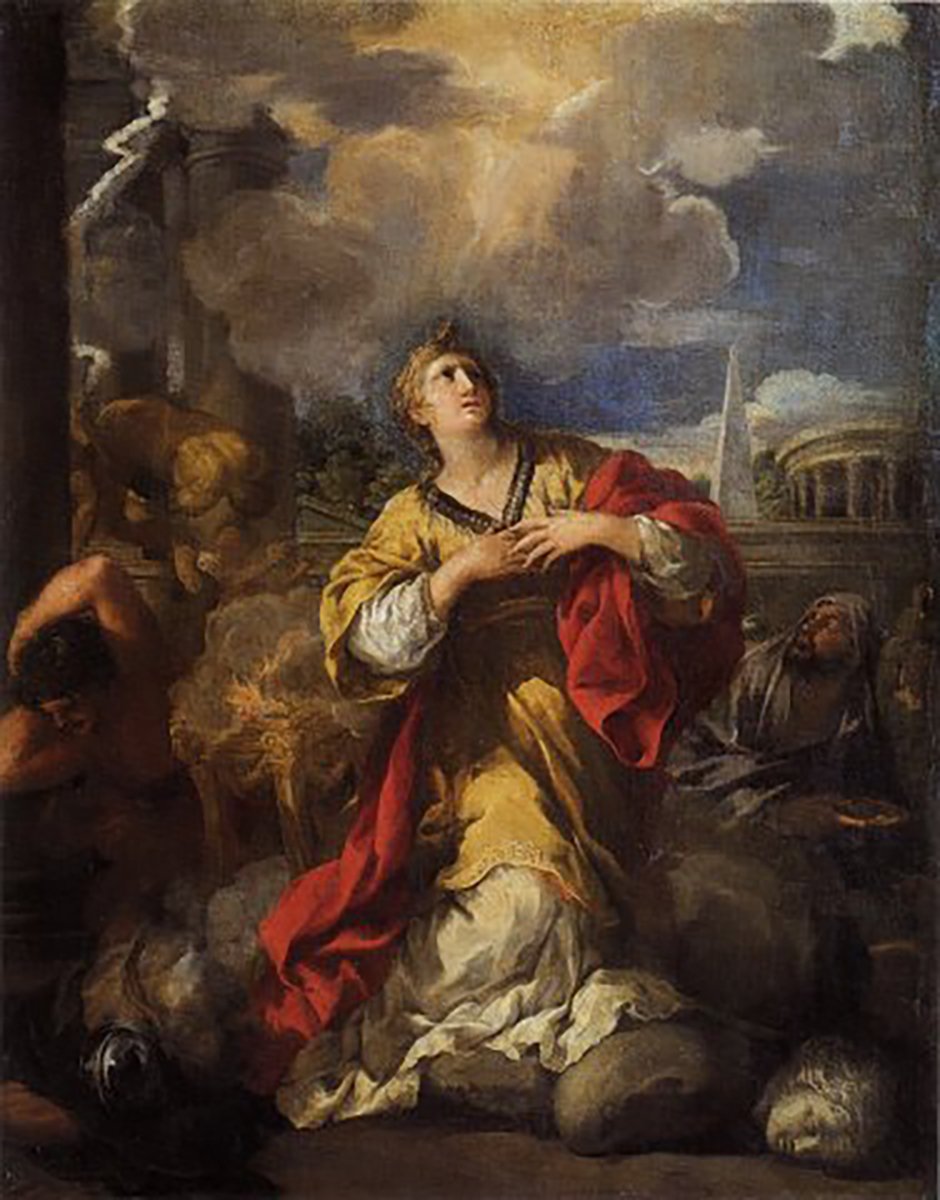
It was therefore in 1634, during reconstruction work on this building, that the relics of the holy martyr were discovered in a terracotta tomb. Her veneration returned to the forefront at this precise moment, marked by the painter and architect Pierre de Cortone, who built this church and, in 1656, created a large canvas depicting the saint with her foot resting on the famous statue. The title of the work is “Saint Martina Refusing to Worship Idols.” This work was created for the altarpiece of the Church of Saint Francis in Siena. We know of it through a preparatory study preserved at the Pitti Palace (Florence). It has a companion piece depicting the saint on the pyre.
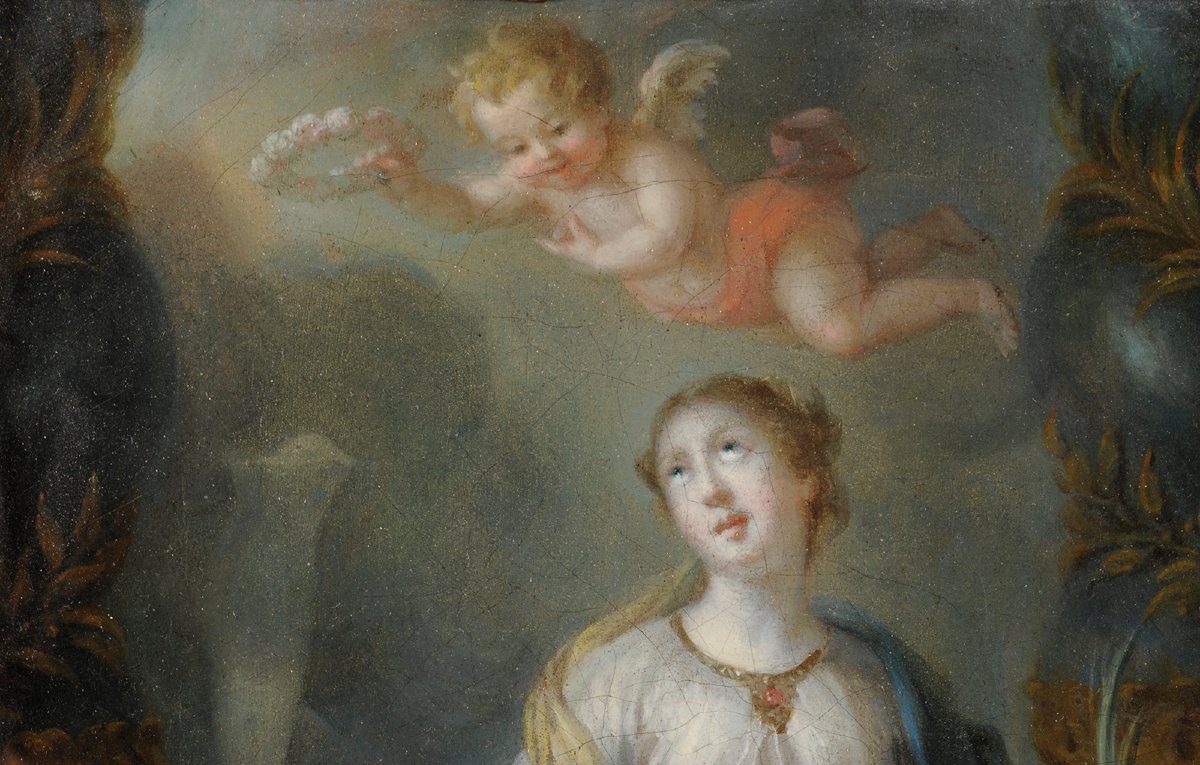
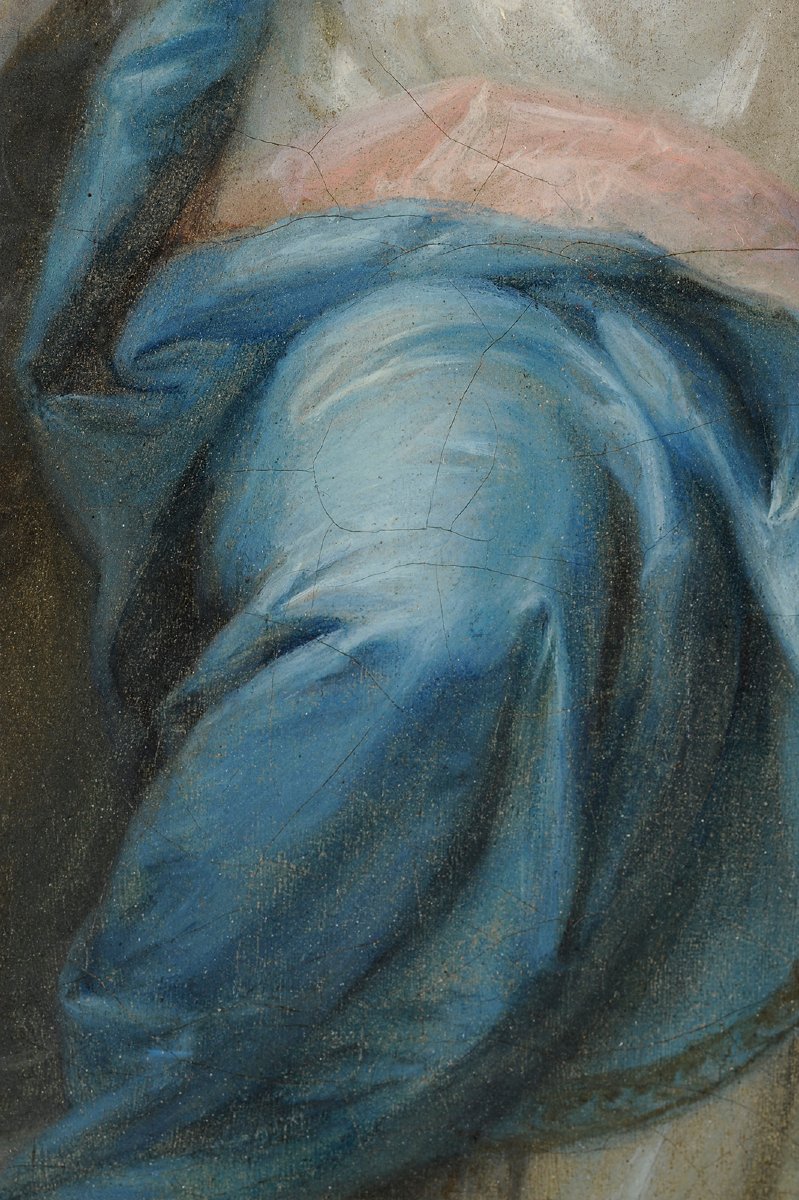
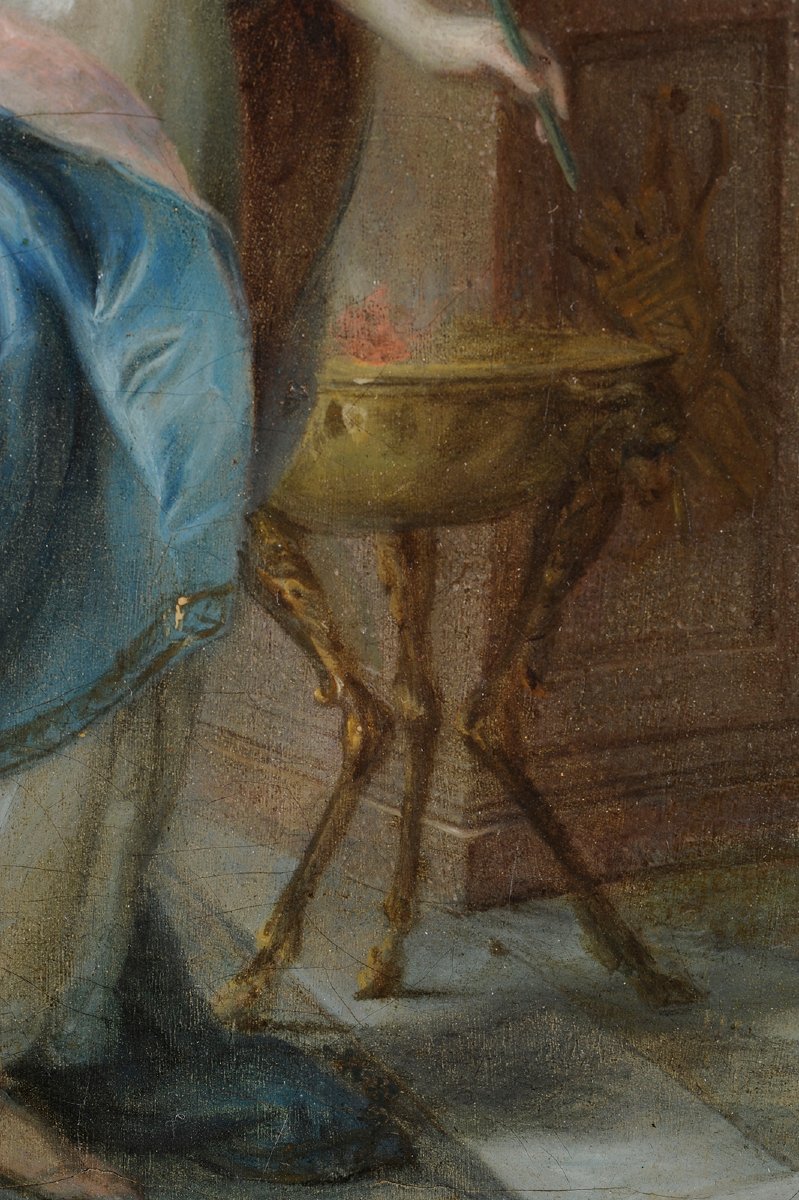
Our work is a preparatory study for a large altarpiece—now lost or possibly never completed—which, based on its color palette and skin tones, can be traced to northern France, Flanders, and the Netherlands. An interesting detail is a retouch visible on Saint Martina’s hand and arm, whose position was slightly altered by the painter so that it would not be too close to the base of the column.
Saint Martina refusing to worship Idols
H. 30 cm; W. 23.5 cm
Rediscovered in the 17th century by the Church, Saint Martina lived in Rome in the 3rd century, during the reign of Emperor Alexander Severus. This period of pseudo-tolerance toward Christianity was precisely what gave rise to the saint’s legend. The daughter of a Roman consul, the young woman chose to donate the entire family fortune—which she had initially hesitated to part with—to charitable causes. While praying in a church, she was arrested and brought before the emperor, who condemned her to be sacrificed in the heart of the Temple of Apollo. As she entered the temple, an earthquake caused the building to collapse and shattered the statue of the god that stood there. The emperor ordered that the young woman be tortured, but she resisted and succeeded in converting her tormentors. She nevertheless endured the torment ordered and was carried into the arena to be devoured by lions. The lions lay down at her feet, protecting her. She was then placed on a pyre, whose flames did not touch her but burned the spectators… Finally, the emperor himself came to behead her.
Despite this tragic story, Saint Martina was given a tomb in a church built in the 7th century by Pope Honorius I, on the forum—the Church of Saint Martina, which was later replaced by the current Church of Saint Luke and Saint Martina.
It was therefore in 1634, during reconstruction work on this building, that the relics of the holy martyr were discovered in a terracotta tomb. Her veneration returned to the forefront at this precise moment, marked by the painter and architect Pierre de Cortone, who built this church and, in 1656, created a large canvas depicting the saint with her foot resting on the famous statue. The title of the work is “Saint Martina Refusing to Worship Idols.” This work was created for the altarpiece of the Church of Saint Francis in Siena. We know of it through a preparatory study preserved at the Pitti Palace (Florence). It has a companion piece depicting the saint on the pyre.
Our work is a preparatory study for a large altarpiece—now lost or possibly never completed—which, based on its color palette and skin tones, can be traced to northern France, Flanders, and the Netherlands. An interesting detail is a retouch visible on Saint Martina’s hand and arm, whose position was slightly altered by the painter so that it would not be too close to the base of the column.
4 500 €
Period: 18th century
Style: Louis 14th, Regency
Condition: Perfect condition
Material: Oil painting
Length: 30 cm hors cadre
Width: 23,5 cm hors cadre
Reference (ID): 1809383
Availability: In stock
Print