

Japanese Iron Tsuba – Dragon And Tiger
Japan, Edo period, early 19th century, circa 1800–1830
Mito School, Hitotsuyanagi style / Ichiryū
Weathered iron, relief-carved decoration with gold highlights.
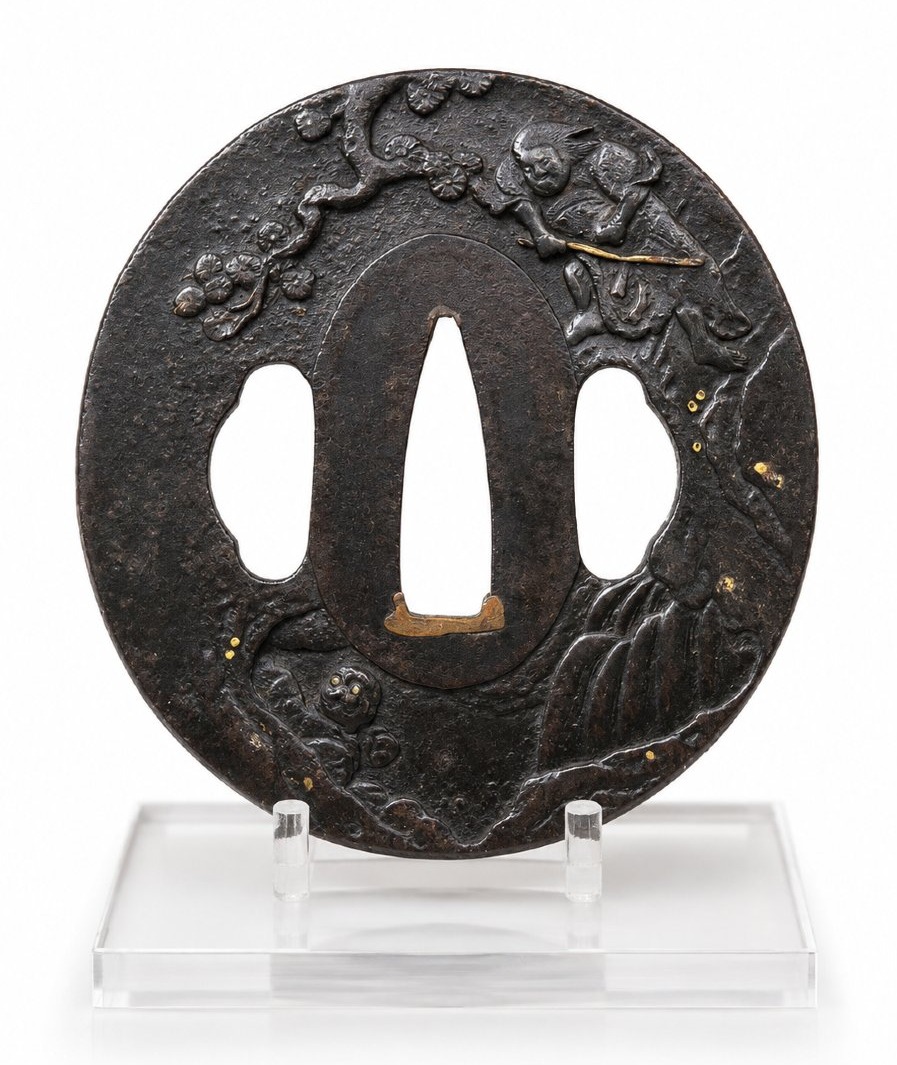
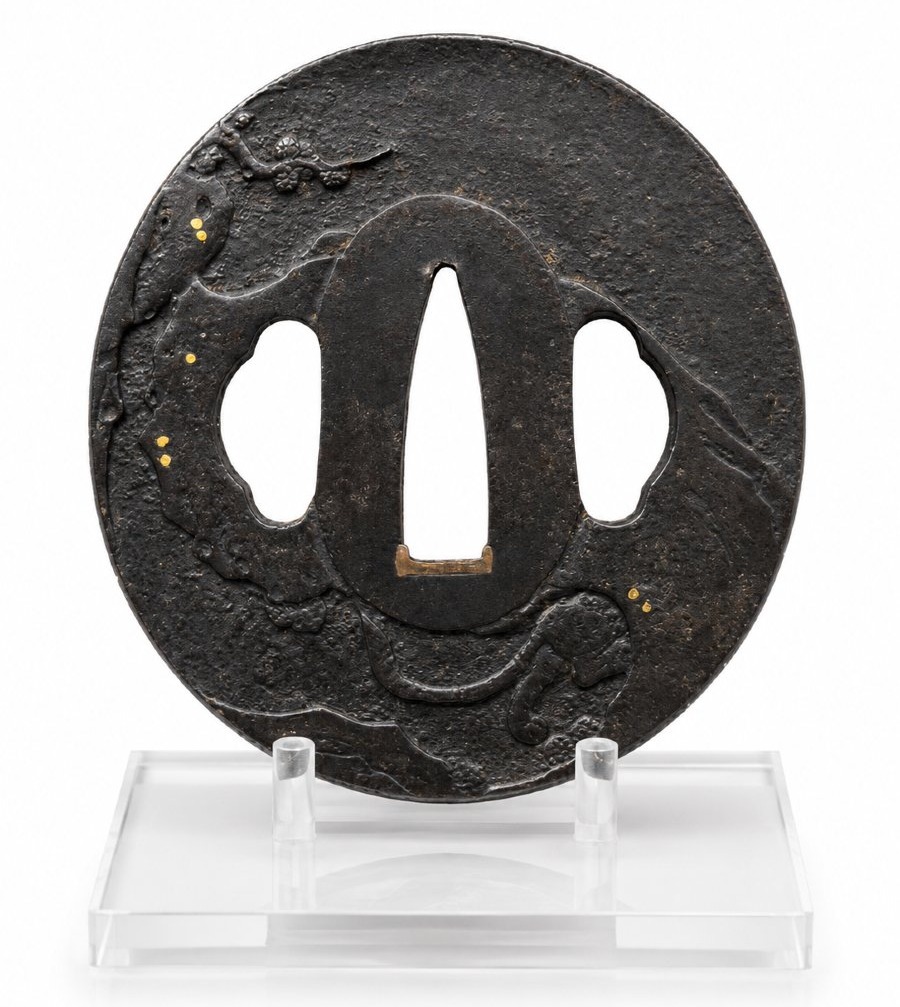
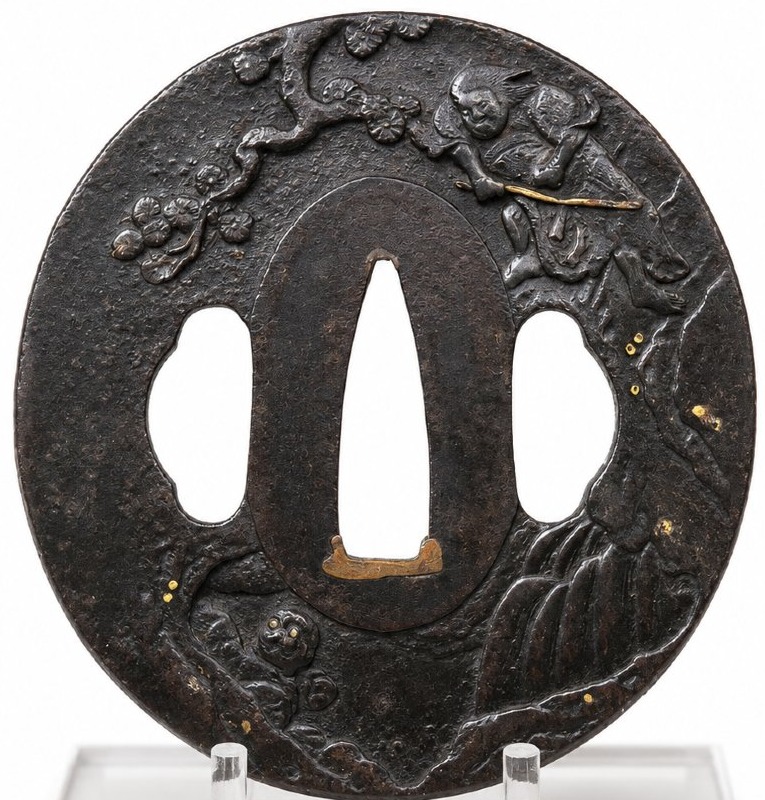
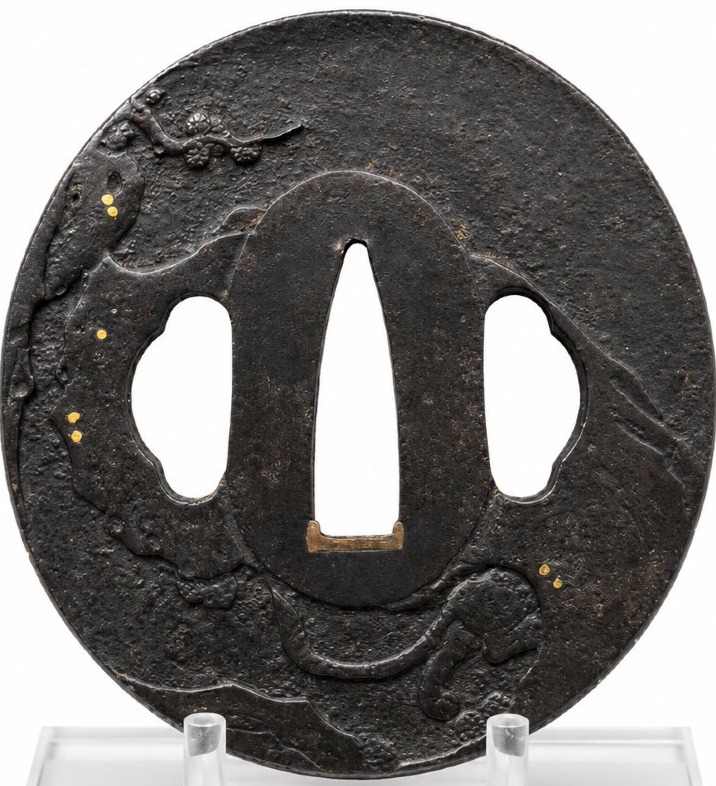
A beautiful circular Japanese tsuba, crafted from iron with a deep patina and featuring, on both sides, remarkable relief carvings based on the traditional theme of Ryūko-zu, depicting the Dragon and the Tiger, two of the great symbolic powers in Far Eastern iconography.
The decoration, executed with great sculptural vigor, depicts the dragon moving among natural elements, while the tiger—powerful and expressive—is set within a lively composition of rocks, vegetation, clouds, and flowing water. A few delicate touches of gold punctuate the design, particularly certain details of the figures, creating a subtle contrast with the deep black patina of the iron.
The theme of the Dragon and the Tiger holds particularly strong symbolic significance in Japanese art. The dragon, associated with the sky, clouds, and water, represents celestial and supernatural power; the tiger, linked to the earth and the wind, embodies strength, courage, and earthly power. Their confrontation or dialogue thus symbolizes the balance of complementary forces, in a concept closely aligned with the principle of yin and yang.
ith its striking relief, the quality of its modeling, and its highly controlled use of a few touches of gold, this guard follows in the tradition of the great tosōgū workshops of the Edo period. It bears strong affinities with the Mito school, and more specifically with the Hitotsuyanagi / Ichiryū tradition, renowned for its carved iron compositions and dynamic depictions of the dragon and the tiger.
Comparable examples are held in European museum collections, including a tsuba attributed to Koizumi Tomoyuki, of the Hitotsuyanagi school, dating from the early 19th century, which also features the dragon and tiger motif with gold highlights.
In the absence of a signature allowing for a definitive attribution to a specific artist, we attribute this piece to the Mito school tradition, specifically the Hitotsuyanagi style, rather than to a specific artist.
A high-quality piece with a particularly striking presence, intended for both collectors of Japanese tosōgū and connoisseurs of Asian art and historical objects.
Period: Edo period, early 19th century, circa 1800–1830
Origin: Japan
School: Mito, Hitotsuyanagi school / Ichiryū
Material: patinated iron, gold highlights
Decoration: Dragon and Tiger – Ryūko-zu
Period: 19th century
Style: Louis 16th, Directory
Condition: Excellent condition
Material: Wrought iron
Reference (ID): 1808961
Availability: In stock