

Pierre-roch Vigneron – Portrait Of A Little Girl – Oil On Canvas – Dated And Signed
Artist: Vigneron Pierre-roch (1789 – 1872)
Pierre-Roch Vigneron (Vosnon, 1789 – Paris, 1872)
Portrait of a Little Girl, 1825
Oil on canvas
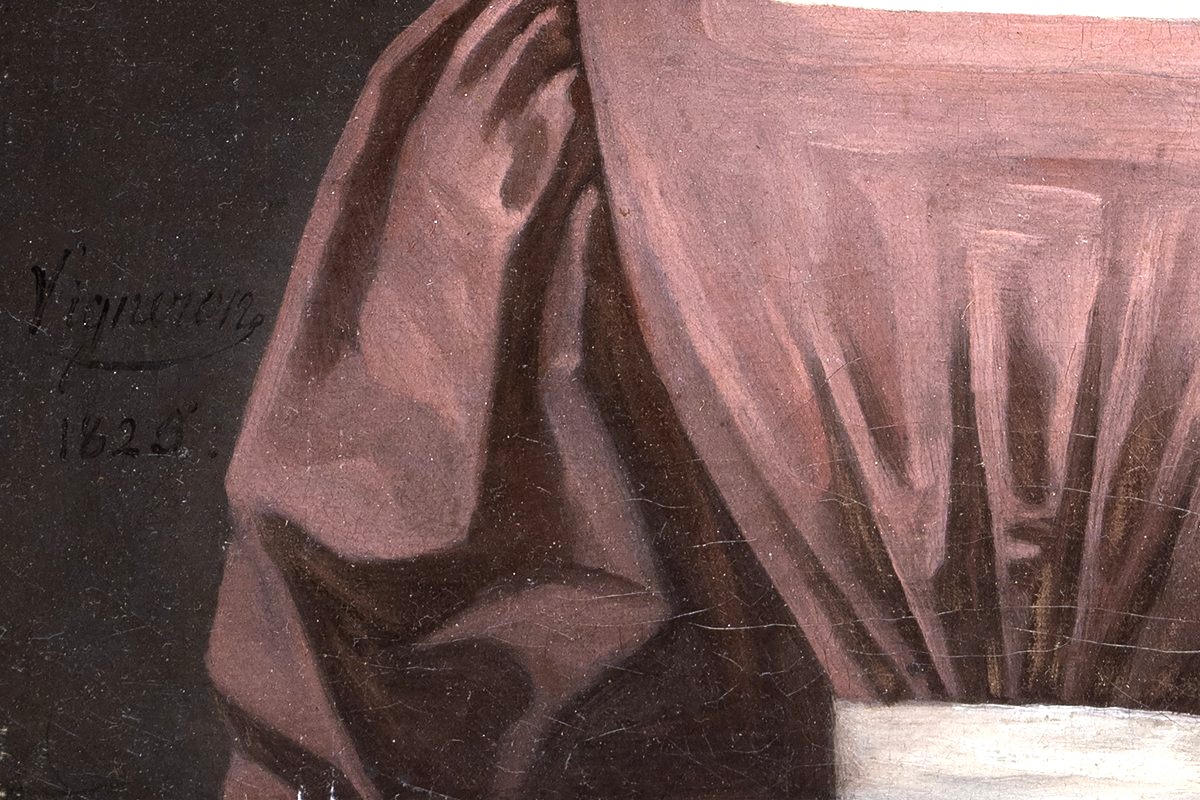
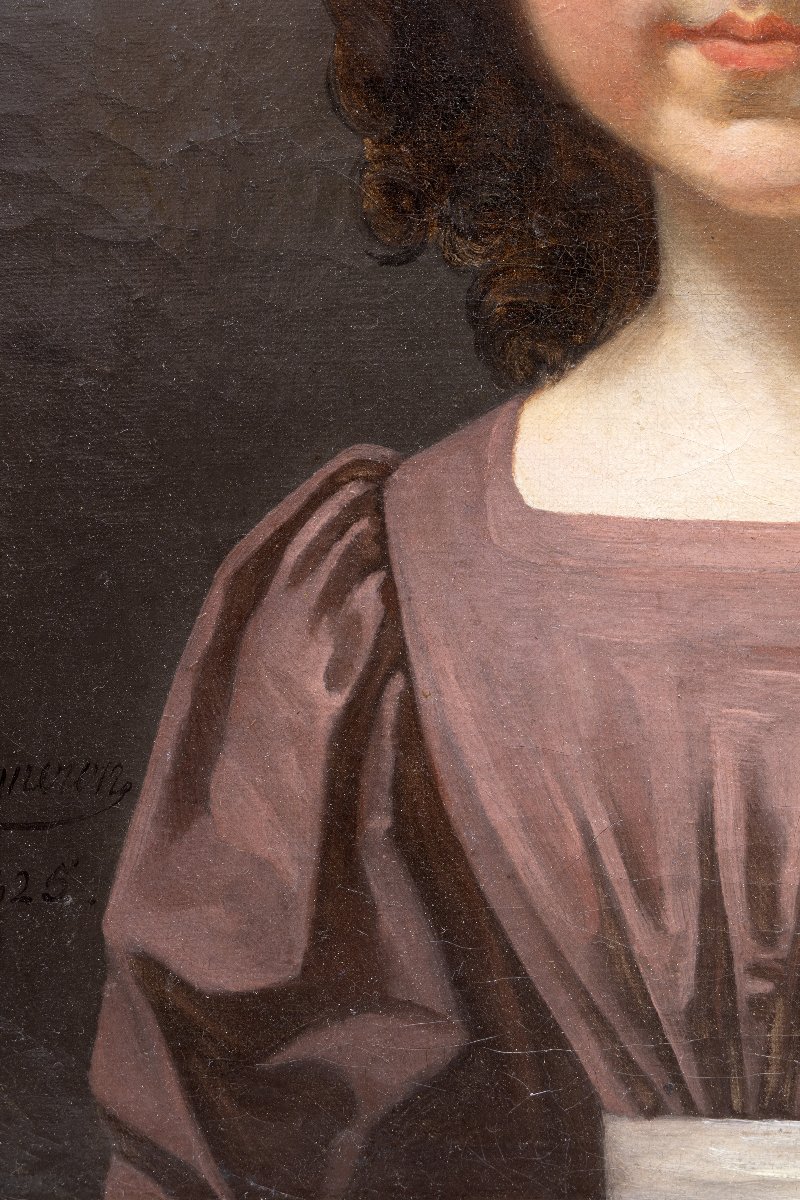
Signed and dated in the middle left: Vigneron 1825
Dimensions: 46 x 37.7 cm — 63 x 55 cm with frame
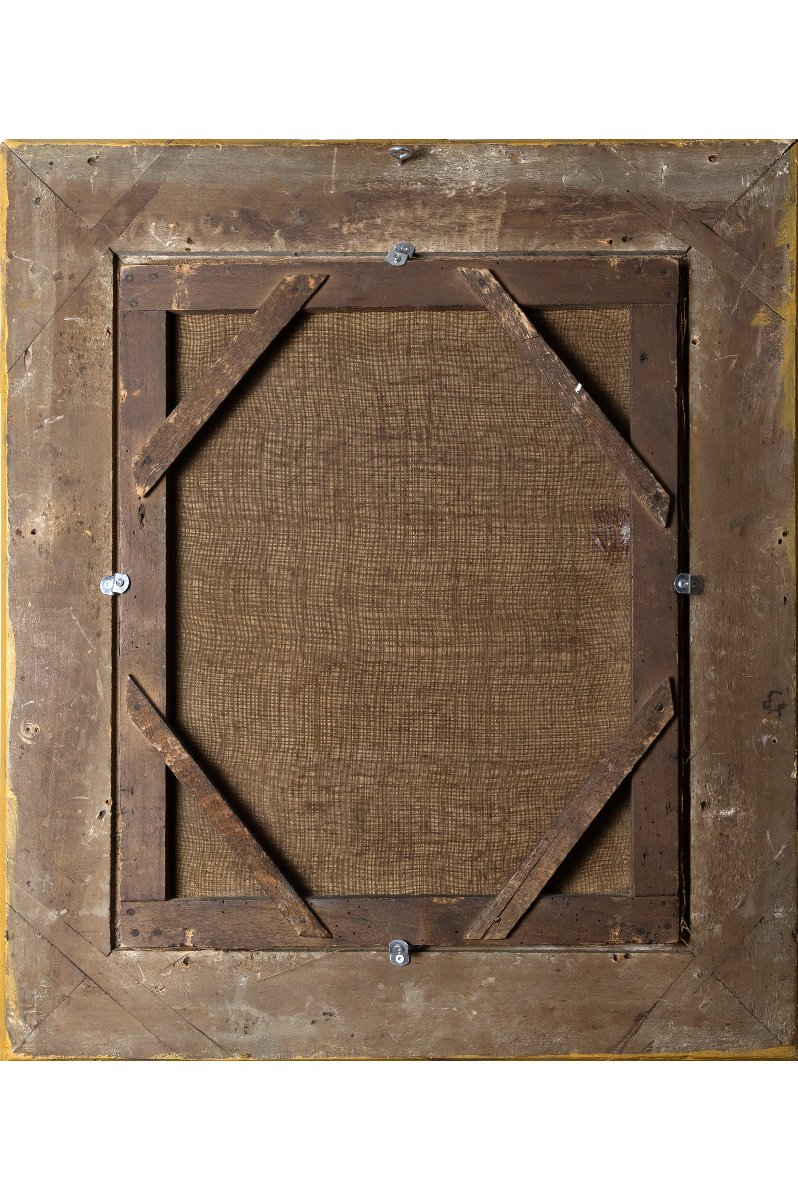
Very good condition, some wear to the paint. One visible repair on the back
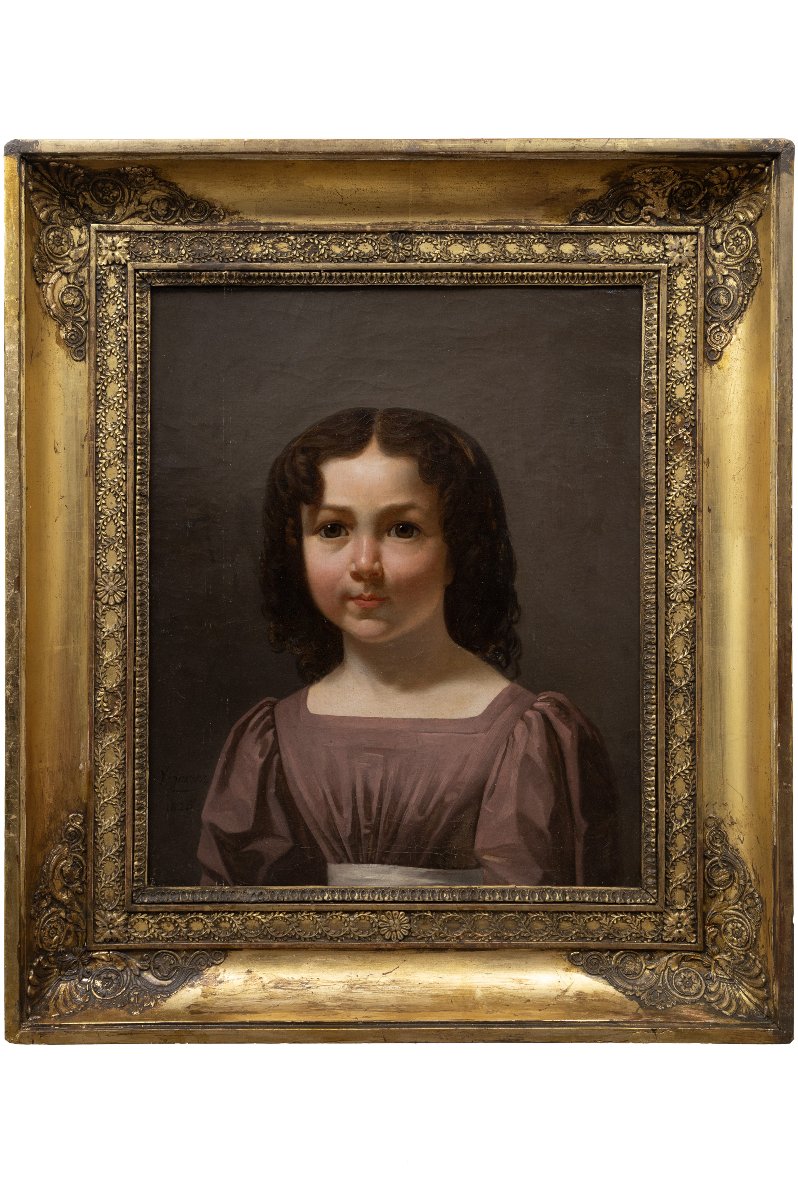
Period frame in wood and gilded stucco, with restorations and flaws in the gilding
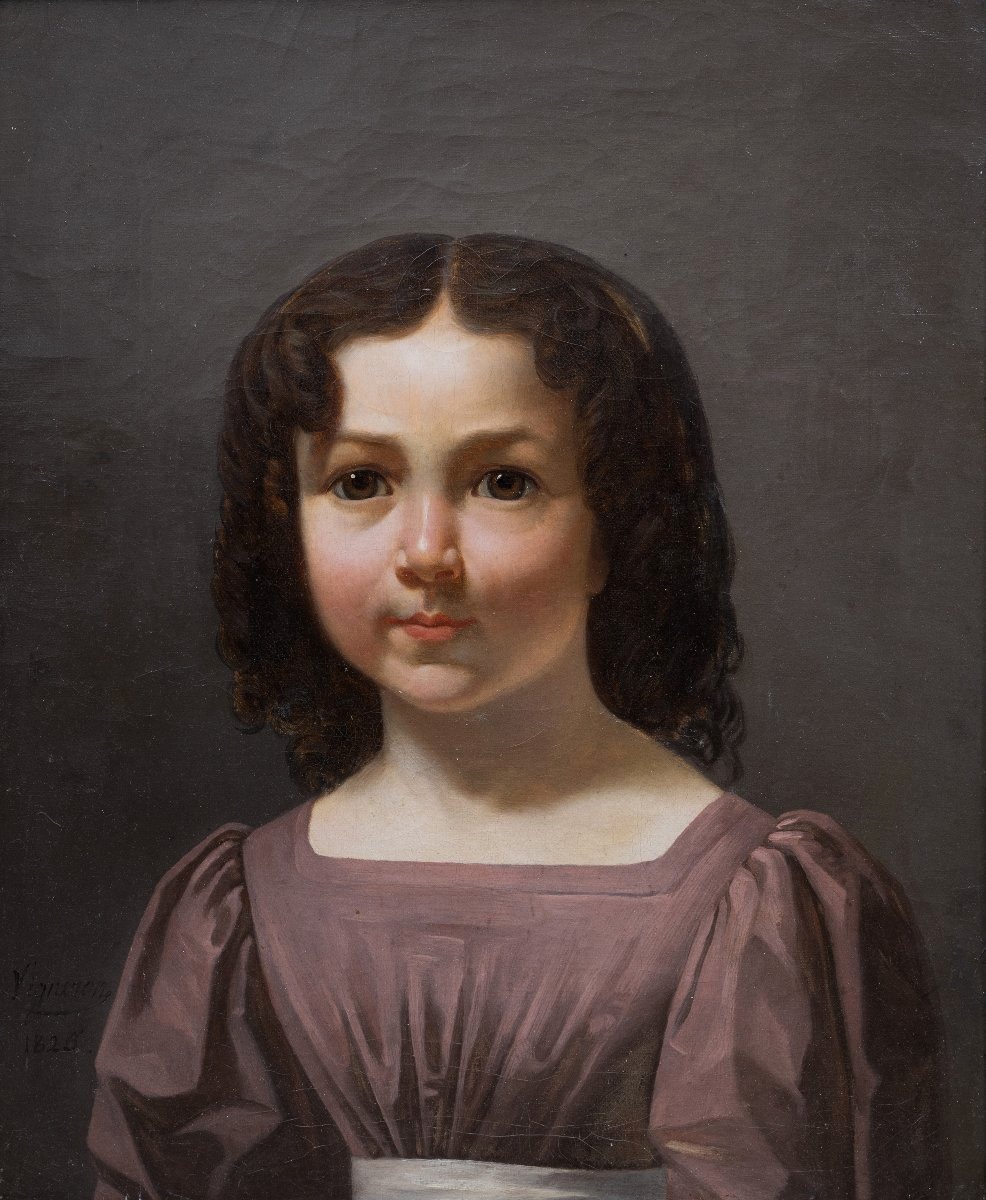
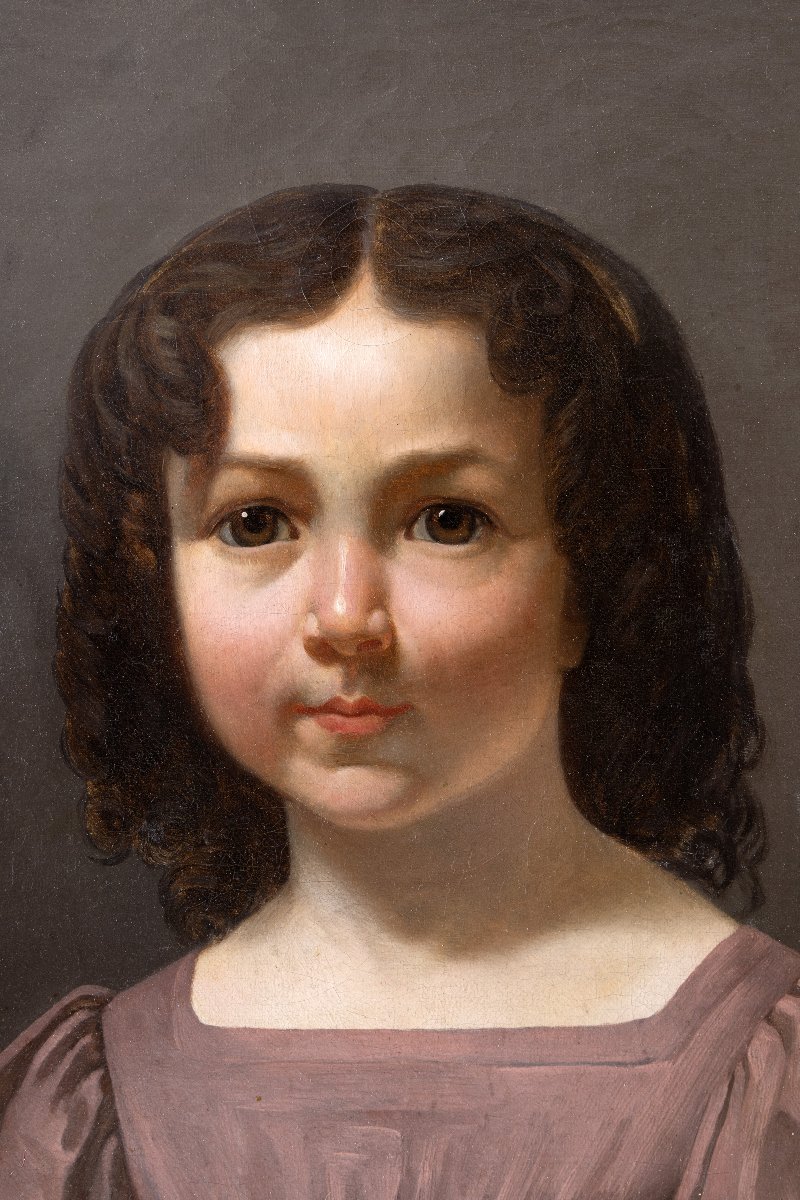
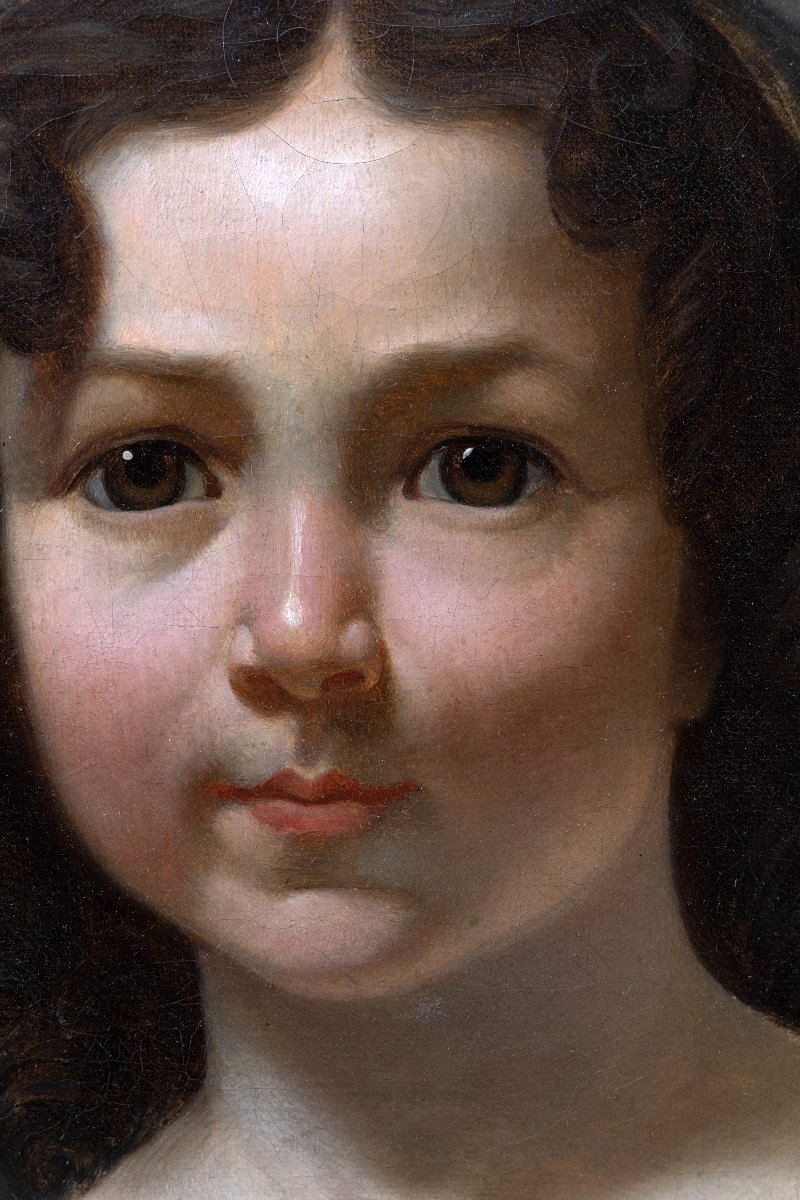
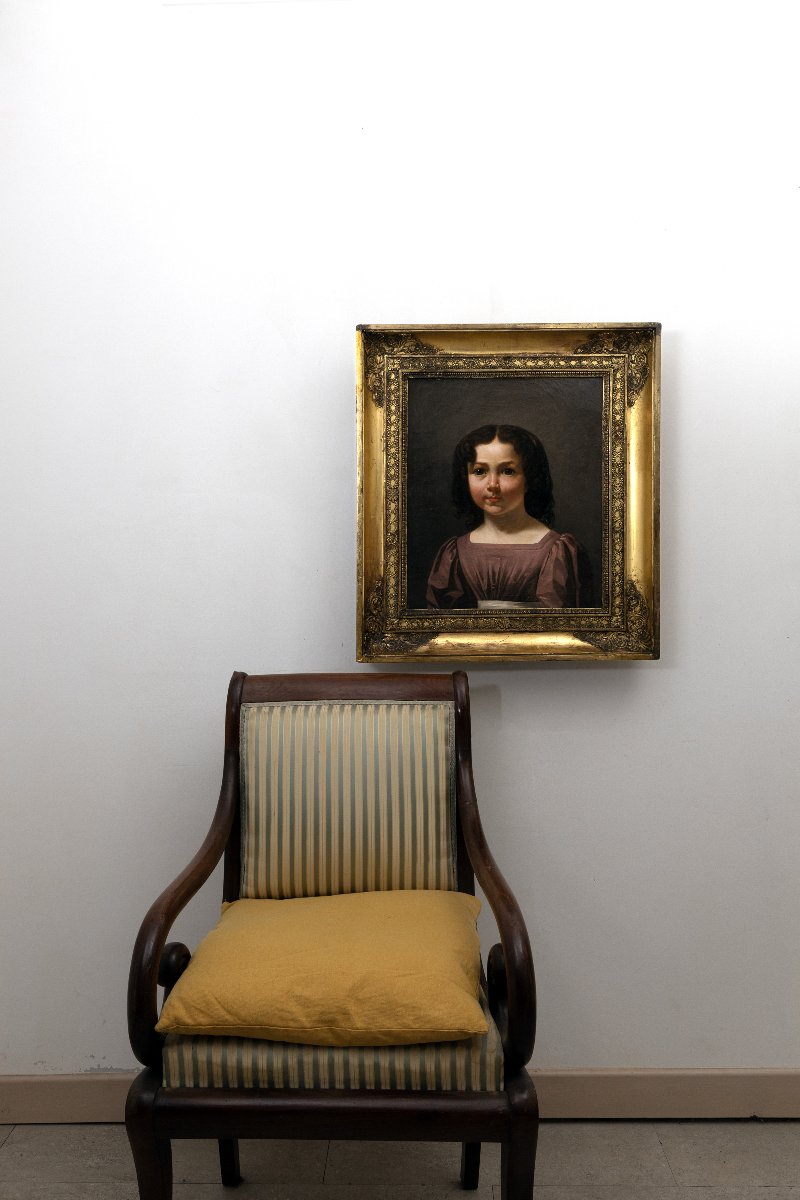
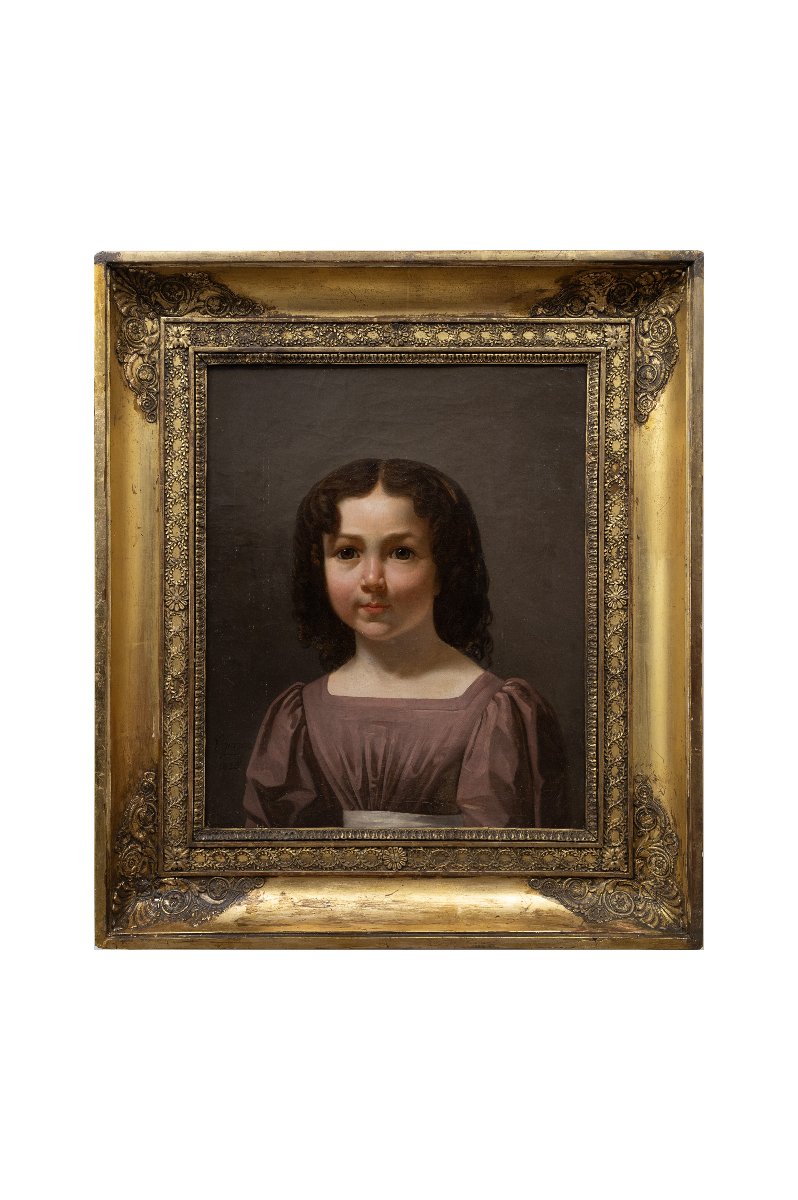
It’s hard to imagine that the sitting took long. Everything in this portrait suggests a child in motion: her head slightly raised, her chin slightly tucked in, her lively eyes following something toward the painter. Vigneron worked quickly, and he was right to do so—it is this liveliness that he captures, and it still holds true two centuries later.
The bust stands out against a lightly textured gray background, devoid of decoration or props. All attention is drawn to the face: the fair, luminous complexion, the still-round cheeks, the sharply defined eyebrows, and the small, bright red mouth. The brown hair, parted in the middle, falls in soft curls on either side of the face—the hairstyle typical of children during the Restoration.
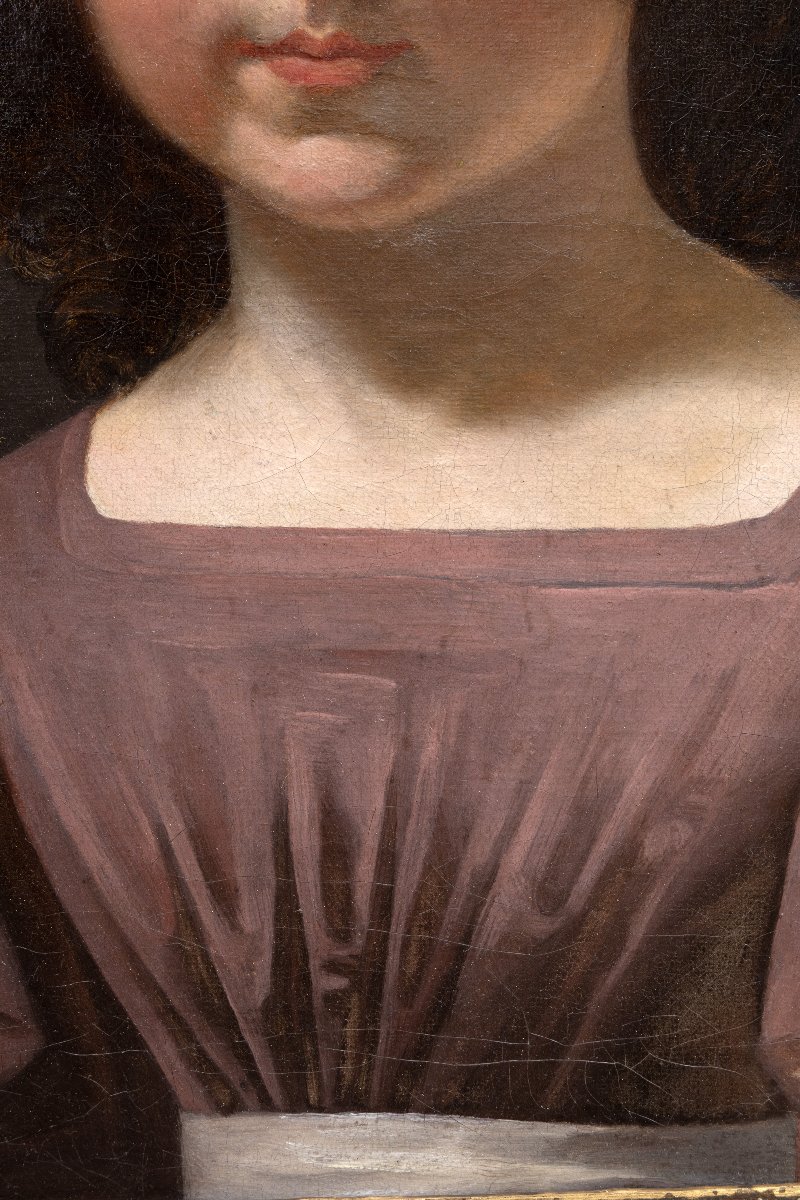
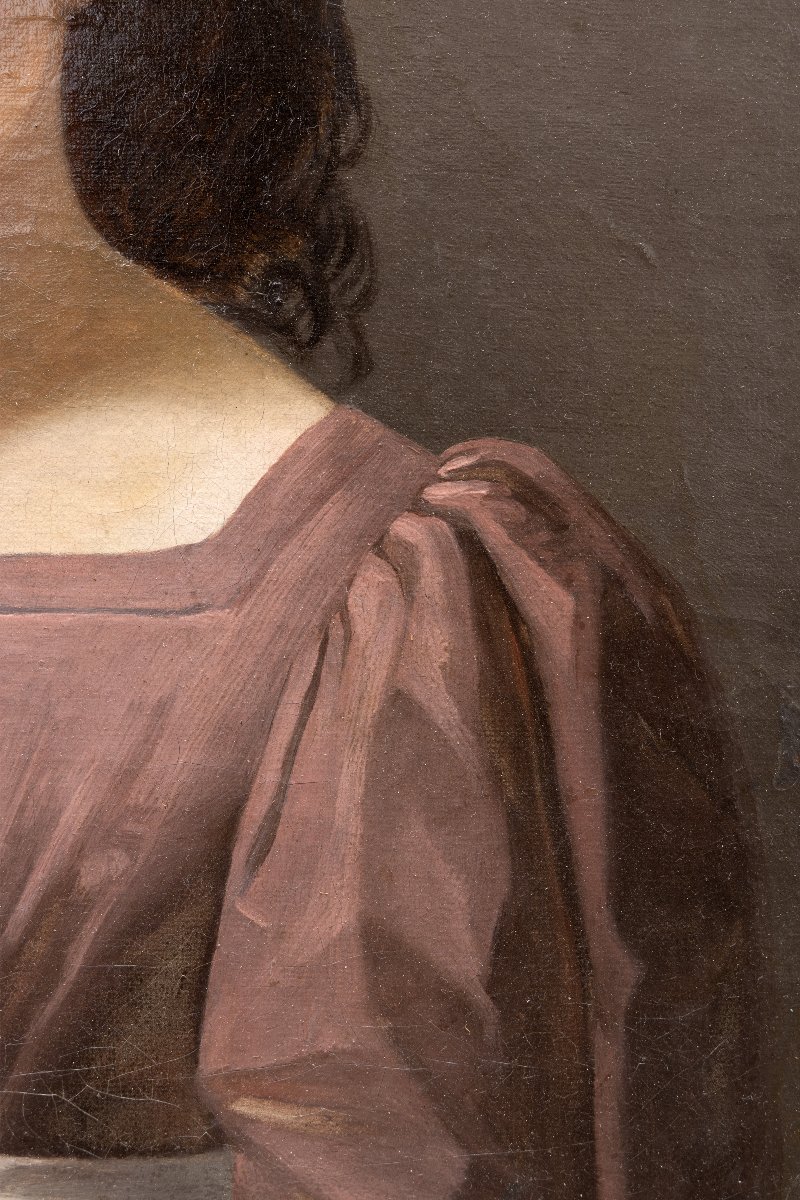
The dress is a delicate mauve-pink, with a square neckline and large balloon sleeves, very characteristic of the 1820s. A white sash accentuates the high waist. Vigneron renders the folds with a beautiful economy of means: a few light brushstrokes are enough to give the sleeve a sense of movement and convey the fabric’s suppleness.
The painting is dated 1825. The artist, who trained under Gros, was by then an established and highly sought-after portraitist. Here we see what made his reputation: an accurate likeness, soft lighting, and above all, a talent for capturing the energy of his subject—a little girl who clearly has something better to do than pose.
The work is presented in its period frame of wood and gilded stucco, decorated with palmette motifs at the corners, foliage friezes, and rows of pearls. It bears the marks of its age and has been restored, but the overall effect remains very cohesive and perfectly showcases the portrait.
The Artist
Pierre-Roch Vigneron was born in Vosnon, in the Aube department, in 1789. He first trained at the Academy of Toulouse under Joseph Roques—Ingres’s teacher—where he practiced miniature painting and sculpture. Upon returning to Paris in 1812, he joined the studio of Claude Gautherot, whose daughter Uranie he would later marry, and then that of Baron Antoine-Jean Gros. He began exhibiting at the Salon in 1812 and won a gold medal there in 1817, before the age of thirty.
It was as a portraitist that he made his mark, and it is in this field that his talent is most remarkable. Vigneron possessed the rare gift of capturing not only the likeness but the person: an expression, a restrained gesture, a way of being. The cream of Parisian theater and literary circles frequented his studio, and from this he created a gallery of strikingly lifelike figures, later disseminated through lithography—a technique then in its infancy, of which he was one of the first practitioners in France. His portraits of children, though rarer, rank among his most touching achievements.
Notably, he painted a portrait of Louis-Philippe, now in the collection of the Carnavalet Museum. He was made a Knight of the Legion of Honor in 1854 and died in Paris in 1872.
His works are held, among other places, in the museums of Troyes, Tarbes, Bagnères-de-Bigorre, Versailles, and Carnavalet.
Work on view at the gallery (07240)
Shipping: Please contact us for shipping costs within France and internationally.
Portrait of a Little Girl, 1825
Oil on canvas
Signed and dated in the middle left: Vigneron 1825
Dimensions: 46 x 37.7 cm — 63 x 55 cm with frame
Very good condition, some wear to the paint. One visible repair on the back
Period frame in wood and gilded stucco, with restorations and flaws in the gilding
It’s hard to imagine that the sitting took long. Everything in this portrait suggests a child in motion: her head slightly raised, her chin slightly tucked in, her lively eyes following something toward the painter. Vigneron worked quickly, and he was right to do so—it is this liveliness that he captures, and it still holds true two centuries later.
The bust stands out against a lightly textured gray background, devoid of decoration or props. All attention is drawn to the face: the fair, luminous complexion, the still-round cheeks, the sharply defined eyebrows, and the small, bright red mouth. The brown hair, parted in the middle, falls in soft curls on either side of the face—the hairstyle typical of children during the Restoration.
The dress is a delicate mauve-pink, with a square neckline and large balloon sleeves, very characteristic of the 1820s. A white sash accentuates the high waist. Vigneron renders the folds with a beautiful economy of means: a few light brushstrokes are enough to give the sleeve a sense of movement and convey the fabric’s suppleness.
The painting is dated 1825. The artist, who trained under Gros, was by then an established and highly sought-after portraitist. Here we see what made his reputation: an accurate likeness, soft lighting, and above all, a talent for capturing the energy of his subject—a little girl who clearly has something better to do than pose.
The work is presented in its period frame of wood and gilded stucco, decorated with palmette motifs at the corners, foliage friezes, and rows of pearls. It bears the marks of its age and has been restored, but the overall effect remains very cohesive and perfectly showcases the portrait.
The Artist
Pierre-Roch Vigneron was born in Vosnon, in the Aube department, in 1789. He first trained at the Academy of Toulouse under Joseph Roques—Ingres’s teacher—where he practiced miniature painting and sculpture. Upon returning to Paris in 1812, he joined the studio of Claude Gautherot, whose daughter Uranie he would later marry, and then that of Baron Antoine-Jean Gros. He began exhibiting at the Salon in 1812 and won a gold medal there in 1817, before the age of thirty.
It was as a portraitist that he made his mark, and it is in this field that his talent is most remarkable. Vigneron possessed the rare gift of capturing not only the likeness but the person: an expression, a restrained gesture, a way of being. The cream of Parisian theater and literary circles frequented his studio, and from this he created a gallery of strikingly lifelike figures, later disseminated through lithography—a technique then in its infancy, of which he was one of the first practitioners in France. His portraits of children, though rarer, rank among his most touching achievements.
Notably, he painted a portrait of Louis-Philippe, now in the collection of the Carnavalet Museum. He was made a Knight of the Legion of Honor in 1854 and died in Paris in 1872.
His works are held, among other places, in the museums of Troyes, Tarbes, Bagnères-de-Bigorre, Versailles, and Carnavalet.
Work on view at the gallery (07240)
Shipping: Please contact us for shipping costs within France and internationally.
900 €
Period: 19th century
Style: Louis Philippe, Charles 10th
Condition: Excellent condition
Material: Oil painting
Width: 37,7 cm / 55 cm encadré
Height: 46 cm / 63 cm encadré
Reference (ID): 1808098
Availability: In stock
Print