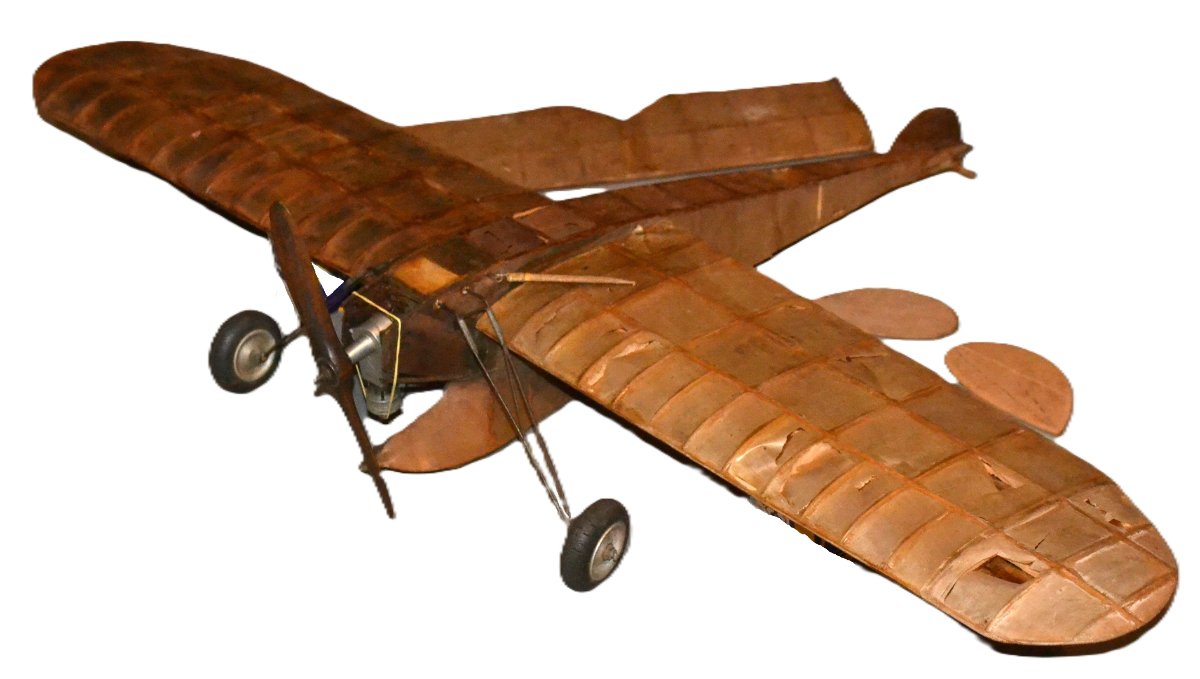
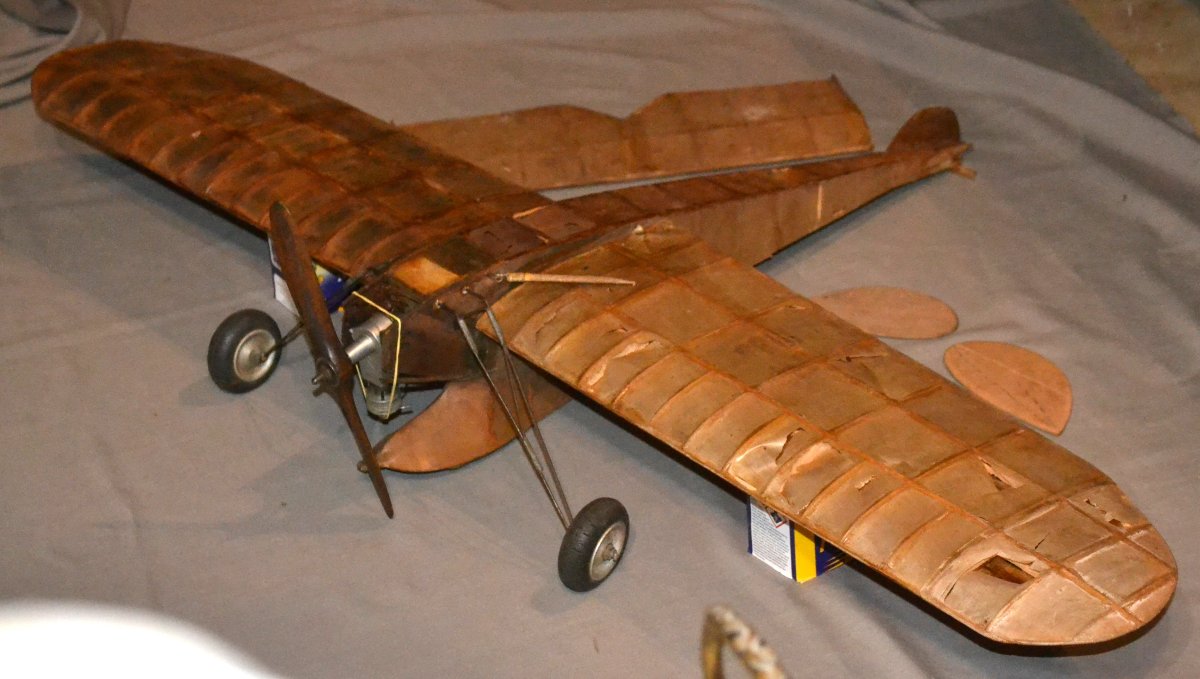
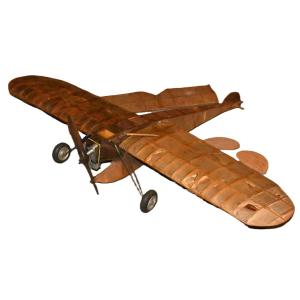


Wood And Silk Model Airplane Equipped With An Allouchery Diesel Engine. France, 1925–30.
Artist: Allouchery
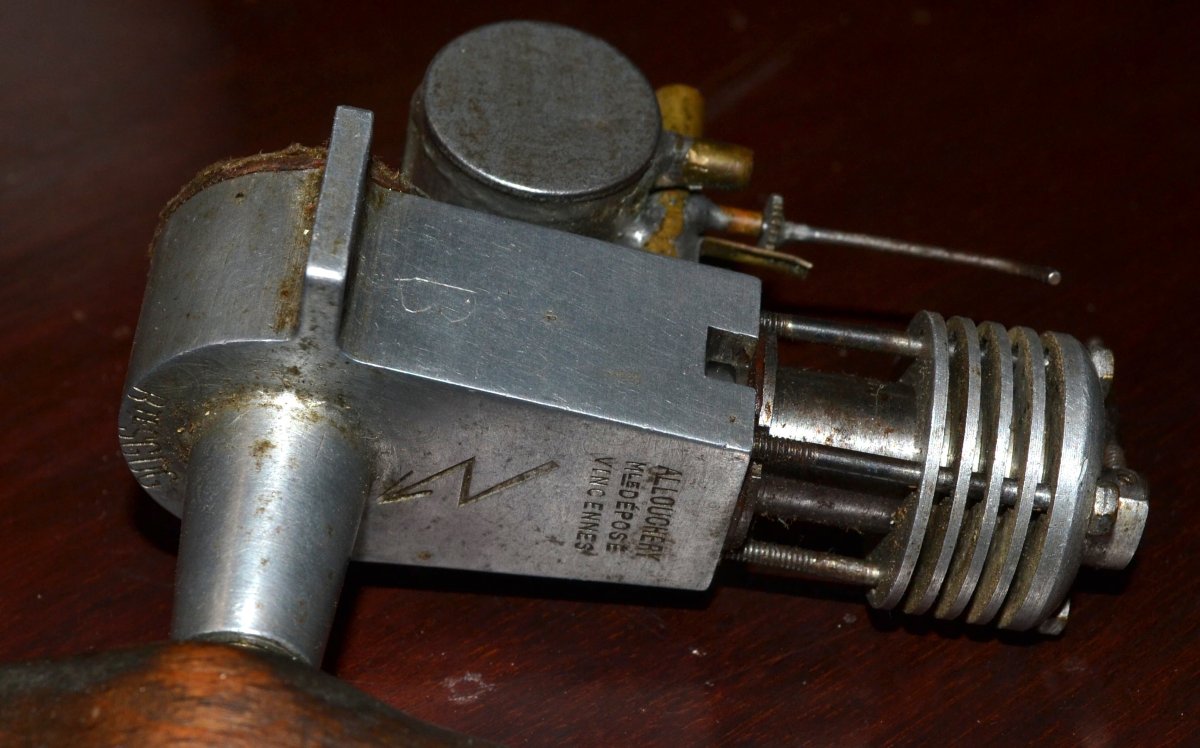
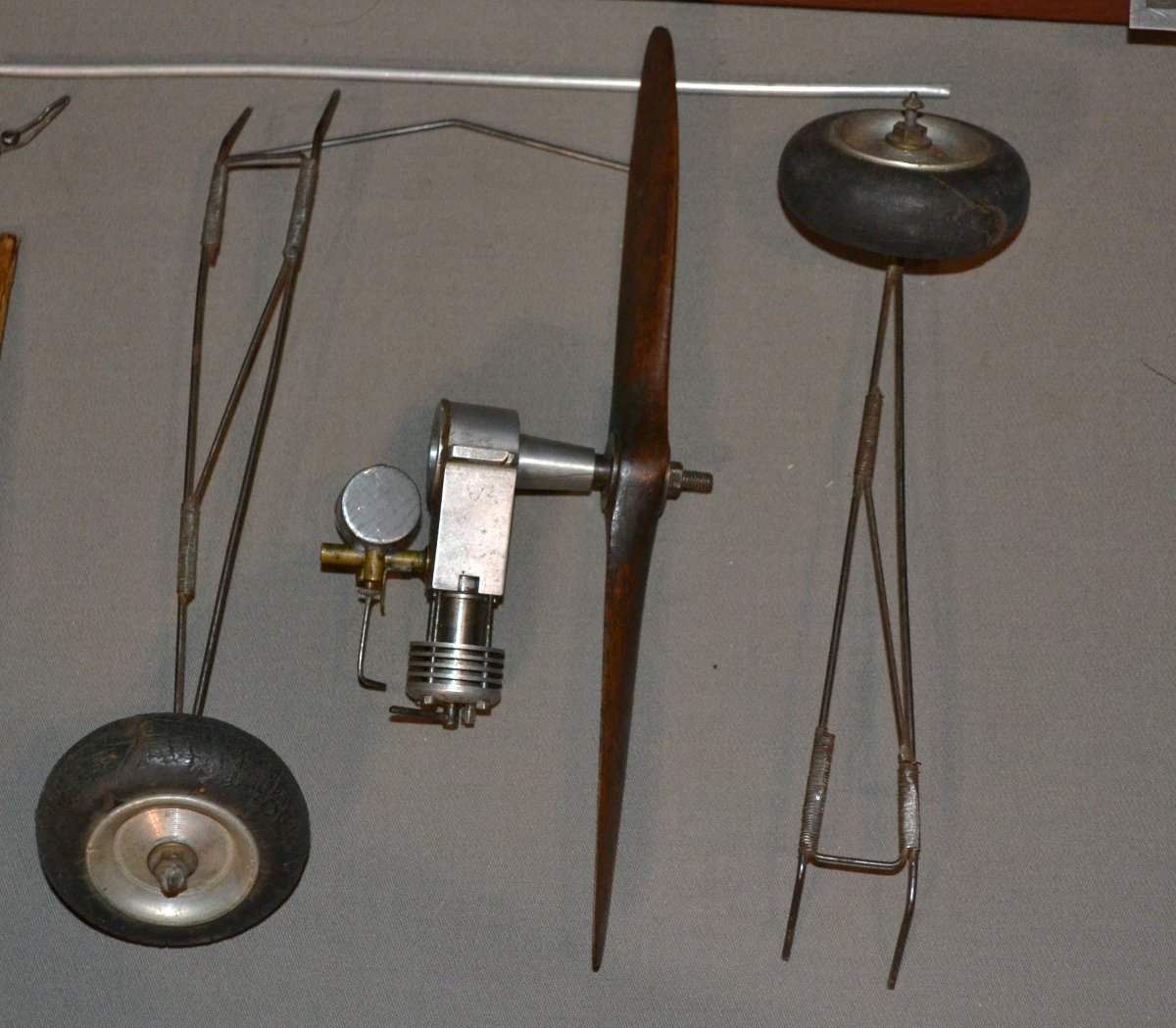
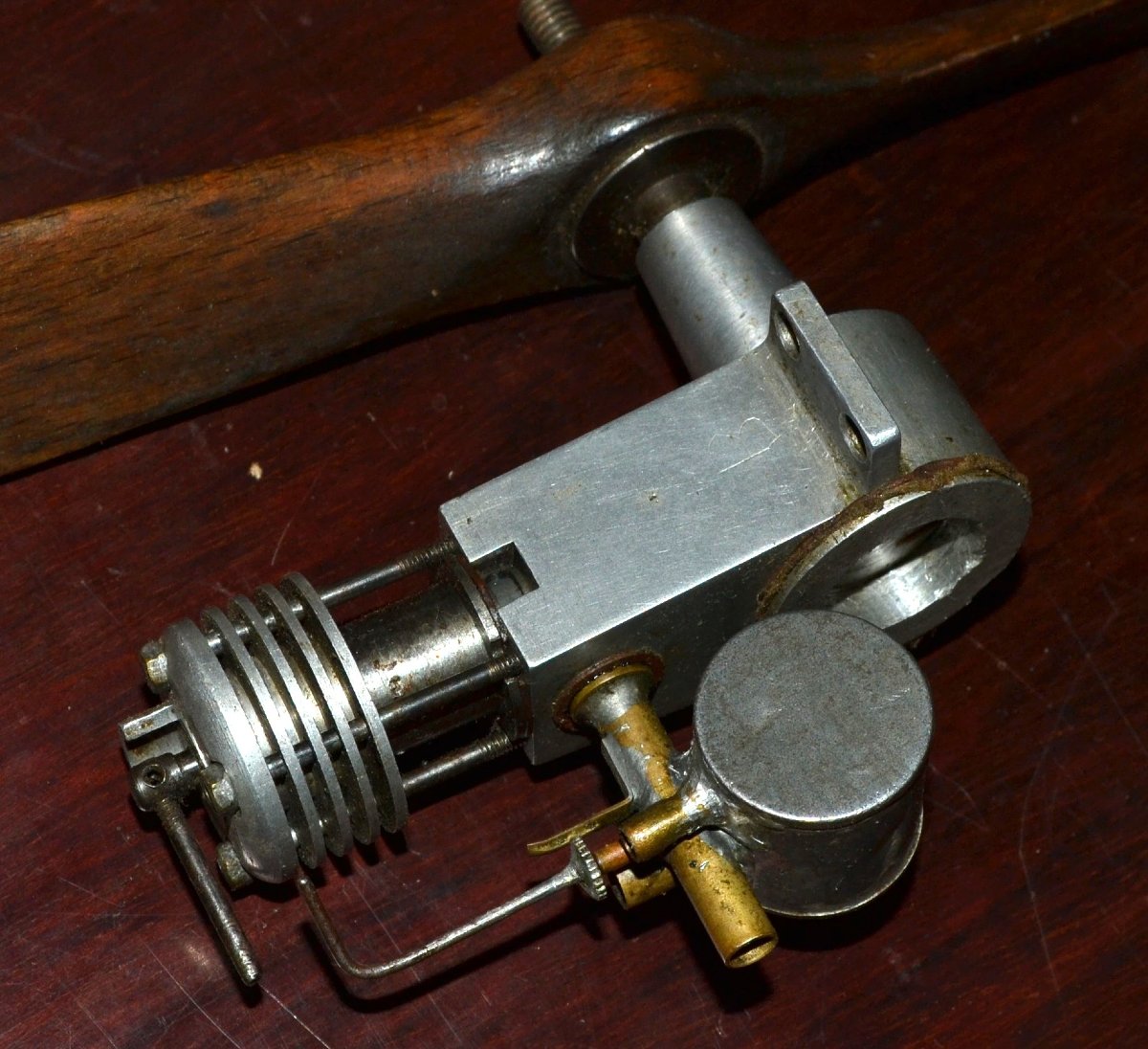
The aircraft is equipped with a diesel engine manufactured by Allouchery in Vincennes. It is the first French miniature compression (diesel) engine, built in Prosper Allouchery’s small workshop in Vincennes, near Paris, during 1944–45. It is said that the “Allouchery Vincennes” mark did not appear stamped on the engines until 1945. This is an extremely rare engine. Only one other example is illustrated in Adrien Maeght’s book. The Vincennes workshop was very small, just a few square meters; only three people worked there: the two Allouchery brothers and one employee.
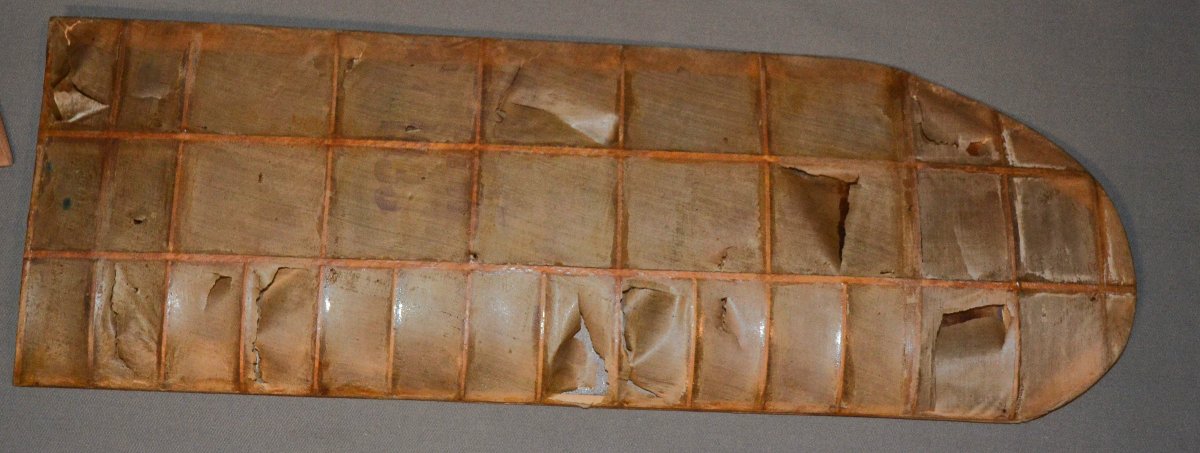
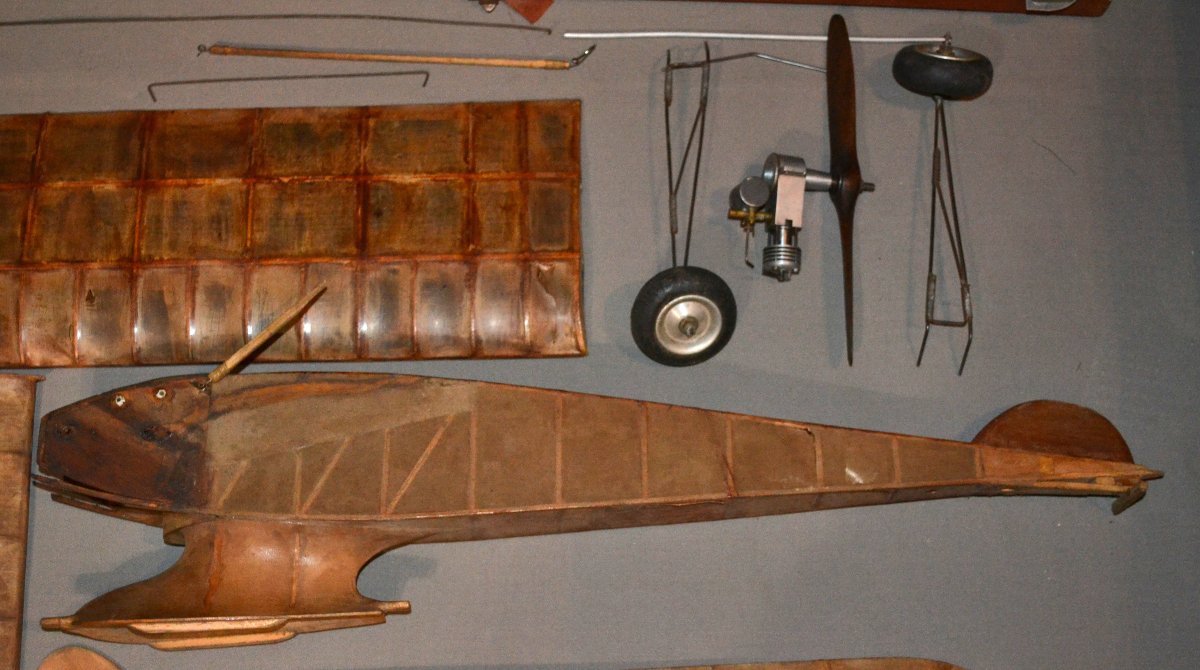
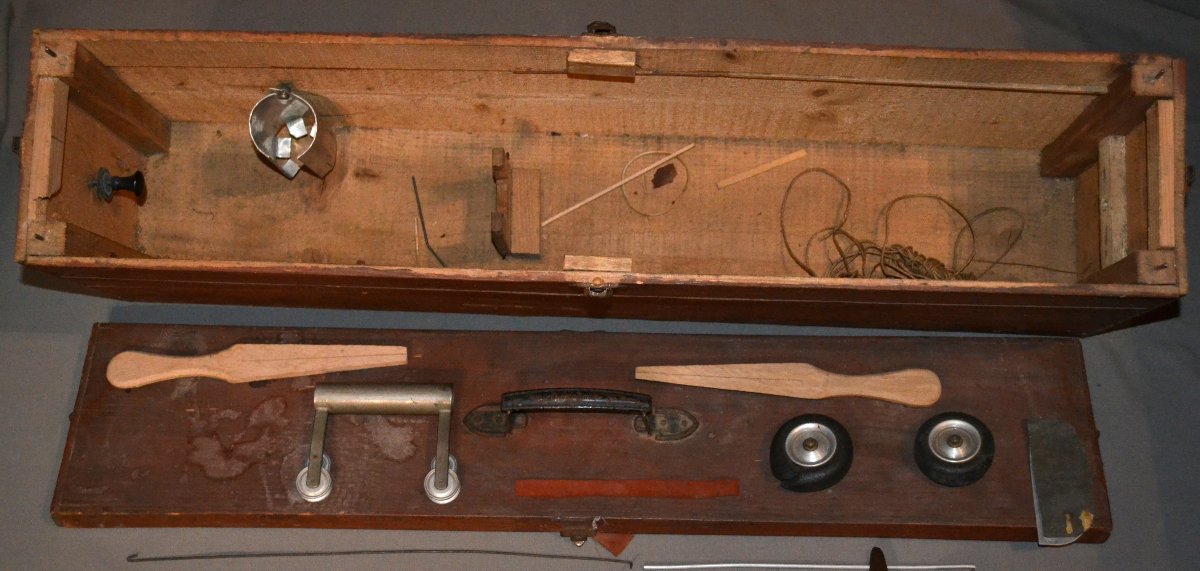
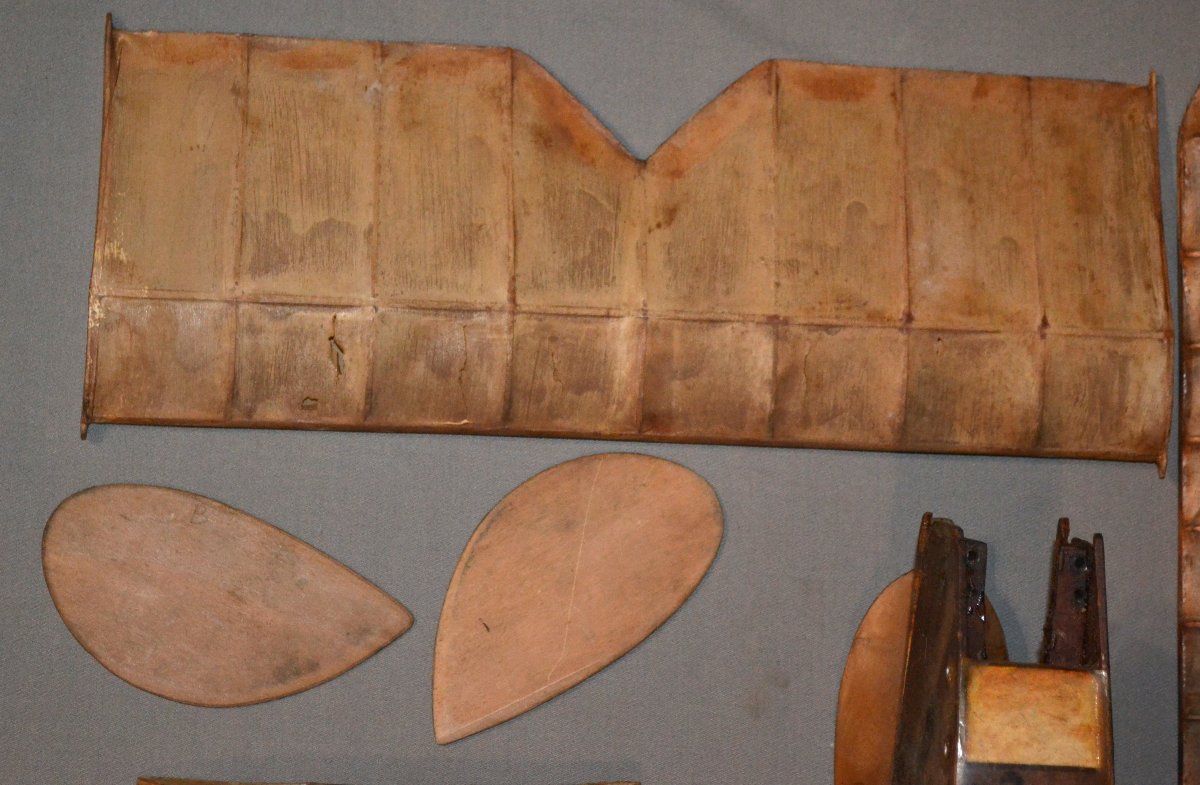
The aircraft itself is constructed of very thin wooden strips and sheets, onto which pieces of silk coated with varnish are glued; the entire structure is very light and fragile. The landing gear is made of steel wire, and the wheels are made of rubber and aluminum. Airplanes of this type date from the 1920s and 1930s, but perhaps earlier, as the technique of coating silk with cellulose appeared in 1911. At that time, airplanes were equipped with rubber-band or compressed-air engines, and sometimes, when unpowered, they were launched from airships.
A keen eye will have noticed some very faded numbers and letters stamped on one of the wings; we can make out “1933,” followed by a large “N” and other illegible letters. Since 1933 seemed a plausible date given the aircraft’s design, we conducted some research and discovered that the first model aircraft competition in history took place in Vincennes in 1933, bringing together 70 competitors from around the world. The “1933” marking, along with the “N” for the contestant’s number, seems to indicate that our plane participated in this prestigious competition. An appropriate scientific method would certainly make it possible to read all the inscriptions and identify the participant’s name, as the list of participants was published in the magazine *Les Ailes* in 1932.Of course, when the competition took place, our airplane was equipped with a propulsion system other than the Allouchery diesel engine, which did not yet exist; it was not until 1945 that its owner had it fitted with this new engine.
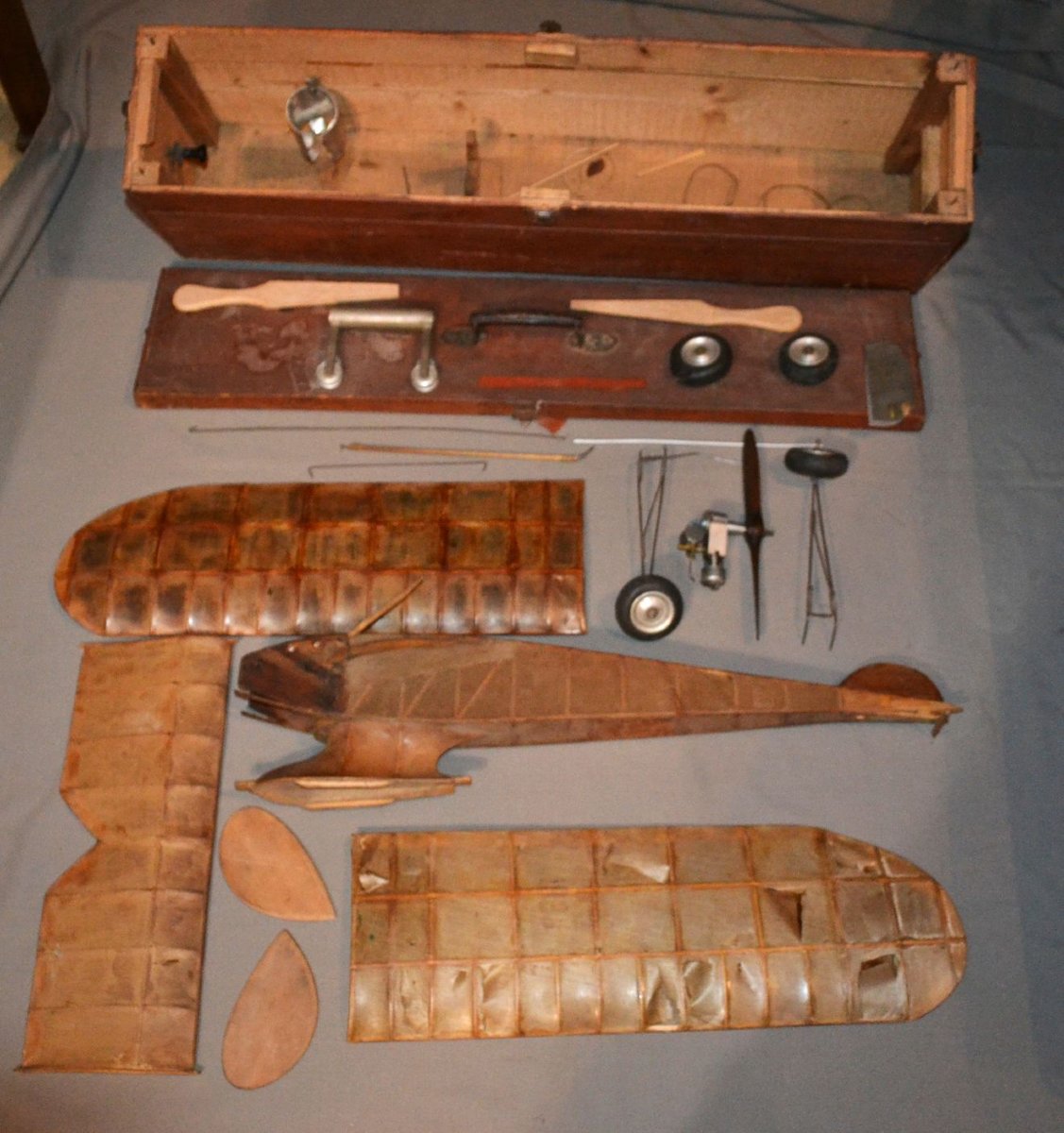
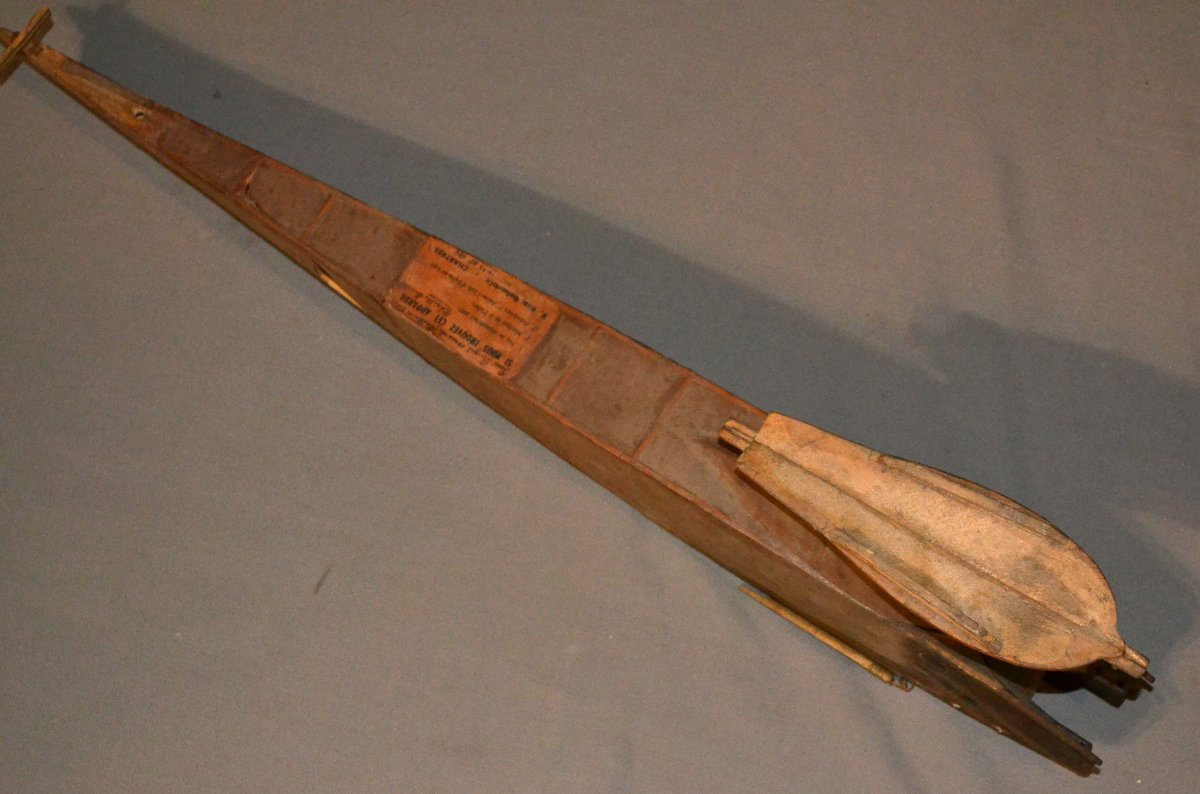
The airplane is in its original box and appears to be complete; an expert can assess this. The silk is torn in some places, and the rubber on the wheels is cracked but still intact.
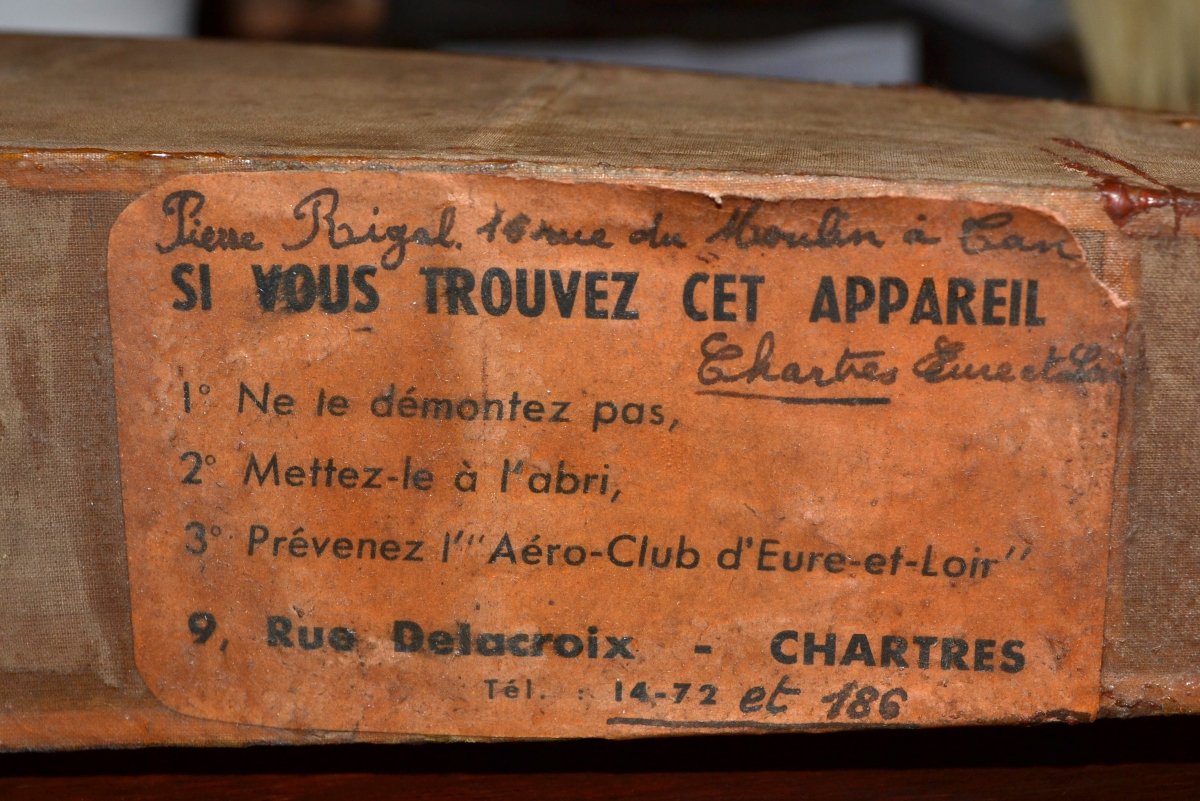
Since remote-control systems did not yet exist, the aircraft was flown like a kite using silk strings. A poignant label affixed to the underside of the aircraft tells us that it would sometimes slip out of its owner’s control.
It’s a battered centenarian, yet it’s still very much alive. A witness not only to another era, but to another world.
It’s an exceptional artifact.
I’m no engine expert, but when you spin the propeller with your finger, you can feel the compression. I wouldn’t be surprised if it still worked.
We have found a few documents online related to the competition and others concerning the engine.
Dimensions: box approximately 80 × 20 × 20 cm. Wingspan approximately: 80 cm.
The aircraft itself is constructed of very thin wooden strips and sheets, onto which pieces of silk coated with varnish are glued; the entire structure is very light and fragile. The landing gear is made of steel wire, and the wheels are made of rubber and aluminum. Airplanes of this type date from the 1920s and 1930s, but perhaps earlier, as the technique of coating silk with cellulose appeared in 1911. At that time, airplanes were equipped with rubber-band or compressed-air engines, and sometimes, when unpowered, they were launched from airships.
A keen eye will have noticed some very faded numbers and letters stamped on one of the wings; we can make out “1933,” followed by a large “N” and other illegible letters. Since 1933 seemed a plausible date given the aircraft’s design, we conducted some research and discovered that the first model aircraft competition in history took place in Vincennes in 1933, bringing together 70 competitors from around the world. The “1933” marking, along with the “N” for the contestant’s number, seems to indicate that our plane participated in this prestigious competition. An appropriate scientific method would certainly make it possible to read all the inscriptions and identify the participant’s name, as the list of participants was published in the magazine *Les Ailes* in 1932.Of course, when the competition took place, our airplane was equipped with a propulsion system other than the Allouchery diesel engine, which did not yet exist; it was not until 1945 that its owner had it fitted with this new engine.
The airplane is in its original box and appears to be complete; an expert can assess this. The silk is torn in some places, and the rubber on the wheels is cracked but still intact.
Since remote-control systems did not yet exist, the aircraft was flown like a kite using silk strings. A poignant label affixed to the underside of the aircraft tells us that it would sometimes slip out of its owner’s control.
It’s a battered centenarian, yet it’s still very much alive. A witness not only to another era, but to another world.
It’s an exceptional artifact.
I’m no engine expert, but when you spin the propeller with your finger, you can feel the compression. I wouldn’t be surprised if it still worked.
We have found a few documents online related to the competition and others concerning the engine.
Dimensions: box approximately 80 × 20 × 20 cm. Wingspan approximately: 80 cm.
15 000 €
Period: 20th century
Style: Art Deco
Condition: Needs to be restored
Length: 60 cm environ
Width: 80cm environ
Height: 25 environ
Reference (ID): 1803954
Availability: In stock
Print