

Anthropomorphic Ceremonial Drum (tifa)
Asmat culture, southwestern coast of New Guinea (West Papua, Indonesia)
Circa 1900–1935
Carved monoxyl wood, monitor lizard skin
Height: approximately 110 cm
Provenance
Jean-Pierre Dutilleux Collection, assembled during fieldwork among the Asmat.
Publication
Exemplar reproduced in TRIBES – The First People, Jean-Pierre Dutilleux, Éditions Vilo.
Exhibition
Le Monde Premier – Jean-Pierre Dutilleux Collection.
⸻
DESCRIPTION
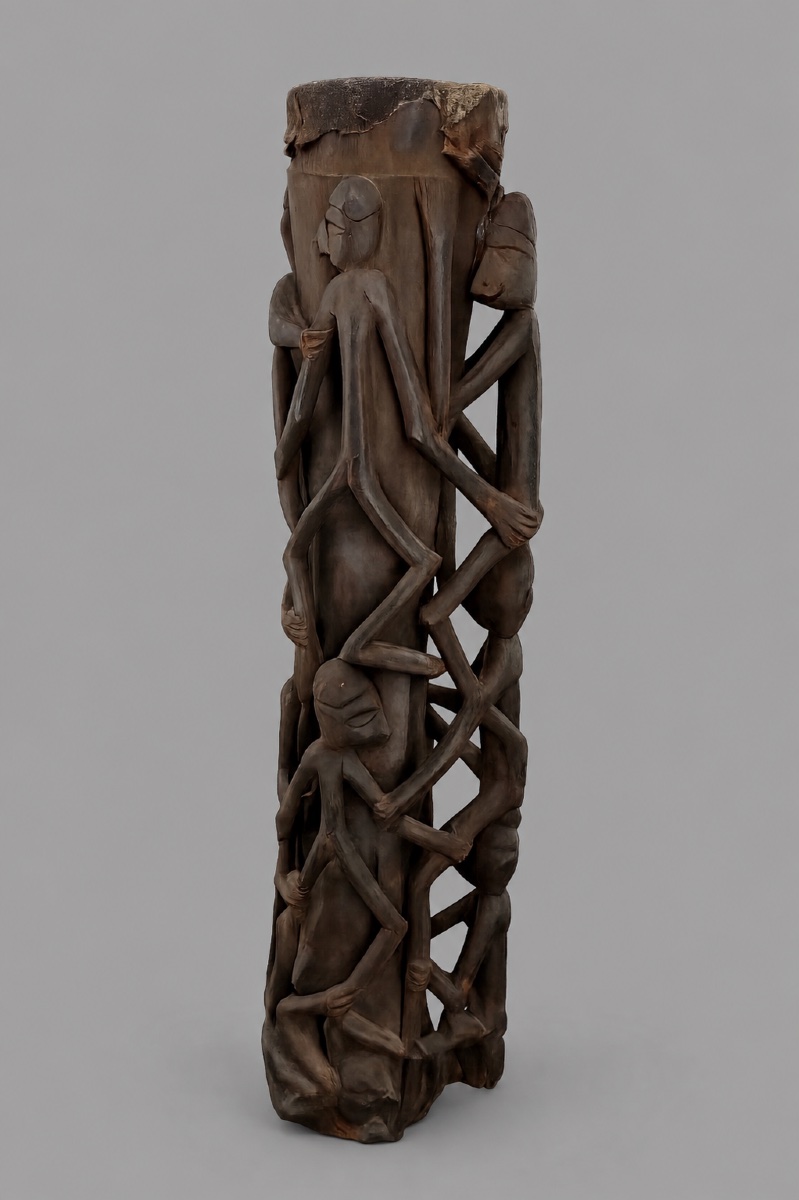
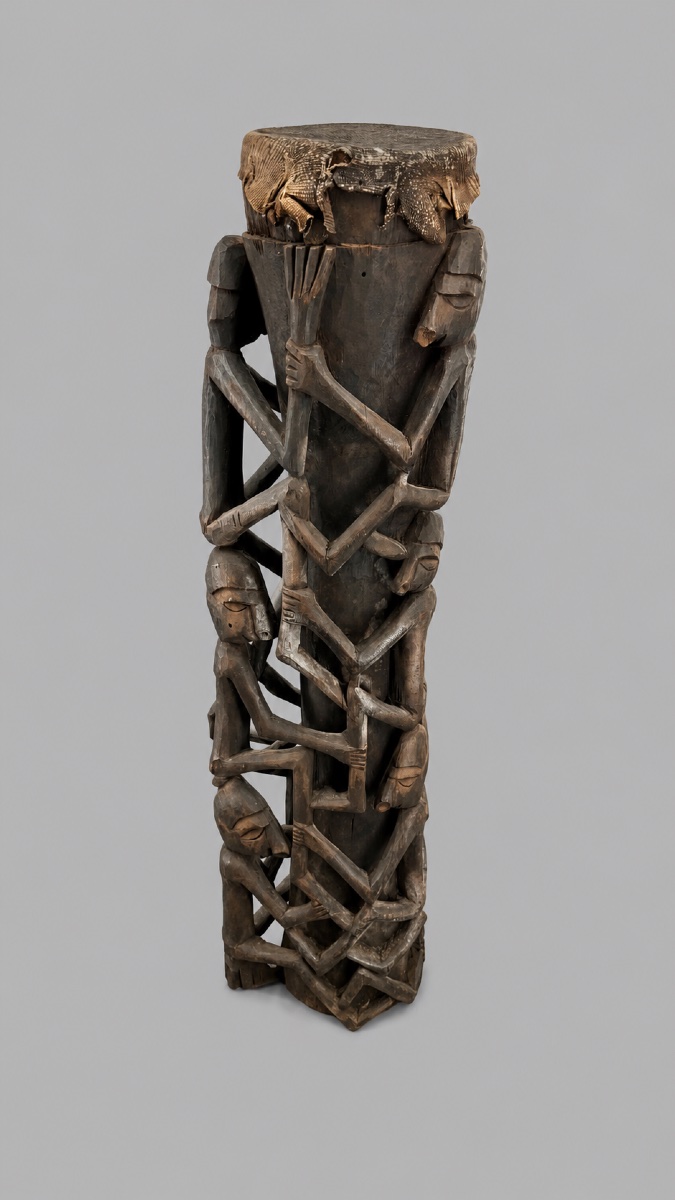
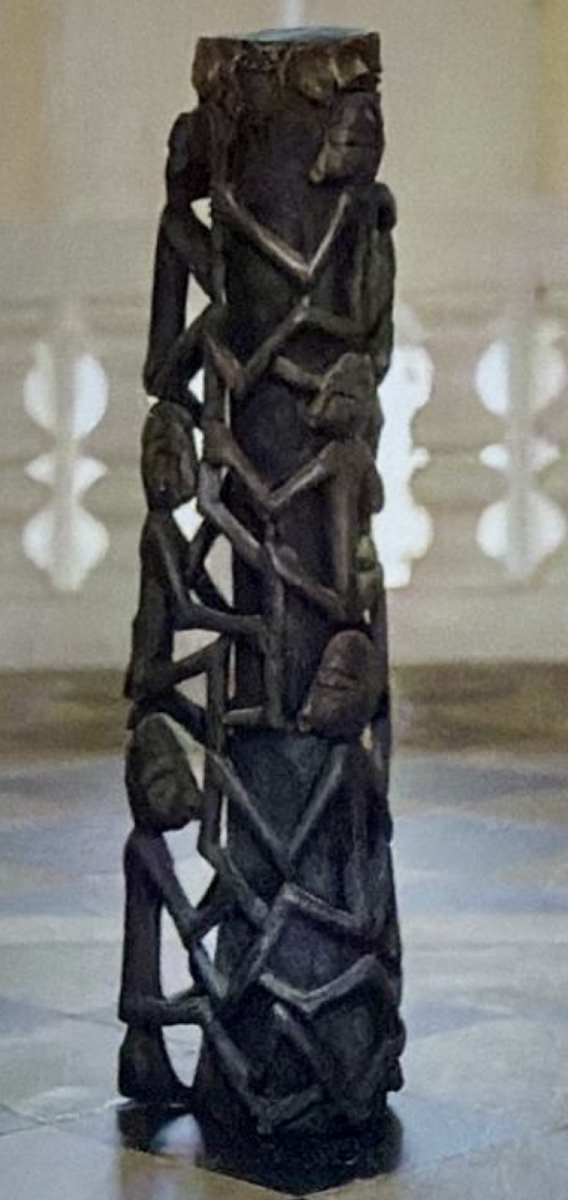
A remarkable Asmat ceremonial drum (tifa), carved from a single log and entirely adorned with an exceptional openwork anthropomorphic design.
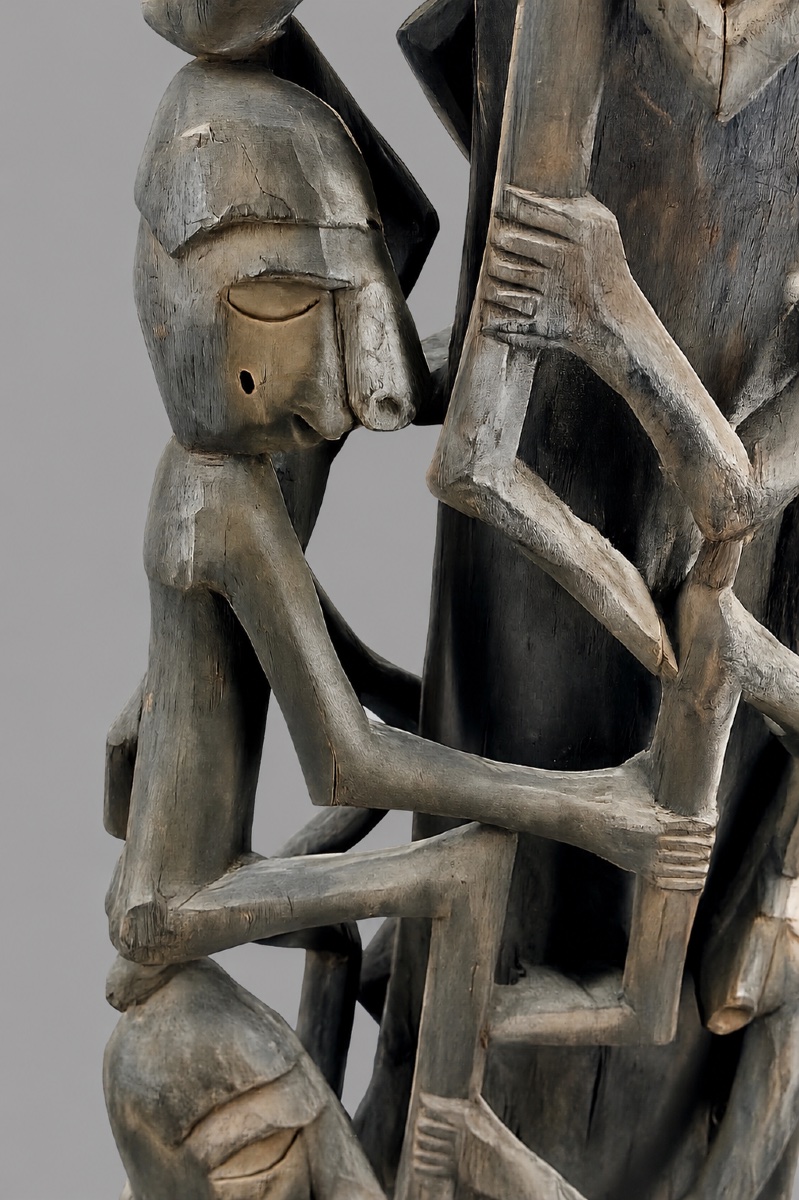
Around the drum body unfolds a succession of intimately intertwined ancestral figures that seem to rise in a continuous movement. This ascent creates a powerful vertical dynamic in which each figure merges into the next, reflecting the continuity of lineages and the enduring link between the world of the living and that of the ancestors.
One of the most remarkable aspects of this work lies in its extraordinary three-dimensional design. Far more than a simple carved decoration, it constitutes a true architecture in the round. The figures are not flattened against the drum; they gradually emerge from it, intertwine, cross paths, and rise into space until they form an open structure of exceptional complexity.
This work represents a true tour de force of monoxyl sculpture. Starting with a single log, the sculptor gradually carved out each figure while maintaining the perfect cohesion of the whole. The characters’ arms, legs, and torsos are not merely decorative elements: they serve as the composition’s supporting points, contributing simultaneously to its mechanical stability and aesthetic balance. A single major error at any stage of the process would have irreparably caused the entire piece to break, ruining several weeks—or even months—of work. This technical virtuosity places this work among the most ambitious achievements in Asmat sculpture.
The figures display the emblematic characteristics of Asmat aesthetics: elongated faces, prominent noses, deeply set eyes, and angular limbs. They embody the founding ancestors, guardians of the clan’s memory, the transmission of spiritual powers, and the protection of the community.
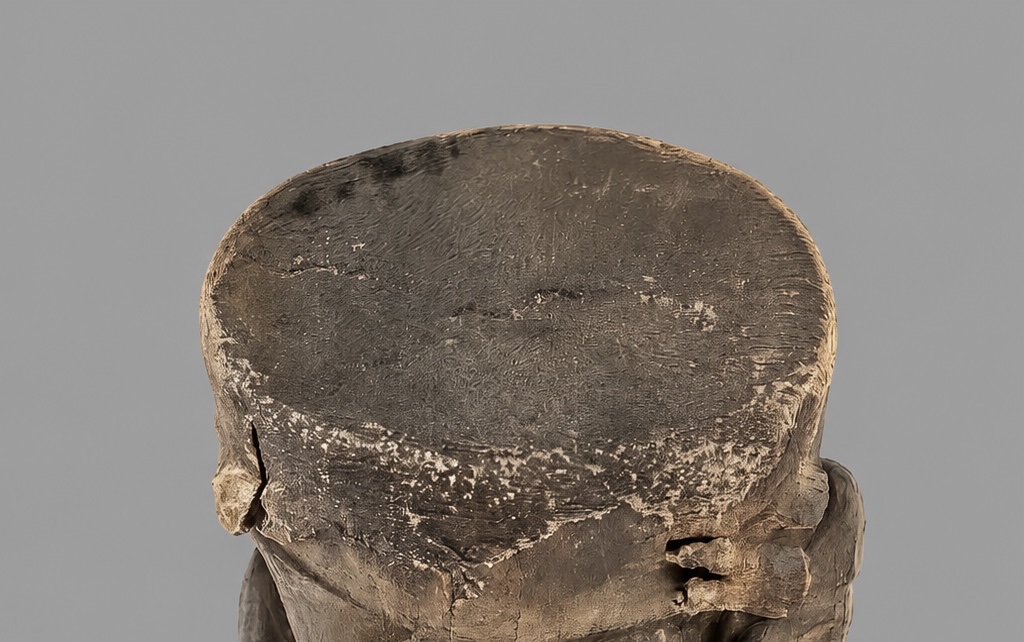
The drum retains its original monitor lizard skin head, an element rarely preserved, serving as a reminder of its original function. The tifa set the rhythm for major ceremonies and accompanied songs, ritual dances, initiations, and events related to ancestor worship.
The most significant collections of Asmat art are currently housed in the Michael C. Rockefeller Wing of the Metropolitan Museum of Art in New York and at the British Museum in London. The drums on display there are generally smaller in size and adorned with a more limited number of carved figures. With a height of approximately 110 cm, its spectacular three-dimensional design featuring a continuous succession of fully openwork figures, and the richness of its composition, this piece stands out as one of the most ambitious works in this artistic tradition.
Collected by Jean-Pierre Dutilleux during his expeditions to Papua, reproduced in his seminal work *TRIBES – The First People*, and featured in the exhibition *Le Monde Premier*, this drum has a thoroughly documented provenance. It is one of the major works in the Dutilleux collection dedicated to Asmat art and embodies the aesthetic, technical, and historical qualities most sought after by major collectors and museums.
Period: 20th century
Style: Tribal Art
Condition: En l'etat
Reference (ID): 1802806
Availability: In stock