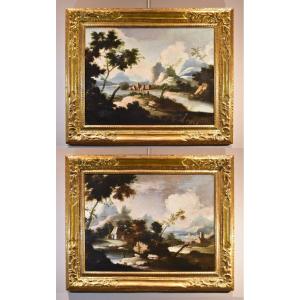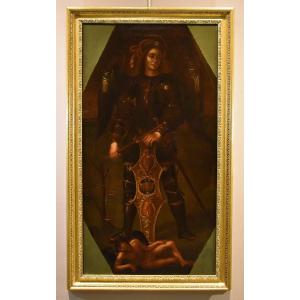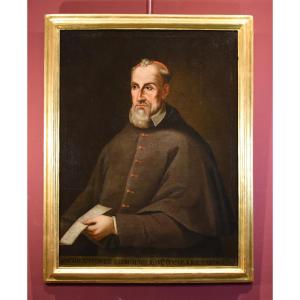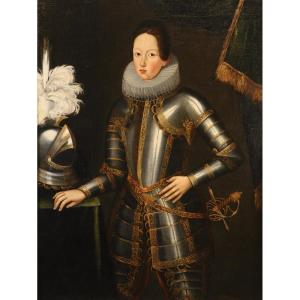
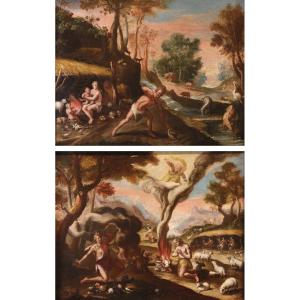


Maarten De Vos (antwerp, 1532–1603), Adam And Eve After The Fall / Cain And Abel
Artist: Maarten De Vos (anvers, 1532 - 1603) Atelier / Disciple
Maarten de Vos (Antwerp 1532–1603) Workshop/follower
Adam and Eve After the Fall/
The Sacrifices of Cain and Abel
Oils on canvas
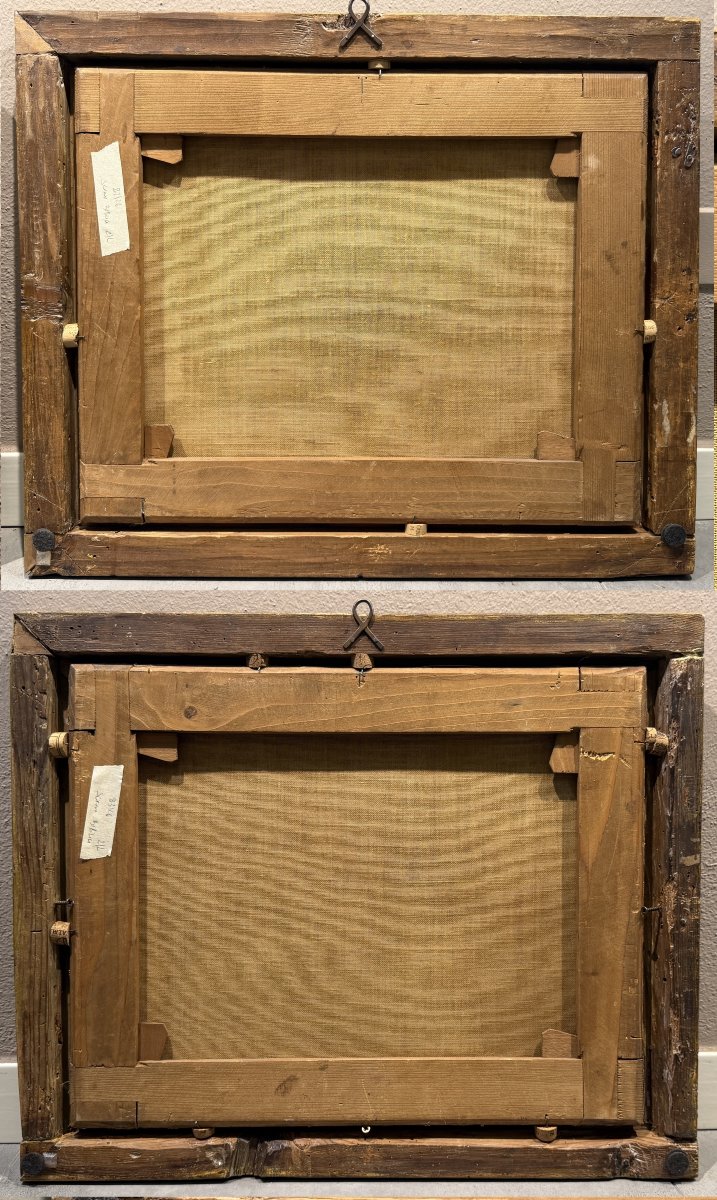
41 x 51 cm - In antique frames (with imperfections) 50 x 60 cm.
FULL DETAILS OF THE WORKS AT THE FOLLOWING - LINK -
This pair of interesting depictions, titled “Adam and Eve After the Fall” and “The Sacrifices of Cain and Abel,” are painterly adaptations of two antique engravings created by the Flemish master Johann Sadler I.
Specifically, these works belong to a famous 1583 series titled *Boni et Mali Scientia** (Knowledge of Good and Evil), engraved by Sadler based on designs by the Flemish painter Maarten De Vos (Antwerp 1532–1603) following his formative journey through Italy, particularly in Venice, Rome, and Florence.
This sequence of extraordinary compositions illustrates the crucial moments of Genesis, from the consequences of original sin to the subsequent history of the first humans and the origins of humanity.
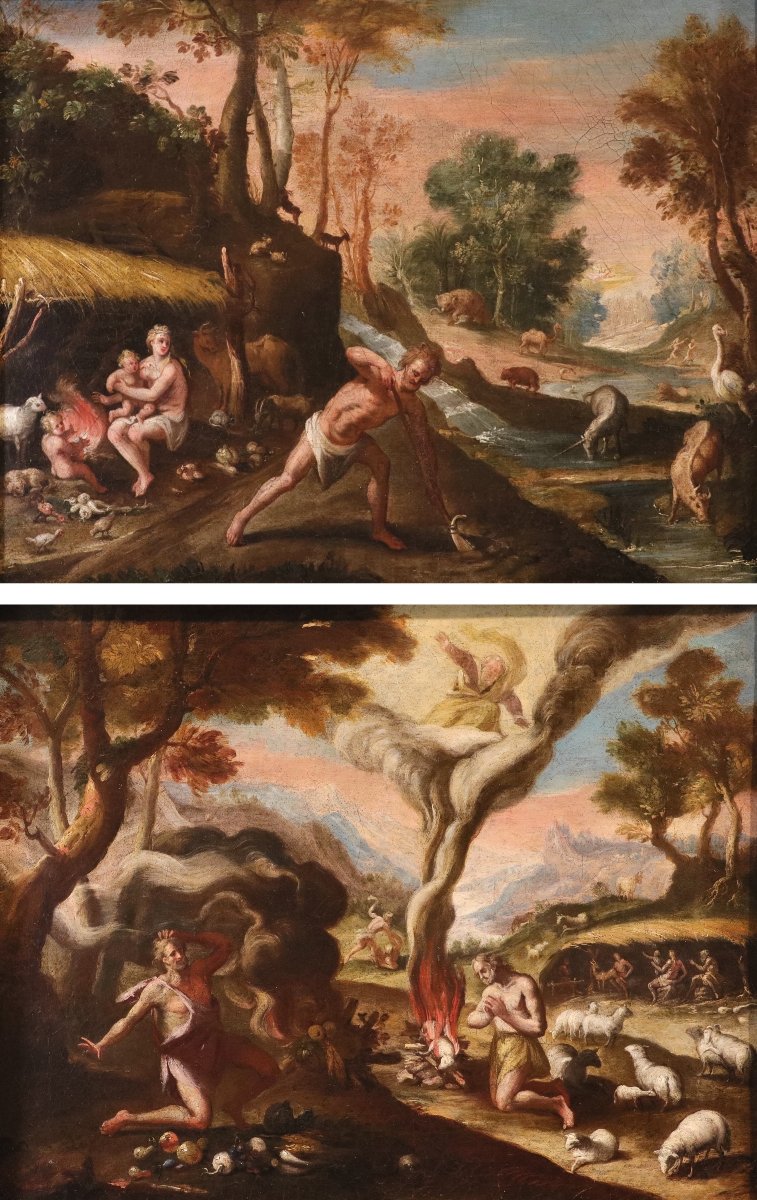
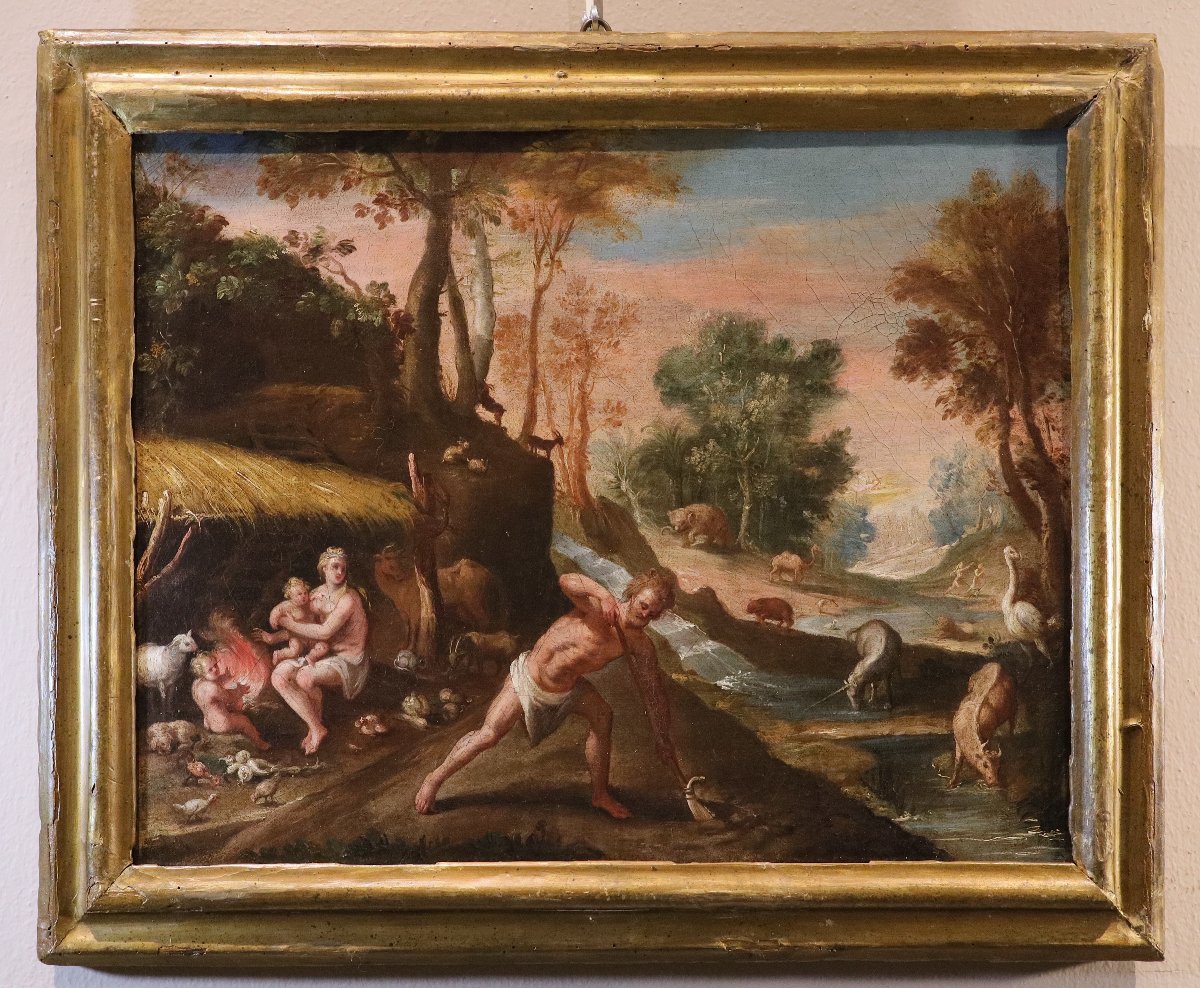
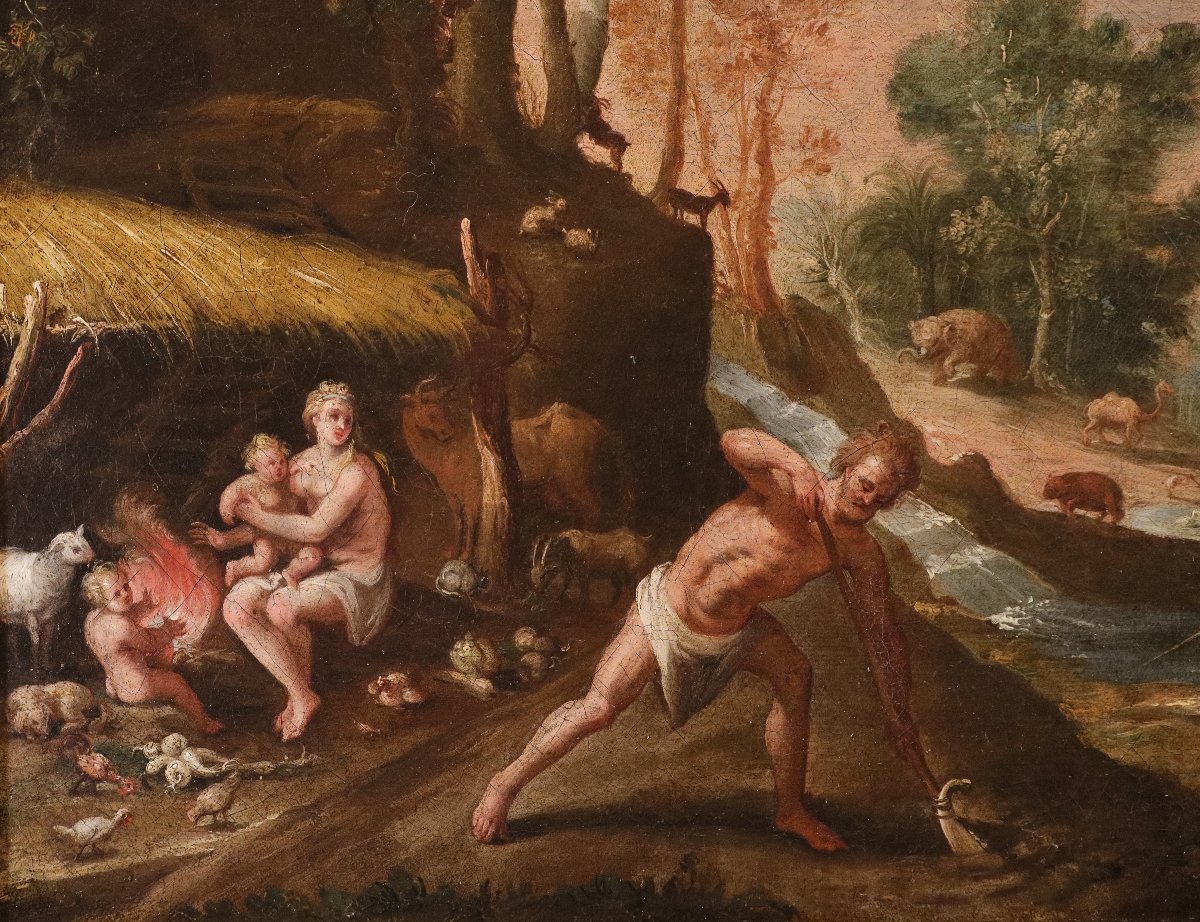
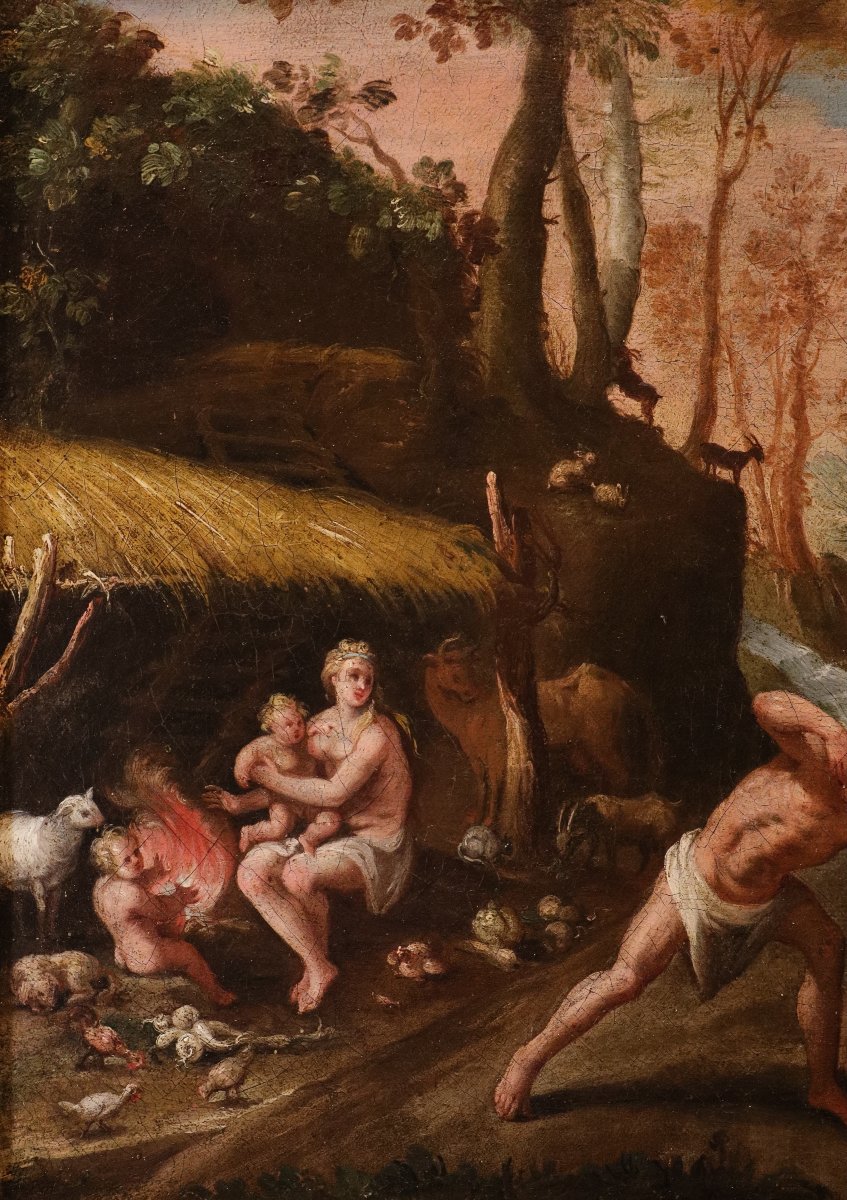
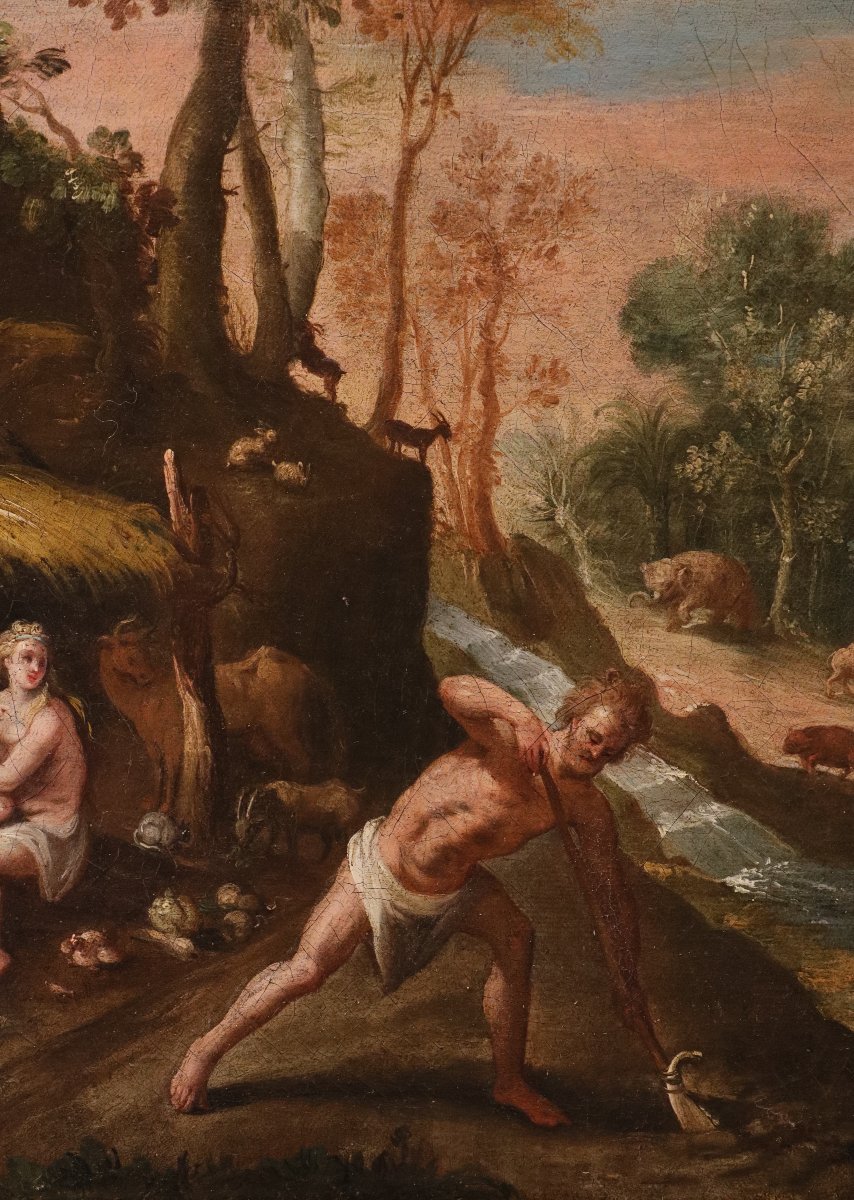
In this case, the first painting depicts the harsh life of our first parents after their expulsion from the Garden of Eden: in the center, Adam laboriously works the barren earth, symbolizing the divine condemnation to manual labor, while Eve, inside a rudimentary hut, cares for the young Cain and Abel.
In the background is a beautiful natural landscape rich in botanical details, which preserves the idyllic vision of the Garden of Eden intact, populated by numerous animal species, including a camel, a unicorn, and a stork—all typical of the Flemish tradition influenced by the celebrated motifs of the Brueghel masters. Bathed in the golden light of Eden, the small nude figures of Adam and Eve stand out, captured in a state of purity and total harmony with nature, before the spiritual fall; above them stands the archangel Michael, who will bring an end to their idyll.
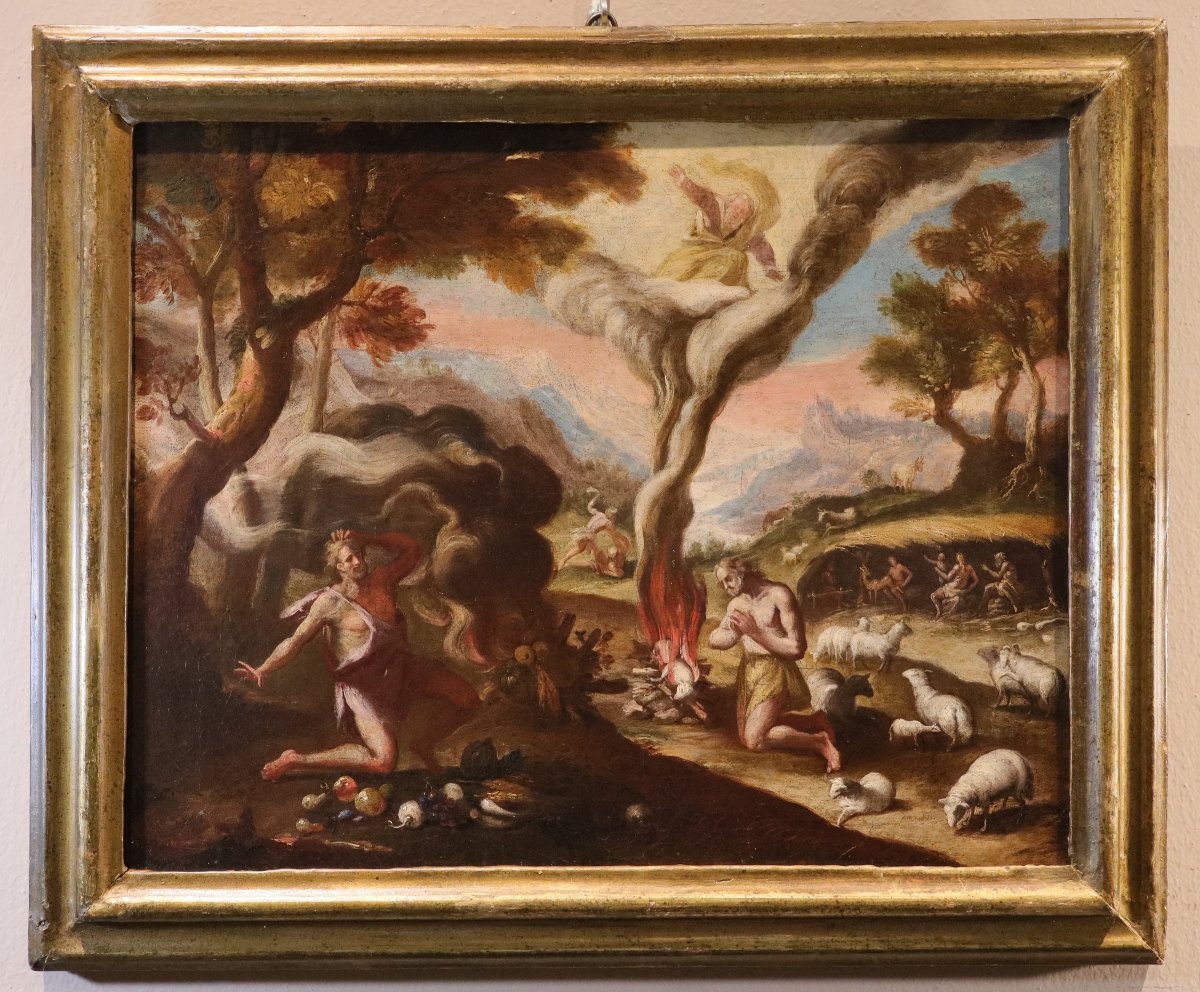
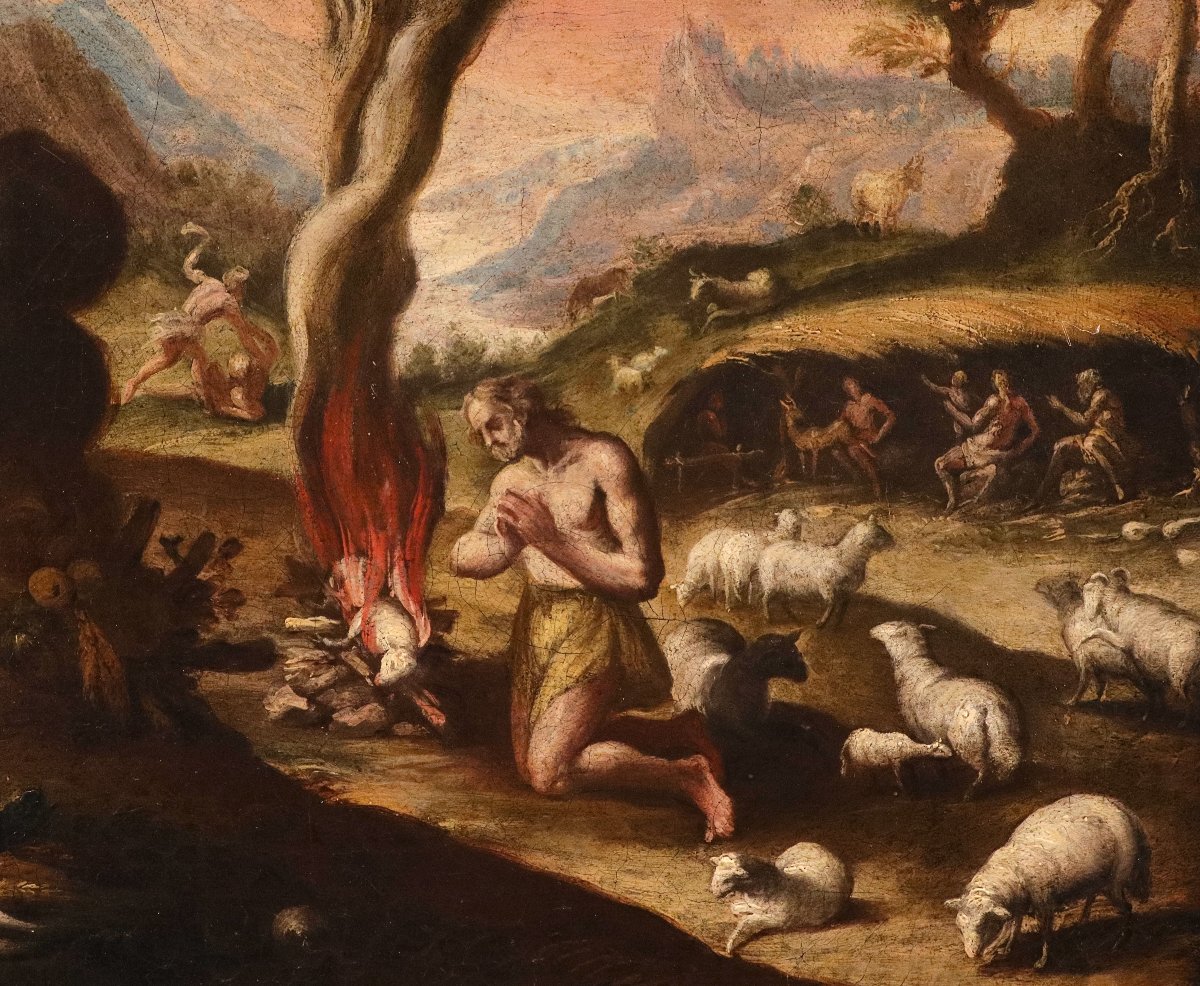
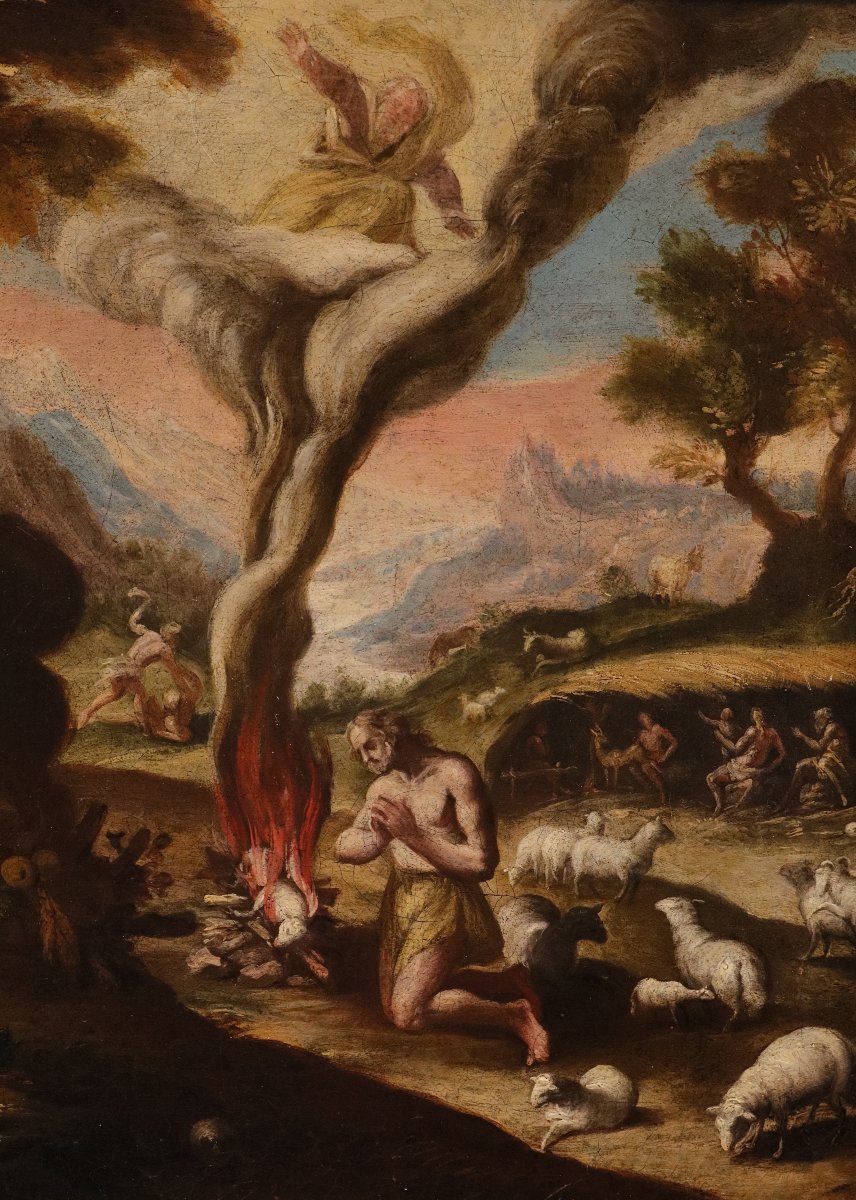
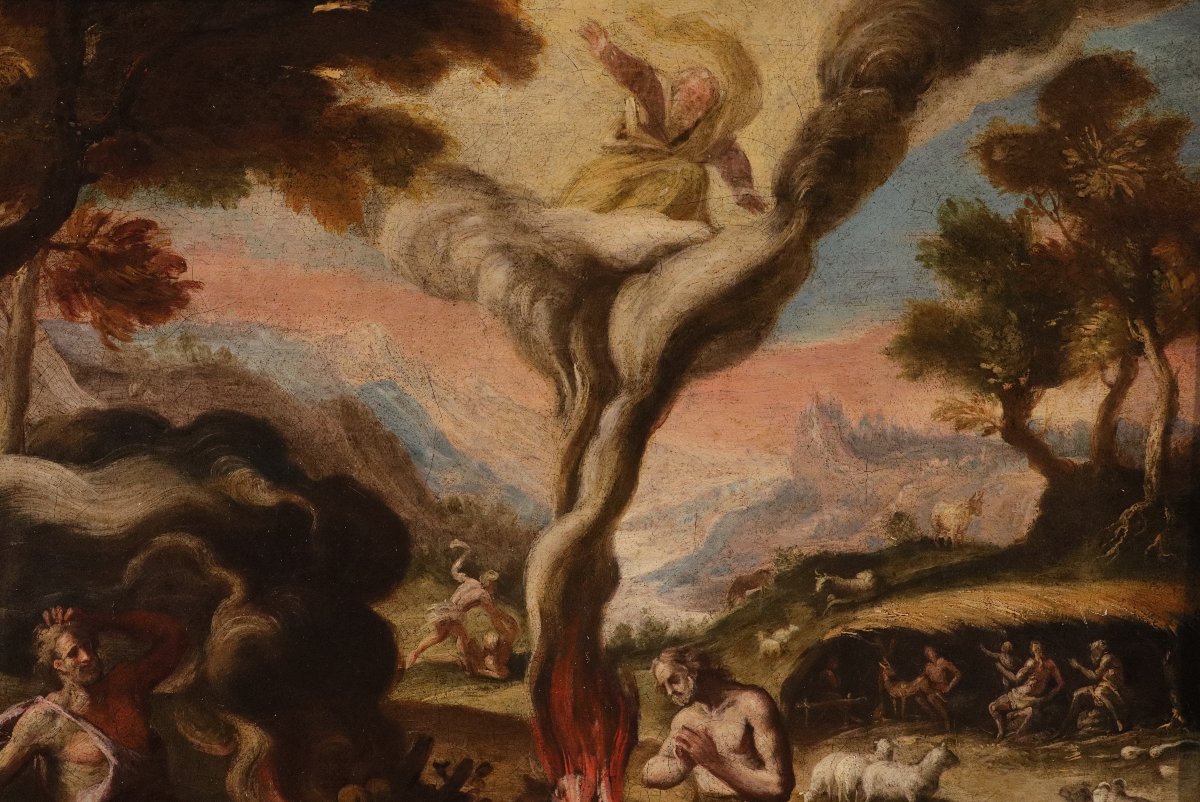
The second work, on the other hand, depicts the prelude to the dramatic story featuring the two sons of Adam and Eve, intent on offering the fruits of their labor as a sacrifice to God.
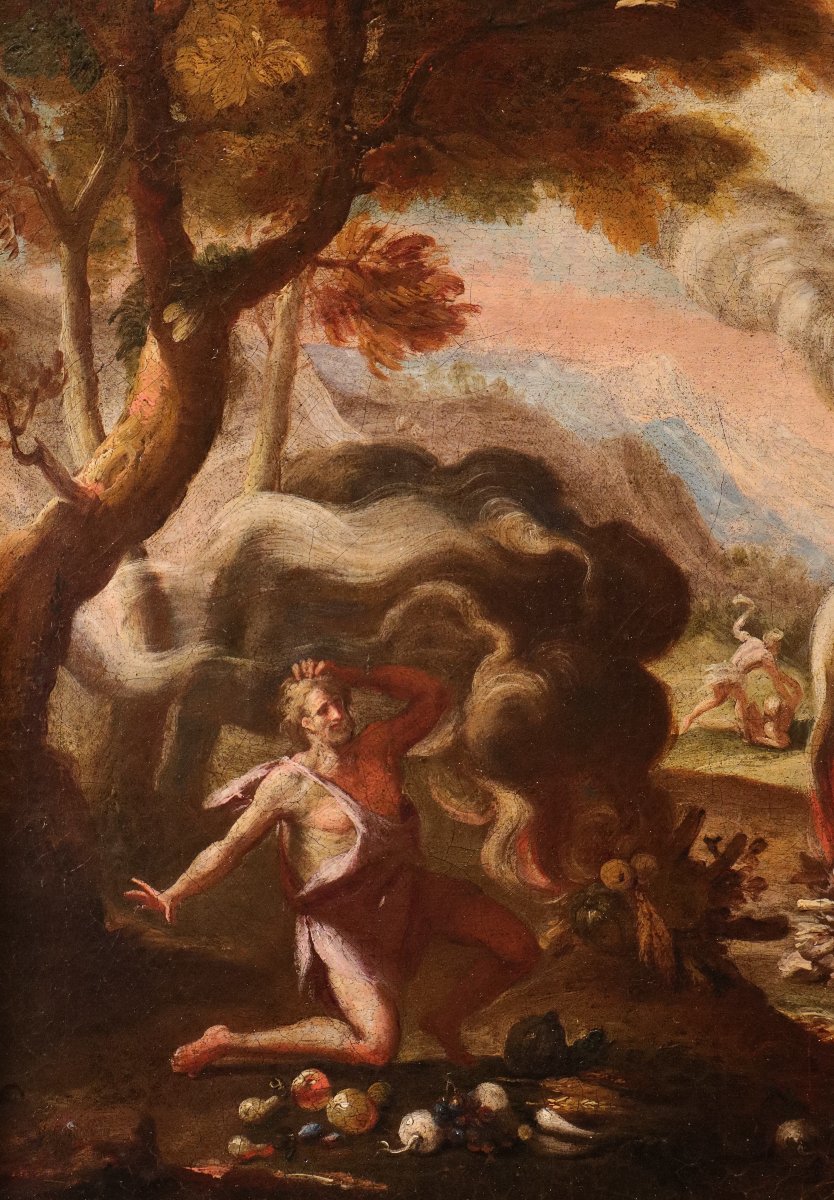
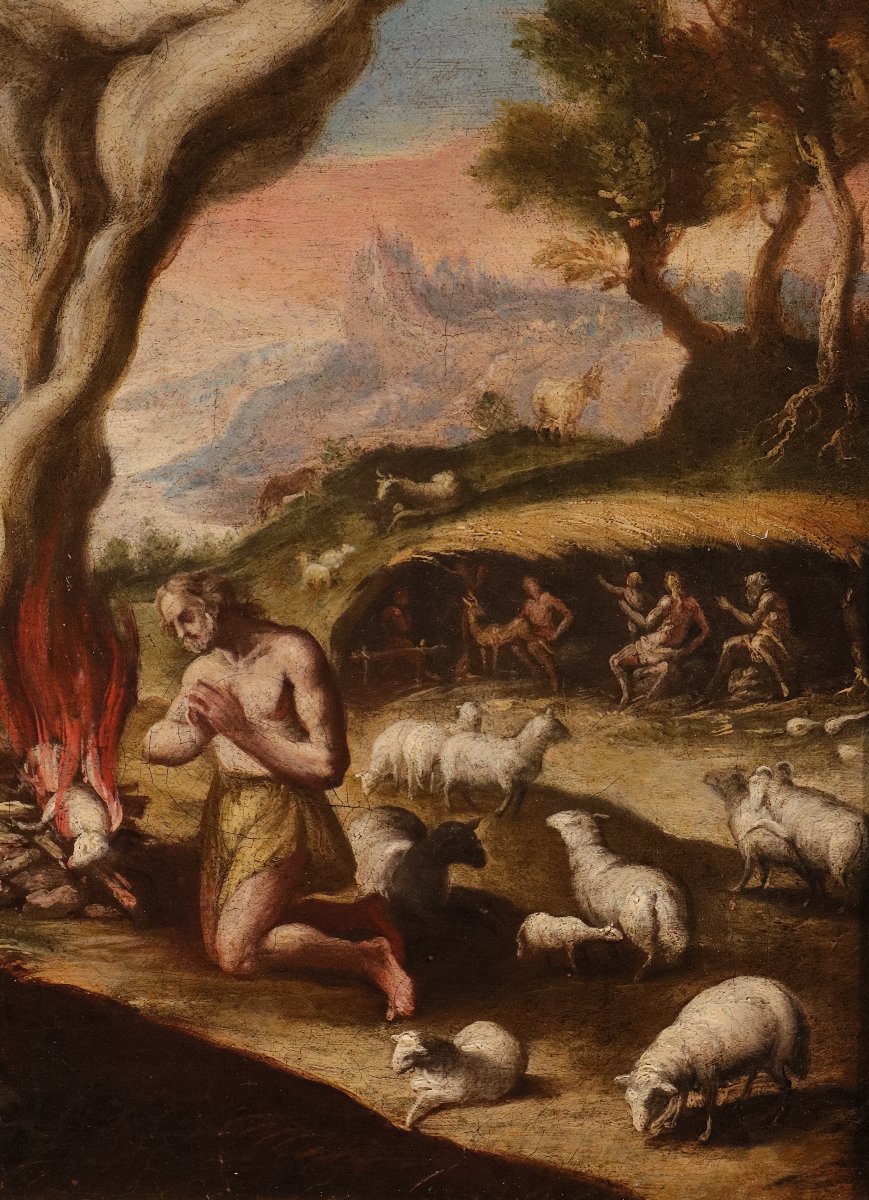
Cain is, in fact, a farmer and offers the fruits of the earth to God; however, the smoke from his sacrifice is dark, dense, and curls downward, symbolizing divine rejection. Beside him stands his brother Abel, a shepherd, kneeling before an altar on which he sacrifices a lamb from his flock. The smoke from his altar rises straight and light toward the sky, where the figure of God the Father can be seen among the clouds, favorably accepting the offering.
In the background, we can catch a glimpse of the tragic events to come, with Cain, consumed by jealousy, killing his brother. Beside them is the hut where their parents, Adam and Eve, rest.
The style of our works exhibits close affinities with the compositions of Marten de Vos, who skillfully blended traditional Flemish taste with Italianate characteristics.
The pleasing quality of the works—characterized by a soft rendering and an intense color palette—suggests that they were likely created within the master’s workshop or by a skilled painter belonging to the large group of followers influenced by his style, in which case they were inspired precisely by Sadeler I’s etching. Many prints of his works regularly served as graphic models for the painters and collaborators in his circle, who transposed his graphic inventions onto canvases and panels intended for Flemish private collections.
** Sadeler Johann I (Brussels, 1550 – Venice, 1601)
BONI ET MALI SCIENTIA
Engraver: Sadeler Johann I (1550/1601)/Designer: Marten de Vos (1532/1603–1604)
https://www.calcografica.it/stampe/inventario.php?id=S-FC40007
ADDITIONAL INFORMATION:
The paintings come complete with two attractive antique frames and are accompanied by a certificate of authenticity and a descriptive iconographic sheet.
We arrange and organize the shipping of purchased works, both within Italy and internationally, using professional and insured carriers.
If you would like to view this or other works in person, we would be delighted to welcome you to our new gallery in Riva del Garda, located at Viale Giuseppe Canella 18. We look forward to seeing you!
Please contact us for any information or to schedule a visit; we’ll be happy to assist you.
Follow us on:
https://www.instagram.com/galleriacastelbarco/?hl=it
https://www.facebook.com/galleriacastelbarco/
Adam and Eve After the Fall/
The Sacrifices of Cain and Abel
Oils on canvas
41 x 51 cm - In antique frames (with imperfections) 50 x 60 cm.
FULL DETAILS OF THE WORKS AT THE FOLLOWING - LINK -
This pair of interesting depictions, titled “Adam and Eve After the Fall” and “The Sacrifices of Cain and Abel,” are painterly adaptations of two antique engravings created by the Flemish master Johann Sadler I.
Specifically, these works belong to a famous 1583 series titled *Boni et Mali Scientia** (Knowledge of Good and Evil), engraved by Sadler based on designs by the Flemish painter Maarten De Vos (Antwerp 1532–1603) following his formative journey through Italy, particularly in Venice, Rome, and Florence.
This sequence of extraordinary compositions illustrates the crucial moments of Genesis, from the consequences of original sin to the subsequent history of the first humans and the origins of humanity.
In this case, the first painting depicts the harsh life of our first parents after their expulsion from the Garden of Eden: in the center, Adam laboriously works the barren earth, symbolizing the divine condemnation to manual labor, while Eve, inside a rudimentary hut, cares for the young Cain and Abel.
In the background is a beautiful natural landscape rich in botanical details, which preserves the idyllic vision of the Garden of Eden intact, populated by numerous animal species, including a camel, a unicorn, and a stork—all typical of the Flemish tradition influenced by the celebrated motifs of the Brueghel masters. Bathed in the golden light of Eden, the small nude figures of Adam and Eve stand out, captured in a state of purity and total harmony with nature, before the spiritual fall; above them stands the archangel Michael, who will bring an end to their idyll.
The second work, on the other hand, depicts the prelude to the dramatic story featuring the two sons of Adam and Eve, intent on offering the fruits of their labor as a sacrifice to God.
Cain is, in fact, a farmer and offers the fruits of the earth to God; however, the smoke from his sacrifice is dark, dense, and curls downward, symbolizing divine rejection. Beside him stands his brother Abel, a shepherd, kneeling before an altar on which he sacrifices a lamb from his flock. The smoke from his altar rises straight and light toward the sky, where the figure of God the Father can be seen among the clouds, favorably accepting the offering.
In the background, we can catch a glimpse of the tragic events to come, with Cain, consumed by jealousy, killing his brother. Beside them is the hut where their parents, Adam and Eve, rest.
The style of our works exhibits close affinities with the compositions of Marten de Vos, who skillfully blended traditional Flemish taste with Italianate characteristics.
The pleasing quality of the works—characterized by a soft rendering and an intense color palette—suggests that they were likely created within the master’s workshop or by a skilled painter belonging to the large group of followers influenced by his style, in which case they were inspired precisely by Sadeler I’s etching. Many prints of his works regularly served as graphic models for the painters and collaborators in his circle, who transposed his graphic inventions onto canvases and panels intended for Flemish private collections.
** Sadeler Johann I (Brussels, 1550 – Venice, 1601)
BONI ET MALI SCIENTIA
Engraver: Sadeler Johann I (1550/1601)/Designer: Marten de Vos (1532/1603–1604)
https://www.calcografica.it/stampe/inventario.php?id=S-FC40007
ADDITIONAL INFORMATION:
The paintings come complete with two attractive antique frames and are accompanied by a certificate of authenticity and a descriptive iconographic sheet.
We arrange and organize the shipping of purchased works, both within Italy and internationally, using professional and insured carriers.
If you would like to view this or other works in person, we would be delighted to welcome you to our new gallery in Riva del Garda, located at Viale Giuseppe Canella 18. We look forward to seeing you!
Please contact us for any information or to schedule a visit; we’ll be happy to assist you.
Follow us on:
https://www.instagram.com/galleriacastelbarco/?hl=it
https://www.facebook.com/galleriacastelbarco/
9 900 €
Period: 17th century
Style: Louis 15th - Transition
Condition: Excellent condition
Material: Oil painting
Width: encadré 60 cm.
Height: encadré 50 cm.
Reference (ID): 1802380
Availability: In stock
Print