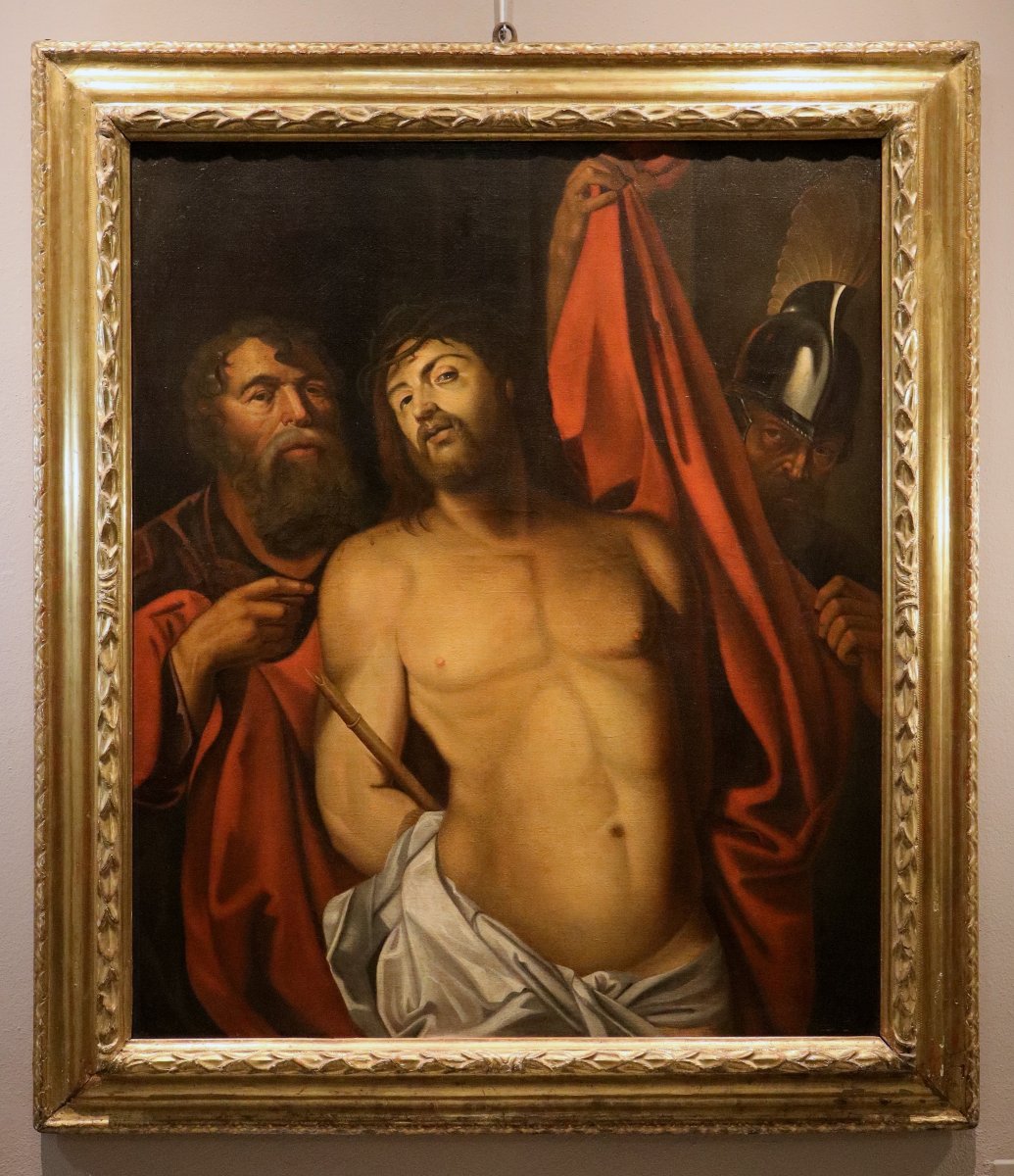
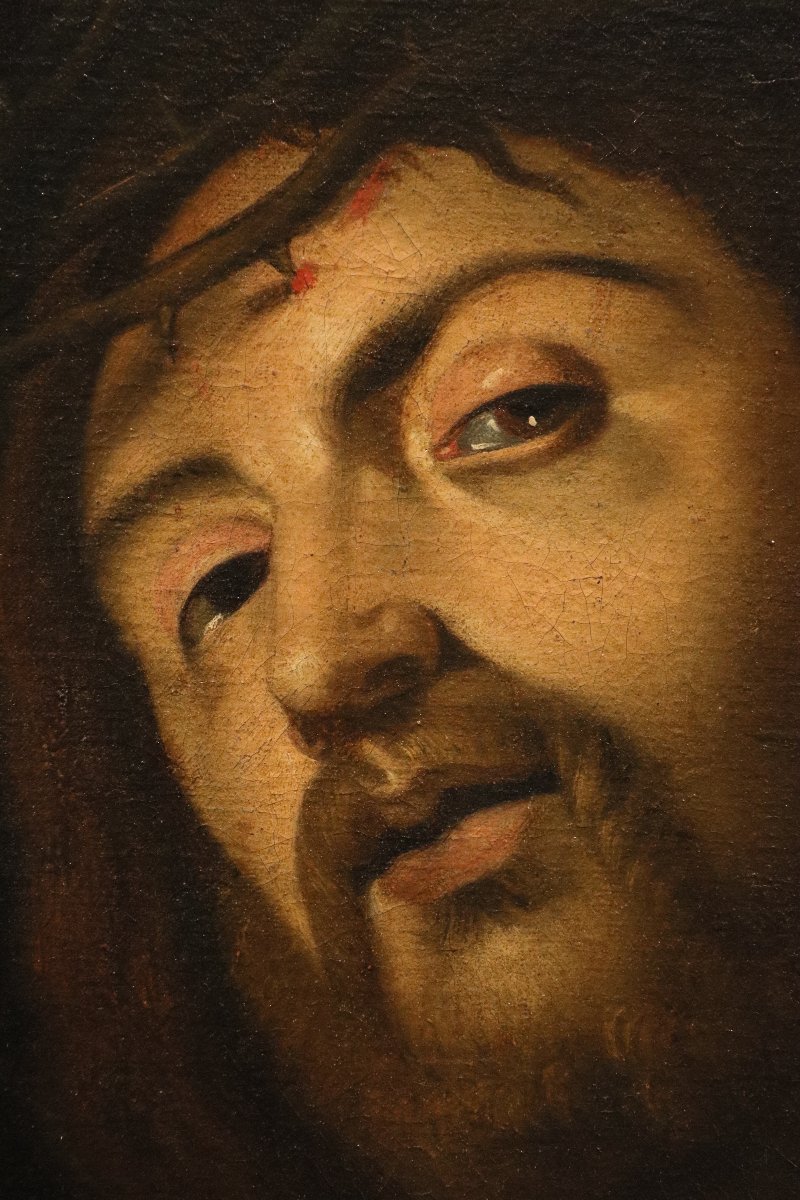
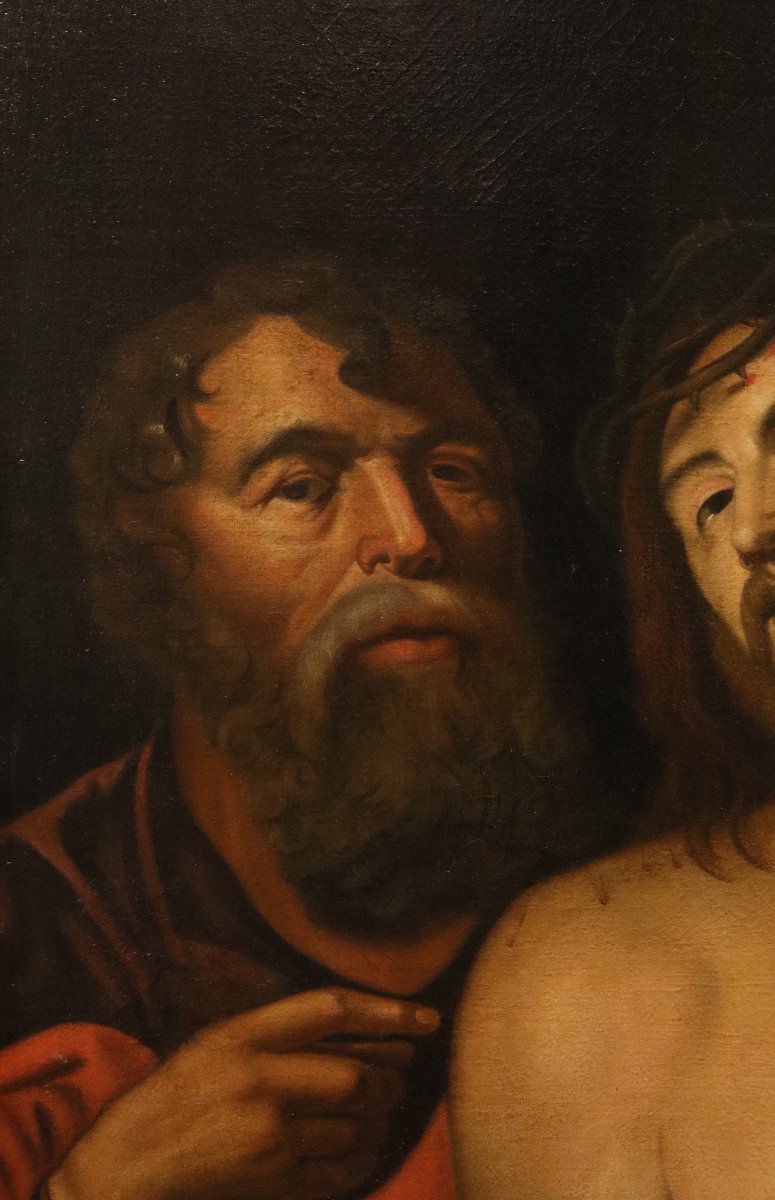
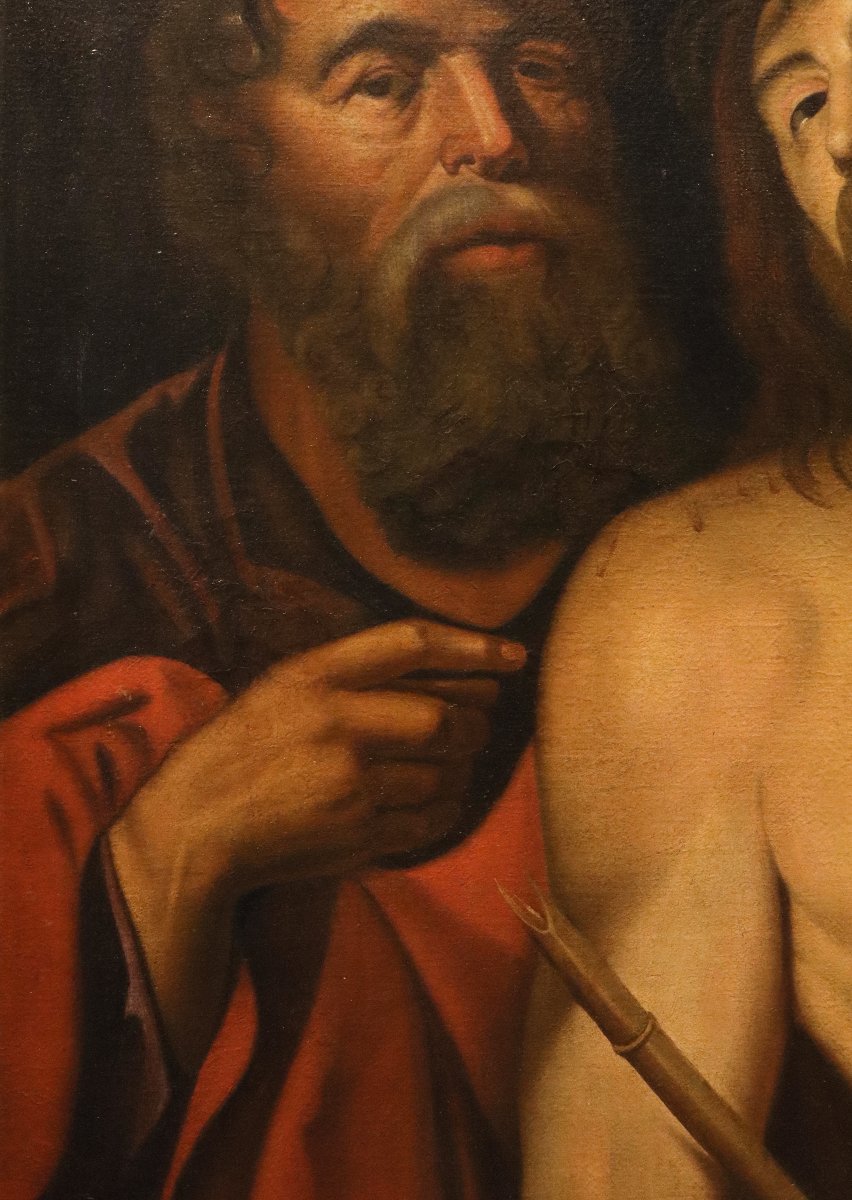
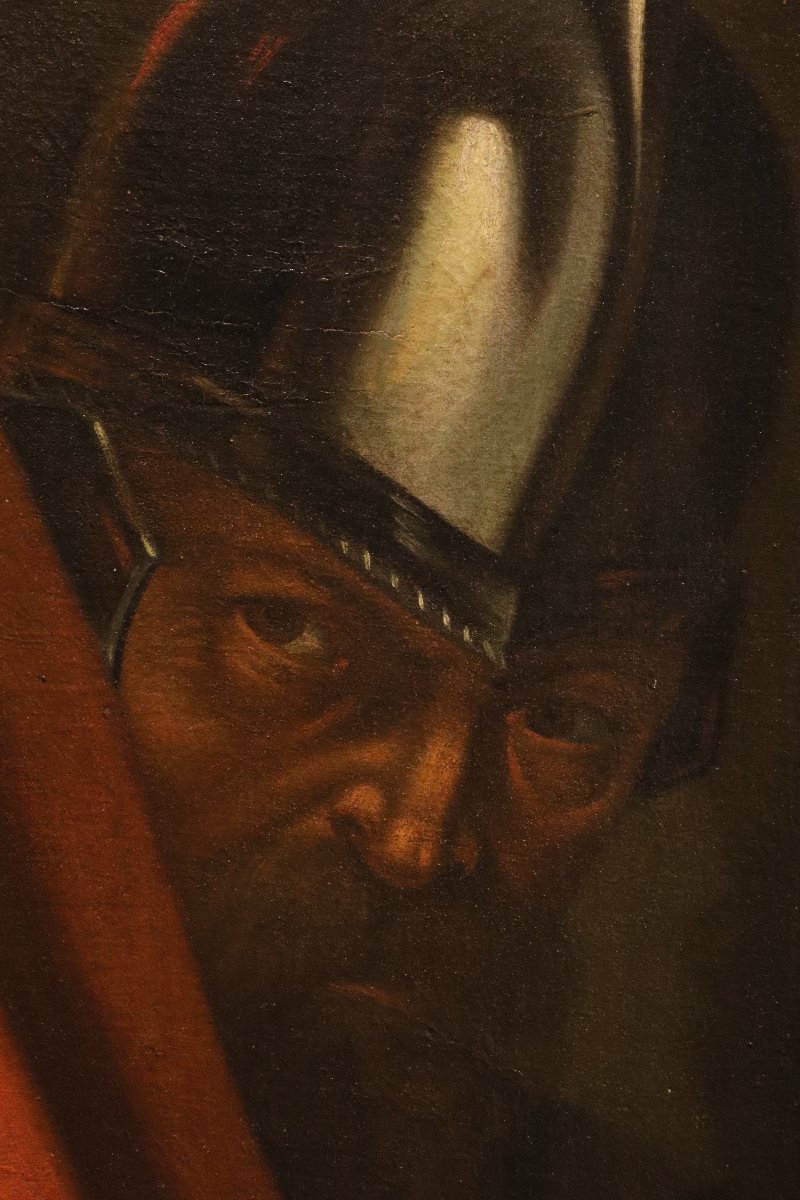
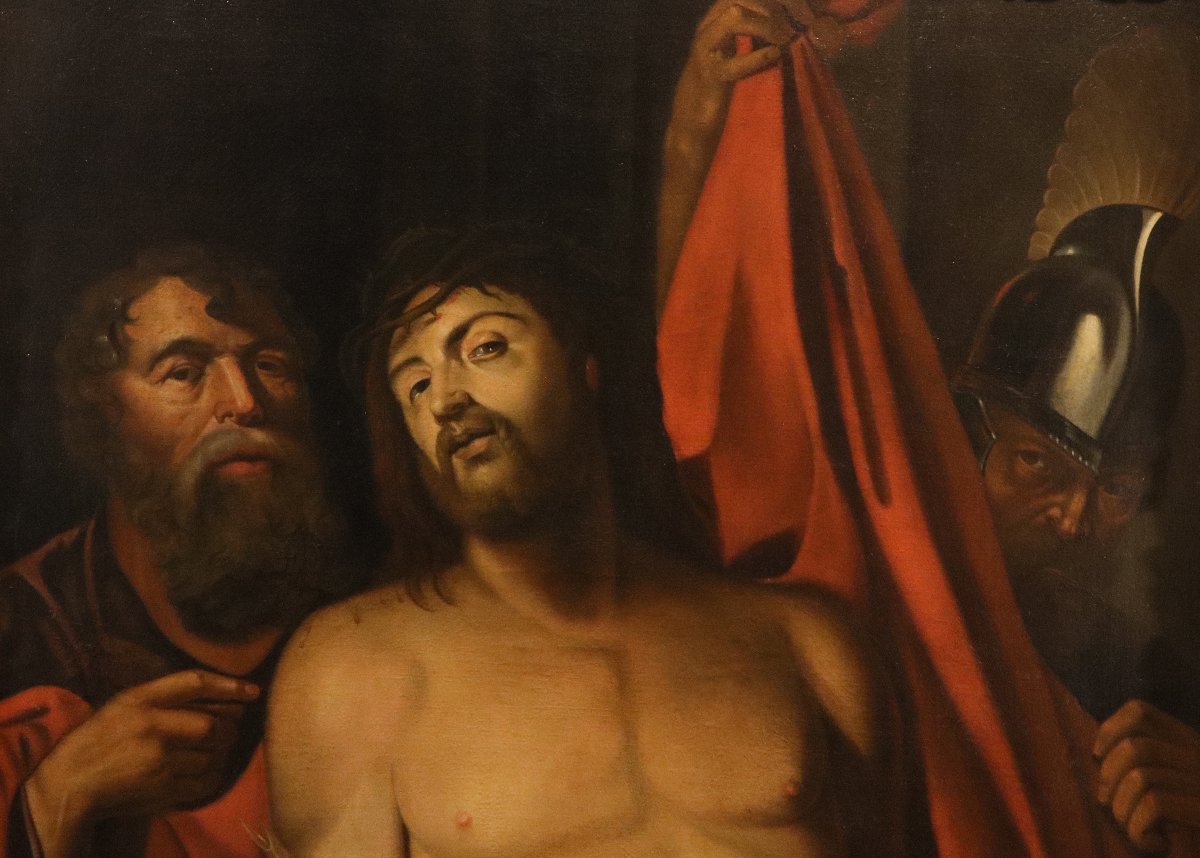
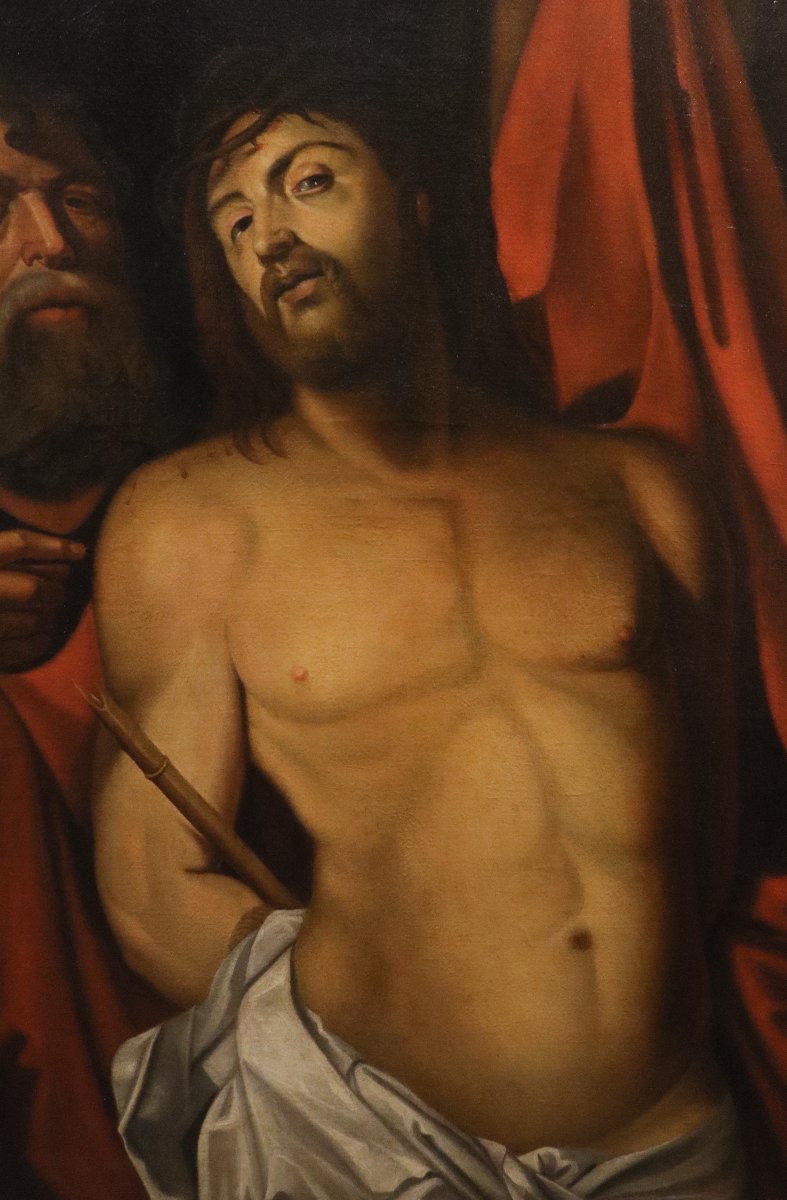
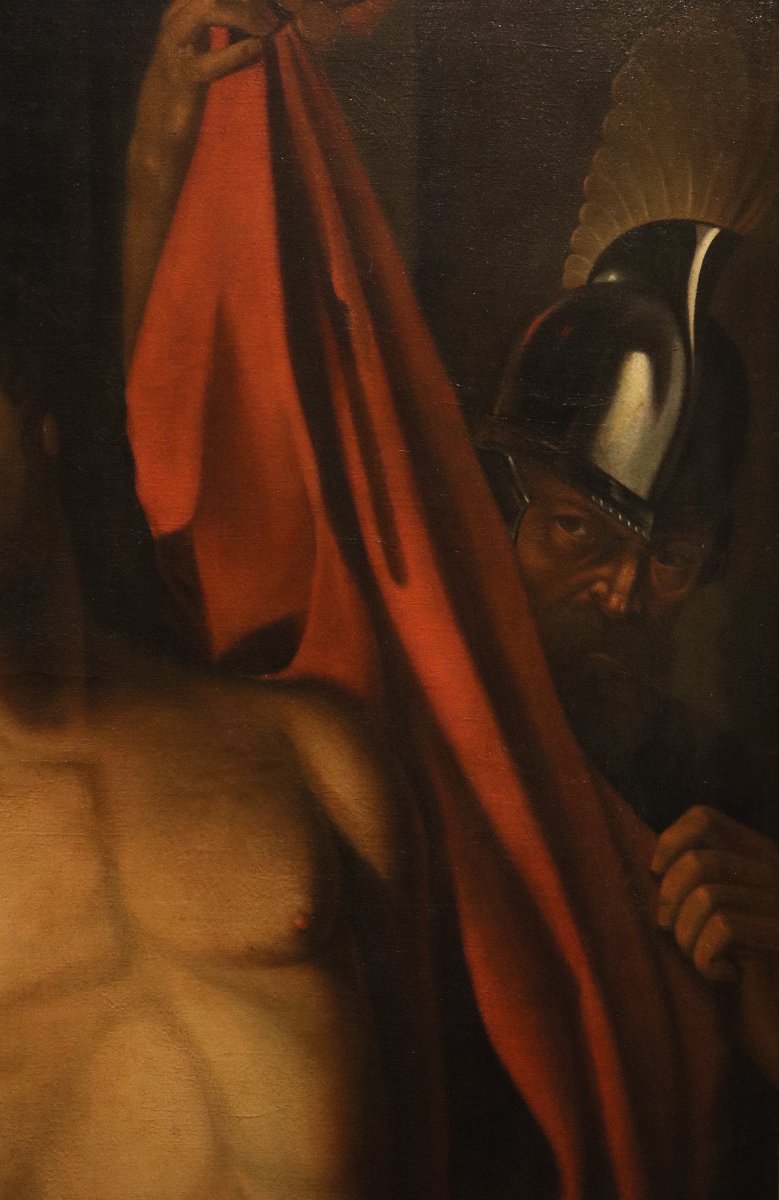


Ecce Homo, Peter Paul Rubens (siegen 1577 – Antwerp 1640), Follower Of
Artist: Suiveur De Peter Paul Rubens (siegen 1577 - Anversa 1640)
Peter Paul Rubens (Siegen 1577 – Antwerp 1640), After
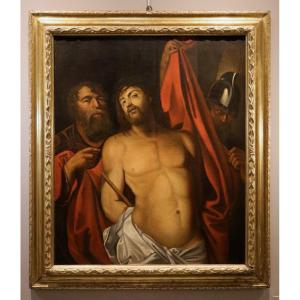
Ecce Homo
Oil on canvas
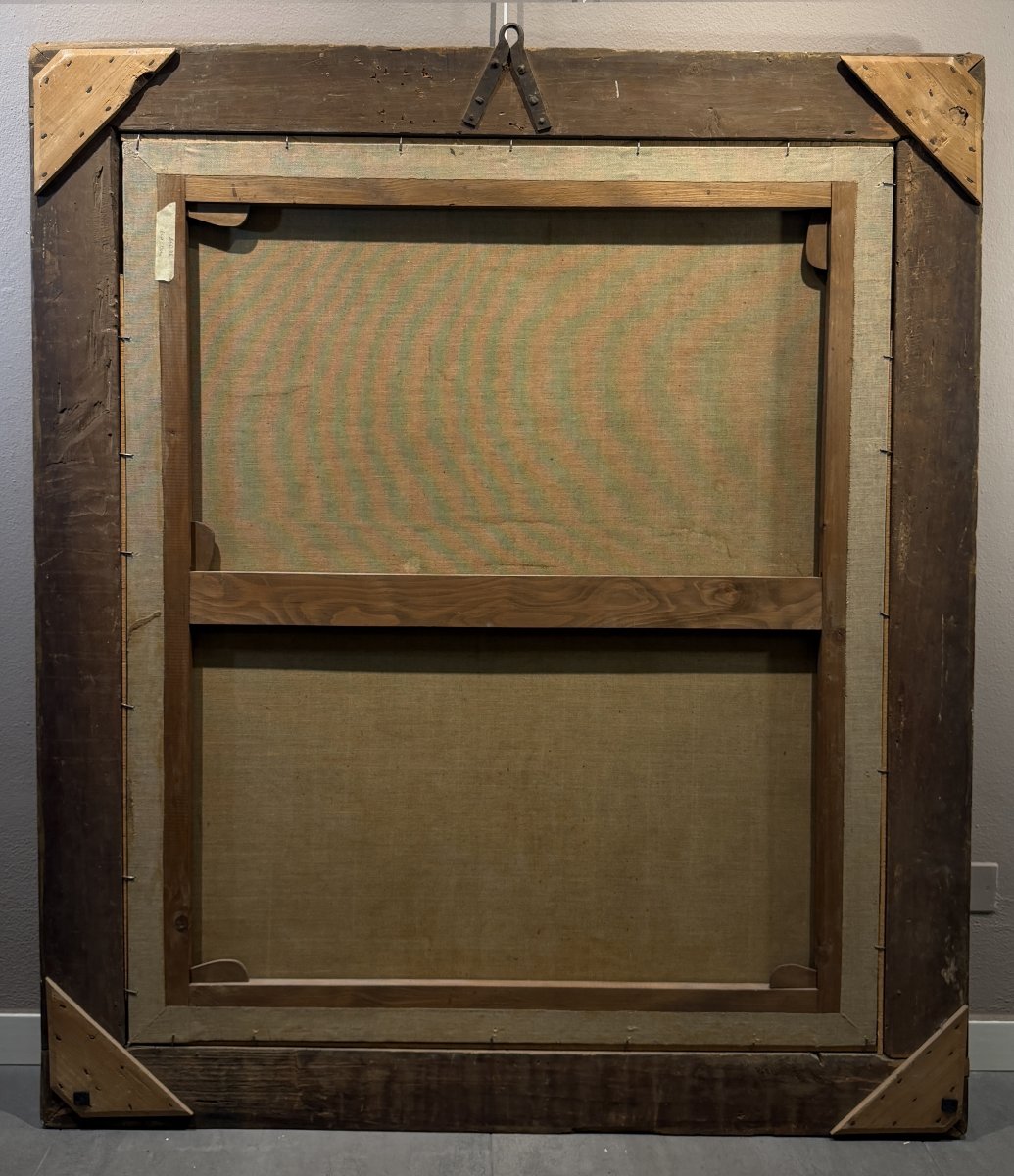
123 x 103 cm.
With antique frame (good condition, with some flaws and minor losses): 149 x 128 cm.
FULL DETAILS of the PAINTING (click HERE)
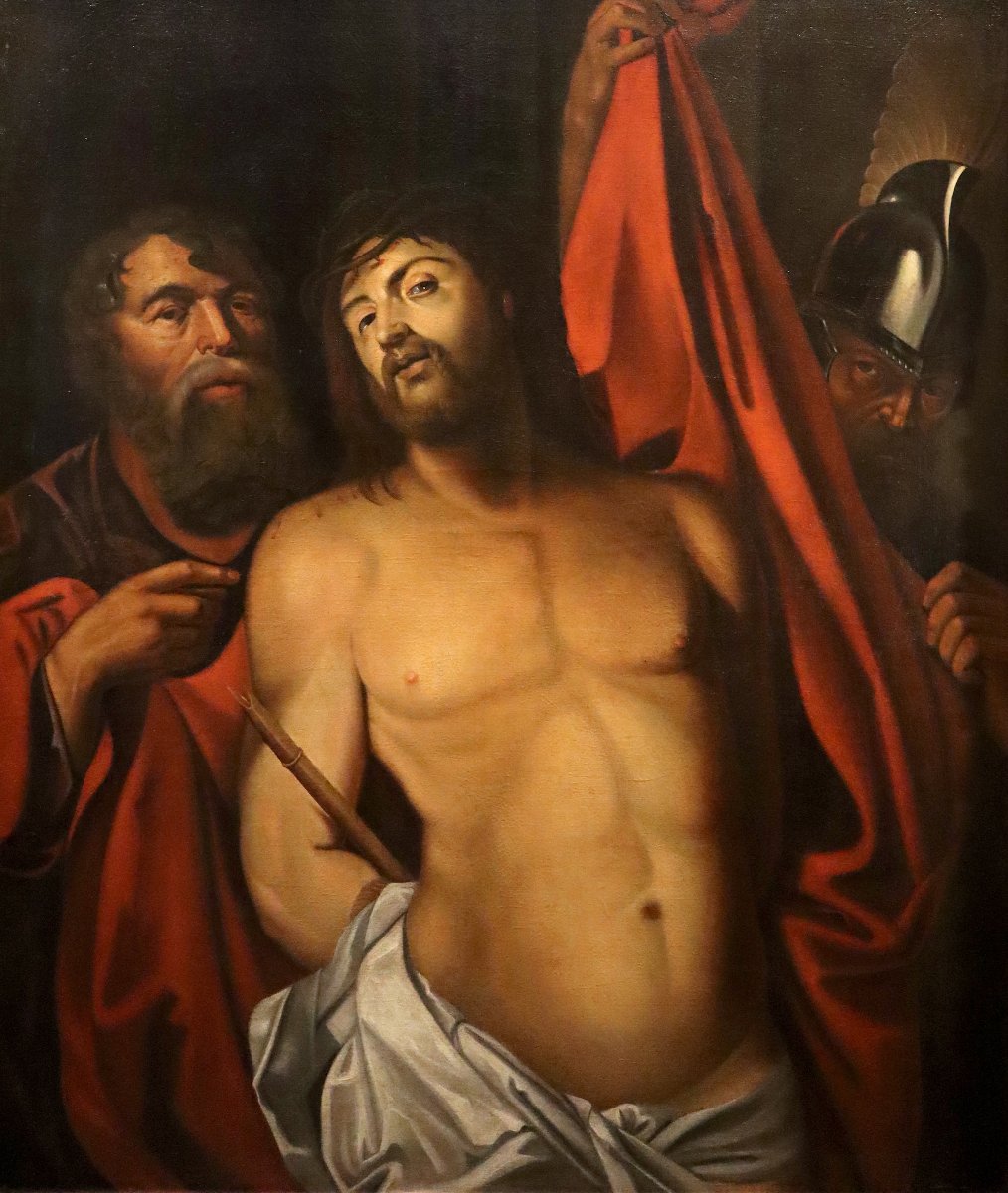
The composition captures the moment in Christ’s Passion when Pontius Pilate, then the Roman governor of Judea, presents the scourged Jesus to the people of Jerusalem, uttering the words “Ecce Homo” (literally, Behold the Man) to curry favor with the crowd, aware that he had condemned an innocent man.
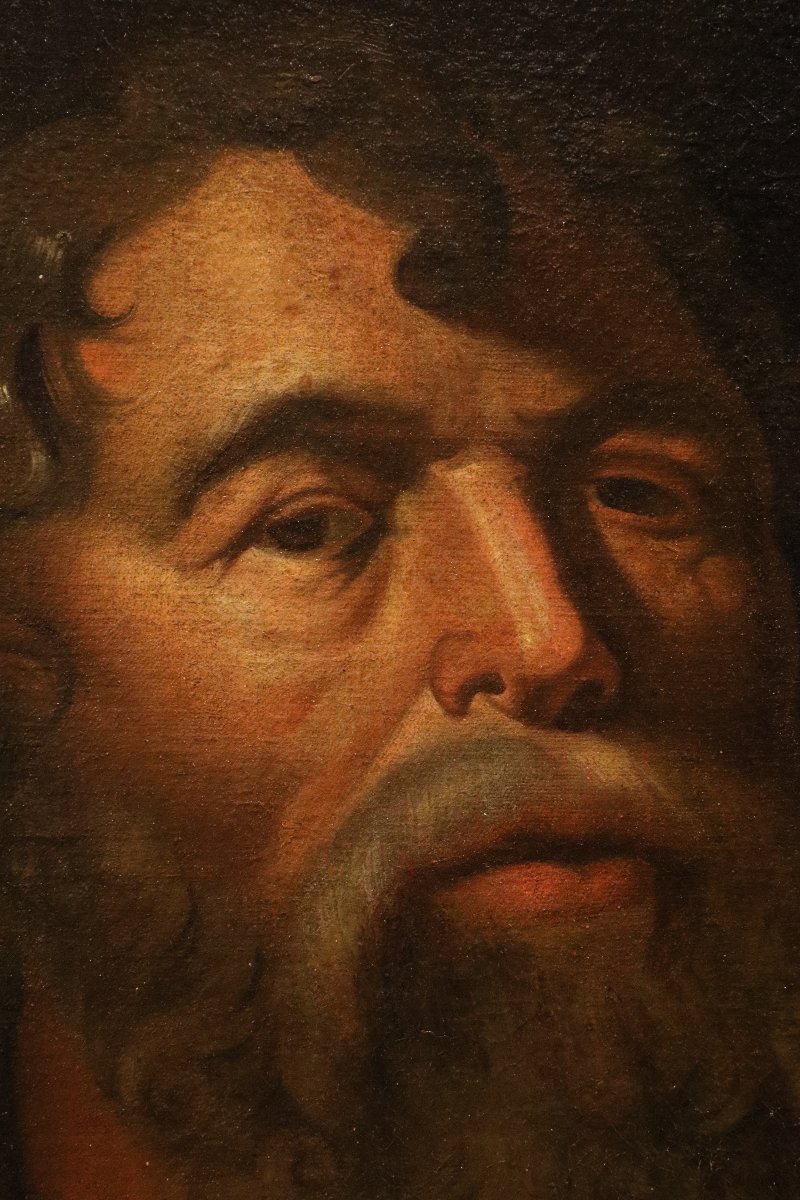
At the center of the canvas we see the powerful figure of Christ, whose face is proud, showing no sign of suffering to reveal an inner strength, with a crown of thorns resting upon his long hair, his hands bound and stripped of his clothes, and behind him a Roman soldier in armor raising a dramatic red drapery.
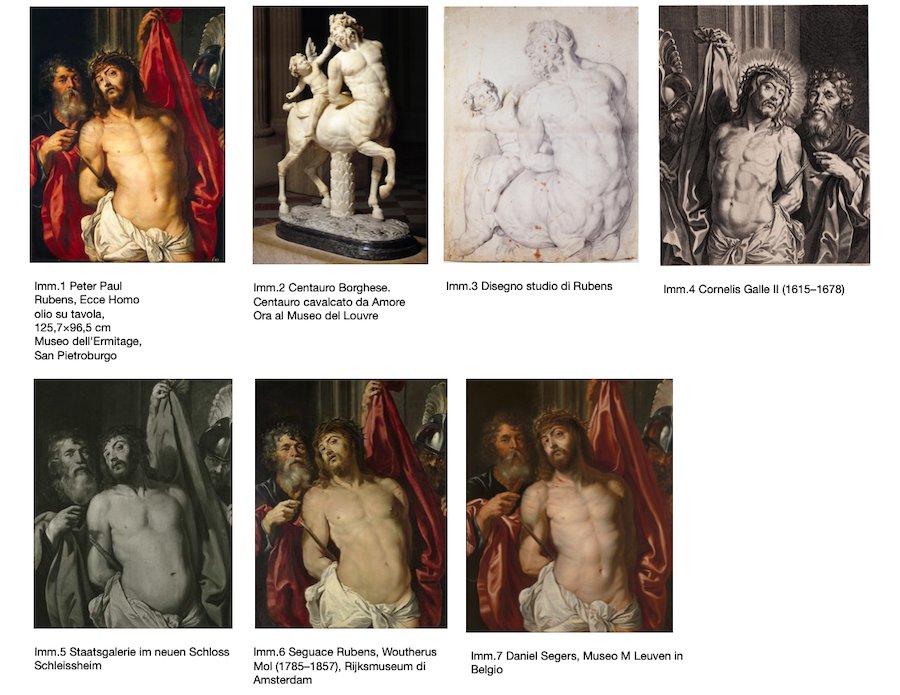
This is a fine period copy attributed to a follower of Rubens and directly inspired by the famous original painted by the Flemish master around 1612, one of his early masterpieces now housed at the Hermitage Museum in St. Petersburg (Fig. 1).
The work immediately established itself as a benchmark for Baroque painting, sublimely blending Flemish realism with the monumentality of Greco-Roman sculpture, which Rubens studied during his stay in Italy (1600–1608).
In particular, to convey the anatomical power of Christ’s pose, Rubens drew inspiration from the famous “Centaur” in Villa Borghese, adopting its idealized anatomy, the vigorous, bare torso thrust forward and the hands bound behind the back, as evidenced by several drawings the master made during his visit to Rome (Fig. 2 and Fig. 3).
The work was an immediate success, giving rise to famous copies, workshop variations, and derivations intended for the collectors of the time.
Contributing to its widespread circulation was the printing work of Cornelis Galle II (1615–1678), which allowed Rubens’s drawing to circulate widely throughout Europe, becoming the “primary source” from which countless Flemish and Italian painters of the time derived their own painted copies (Fig. 4).
Among the most famous versions from that period, we can mention the one at the Staatsgalerie im neuen Schloss Schleissheim (Fig. 5 - https://rkd.nl/images/275207 ) and the one held by the Cultural Heritage Agency (Netherlands), cataloged under inventory code B595 and attributed to the master’s circle or school, which attest to the composition’s immediate spread throughout Flanders. We can also mention the version at the Rijksmuseum in Amsterdam, historically linked to Rubens’s iconography (Fig. 6 - https://rkd.nl/images/40088), painted by the Dutch artist Woutherus Mol (1785–1857).
Also from the same period, we can mention what is perhaps the most famous replica of our *Ecce Homo*, namely the one at the M Leuven Museum in Belgium (Fig. 7 - https://www.mleuven.be/collectie/ecce-homo-0), painted by Daniel Seghers between 1612 and 1651, one of many painters commissioned to create replicas and copies of Rubens’s paintings for prominent royalty, such as Queen Isabella of Bourbon of Spain.
ADDITIONAL INFORMATION:
Good condition. With an antique frame (in good condition, with some flaws and minor losses).
The work is sold complete with a certificate of authenticity and a descriptive iconographic sheet.
We arrange and organize the shipping of purchased works, both within Italy and internationally, using professional and insured carriers.
It is also possible to view the painting at our gallery in Riva del Garda, by appointment, where we will be happy to welcome you and show you the works that interest you.
Please feel free to contact us, with no obligation, for any additional information.
Follow us on:
INSTAGRAM: https://www.instagram.com/galleriacastelbarco/?hl=it
FACEBOOK: https://www.facebook.com/galleriacastelbarco/
11 000 €
Period: 17th century
Style: Louis 15th - Transition
Condition: Good condition
Material: Oil painting
Width: encadré 128 cm.
Height: encadré 149 cm.
Reference (ID): 1840936
Availability: In stock
Print