


*ecce Homo*, 17th-century Northern Italian School
Artist: Peintre Lombard Du Xviie Siècle
17th-century Lombard painter
Ecce Homo
Oil on canvas
56 x 43 cm, framed 75 x 63 cm.
Provenance: Florence, Pandolfini, October 5, 2021, lot 209
https://www.pandolfini.it/it/asta-1077/scuola-lombarda-sec-xvii-7.asp
Complete details of the work are available directly at the following link
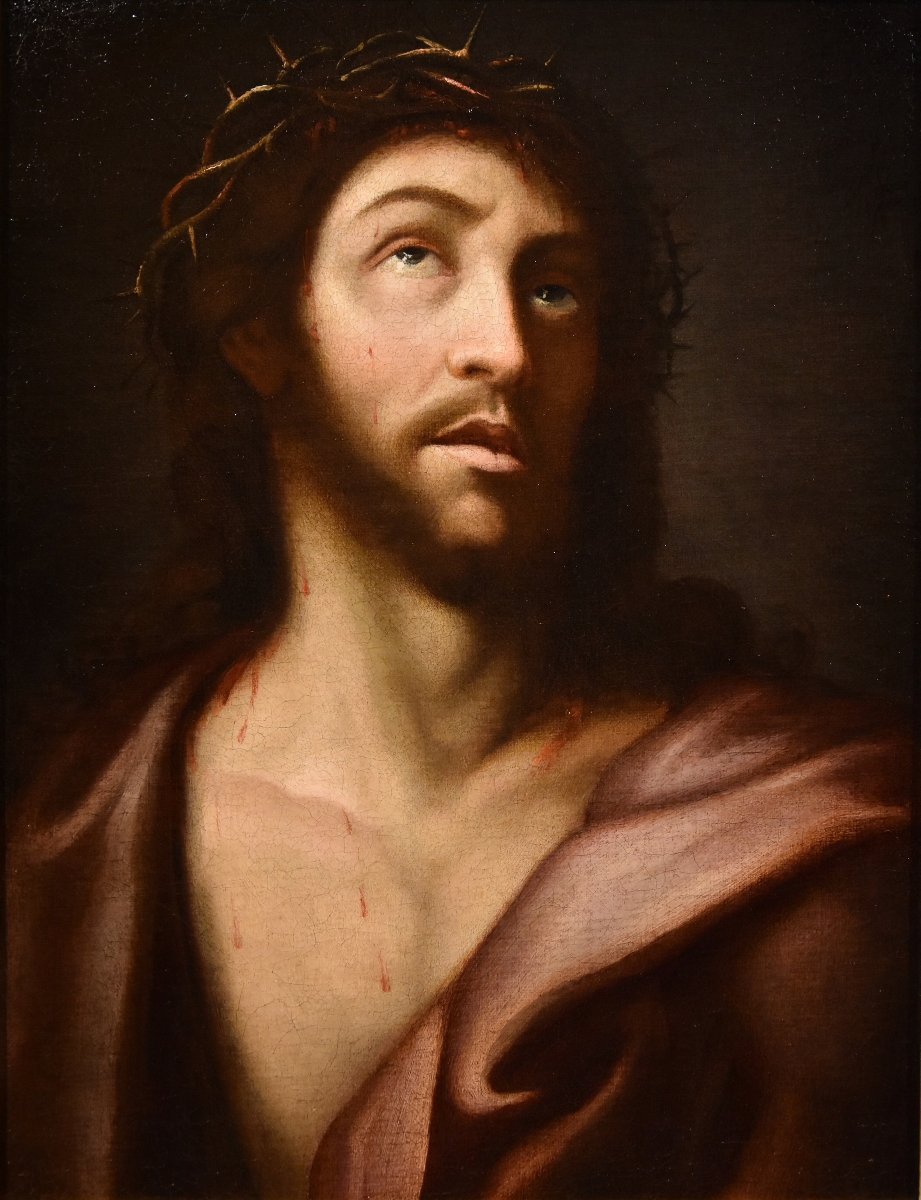
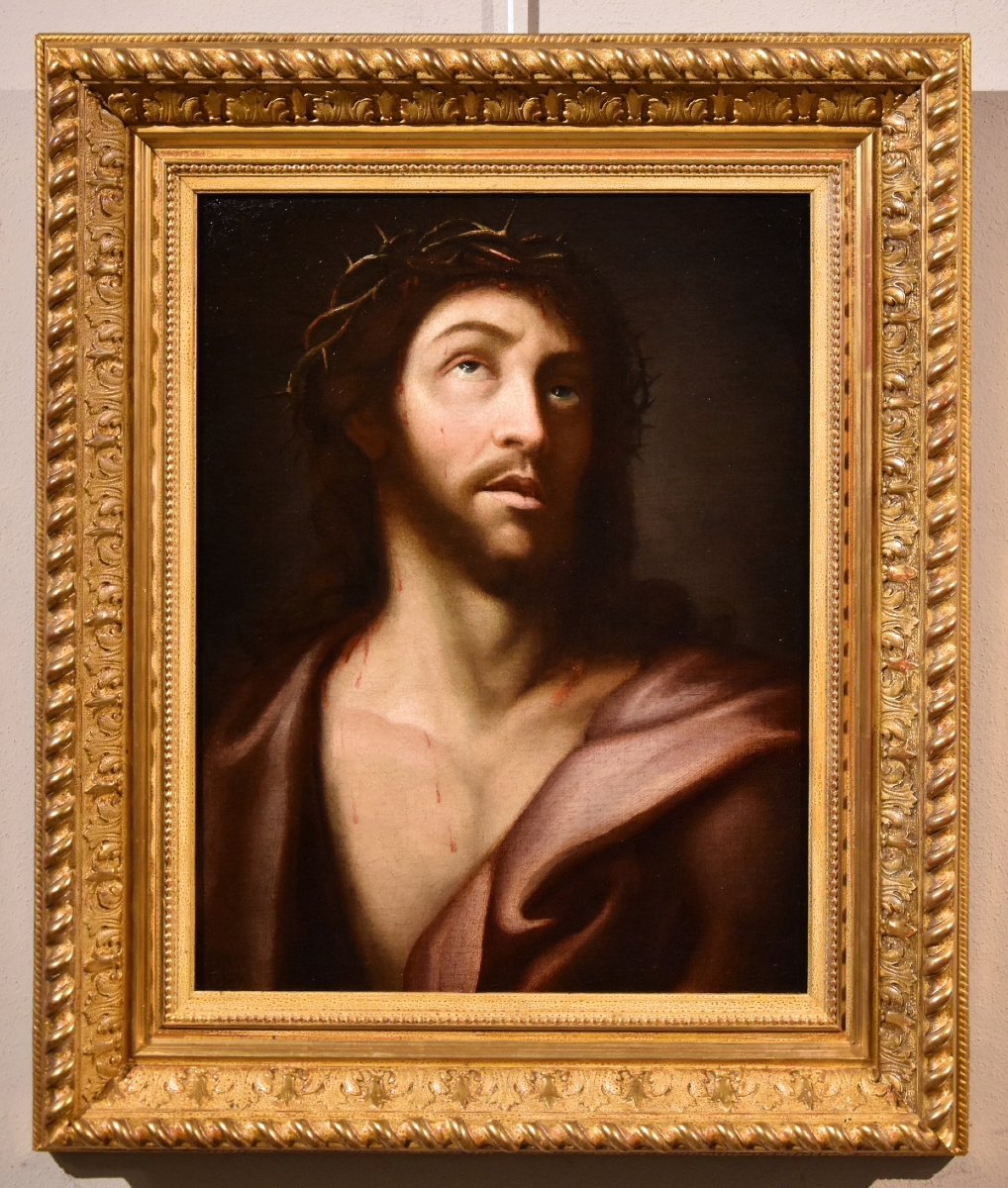
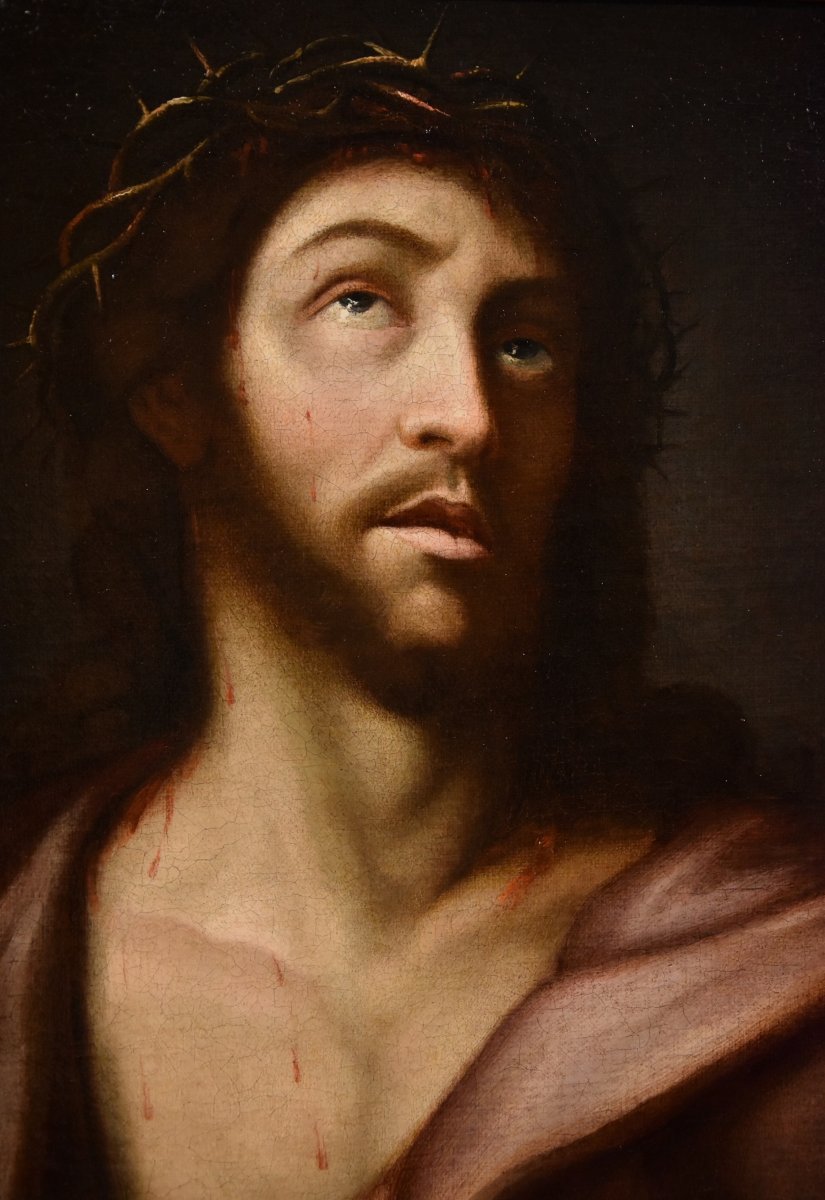
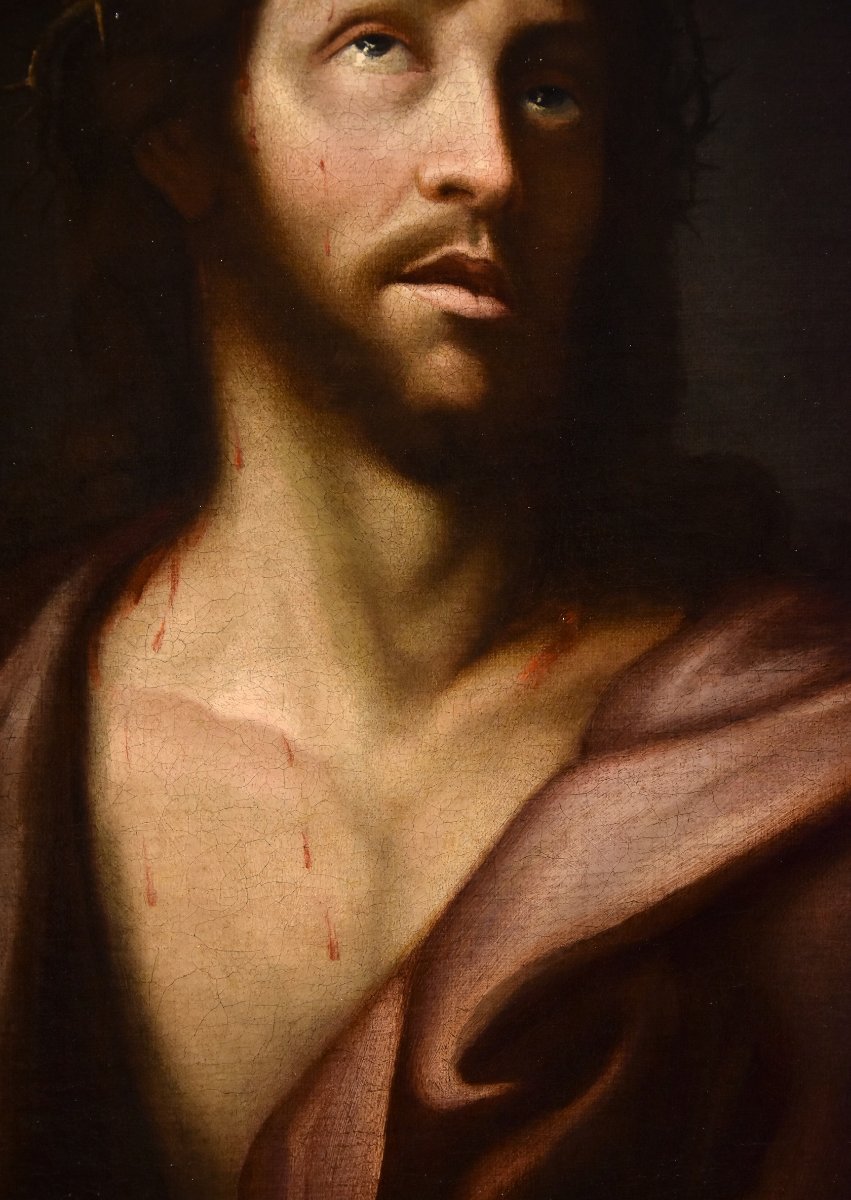
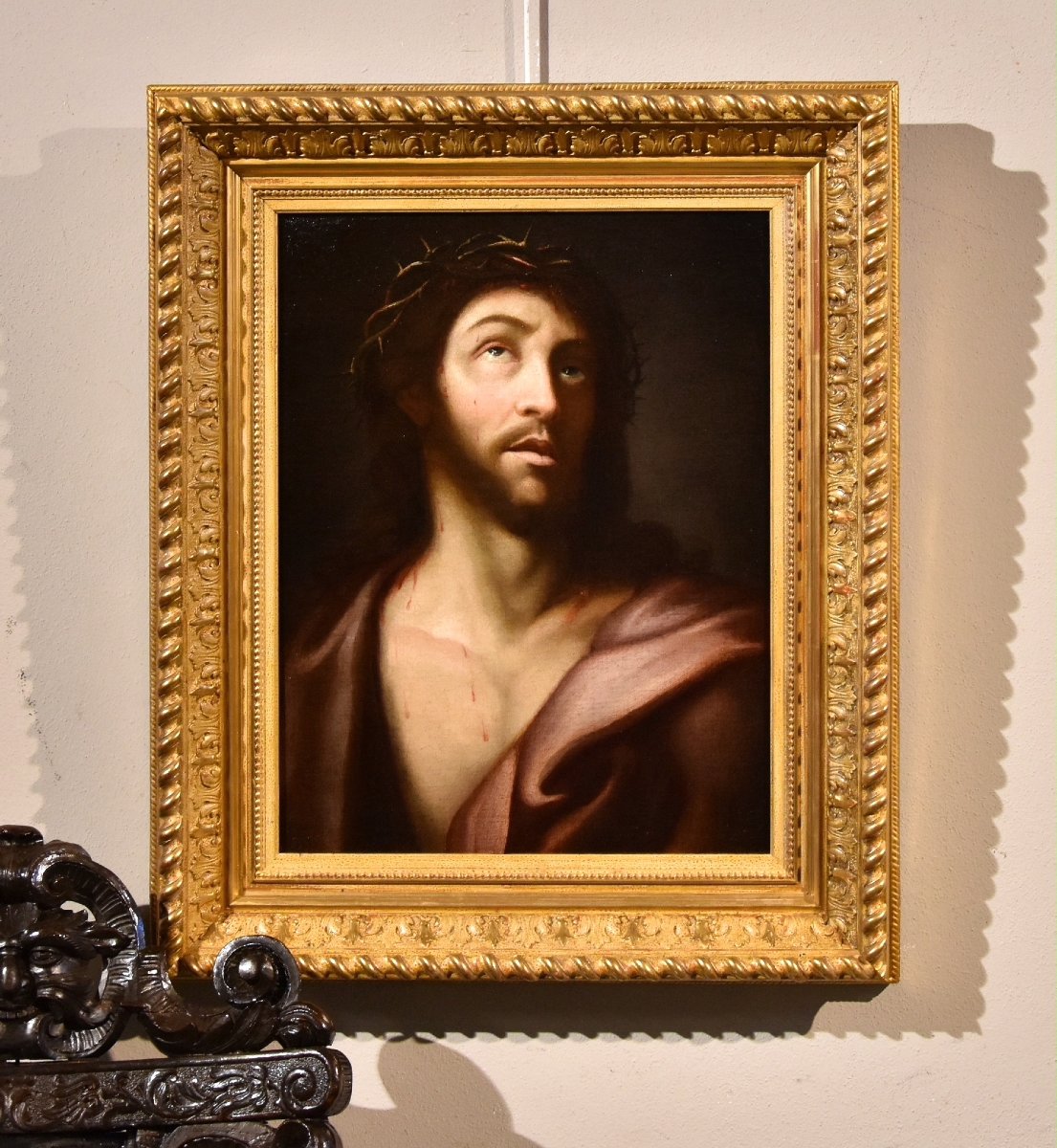
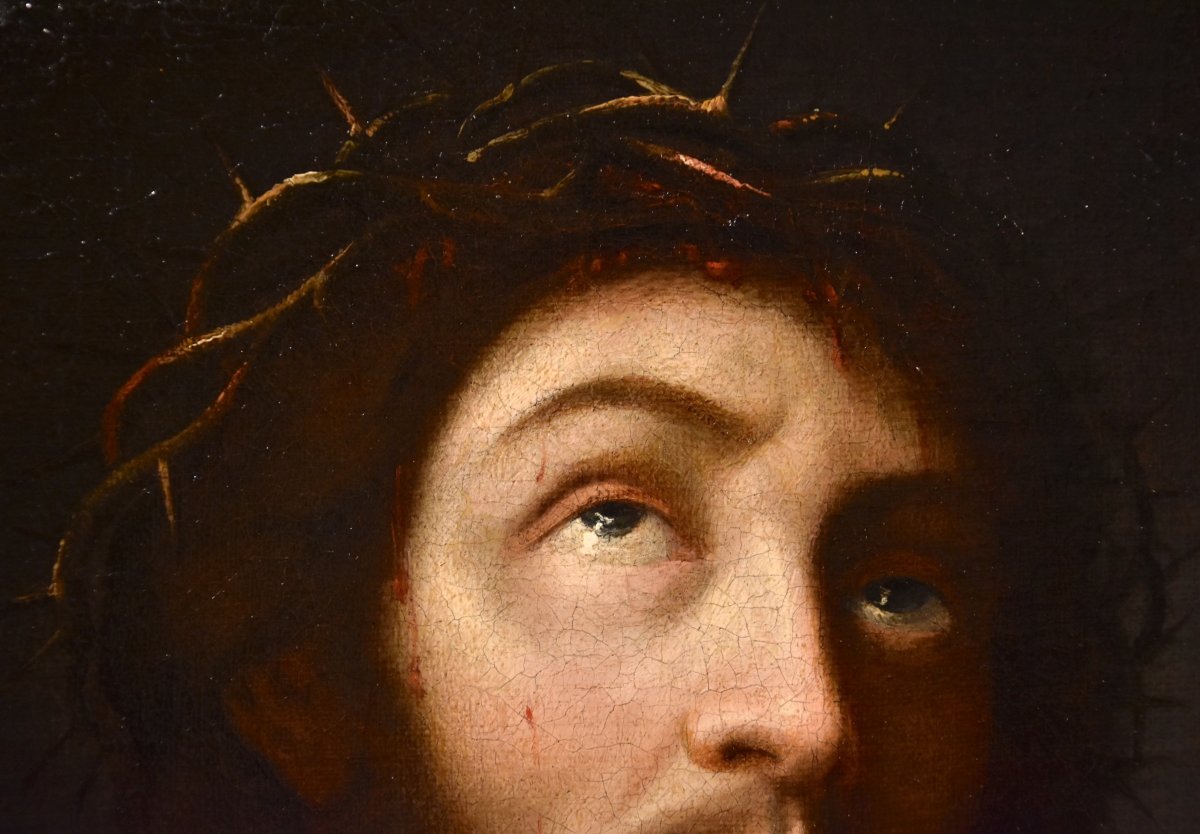
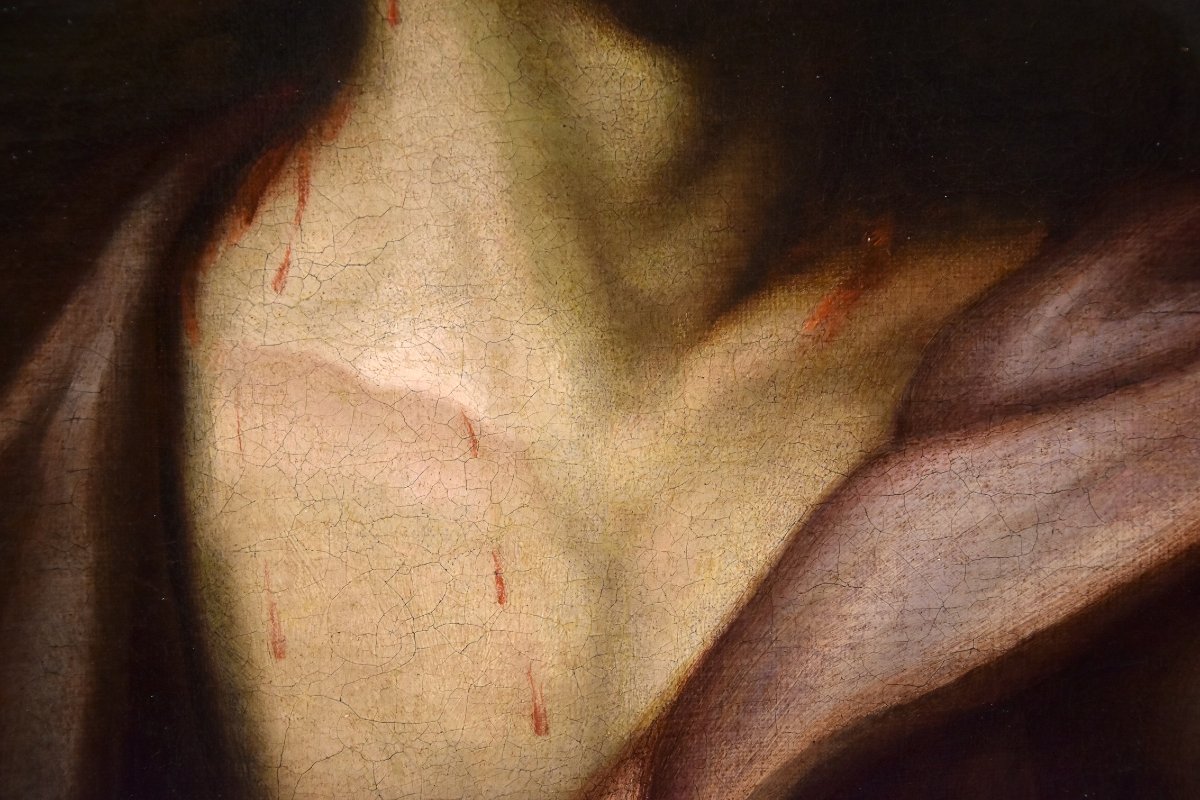
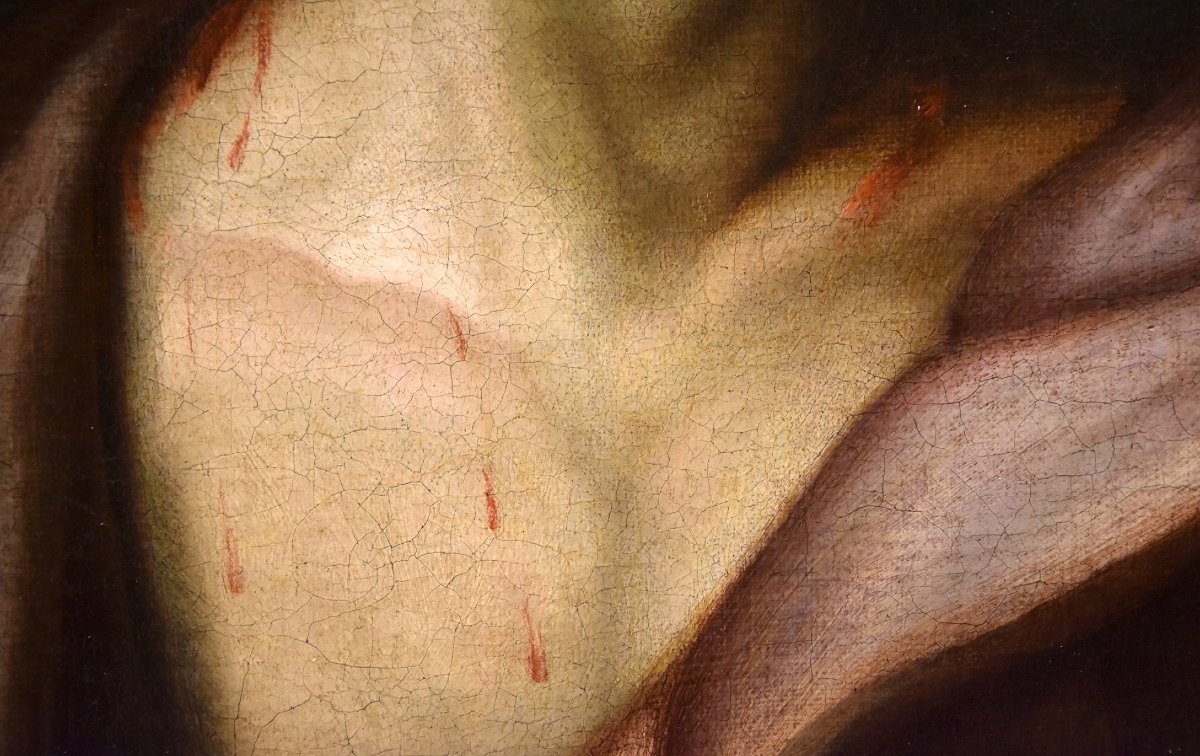
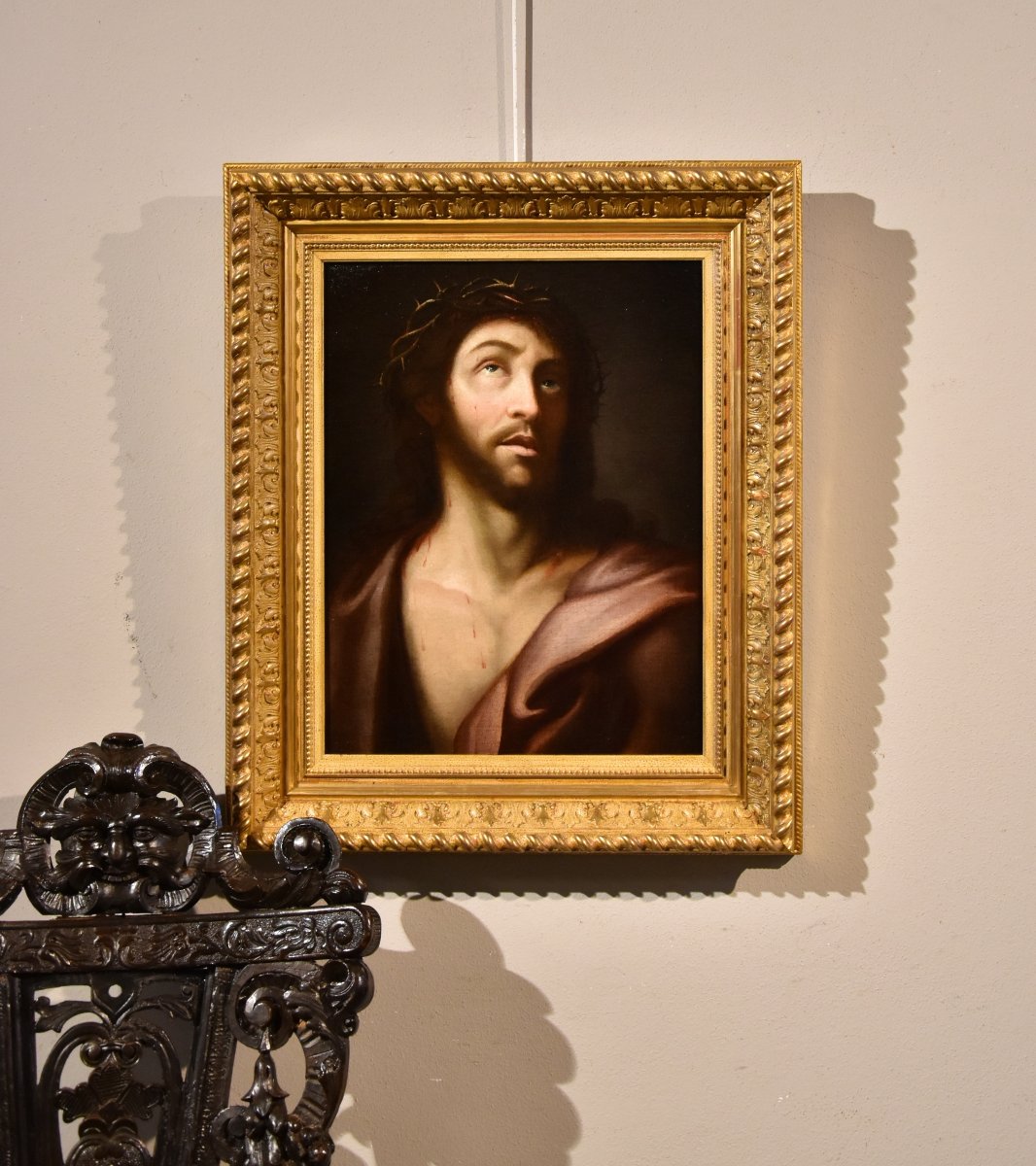
The painting on offer, by a Lombard painter active in the 17th century, depicts Christ according to the iconography of *Ecce Homo*, with a crown of thorns resting upon his long hair, stripped of his clothes, awaiting his imminent crucifixion on Golgotha
… Jesus came out, bearing the crown of thorns. Pilate said to them, “Behold the man.” When they saw him, the chief priests and the guards shouted, “Crucify him, crucify him” (Gospel of John 19:5).
This type of depiction of Christ, known precisely as Ecce Homo and which, as noted, precedes the moment of his Crucifixion—after he had been arrested and scourged, while being mocked by the Roman soldiers, who crowned him with thorns as a sign of derision toward the one who had proclaimed himself the King of Kings—became widespread in the 16th century, giving rise to particularly intense works of art.
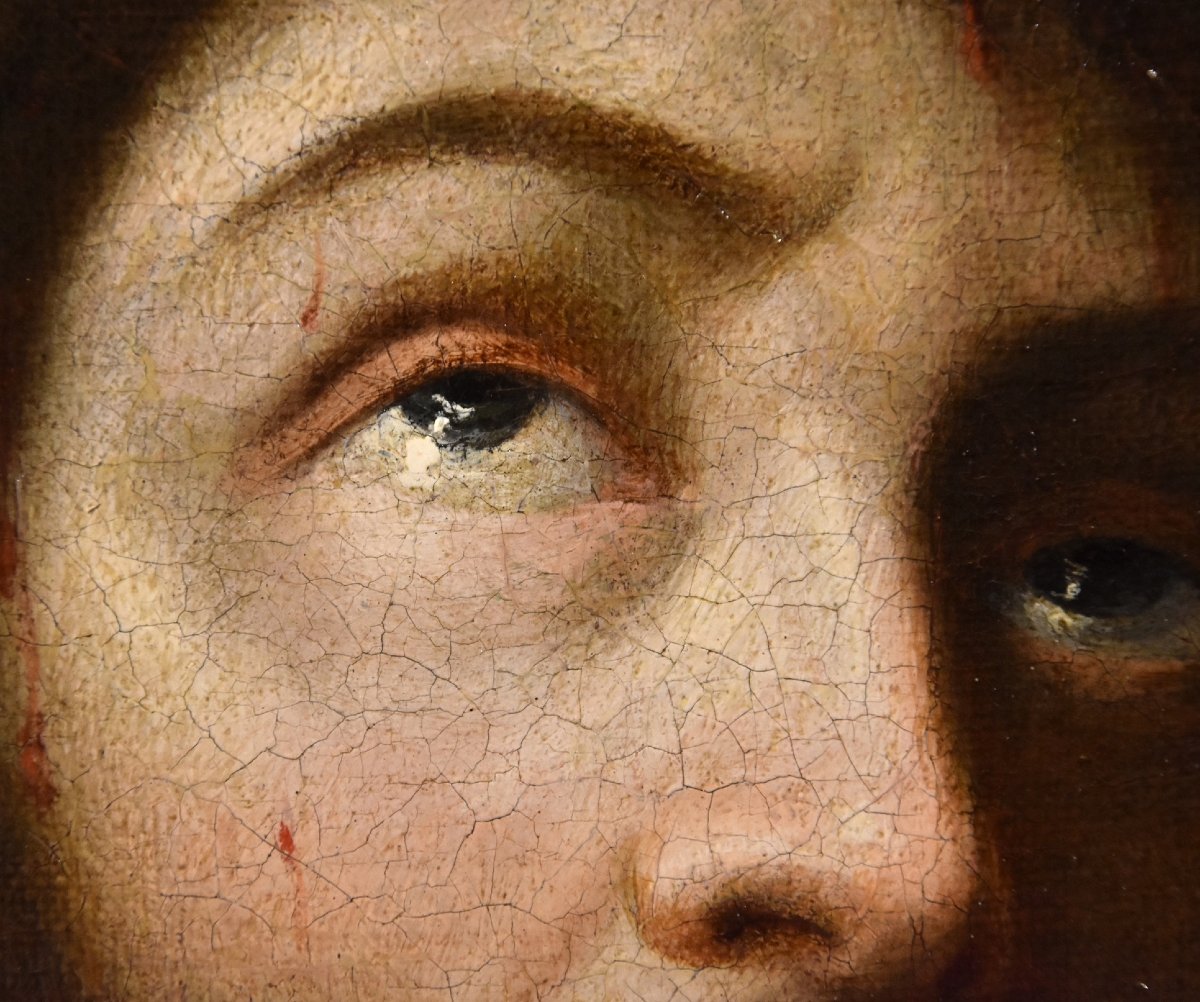
The image harmonizes the remarkable spiritual strength of Christ in his moment of human suffering with a refined elegance, supported by the superb rendering of the face that stands out against the dark background.
Although the “Ecce Homo” is not an “easy” subject, in this case the work is not treated with a strong sense of drama, yet it is nonetheless capable of moving the viewer. As he awaits his martyrdom, what strikes the viewer is the face, which appears unperturbed and not at all suffering, but rather serene, evoking the forgiveness he granted to his executioners.
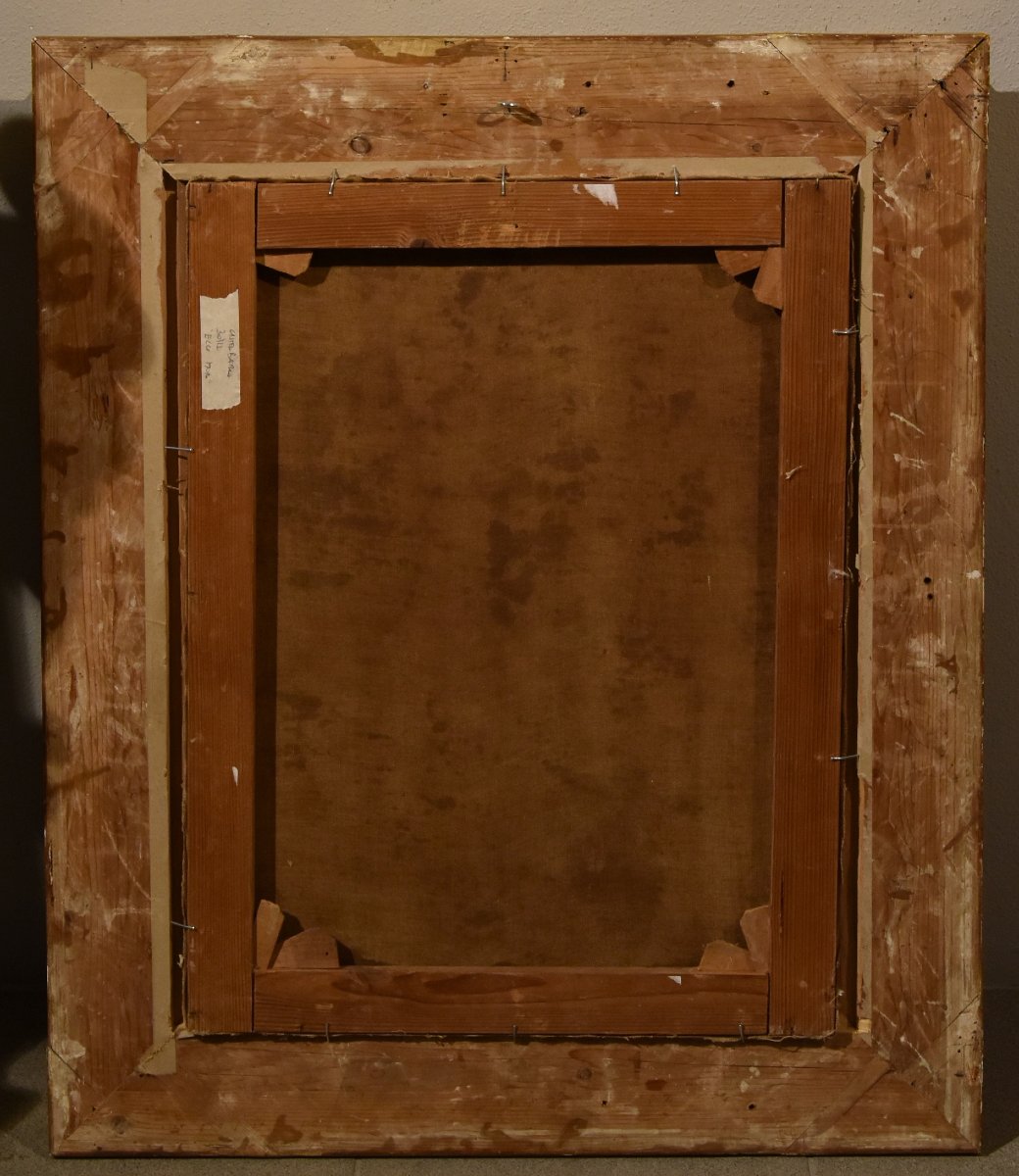
The canvas is in good condition, considering its age.
The painting, like all of our items, is sold with a photographic certificate of authenticity in accordance with the law.
For more information, please contact us: we are at your complete disposal for any inquiries.
Follow us on:
https://www.instagram.com/galleriacastelbarco/?hl=it
https://www.facebook.com/galleriacastelbarco/
Ecce Homo
Oil on canvas
56 x 43 cm, framed 75 x 63 cm.
Provenance: Florence, Pandolfini, October 5, 2021, lot 209
https://www.pandolfini.it/it/asta-1077/scuola-lombarda-sec-xvii-7.asp
Complete details of the work are available directly at the following link
The painting on offer, by a Lombard painter active in the 17th century, depicts Christ according to the iconography of *Ecce Homo*, with a crown of thorns resting upon his long hair, stripped of his clothes, awaiting his imminent crucifixion on Golgotha
… Jesus came out, bearing the crown of thorns. Pilate said to them, “Behold the man.” When they saw him, the chief priests and the guards shouted, “Crucify him, crucify him” (Gospel of John 19:5).
This type of depiction of Christ, known precisely as Ecce Homo and which, as noted, precedes the moment of his Crucifixion—after he had been arrested and scourged, while being mocked by the Roman soldiers, who crowned him with thorns as a sign of derision toward the one who had proclaimed himself the King of Kings—became widespread in the 16th century, giving rise to particularly intense works of art.
The image harmonizes the remarkable spiritual strength of Christ in his moment of human suffering with a refined elegance, supported by the superb rendering of the face that stands out against the dark background.
Although the “Ecce Homo” is not an “easy” subject, in this case the work is not treated with a strong sense of drama, yet it is nonetheless capable of moving the viewer. As he awaits his martyrdom, what strikes the viewer is the face, which appears unperturbed and not at all suffering, but rather serene, evoking the forgiveness he granted to his executioners.
The canvas is in good condition, considering its age.
The painting, like all of our items, is sold with a photographic certificate of authenticity in accordance with the law.
For more information, please contact us: we are at your complete disposal for any inquiries.
Follow us on:
https://www.instagram.com/galleriacastelbarco/?hl=it
https://www.facebook.com/galleriacastelbarco/
4 800 €
Period: 17th century
Style: Renaissance, Louis 13th
Condition: Excellent condition
Material: Oil painting
Width: encadré 63 cm.
Height: encadré 75 cm.
Reference (ID): 1800757
Availability: In stock
Print