

Louis XIII-style Gilded Wooden Tabernacle Frame
Southern France, circa 1640–1680
Dimensions:
Height: 102 cm
Width: 72 cm
Rebate: 66 × 48.5 cm
Description
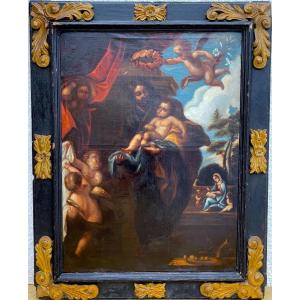
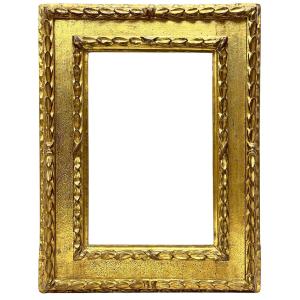
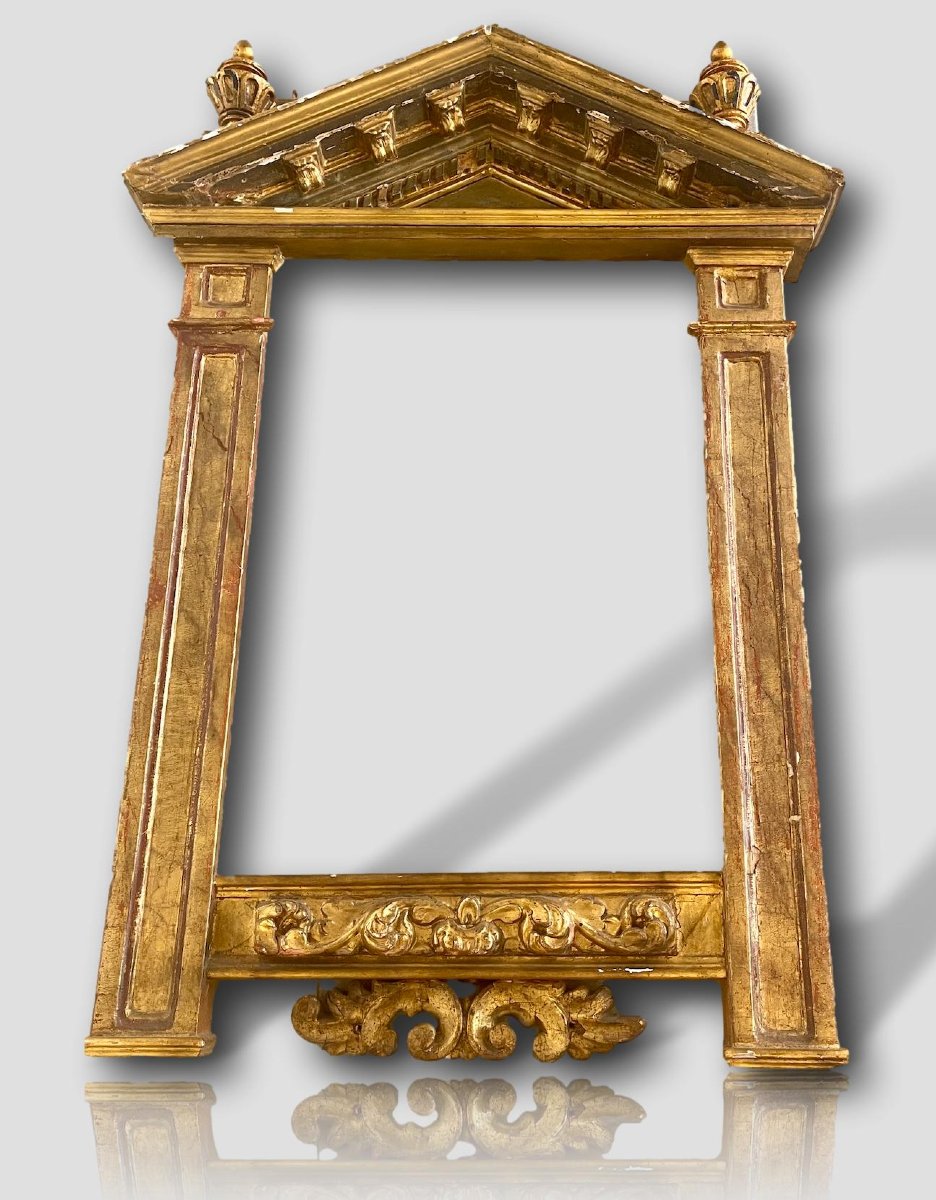
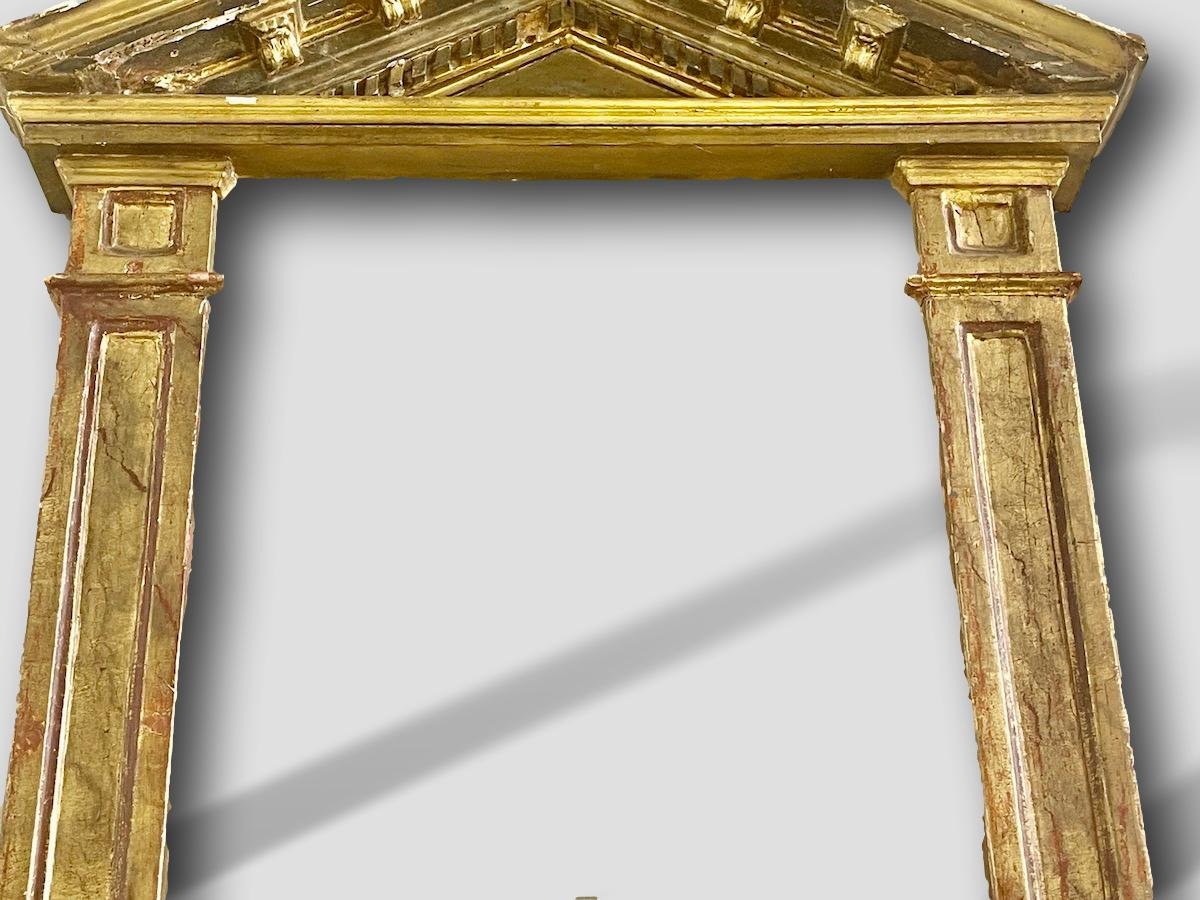
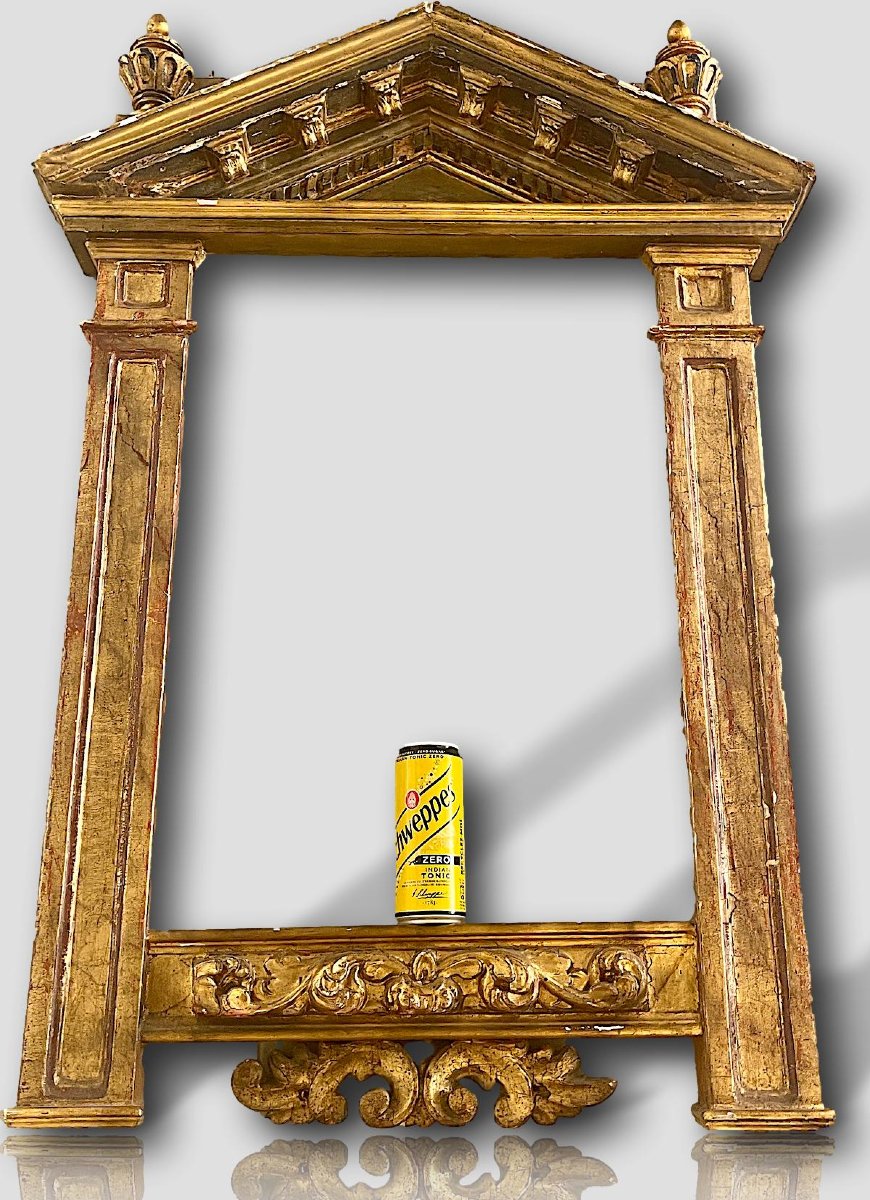
A rare and remarkable Louis XIII-period tabernacle frame made of finely carved wood. It features a chalk-based preparation and is fully gilded with gold leaf, retaining a significant portion of its original gilding as well as numerous traces of its original polychromy.
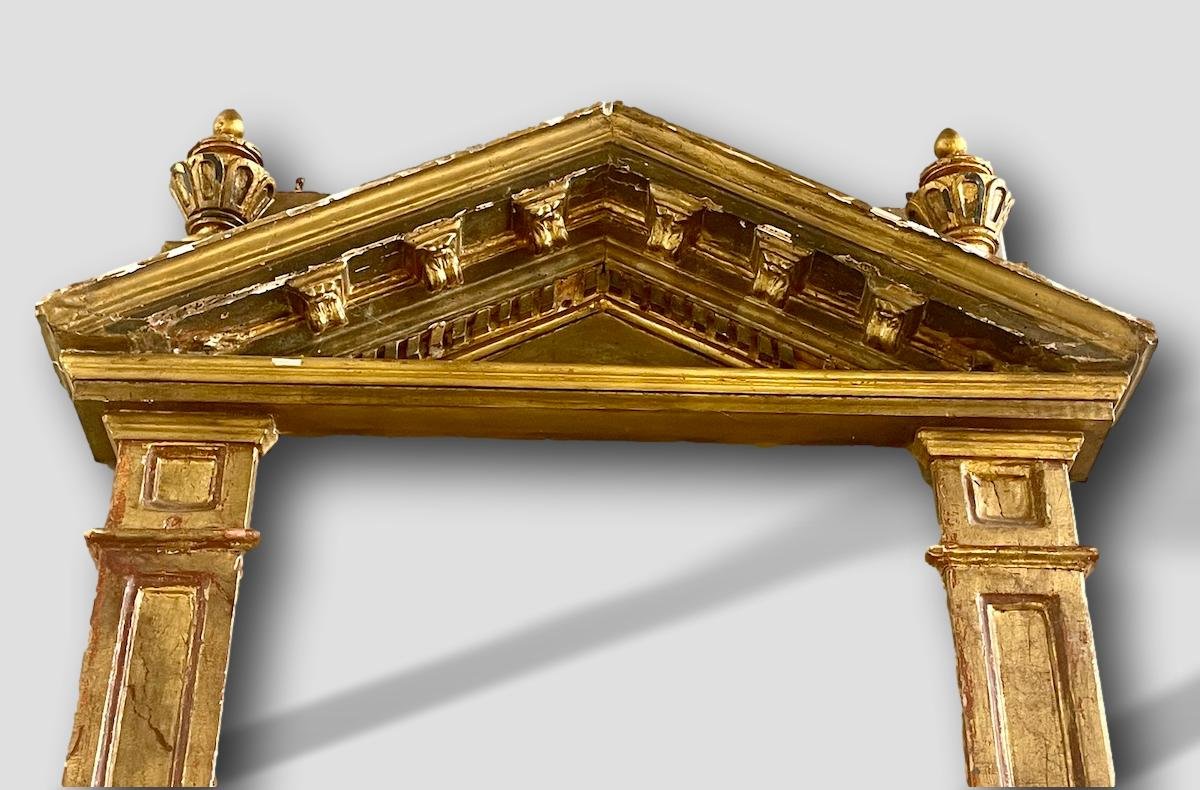
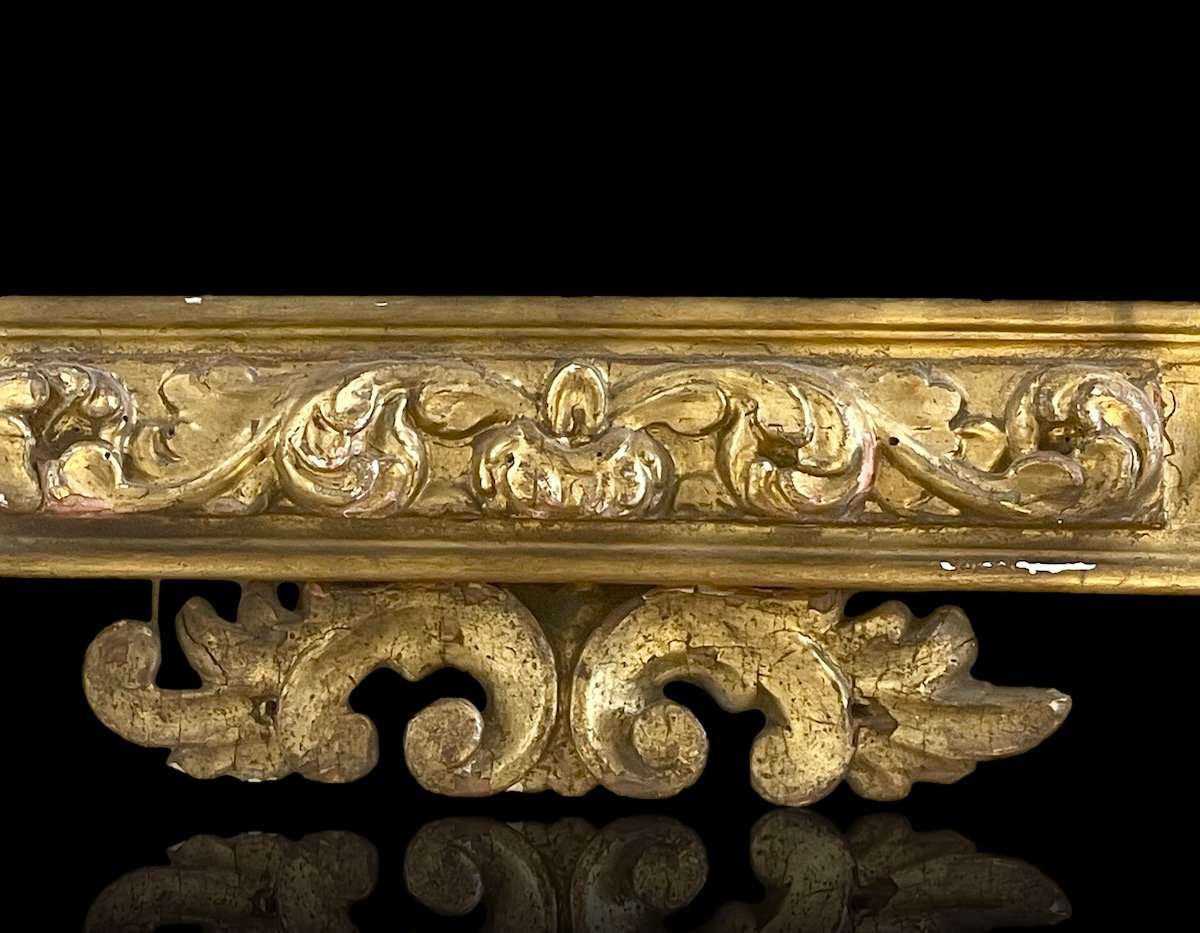
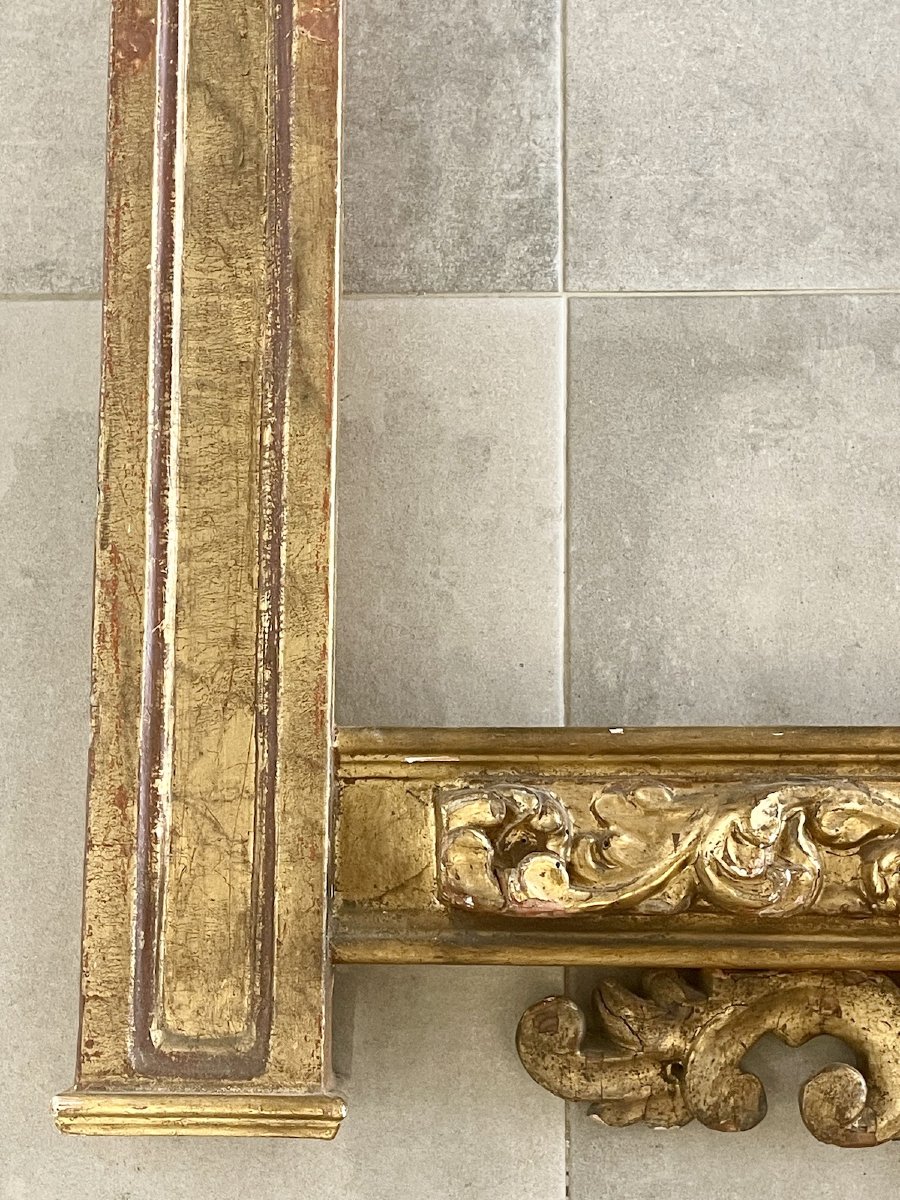
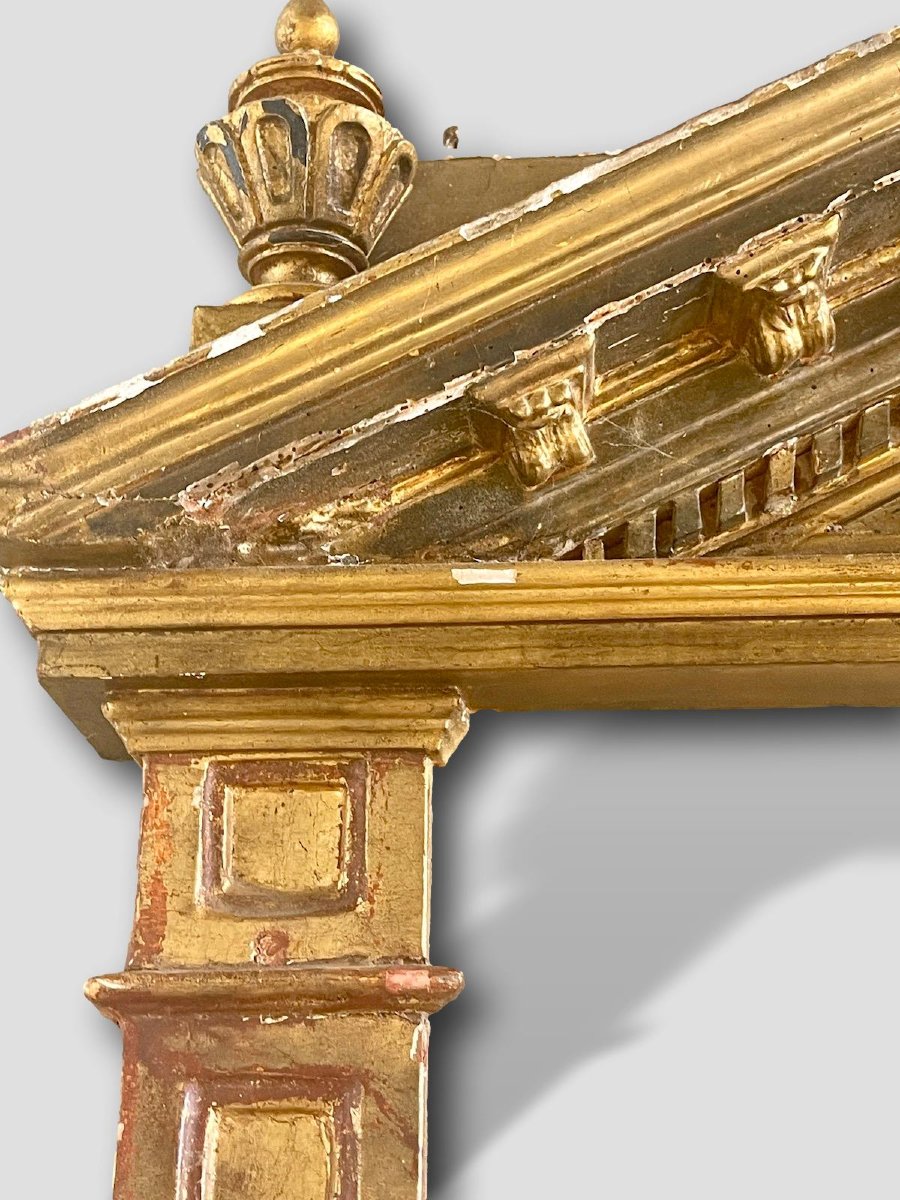
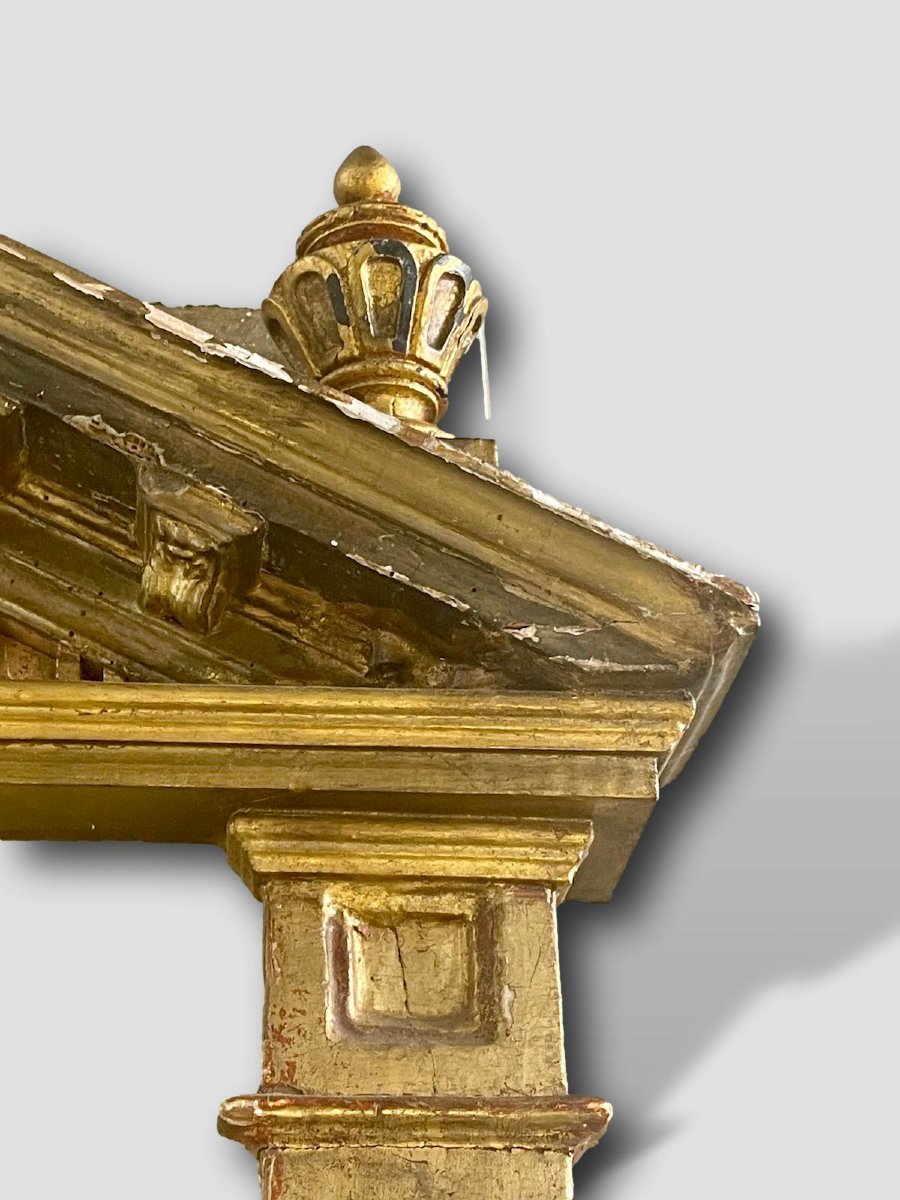
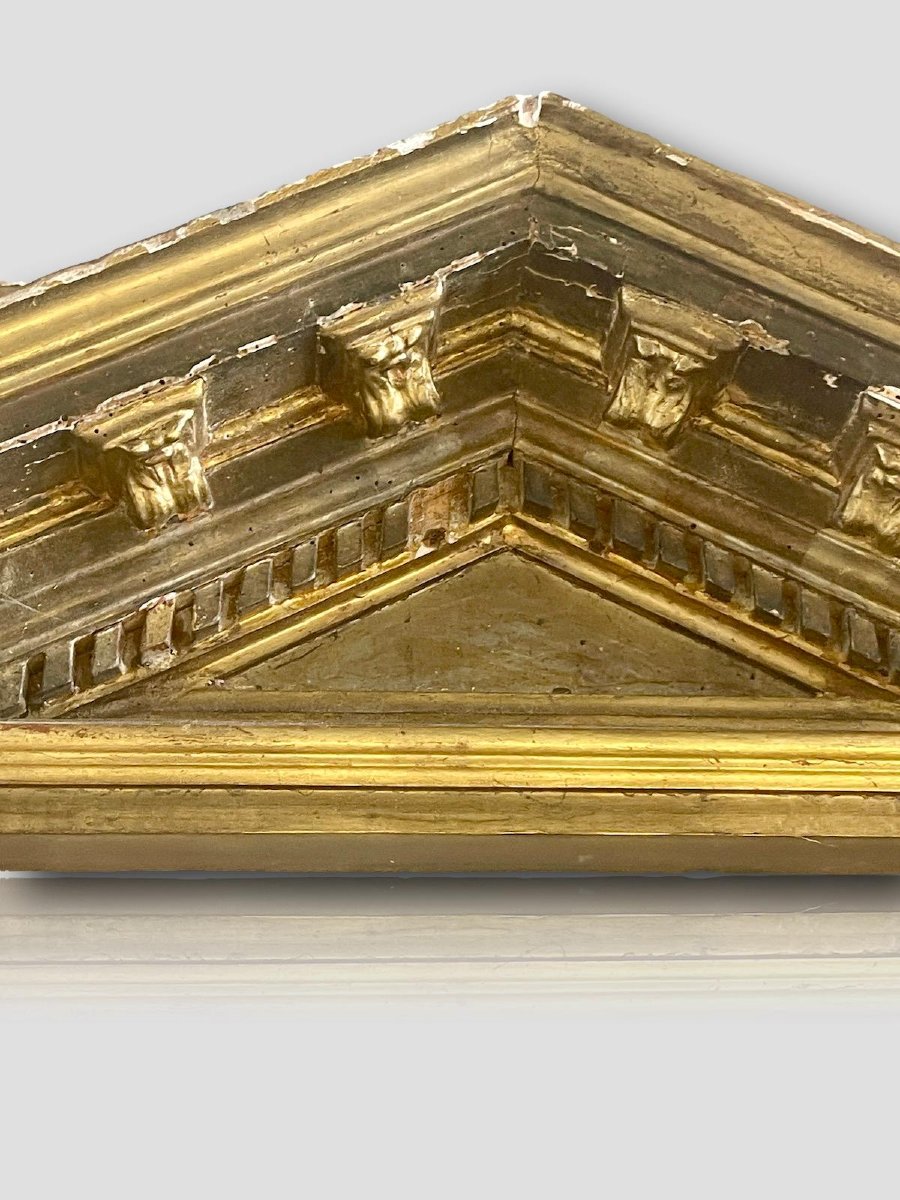
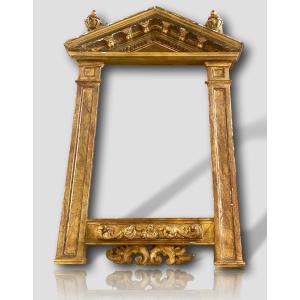
Designed with a monumental architectural style inspired by ancient temples, it consists of two robust pilasters supporting a molded entablature topped by a triangular pediment adorned with carved modillions. Two elegant flaming urns punctuate the ends of the pediment, while a rich console featuring openwork scrollwork enlivens the lower section.
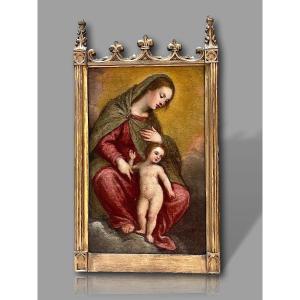
The piece forms a veritable miniature façade designed to majestically showcase a religious painting, a carved relief, or a devotional image.
With its particularly slender proportions, high quality of execution, and skillfully balanced architecture, this work possesses an exceptional decorative presence.
Stylistic Analysis
The design belongs firmly to the vocabulary of 17th-century classical architecture.
Features include:
a triangular pediment inspired by Vitruvius
a modillion cornice
dentils
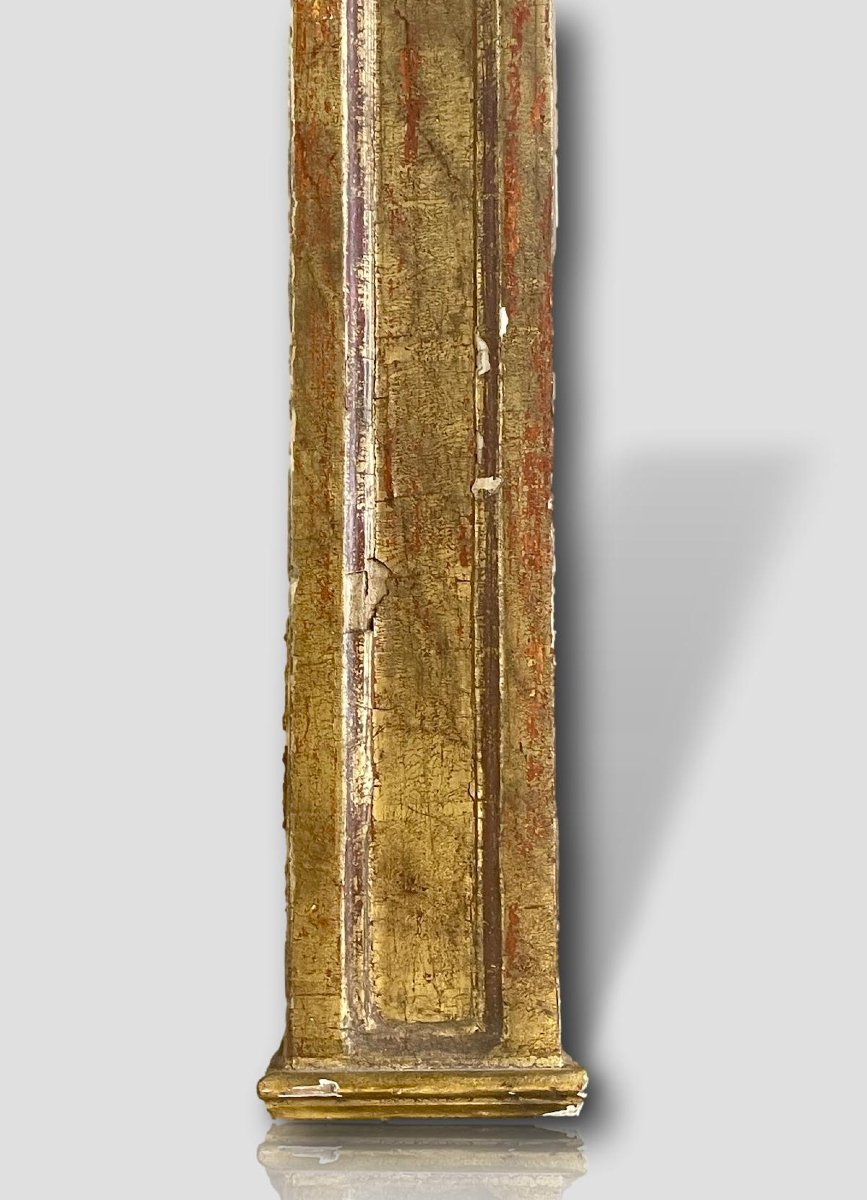
architectural pilasters
molded panels
flaming urns
a lower console with acanthus scrollwork
All these elements demonstrate a perfect mastery of the models disseminated by French architects following Jacques Lemercier, François Mansart, and the major decorative sculpture workshops active under Louis XIII and into the early reign of Louis XIV.
The frame translates the very principles of monumental architecture into the realm of religious furnishings.
It is no longer merely a frame, but a true sacred façade.
Architecture designed to glorify the sacred image
During the 17th century, the Counter-Reformation profoundly transformed the presentation of religious artworks. The frame becomes an essential element of the overall presentation.
It serves to:
isolate the image from the secular world;
naturally draw the worshipper's gaze;
amplify the emotional power of the depiction;
evoke the symbolic gateway to the Heavenly Kingdom.
The pediment represents the Temple.
The columns symbolize the pillars of the Church.
The gilding conveys divine light.
Thus, even a relatively modest painting acquires a monumental dimension.
The sculptures
The sculpture is of remarkable quality.
The modillions retain a highly spirited modeling.
The lower scrolling foliage is deeply carved.
It alternates between:
acanthus leaves
vegetal scrolls
Baroque volutes
without ever descending into excess.
The ornamentation remains elegant and perfectly balanced.
The two upper finials take the form of stylized flaming urns—a symbol of immortality highly favored in 17th-century religious art.
Gilding and polychromy
The piece retains its original preparatory layers.
The gilding was executed using the traditional technique:
wood
canvas
animal glue
chalk ground (blanc de Meudon)
Armenian bole
gold leaf
Natural wear reveals the red preparatory layers characteristic of antique gilding.
Reddish-brown lines accentuating the pilasters provide a refined contrast that enlivens the gilded surfaces.
This interplay between luminous gold and warm tones is integral to the Baroque aesthetic.
The piece now possesses a particularly appealing antique patina.
The presentation
This frame is conceived as a theatrical setting.
The artwork it housed became the focal point of a true *mise-en-scène*.
The eye naturally follows:
the carved base →
the pilasters →
the entablature →
the pediment
before returning to the central image.
The entire composition guides the worshipper toward the depicted subject. This is a work of true spiritual architecture.
Condition
The condition appears very satisfactory.
Observations include:
normal wear to the gilding
small, old chips
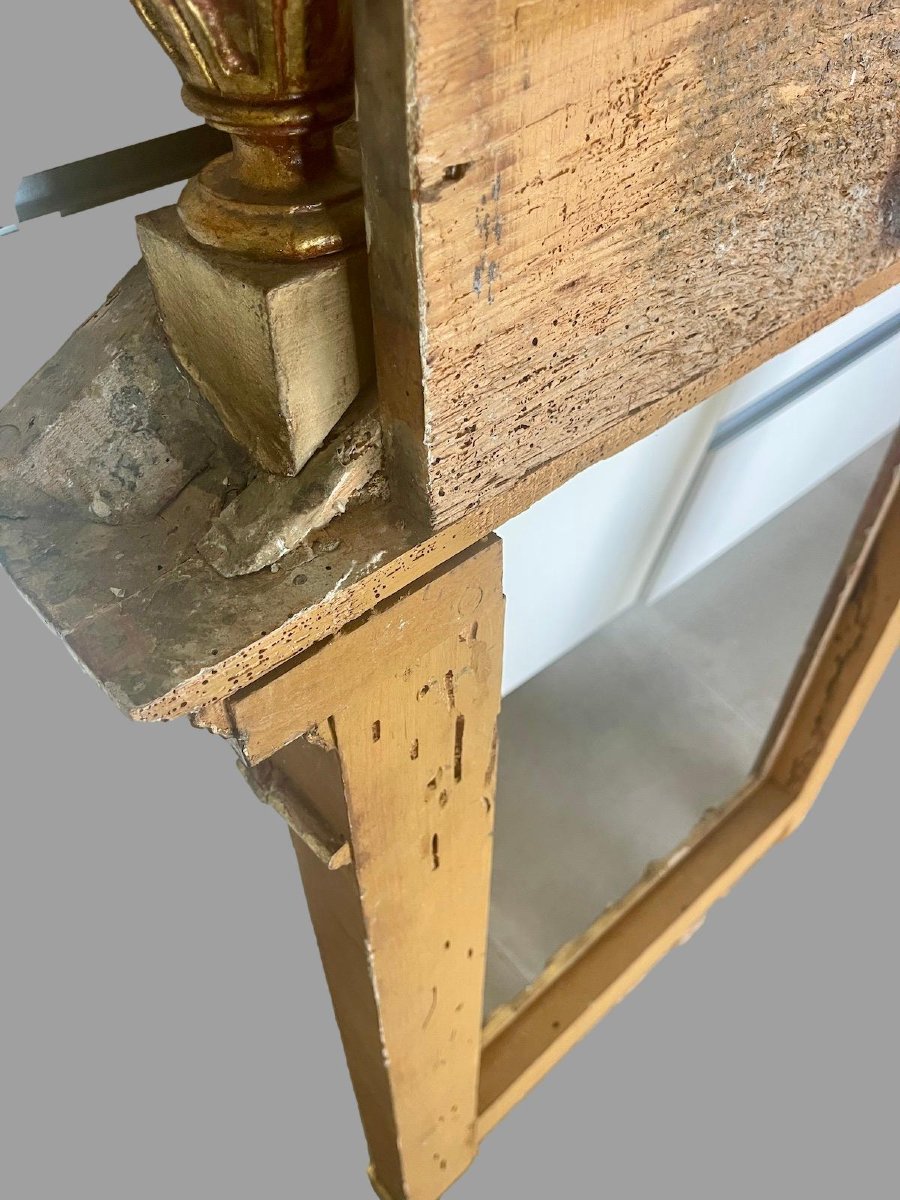
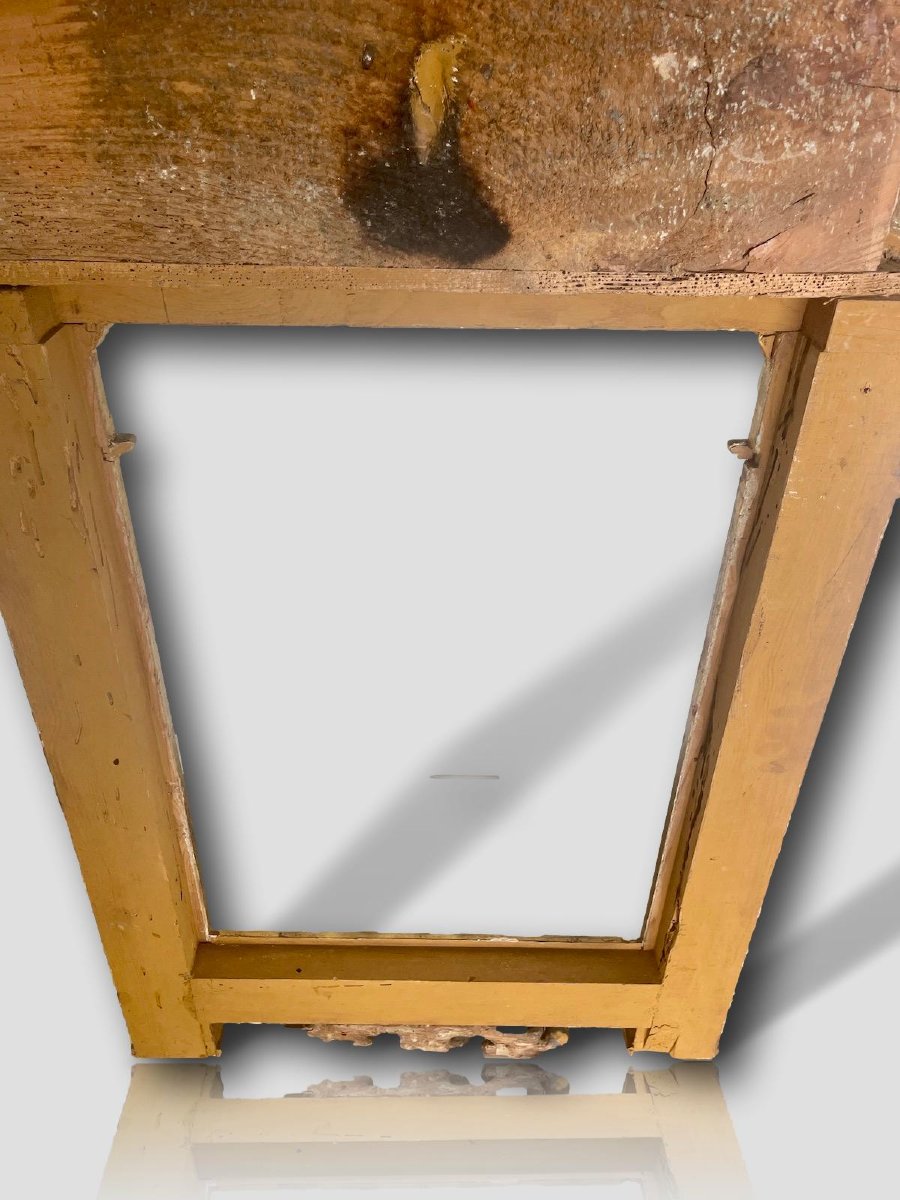
past wood-boring insect damage that is now stabilized
a few discreet, older restorations
a perfectly sound structure
These signs of age contribute to the work's authenticity and in no way detract from its visual appreciation.
Possible attribution
Based on the photographs, a reasonable attribution would be:
Southern French School
or
Religious sculpture workshop from Languedoc or Provence
circa 1640–1680.
An Italian origin (Piedmont or Liguria) could also be considered, though the decorative details strike me as more characteristically French.
Comparisons
This type of architectural frame can be compared to works held in:
the Louvre Museum (17th-century French frames);
the Musée des Arts Décoratifs in Paris;
various altarpieces in the cathedrals of Narbonne, Carcassonne, and Saint-Bertrand-de-Comminges;
religious sculpture workshops active in Toulouse and Avignon during the 17th century.
Similarities include:
architectural pediments;
paneled pilasters;
scrollwork brackets (consoles);
gold leaf gilding over a red ground.
Significance in Art History
Tabernacle frames are a highly sought-after category today.
They sit at the intersection of:
sculpture,
architecture,
painting,
liturgical art.
Many were lost during church renovations in the 18th and 19th centuries.
Examples of this quality have become relatively rare on the market.
They are of interest today to:
collectors of early art (*Haute Époque*);
specialized interior decorators;
museums;
enthusiasts of religious furniture;
interior architects.
Expert Assessment
Object: Architectural tabernacle frame.
Dating: Circa 1640–1680.
Period: Louis XIII – early Louis XIV.
Probable origin: Southern France.
Technique: Carved wood, traditional ground, gold leaf gilding, traces of polychromy.
Authenticity: Fully consistent with 17th-century production.
Significance: Exceptional decorative and architectural quality.
Rarity: High.
#CadreTabernacle #CadreLouisXIII #XVIIeSiecle #BoisDore #ArtReligieux #Retable #MobilierLiturgique #HauteEpoque #Antiquites #Proantic #ArteCollection #SculptureAncienne #DorureALaFeuille #Patrimoine #Collectionneur #Baroque #Classicisme #ObjetDeDevotion #CadreArchitectural #ArtSacre
Avis d'expertCette pièce se distingue par son architecture très aboutie, la qualité de sa sculpture et l'équilibre de ses proportions. Ce n'est pas un simple cadre, mais un véritable élément de retable autonome, conçu pour magnifier une image sacrée. Sur le marché actuel des antiquités, les cadres-tabernacles authentiques du XVIIᵉ siècle de cette dimension sont devenus peu fréquents. Présenté avec un tableau ancien de même époque ou une sculpture de dévotion, il constitue un ensemble d'une forte puissance esthétique et patrimoniale, particulièrement recherché par les collectionneurs de Haute Époque et les décorateurs spécialisés dans les intérieurs historiques.
Period: 17th century
Style: Renaissance, Louis 13th
Condition: Good condition
Material: Gilted wood
Width: 72 cm
Height: 102 cm
Reference (ID): 1800749
Availability: In stock