




Venetian Master, 17th–18th Centuries, Ceres
Venetian master, 17th–18th centuries
Ceres
Oil on canvas, 73 x 60 cm
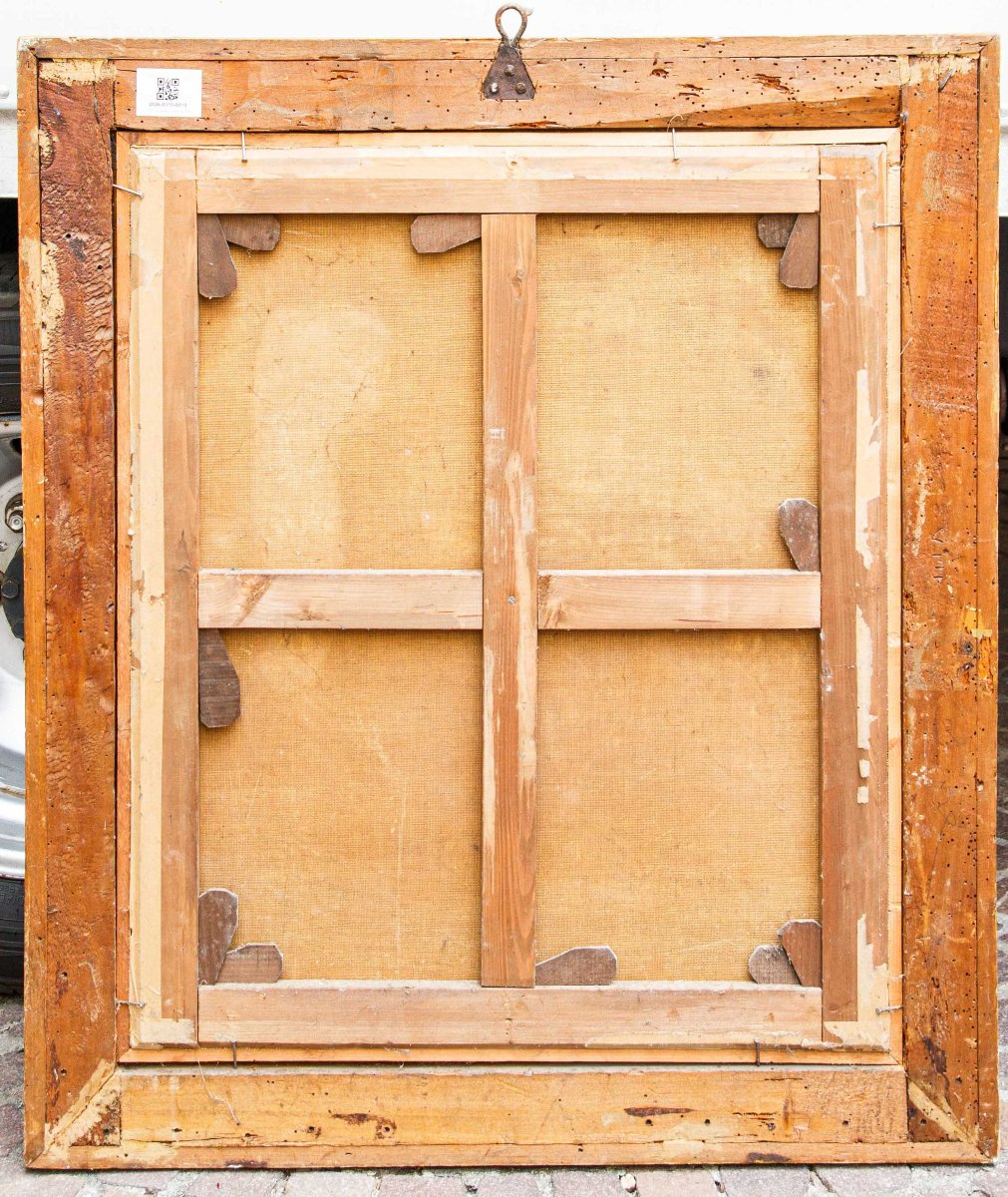
With frame, 80 x 93 cm
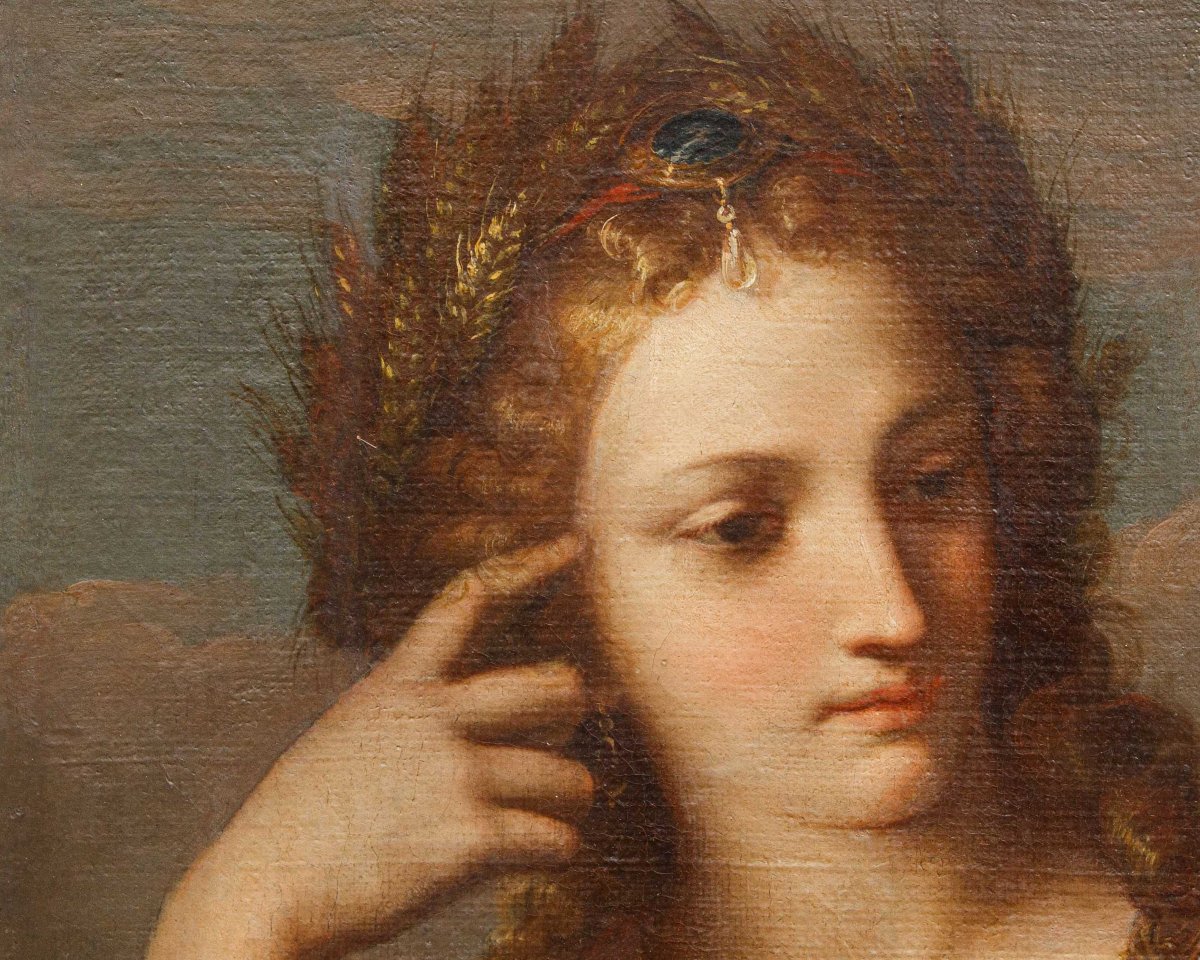
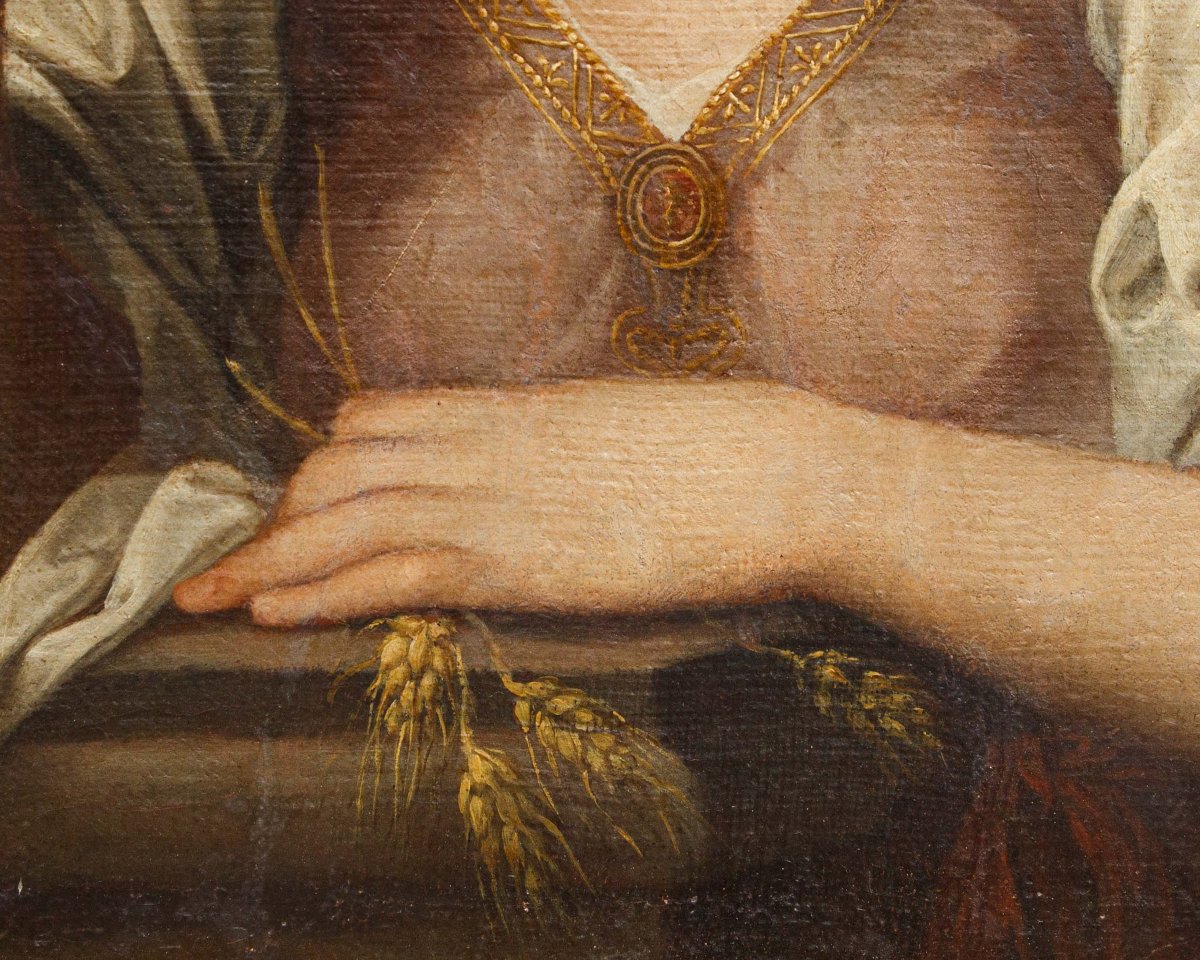
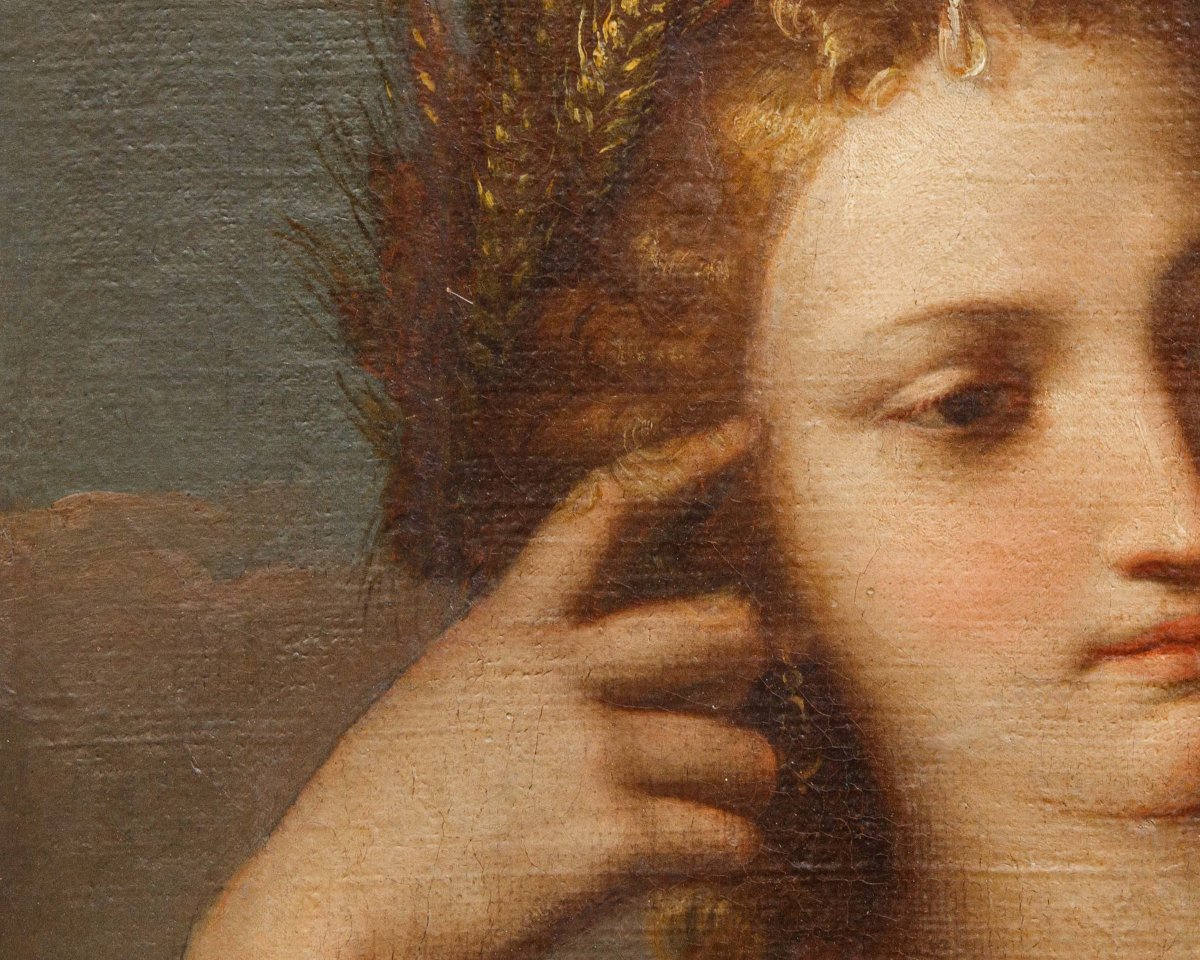
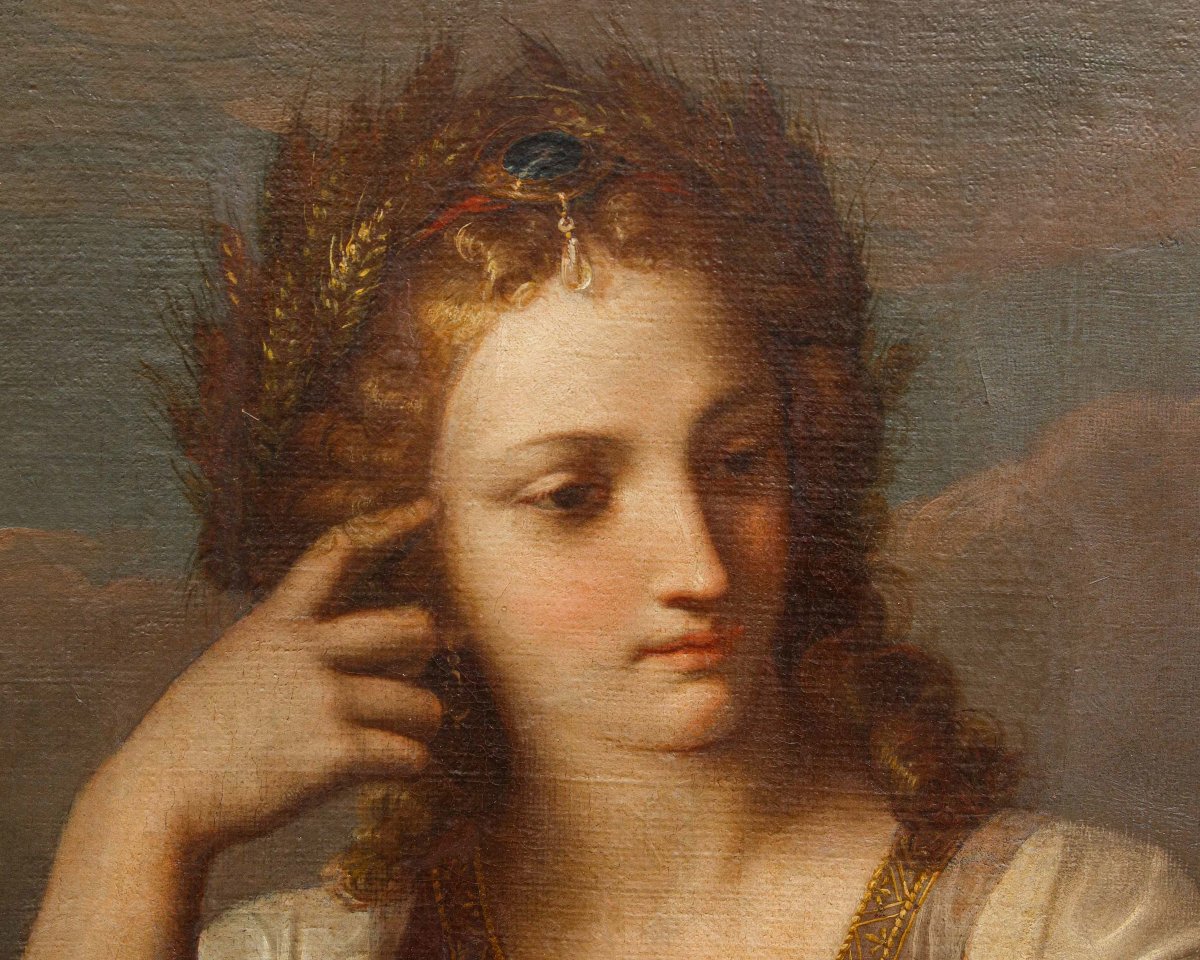
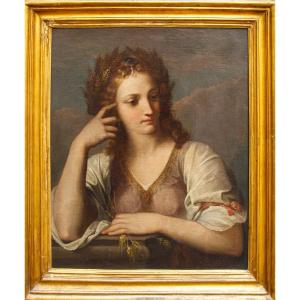
The painting depicts the Roman goddess Ceres, the deity of agriculture, harvests, and fertility. This identification is supported by the numerous iconographic attributes present in the work. On the goddess’s head, a wreath of intertwined wheat ears frames her golden hair, an unmistakable symbol of her connection to the harvest. A fabric headband, decorated with pearls and a central gemstone, further adorns her head. Ceres’s attire—a white tunic and a purple cloak—is embellished with gold embroidery. The goddess is portrayed in a pensive pose, with her right hand resting on her temple, while her left hand rests on a stack of ears of wheat resting on a stone pedestal. The ears of wheat spill over the edge of the pedestal, symbolizing the bounty of the harvest. The background consists of a stormy sky, reflecting the goddess’s dual nature: her ability to bring both fertility and famine.
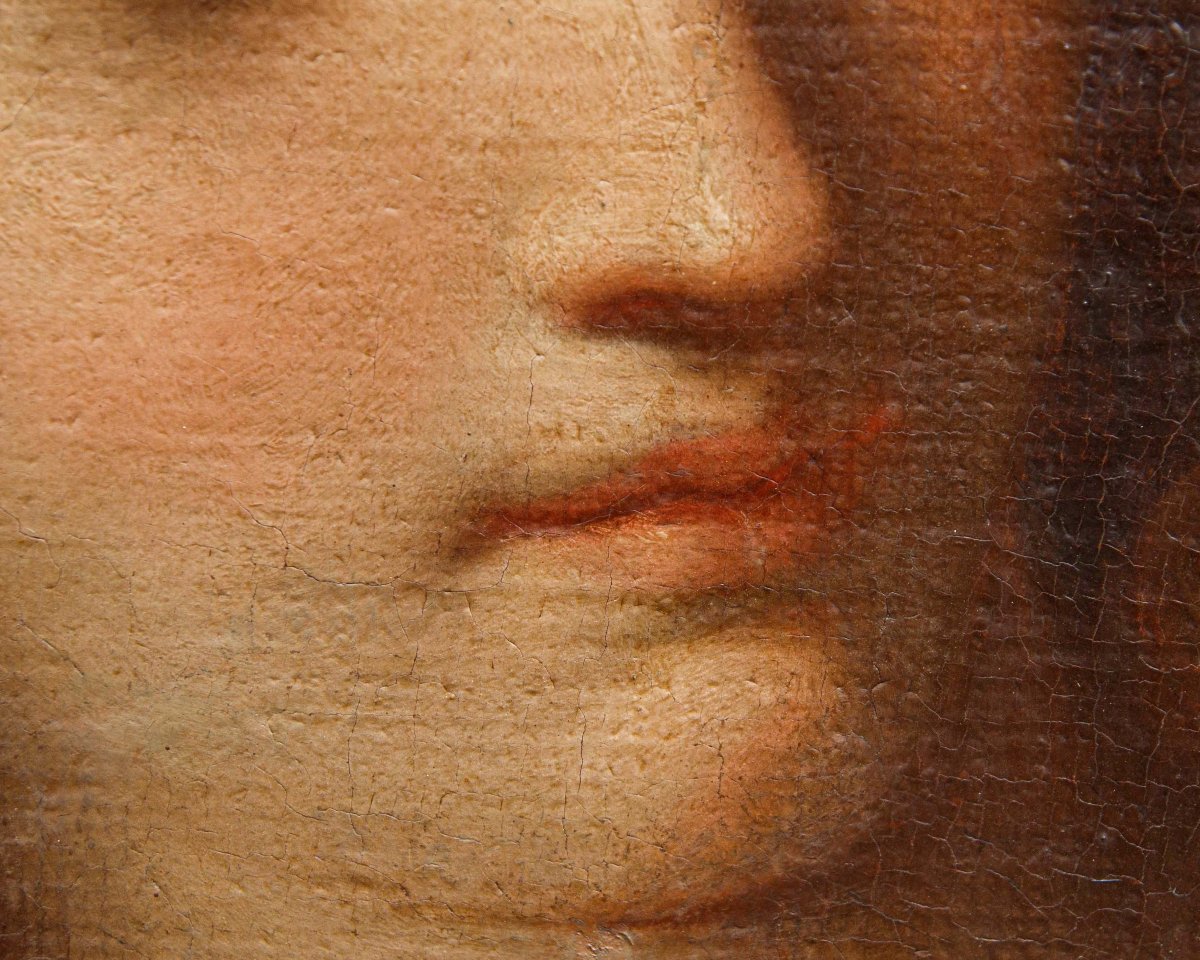
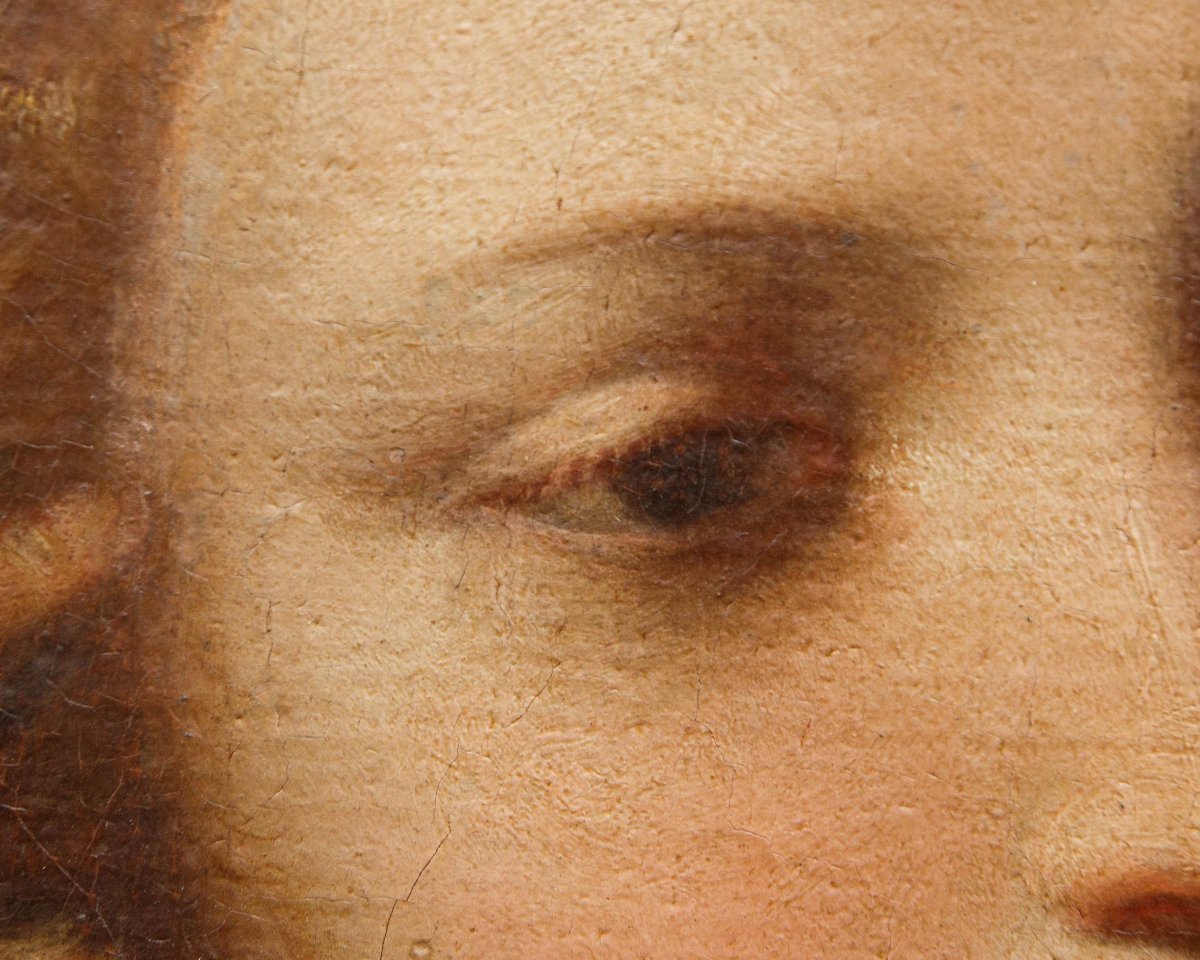
The painting is characterized by a soft realism and a subtle use of light. The figure of Ceres is idealized, with delicate features and a serene expression. The colors are warm and natural, with a predominance of shades of brown, gold, and white. The composition is balanced and harmonious.
One intriguing hypothesis regarding the painting’s attribution is that it is the work of Antonio Bellucci, a late Baroque Venetian painter. Bellucci is known for his “eclectic” style, which blends elements of the Venetian painting tradition with Bolognese and Roman influences. His work diverges from Tenebrism—the painterly movement that emphasized the contrast between light and shadow—to embrace a brighter and more colorful style. Bellucci’s painting is akin to that of the Bolognese school, with greater attention to composition and the emotional expression of the figures. The Bolognese influence is evident in the plasticity of the figure and the softness of the drapery, which is also evident in the painting of Ceres.
The painting of Ceres may have been a private commission, intended to decorate a noble residence. The presence of complex iconographic elements and the refinement of the composition suggest that the painting was created for a cultured and sophisticated audience.
Period: 17th century
Style: Other Style
Condition: Good condition
Material: Oil painting
Width: 60
Height: 73
Reference (ID): 1797560
Availability: In stock