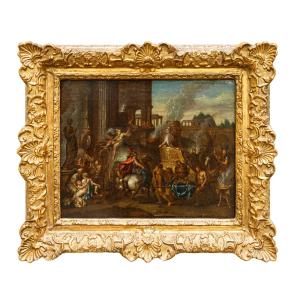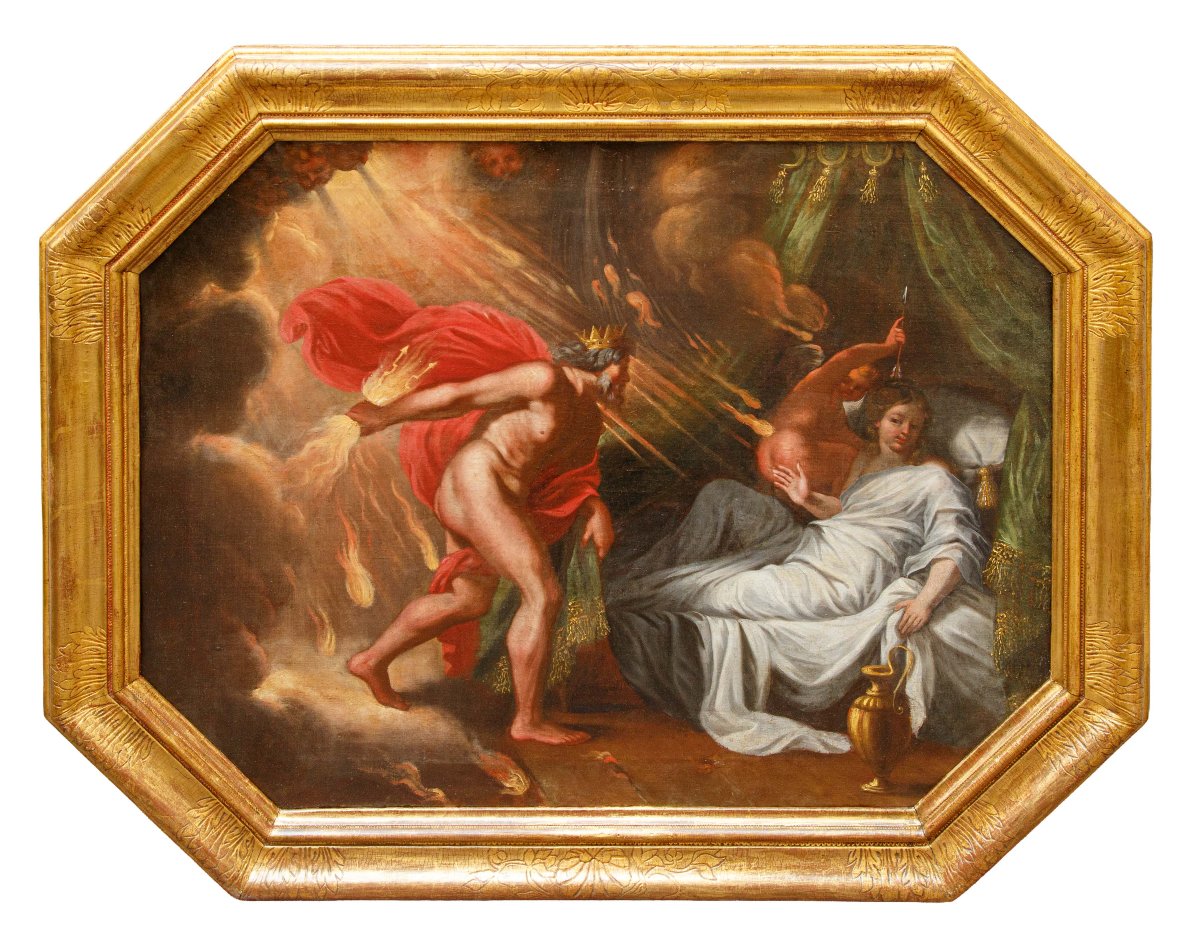
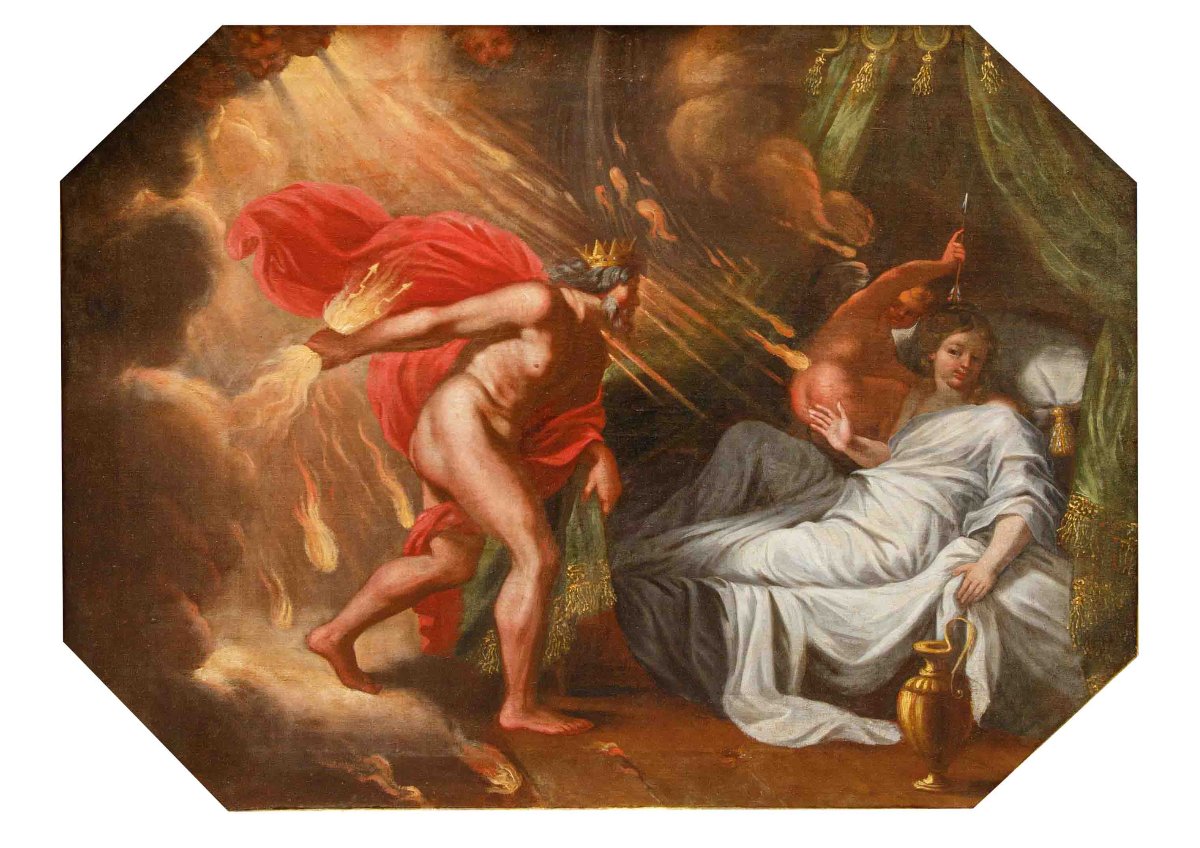


Abraham Van Diepenbeeck (1596–1675), Jupiter Appears To Semele
Abraham van Diepenbeeck (1596–1675)
Jupiter Appears to Semele
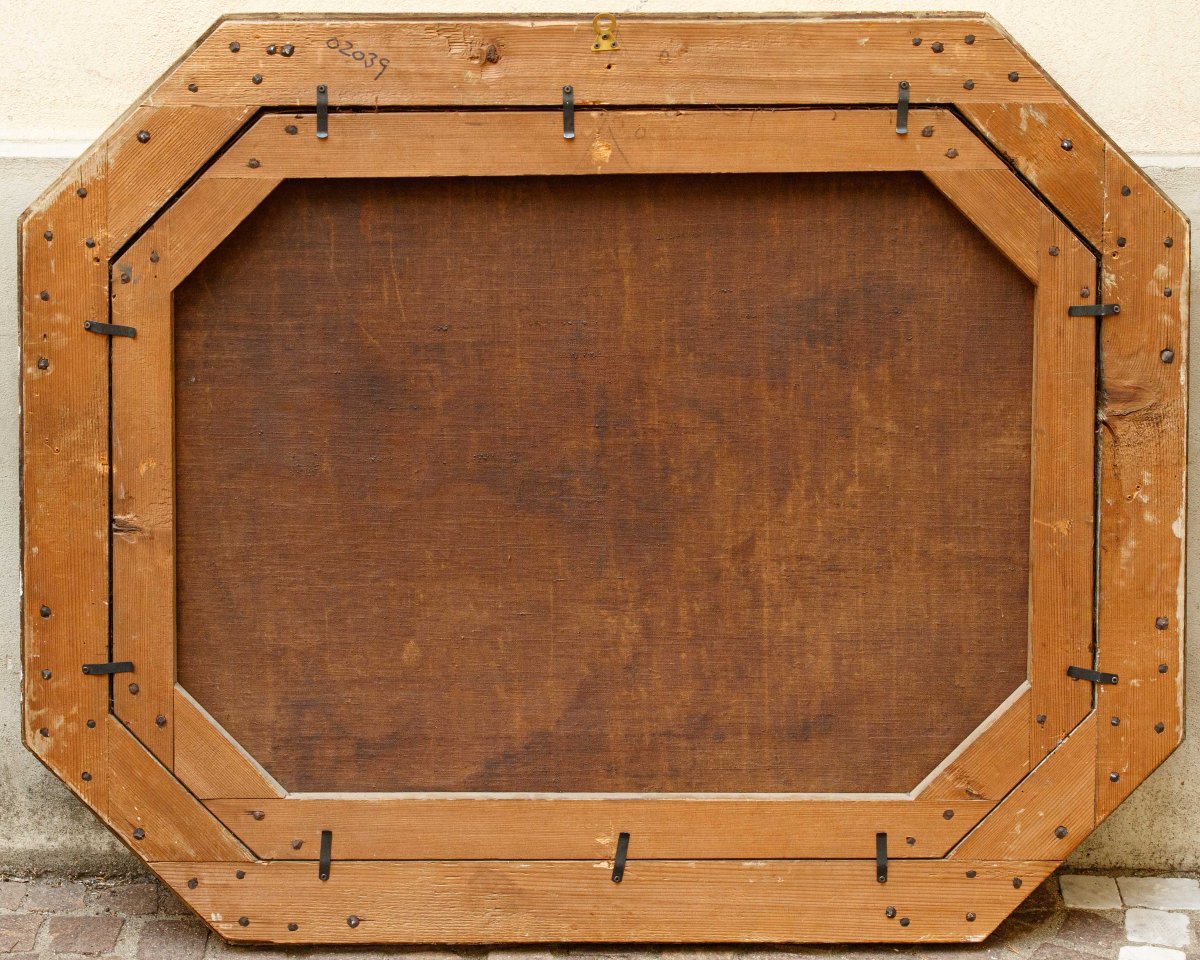
Oil on canvas, 60 x 83 cm – framed, 79 x 112 cm
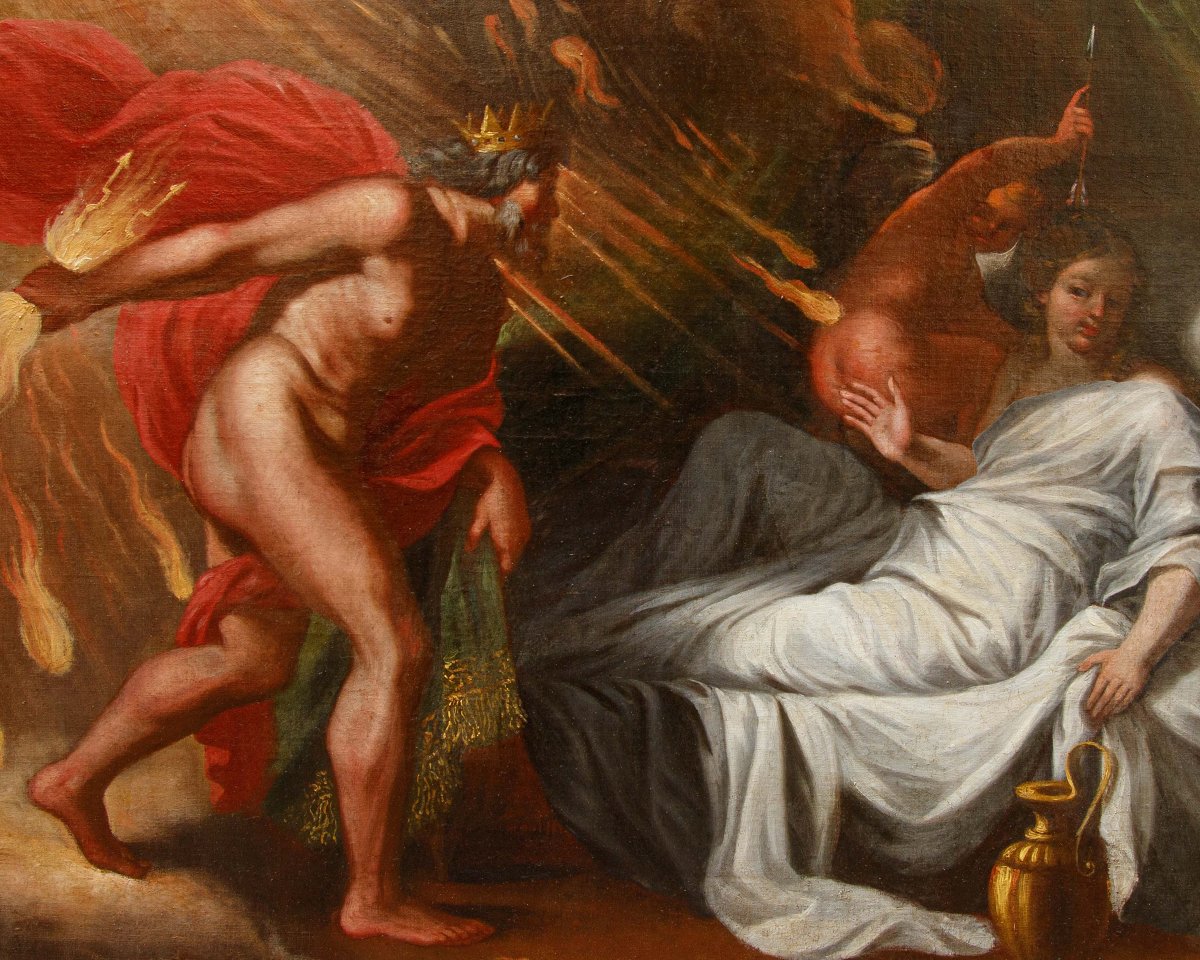
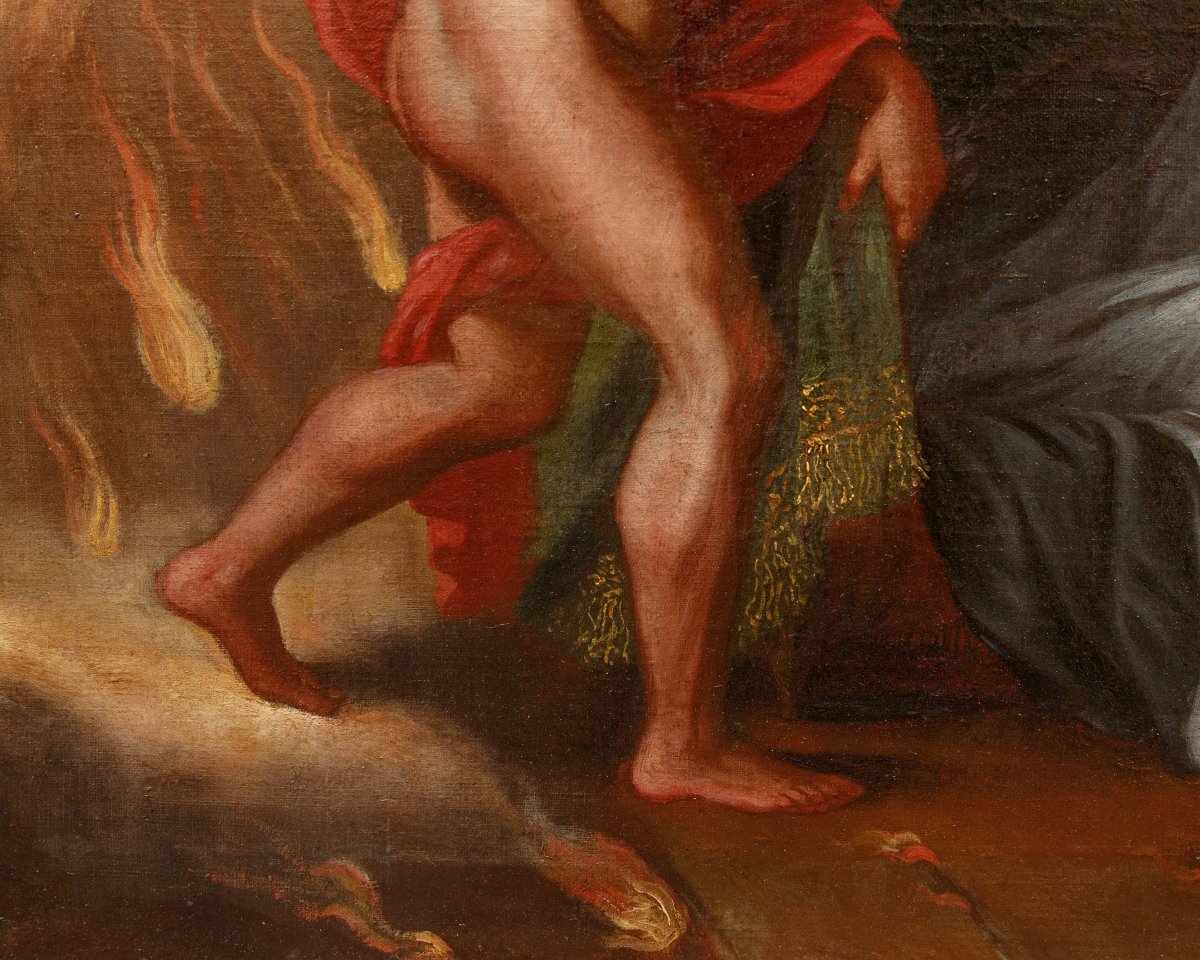
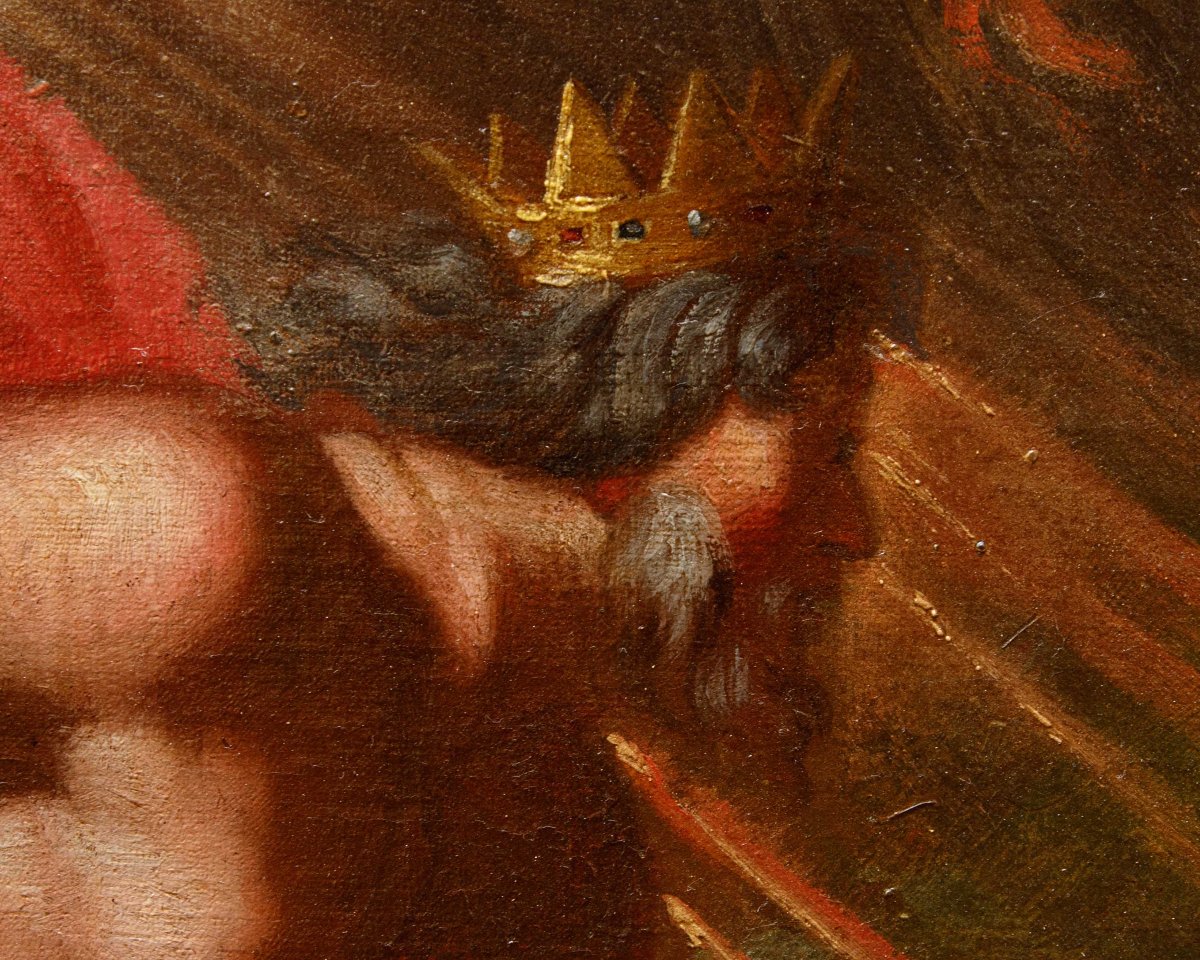
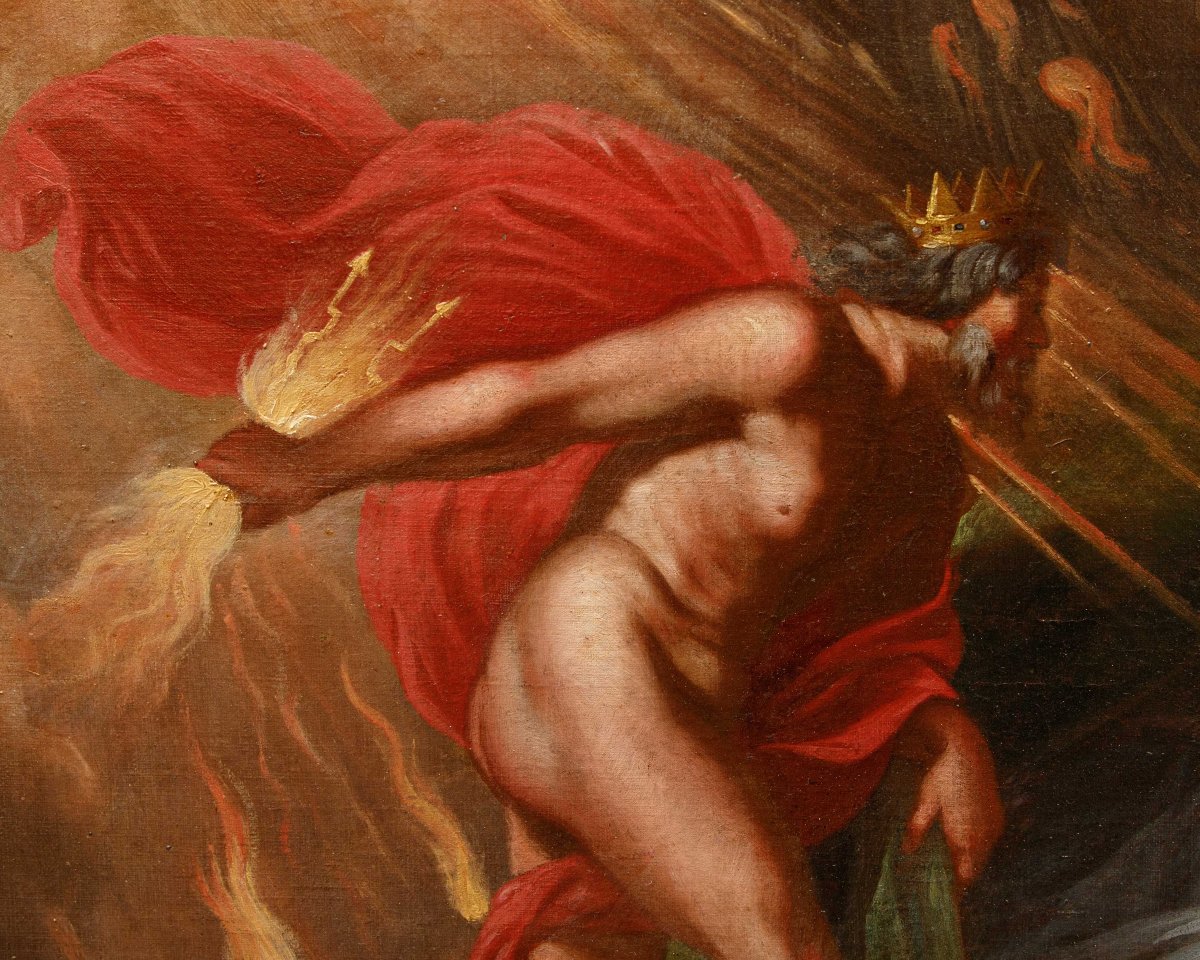
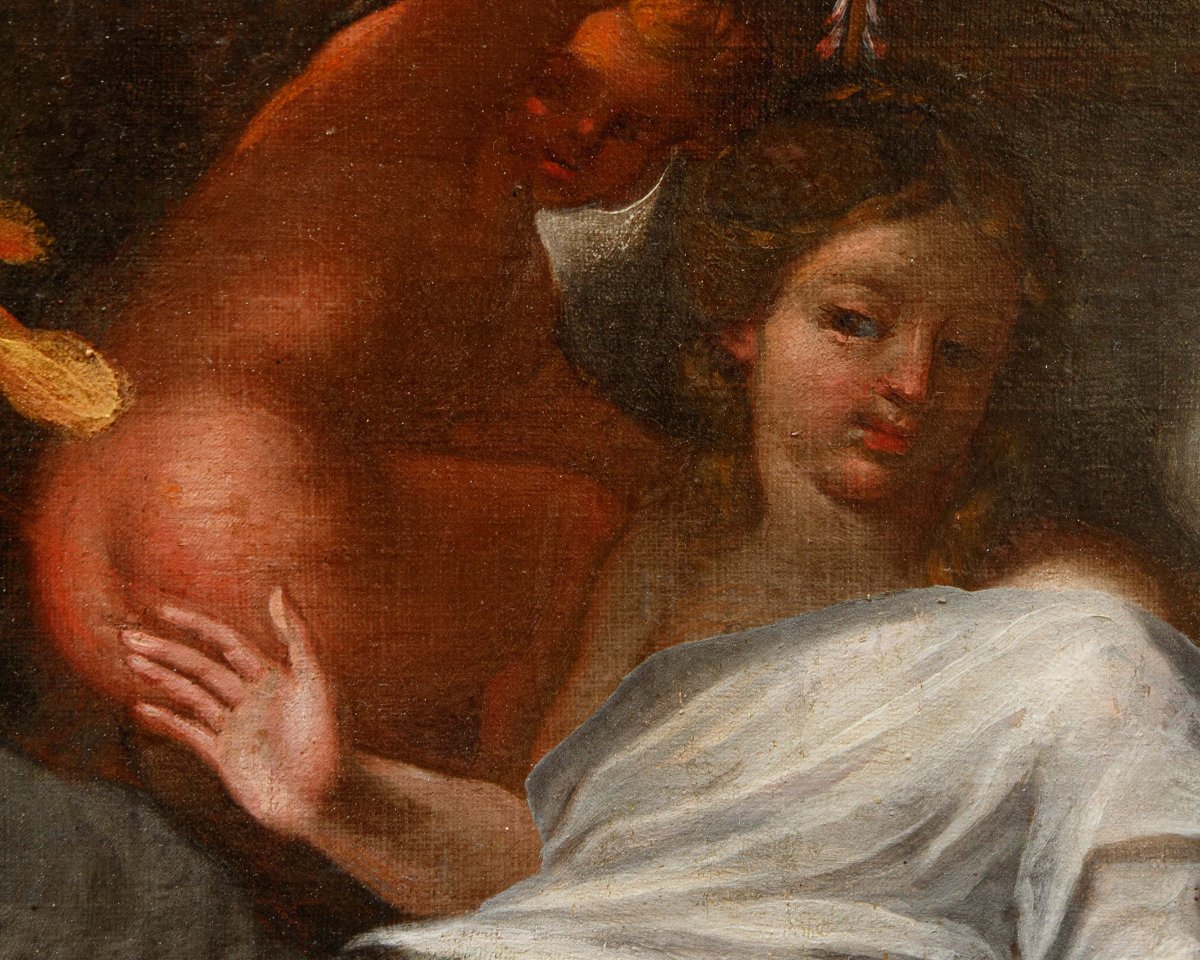
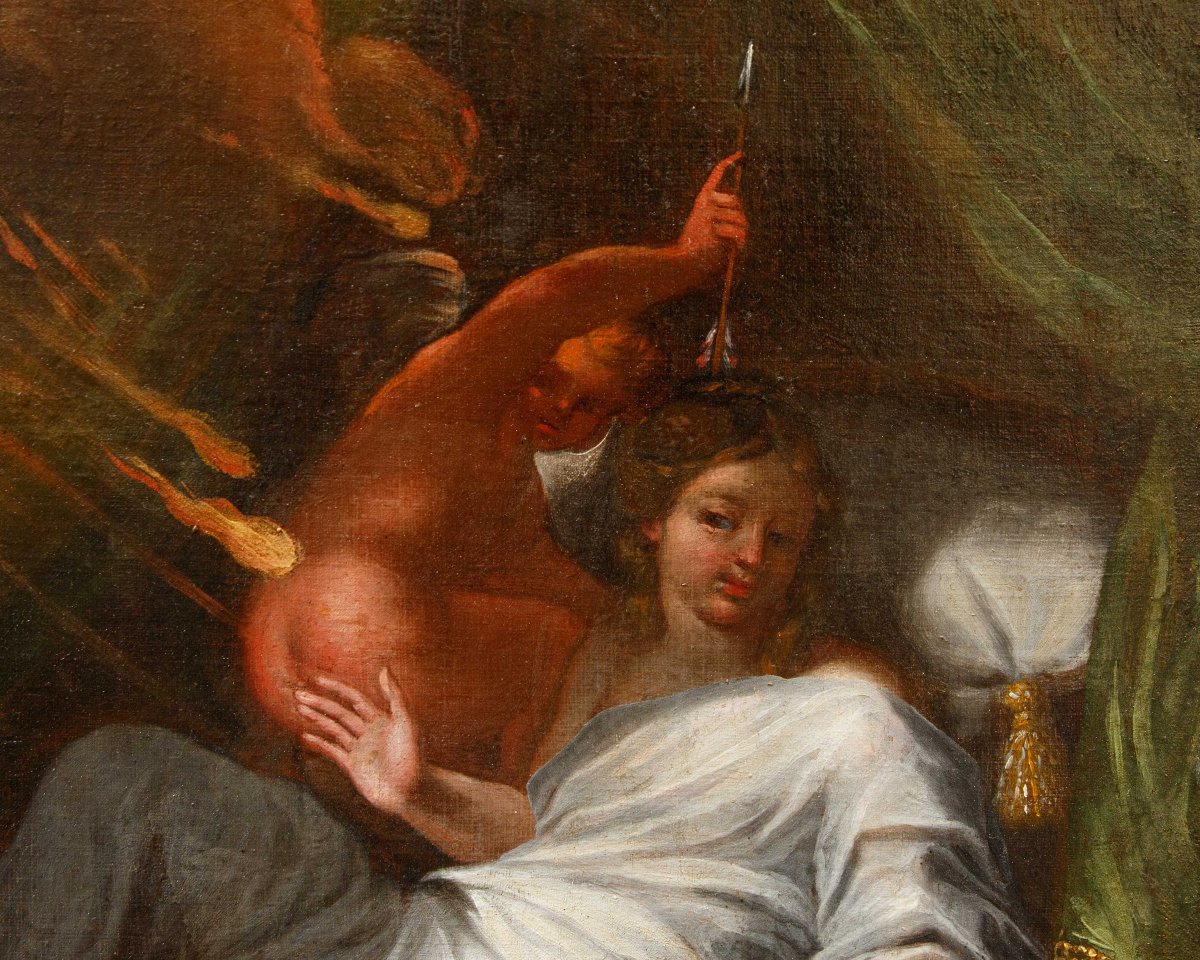
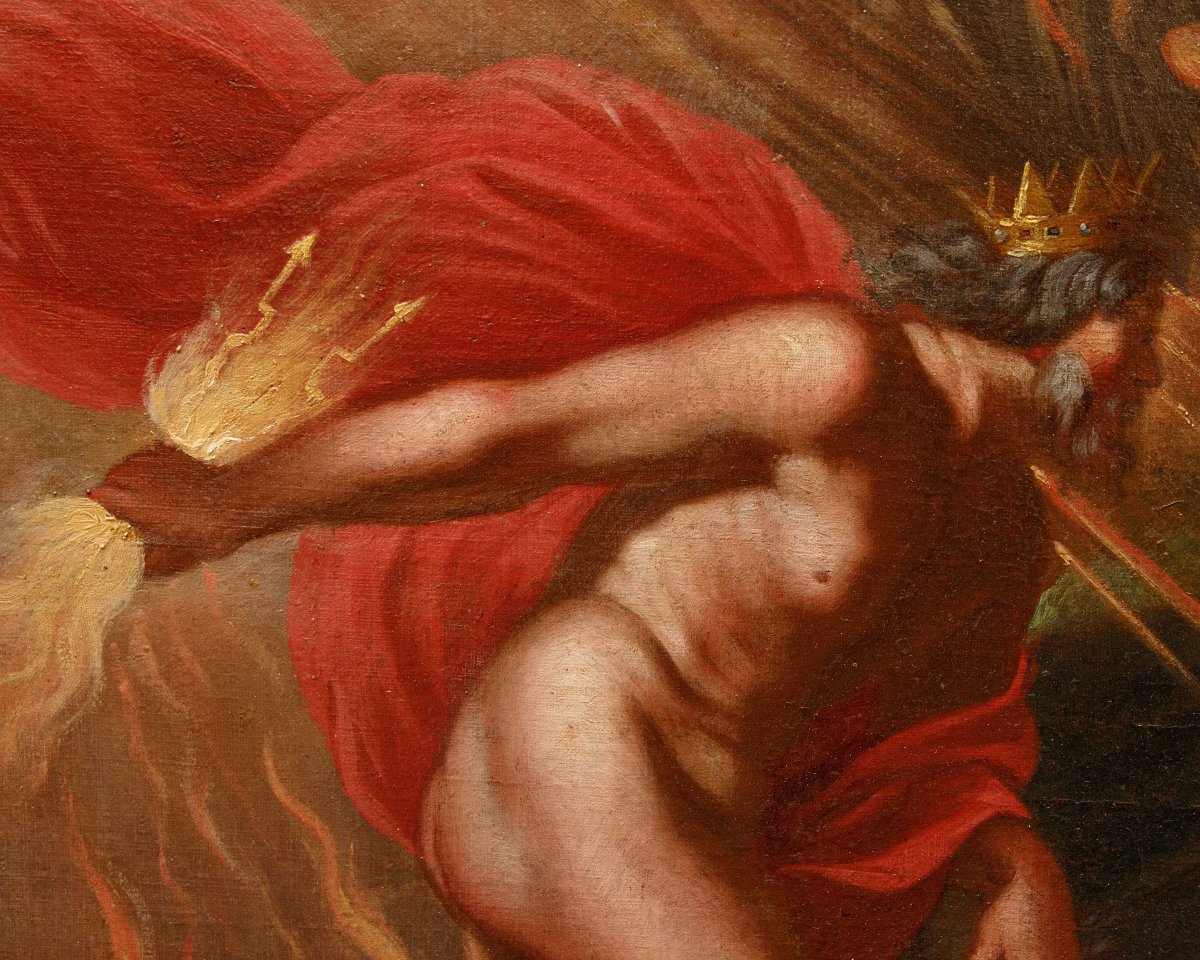
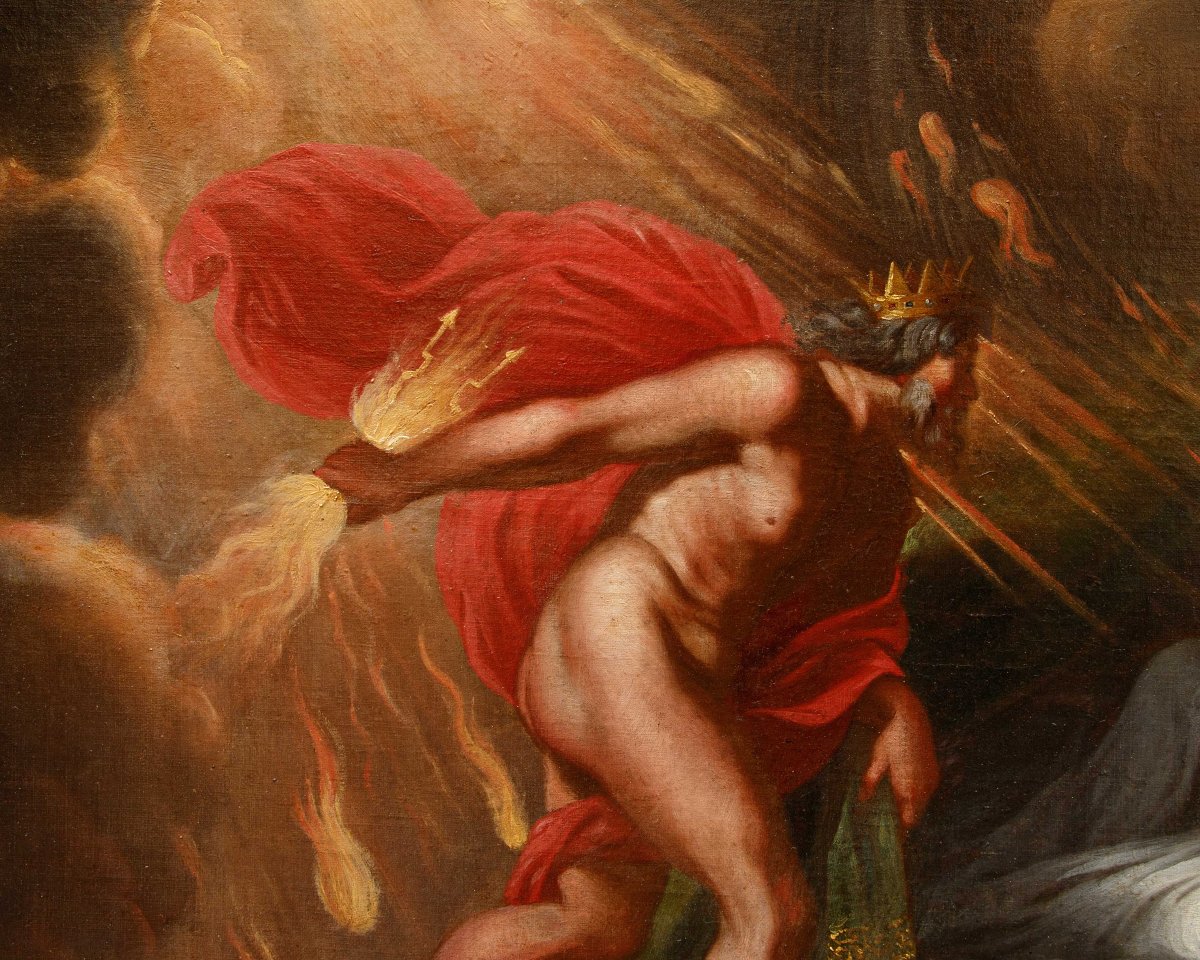
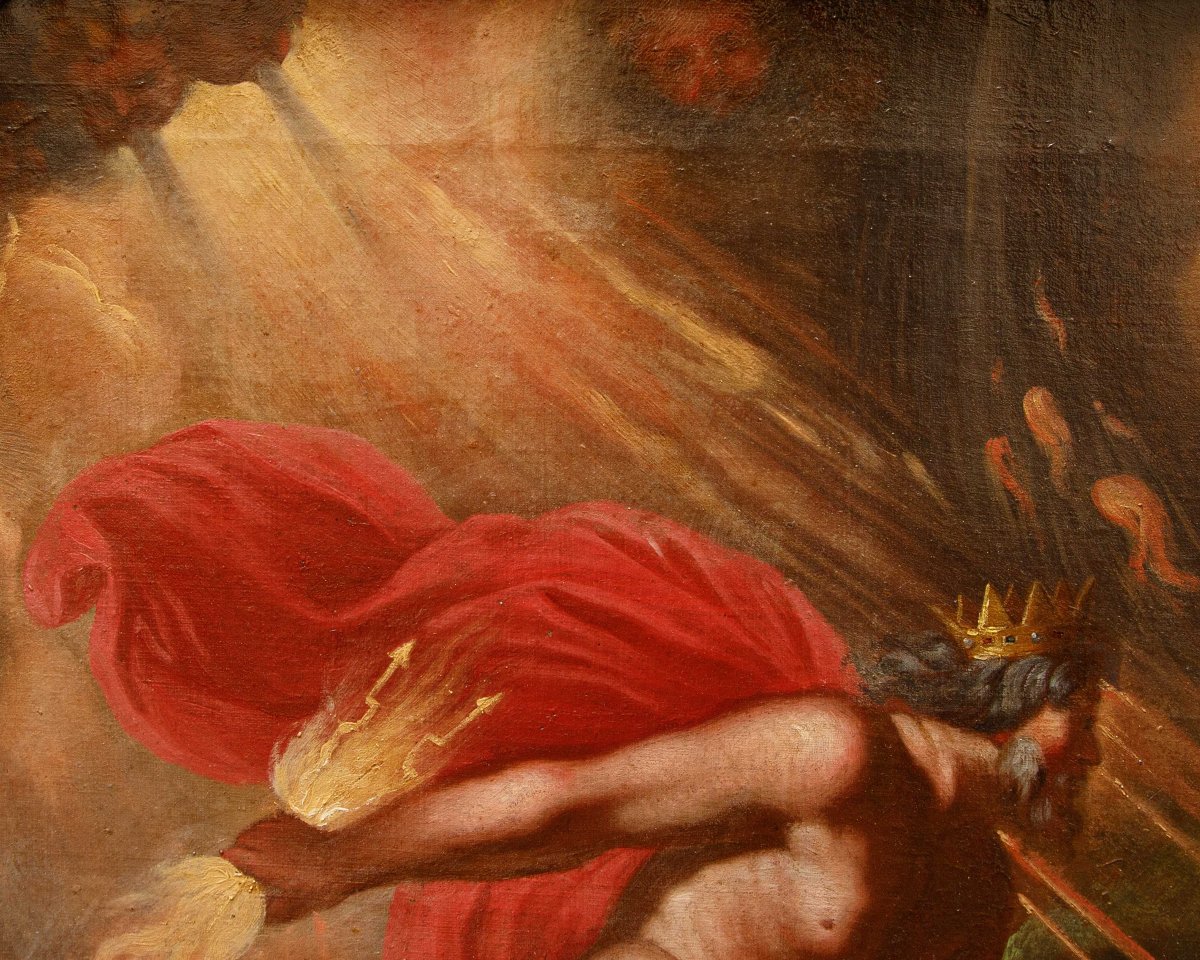
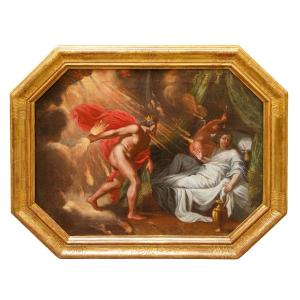
The scene depicts Jupiter’s appearance to Semele, one of the most dramatic and tragic moments in Greco-Roman mythology, as recounted primarily by Ovid in *Metamorphoses*. In the painting, Semele is seen reclining on a bed, wrapped in a pure white cloth, captured at the very moment when the god Jupiter reveals himself to her, surrounded by fiery clouds and beams of light that pierce the darkness of the room.
The mythological tale recounts that Semele, daughter of Cadmus, king of Thebes, became Jupiter’s lover and became pregnant by him. Juno, jealous and furious over her husband’s betrayal, disguised herself as an elderly nurse and convinced Semele to ask her divine lover to reveal himself to her in all his splendor, just as he appeared before Juno herself. Jupiter, bound by an oath sworn on the Styx that compelled him to grant any request Semele made, was forced to reveal himself in his true form, surrounded by lightning and thunder. The power of this divine manifestation proved fatal to the mortal, who was incinerated by the thunderbolt. Jupiter, however, managed to save his unborn son by sewing him into his thigh until the moment of birth: from this event, Dionysus, the god of wine and ecstasy, was born.
The artist, Abraham van Diepenbeeck, was a Flemish painter active in the 17th century, whose training began under his father, Jan Roelofszone van Diepenbeeck, from whom he learned the art of stained glass. After completing his classical studies, he moved to Antwerp between 1621 and 1623, where he created important stained-glass windows, including those for Saint-Jacques Cathedral, dedicated to the works of mercy, and those for the Dominican Church, centered on the life of Saint Paul. In 1623, he became a pupil of Pieter Paul Rubens, whose influence played a decisive role in shaping his artistic style. In 1636, he obtained Antwerp citizenship, and two years later he was admitted to the prestigious Guild of Saint Luke, eventually becoming director of the city’s academy in 1641. After a trip to Italy, which further expanded his pictorial language, he successfully devoted himself to producing illustrations, including the 59 drawings engraved by Cornelis Bloemaert. He also traveled to England during the reign of Charles I, where he painted portraits of the Duke of Newcastle and his family and illustrated a treatise on horsemanship.
This very subject—the appearance of Jupiter to Semele—enjoyed remarkable success as an engraving subject: it was, in fact, rendered in engraving both by Cornelis Bloemaert the Younger, a Dutch engraver associated with the Flemish circle and a regular collaborator of Van Diepenbeeck, and, later, by Bernard Picart in France during the 18th century, attesting to the widespread popularity and enduring appreciation of this composition among the educated European public of the time, who were always drawn to the great themes of classical mythology reinterpreted with Baroque sensibility.
Period: 17th century
Style: Other Style
Condition: Good condition
Material: Oil painting
Width: 83
Height: 60
Reference (ID): 1796999
Availability: In stock