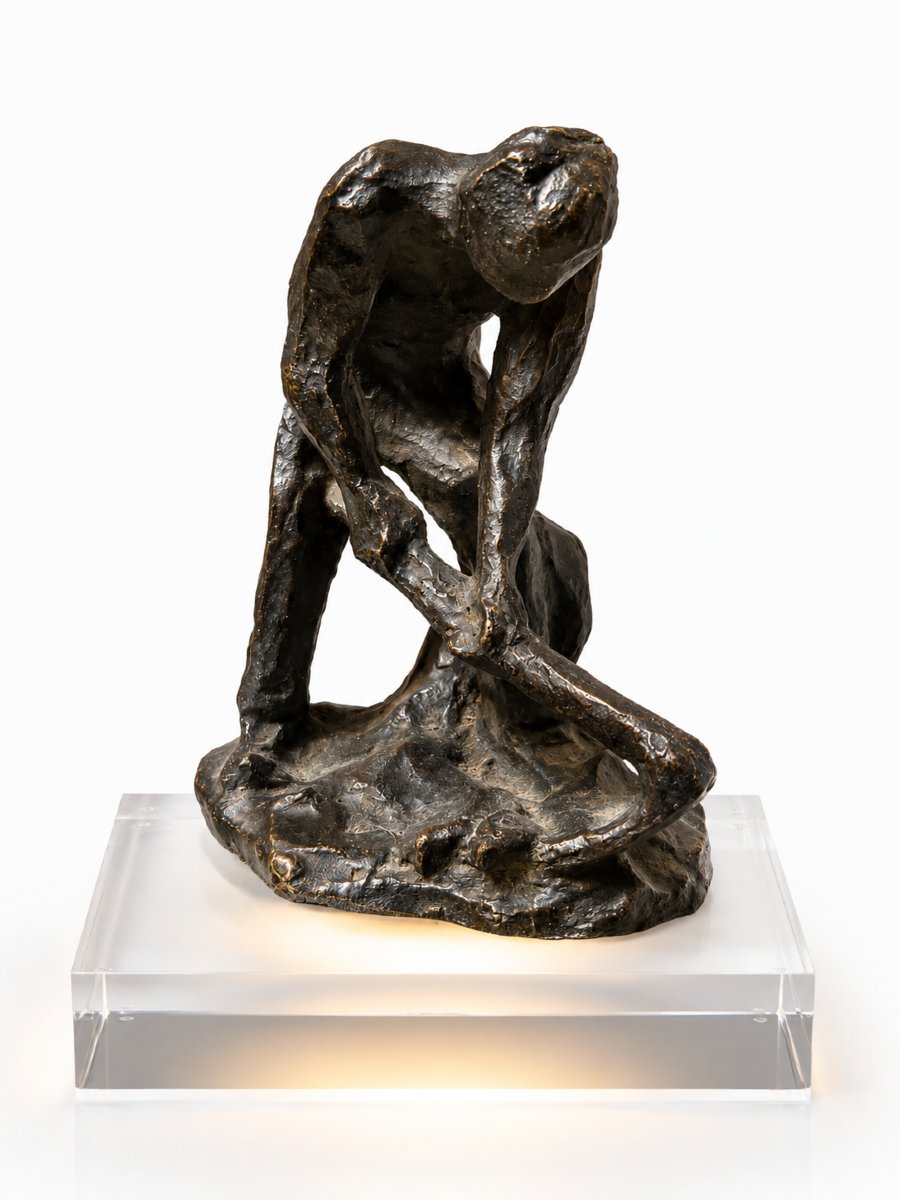
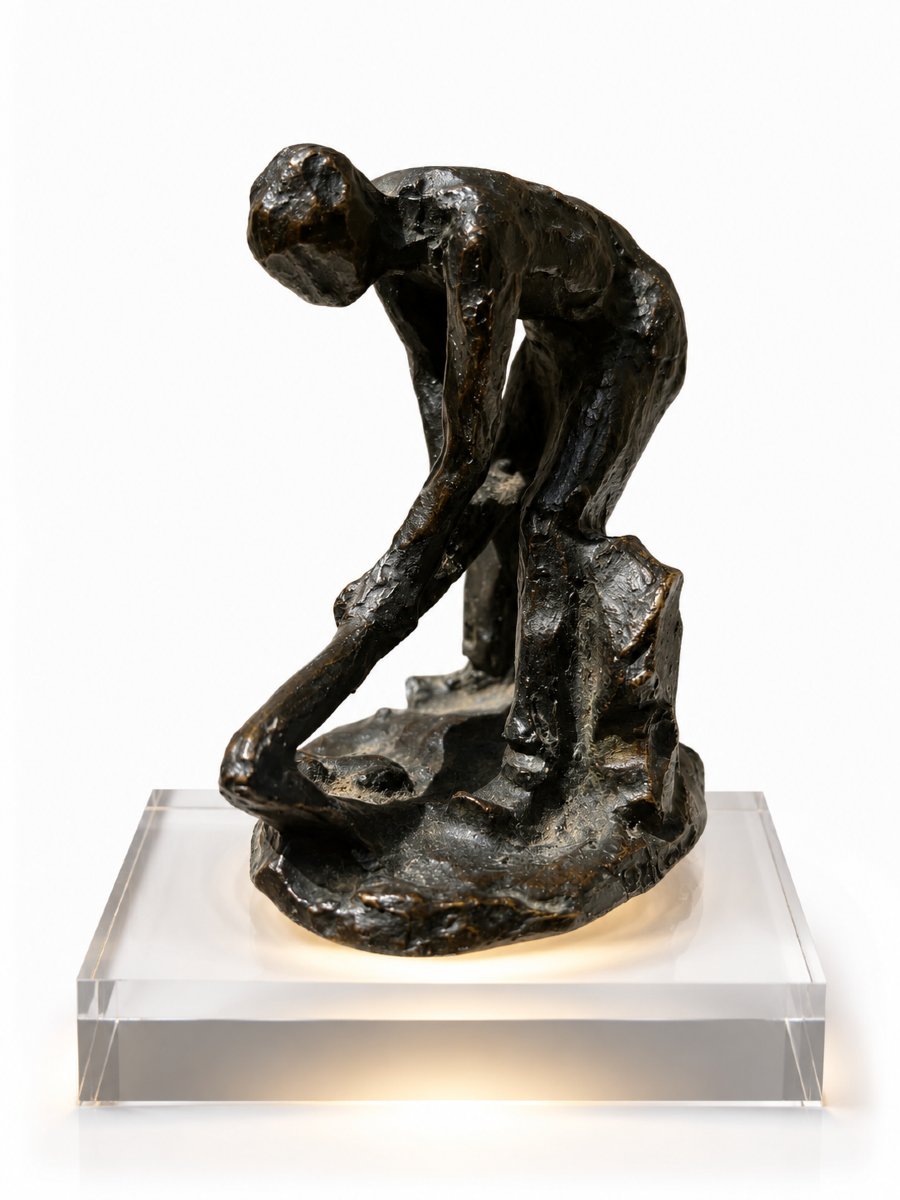
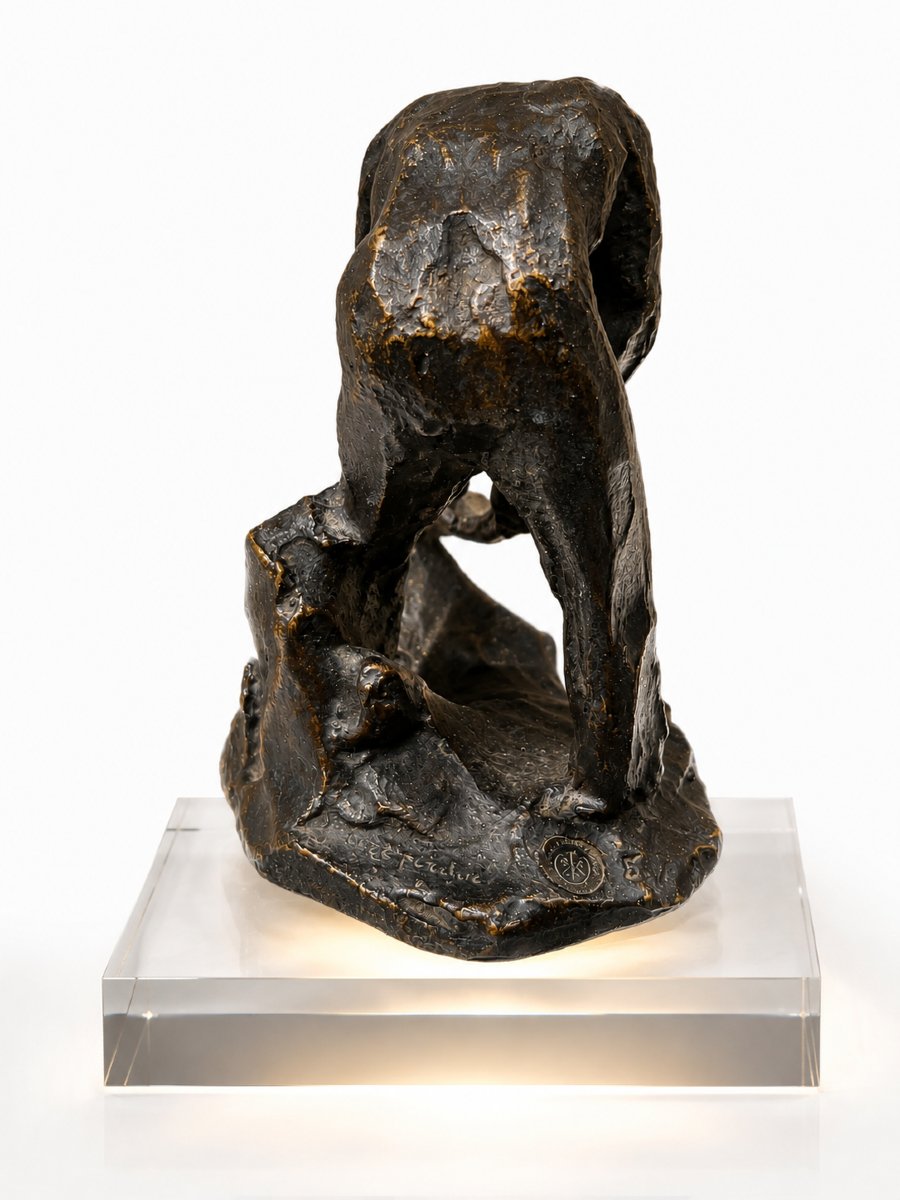
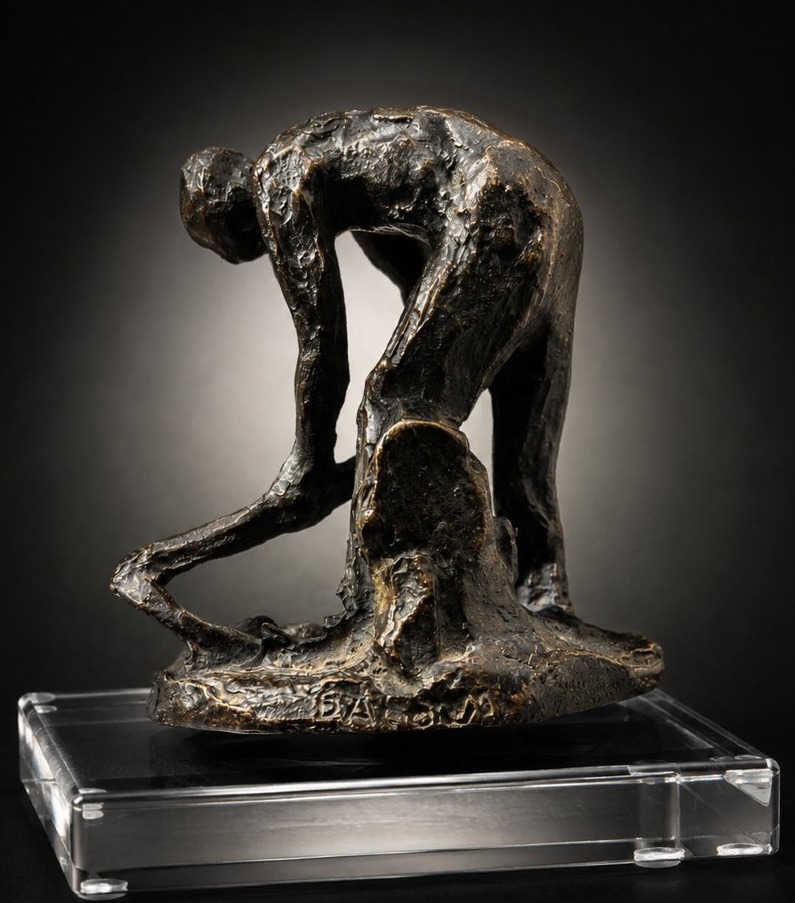



Aimé-jules Dalou (1838–1902) *the Peasant With A Hoe* (or *standing Hoeer*) Lost-wax Bronze,
A major figure in late 19th-century French sculpture, Aimé-Jules Dalou holds a pivotal place alongside Auguste Rodin. A staunch Republican, he developed a deeply humanistic body of work in which workers, peasants, and artisans became the true heroes of monumental sculpture.
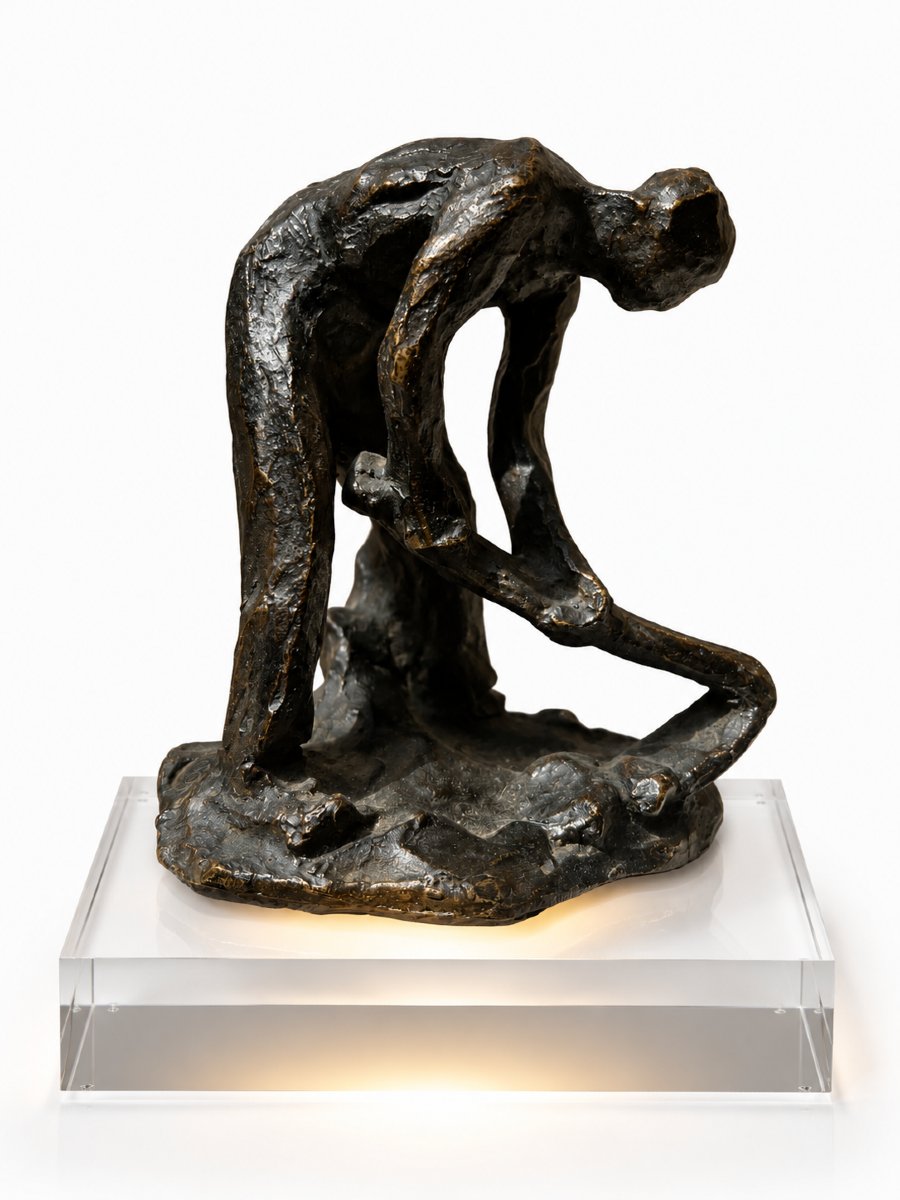
The bronze presented here depicts The Peasant with a Hoe, also known as Standing Hoe-Wielder. Created around 1889–1898, this model belongs to the famous series of studies devoted to rural and working-class life, executed by Dalou as part of his ambitious project, the Monument to the Workers, which remained unfinished at the time of his death.
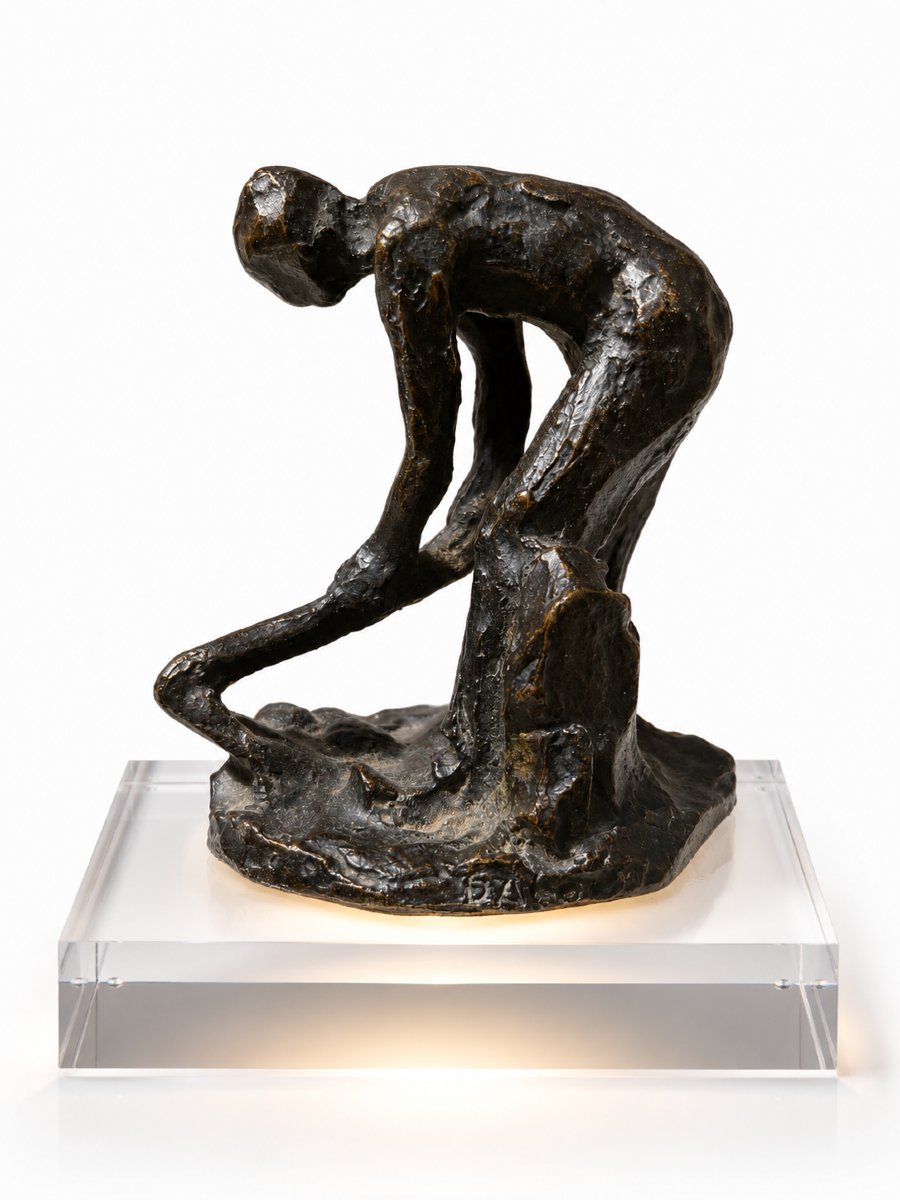
In a powerfully expressive pose, the peasant bends over his work, both hands firmly resting on a hoe. Without resorting to anecdotalism or idealization, Dalou captures with remarkable accuracy the physical effort, the body’s balance, and the nobility of this everyday gesture. The modernity of his work lies entirely in this ability to magnify human labor through a sculpture of great simplicity.
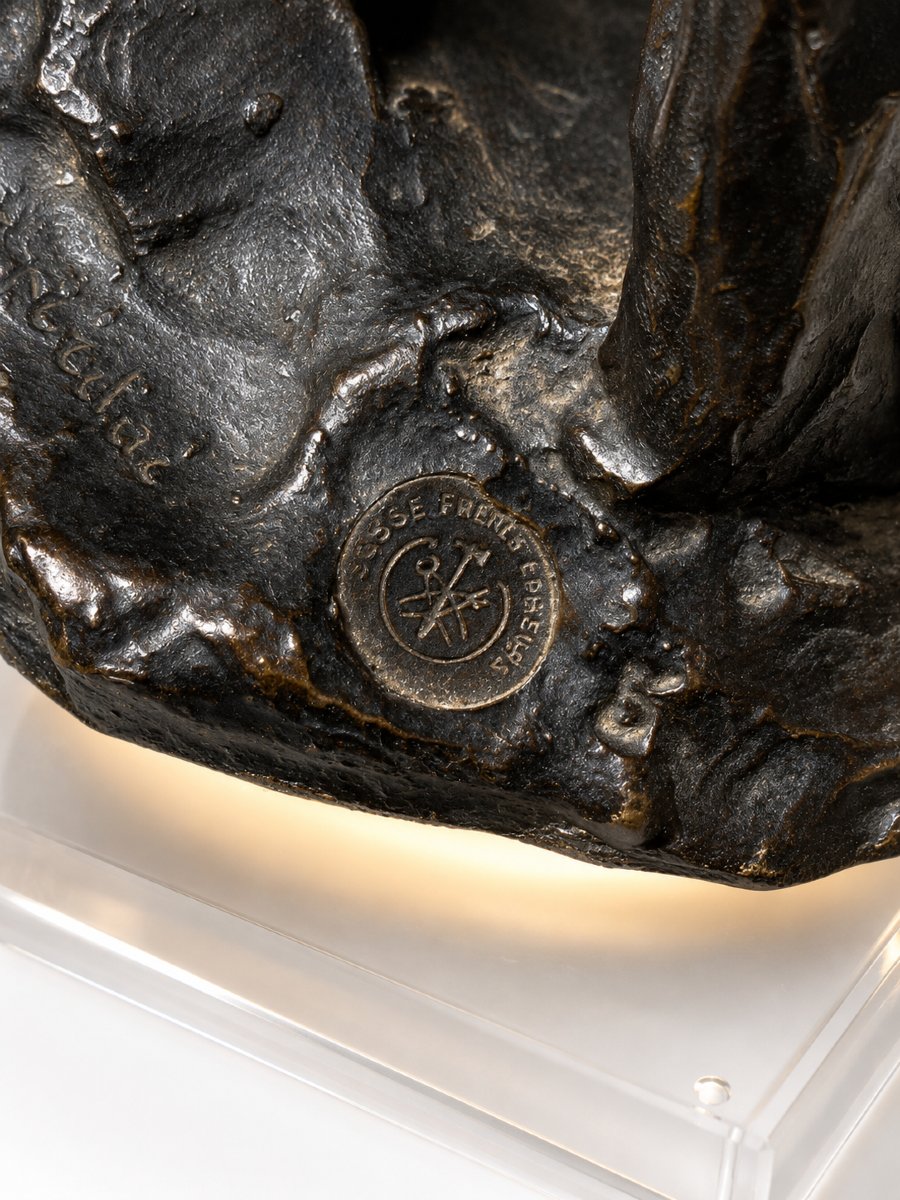
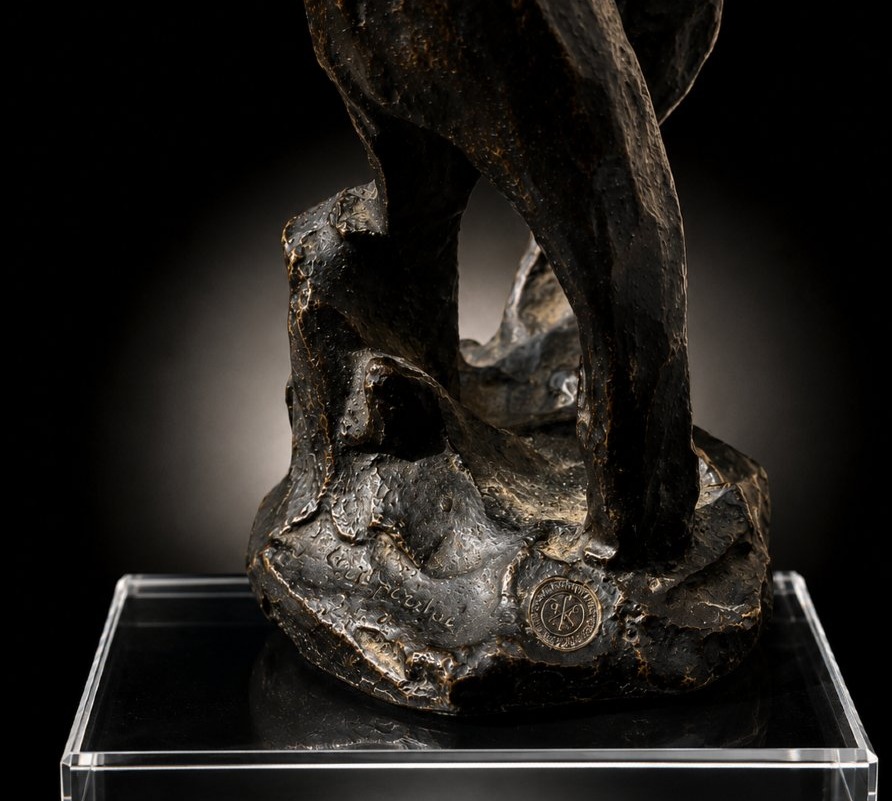
Our copy is an early edition by Susse Frères, bearing the circular stamp “Susse Frères Éditeurs Paris – Cire Perdue”, a casting process that faithfully reproduces the richness of the modeling and the vigor of the marks left by the sculptor. The signature “Dalou”, visible on the pedestal, confirms the authenticity of the model.
After the artist’s death in 1902, Susse obtained permission from his heirs to produce several of his most iconic sculptures. The vintage castings produced under this contract are now the most sought-after editions among collectors.
The nuanced brown patina particularly highlights the power of the modeling, while the deliberately textured surfaces reflect Dalou’s highly personal sculptural style, in which every mark contributes to the life of the material.
Housed in the collections of the Musée d’Orsay as well as the Petit Palais in Paris, this work is considered one of the sculptor’s most beautiful depictions of peasant life.
An iconic work of late 19th-century French naturalist sculpture, combining the quality of an antique Susse Frères cast, the elegance of a beautiful original patina, and the expressive intensity characteristic of one of the greatest sculptors of his time.
Bibliography:
- Jules Dalou (1838–1902), The Sculptor of the Republic, exhibition catalog from the Petit Palais, Paris, 2013.
- Musée d’Orsay, Standing Plowman.
- Archives and catalogs of Susse Frères.
Period: 19th century
Style: Napoleon 3rd
Condition: Good condition
Material: Bronze
Length: 09cm
Width: 06cm
Height: 09cm
Reference (ID): 1796207
Availability: In stock