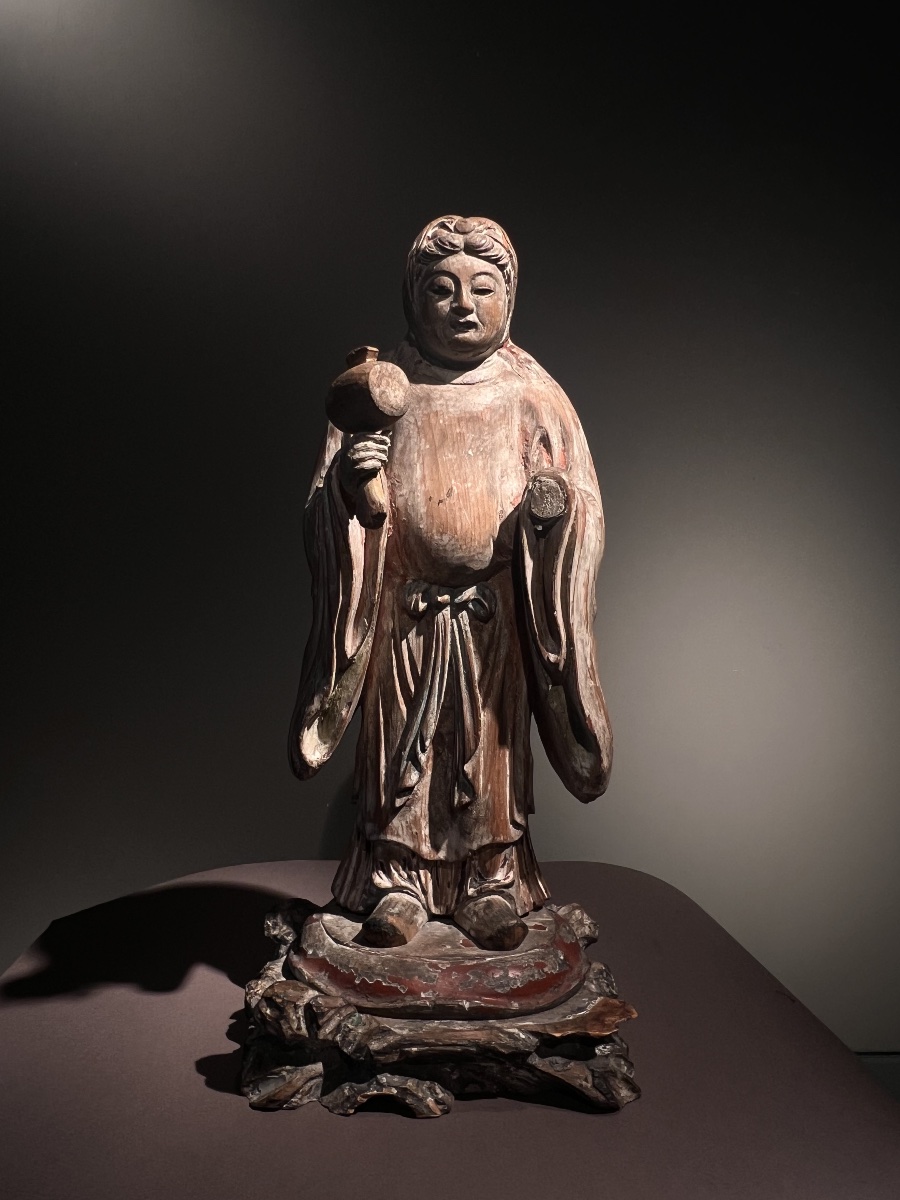

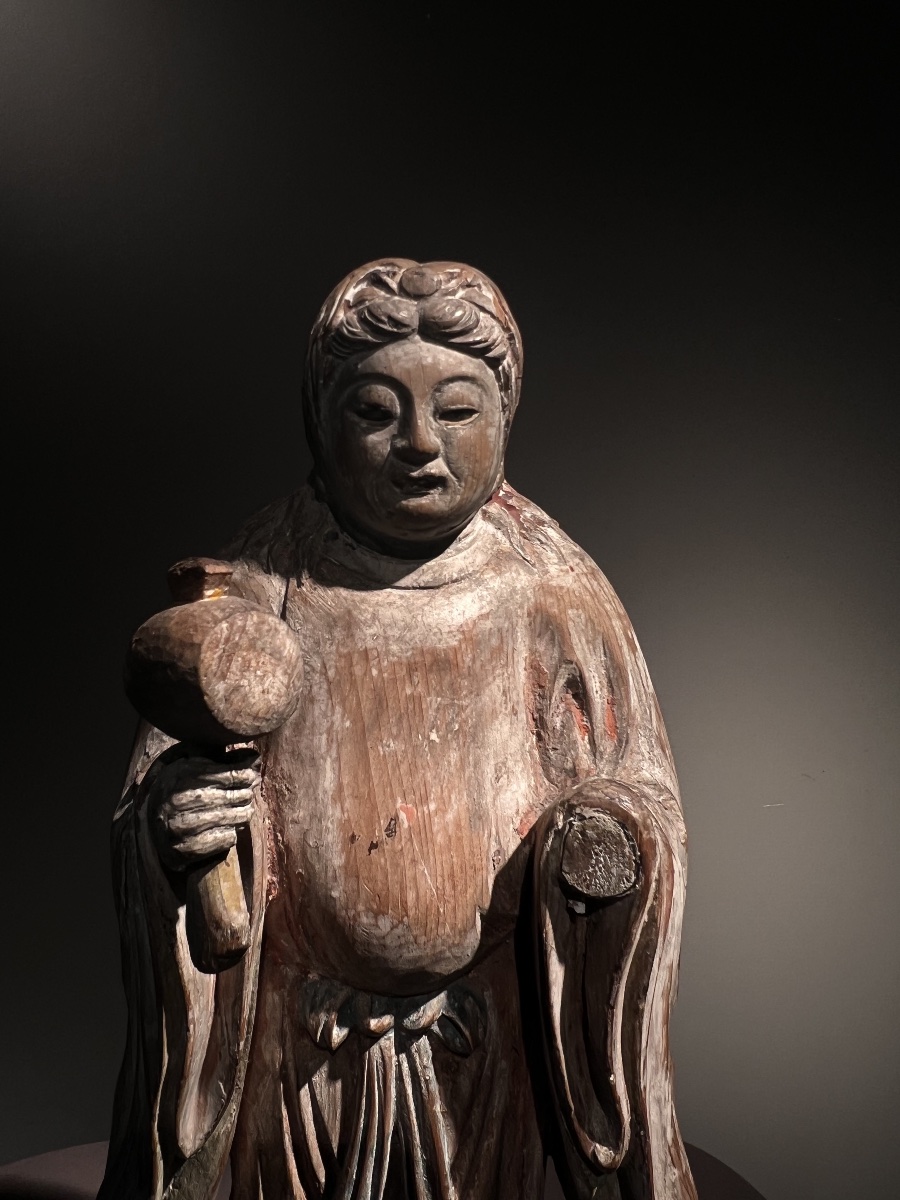
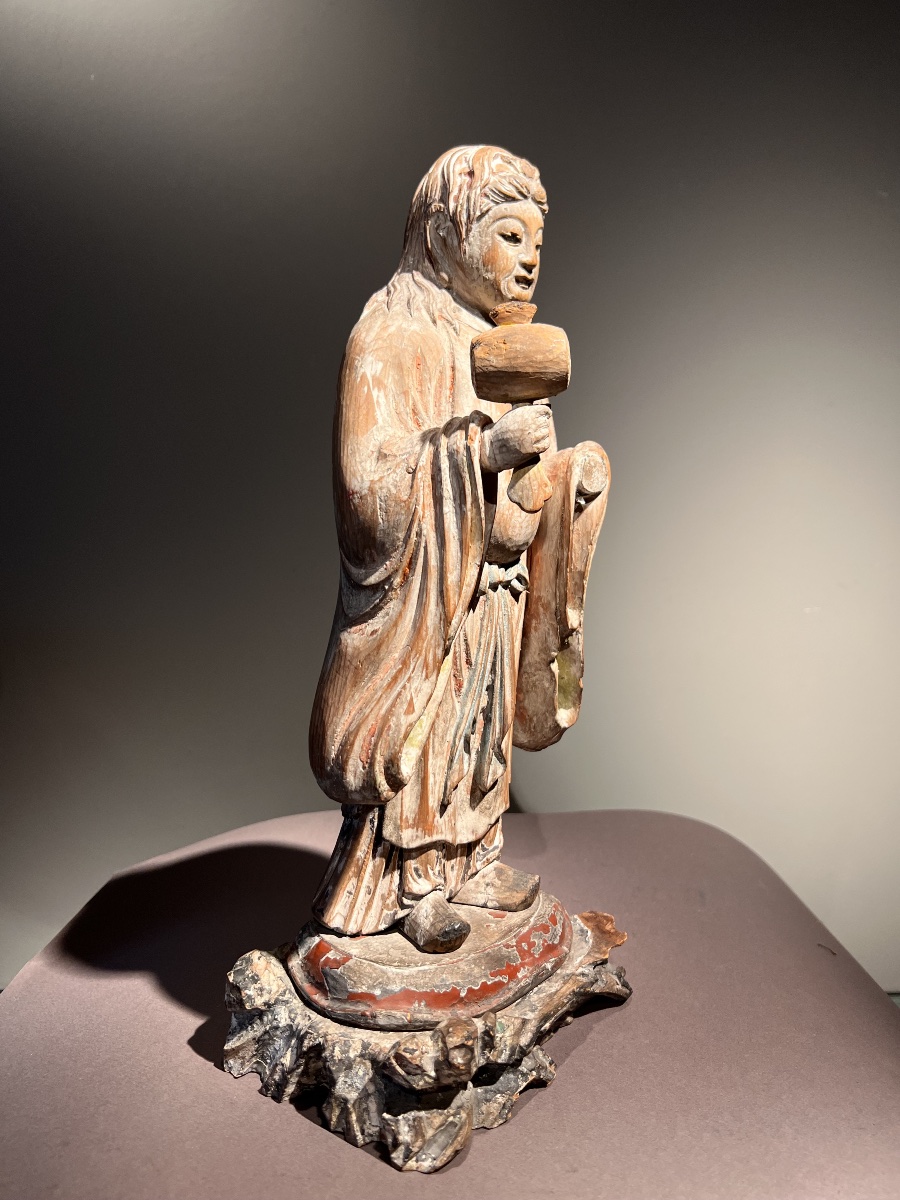
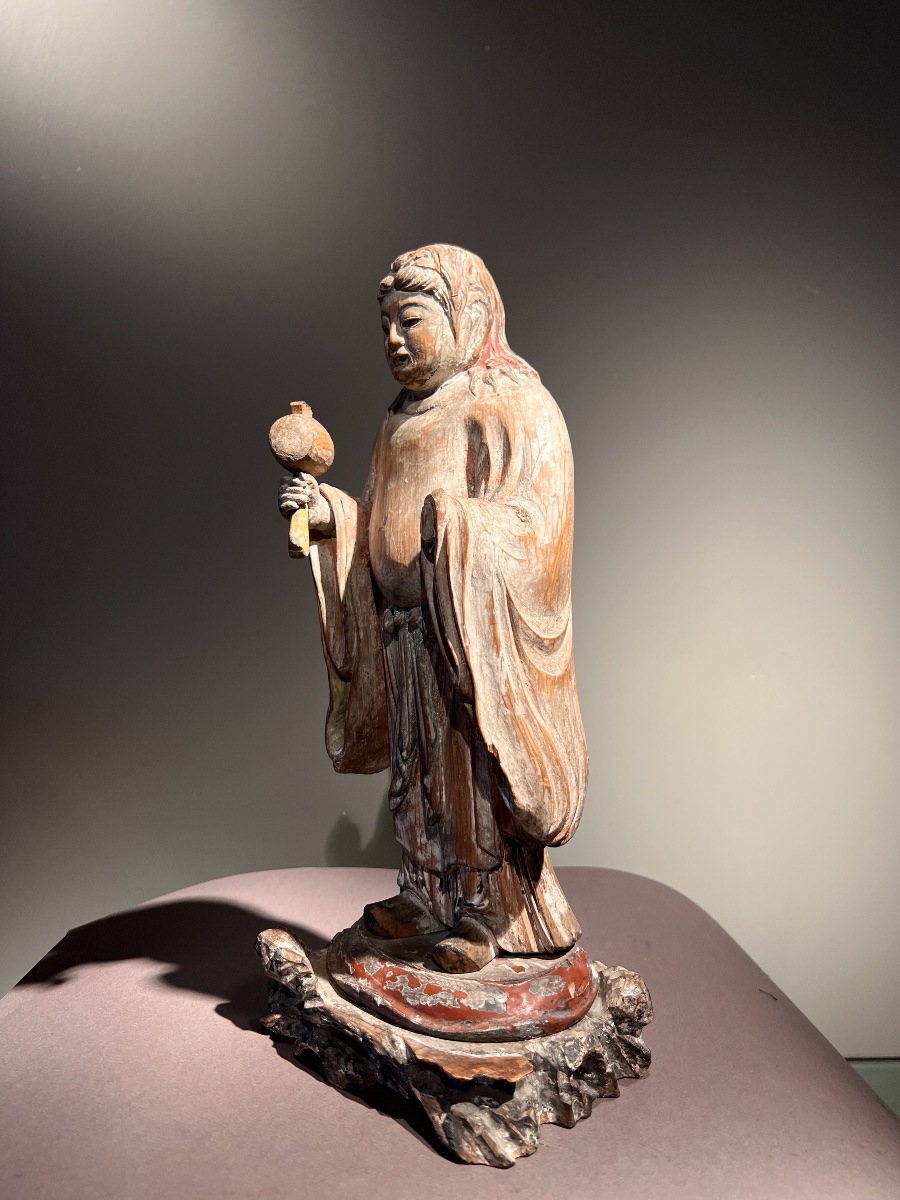
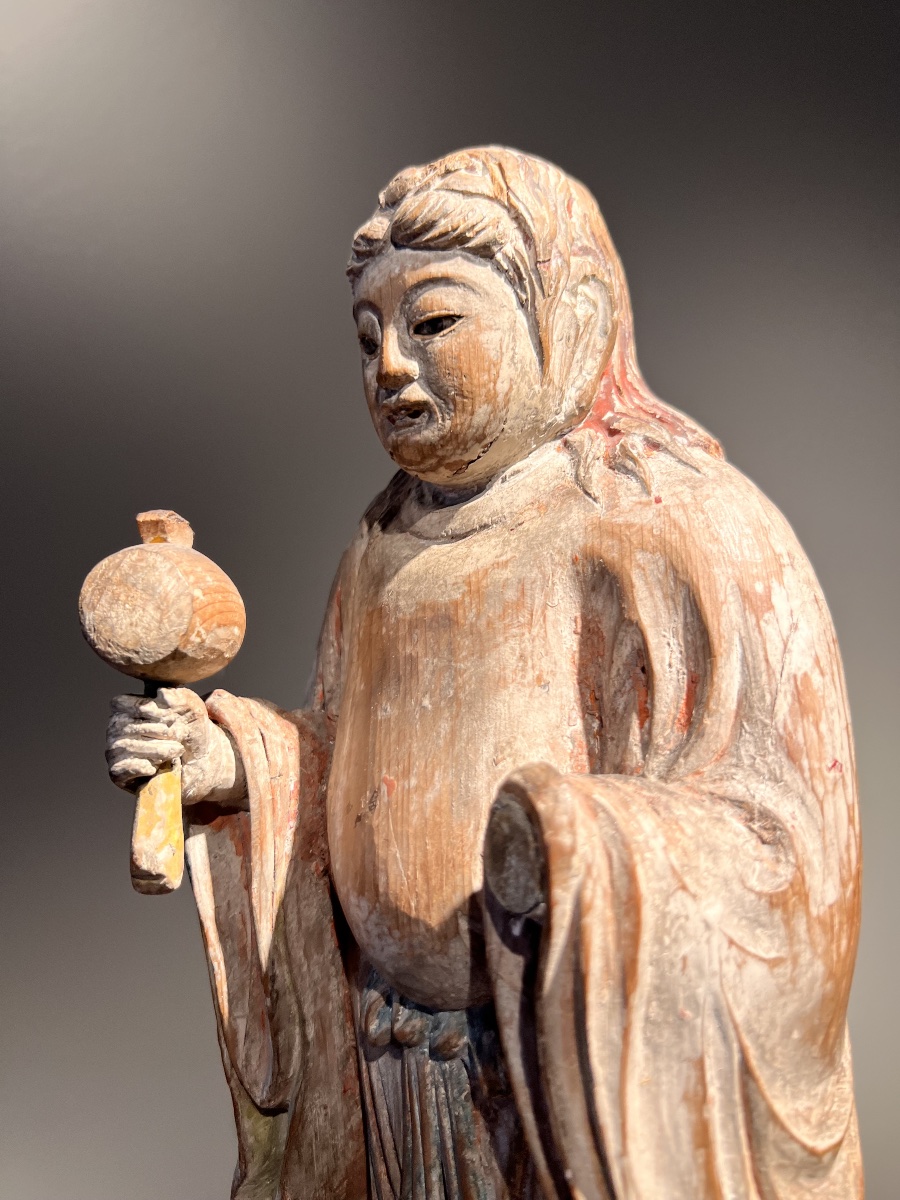
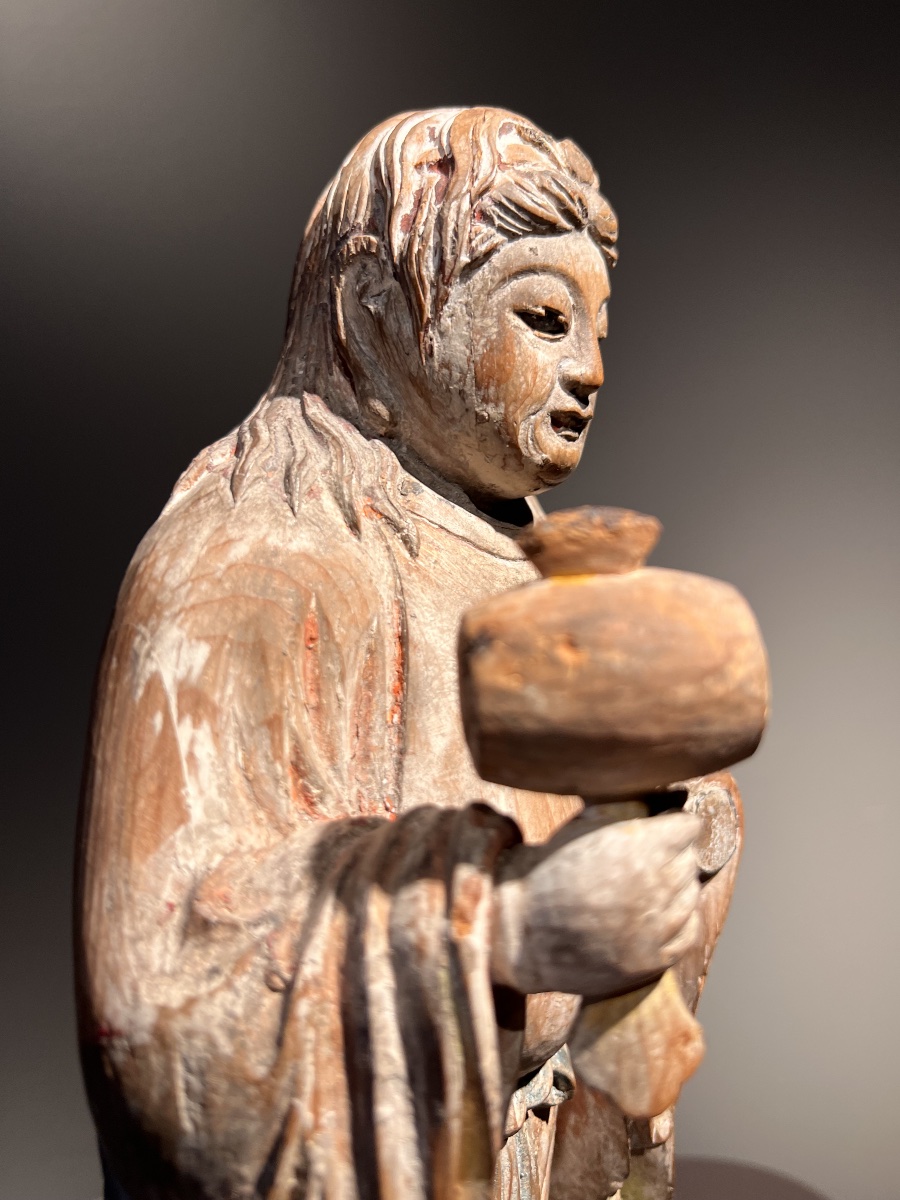
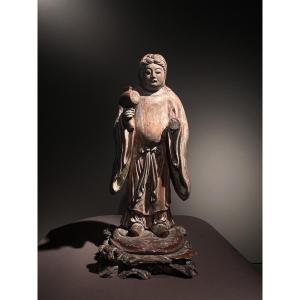


Sculpture Of Daikokuten. Japan, Momoyama Period (1573–1615). Carved Softwood.
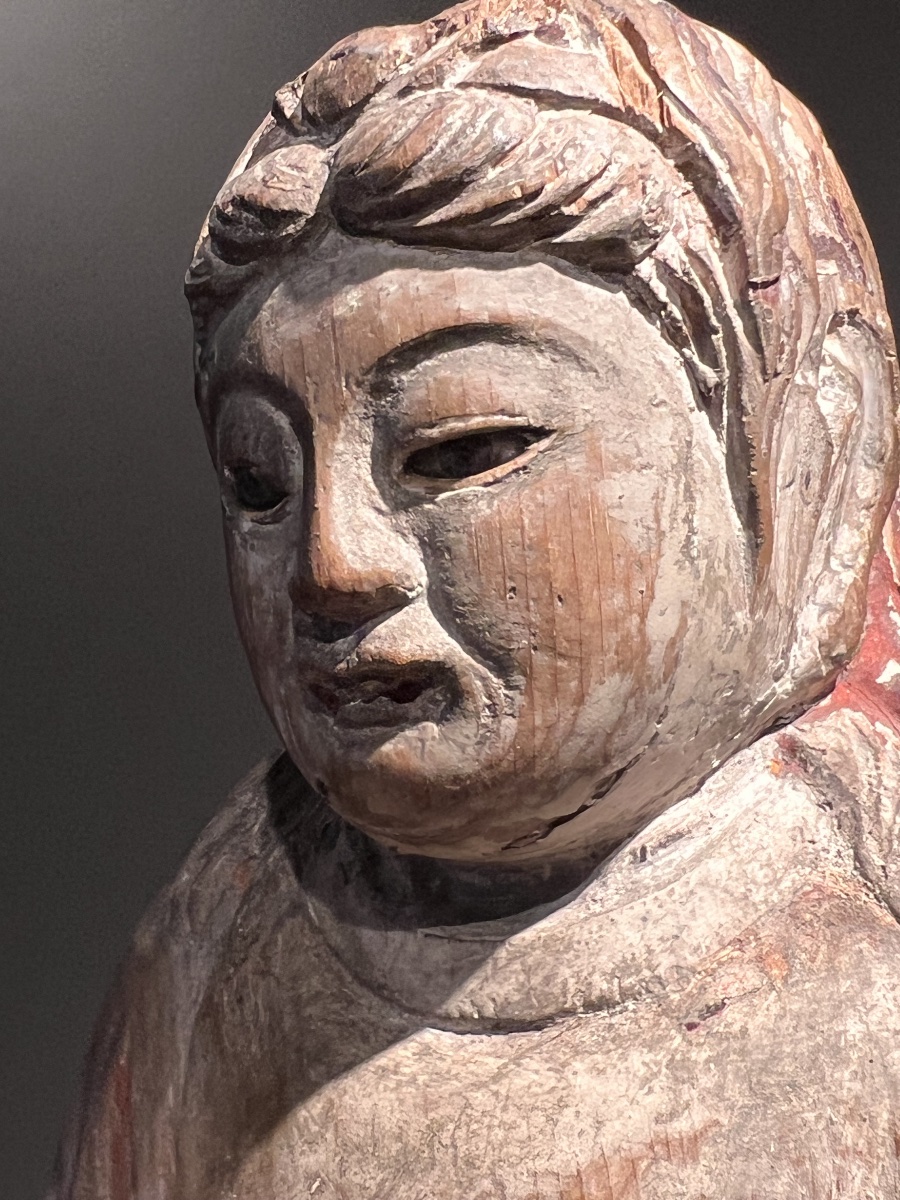
Sculpture depicting Daikokuten. Japan, Momoyama period (1573–1615), made of softwood, with traces of polychromy; eyes made of sulfide.
This sculpture depicts Daikokuten (大黒天), the Japanese deity of prosperity, wealth, and the protection of households. He is depicted standing, dressed in a long robe with wide, flowing sleeves, holding in his left hand his “wish-granting mallet,” or uchide no kozuchi (打ち出の小槌), an attribute symbolizing the fulfillment of desires, abundance, and good fortune. His face, with its full and serene features, is brought to life by eyes inlaid with sulfide, while the work retains significant traces of its original polychromy, notably traces of white, red, and black. It rests on a partially polychromed lotus-shaped pedestal.
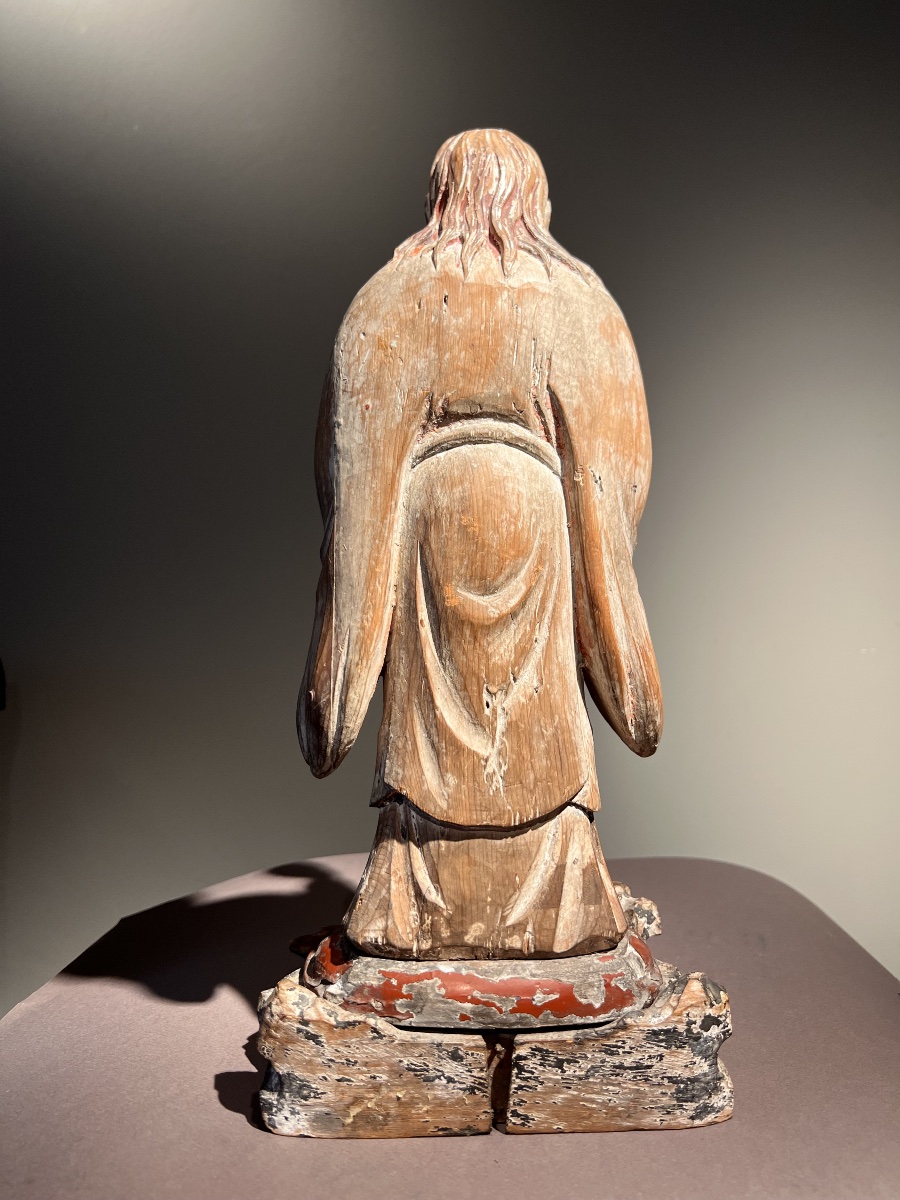
The reverse side of the sculpture bears a particularly interesting handwritten inscription. In the center is the phrase 大佛師方厓 (Dai-Busshi Hōgai), which translates to “Great Master Sculptor of Buddhist Statues Hōgai.” The title 大佛師 (Dai-Busshi) was a prestigious honorary distinction granted to masters specializing in the carving of Buddhist statues, while 方厓 (Hōgai) corresponds to the sculptor’s artist name or religious name. On the right is a date that is now partially erased, 〇〇十四日, ending with “the fourteenth day,” likely indicating the date of the sculpture’s completion or consecration. On the left is the inscription 在十一, which can be interpreted as “located at the eleventh” or “number eleven,” likely corresponding to a location within a temple or an inventory number in a series of sculptures.
Period: 16th century
Style: Asian art
Condition: Good condition
Material: Painted wood
Width: 18 cm
Height: 39 cm
Depth: 12 cm
Reference (ID): 1793303
Availability: In stock