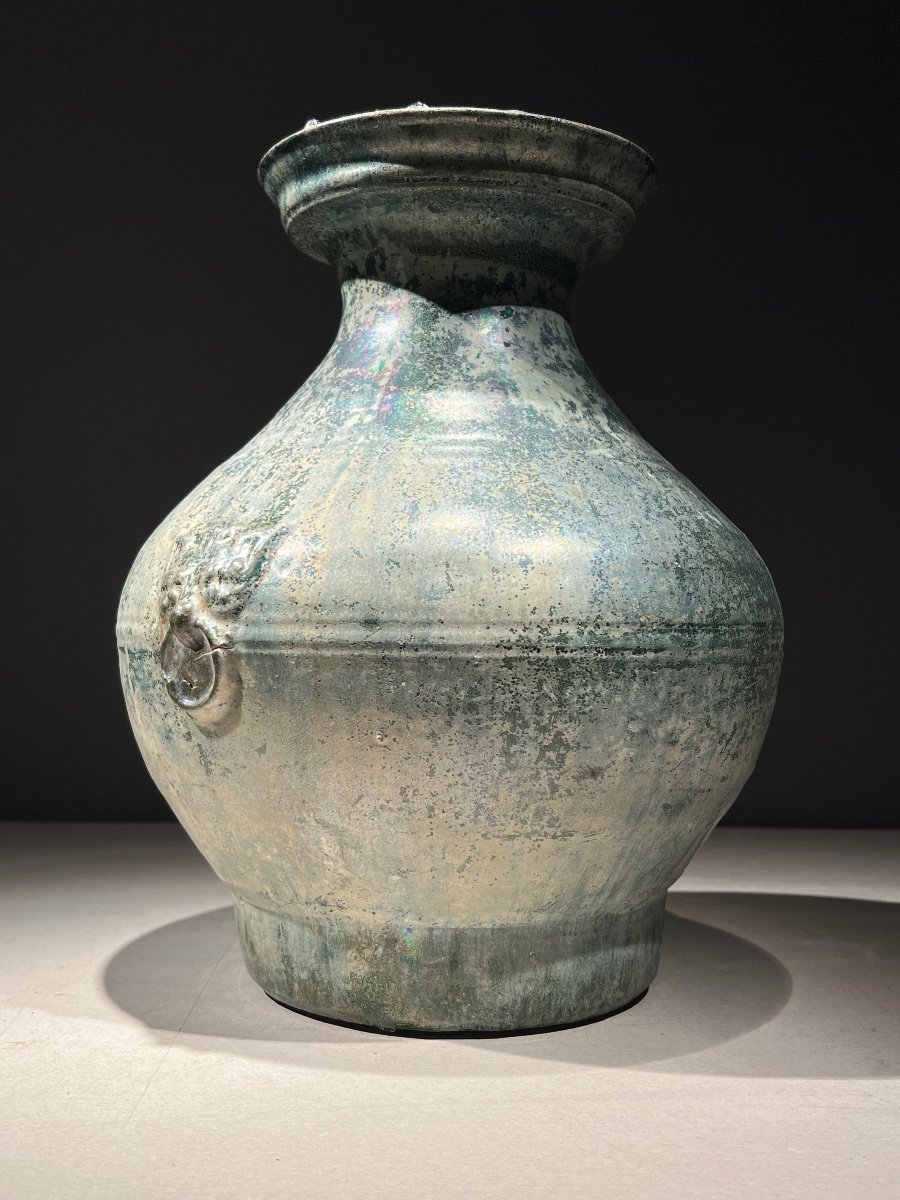


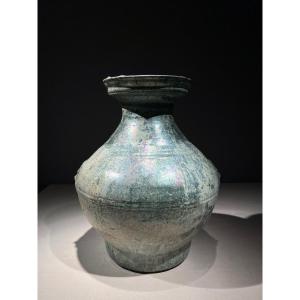


Ceramic Baluster Vase, Iridescent, Hu, Han Dynasty, Han Dynasty, China, 206 Bc – 220 Ad
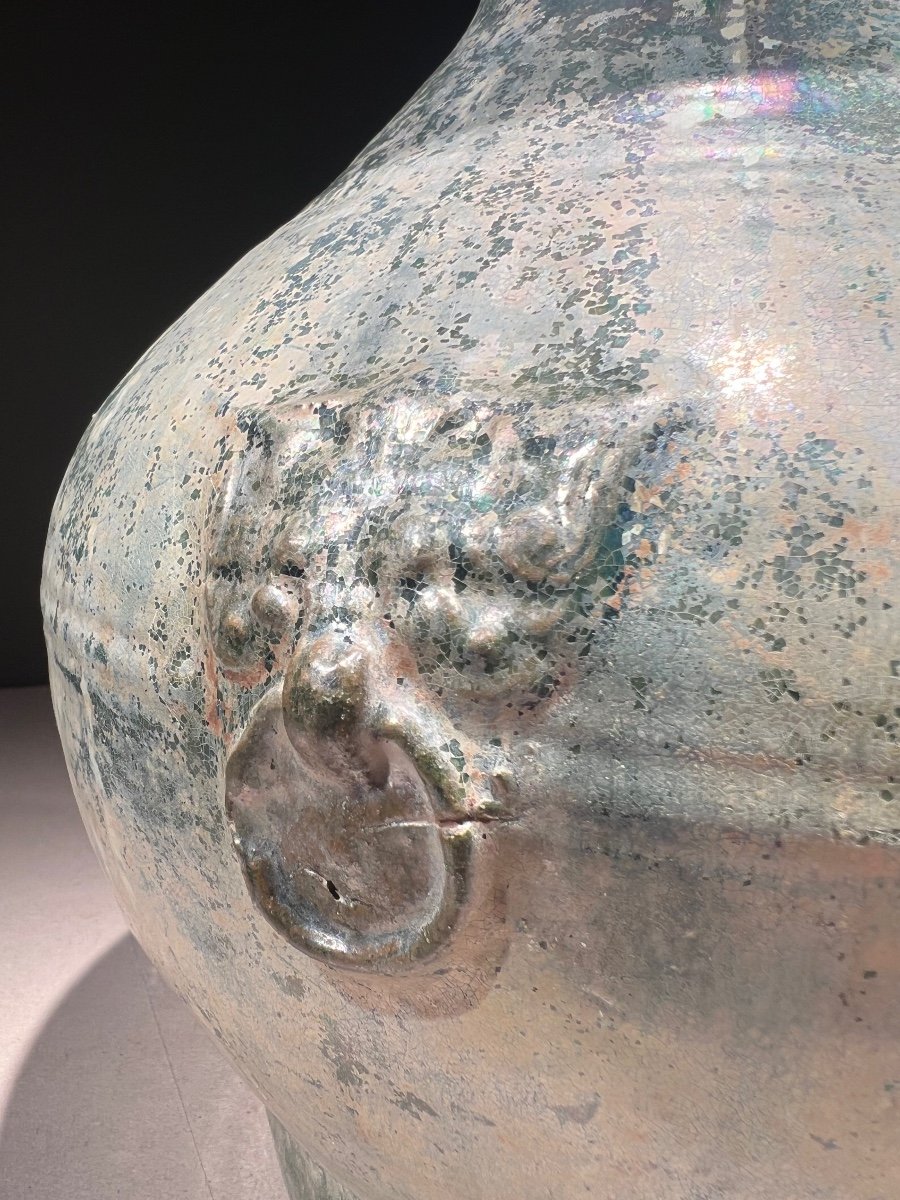
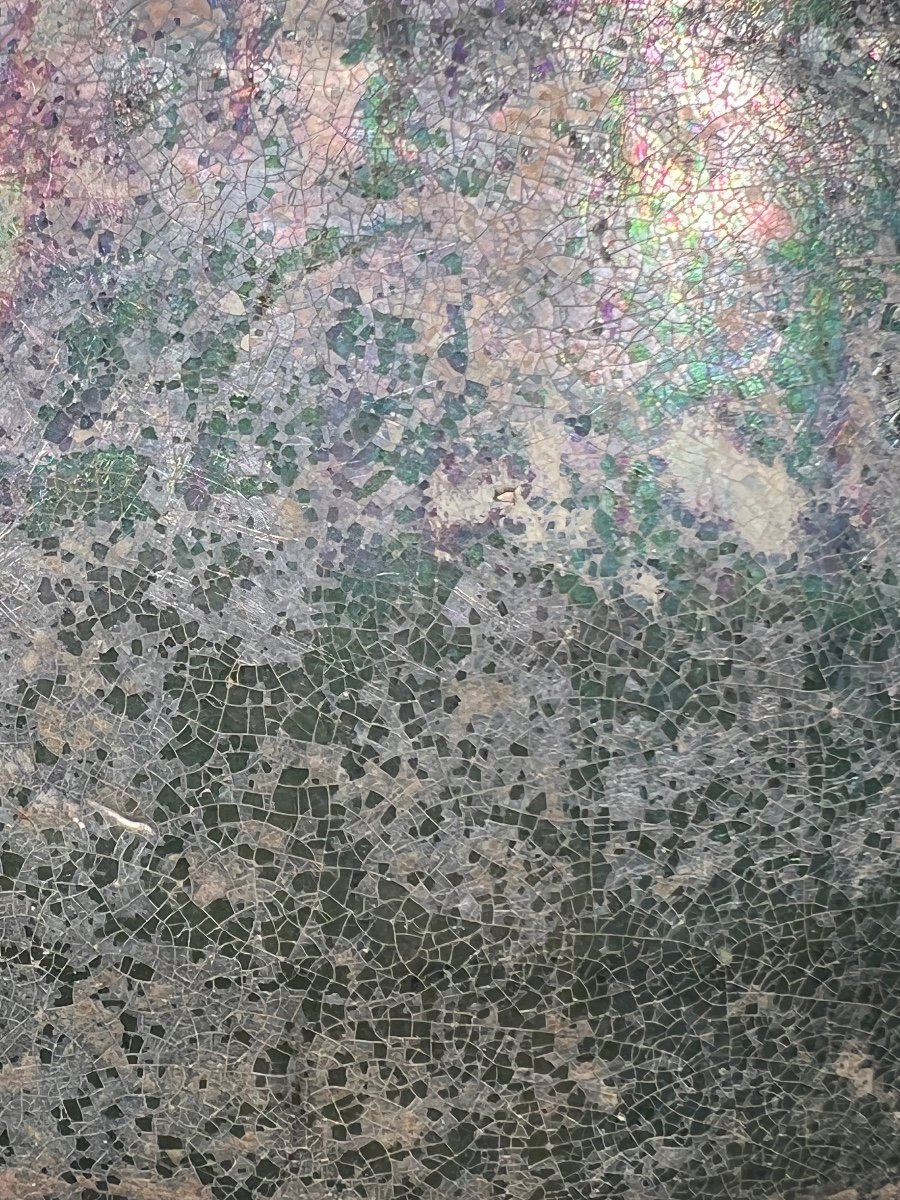
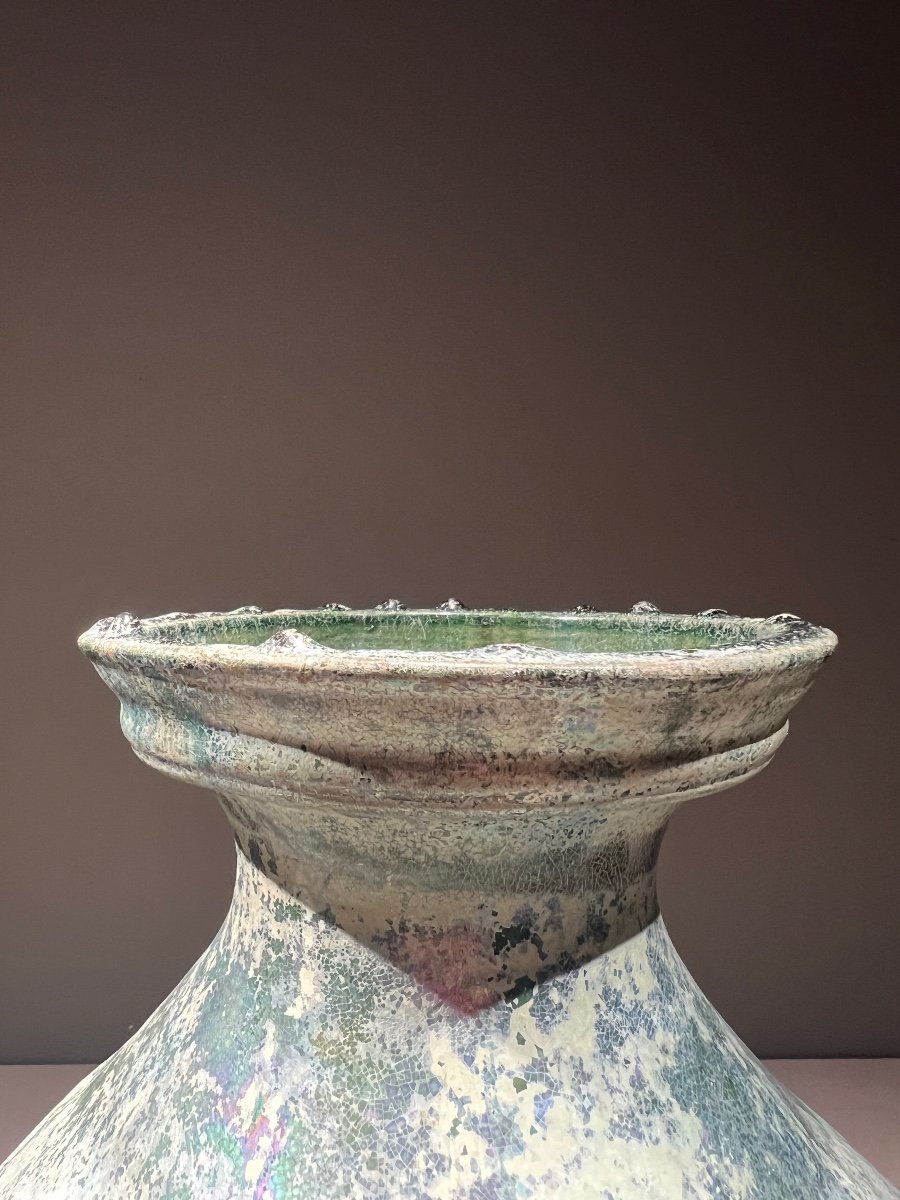
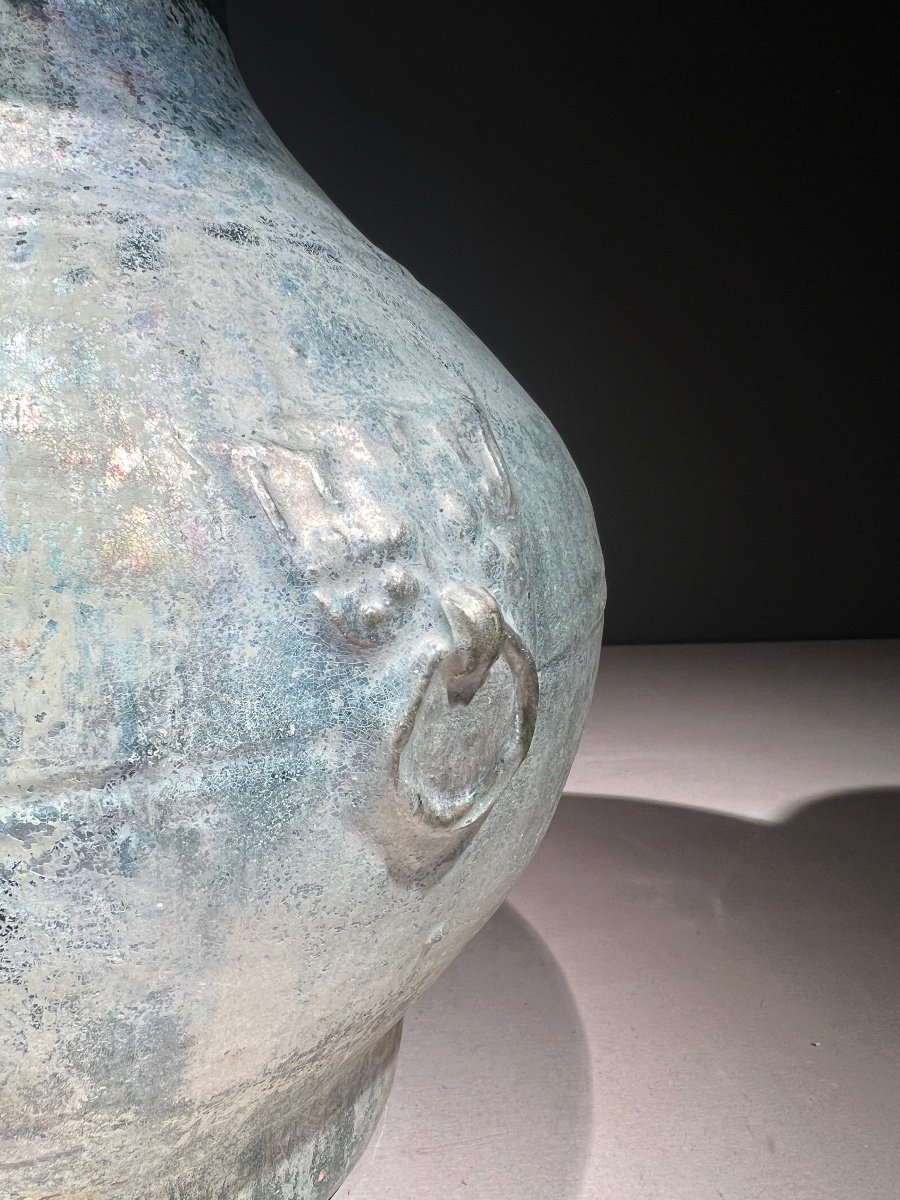
Ceramic vase, hu, baluster-shaped, resting on a high foot and flaring outwards at the neck, which ends in a stepped mouth. Magnificent iridescence. The body is divided into three horizontal sections by two series of grooved lines, around the shoulder and the belly of the vase. The body is decorated with a large taotie mask in relief on each side, each with a false ring handle. The vase is covered in a deep, shiny green glaze, leaving only the interior unglazed and revealing the body of the reddish pottery. The prototype of this vase is derived from an archaic bronze vase from the Warring States period (475 - 221 BC), as indicated by its low, pear-shaped body. The metallic effect created by the iridescent green lead glaze also supports this theory. Pottery made during the Han dynasty provides valuable insight into the social and financial context of China. Funerary objects such as this vessel were made of terracotta and covered with a weakly fired lead glaze, which was toxic and therefore unsuitable for everyday use. This weakly fired lead glaze, with copper as a colorant, was fired in an oxidized atmosphere at around 800°C and is one of the remarkable inventions of the Han potters. It laid the foundation for the further development of glazing techniques in China[1]. Similar green-glazed Hu vases from the Han dynasty, comparable in shape, size and decoration, are found in the collections of the Metropolitan Museum of Art[2], the British Museum[3], the Fitzwilliam Museum[ 4] and the University of London.
1. The Jiurutang Collection ed., The Jiurutang Collection, Hong Kong, 2003, p. 85
2. The Metropolitan Museum of Art online collection archive, accession number: 29.100.168 and 29.100.170
3. The British Museum online collection archive,
registration number: 1970,0726.169
4. The Fitzwilliam Museum online collection archive, object number: C .3-1974
5. The National Museum of History, Taiwan, registration number: 79-00338 and 76-00262
6. An, Jingkui, Zhongquo Taoci Quanji: The Complete Works of Chinese Ceramics, vol.3: Qin Han, Shanghai ren ming chu ban she, Shanghai, 2000, no. 91, p. 108
1. The Jiurutang Collection ed., The Jiurutang Collection, Hong Kong, 2003, p. 85
2. The Metropolitan Museum of Art online collection archive, accession number: 29.100.168 and 29.100.170
3. The British Museum online collection archive,
registration number: 1970,0726.169
4. The Fitzwilliam Museum online collection archive, object number: C .3-1974
5. The National Museum of History, Taiwan, registration number: 79-00338 and 76-00262
6. An, Jingkui, Zhongquo Taoci Quanji: The Complete Works of Chinese Ceramics, vol.3: Qin Han, Shanghai ren ming chu ban she, Shanghai, 2000, no. 91, p. 108
2 800 €
Period: Before 16th century
Style: Asian art
Condition: Good condition
Material: Ceramic
Length: 29 cm
Height: 34.5 cm
Reference (ID): 1234250
Availability: In stock
Print