

A Writing Desk Known As A “pompadour-style” Desk, Stamped “léonard Boudin”
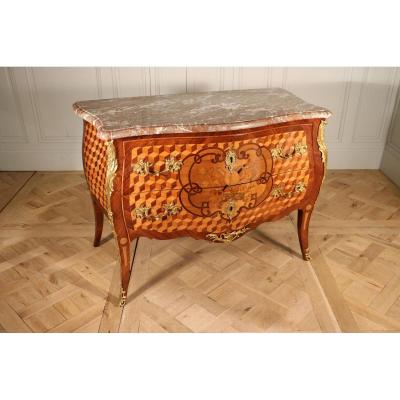
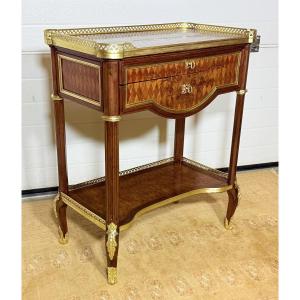
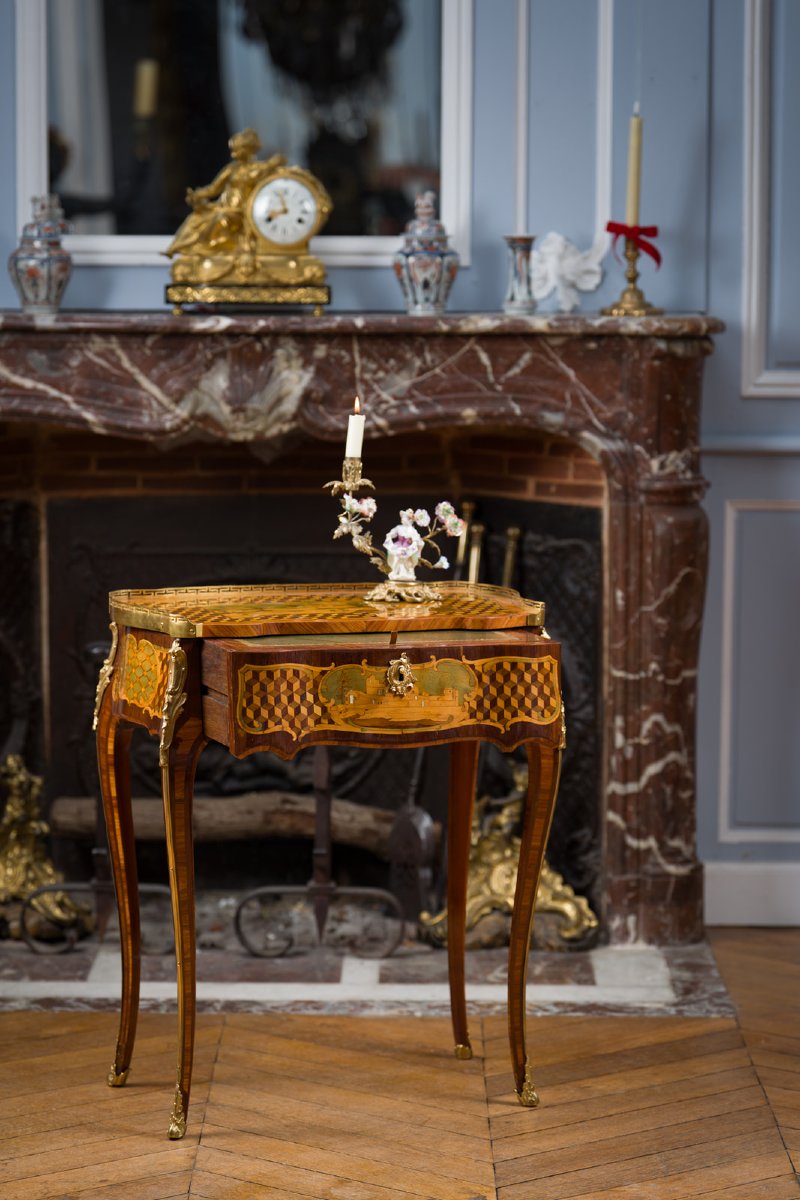
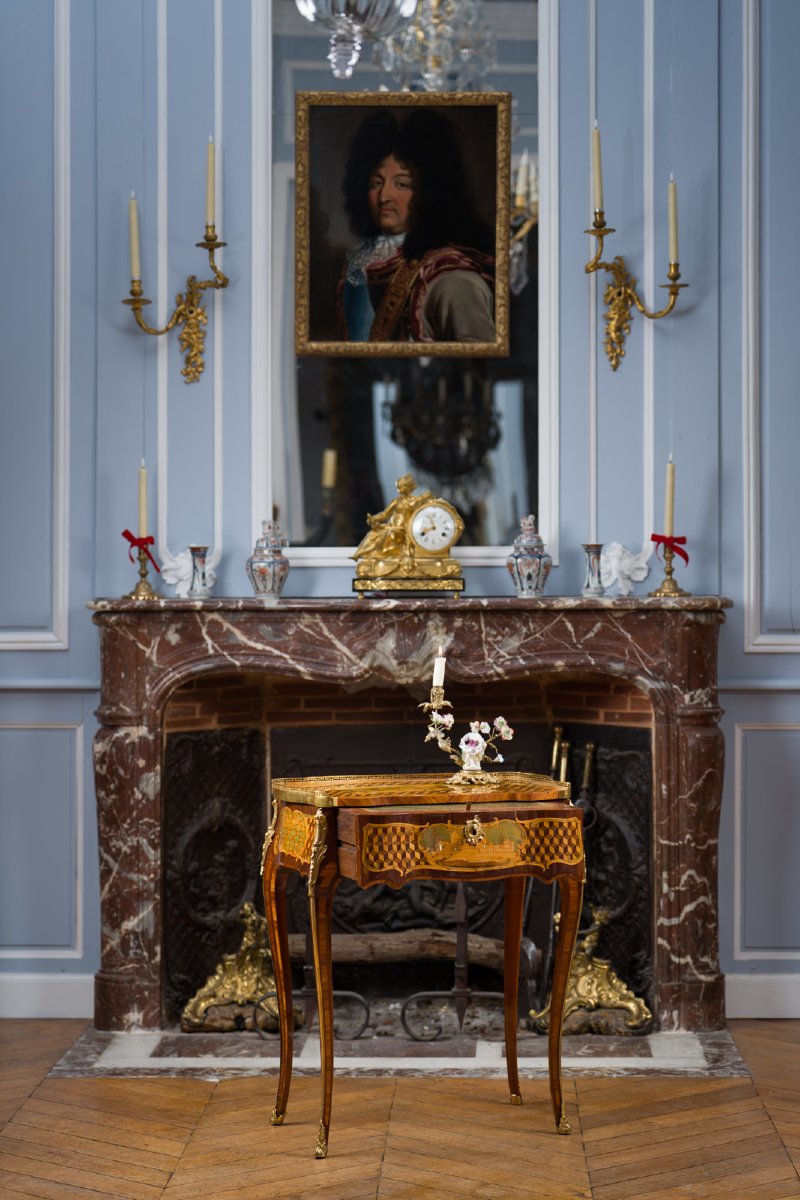
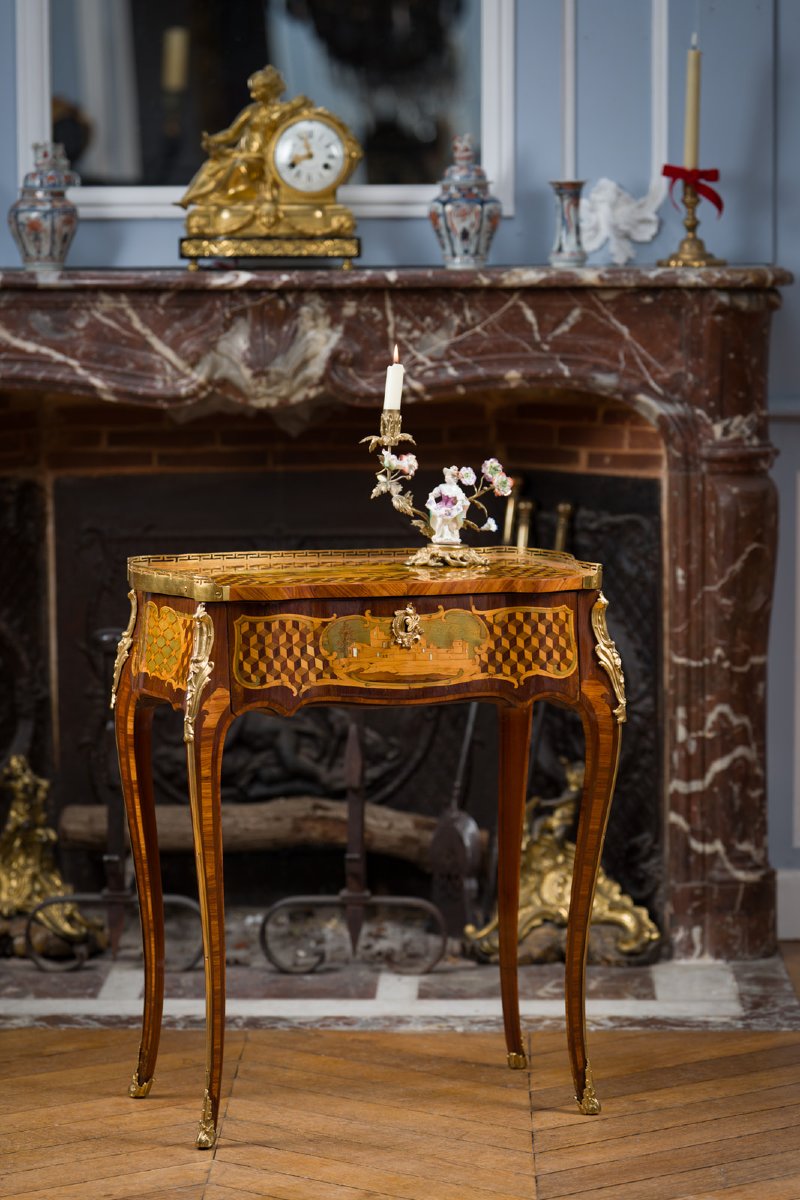
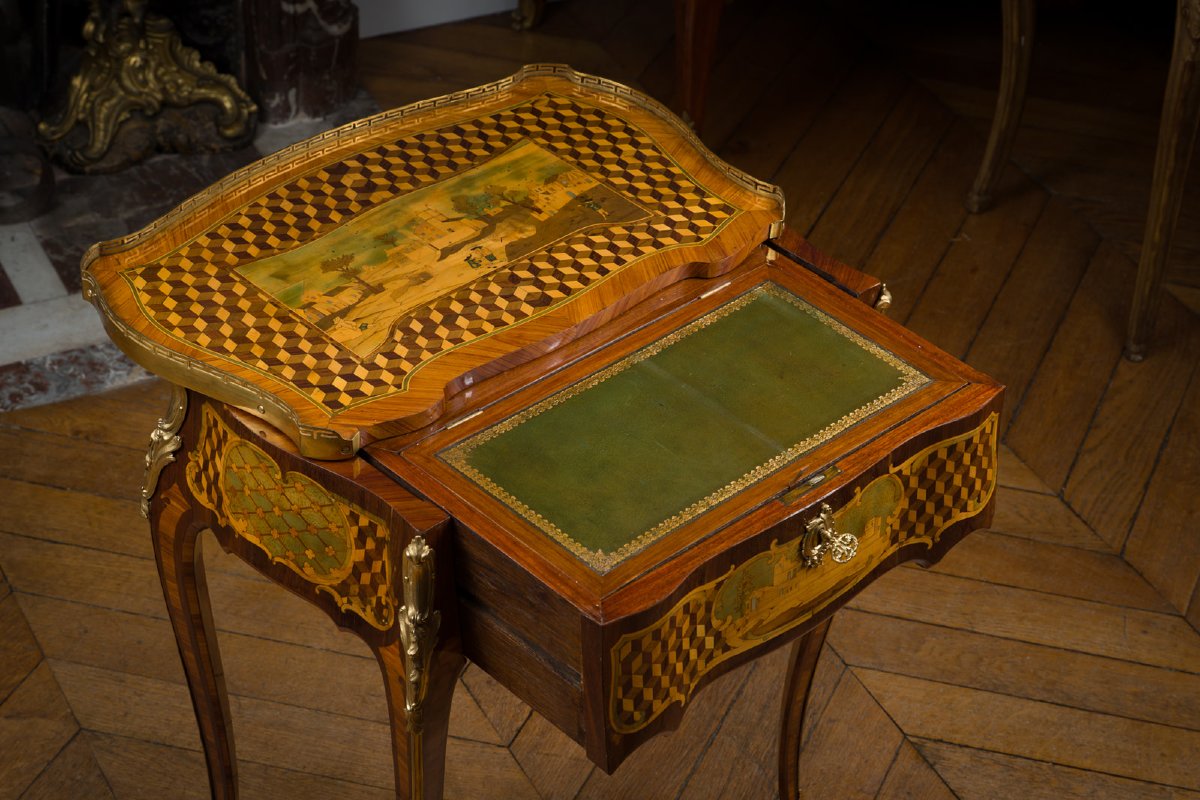
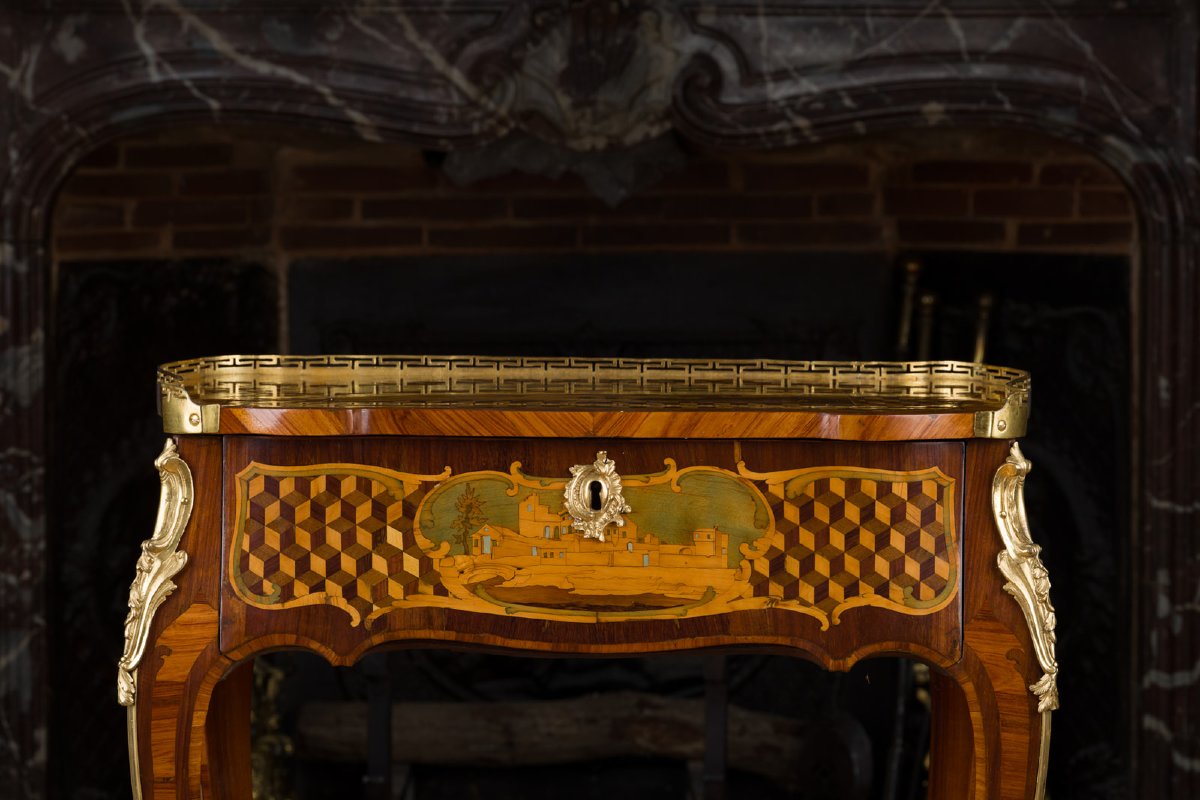
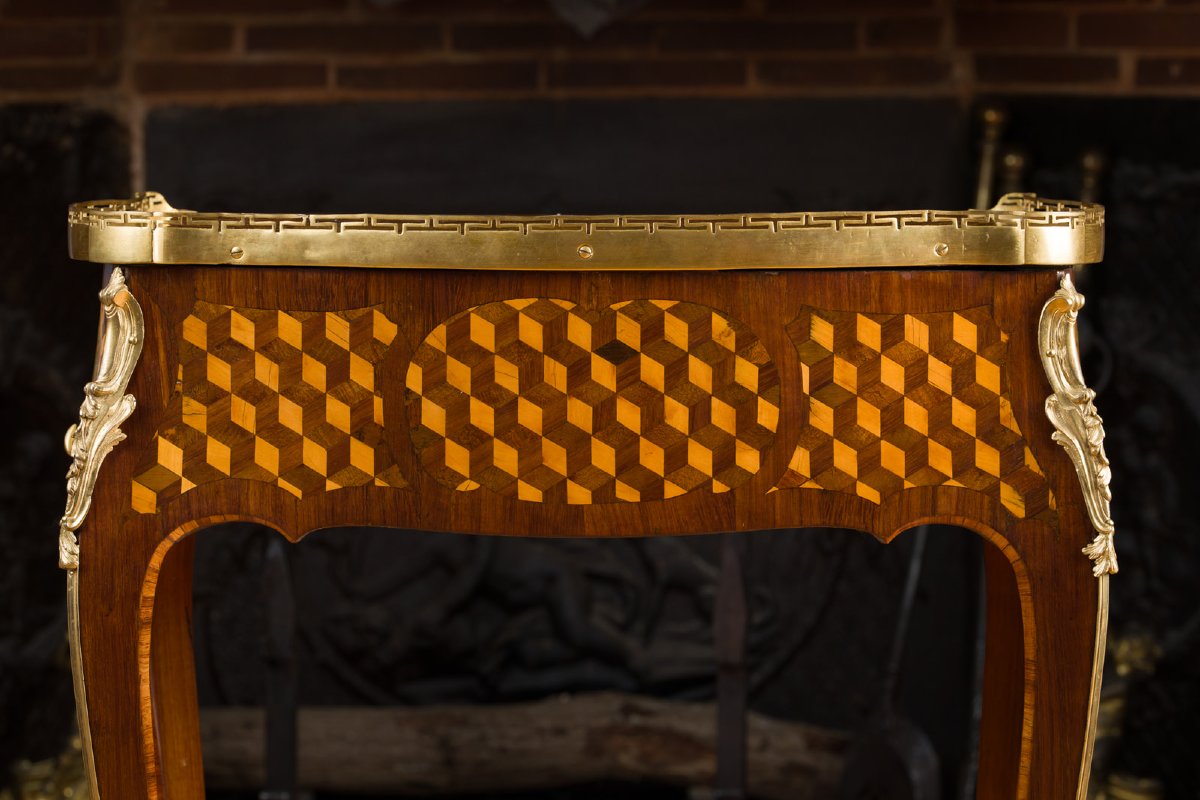
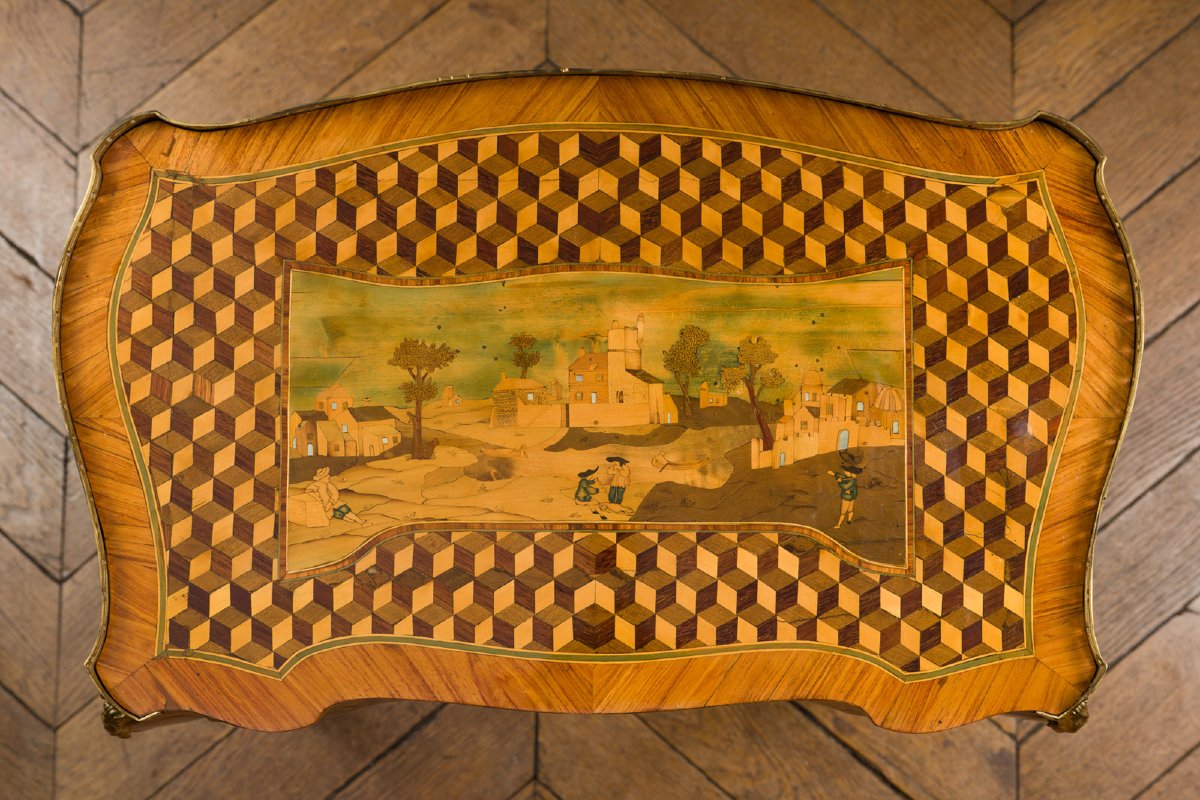
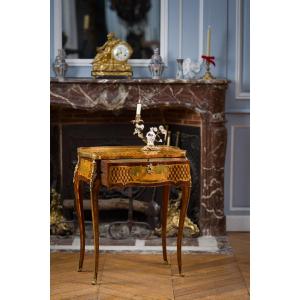
A lady's table à écrire known as a "Pompadour" writing table, entirely veneered with geometric cube marquetry and featuring, on the top, a reserve depicting a landscape with figures and architectural elements. The front is similarly decorated with marquetry and mother-of-pearl inlay.
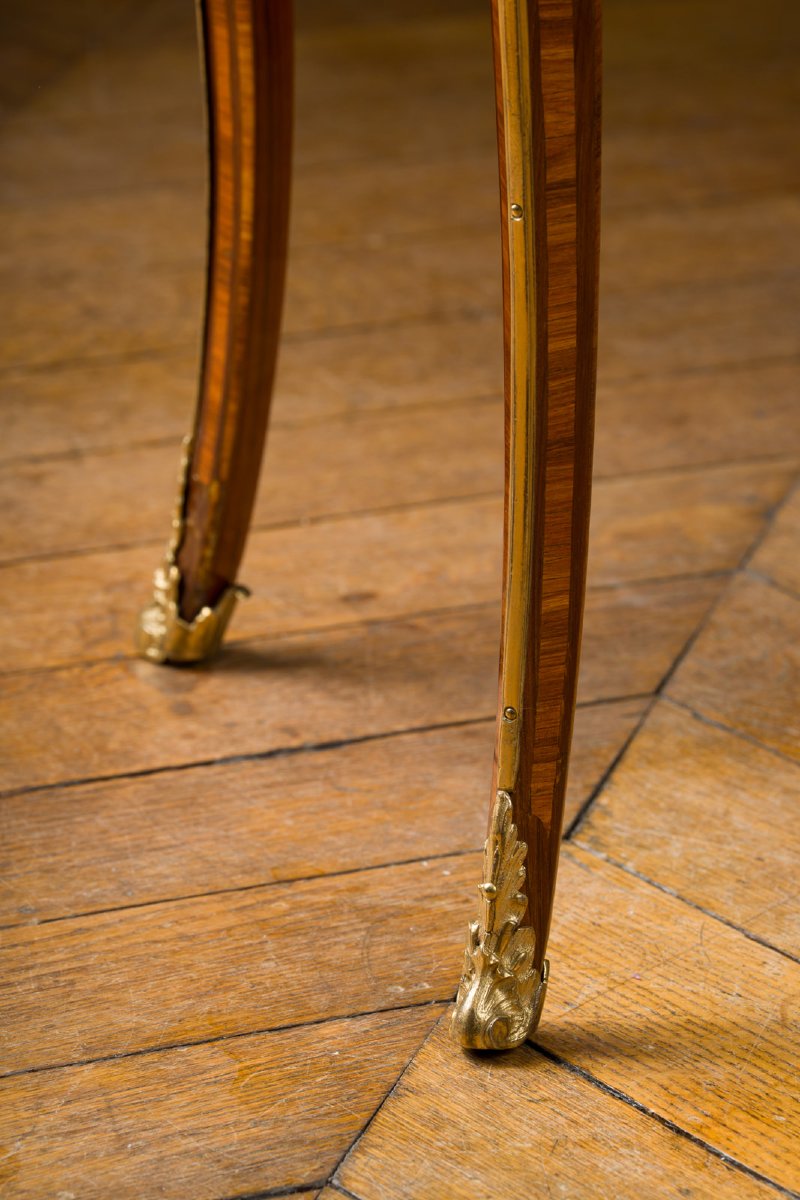
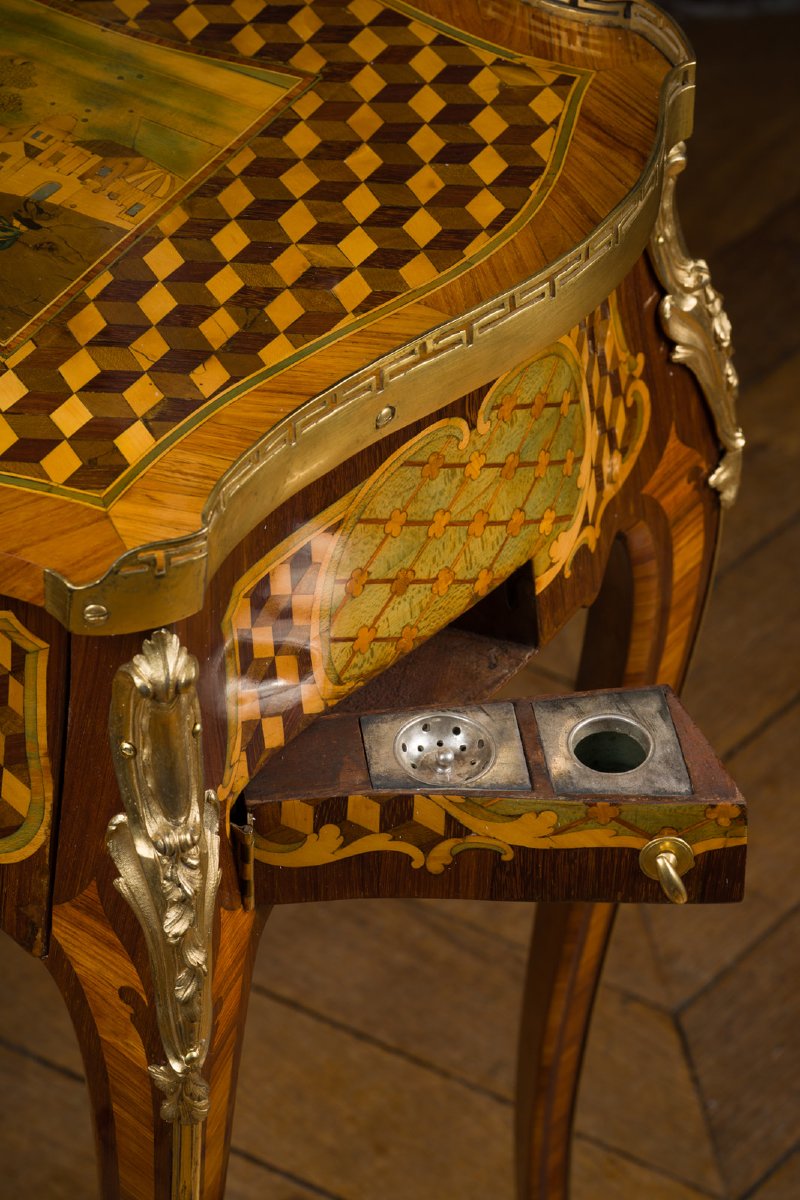
The sliding top opens to reveal a green leather writing surface above a compartment concealed within the drawer. A discreet pivoting side drawer houses a silvered metal inkwell and a pounce pot. Finely chased and gilt bronze mounts.
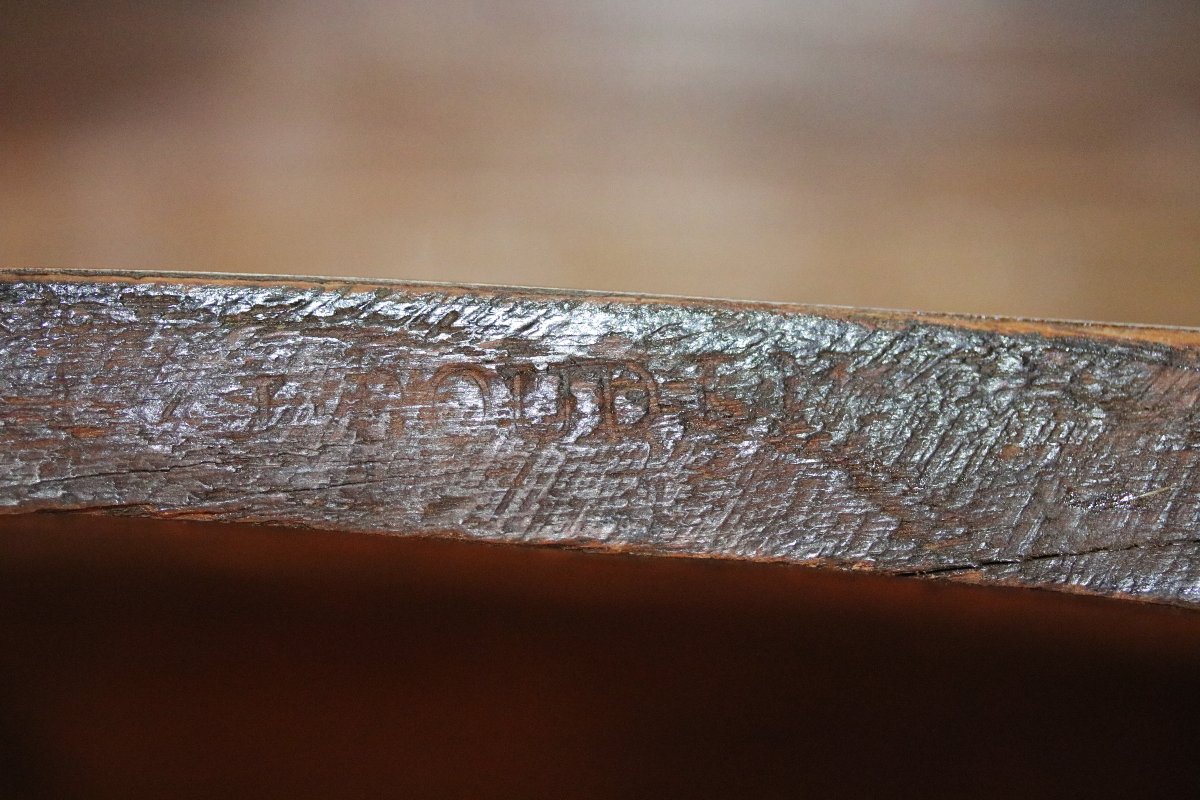
Double-stamped by Léonard Boudin (master in 1761) and bearing the Jurande guild stamp.
France, second half of the 18th century
Height: 72.6 cm
Width: 61 cm
Depth: 38 cm
Usual restorations.
We may compare this model with a salon table attributed to Wolff, sold at Sotheby's, London, 6 July 1979, lot 237, as well as with the celebrated Roberto Polo Collection sale (Ader/Tajan, Paris, 7 November 1991, lot 155; estimate: FF 600,000–800,000).
DescriptionThroughout the eighteenth century, furniture evolved not only stylistically but also in response to new standards of comfort within the aristocratic interiors of the Kingdom of France.
The architect Jacques-François Blondel documented these social developments by distinguishing three categories of apartments—state apartments, reception apartments, and private apartments—each requiring furniture specifically adapted to its function.
It was within these private interiors that luxurious furniture flourished, including writing tables (tables à écrire), whose growing popularity has traditionally been attributed to the influence of the Marquise de Pompadour.
The marquetry decoration found on this type of furniture, highly prized by contemporary collectors and patrons, appears in a variety of interpretations on writing tables bearing different cabinetmakers' stamps. This suggests that their makers shared techniques and designs across several workshops.
The present table bears the stamp of Léonard Boudin twice. A pupil of Pierre Migeon, Boudin earned such a distinguished reputation among his contemporaries that, in addition to his own cabinetmaking practice, he opened a retail establishment and employed several fellow ébénistes, while continuing to stamp furniture produced through these collaborations with his own name.
Modest in scale, these portable tables were intended for the intimacy of bedrooms and private salons. They fulfilled a variety of practical functions while displaying sumptuous decoration that reflected the wealth and refinement of their original patrons.
Dating from the 1770s, the present table belongs to the Transitional period between the reigns of Louis XV and Louis XVI. Its structure reflects this moment of stylistic transition, while its richly coloured marquetry combines picturesque scenes with rectilinear compositions, cube marquetry, scrolling cartouches and rocaille ornament. Its lively silhouette demonstrates the continued appeal of Rococo forms during this decade, while simultaneously revealing the growing influence of the more restrained goût à la grecque that heralded Neoclassicism.
Furniture bearing Boudin's stamp may also reflect the work of other cabinetmakers, and certain architectural marquetry panels have likewise been attributed to André-Louis Gilbert.
Both an accomplished cabinetmaker and a highly successful dealer, Boudin enjoyed a prolific career. Writing tables bearing his stamp are preserved in important museum collections in France and abroad, notably at the Metropolitan Museum of Art, New York, which owns a writing table of the same model as the present example (inv. no. 69.9.4). Another closely related example, featuring highly comparable marquetry decoration, was sold at Christie's London on 12 November 2020 (lot 24).
Léonard Boudin excelled in the execution of the complex, flowing curves characteristic of the finest furniture of his period, enriching them with exceptionally sophisticated marquetry combining figural scenes and architectural motifs.
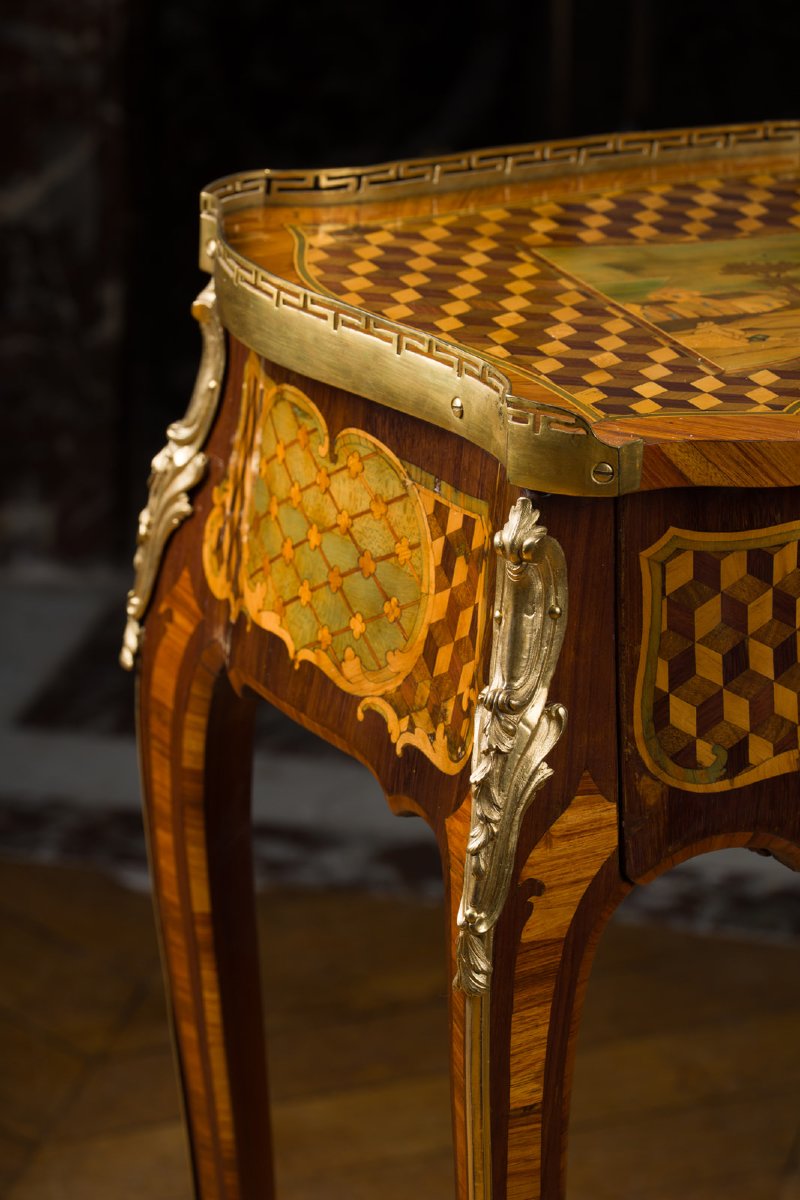
These compositions derive their remarkable vitality from the chromatic contrasts between the various wood veneers employed, some of which were stained, although their original appearance would undoubtedly have been even more vibrant.
Clearly, at a time when avant-garde taste had shifted towards the austere Greek style and the lighter Louis XVI aesthetic, there remained a significant and enthusiastic market for richly coloured and lavishly decorated furniture in the late Rococo tradition. Through their ingenious mechanisms, figurative marquetry framed by scrolling cartouches, cube marquetry and mosaic panels, these writing tables ultimately drew inspiration from the celebrated models created by Jean-François Oeben (1721–1763) during the late 1750s and early 1760s (see R. Stratmann-Döhler, Jean-François Oeben, Paris, 2002, for numerous examples).
The stamps found on these tables demonstrate that a number of cabinetmakers continued to satisfy this enduring taste. Since very similar marquetry appears on pieces stamped by different ébénistes, scholars have suggested that the figurative panels may have been produced by specialist marquetry craftsmen who supplied several workshops. It should nevertheless be noted that most of these tables display a remarkable unity of conception and style. On the present model, for example, the lattice pattern decorating the side panels of the top is repeated on the sides of the table, with its scale subtly enlarged. Evidently, the workshops responsible for these pieces possessed complete mastery of every stage of their production.
Period: 18th century
Style: Louis 15th - Transition
Condition: Condition of use
Reference (ID): 1792291
Availability: In stock