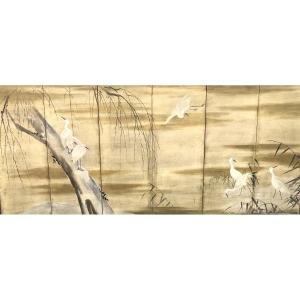


6-panel Japanese Screen - Egrets, Attributed To Kano Sansetsu (1559–1651)
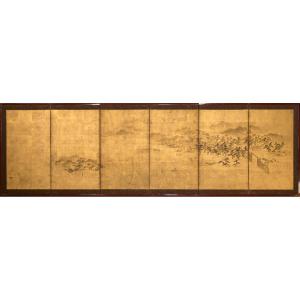
6-panel folding screen; ink, colors, gofun (crushed, calcified crustacean shells), and gold on paper, framed by a double border of silk brocade.
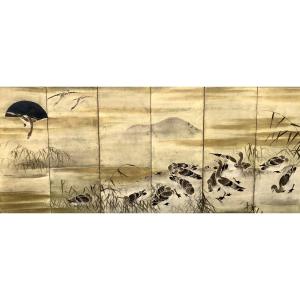
The screen on the right depicts numerous geese (14); some are flying down in front of a black moon, while others are foraging or resting among the grasses at the edge of a body of water, with a mountain in the background.
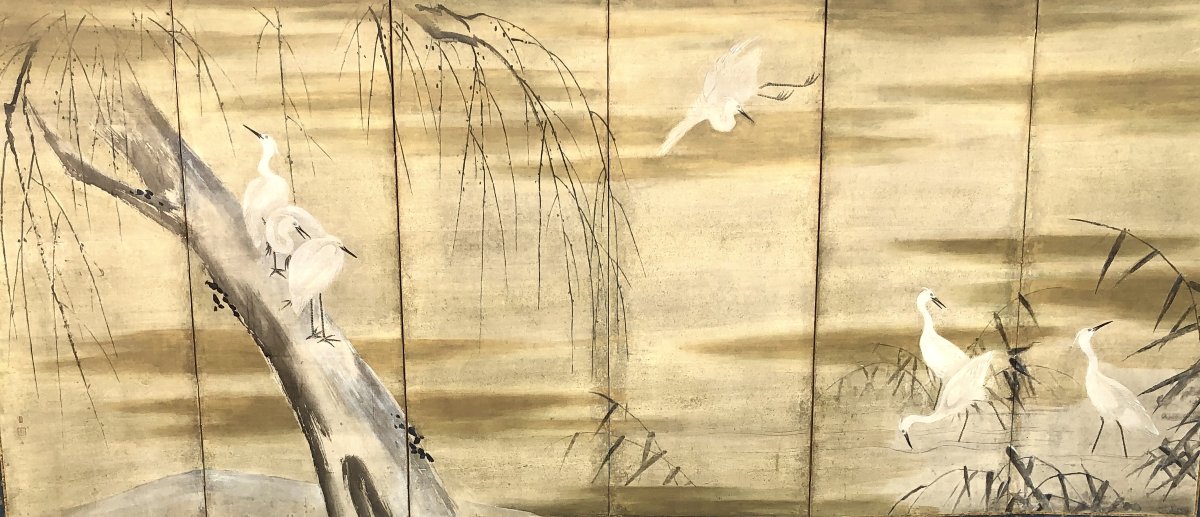
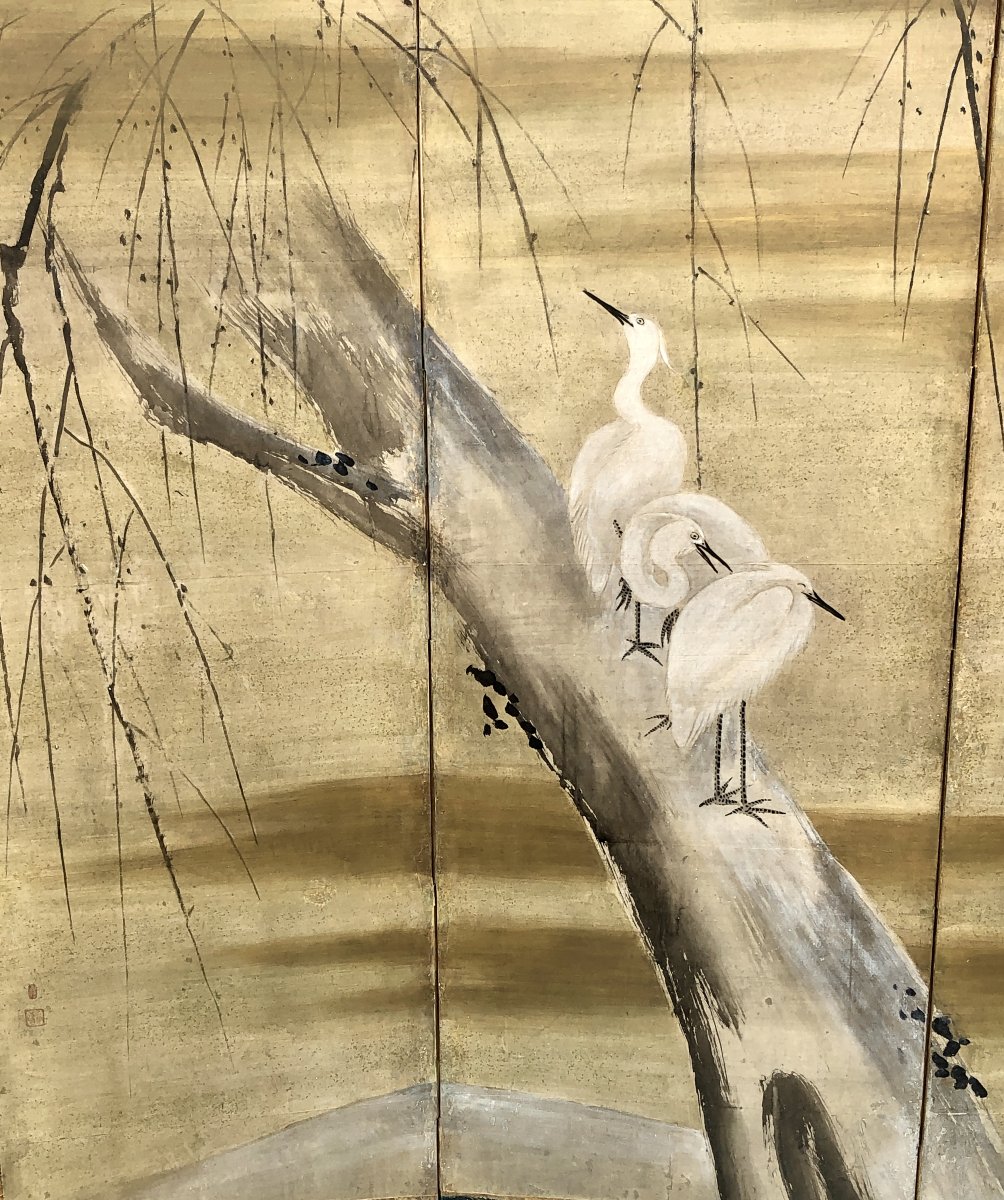
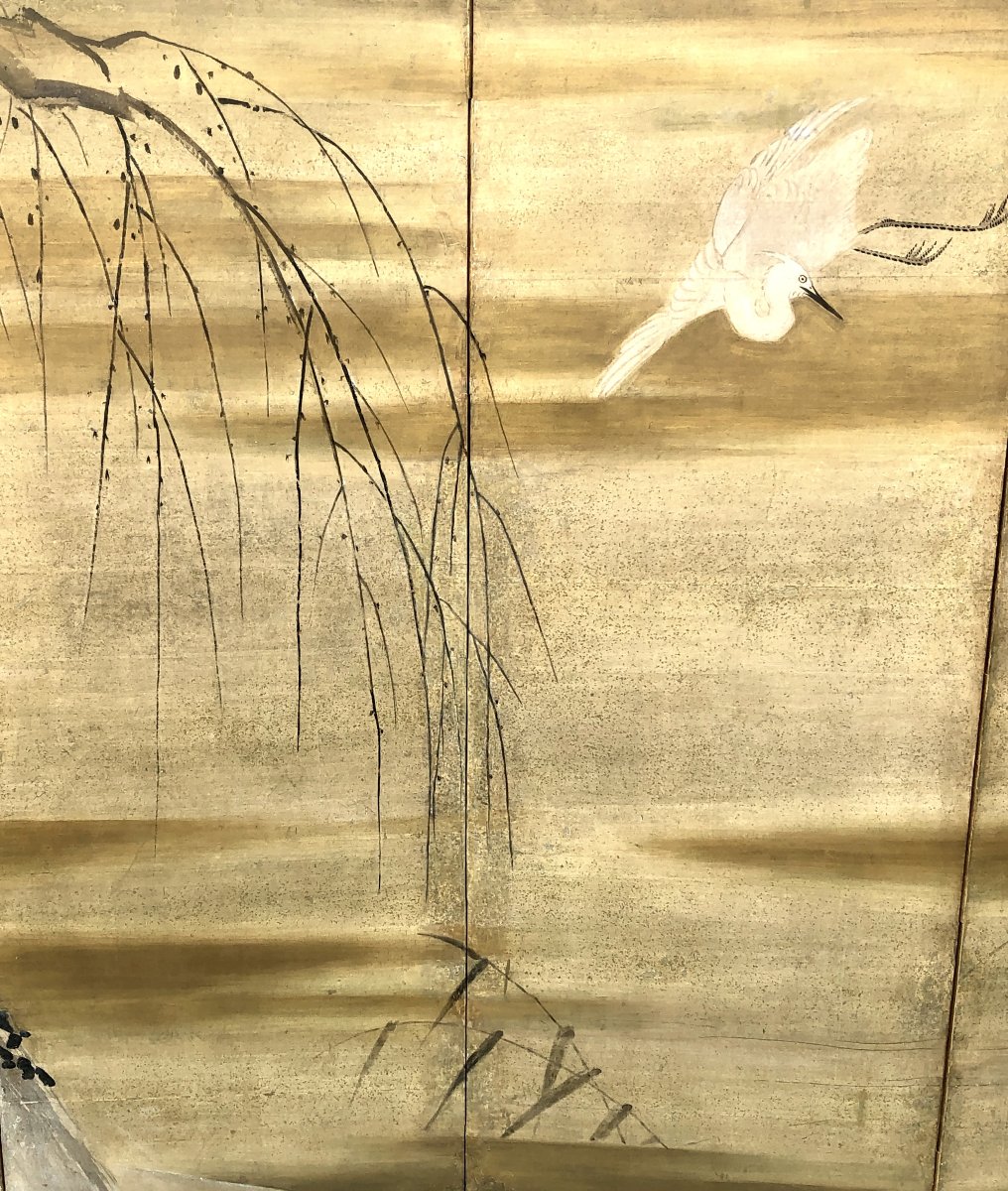
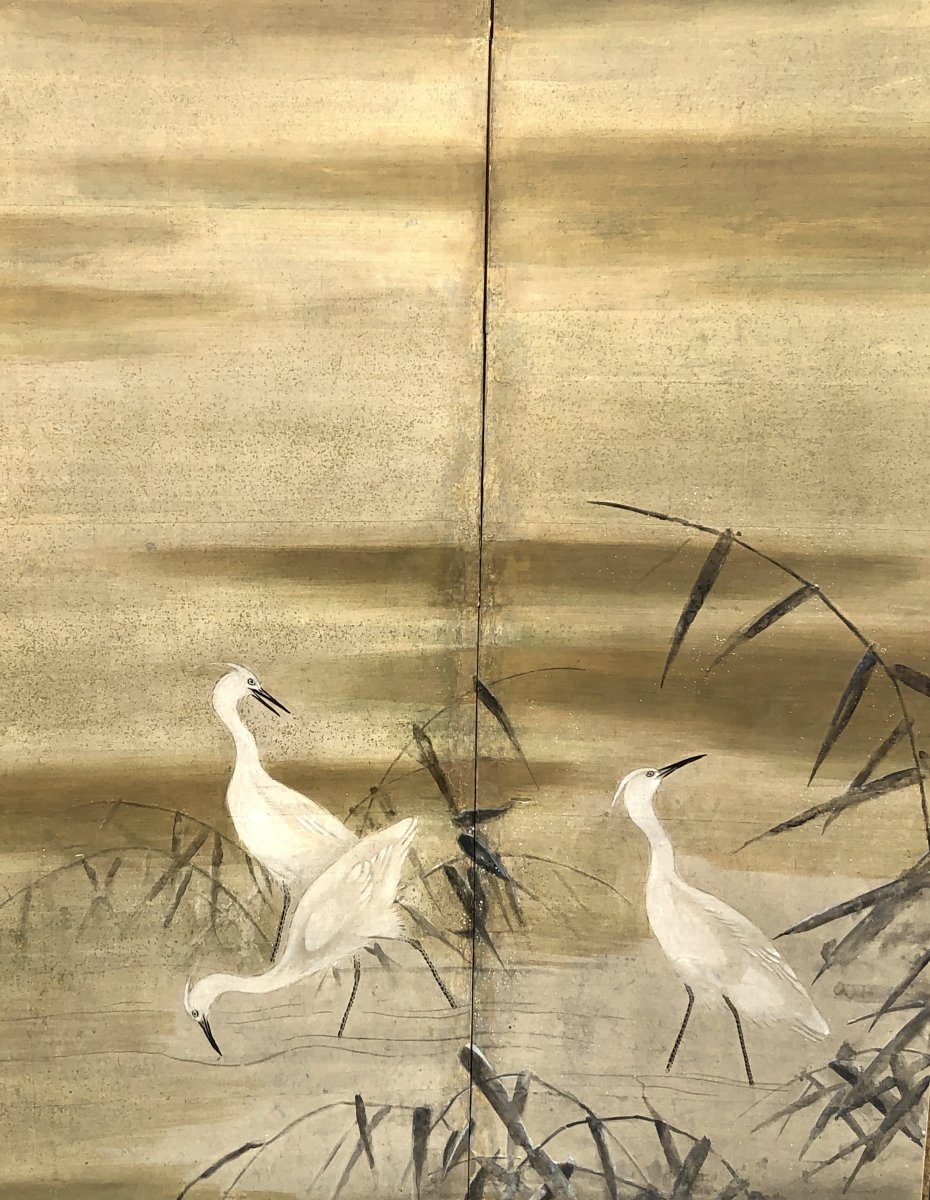
The left panel depicts egrets (7), three of which are perched on the trunk of a majestic weeping willow, covered in white pigment representing snow; one is flying downward, and the others are hunting in a stream.
The theme of these folding screens is late fall and the arrival of winter.
The gentleness and tranquility of these seasons are particularly well captured by the pastel tones across all the panels.
Depictions of two pairs of geese among reeds and egrets with willow trees have existed in Japanese art since the Muromachi period (1336–1573). They were created by famous artists such as Sesson Shokei (1504–1589) and Kanô Masanobu (1434–1530).
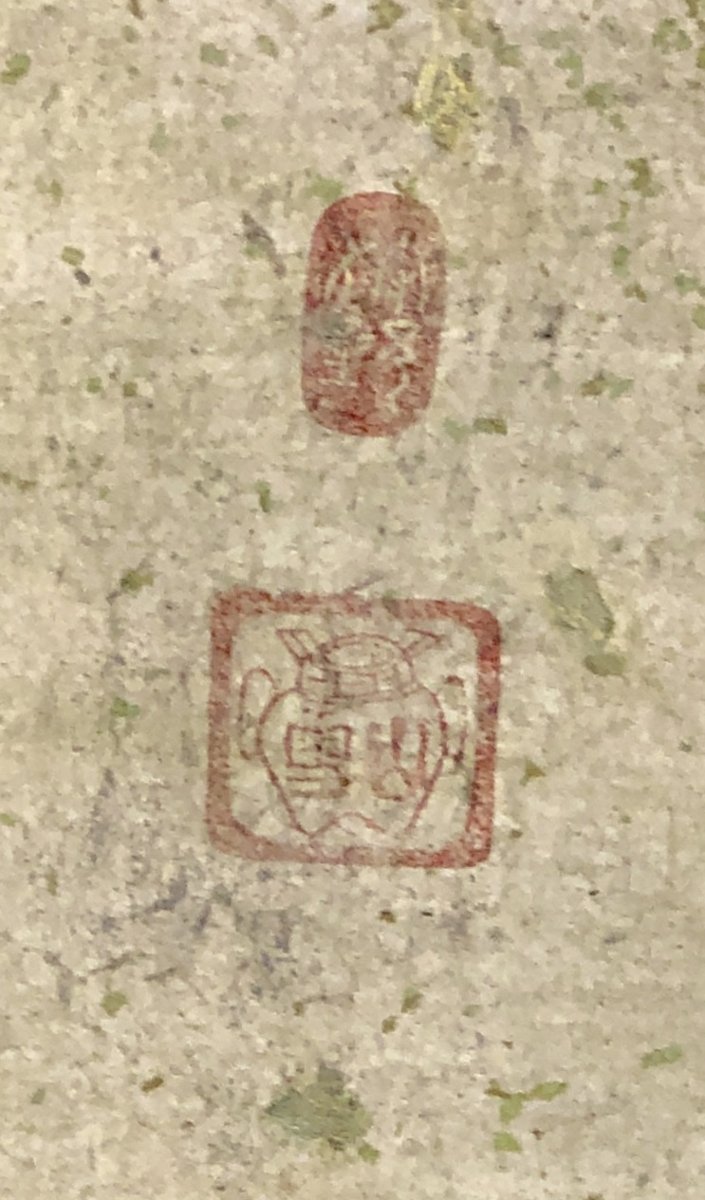
Each folding screen bears seals attributed to Kanô Sansetsu (1589–1651), though they have not been authenticated. The artist likely entrusted the creation of these seals to a close associate.
Dimensions: 372 x H 167 cm each.
Edo period (1603–1868), 18th century
Price: 29,500 euros (for the pair)
Provenance: Simone and Alan Hartman Collection, New York
The screen on the right depicts numerous geese (14); some are flying down in front of a black moon, while others are foraging or resting among the grasses at the edge of a body of water, with a mountain in the background.
The left panel depicts egrets (7), three of which are perched on the trunk of a majestic weeping willow, covered in white pigment representing snow; one is flying downward, and the others are hunting in a stream.
The theme of these folding screens is late fall and the arrival of winter.
The gentleness and tranquility of these seasons are particularly well captured by the pastel tones across all the panels.
Depictions of two pairs of geese among reeds and egrets with willow trees have existed in Japanese art since the Muromachi period (1336–1573). They were created by famous artists such as Sesson Shokei (1504–1589) and Kanô Masanobu (1434–1530).
Each folding screen bears seals attributed to Kanô Sansetsu (1589–1651), though they have not been authenticated. The artist likely entrusted the creation of these seals to a close associate.
Dimensions: 372 x H 167 cm each.
Edo period (1603–1868), 18th century
Price: 29,500 euros (for the pair)
Provenance: Simone and Alan Hartman Collection, New York
9 800 €
Period: 18th century
Style: Asian art
Condition: Good condition
Width: 372
Height: 167
Reference (ID): 1791572
Availability: In stock
Print