THIS OBJECT WAS SOLD
Thomas Murray (1663–1734) – Portrait Of A Gentleman In A Roux-brun Silk Robe.

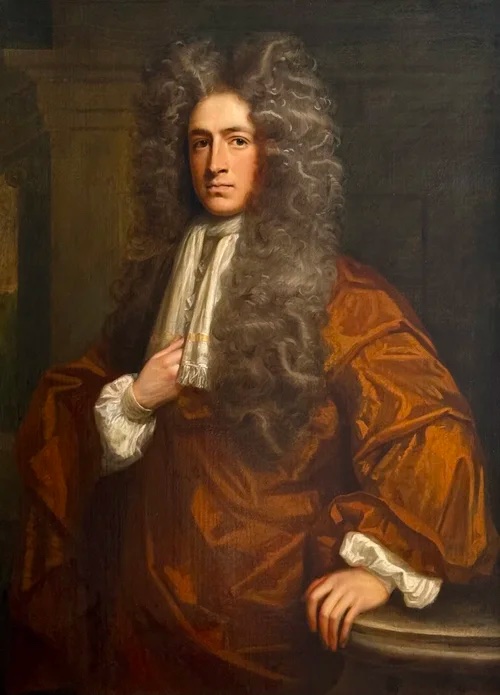
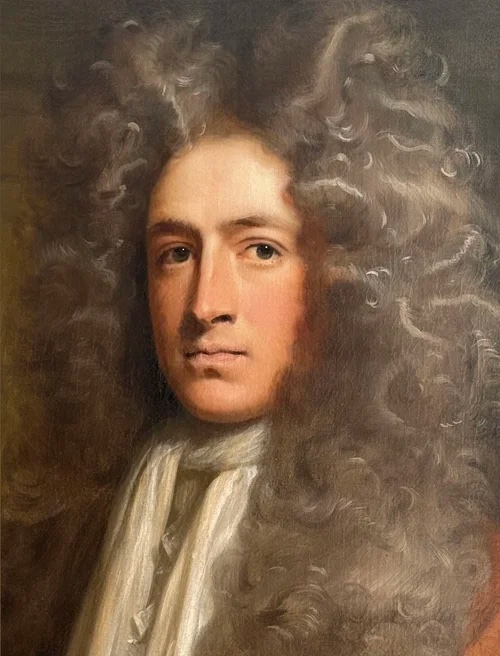

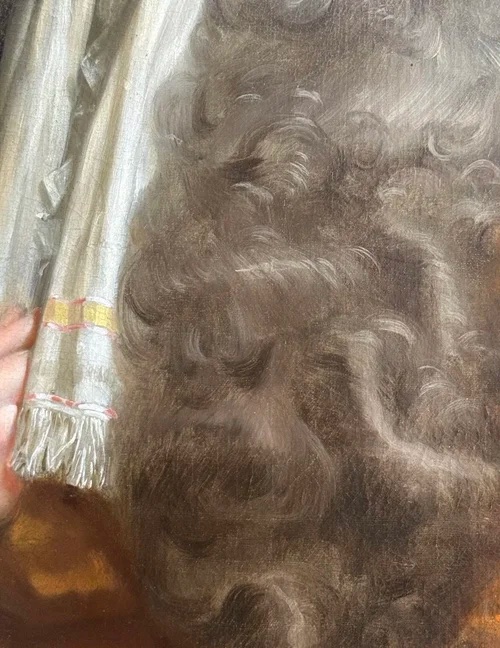


Fine and imposing late 17th century English portrait of a wigged gentleman attributed to Thomas Murray (1663- 1734). The handsome sitter is depicted three quarter-length, leaning upon a stone ledge in front of an extensive walled architectural background, with an archway and trees beyond.
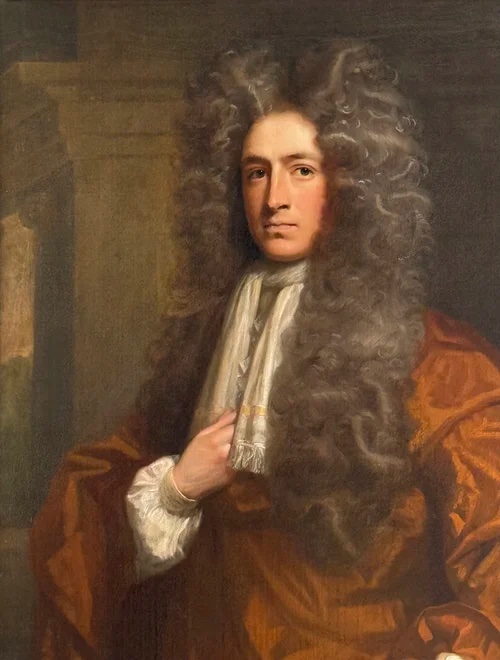
At first glance this charming portrait appears typical of its time. Look closer and the sitter (as yet unknown) wears a the hugest, of fashionable and costly wigs. and it tumbles to below his shoulders! Infact the derivation of ‘big wig’ as a term to describe a person of means and importance comes from fashions like this. A finger white stock tied at the neck and a shimmering russet silk robe are further clues that this is indeed an aristocrat or member of the gentry.
Unlike may paintings of the period with their matching power poses and aloof expressions, what really shines from this portrait is the way that the artist has managed to conjure real character. The strength and sensitivity with which the sitters face is painted is of particular note. Yes he is handsome, but he also exudes the kind of a calm and confident air which makes this attractive portrait very easy to accomodate.
Thomas Murray (1663 – June 1734) was a Scottish painter who specialised in portrait painting.
Thomas Murray received his first lessons in art from one of the De Critz family. Subsequently, he became a pupil of John Riley; like his master, Murray was just a face-painter, leaving the rest of the picture to be completed by others.[1]
Murray was successful financially. He died in June 1734, leaving no children, and bequeathed his money to a nephew, with instructions that his monument, with a bust, should be erected in Westminster Abbey, provided that it did not cost too much. His nephew, however, taking him at his word, buried him in St. Paul's, Covent Garden, and found the monument too expensive to erect.
This painting is housed in a later antique ‘lely’ stye frame.
Higher resolution images on request.
Worldwide shipping available.
Canvas: 120cm x 90cm. Framed: 130cm x 100cm.
Explore similar pieces and discover your ideal find:
Portraits