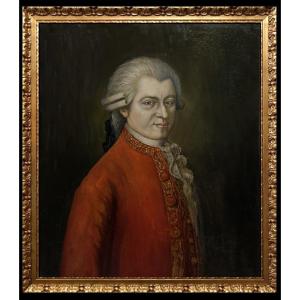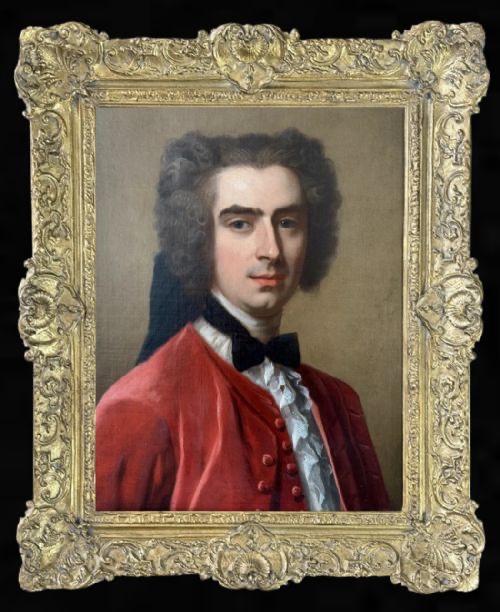


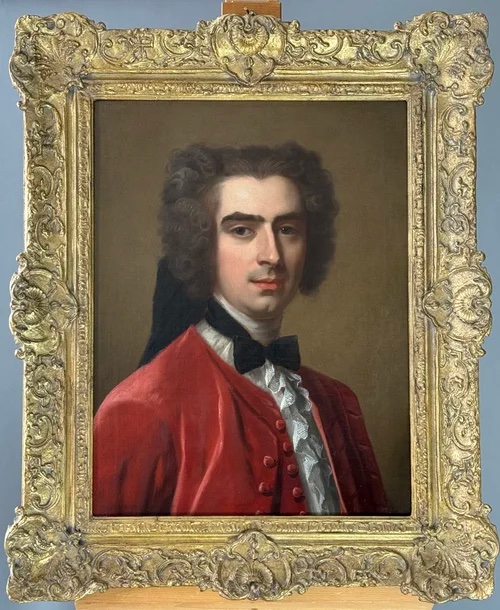


Circle Of Jean-baptiste Van Loo (1684-1745) - Portrait Of A Gentleman In A Red Jacket
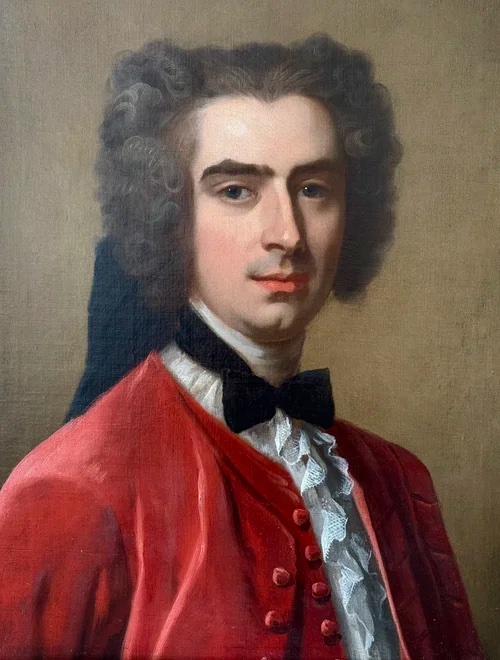
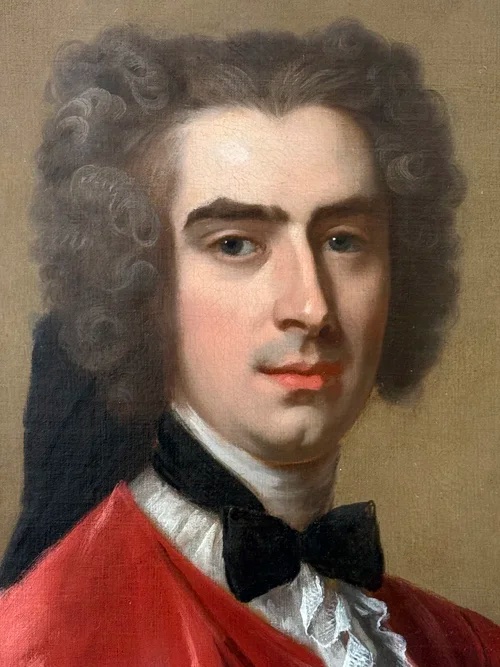
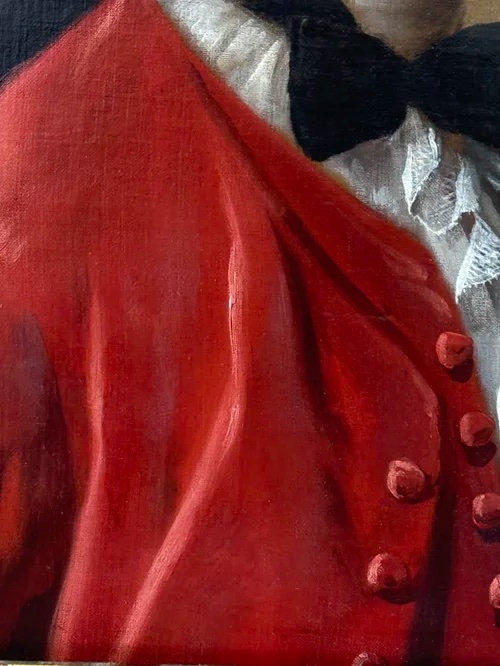
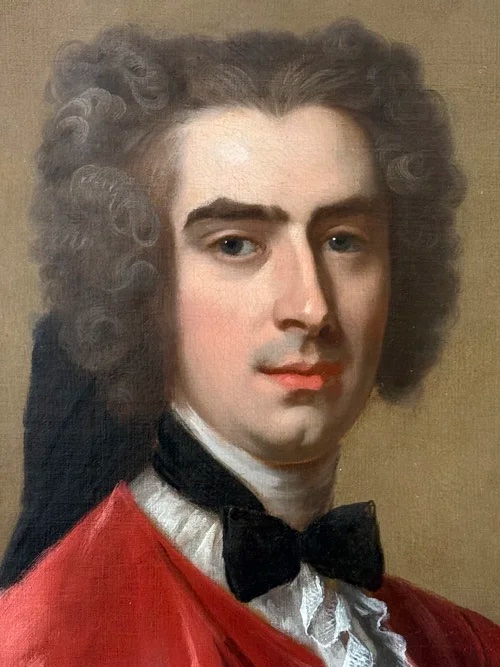
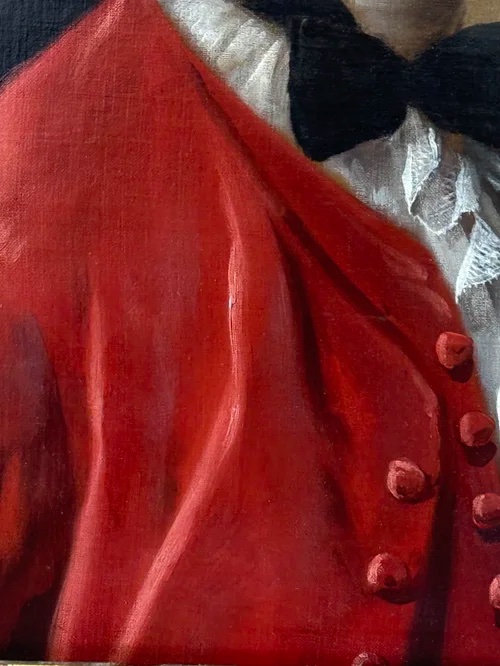
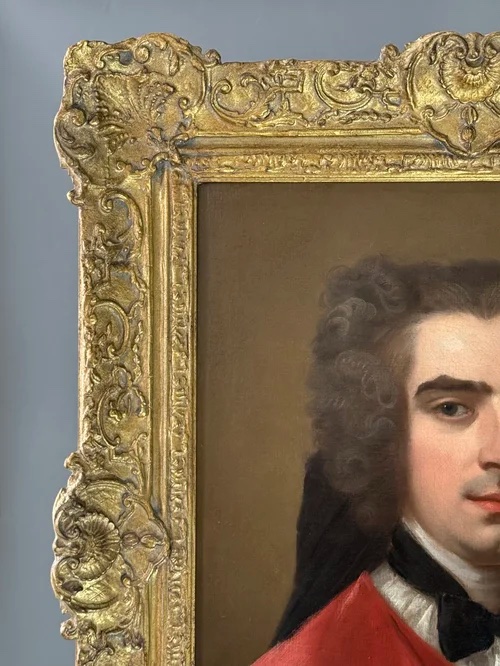
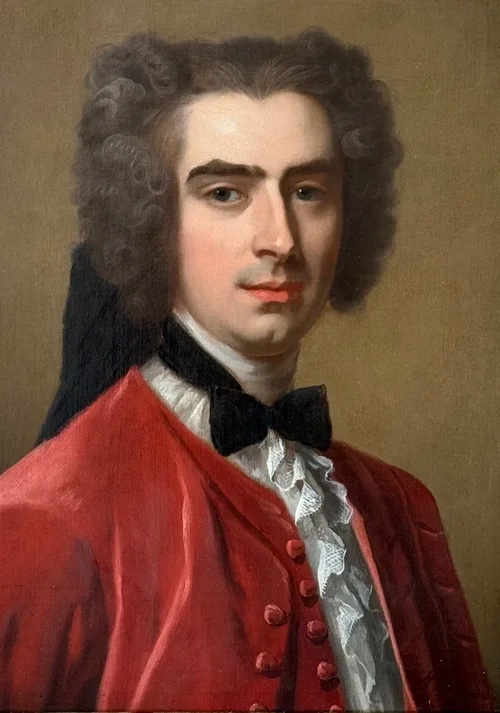
A high-quality and highly decorative portrait of an 18th-century nobleman, painted by an artist from the circle of Jean-Baptiste van Loo (1684-1745). The elegant and fashionable young man is depicted in a bust-length portrait against a beige background. His attire, a blend of English and Continental influences, is perfectly in vogue. In the 18th century, keeping up with fashion was a sign of social distinction, and the Grand Tour was a formative experience for many young aristocrats. It helped shape their identity, particularly their ability to display their social status through their clothing. With an intense yet pleasing gaze, our subject, slightly inclined, wears a scarlet jacket and matching waistcoat, the colors still vibrant. The thick impasto reveals the artist's skill in depicting velvet. His jabot, made of Continental-style lace, is executed with cross-brushed strokes. The black silk bow tie perfectly completes the outfit. Wigs were very fashionable at the time and often quite elaborate. It is therefore likely that the subject is wearing a wig rather than a hairstyle imitating one. It features large side curls, often called bouffant curls. The black ribbon visible at the nape of the neck served to hold the hair or the wig's tail in place. The hairstyle also appears to be powdered. Wig powder was a common cosmetic in the 18th century, made from finely ground starch (wheat or corn flour) and scented with lavender, orange blossom, or orris root. The most common color was off-white or gray, as seen here, but it could be tinted purple, blue, pink, or yellow. The powder was applied using a bellows or a powder box. To avoid soiling clothing and furniture, a separate room, or a small cabinet, was sometimes used for powdering the face. This is thought to be one of the origins of the term "powder room." Jean-Baptiste van Loo (1684-1745) Born in Aix-en-Provence, Jean-Baptiste van Loo received his artistic training from his father, Louis-Abraham van Loo. He worked from a young age in several cities in France and Italy, where he decorated churches and public buildings. In Turin, he painted portraits of Charles Emmanuel II, Duke of Savoy, and several members of his court. In 1737, van Loo went to England, where his portraits of the playwright and poet Colley Cibber and the Irish patron Owen McSwiny aroused great interest. It was there that he acquired international renown, and being portrayed by him became a sign of prestige. Van Loo also painted portraits of Sir Robert Walpole and the Prince and Princess of Wales. However, his stay in England was short-lived: his health declining, he returned to France in 1742. This magnificent portrait is presented in a high-quality antique frame and is in excellent condition. High-resolution images are available upon request. International shipping is possible. Canvas: 77 cm x 64 cm (22" x 17") Frame: 92 cm x 79 cm (29" x 24")
11 500 €
Period: 18th century
Style: Other Style
Condition: Excellent condition
Material: Oil painting
Width: 79cm
Height: 92cm
Depth: 3cm
Reference (ID): 1727181
Availability: In stock
Print