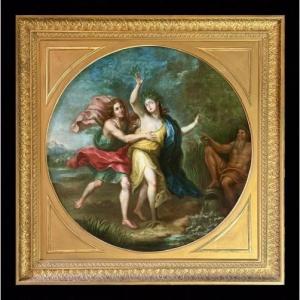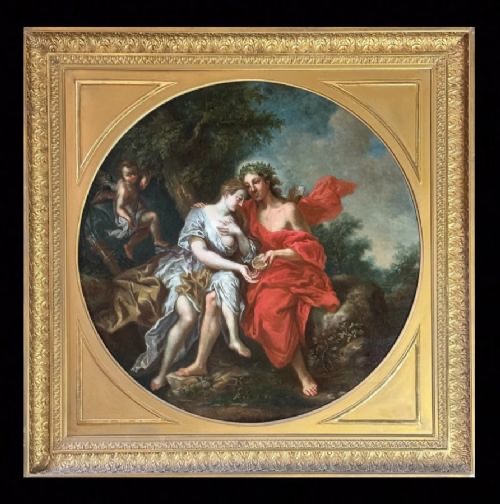
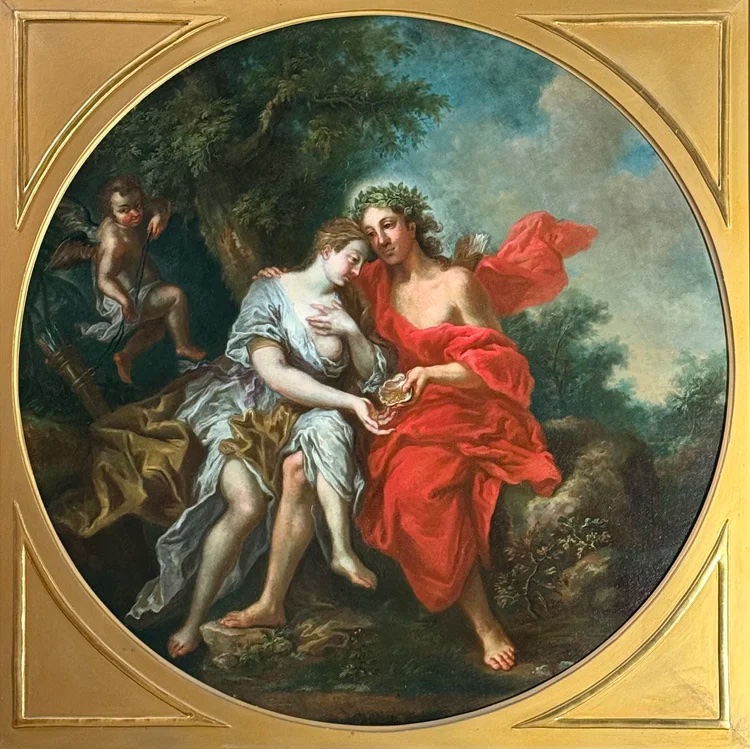
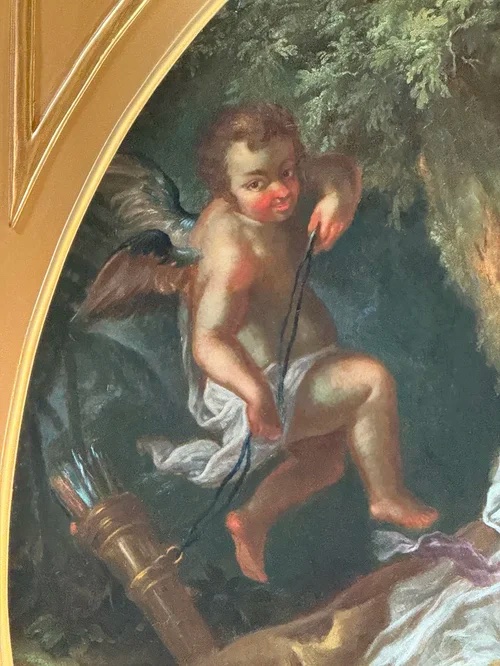
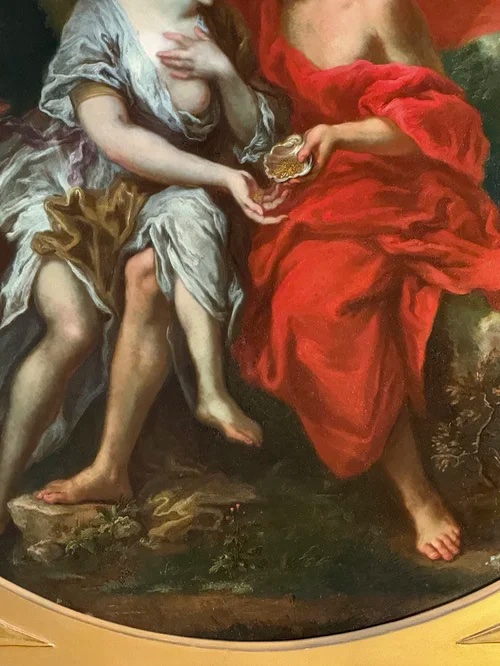
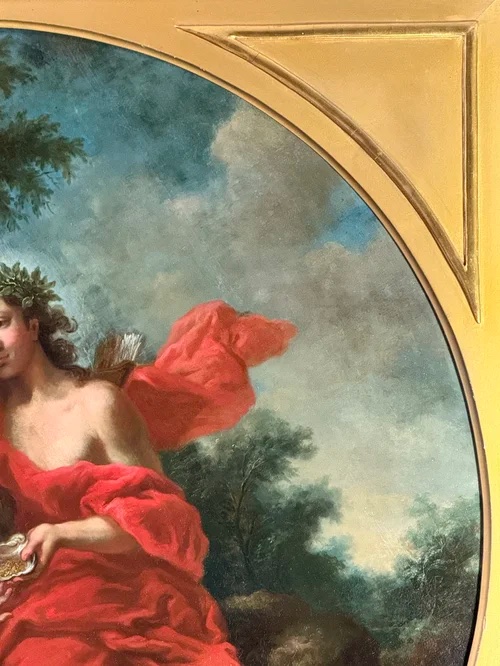
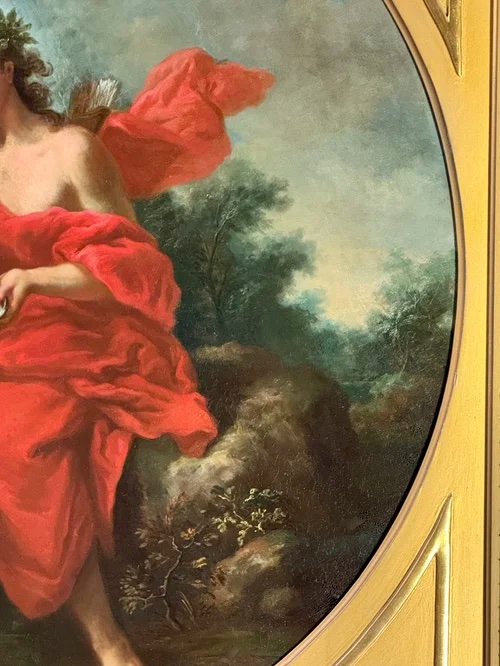
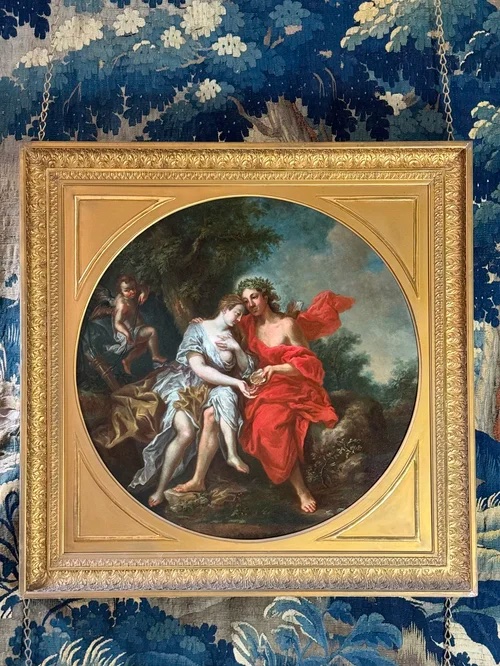



Charles Antoine Coypel (1694-1752) - Apollo And Daphne And Venus And Apollo
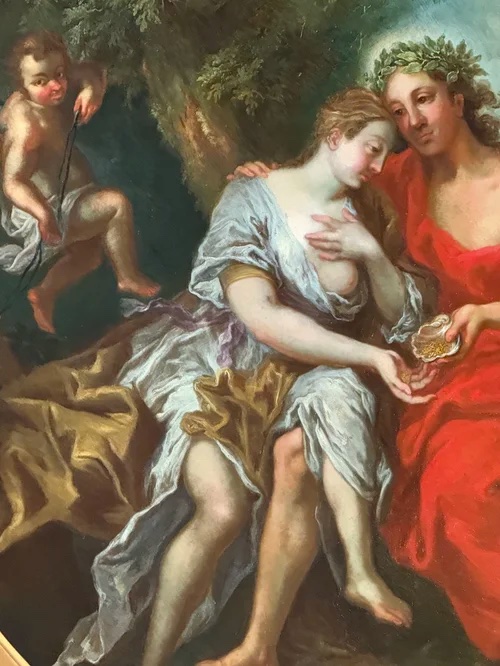
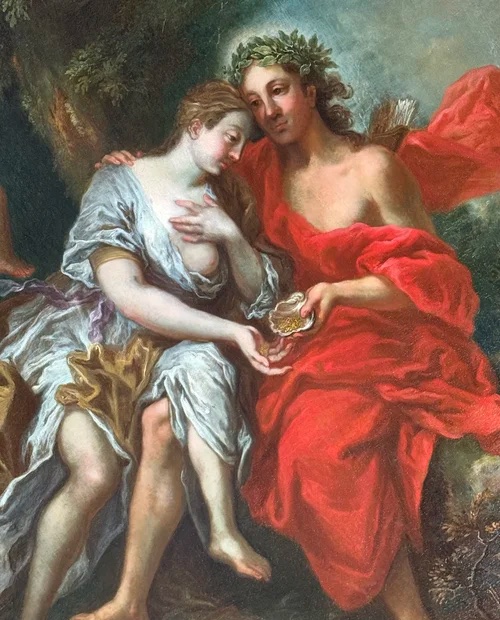
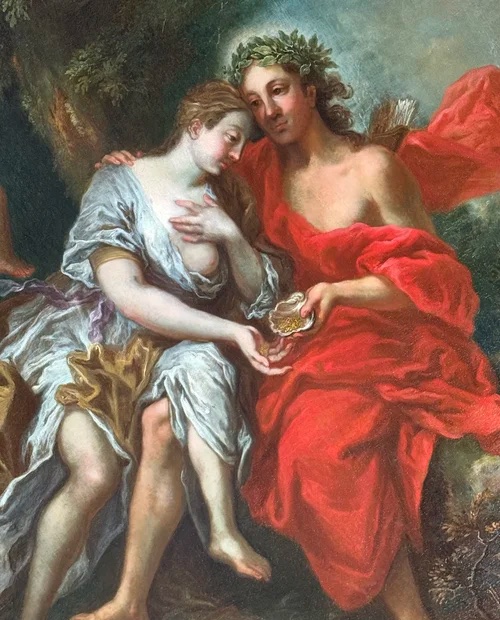
A pair of large and beautiful allegorical oil paintings from the early to mid-18th century, attributed to Charles Antoine Coypel (1694-1752). One, painted in the round, depicts Apollo, the Greek and Roman god of the sun and the arts, who has fallen in love with the nymph Daphne. Pursued to the banks of a river, Daphne implores her father, the river god Peneus, for help. The moment Apollo reaches out to touch her, she transforms into a laurel tree, branches and roots springing from her body. The other depicts Venus, probably in a relationship with Apollo, and is an allegory of love or abundance: the shell, often associated with Venus, symbolizes femininity, sensuality, and birth, while its golden contents represent wealth and blessings, or perhaps the richness of the love shared between the two figures. Charles Antoine Coypel (1649–1752) was a French painter and engraver, a member of the renowned Coypel family of artists. His first teacher was his father, Antoine Coypel, with whom he worked until his death in 1722. Charles then inherited his father's responsibilities as painter and draftsman at court, becoming the chief painter to Philip II, Duke of Orléans. He was housed in the Louvre, where he remained until his death. In 1747, he became director of the Royal Academy and chief painter to the king. Coypel's masterpiece was a large work depicting scenes from Don Quixote (1716). He also received several commissions for the Palace of Versailles and the Trianon Chapel; he also worked for the king's mistress, Madame de Pompadour. In 1747, Coypel received a commission for tapestries for the Queen of Poland, a series of scenes from various plays. Coypel also painted portraits of the Duke of Orléans, Louis XV, and other political and religious figures; he also painted actors. Coypel is also known for his writings, which include prose, verse, two tragedies, and several comedies. These magnificent, museum-quality oil paintings are presented in matching antique Empire-style frames. They are in excellent condition, having benefited from surface cleaning and revarnishing, and their pigments have been treated. They remain particularly fresh and vibrant. High-resolution images available upon request. International shipping available. Canvas: 101 cm x 127 cm. Frame: 130 cm x 122 cm.
24 000 €
Period: 18th century
Style: Renaissance, Louis 13th
Condition: Excellent condition
Material: Oil painting
Width: 112cm
Height: 112cm
Reference (ID): 1704046
Availability: In stock
Print