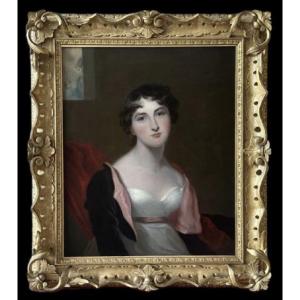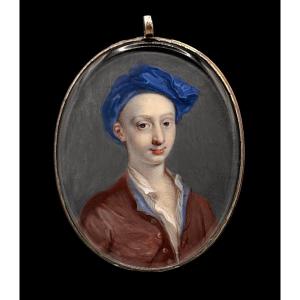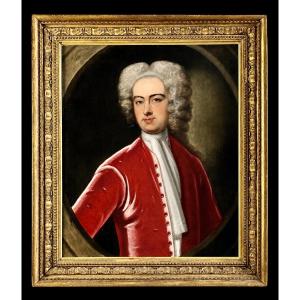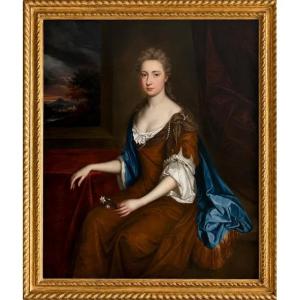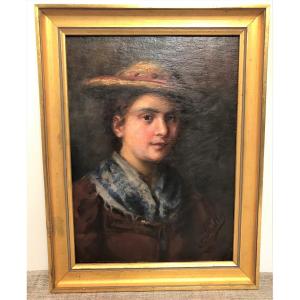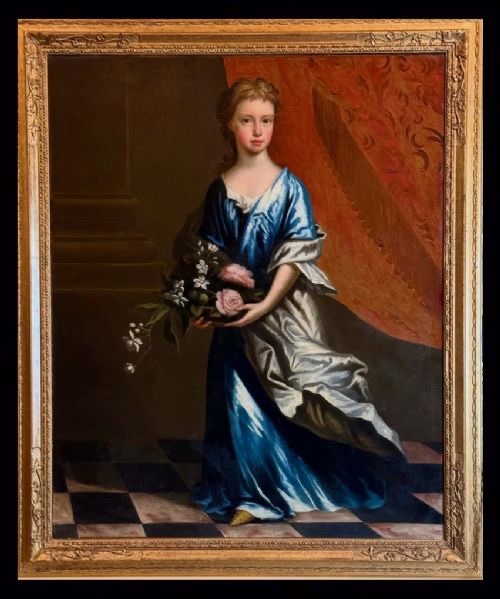


Robert Byng's Circle (1666-1720) - Portrait Of A Young Woman Circa 1700
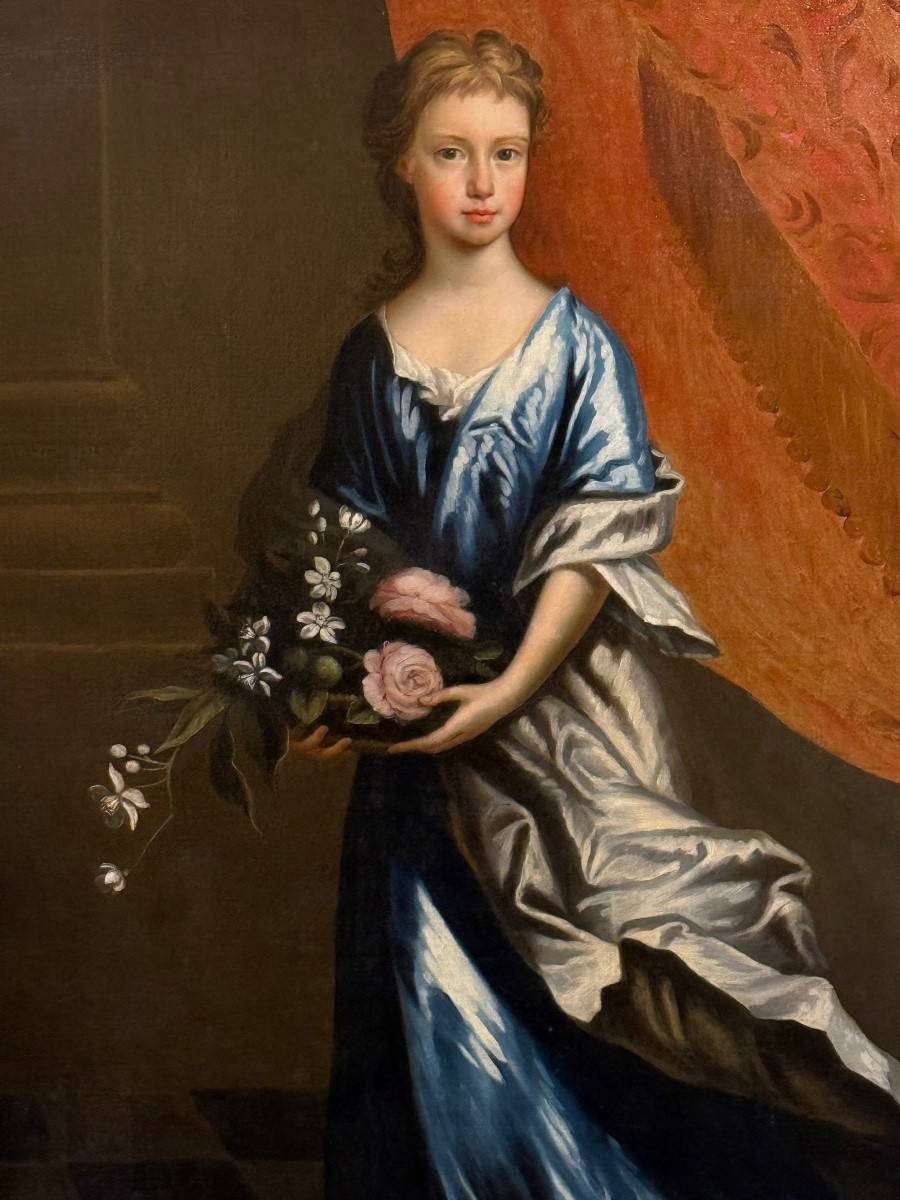
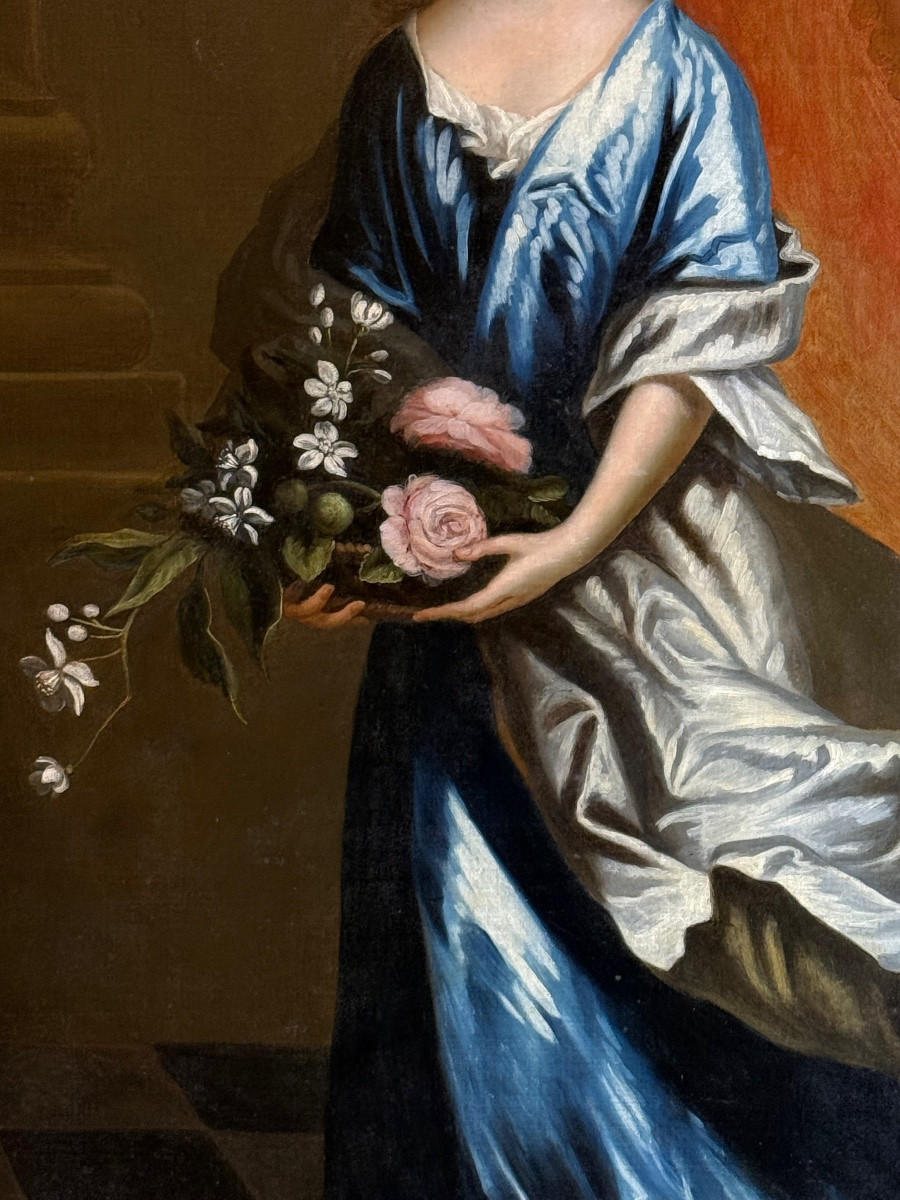
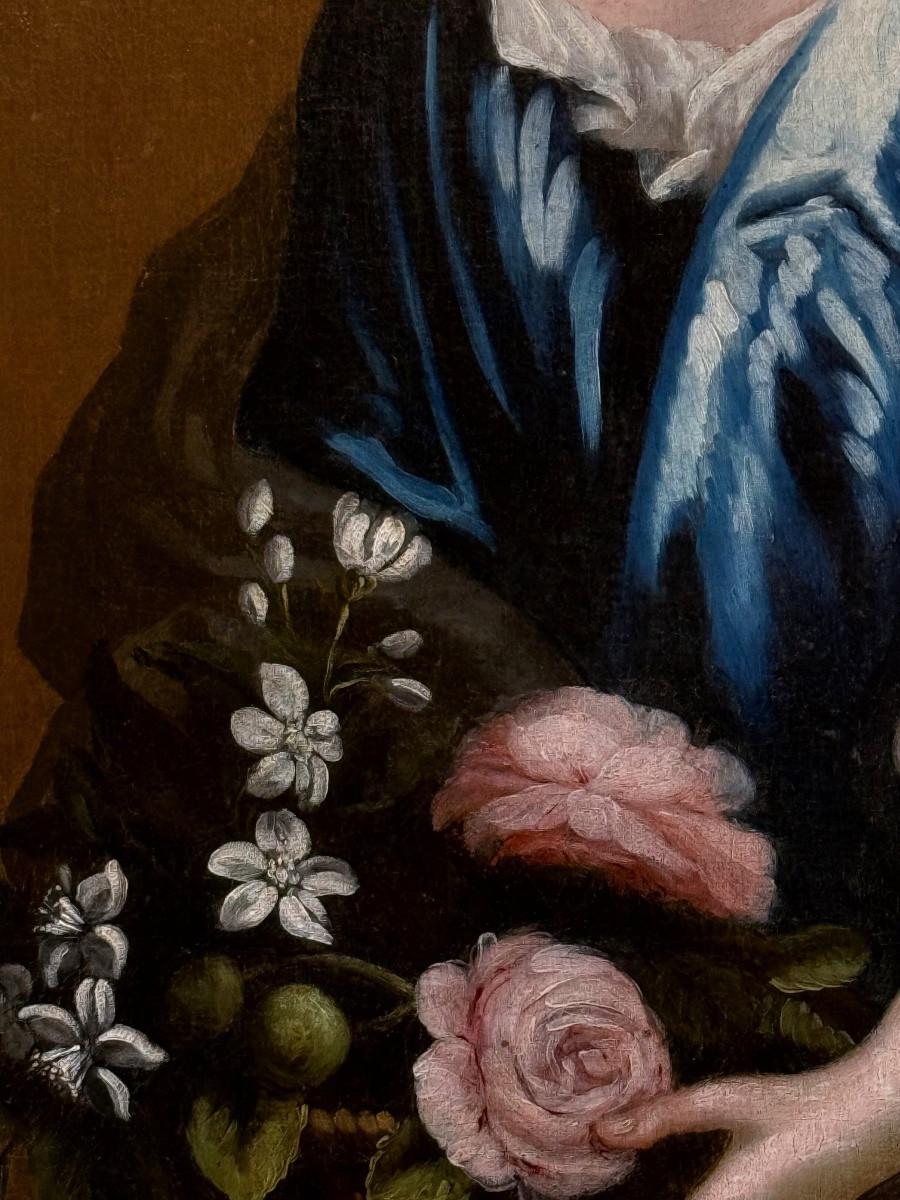
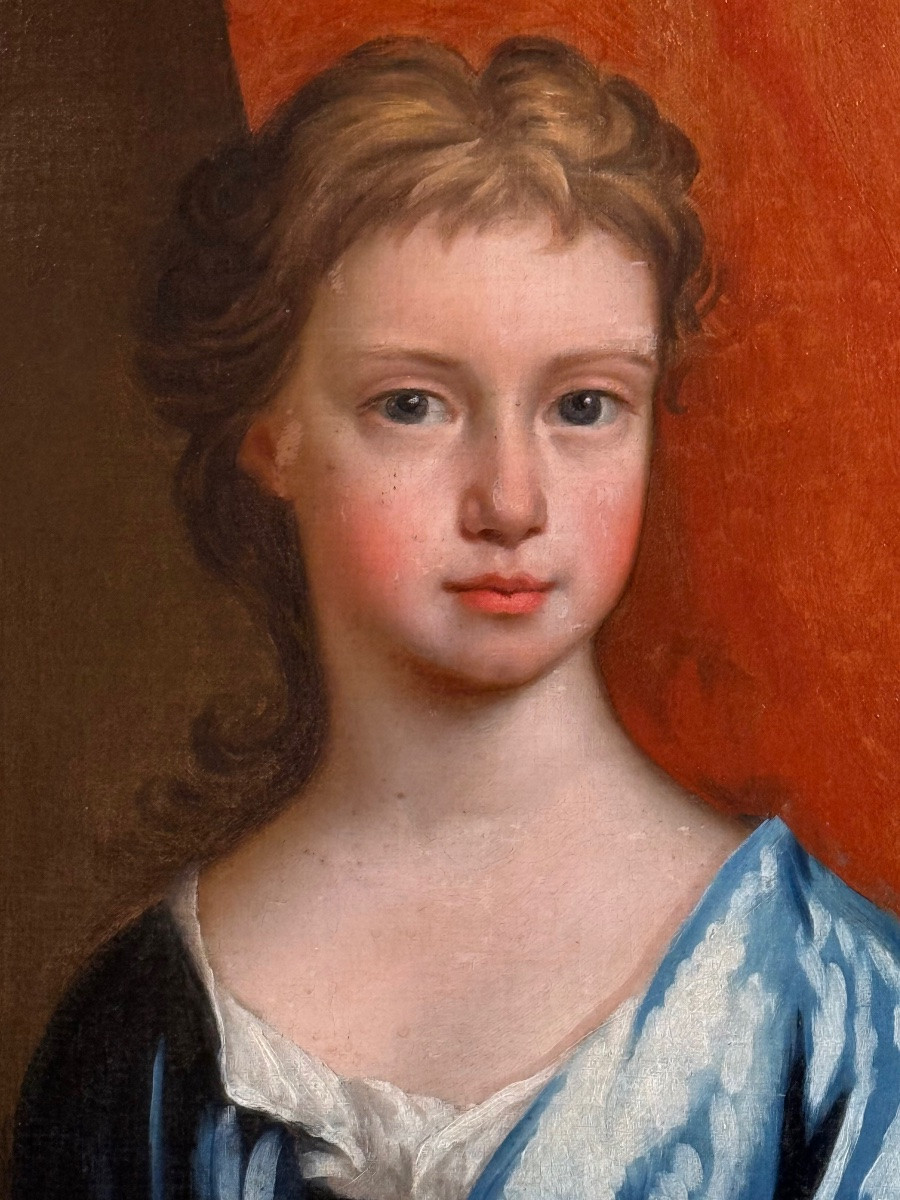
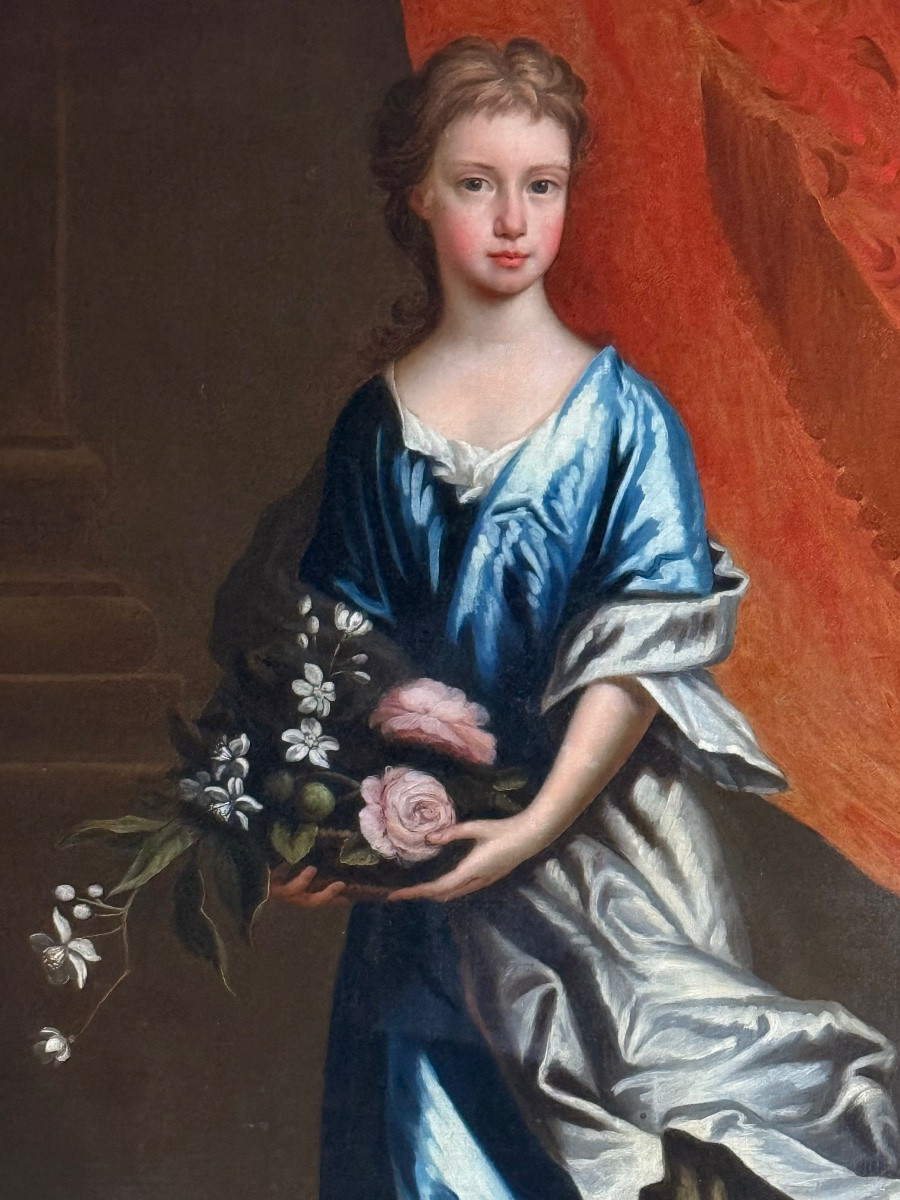
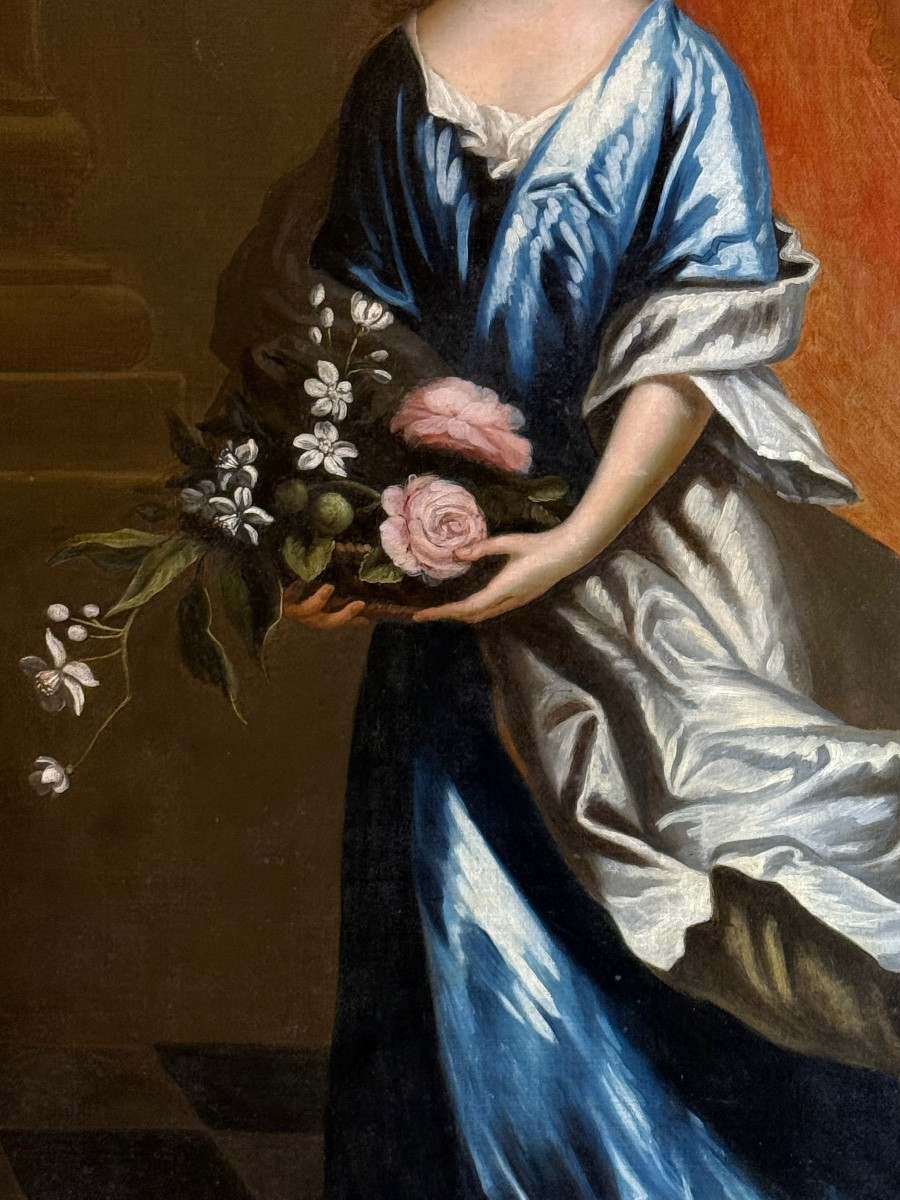
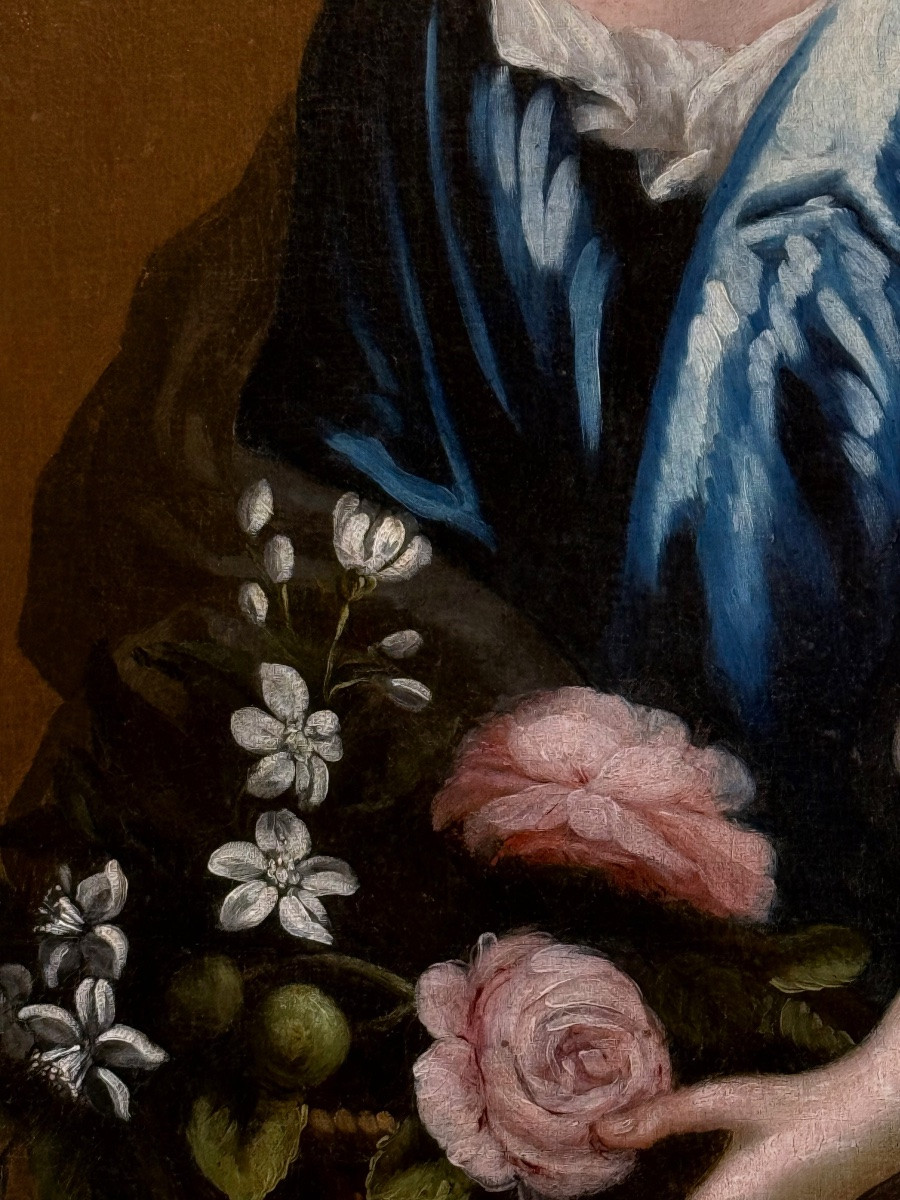
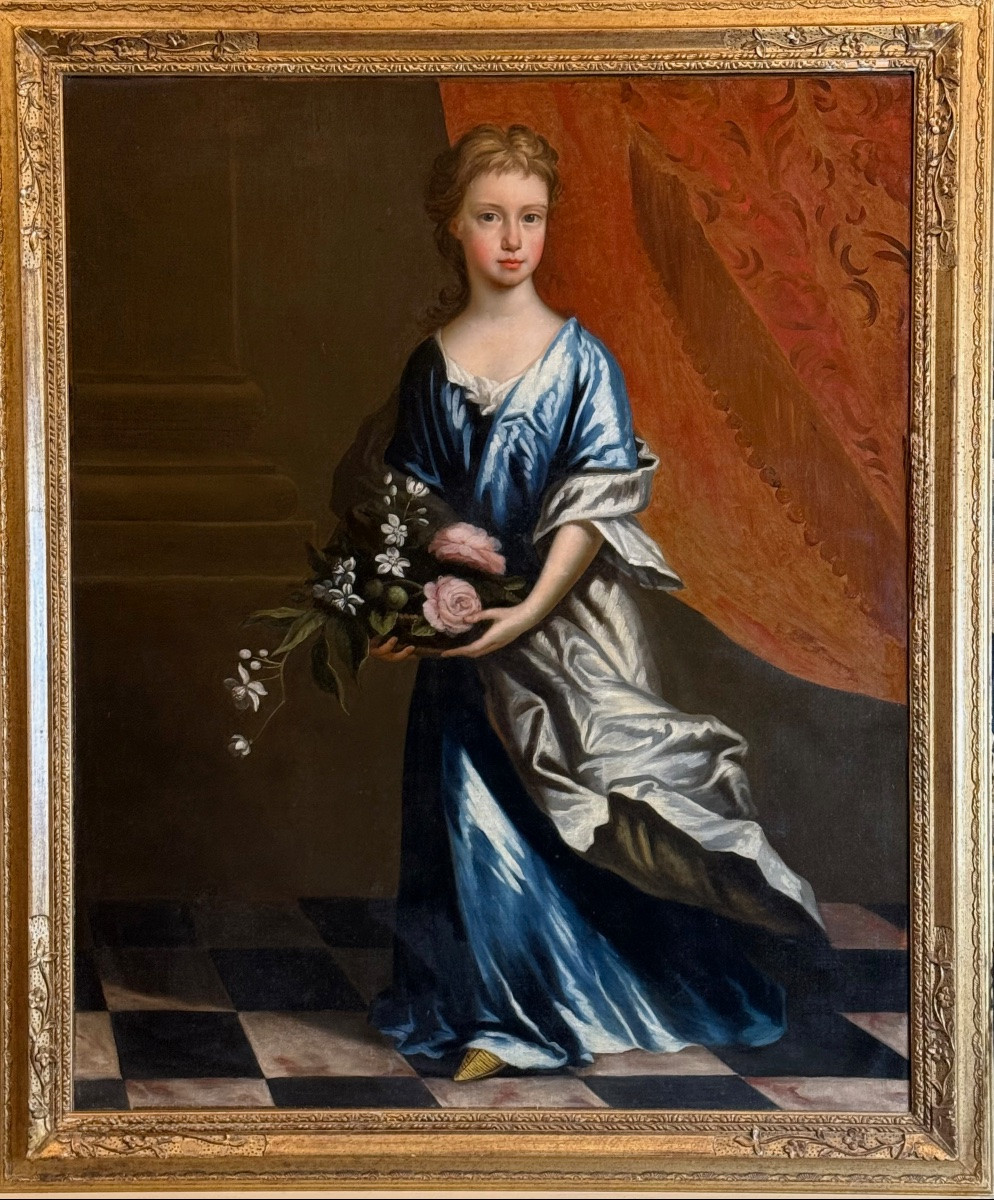
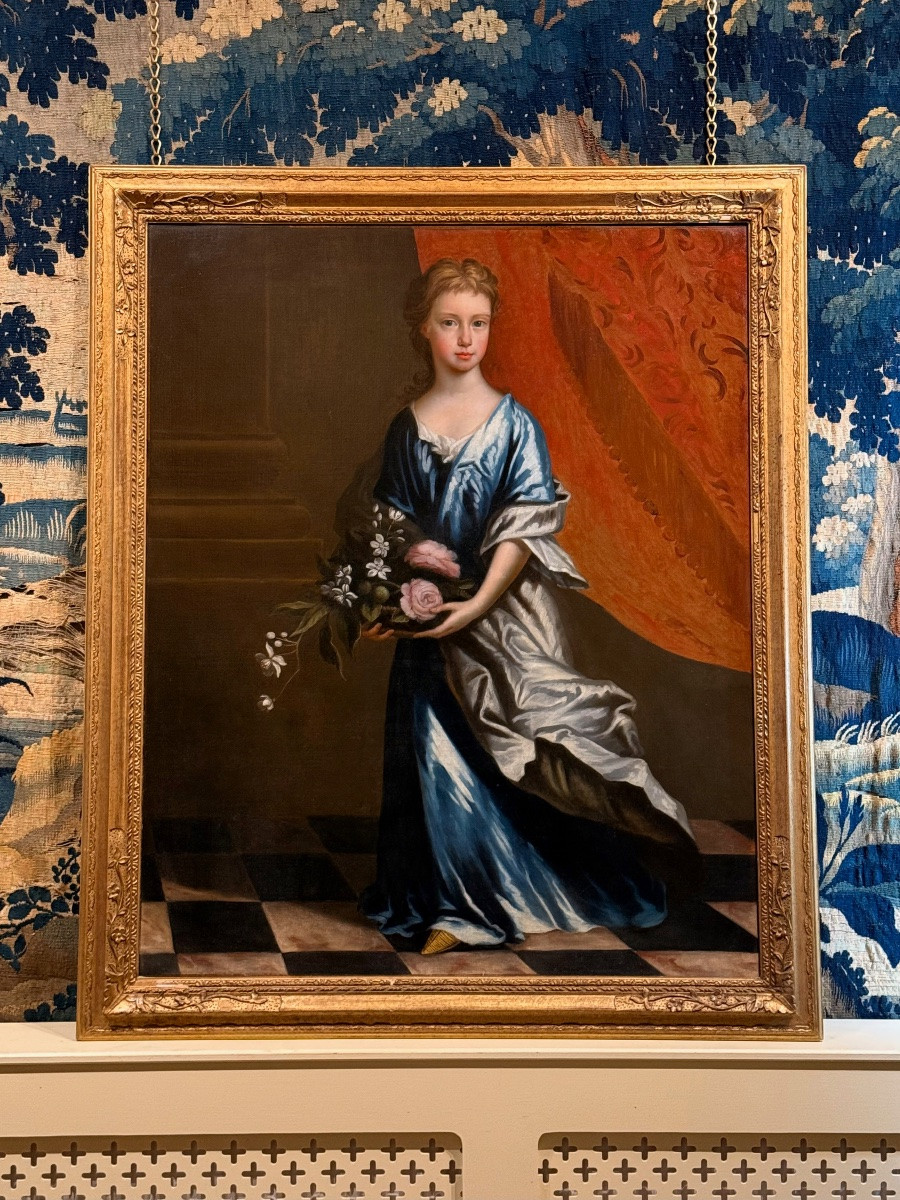
A richly colored and highly decorative early 18th-century portrait of a young girl carrying a basket of flowers offers a charming glimpse into childhood in 18th-century England. The elegant sitter is depicted full-length in a corridor, standing between a stone pillar and a curtain billowing over a checkered floor. She wears the brightly colored silk clothing so fashionable at the time: a blue dress and a silver silk shawl over a white chemise. Beneath the hem of her dress, a striped yellow silk shoe is visible. The drape of her costume adds a welcome touch of dynamism to the work. With her long neck and casually cut hair, she looks directly into the viewer's eyes, captivating them with her wide, compassionate gaze. This highly decorative portrait carries a subtext: the basket of flowers symbolizes the sitter's youth, beauty, and future fertility, at a time when the primary goal of an aristocratic woman was to have a son and an heir. Her roses symbolize love and affection, and the white jasmine, her amiable nature. This portrait also holds another potentially hidden message: a reminder that time flies… and that, just like flowers, the youth and beauty of our subjects can fade quickly. This portrait offers a captivating glimpse into early 18th-century ideas about the innocence of childhood. Later in the century, children's art began to emphasize the innocence and purity of childhood by depicting children playing or in moments of unconscious contemplation. Here, however, the sitter is depicted dressed as an adult woman, which may well have been the case in her portrait, and in this state, she is as much a miniature woman as a child. Portraits of children, especially those of this scale, were a luxury at this time, and although the sitter remains remarkably unknown, it can be assumed that she belonged to an aristocratic or high-ranking family. Robert Byng (1666–1720) was born in Wiltshire but is buried in Oxford, where he died in 1720, having lived there before 1714. A pupil of Sir Godfrey Kneller (the King's chief painter and England's most prominent Baroque portraitist), he was greatly influenced by him. The earliest dated portraits of Byng are from around 1697; one of his younger brothers, Edward, was Kneller's drapery painter and principal assistant. High-resolution images available upon request. International delivery available. Canvas: 100 cm x 125 cm. Frame: 120 cm x 142 cm.
14 000 €
Period: 17th century
Style: Other Style
Condition: Excellent condition
Material: Oil painting
Width: 120cm
Height: 142cm
Depth: 3cm
Reference (ID): 1703963
Availability: In stock
Print