

Revolutionary Knife, Known As The
Artist: Pierre-François Palloy
“Grenadier of the Bastille” – Carved Ivory and Engraved Tortoiseshell – Paris, Late 18th Century
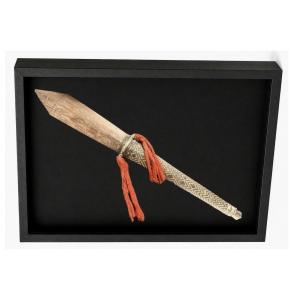
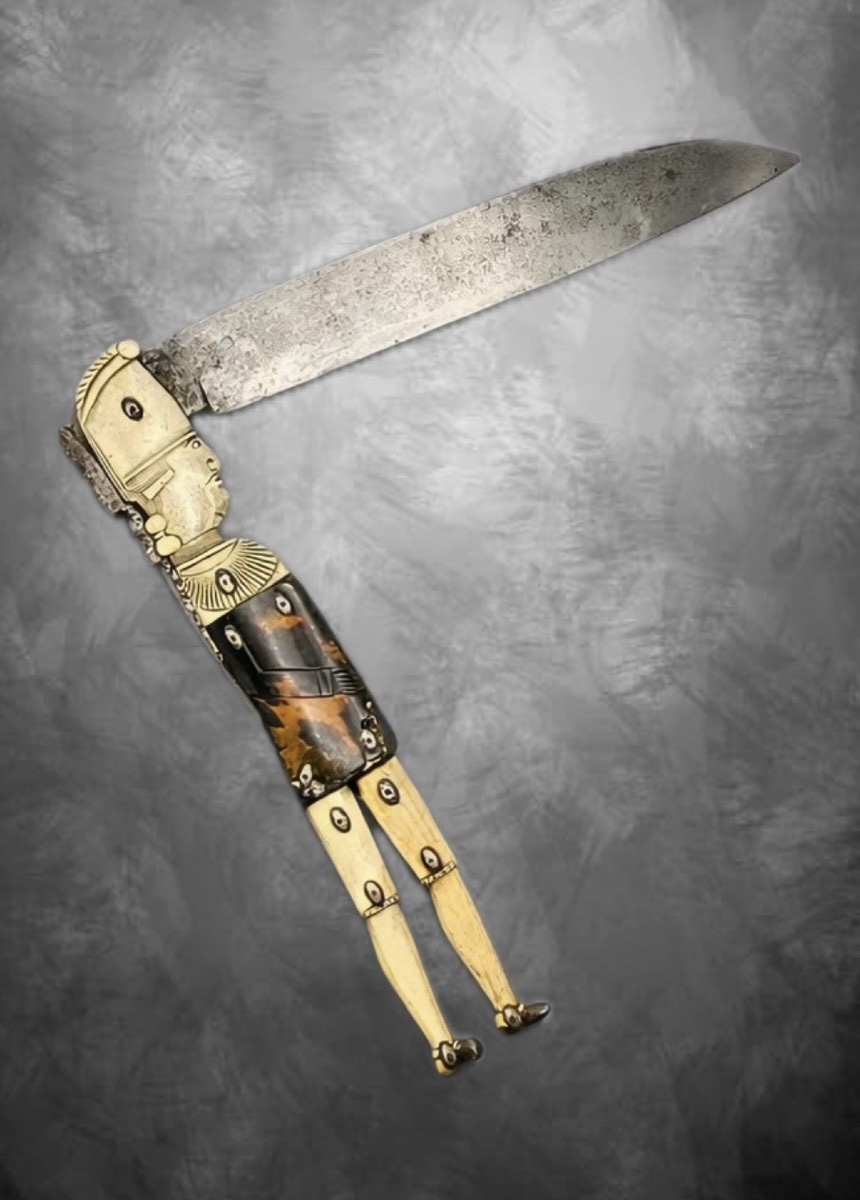
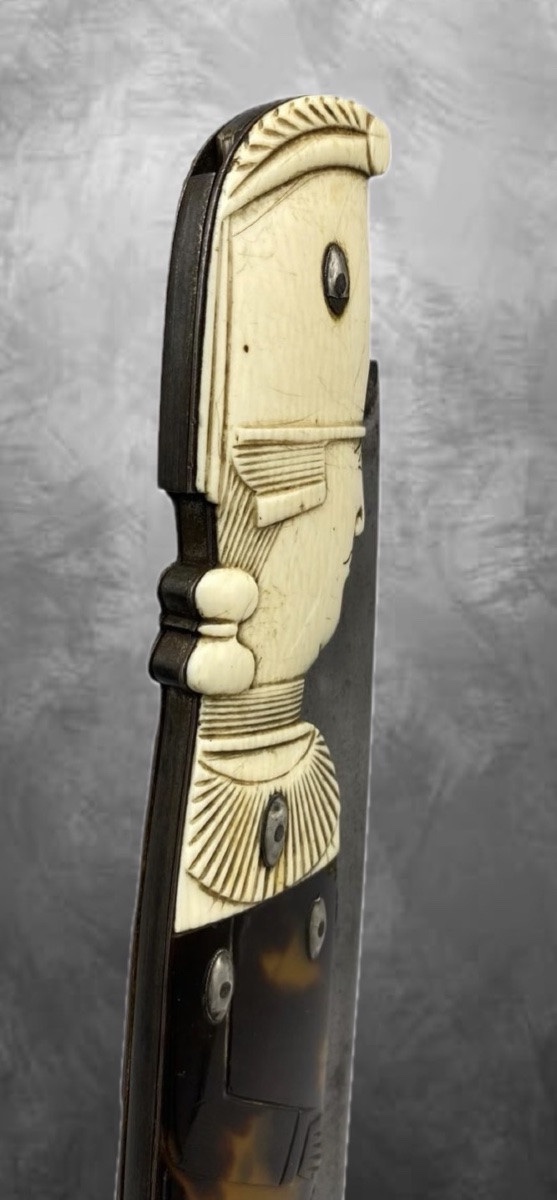
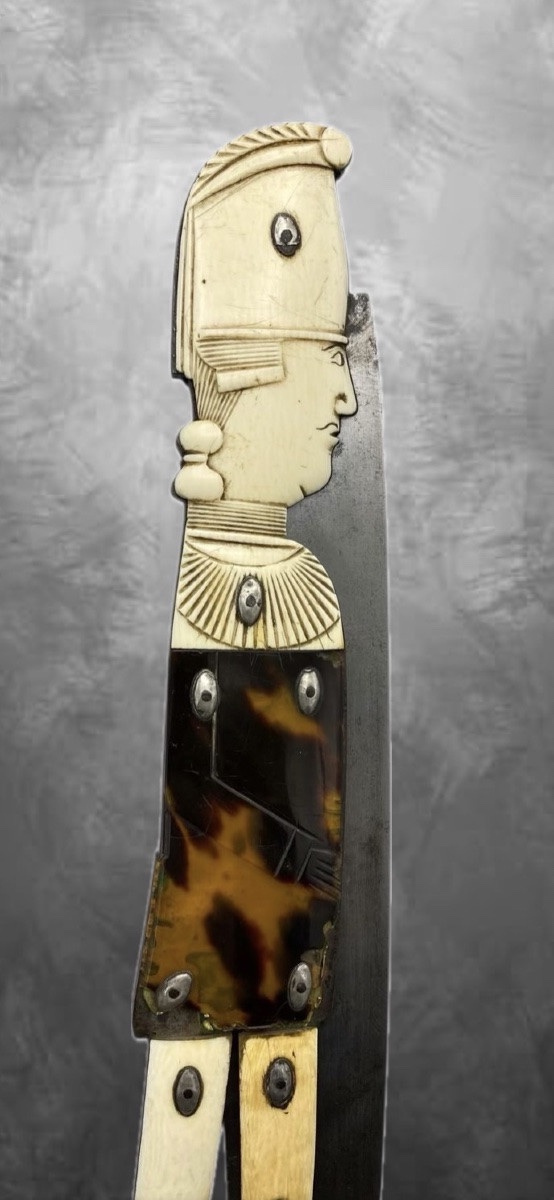
An exceptional and spectacular figurative folding knife from the late 18th century, depicting a revolutionary grenadier carved from ivory, likely made in Paris as part of the patriotic works that followed the storming of the Bastille in 1789.
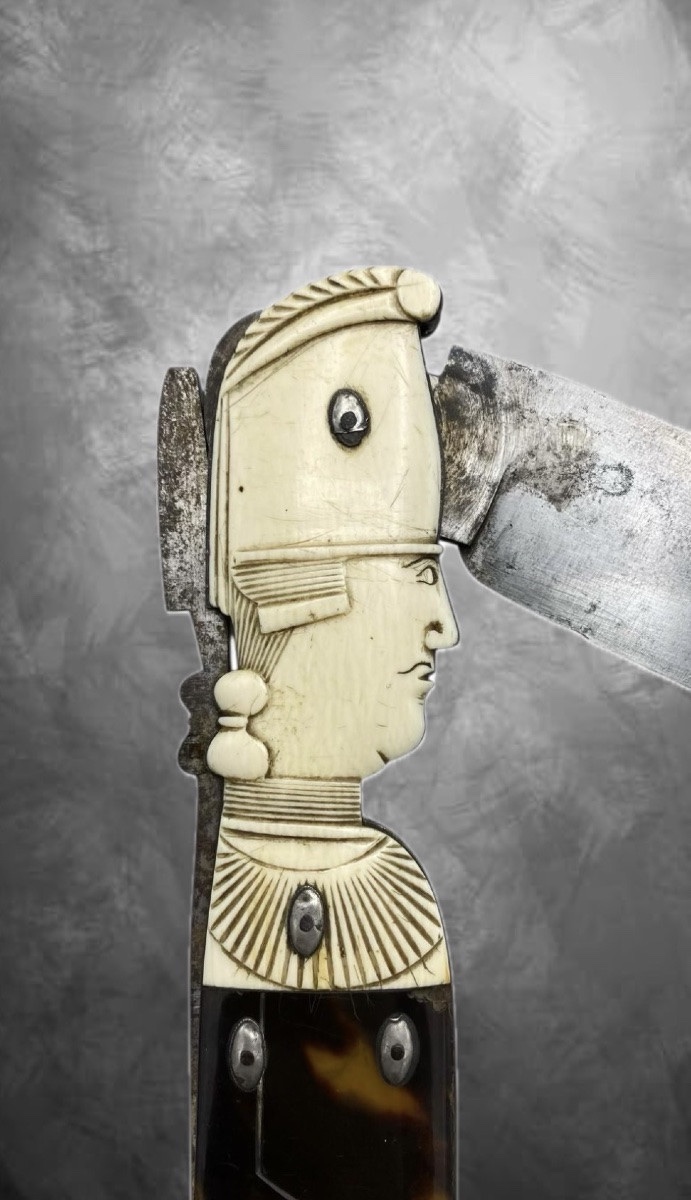
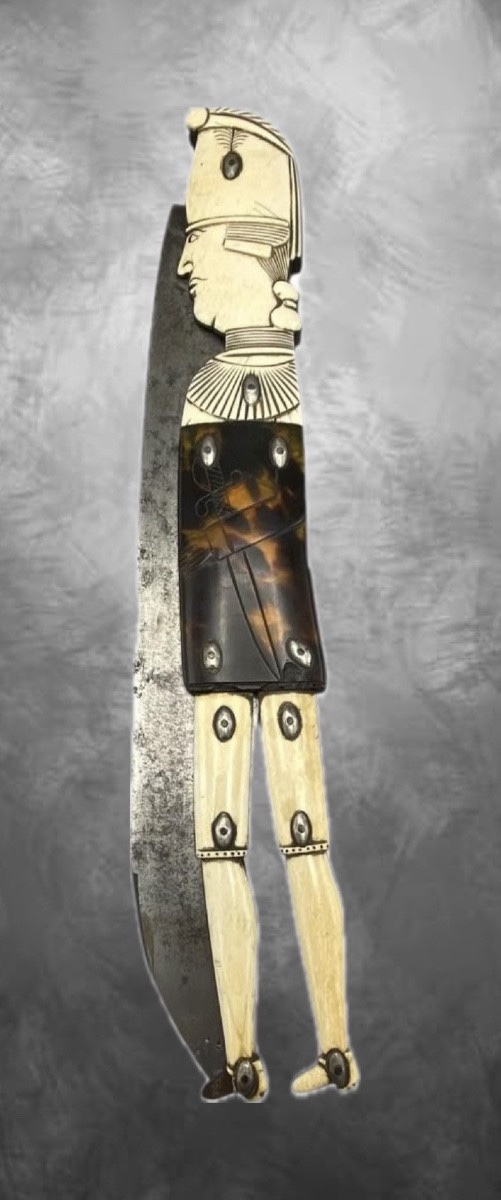
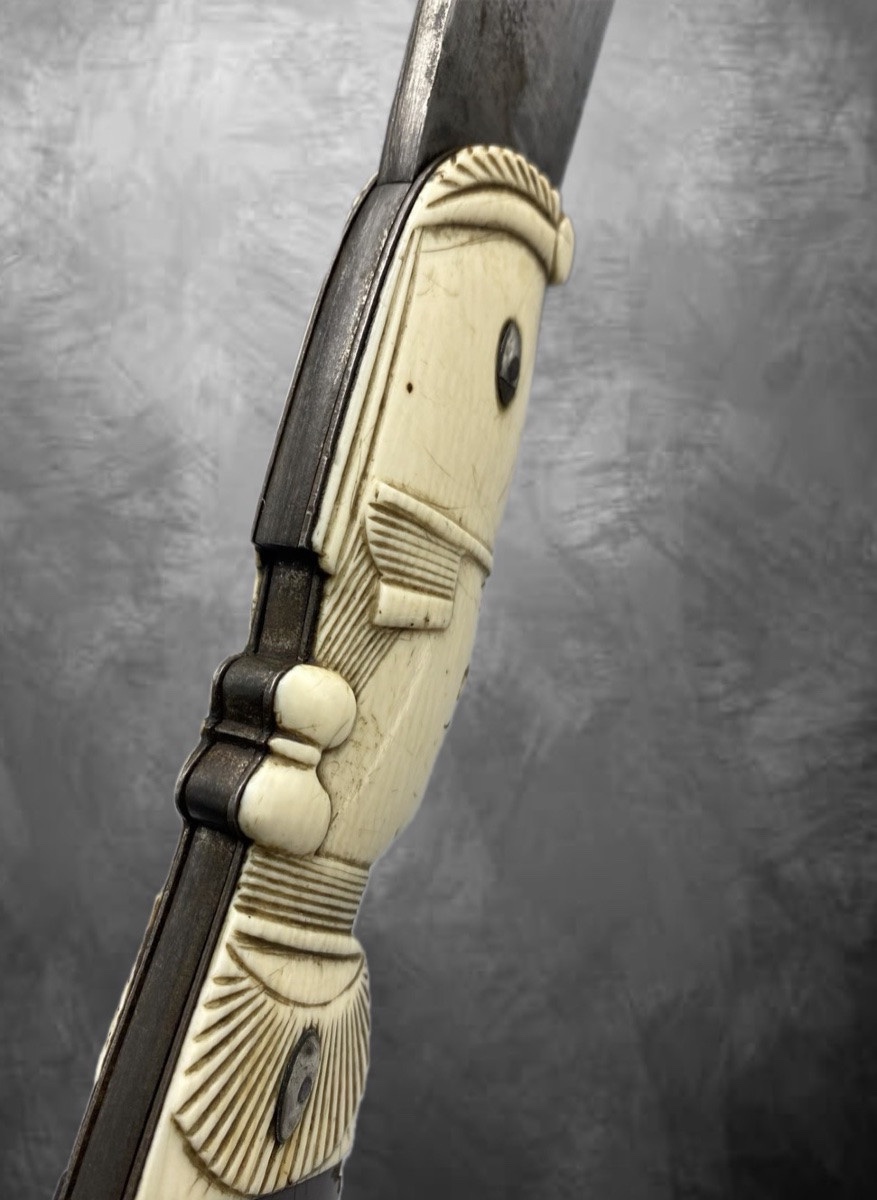
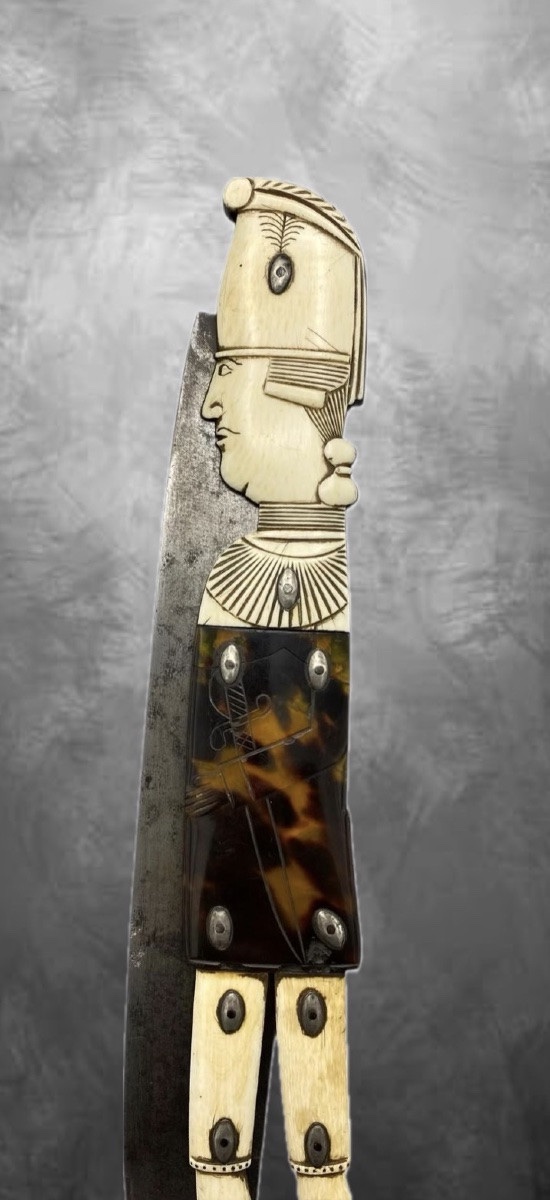
The handle is entirely shaped like a full-length military figure. The head, finely carved from ivory, depicts a grenadier wearing a stylized helmet. The face, rendered in profile with great finesse, features an aquiline nose, a prominent chin, and hair styled into a double-ball catogan characteristic of late 18th-century military hairstyles.
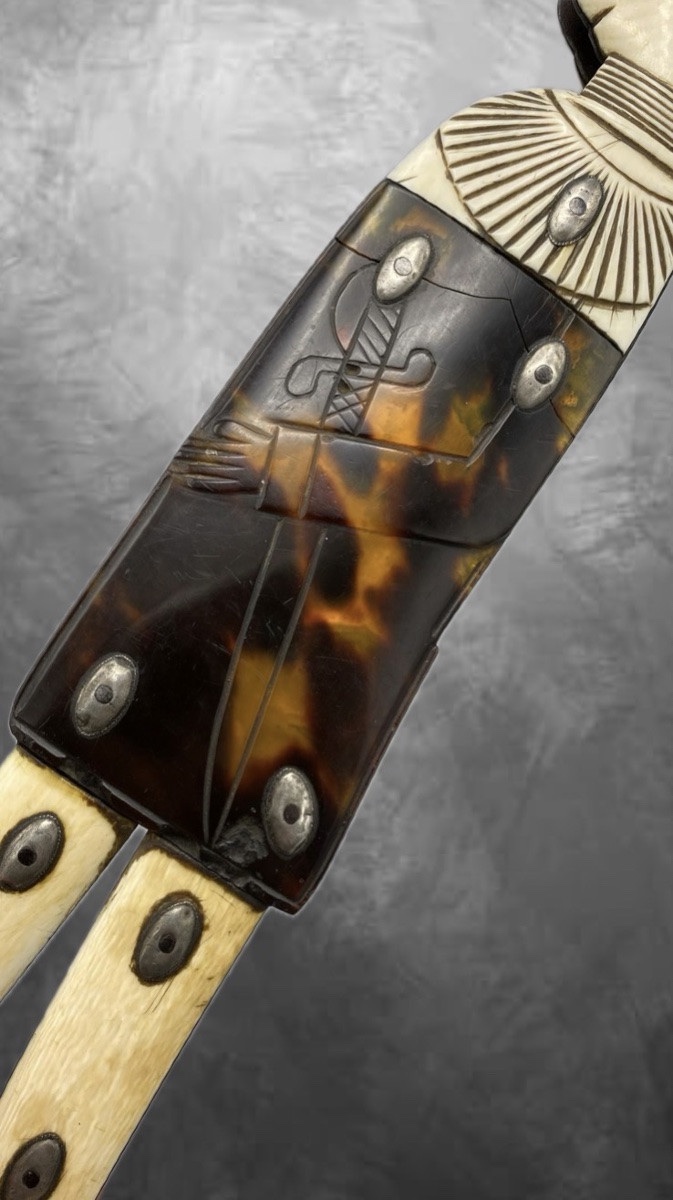
The neck is adorned with a wide, radiating ruff, also carved from ivory, forming an elegant transition between the figure’s head and body.
The torso consists of a beautiful panel of blond and brown tortoiseshell, carefully fitted into a metal frame and engraved with a stylized military saber. This patriotic imagery clearly evokes the world of the militias and volunteers of the Revolution. The tortoiseshell is secured by several oval silver rivets arranged symmetrically.
The figure’s legs, also made of ivory, are articulated and connected to the body by metal pins. They end in stylized shoes that form the tip of the handle when the knife is closed. This anthropomorphic design is one of the most remarkable features of these figurative Revolutionary-era knives.
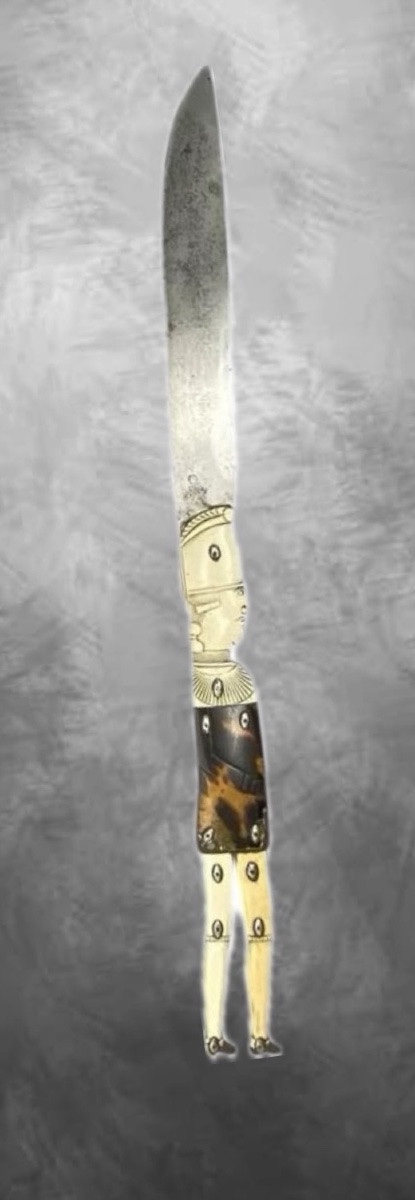
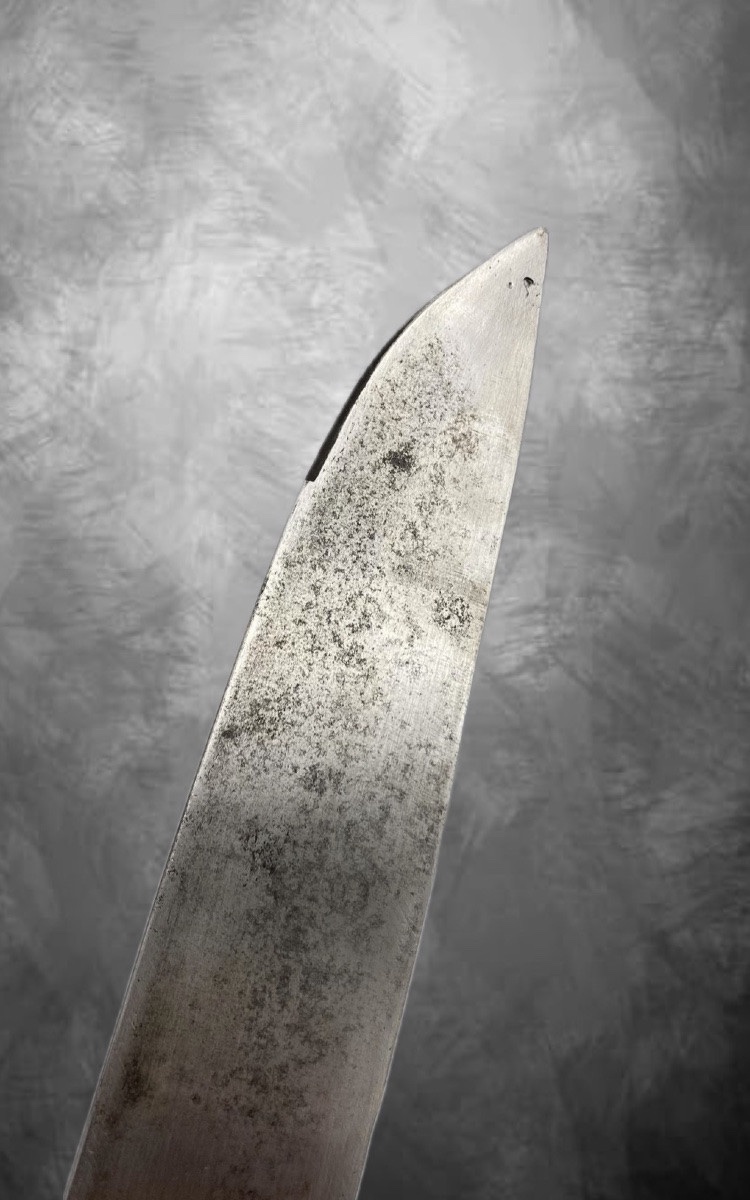
The large blade, made of forged steel, folds into the figure’s body via a sturdy spring mechanism typical of late 18th-century cutlery.
Through its iconography and the nature of its materials—carved ivory, engraved tortoiseshell, and metal mountings—this knife follows in the tradition of patriotic objects produced in Paris in the years following the fall of the Bastille. After 1789, the contractor Pierre-François Palloy, who was in charge of demolishing the fortress, commissioned and distributed numerous revolutionary souvenirs intended to commemorate this seminal event.
With its construction combining carved ivory, engraved tortoiseshell, and a metal mount, this object evokes the work of Parisian cutlers active around the Palais-Royal, a neighborhood then famous for the production of luxury items and patriotic curiosities linked to the events of the French Revolution.
Figurative knives depicting soldiers or armed citizens are among the rarest creations in this collection of commemorative objects. Large examples such as this one appear very rarely on the market and are today particularly sought-after examples of Parisian craftsmanship during the Revolution.
With its impressive size, the quality of its carving, and its revolutionary iconography, this piece is a remarkable display item and an exceptional testament to the patriotic imagination of the late 18th century.
Dimensions:
Length when closed: approximately 33 cm
Length when open: approximately 60 cm
Period: 18th century
Style: Louis 16th, Directory
Condition: Excellent condition
Reference (ID): 1785324
Availability: In stock