




17th-century Flemish School - Two Farm Scenes - (15 X 11 Cm Each)
Pen and ink on black stone.
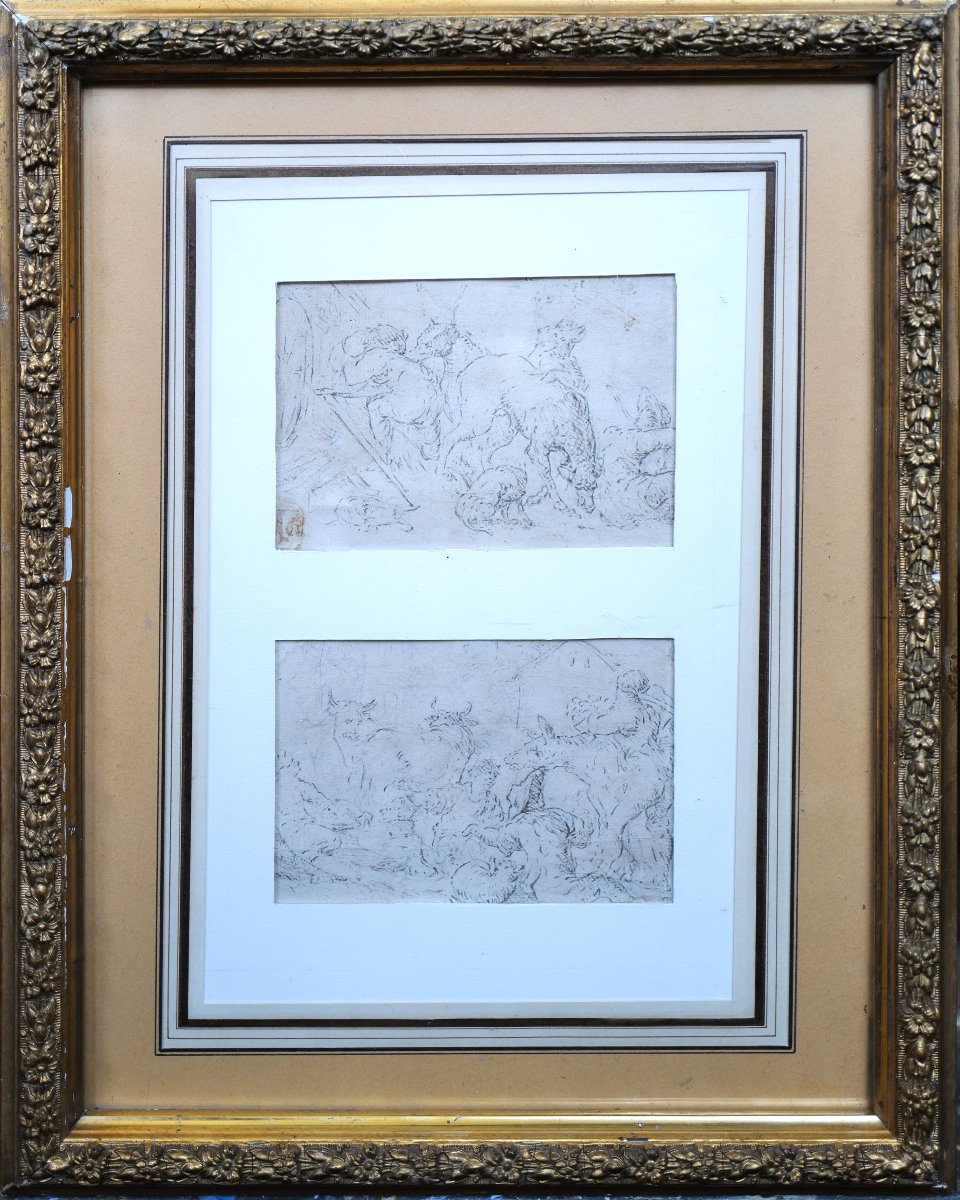
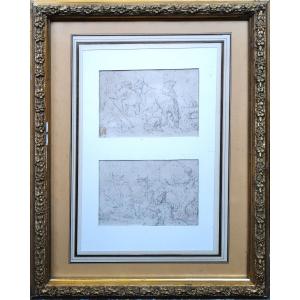
Two antique sheets combined in a single mounting.
Dimensions of each sheet: 15 × 11 cm
Presented in a 19th-century gilded wooden frame.
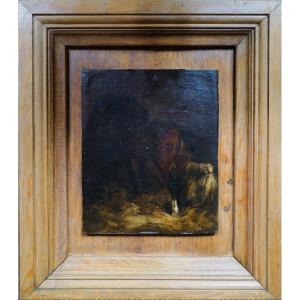
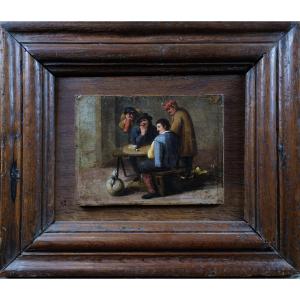
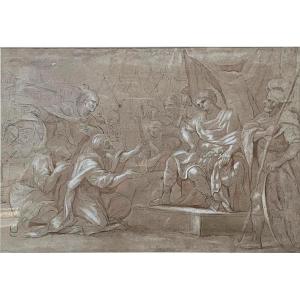
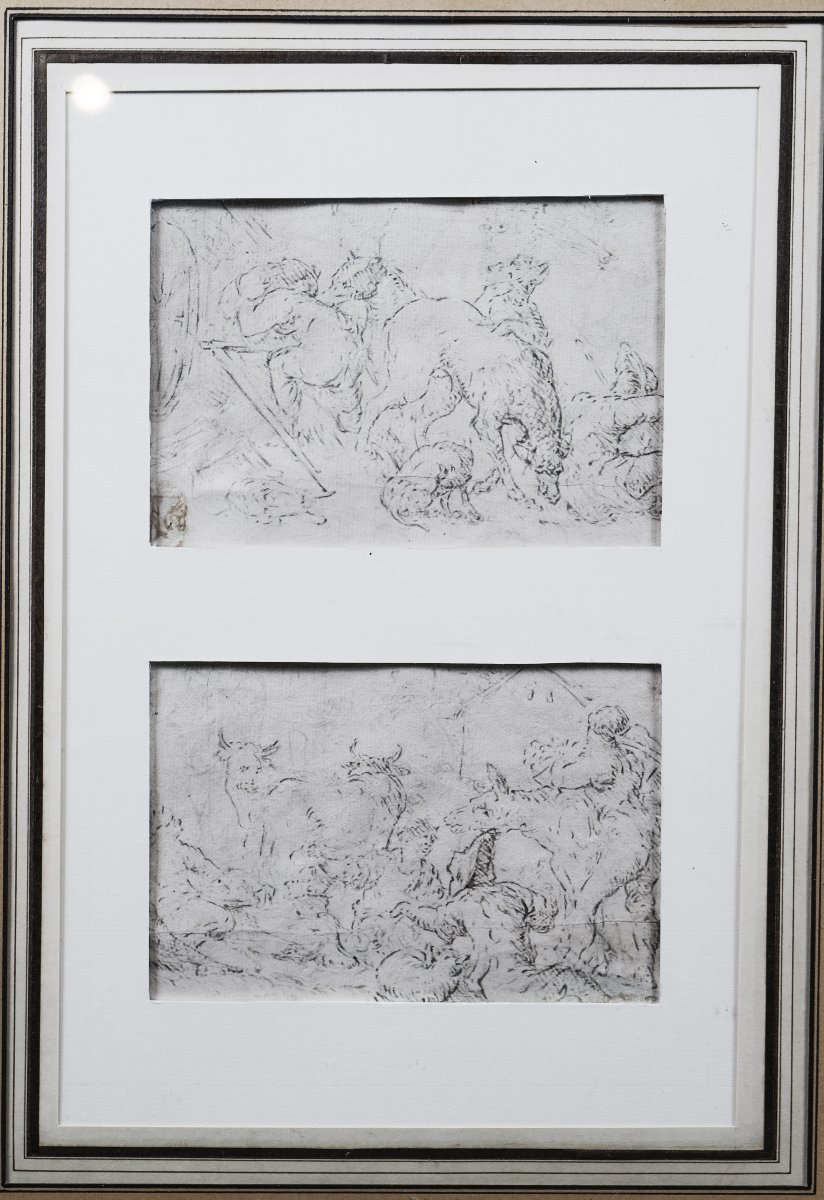
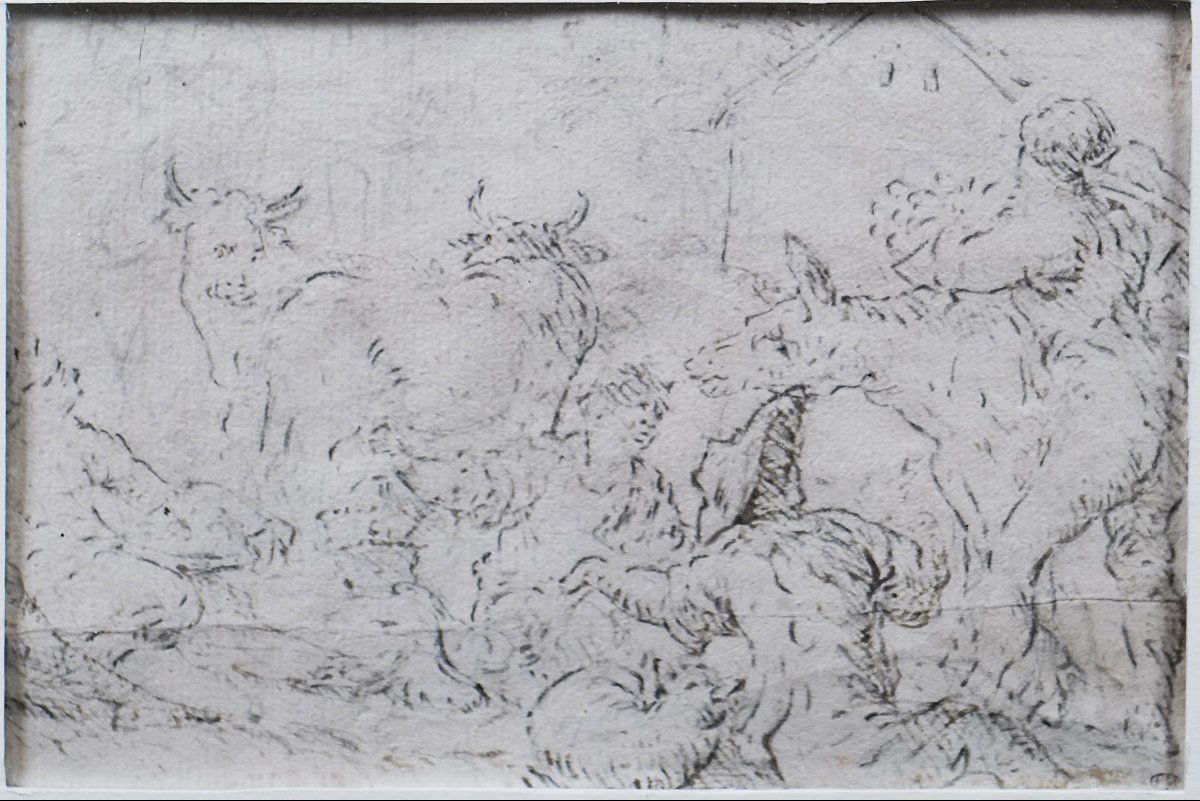
These two charming studies depict various farm animals—a dog, a mule, cattle, and goats—alongside several figures, observed with great spontaneity.
Rather than finished compositions, these are genuine study drawings, in which the artist seeks above all to capture the accuracy of movement and the lively expression of the animals.The particularly free line combines a preliminary sketch in black chalk with a final rendering in pen, following a practice that was very common among 17th-century Flemish draftsmen.
The outlines remain deliberately open, allowing the composition to breathe and lending the work as a whole a remarkable freshness of execution.
These sheets are part of the tradition of studio studies produced in the major artistic centers of Antwerp and Brussels, where painters specializing in rural scenes and landscapes filled their sketchbooks with observations intended to inform their future compositions.
An old handwritten annotation, preserved on the reverse of the mount, suggests an attribution to Cornelis de Wael (1592–1667). This indication is an interesting element in the work’s history but cannot be considered an established attribution. The style is more broadly reminiscent of 17th-century Flemish art, though, based on the current state of research, it does not allow for a definitive identification of the artist.
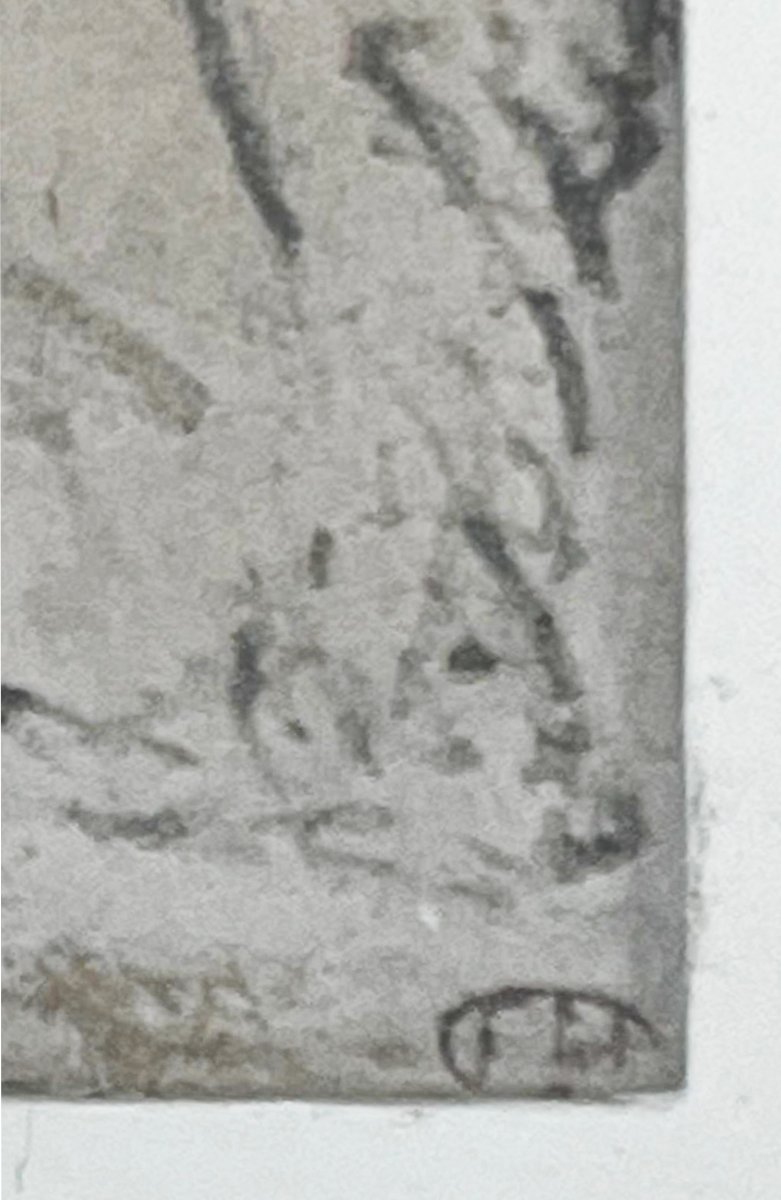
The mount also bears the stamp of the Mathias Polakovits collection (Lugt 3561).
A great connoisseur and collector of old drawings, Polakovits spent several decades assembling an exceptional collection of old drawings acquired at major European auctions. His mark appears in Frits Lugt’s *Répertoire des marques de collections* and is a provenance highly sought after by collectors of drawings.
Our opinion: These two studies captivate with their extreme freedom of execution and their freshness. Far from being mere academic exercises, they reflect genuine studio practice, where direct observation of the animal world takes precedence over the composition’s finish. Their provenance, enhanced by Mathias Polakovits’s stamp and by a long-standing tradition of attribution to Cornelis de Wael, lends this set a historical significance that far exceeds that of mere decorative sheets.
Two antique sheets combined in a single mounting.
Dimensions of each sheet: 15 × 11 cm
Presented in a 19th-century gilded wooden frame.
These two charming studies depict various farm animals—a dog, a mule, cattle, and goats—alongside several figures, observed with great spontaneity.
Rather than finished compositions, these are genuine study drawings, in which the artist seeks above all to capture the accuracy of movement and the lively expression of the animals.The particularly free line combines a preliminary sketch in black chalk with a final rendering in pen, following a practice that was very common among 17th-century Flemish draftsmen.
The outlines remain deliberately open, allowing the composition to breathe and lending the work as a whole a remarkable freshness of execution.
These sheets are part of the tradition of studio studies produced in the major artistic centers of Antwerp and Brussels, where painters specializing in rural scenes and landscapes filled their sketchbooks with observations intended to inform their future compositions.
An old handwritten annotation, preserved on the reverse of the mount, suggests an attribution to Cornelis de Wael (1592–1667). This indication is an interesting element in the work’s history but cannot be considered an established attribution. The style is more broadly reminiscent of 17th-century Flemish art, though, based on the current state of research, it does not allow for a definitive identification of the artist.
The mount also bears the stamp of the Mathias Polakovits collection (Lugt 3561).
A great connoisseur and collector of old drawings, Polakovits spent several decades assembling an exceptional collection of old drawings acquired at major European auctions. His mark appears in Frits Lugt’s *Répertoire des marques de collections* and is a provenance highly sought after by collectors of drawings.
Our opinion: These two studies captivate with their extreme freedom of execution and their freshness. Far from being mere academic exercises, they reflect genuine studio practice, where direct observation of the animal world takes precedence over the composition’s finish. Their provenance, enhanced by Mathias Polakovits’s stamp and by a long-standing tradition of attribution to Cornelis de Wael, lends this set a historical significance that far exceeds that of mere decorative sheets.
250 €
Period: 17th century
Style: Renaissance, Louis 13th
Condition: Good condition
Material: Paper
Reference (ID): 1785085
Availability: In stock
Print