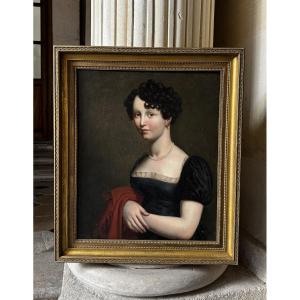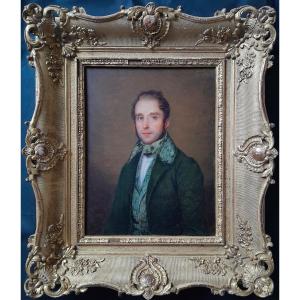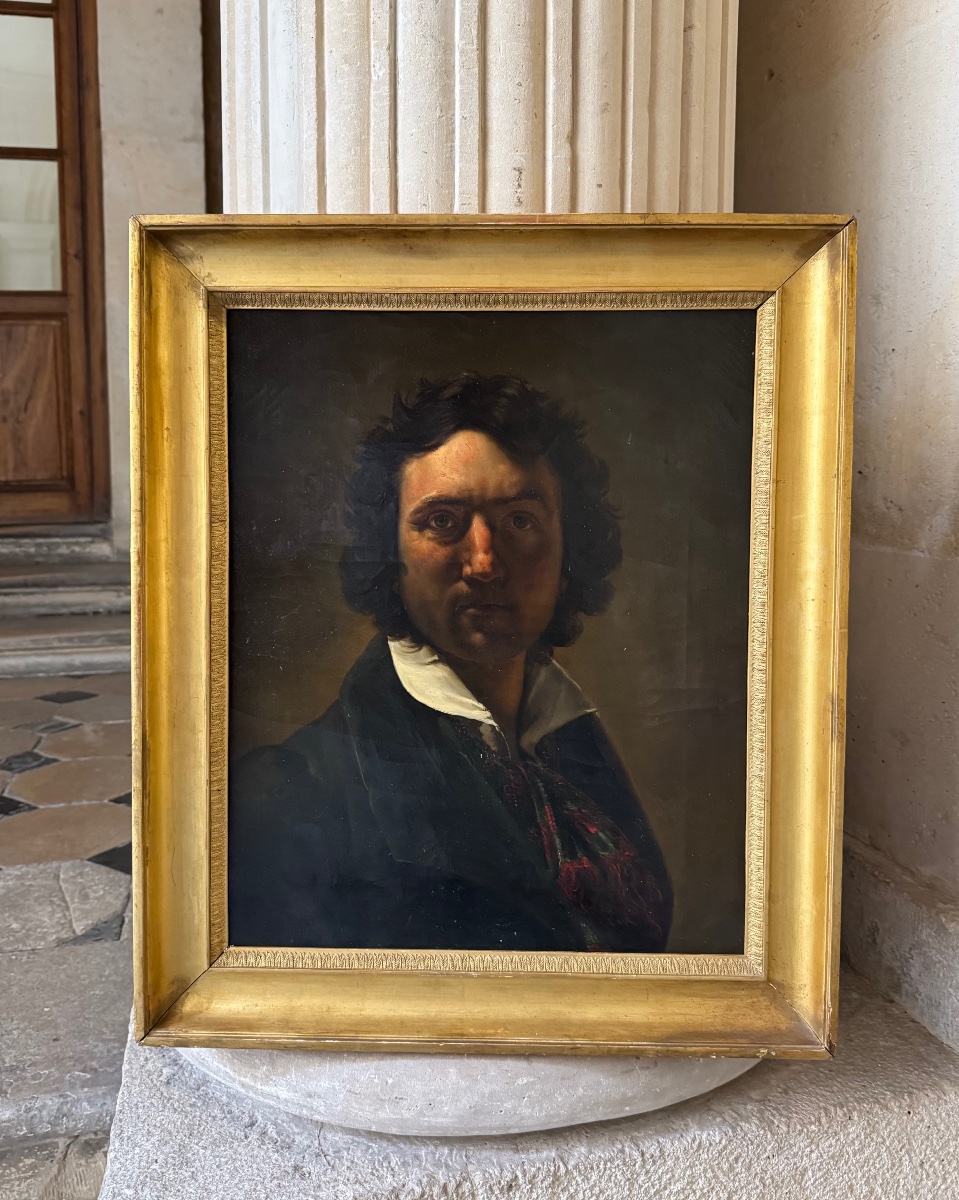
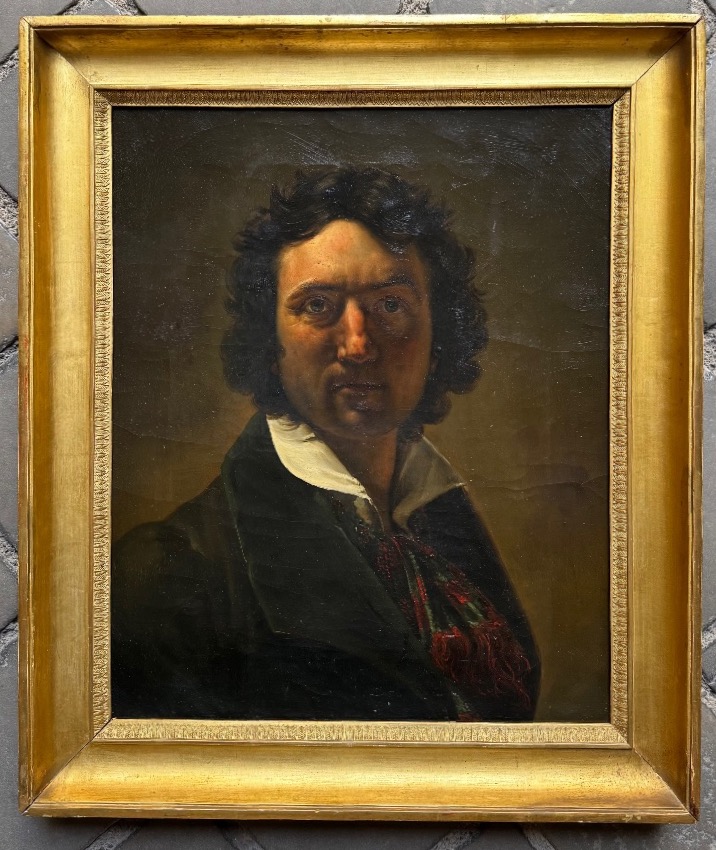
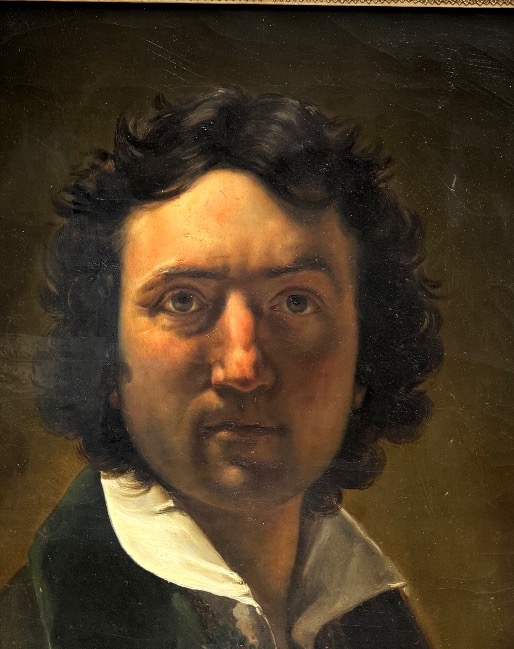
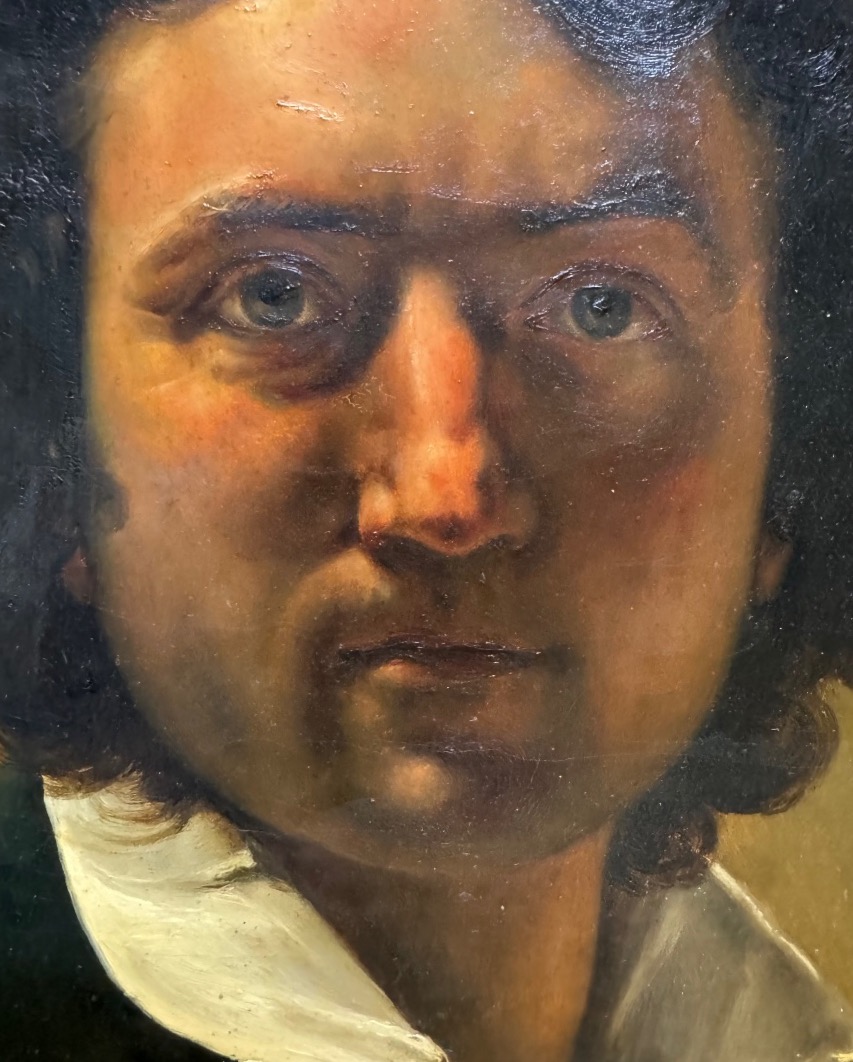
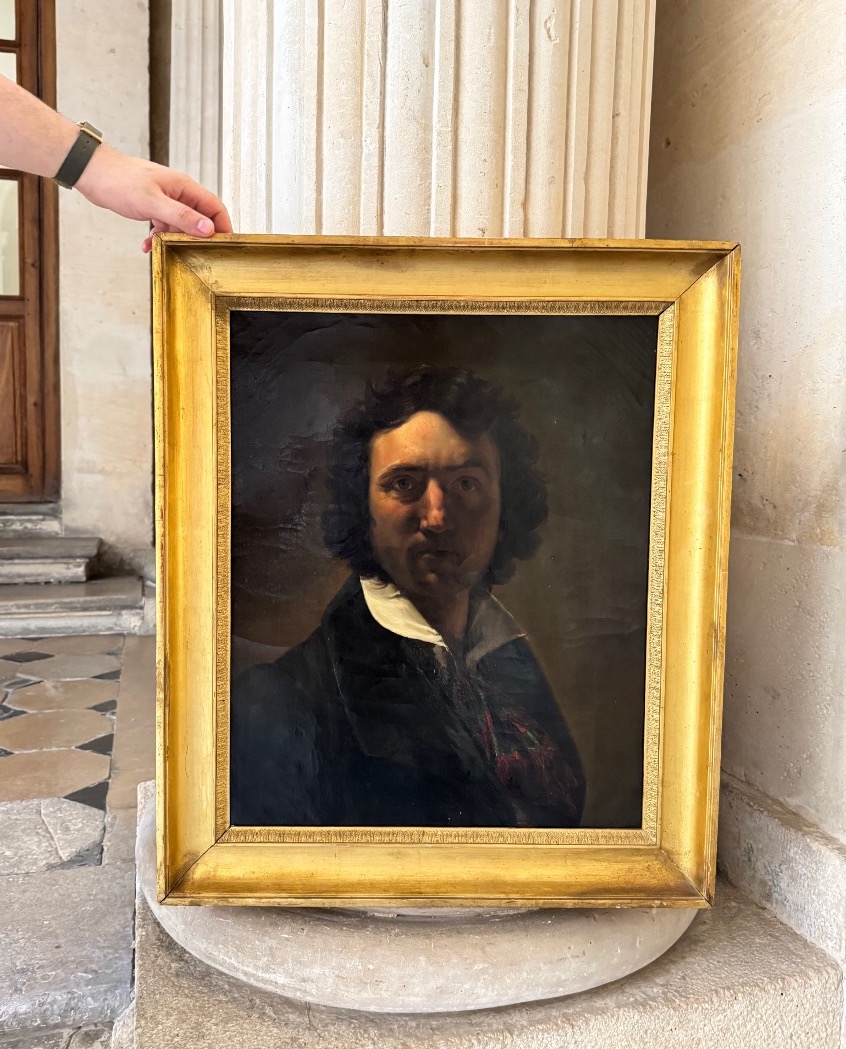


Self-portrait By Jean-baptiste Paulin-guérin, Artist’s Studio, C. 1820
Artist: Guerin
From the studio of Jean-Baptiste PAULIN-GUERIN (Toulon 1783–1855).
Oil on canvas, original canvas and frame from the same period.
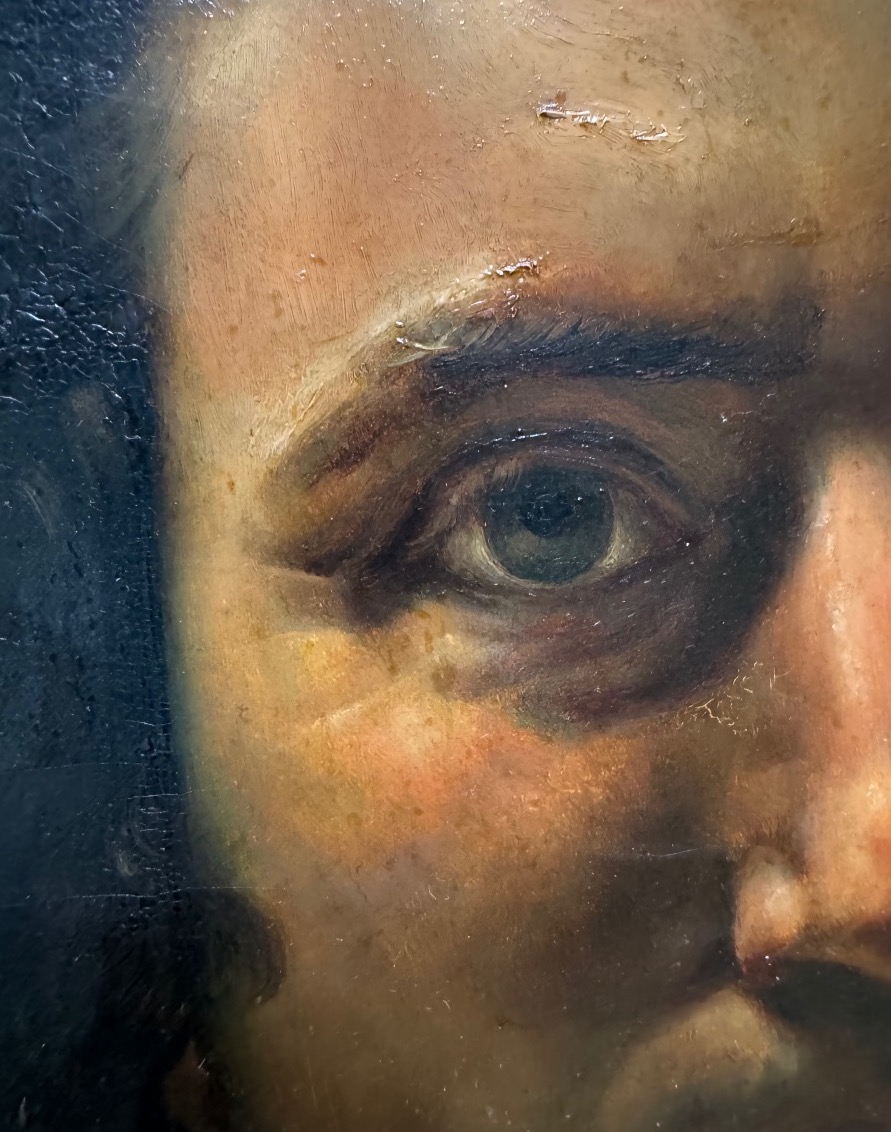
Very good condition,
Frame measures 68x58 cm; painting measures 55.5x45.5 cm without frame.
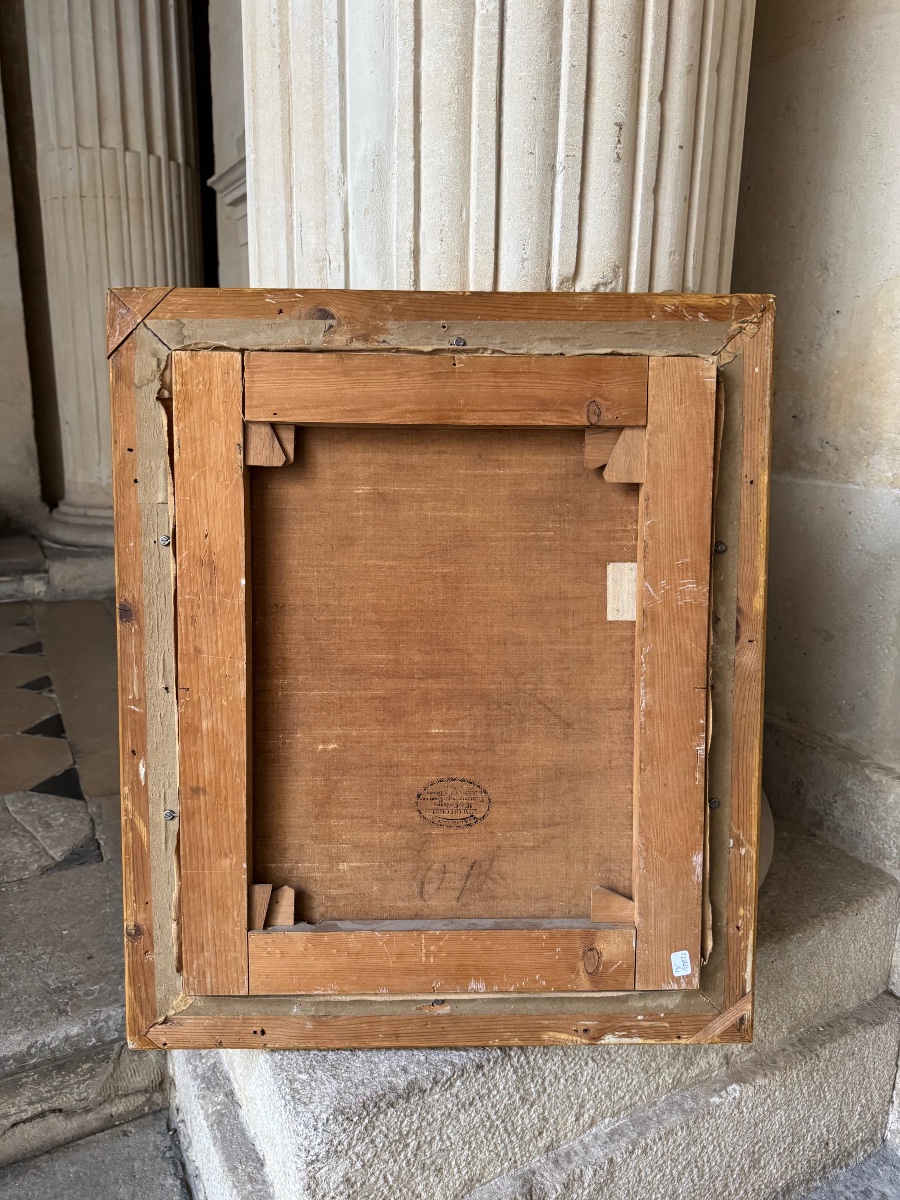
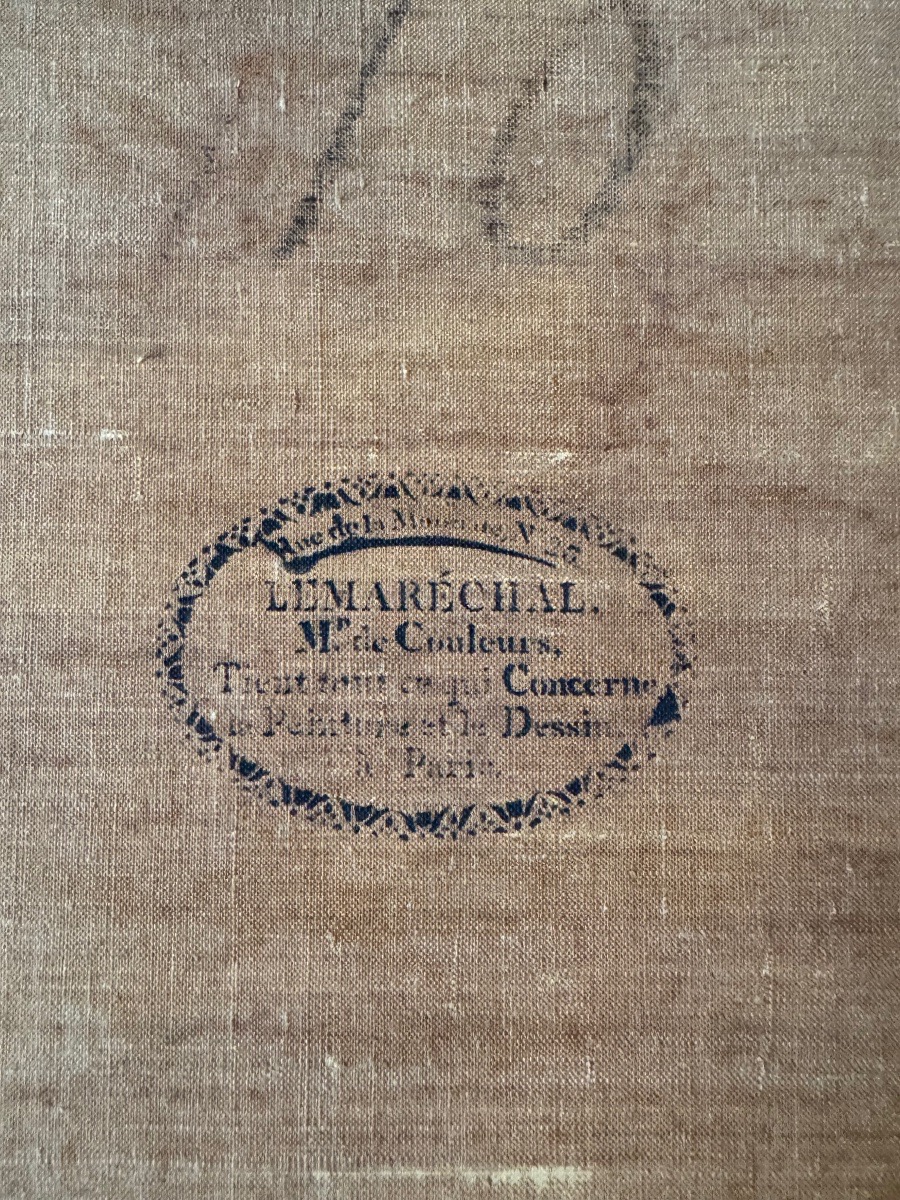
Portrait of the artist, oil on canvas from the Lemaréchal company in Paris. On the back, an oval mark in black ink from the canvas supplier: Lemaréchal, 23 Rue de la Monnaie, Paris (circa 1835)
Related work:
- Jean-Baptiste Paulin-Guérin (1783 Toulon–Paris 1855), self-portrait, oil on canvas, 55.5 x 45.5 cm. - Private collection; current location unknown since the Sotheby’s London auction on July 3, 2013, lot 47, sold for €156,760 (£134,500).
Here we draw on the research of Mr. Pierre Antoine Martenet, an expert in Paris, who kindly shared it with us:
"A portrait! What could be simpler and more complicated, more obvious and more profound?
Charles Baudelaire, Salon of 1859.
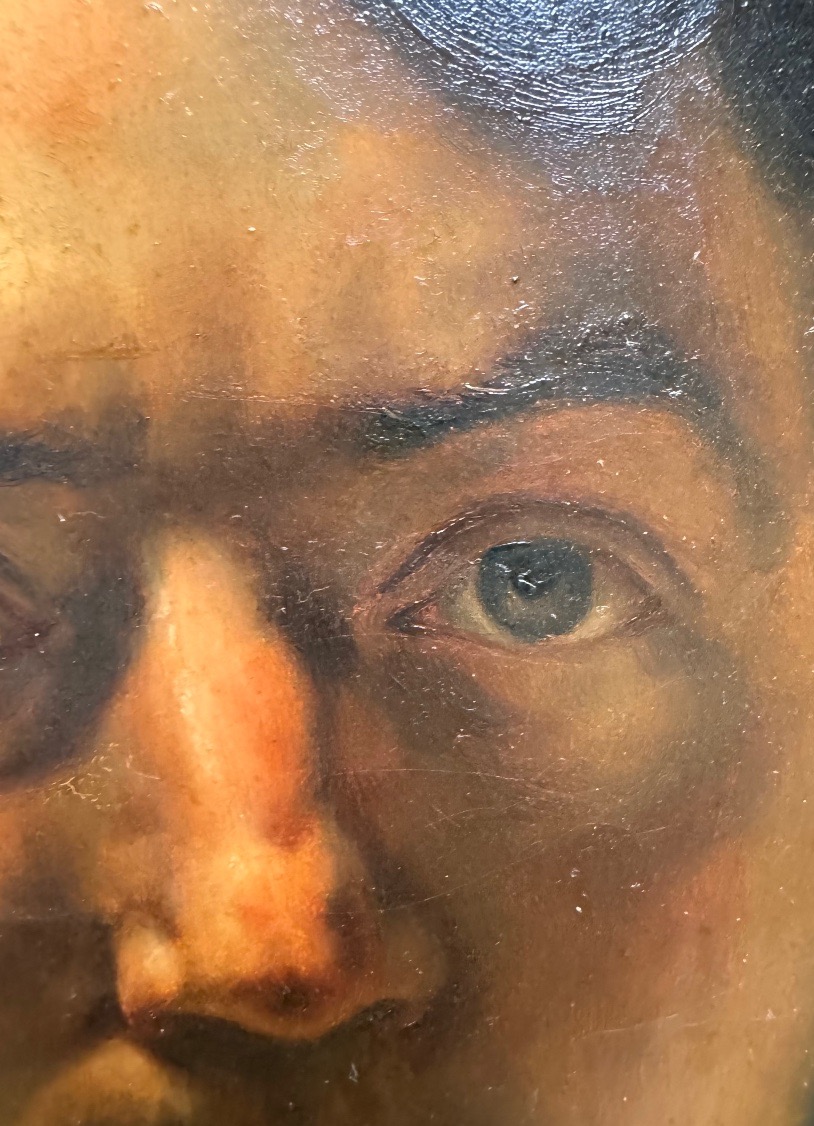
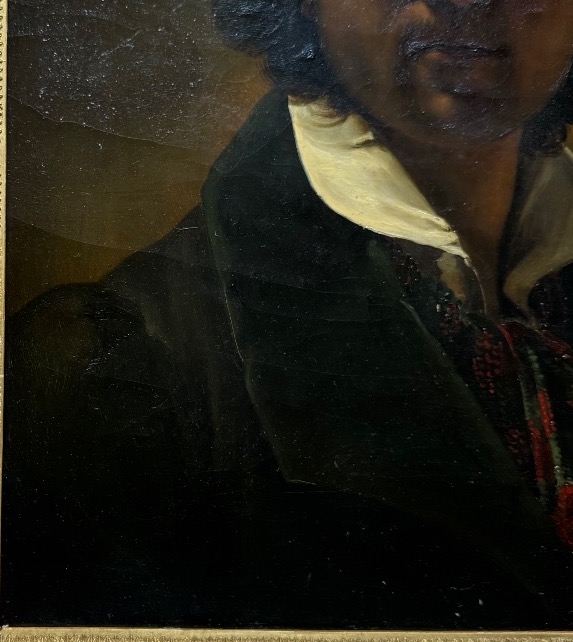
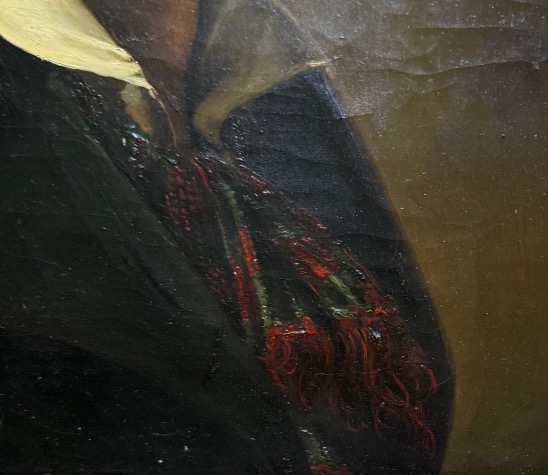
Our painting is the only known contemporary copy of the masterpiece that Paulin-Guérin created around 1820. The frontal pose, the captivating gaze, the highly naturalistic face, and the striking handling of light all combine to make this one of his most penetrating works. The dazzling white collar of his shirt stands out against the lapel of his black velvet jacket, casting a soft glow on the line of his jaw. Through the observation of his features and the finesse of its execution, this is a deeply engaging portrait—at once true to life and expressive, sincere and utterly captivating. Praised for his genius by both Jean-Auguste-Dominique Ingres and Théodore Géricault, Paulin Guérin is one of the most mysterious painters of the early 19th century. The son of a locksmith, he began his life in poverty, painting numerous self-portraits because he could not afford to hire models. He exhibited for the first time at the Salon in 1810, presenting only portraits, while his first composition, *Cain After the Death of Abel*, for which he received critical acclaim and which was acquired by the government, was exhibited in 1812 (Toulon, Musée de Toulon). Guérin served as the official painter to the royal family during the reigns of Louis XVIII and Charles X, and he remained loyal to the Bourbons after 1830. His early style followed the 18th-century tradition of Jean-Baptiste Greuze and, indeed, of some of the great English portraitists, although he succeeded, in both his portraits and his compositions, in asserting a neoclassical style all his own, primarily through his distinctive use of color, light, and a very particular form of sfumato—a technique that, of course, also distinguishes the paintings of his Romantic contemporaries Pierre-Paul Prud’hon and Anne-Louis Girodet. There is, however, something more to Guérin’s portraits—primarily in the combination of his extraordinary understanding of light and an intense psychological interpretation of his subjects—that seems to foreshadow the great portraits of the next generation, such as those by Gustave Courbet, and in particular his own self-portrait from 1841, *The Desperate Man*. Based on a comparison with Guérin’s self-portrait dated 1804, held at the Toulon Museum and painted on his twenty-first birthday, we can estimate that this self-portrait was created around 1815–1820. Although similar in conception—with a haunting face emerging from a dark background—in this later example, Guérin is depicted facing forward and, above all, appears much more prosperous and self-assured. In 1804, he had been in Paris for only eighteen months, mired in poverty and on the verge of despair, and it was not until the following year that he found employment, first in Gérard’s studio and then as an apprentice to Vincent. By the time of Napoleon’s death, ten years later, however, he was well established and, moreover, an important member of Parisian society. In 1819, he painted the portrait of the Duchess of Berry, which was particularly well-received, securing him a long series of commissions for portraits of prominent figures in the years to come. This self-portrait appears to date from a period similar to that of the portrait of the Duchess of Berry.
Oil on canvas, original canvas and frame from the same period.
Very good condition,
Frame measures 68x58 cm; painting measures 55.5x45.5 cm without frame.
Portrait of the artist, oil on canvas from the Lemaréchal company in Paris. On the back, an oval mark in black ink from the canvas supplier: Lemaréchal, 23 Rue de la Monnaie, Paris (circa 1835)
Related work:
- Jean-Baptiste Paulin-Guérin (1783 Toulon–Paris 1855), self-portrait, oil on canvas, 55.5 x 45.5 cm. - Private collection; current location unknown since the Sotheby’s London auction on July 3, 2013, lot 47, sold for €156,760 (£134,500).
Here we draw on the research of Mr. Pierre Antoine Martenet, an expert in Paris, who kindly shared it with us:
"A portrait! What could be simpler and more complicated, more obvious and more profound?
Charles Baudelaire, Salon of 1859.
Our painting is the only known contemporary copy of the masterpiece that Paulin-Guérin created around 1820. The frontal pose, the captivating gaze, the highly naturalistic face, and the striking handling of light all combine to make this one of his most penetrating works. The dazzling white collar of his shirt stands out against the lapel of his black velvet jacket, casting a soft glow on the line of his jaw. Through the observation of his features and the finesse of its execution, this is a deeply engaging portrait—at once true to life and expressive, sincere and utterly captivating. Praised for his genius by both Jean-Auguste-Dominique Ingres and Théodore Géricault, Paulin Guérin is one of the most mysterious painters of the early 19th century. The son of a locksmith, he began his life in poverty, painting numerous self-portraits because he could not afford to hire models. He exhibited for the first time at the Salon in 1810, presenting only portraits, while his first composition, *Cain After the Death of Abel*, for which he received critical acclaim and which was acquired by the government, was exhibited in 1812 (Toulon, Musée de Toulon). Guérin served as the official painter to the royal family during the reigns of Louis XVIII and Charles X, and he remained loyal to the Bourbons after 1830. His early style followed the 18th-century tradition of Jean-Baptiste Greuze and, indeed, of some of the great English portraitists, although he succeeded, in both his portraits and his compositions, in asserting a neoclassical style all his own, primarily through his distinctive use of color, light, and a very particular form of sfumato—a technique that, of course, also distinguishes the paintings of his Romantic contemporaries Pierre-Paul Prud’hon and Anne-Louis Girodet. There is, however, something more to Guérin’s portraits—primarily in the combination of his extraordinary understanding of light and an intense psychological interpretation of his subjects—that seems to foreshadow the great portraits of the next generation, such as those by Gustave Courbet, and in particular his own self-portrait from 1841, *The Desperate Man*. Based on a comparison with Guérin’s self-portrait dated 1804, held at the Toulon Museum and painted on his twenty-first birthday, we can estimate that this self-portrait was created around 1815–1820. Although similar in conception—with a haunting face emerging from a dark background—in this later example, Guérin is depicted facing forward and, above all, appears much more prosperous and self-assured. In 1804, he had been in Paris for only eighteen months, mired in poverty and on the verge of despair, and it was not until the following year that he found employment, first in Gérard’s studio and then as an apprentice to Vincent. By the time of Napoleon’s death, ten years later, however, he was well established and, moreover, an important member of Parisian society. In 1819, he painted the portrait of the Duchess of Berry, which was particularly well-received, securing him a long series of commissions for portraits of prominent figures in the years to come. This self-portrait appears to date from a period similar to that of the portrait of the Duchess of Berry.
5 500 €
Period: 19th century
Style: Louis Philippe, Charles 10th
Condition: Excellent condition
Material: Oil painting
Length: 68
Width: 58
Reference (ID): 1783622
Availability: In stock
Print